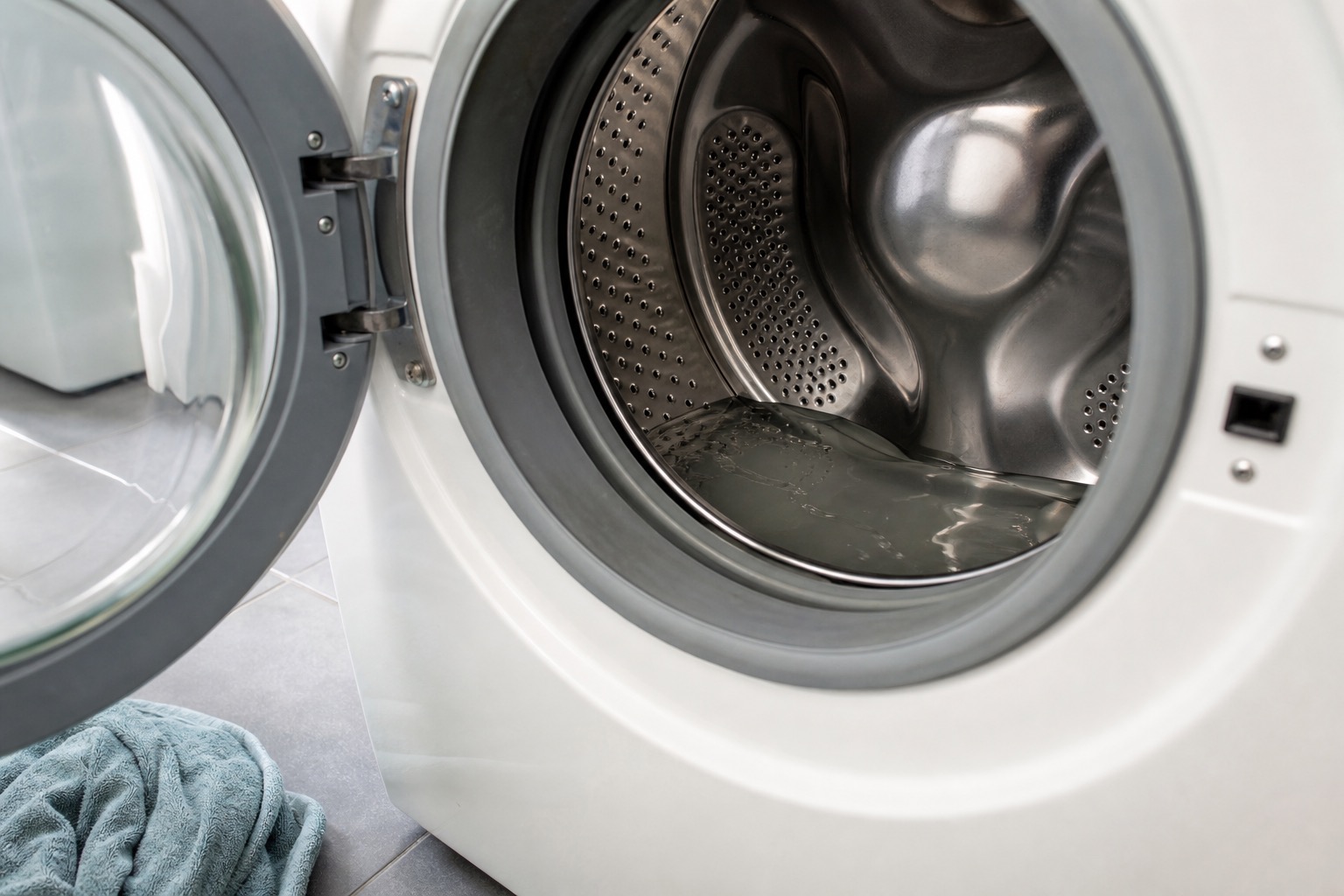
What Does a Washer Drain Problem Look Like?
A washer may have a drainage problem when:
- Water remains inside after the cycle.
- Clothes are soaking wet.
- The washer stops before the spin cycle.
- The display shows a drain-related error code.
- The drain pump hums but no water leaves.
- Water drains very slowly.
- The washer repeatedly adds time to the cycle.
- The door remains locked.
- The machine shuts down with water inside.
- Water returns to the tub after draining.
These symptoms can point to different causes, so it is helpful to note exactly when the problem occurs.
If water is escaping onto the floor, stop use and address the leak before attempting another drain cycle.
Washer leaking water: safe steps and timing clues
Tub drained but clothes stayed wet? Check the cycle and spin setting
Is the Washer Not Draining or Not Spinning?
Drain and spin problems often appear together, but they are not the same.
A washer may refuse to spin when it detects water still inside the tub. In that case, the drainage problem must be corrected first.
A washer may also drain normally but fail to spin because of:
- Lid switch failure.
- Door lock problem.
- Motor issue.
- Belt failure.
- Suspension problem.
- Unbalanced load.
- Control board malfunction.
Listen for the sound of water moving through the drain hose before deciding which system has failed.
1. The Drain Hose Is Kinked or Crushed
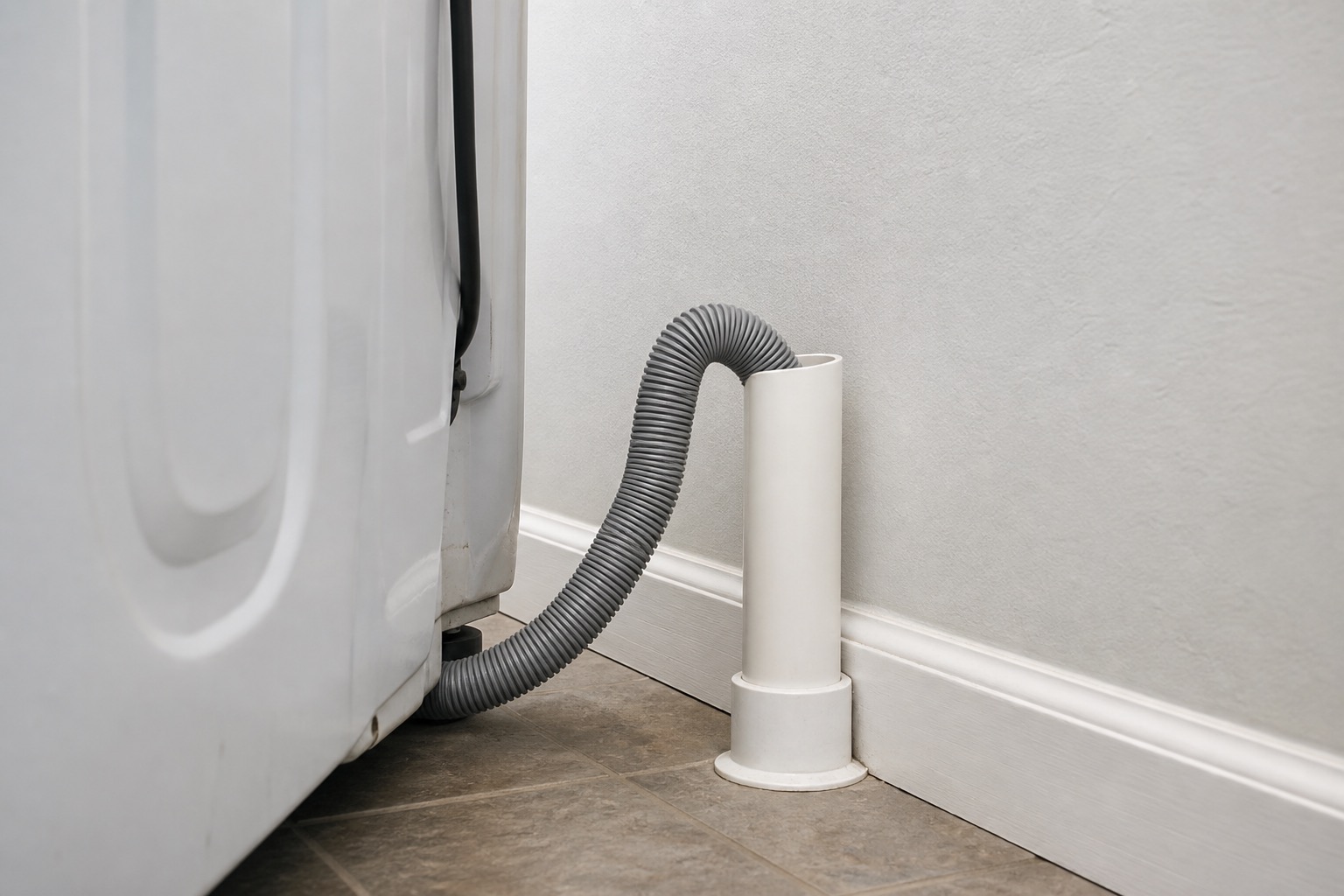
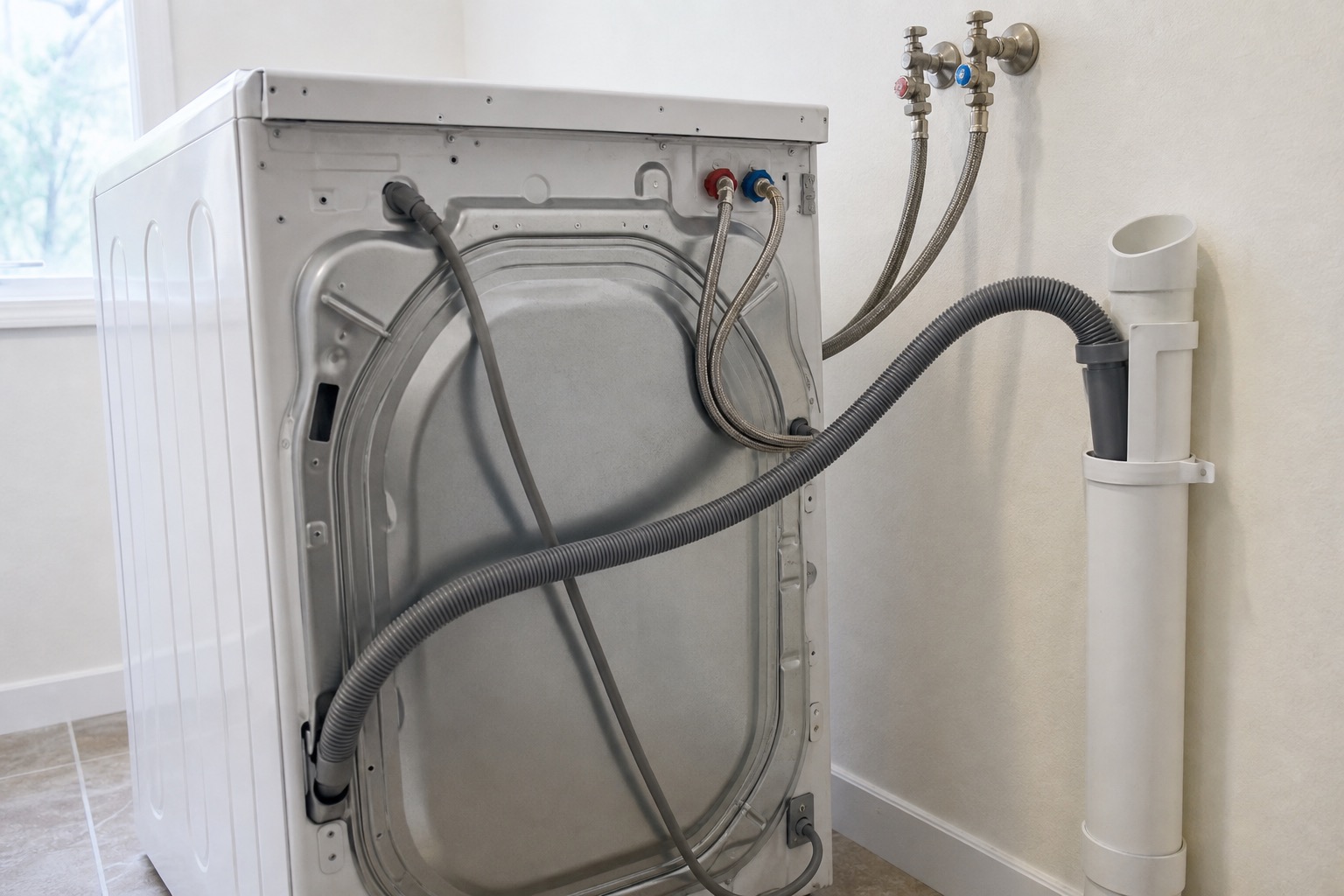
The drain hose carries water from the washer to the standpipe, utility sink, or household drain.
If the hose is kinked, crushed, or pinched behind the machine, water may drain slowly or not at all.
Check for:
- Sharp bends.
- Hose trapped between the washer and wall.
- Washer pushed too far backward.
- Damaged or collapsed hose.
- Hose twisted during installation.
- Heavy objects resting on the hose.
Carefully pull the washer forward only if it can be moved safely.
Do not pull aggressively because the water hoses, drain hose, and power cord may be short.
2. The Drain Hose Is Installed Incorrectly
A drain hose positioned too high, too low, or too far into the standpipe can cause drainage problems.
Possible installation issues include:
- Hose inserted too deeply into the standpipe.
- Airtight seal around the drain hose.
- Hose outlet higher than the washer allows.
- Hose lying flat on the floor.
- Missing support bracket.
- Standpipe too narrow.
- Improper connection to a sink drain.
If the hose is inserted too deeply, it may create a siphoning or airflow problem.
If the hose is too low, water may drain out while the washer is filling.
Follow the installation requirements for the specific washer model.
3. The Drain Hose Is Clogged
Small clothing items, lint, coins, pet hair, detergent residue, or other debris can block the drain hose.
A partial blockage may cause:
- Slow draining.
- Cycle taking too long.
- Pump running for several minutes.
- Water remaining at the bottom.
- Drain error code.
- Water returning after the cycle.
A complete blockage may prevent any water from leaving.
The hose may need to be disconnected and inspected. Water can spill suddenly, so this should be done carefully with towels and a container available.
Disconnect power before removing hoses or panels.
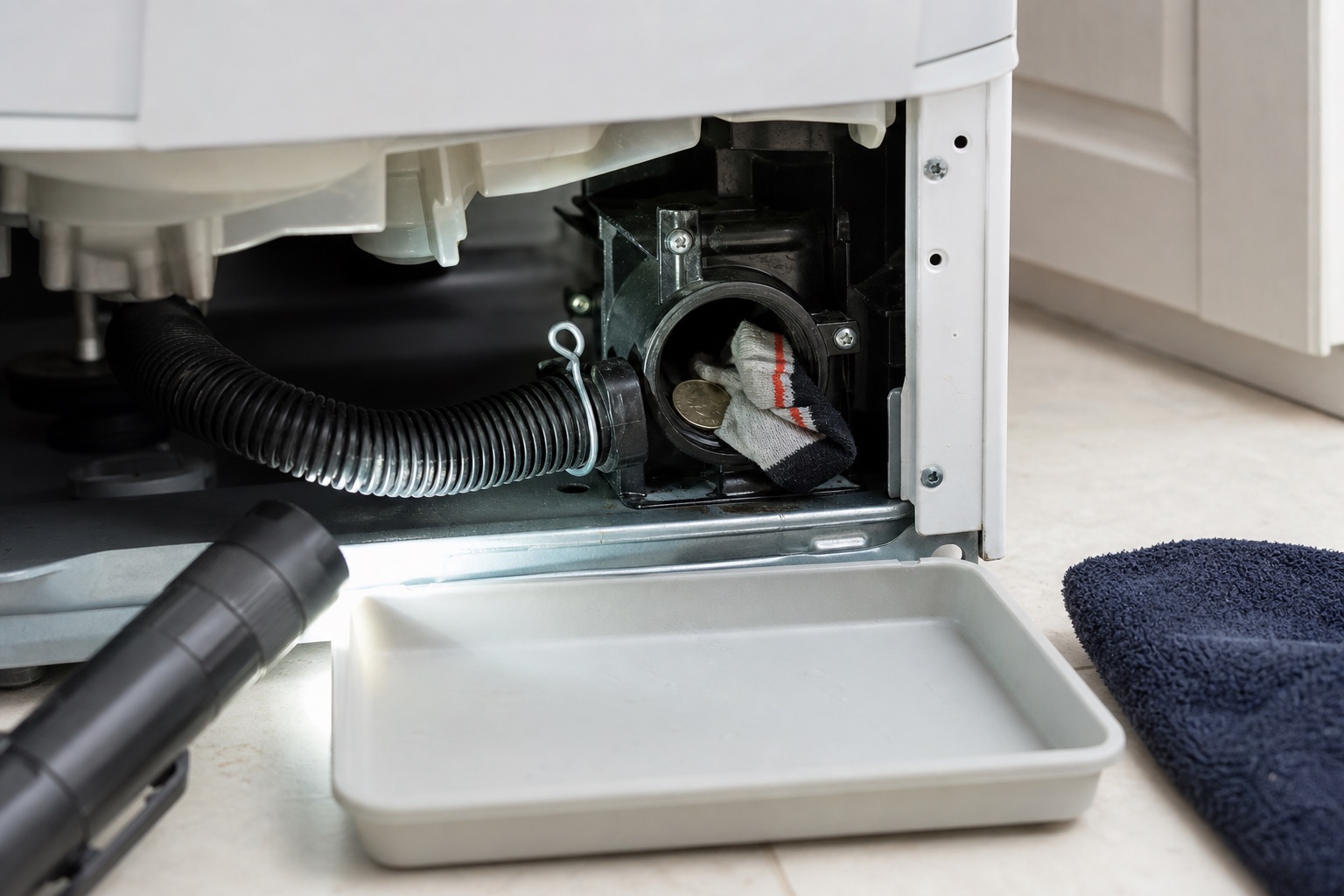
4. The Pump Filter Is Clogged
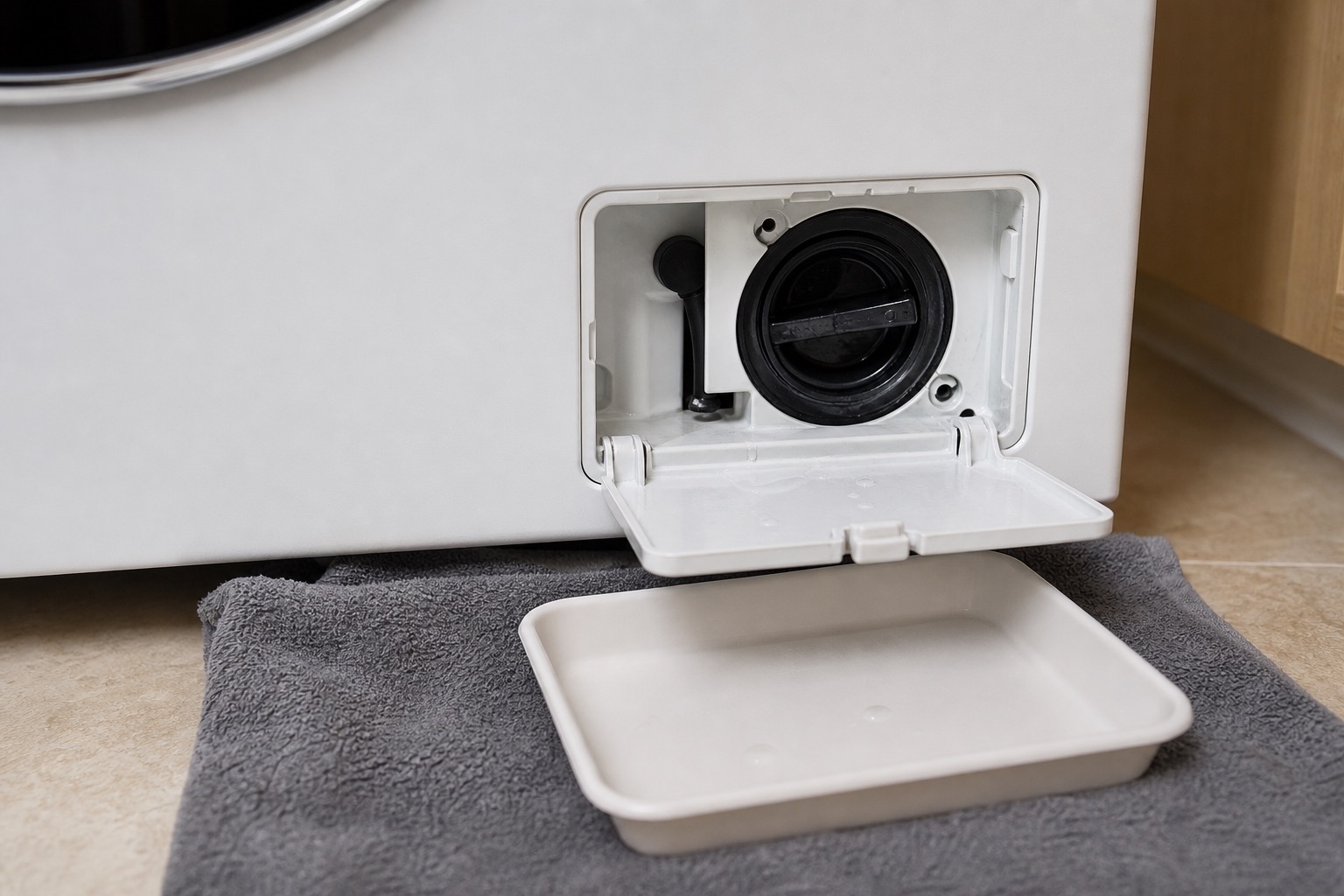
Many front-load washers and some top-load models have a drain-pump filter.
The filter catches objects before they reach the pump.
Common items found in washer filters include:
- Coins.
- Hair pins.
- Small socks.
- Bra wires.
- Buttons.
- Pet hair.
- Lint.
- Paper.
- Screws.
- Plastic pieces.
A clogged filter may cause:
- Washer not draining.
- Pump humming.
- Slow drainage.
- Error code.
- Water under the washer.
- Door remaining locked.
- Unpleasant odor.
Before opening the filter, prepare for water to drain out.
Some washers have a small emergency drain tube near the filter. Use it according to the manufacturer’s instructions.
Do not remove the filter while the washer is full unless you are prepared to control a large amount of water.
5. A Foreign Object Is Blocking the Drain Pump
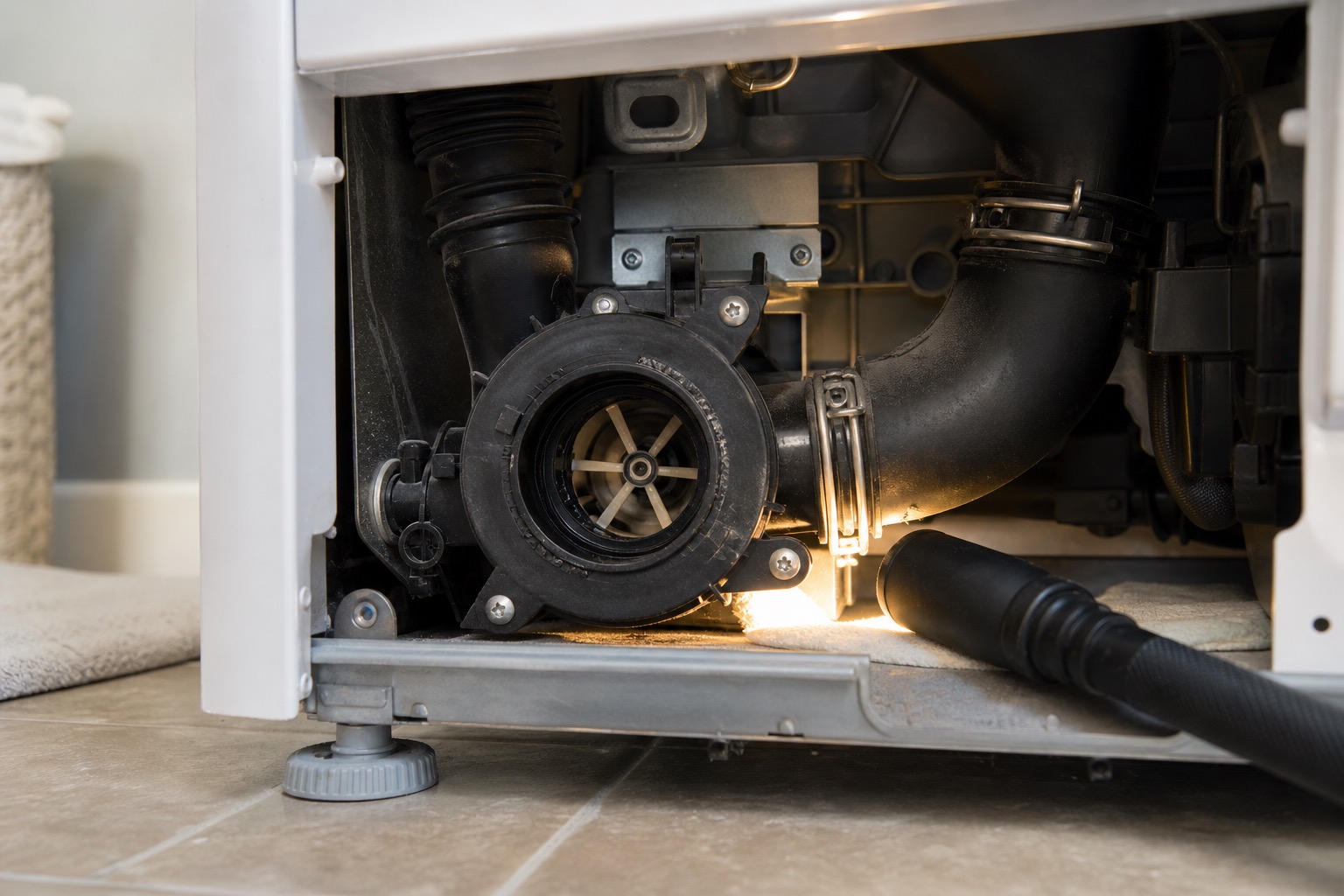
Even when the filter is clear, an object may be lodged inside the pump housing or impeller.
Possible obstructions include:
- Coin.
- Button.
- Fabric.
- Sock.
- Wire.
- Piece of plastic.
- Hair tie.
- Debris from a damaged garment.
Common symptoms include:
- Pump humming loudly.
- Clicking or grinding during drain.
- Water moving only slightly.
- Pump stopping and restarting.
- Drain error returning.
- Washer draining intermittently.
The pump impeller should rotate with normal resistance, but it should not be loose, broken, or completely jammed.
Access to the pump may require removal of a front, rear, or lower panel.
6. The Drain Pump Has Failed
The drain pump moves water out of the washer.
It may fail electrically or mechanically.
Possible symptoms include:
- No pump sound during drain.
- Pump receives power but does not run.
- Loud humming without water movement.
- Grinding or rattling.
- Intermittent drainage.
- Water leaking from the pump housing.
- Drain error code.
- Washer stopping before spin.
A pump can fail because of:
- Age.
- Repeated blockage.
- Internal motor failure.
- Broken impeller.
- Water entering the motor.
- Overheating.
- Electrical damage.
The pump should be tested before replacement. A blocked hose or control problem can produce similar symptoms.
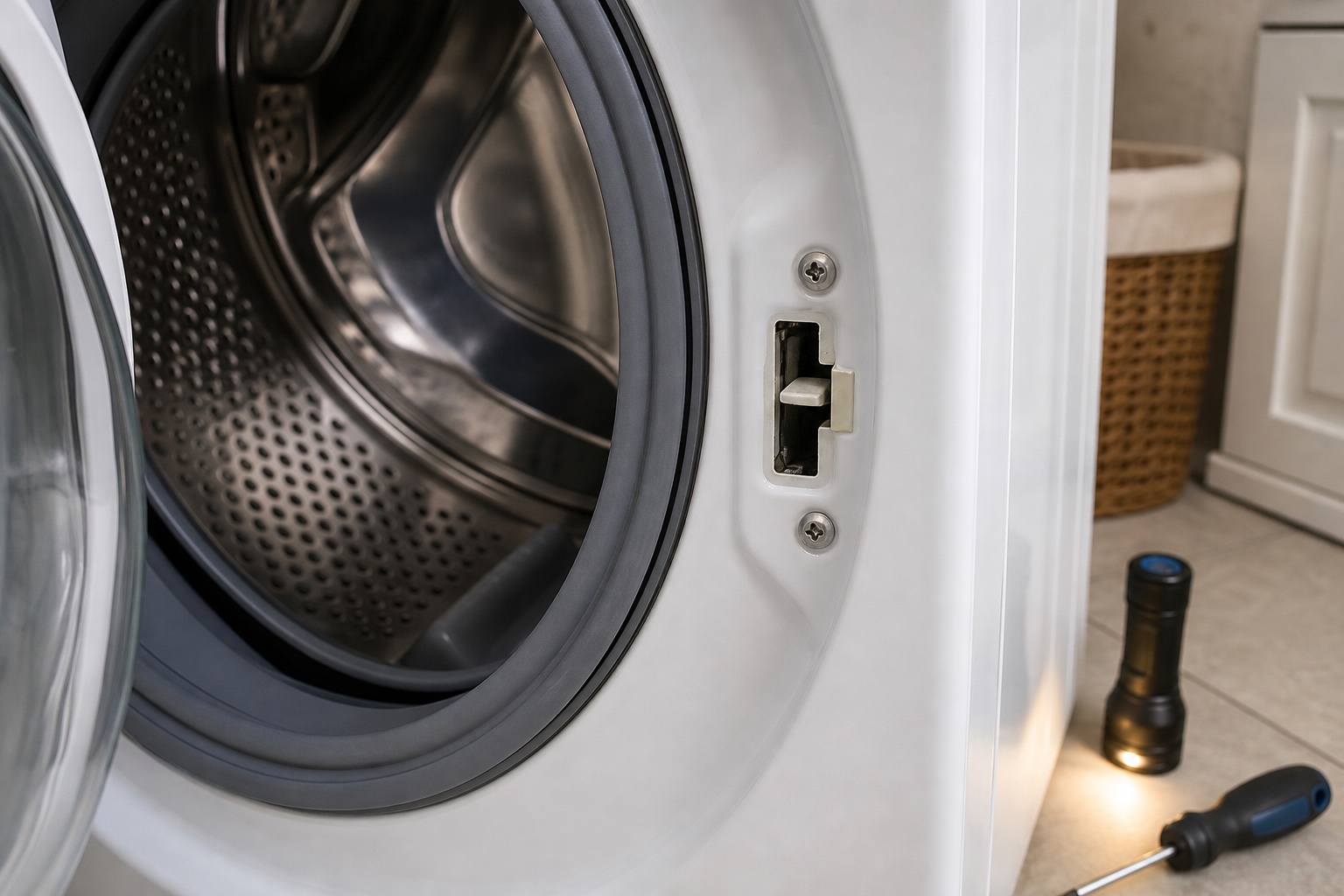
7. The Lid Switch or Door Lock Is Faulty
A washer may refuse to drain or spin if it cannot confirm that the lid or door is safely closed.
Top-load washers often use a lid switch or lid-lock assembly.
Front-load washers use a door-lock mechanism.
Possible symptoms include:
- Washer stops with water inside.
- Lid-lock light flashes.
- Door-lock error appears.
- No spin cycle.
- Door remains unlocked when the cycle begins.
- Washer clicks repeatedly.
- Machine works only when pressure is applied to the lid.
- Cycle starts but stops before draining or spinning.
The switch, lock, wiring, and control signal should be tested.
Do not bypass a lid switch or door lock. It is an important safety device.
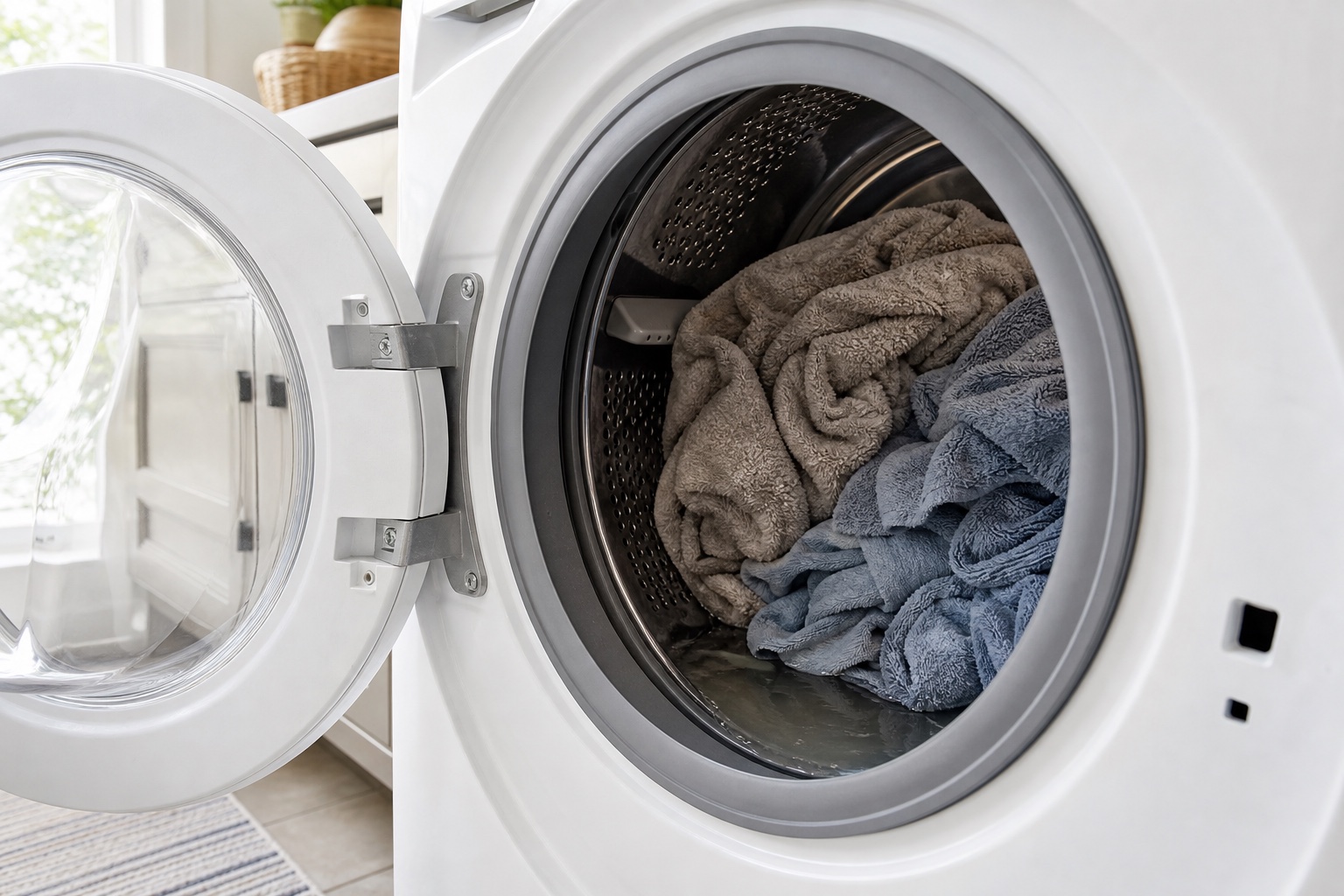
8. The Load Is Unbalanced
Some washers pause or stop the drain-and-spin cycle when the load becomes severely unbalanced.
This is common with:
- Blankets.
- Towels.
- Rugs.
- Heavy clothing.
- One large item.
- Waterproof materials.
- Small loads that gather on one side.
The washer may:
- Add time repeatedly.
- Refill with water.
- Stop before spinning.
- Leave clothes wet.
- Display an unbalanced-load error.
- Bang against the cabinet.
Pause the cycle and redistribute the load evenly.
Do not wash items that the manufacturer identifies as unsuitable for the machine.
9. The Washer Is Overloaded
An overloaded washer may not distribute the load correctly.
This can prevent proper spinning and leave too much water inside the clothes or tub.
Signs of overloading include:
- Drum packed tightly.
- Clothes barely moving.
- Washer shaking.
- Cycle taking longer than normal.
- Clothes remaining soaked.
- Drain and spin repeating.
- Error code.
Remove some items and run a drain-and-spin cycle.
Clothes should have room to move freely.
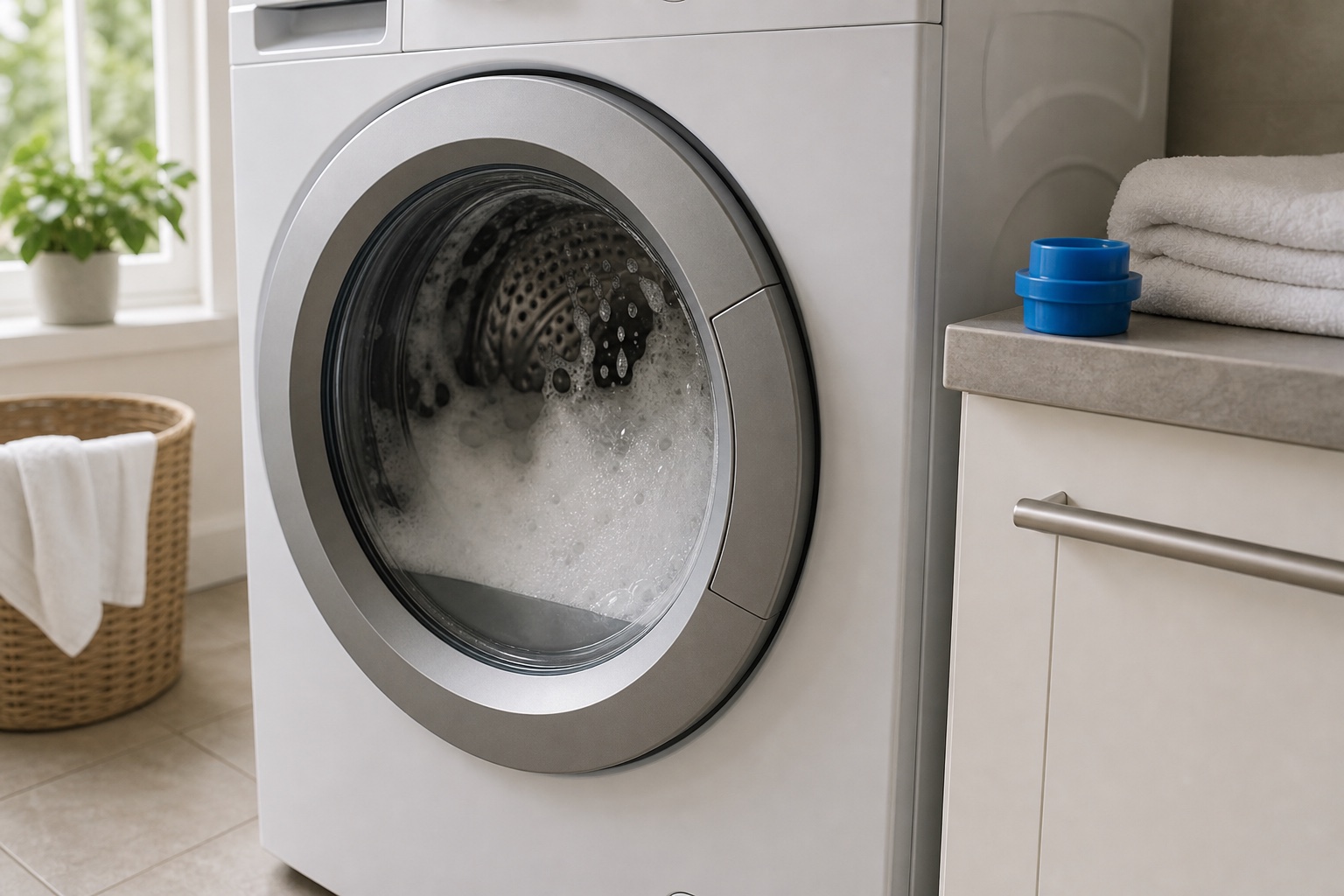
10. Excessive Detergent Is Creating Too Many Suds
Using too much detergent can produce excessive foam.
The washer may have difficulty sensing the water level or completing the drain cycle.
High-efficiency washers require HE detergent in the correct amount.
Too many suds may cause:
- Slow draining.
- Extended cycle time.
- Repeated rinses.
- Water remaining in the tub.
- Suds error.
- Door staying locked.
- Pump running longer than normal.
Use less detergent, especially with:
- Soft water.
- Small loads.
- Concentrated detergent.
- Lightly soiled clothing.
Running an empty rinse cycle may help remove residual detergent.
11. The Pressure Switch or Water-Level Sensor Is Faulty
The washer uses a pressure sensor to determine how much water is inside the tub.
If the sensor incorrectly reports that the washer is empty or full, the control system may operate the drain pump incorrectly.
Possible symptoms include:
- Washer not draining.
- Washer draining continuously.
- Washer overfilling.
- Cycle stopping unexpectedly.
- Incorrect water level.
- Door remaining locked.
- Error code.
- Pump operating when no water is present.
The problem may involve:
- Faulty pressure switch.
- Blocked pressure hose.
- Loose air tube.
- Damaged wiring.
- Control board issue.
The pressure hose should be checked for blockage, cracks, and secure connections.
12. The Pressure Hose Is Blocked
The small air hose connected to the pressure sensor can become blocked by:
- Detergent residue.
- Fabric softener.
- Dirt.
- Water.
- Mold.
- Debris from the tub.
A blocked hose may send incorrect water-level information.
This can cause:
- Drain cycle not starting.
- Pump running too long.
- Washer overfilling.
- Washer stopping before spin.
- Incorrect error codes.
The hose should be inspected carefully and replaced if damaged.
13. The Control Board Is Not Activating the Pump
The electronic control board sends power to the drain pump.
A failed relay, damaged circuit, or software error may prevent the pump from operating.
Possible signs include:
- Pump and hoses test correctly.
- No voltage reaches the pump during drain.
- Washer behaves unpredictably.
- Drain works only after unplugging the washer.
- Error codes appear.
- Multiple functions fail.
- Display resets.
- Cycle freezes at the same point.
The board should not be replaced until the pump, wiring, sensors, door lock, and power supply have been checked.
14. The Timer Is Faulty
Some older washers use a mechanical timer rather than a fully electronic control board.
Worn or burned timer contacts may prevent the drain pump from receiving power.
Possible symptoms include:
- Washer stops at the drain portion.
- Timer does not advance.
- Drain works only on certain cycles.
- Manually moving the timer changes operation.
- Motor runs but pump does not activate.
The timer should be tested according to the wiring diagram.
15. Wiring or a Connector Is Damaged
The drain pump, door lock, pressure sensor, and control board depend on secure electrical connections.
A loose, burned, or corroded connector may interrupt the drain circuit.
Possible causes include:
- Vibration.
- Moisture.
- Previous repair.
- Rodent or insect damage.
- Overheating.
- Corrosion.
- Loose harness.
Signs may include:
- Intermittent draining.
- Burning smell.
- Error codes.
- Pump working when the washer is moved.
- Visible discoloration.
- Melted connector.
Damaged wiring should be repaired correctly, not twisted together temporarily.
16. A Small Item Is Trapped Between the Tubs
A sock, fabric item, or foreign object may pass between the inner basket and outer tub.
It can then block:
- Sump hose.
- Drain pump inlet.
- Recirculation system.
- Drain opening.
Possible symptoms include:
- Washer hums but does not drain.
- Grinding during agitation.
- Water leaks.
- Object visible through a tub opening.
- Drain problem begins after washing small items.
Retrieving the object may require partial disassembly.
Using a mesh laundry bag for small items can help prevent this problem.
17. The Sump Hose Is Blocked
The sump hose connects the tub to the drain pump.
It may become clogged by:
- Socks.
- Lint.
- Coins.
- Detergent buildup.
- Fabric.
- Debris.
- Internal check ball.
A blocked sump hose may cause:
- Pump running with no water movement.
- Slow drainage.
- Water remaining after filter cleaning.
- Repeated drain errors.
- Unusual gurgling.
The hose may need to be removed and cleaned.
Because it can hold a large amount of water, proper preparation is important.
18. The Check Valve Is Stuck
Some washers use a check valve or check ball in the drain system.
Its purpose is to prevent water from flowing backward.
If it becomes stuck, water may:
- Drain slowly.
- Return to the tub.
- Remain in the pump housing.
- Cause repeated drain errors.
- Create unusual gurgling sounds.
The valve may be blocked by debris or detergent buildup.
19. The Household Drain Is Clogged
The washer may drain correctly while the home’s standpipe or plumbing is blocked.
Signs include:
- Water backing up from the standpipe.
- Water spilling onto the floor.
- Gurgling from nearby drains.
- Slow sink drainage.
- Washer drains for a moment and then overflows.
- Sewer odor.
If water exits the washer hose strongly but the standpipe overflows, the household drain may need plumbing service.
Do not continue running the washer if the standpipe is overflowing.
20. The Drain Hose Is Creating a Siphon
A drain hose installed too low or sealed too tightly may cause water to siphon out or return unexpectedly. If water leaves as the washer fills, use the washer fills then drains immediately guide to distinguish that symptom from water left behind at the end of a cycle.
Possible symptoms include:
- Washer fills and drains at the same time.
- Water never reaches the correct level.
- Cycle takes too long.
- Washer repeatedly adds water.
- Water remains after the cycle.
- Unusual gurgling.
The hose must have the correct height and an air gap around it.
Follow the installation instructions for the washer model.
21. The Washer Has Entered Flood-Protection Mode
Some washers stop normal operation and activate the pump when they detect water in the base.
Possible causes include:
- Internal leak.
- Too much detergent.
- Overflow.
- Damaged hose.
- Pump leak.
- Door-gasket leak.
- Water-level sensor failure.
The washer may:
- Run the drain pump continuously.
- Refuse to start.
- Display a leak or flood error.
- Keep the door locked.
- Stop responding to controls.
The source of the water must be found before the error can be resolved.
22. The Washer Needs a Power Reset
A temporary control error may prevent the cycle from advancing.
A basic reset may help:
- Disconnect the washer from power.
- Wait approximately five minutes.
- Reconnect power.
- Select Drain and Spin.
- Observe whether the pump starts.
A reset is not a repair if the problem returns.
Repeated control lockups may indicate a faulty component, wiring issue, or control-board problem.
23. The Washer Is Not Receiving Stable Power
Low voltage, a loose outlet, or an interrupted circuit may stop the washer during the drain cycle.
Check for:
- Partially tripped breaker.
- Loose power plug.
- Damaged outlet.
- Extension cord.
- GFCI trip.
- Display resetting.
- Washer losing power under load.
The washer should be connected directly to a properly grounded outlet.
Do not use a damaged or overheating receptacle.
What Can You Safely Check?
Before scheduling service, you can:
- Select a Drain and Spin cycle.
- Redistribute an unbalanced load.
- Remove some clothing if the washer is overloaded.
- Check the drain hose for kinks or crushing.
- Confirm that the hose is installed at the correct height.
- Inspect the standpipe for overflow.
- Clean the pump filter if the model provides safe access.
- Use the emergency drain tube if available.
- Reduce detergent use.
- Record any error code.
- Listen for humming, grinding, or pump operation.
- Check whether water returns after draining.
- Reset the washer once by disconnecting power.
- Stop the machine if water is leaking onto electrical components.
Do not tip or move a washer full of water without proper equipment.
Do not remove electrical panels while the washer is connected to power.
How Can You Remove Water From a Washer That Will Not Drain?
Possible safe methods depend on the model.
Front-load washer
Some models have:
- Emergency drain tube.
- Pump-filter access door.
- Low drain point near the front.
Prepare:
- Towels.
- Shallow container.
- Wet vacuum if available.
Drain the water slowly to avoid flooding.
Top-load washer
Possible options include:
- Selecting Drain and Spin.
- Lowering the drain hose into a safe container if the installation permits.
- Using a wet vacuum at the drain hose.
- Removing water manually with a container.
Do not lay the washer on its side while it is full of water.
If the door or lid is locked, do not force it open. The washer door locked guide explains what to record about standing water, cycle temperature, and lock messages before arranging service.
When Should You Stop Using the Washer?
Stop the washer and disconnect power when:
- Water is leaking onto the floor.
- The pump smells burned.
- The machine makes loud grinding noises.
- The outlet or cord becomes hot.
- The breaker repeatedly trips.
- Water reaches electrical components.
- The washer continues filling without stopping.
- The drain pump runs continuously while the machine is off.
- The standpipe overflows.
Turn off the household water valves if the washer is also filling uncontrollably.
When Should You Call a Washer Technician?
Professional diagnosis is recommended when:
- Water remains after cleaning the filter.
- The drain pump hums but does not move water.
- The pump makes grinding or rattling sounds.
- The washer displays a recurring drain error.
- The door remains locked with water inside.
- The drain hose and standpipe are clear.
- The washer stops before every spin cycle.
- Water returns to the tub.
- The pump does not receive power.
- The washer leaks during draining.
- The problem returns after a reset.
- Wiring or connectors show damage.
A technician can test the drain pump, sump hose, pressure sensor, door lock, lid switch, wiring, timer, control board, and household-drain interaction.
Should You Repair or Replace the Washer?
Repair is often reasonable when the problem involves:
- Clogged filter.
- Blocked hose.
- Drain pump.
- Door lock.
- Lid switch.
- Pressure sensor.
- Wiring connection.
- Control relay.
- Sump hose.
Replacement may be more practical when:
- The washer has severe tub or bearing damage.
- Multiple expensive components have failed.
- The cabinet has extensive corrosion.
- Critical parts are discontinued.
- The machine has repeated electrical failures.
- Repair cost approaches the value of a replacement washer.
A full diagnosis should be completed before making the decision.
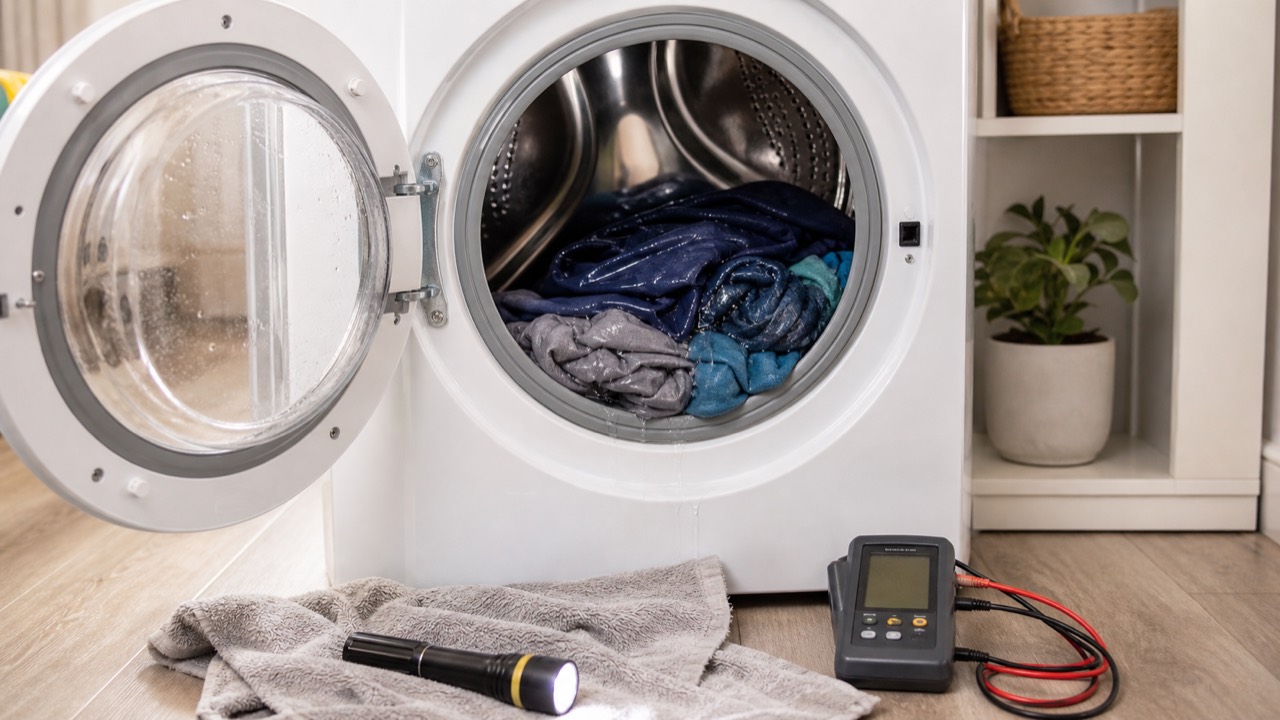
Photo guide
Diagnostic Photos
Local Washer Service
Relevant local service pages include washer repair in Cape Coral, Fort Myers, North Fort Myers washer repair, and Lehigh Acres washer repair. We also serve surrounding Southwest Florida service areas.
For scheduling, use the Contact page or call/text Art’s Appliance Repair directly.
Related Appliance Guides
Washer
Washer Stops in the Middle of a Cycle: Common Causes
Washer stopping mid-cycle? Learn the common drain, lock, motor, sensor, water-supply, and control problems and when to schedule washer repair.
Updated August 6, 2026
washer stops in the middle of a cycle
Washer
Washer Not Spinning: What Could Be Wrong?
Washer not spinning or clothes still wet? Check cycle settings, drainage and load balance, then know what to share for washer repair in Cape Coral or Fort Myers.
Updated September 21, 2026
washer not spinning
Dryer
Dryer Takes Two Cycles to Dry: Airflow, Heat, and Vent Clues
If a dryer takes two cycles, compare the load, washer spin, heat and outside airflow. Learn when the dryer needs service and when the home vent needs attention.
Updated September 26, 2026
dryer takes two cycles to dry clothesNeed service?
Washer Repair in Cape Coral, Fort Myers and Southwest Florida
Art’s Appliance Repair provides washer diagnostics and repair throughout Cape Coral, Fort Myers, North Fort Myers, Lehigh Acres, Estero, Bonita Springs, Naples, and surrounding Southwest Florida communities.
We diagnose washer problems including:
- Washer not draining.
- Water remaining in the tub.
- Clothes left soaking wet.
- Failed drain pumps.
- Clogged pump filters.
- Blocked drain hoses.
- Door-lock and lid-switch problems.
- Washer not spinning.
- Drain error codes.
- Washer leaking during drain.
- Control-board and sensor problems.
- Washer stopping in the middle of a cycle.
Call or text (239) 688-9955 to schedule washer service.
The service call is $0 when the diagnosed repair is approved and completed. If no repair is completed, the diagnostic service call is $79.
View Washer Repair