Is the Washer Not Spinning or Not Draining?
A washer usually will not begin high-speed spin while it still detects water in the tub.
Before diagnosing the spin system, determine whether the machine drains correctly.
Signs of a drainage problem include:
- Water remains in the tub.
- The drain pump hums.
- Clothes are sitting in visible water.
- A drain-related error code appears.
- The washer stops before spin.
- The cycle repeatedly adds time.
If water remains inside, read the related guide:
Washer Not Draining: 7 Common Causes
If the washer drains completely but the basket still does not spin, continue with the checks below.
What Does a Spin Problem Look Like?
A washer may have a spin problem when:
- Clothes remain very wet after the cycle.
- The basket does not move during spin.
- The basket turns slowly but never accelerates.
- The washer repeatedly redistributes the load.
- The cycle stops with an unbalanced-load error.
- The lid-lock light flashes.
- The door remains locked.
- The motor runs but the basket stays still.
- The washer makes grinding, clicking, or banging noises.
- The basket spins by hand but not during the cycle.
Different symptoms point to different components.
Load and Installation Problems
1. The Load Is Unbalanced
An unbalanced load is one of the most common reasons a washer does not complete high-speed spin.
This often happens with:
- Towels.
- Blankets.
- Rugs.
- One large item.
- Heavy work clothing.
- Waterproof materials.
- Small loads collected on one side.
The washer may:
- Stop spinning.
- Refill with water.
- Add time to the cycle.
- Rotate slowly in both directions.
- Display an unbalanced-load error.
- Bang against the cabinet.
Pause the cycle and redistribute the items evenly.
If one heavy item is being washed, add one or two similar items when permitted by the manufacturer.
Do not overload the machine to correct an unbalanced load.
2. The Washer Is Overloaded
An overloaded washer may not be able to distribute or accelerate the basket safely.
Common signs include:
- Basket packed tightly.
- Clothes barely moving.
- Washer shaking.
- Motor straining.
- Cycle taking longer than normal.
- Clothes remaining wet.
- Repeated spin attempts.
Remove some items and run Drain and Spin again.
Clothes should have enough room to move freely.
3. The Washer Is Not Level
A washer that rocks or tilts may stop the spin cycle to protect the machine.
Check whether:
- All four feet contact the floor.
- The washer rocks when pushed.
- One side is lower.
- The floor is weak or uneven.
- Locking nuts on the leveling feet are loose.
- The washer is touching a wall or cabinet.
Adjust the feet according to the manufacturer’s instructions.
A washer must be stable before suspension or control problems are diagnosed.
4. Shipping Bolts Are Still Installed
Front-load washers use shipping bolts to secure the tub during transportation.
If they remain installed, the washer may:
- Shake violently.
- Fail to balance.
- Make loud banging noises.
- Stop before high-speed spin.
- Damage the suspension or tub.
Shipping bolts must be removed before normal operation.
Do not remove bolts unless the washer installation instructions confirm their location and purpose.
Drainage and Water-Level Problems
5. Water Is Still Inside the Washer
The control system may prevent spinning if it detects water in the tub.
Possible causes include:
- Clogged pump filter.
- Blocked drain hose.
- Failed drain pump.
- Obstruction in the sump hose.
- Household drain problem.
- Faulty water-level sensor.
Even a small amount of trapped water may prevent high-speed spin on some models.
Run a Drain and Spin cycle and listen for water leaving through the drain hose.
6. The Pressure Sensor Is Reporting the Wrong Water Level
The pressure sensor tells the control board whether water remains inside.
If it incorrectly reports that the tub is full, the washer may refuse to spin.
Possible symptoms include:
- Washer drains but does not spin.
- Pump continues running after water is gone.
- Incorrect water level.
- Door stays locked.
- Washer stops at the same point.
- Pressure-sensor error code.
The problem may involve:
- Faulty pressure sensor.
- Blocked pressure hose.
- Loose air tube.
- Damaged wiring.
- Control-board problem.
The pressure hose should be inspected for detergent buildup, water, cracks, and secure connections.
7. Excessive Suds Are Interfering With Spin
Using too much detergent can create excessive foam.
The washer may interpret the suds as remaining water and delay high-speed spin.
Possible symptoms include:
- Cycle repeatedly extends.
- Washer adds extra rinses.
- Clothes remain wet.
- Door stays locked.
- Suds error appears.
- Pump runs for a long time.
Use HE detergent when required and reduce the amount, especially with:
- Soft water.
- Small loads.
- Concentrated detergent.
- Lightly soiled clothing.
Lid and Door Safety Problems
8. The Lid Switch Is Faulty
Many top-load washers use a lid switch to confirm that the lid is closed.
If the switch fails, the washer may wash or drain but refuse to spin.
Possible symptoms include:
- Washer stops when spin should begin.
- No motor activity during spin.
- Machine works when pressure is applied to the lid.
- Lid-open error.
- Intermittent operation.
- Broken switch actuator.
The lid switch is a safety device and should not be bypassed.
9. The Lid Lock Is Not Engaging
Newer top-load washers often use an electronic lid-lock assembly.
A faulty lock may cause:
- Lid-lock light flashing.
- Repeated clicking.
- Washer attempting to lock several times.
- No spin cycle.
- Cycle stopping with wet clothes.
- Lid remaining unlocked during operation.
- Error code.
The lock, strike, wiring, and control signal should be tested.
A damaged lid strike may prevent a good lock from engaging.
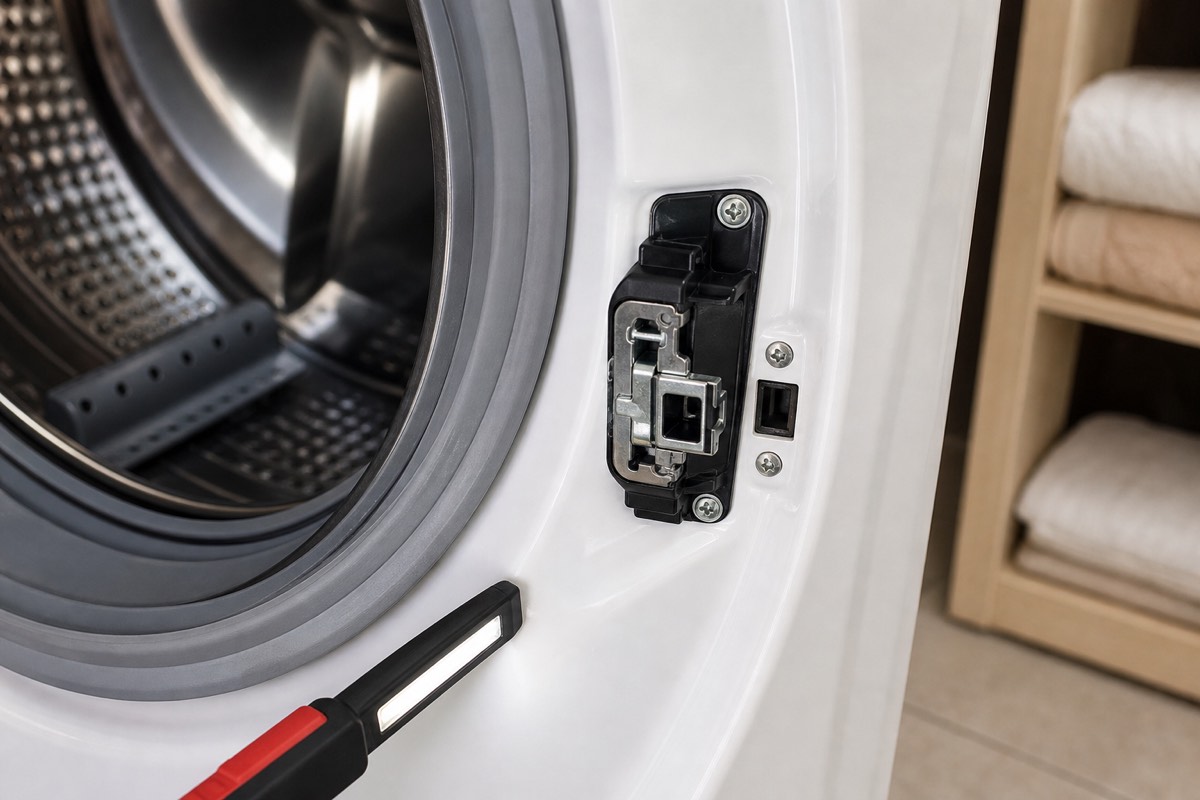
10. The Front-Load Door Lock Is Faulty
A front-load washer will not begin high-speed spin unless the door is securely locked.
Possible symptoms include:
- Door-lock error.
- Washer drains but does not spin.
- Door remains unlocked after starting.
- Repeated clicking.
- Machine works only after pushing the door.
- Door stays locked after the cycle fails.
The problem may involve:
- Door-lock assembly.
- Door strike.
- Wiring.
- Door alignment.
- Control board.
Do not force the door open while water remains inside.
Drive-System Problems
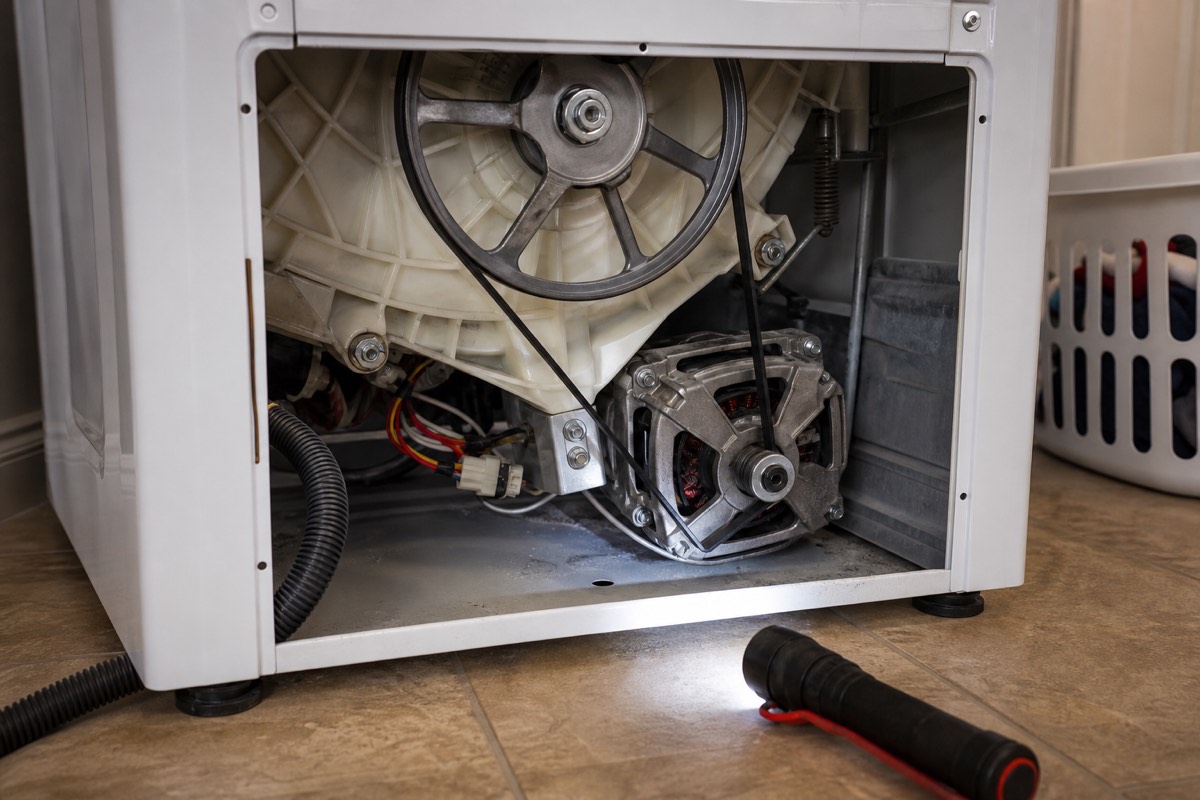
11. The Drive Belt Is Loose or Broken
Many washers use a belt to connect the motor to the basket or transmission.
A damaged belt may cause:
- Motor sound without basket movement.
- Basket turning slowly.
- Burning-rubber smell.
- Belt pieces beneath the washer.
- Spin working intermittently.
- Squealing noise.
The belt should be inspected for:
- Cracks.
- Stretching.
- Glazing.
- Missing sections.
- Oil contamination.
- Incorrect tension.
A belt can fail because another component is binding. The basket, pulleys, bearings, and motor should also be checked.
12. The Drive Pulley Is Loose or Damaged
The drive pulley transfers motion from the belt to the basket or transmission.
Possible symptoms include:
- Basket not spinning.
- Belt repeatedly coming off.
- Scraping or knocking.
- Pulley wobbling.
- Metal dust beneath the washer.
- Spin speed changing.
The pulley bolt, mounting surface, and belt alignment should be inspected.
13. The Motor Coupling Has Failed
Some direct-drive top-load washers use a motor coupling instead of a belt.
The coupling may break to protect the motor and transmission.
Possible symptoms include:
- Washer fills and drains but does not agitate or spin.
- Motor runs.
- Plastic or rubber pieces under the machine.
- Grinding or rattling.
- Basket can be turned by hand.
The coupling and connected shafts should be inspected before replacement.
14. The Shift Actuator Is Faulty
Many modern top-load washers use a shift actuator to change between agitation and spin.
A failed actuator may cause:
- Washer agitates but does not spin.
- Washer spins but does not agitate.
- Clicking under the washer.
- Basket-sensor errors.
- Cycle stopping during transition.
- Machine repeatedly attempting to shift.
The actuator may also include a basket speed or position sensor.
The actuator, splutch, wiring, and control commands should be tested together.
15. The Clutch or Splutch Is Worn
A clutch or splutch transfers motor power to the basket during spin.
Wear may cause:
- Basket turning slowly.
- Washer unable to reach high speed.
- Clothes remaining wet.
- Grinding or clicking.
- Black dust beneath the washer.
- Spin starting only with a light load.
The drive system should be inspected for worn teeth, damaged springs, or slipping surfaces.
16. The Transmission or Gearcase Is Failing
Some washers use a transmission or gearcase to control agitation and spin.
Possible symptoms include:
- Loud grinding.
- Oil leaking underneath.
- Basket not spinning.
- Agitation working but spin failing.
- Excessive play.
- Burning smell.
- Repeated drive-component failures.
A gearcase should not be replaced until the belt, actuator, clutch, motor, and basket have been checked.
Motor and Sensor Problems
17. The Drive Motor Is Failing
A motor may run weakly, overheat, or fail to start under load.
Possible symptoms include:
- Washer hums but does not spin.
- Motor starts with an empty basket but fails with clothes.
- Burning smell.
- Motor stops after several minutes.
- Error code.
- Basket moves in test mode but not during a normal cycle.
- Breaker or internal protector opens.
The motor, wiring, capacitor, control output, and mechanical load should be tested.
18. The Motor Capacitor Is Weak or Failed
Some washers use a capacitor to help the motor start or run.
A weak capacitor may cause:
- Motor humming.
- Basket attempting to move.
- Washer spinning only with a light load.
- Intermittent operation.
- Motor overheating.
- Capacitor-related error.
A capacitor can retain an electrical charge after power is disconnected.
It should be tested and discharged using proper service procedures.
19. The Rotor or Stator Is Damaged
Direct-drive front-load and top-load washers may use a rotor and stator instead of a belt-driven motor.
Possible symptoms include:
- Basket jerking.
- Grinding or knocking.
- Motor-position error.
- Washer unable to accelerate.
- Loose rotor bolt.
- Cracked rotor magnets.
- Burned stator winding.
The rotor, stator, mounting hardware, and sensor should be inspected.
20. The Hall Sensor or Speed Sensor Is Faulty
The control board uses a speed or position sensor to monitor basket movement.
If the sensor fails, the washer may stop spinning because it cannot confirm motor speed.
Possible symptoms include:
- Basket moves briefly and stops.
- Motor-related error code.
- Washer repeatedly attempts to spin.
- Incorrect speed.
- Spin works intermittently.
- Basket moves in one direction only.
The sensor, wiring, motor, and control board should be tested before parts are replaced.
21. The Motor Is Overheating
A motor may stop during spin if its internal overload opens.
Possible causes include:
- Overloaded washer.
- Binding basket.
- Worn bearings.
- Weak capacitor.
- Low voltage.
- Motor failure.
- Drive-system obstruction.
The washer may work again after cooling, but the underlying problem will return.
Suspension and Basket Problems
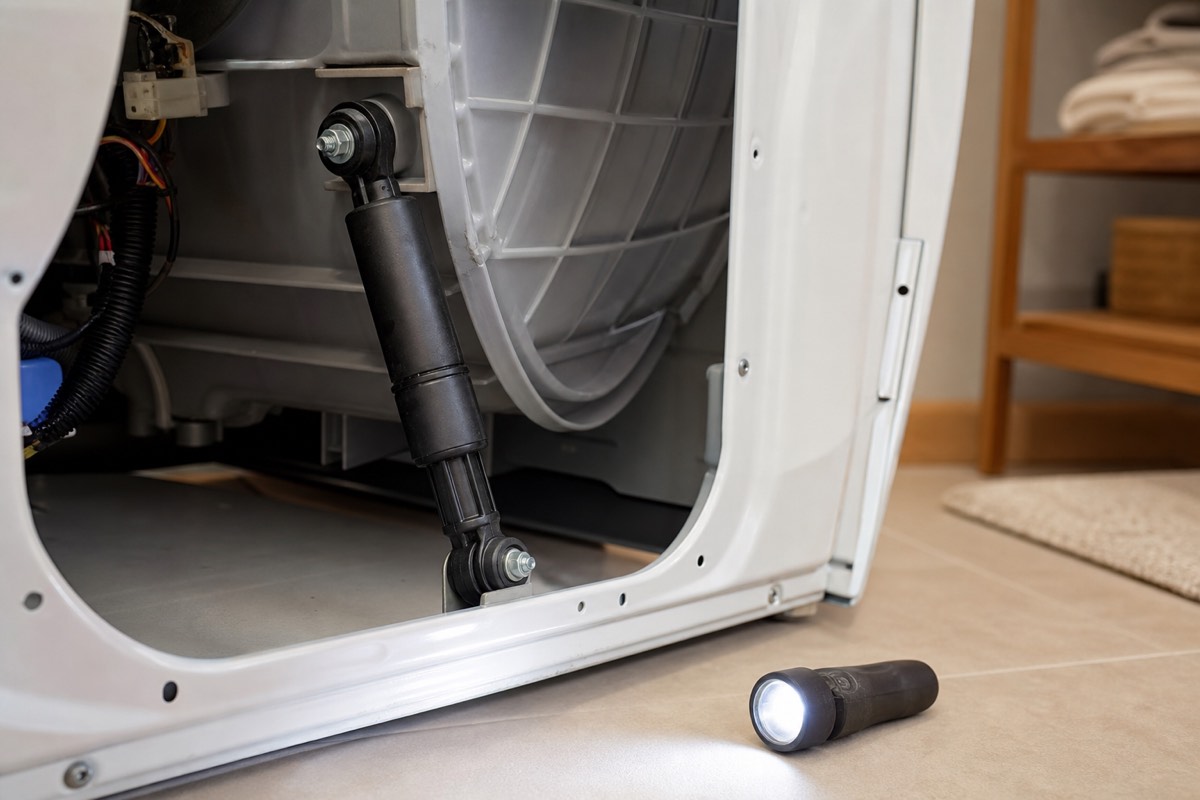
22. The Suspension Is Worn
Suspension rods, shocks, springs, and dampers control tub movement.
Worn suspension can prevent the washer from balancing and reaching full spin speed.
Possible symptoms include:
- Basket bouncing excessively.
- Washer shaking with small loads.
- Tub leaning to one side.
- Repeated redistribution.
- Loud banging.
- Spin stopping.
- Clothes remaining wet.
Suspension parts should be inspected for wear, damage, oil leakage, and proper attachment.
23. The Basket Is Binding
The basket should rotate smoothly by hand when the washer is off and empty.
Binding may be caused by:
- Foreign object.
- Failed bearing.
- Damaged gearcase.
- Clothing trapped between tubs.
- Corrosion.
- Broken basket support.
- Damaged seal.
Possible symptoms include:
- Basket difficult to turn.
- Scraping.
- Grinding.
- Motor humming.
- Belt or coupling failures.
- Washer unable to accelerate.
Disconnect power before checking basket movement.
24. The Tub Bearing Is Worn
A worn bearing may create excessive resistance or noise during spin.
Common symptoms include:
- Roaring noise.
- Grinding.
- Basket movement or play.
- Water leakage near the bearing.
- Rust marks.
- Spin becoming progressively worse.
- Clothes remaining wet.
Bearing replacement may require significant disassembly.
The basket, shaft, seal, and outer tub should be inspected before deciding whether repair is economical.
25. A Small Item Is Trapped Between the Tubs
Coins, bra wires, socks, and other small items may become trapped between the inner basket and outer tub.
This can cause:
- Scraping.
- Basket binding.
- Drain obstruction.
- Intermittent spin.
- Damage to the tub.
- Water leakage.
Removing the object may require partial disassembly.
Use mesh laundry bags for small items when appropriate.
Control and Electrical Problems
26. The Washer Control Needs a Reset
A temporary control error may interrupt the spin sequence.
A basic reset may help:
- Disconnect the washer from power.
- Wait approximately five minutes.
- Restore power.
- Select Drain and Spin.
- Observe whether the washer locks, drains, and spins.
A reset is not a repair if the problem returns.
27. The Main Control Board Is Not Activating Spin
The control board manages:
- Lid or door locking.
- Drain pump.
- Motor direction.
- Spin speed.
- Water-level sensing.
- Balance detection.
A failed relay or electronic circuit may cause:
- Washer draining but not spinning.
- No power sent to the motor.
- Spin working only after reset.
- Multiple error codes.
- Cycle stopping at the same point.
- Motor or lock operating unpredictably.
The board should not be replaced until the lock, pump, motor, sensors, wiring, and drive system have been tested.
28. Wiring or a Connector Is Damaged
A loose, burned, or corroded connection can interrupt the spin circuit.
Possible locations include:
- Lid lock.
- Door lock.
- Motor.
- Actuator.
- Speed sensor.
- Capacitor.
- Control board.
- Pressure sensor.
Signs may include:
- Intermittent spin.
- Burning smell.
- Error codes.
- Washer working when the cabinet or door moves.
- Melted connector.
- Corroded terminals.
Damaged wiring should be repaired correctly, not temporarily twisted together.
29. The Washer Is Not Receiving Stable Power
Low voltage or an interrupted electrical supply may stop the motor during spin.
Check for:
- Partially tripped breaker.
- Loose outlet.
- Extension cord.
- Hot plug.
- Display resetting.
- Washer losing power under load.
- GFCI trip.
The washer should be connected directly to a properly grounded outlet.
What Can You Safely Check?
Before scheduling service, you can:
- Confirm whether water remains inside.
- Run Drain and Spin.
- Redistribute the load.
- Remove some items if the washer is overloaded.
- Make sure the washer is level.
- Check for a lid-lock or door-lock error.
- Listen for the drain pump and motor.
- Note whether the basket attempts to move.
- Check whether the basket turns smoothly by hand while the washer is off and empty.
- Inspect for visible belt pieces or leaking oil underneath.
- Reduce detergent use if excessive suds are present.
- Record any error code.
- Reset the washer once by disconnecting power.
- Stop using the washer if it makes severe grinding noises or leaks water.
Do not bypass the lid switch or door lock.
Do not remove electrical panels while the washer is connected to power.
When Should You Stop Using the Washer?
Stop the washer and disconnect power when:
- The basket makes loud grinding noises.
- The washer moves across the floor.
- Water leaks underneath.
- You smell burning.
- The cord or outlet becomes hot.
- The breaker repeatedly trips.
- The basket is visibly loose.
- The motor hums without movement.
- Metal parts are scraping.
- The washer continues filling without stopping.
Turn off the water-supply valves if the washer is leaking or filling uncontrollably.
When Should You Call a Washer Technician?
Professional diagnosis is recommended when:
- The washer drains but does not spin.
- The lid or door will not lock.
- The basket turns slowly but never reaches high speed.
- The washer repeatedly displays an unbalanced-load error.
- The motor hums or overheats.
- The belt repeatedly comes off.
- The actuator or clutch makes clicking noises.
- The basket is difficult to turn.
- The washer makes a roaring bearing noise.
- A motor, speed-sensor, or control error returns.
- The problem continues after redistributing the load and resetting the washer.
- Wiring or connectors show damage.
A technician can test the drain system, lock assembly, drive belt, actuator, clutch, motor, capacitor, speed sensor, suspension, bearings, wiring, and control board.
Should You Repair or Replace the Washer?
Repair is often reasonable when the problem involves:
- Lid lock.
- Door lock.
- Drive belt.
- Motor coupling.
- Shift actuator.
- Clutch or splutch.
- Capacitor.
- Speed sensor.
- Suspension.
- Wiring connection.
Replacement may be more practical when:
- The outer tub is damaged.
- Bearings and basket support have failed.
- The gearcase and control board both require replacement.
- The cabinet has severe corrosion.
- Critical parts are discontinued.
- Repair cost approaches the value of a replacement washer.
A complete diagnosis should be performed before deciding.
Photo guide
Diagnostic Photos
Local Washer Service
We provide washer repair in Cape Coral and Washer Repair in Fort Myers, along with surrounding Southwest Florida service areas.
For scheduling, use the Contact page or call/text Art’s Appliance Repair directly.
Related Appliance Guides
Washer
Washer Shaking Violently During the Spin Cycle: What It Usually Means
Washer shaking, banging, or walking during spin? Learn how loads, leveling, suspension rods, shocks, bearings, and basket problems cause severe vibration.
Updated August 12, 2026
washer shaking violently during spin cycle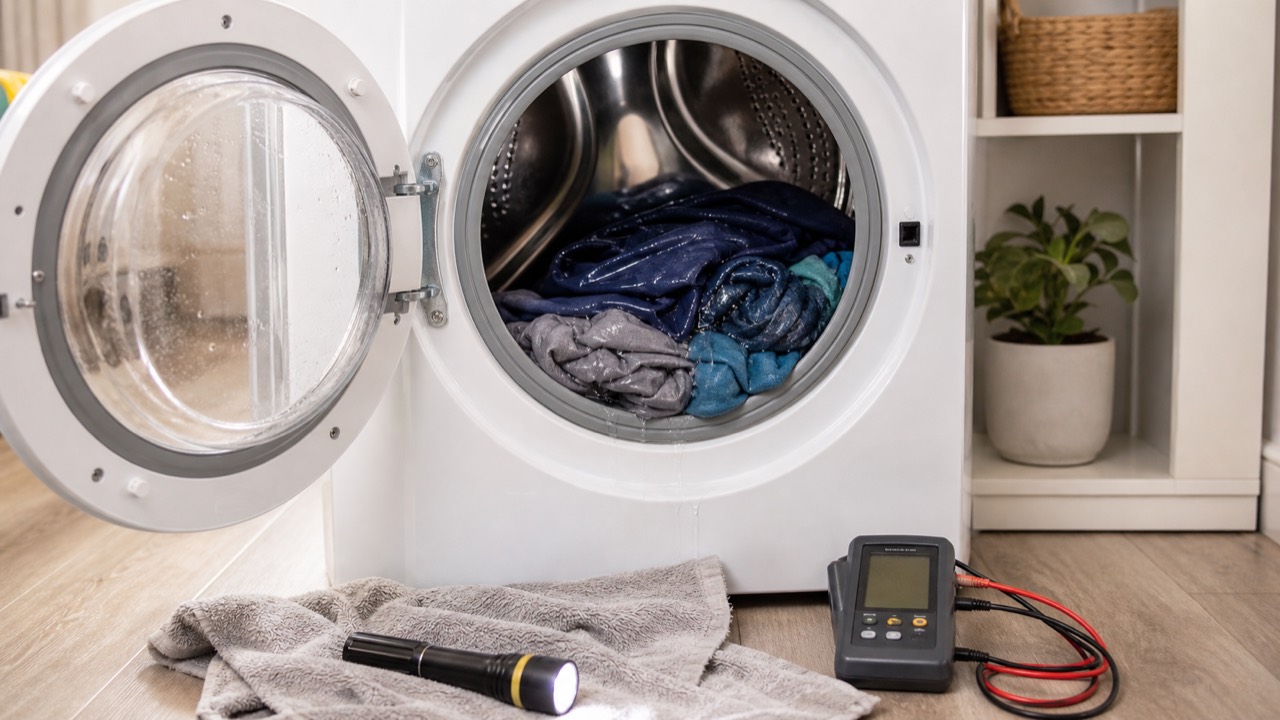
Washer
Washer Stops in the Middle of a Cycle: Common Causes
Washer stopping mid-cycle? Learn the common drain, lock, motor, sensor, water-supply, and control problems and when to schedule washer repair.
Updated August 6, 2026
washer stops in the middle of a cycle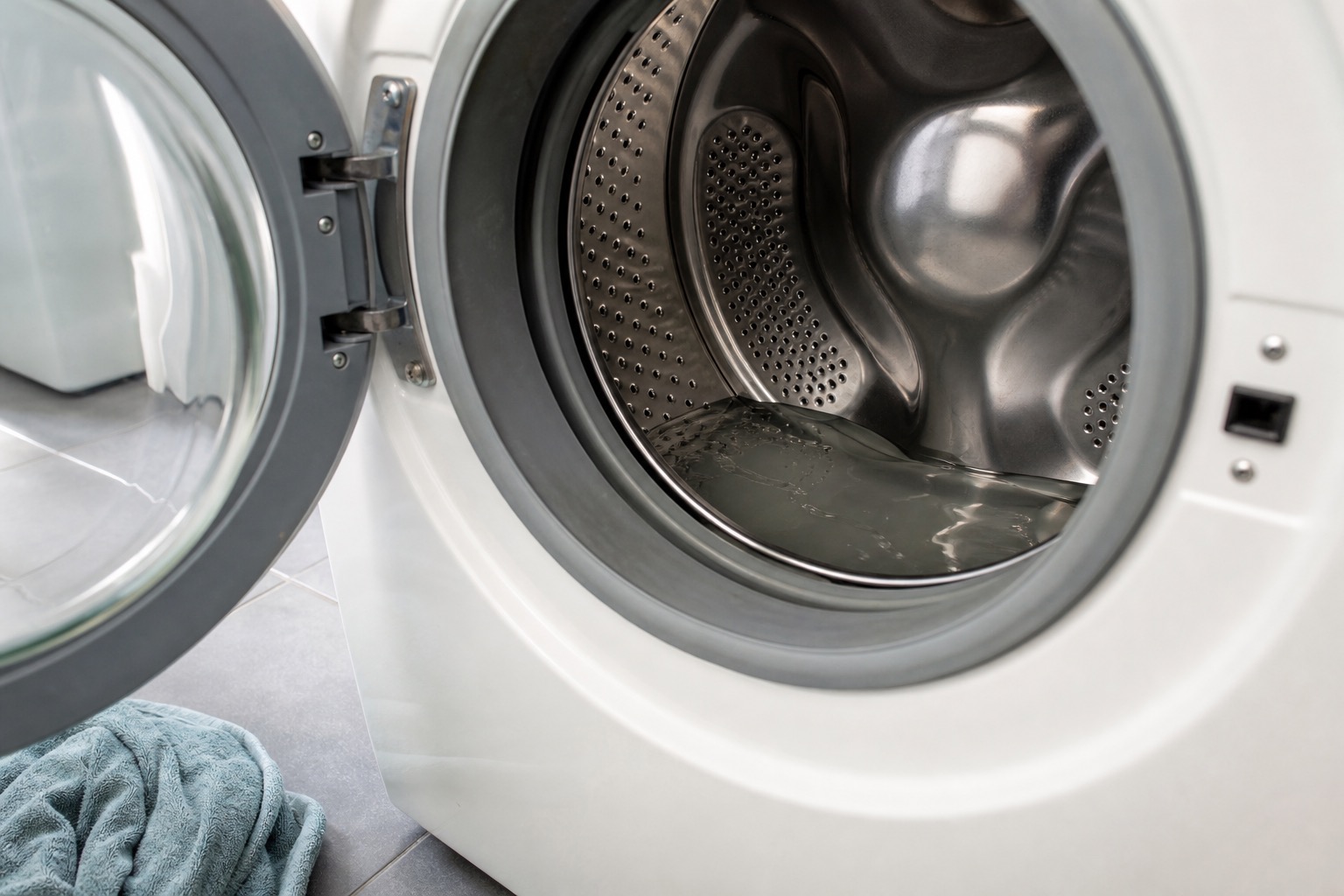
Washer
Washer Not Draining: 7 Common Causes
Washer not draining or leaving water inside? Learn the common causes, safe checks, and when to schedule washer repair in Cape Coral or Fort Myers.
Updated July 25, 2026
Washer Not Draining: 7 Common CausesNeed service?
Washer Repair in Cape Coral, Fort Myers and Southwest Florida
Art’s Appliance Repair provides washer diagnostics and repair throughout Cape Coral, Fort Myers, North Fort Myers, Lehigh Acres, Estero, Bonita Springs, Naples, and surrounding Southwest Florida communities.
We diagnose washer problems including:
- Washer not spinning.
- Washer not draining.
- Clothes remaining soaking wet.
- Lid-lock and door-lock failures.
- Drive belt and actuator problems.
- Clutch and motor failures.
- Washer shaking during spin.
- Suspension problems.
- Speed-sensor errors.
- Bearing and gearcase noise.
- Control-board and wiring problems.
- Washer stopping before completing the cycle.
Call or text (239) 688-9955 to schedule washer service.
Service call: $0 with an approved repair. A $79 diagnostic fee may apply if the repair is declined.
View Washer Repair