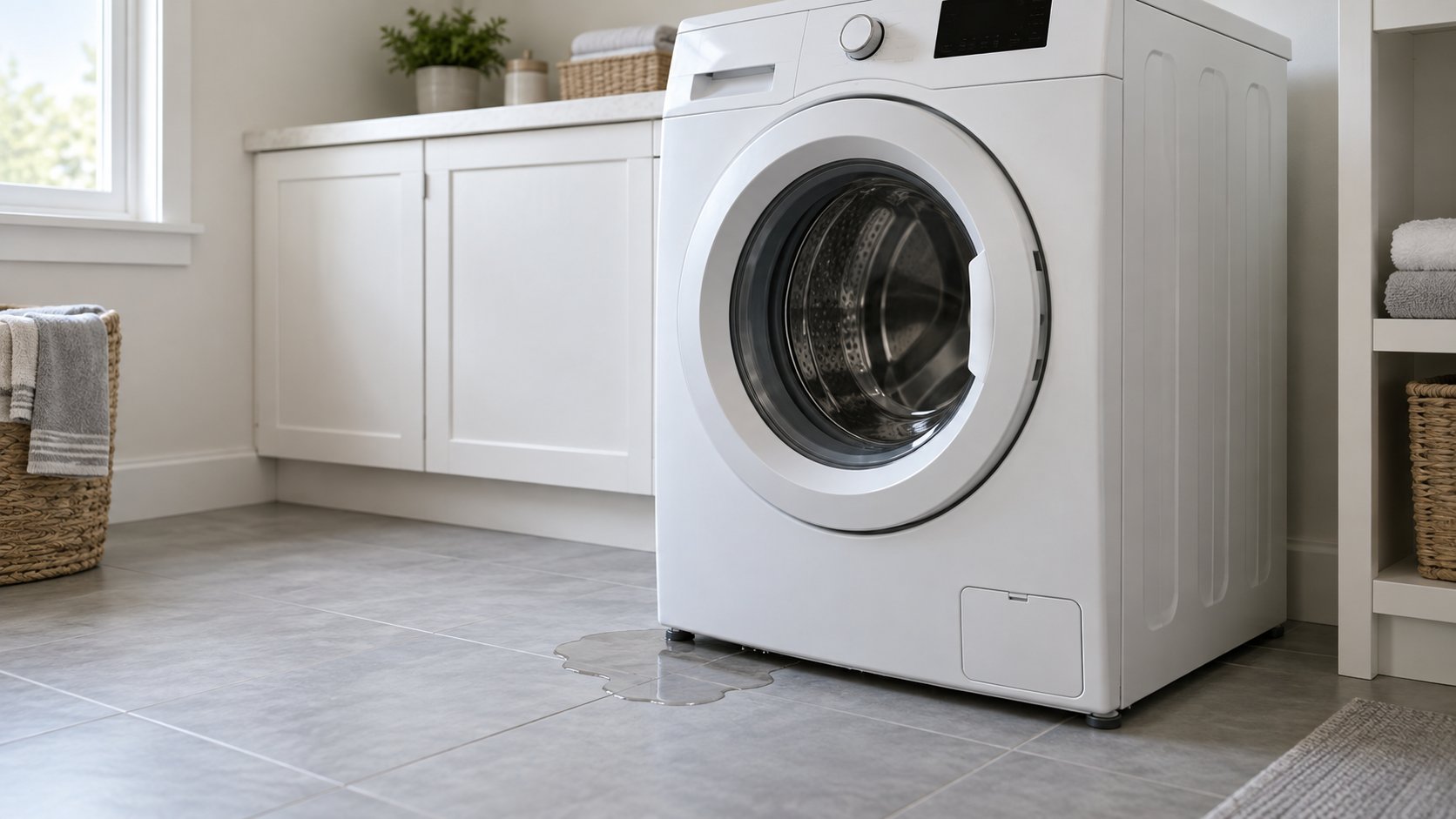
Stop the Leak Before Inspecting the Washer
Whirlpool advises isolating both water and power before troubleshooting. A towel or drain pan can limit a small spill after the area is safe, but it does not make a leaking washer safe to run. Ongoing flooding needs prompt help to control the water before an ordinary repair appointment.
Whirlpool: precautions before investigating a washer leak
Use the Timing as a Clue, Not a Diagnosis
The comparisons below organize what you already noticed. They do not prove which part failed, and you do not need to run another load to fill in missing details.
Water first appeared during filling
Report whether moisture began at an exposed supply connection, the detergent drawer, the door or an unknown point underneath. Whirlpool lists supply-hose connections and damaged hoses among external leak sources. Inspect only what is visible without moving the washer; leave connection repairs to someone who can safely isolate and assess the supply.
Water appeared while washing or rinsing
For a front-loader, note whether the door was closed, clothing was caught at its edge, or suds were escaping. A dispenser trail is a different observation from water at the bottom of the door. Do not identify the seal as the failed part solely because the floor is wet in front.
Water appeared when the washer drained or spun
If you saw water rising out of the standpipe or laundry sink, stop using the washer and arrange a household-drain check. Whirlpool notes that a slow or blocked drain can back up. Water escaping from a hose or the machine itself calls for a different inspection. Report the first source you saw, not just “it leaks on spin.”
Whirlpool: external hoses and household drain backup
Water appeared while the washer was off
Distinguish water accumulating inside the tub from water already on the floor. Whirlpool identifies an inlet-valve issue as one possible reason for water entering an idle washer. Keep the supply shut off if safely accessible and request diagnosis. Switching off the controls is not the same as closing the water supply.
A Few Door Drips Are Different From a Closed-Door Leak
Samsung notes that residual water can drip when a front-load door is opened. Record whether the water appeared only after opening or escaped while the door was closed. A recurring puddle, damaged seal or unexplained water still needs attention; do not dismiss it as ordinary drips without identifying that sequence.
Samsung: door drips, leak checks and model-specific installation
What You Can Check With Power and Water Off
- Look at accessible hoses and surrounding plumbing for visible damage or moisture. Do not pull out, tilt or unstack the washer.
- On a front-loader, once the door unlocks normally and water is no longer behind it, inspect the visible glass and seal for lint, residue or trapped clothing. Clean only as the owner’s manual directs.
- Check that the detergent drawer is seated correctly. If it is designed for owner removal, follow the manual’s cleaning and reassembly procedure.
- Confirm the detergent type and dose for your model. HE machines require HE detergent; excess suds can contribute to leakage. Do not add chemicals or run repeated rinse cycles to chase an unexplained leak.
Whirlpool’s front-load guidance links seal contamination, dispenser blockage, trapped clothing and oversudsing with leakage. These checks can explain a visible issue; they do not rule out a hidden fault.
Whirlpool: front-load door, dispenser and detergent checks
Did It Start After Installation or Filter Cleaning?
Tell the technician about a move, hose replacement, drain work or recent pump-filter cleaning. Samsung emphasizes drain-hose routing and secure installation; use your exact manual rather than copying another model’s insertion depth or height.
Some front-loaders have an owner-accessible pump filter and emergency drain tube. After maintenance, the filter and drain cap must be secured as instructed. Do not unscrew a filter merely to look for the leak while water remains inside. Use only the model’s safe draining procedure, including cooling precautions, or leave it for service.
Washer Repair or a Plumber?
Choose a plumber when the observed problem is a backed-up household standpipe, laundry sink, supply faucet or building pipe. Request appliance diagnosis when water originates at the door, dispenser, washer hose or cabinet, or the source remains uncertain. For a recent installation, report the history to the installer as well. A floor puddle alone cannot determine responsibility.
A technician may need to assess internal hoses, the pump or tub sealing. Leave cabinet removal and internal electrical testing to qualified service. Share what you saw and ask for the findings and repair price before authorizing work.
What to Include in a Local Repair Request
- Brand and model from an accessible label; front-load or top-load, stacked or on a pedestal.
- Where water first appeared and whether the washer was filling, washing, draining, spinning or idle.
- Any displayed error, unusual suds, water left inside or locked door.
- Recent installation, plumbing work, detergent change or filter maintenance.
- Your service city and photos taken from a dry, safe position. Do not recreate the leak to record a video.
If you did not see the beginning, say so. A useful request can simply describe the puddle, the last cycle used and the steps taken to stop the water. You do not need a confirmed diagnosis before contacting us.
Art’s Appliance Repair serves Cape Coral, Fort Myers and its listed Southwest Florida service area. Share your city and installation details so coverage and availability can be confirmed. An online appointment time is a request and requires confirmation.
Request a washer service appointment
Read the service call and warranty policy
Local Washer Service
We provide washer repair in Cape Coral and Fort Myers, along with surrounding Southwest Florida service areas.
For scheduling, use the Contact page or call/text Art’s Appliance Repair directly.
Related Appliance Guides
Washer
Washer Not Draining: 7 Common Causes
Washer not draining or leaving water inside? Learn the common causes, safe checks, and when to schedule washer repair in Cape Coral or Fort Myers.
Updated July 25, 2026
Water stays in the washer after a cycle
Washer
Washer Fills With Water Then Drains Immediately: What to Check
Washer fills then drains immediately? Check the drain hose, standpipe, siphoning, water supply, fill errors and water-level system before replacing parts.
Updated September 4, 2026
Washer fills and drains immediately
Washer
Washer Door Is Locked and Will Not Open: What to Check
Washer door stuck locked after the cycle? Learn how standing water, drain problems, hot water, Child Lock, door locks, and error codes affect unlocking.
Updated August 24, 2026
Washer door stays lockedNeed service?
Washer Repair in Southwest Florida
Once the water is under control, Art’s Appliance Repair can help diagnose an appliance leak and explain the repair options. Send the observations above so we can prepare for the visit.
The service call is $0 when an approved repair is completed; $79 if no repair is completed after diagnosis.
View Washer Repair