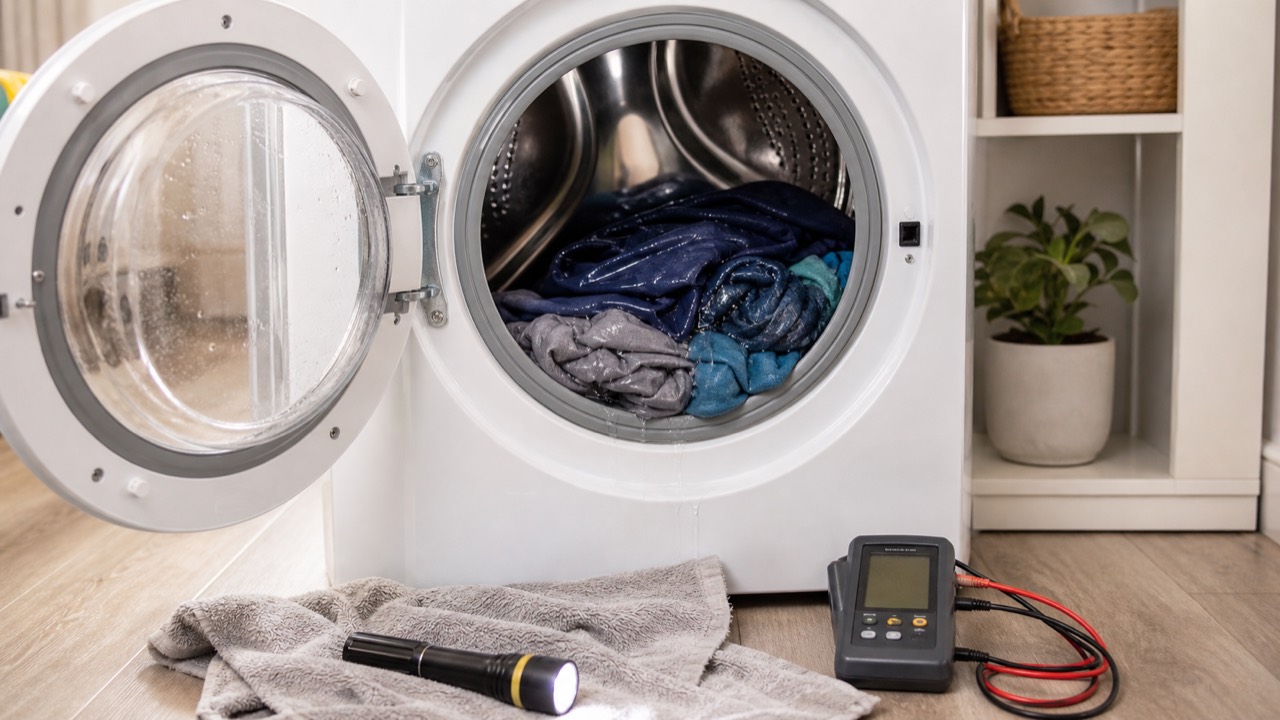
When Does the Washer Stop?
Before diagnosing the appliance, determine what it was doing immediately before the cycle stopped.
Stops while filling
Possible causes include:
- water-supply problem;
- clogged inlet screens;
- failed water valve;
- pressure-sensor issue;
- control problem.
Stops during washing
Possible causes include:
- motor overheating;
- drive-system problem;
- lid or door-lock issue;
- control-board failure;
- excessive suds.
Stops before draining
Possible causes include:
- clogged drain filter;
- blocked drain hose;
- failed drain pump;
- pressure-sensor problem.
Stops before spinning
Possible causes include:
- water remaining in the tub;
- unbalanced load;
- lid-lock or door-lock failure;
- suspension problem;
- motor or speed-sensor issue.
Stops and completely loses power
Possible causes include:
- outlet or breaker problem;
- damaged power cord;
- overheating motor;
- control-board failure;
- loose electrical connection.
Load and Balance Problems
1. The Load Is Unbalanced
Modern washers monitor tub movement during spin.
If the load becomes severely unbalanced, the washer may stop, redistribute the clothes, add water, or extend the cycle.
This is common with:
- towels;
- blankets;
- rugs;
- one heavy item;
- waterproof materials;
- small loads gathered on one side.
Possible symptoms include:
- washer repeatedly stopping and restarting;
- cycle time increasing;
- banging against the cabinet;
- spin never reaching full speed;
- clothes remaining wet;
- unbalanced-load error.
Pause the cycle and redistribute the items evenly.
2. The Washer Is Overloaded
An overloaded washer may stop because the motor, suspension, or control system cannot move the load safely.
Possible signs include:
- drum packed tightly;
- clothes barely moving;
- motor straining;
- repeated pauses;
- washer shaking;
- cycle taking much longer than normal.
Remove some items and restart the appropriate cycle.
Do not pack the basket tightly.
3. A Large Item Is Preventing Proper Balance
Comforters, sheets, rugs, and blankets can collect on one side of the basket.
The washer may attempt several redistribution cycles before stopping.
If allowed by the manufacturer:
- pause the washer;
- spread the item evenly;
- add another similar item if needed;
- run Drain and Spin after balancing.
Drainage Problems
4. The Washer Cannot Drain
Many washers will stop before spin if water remains inside.
Possible causes include:
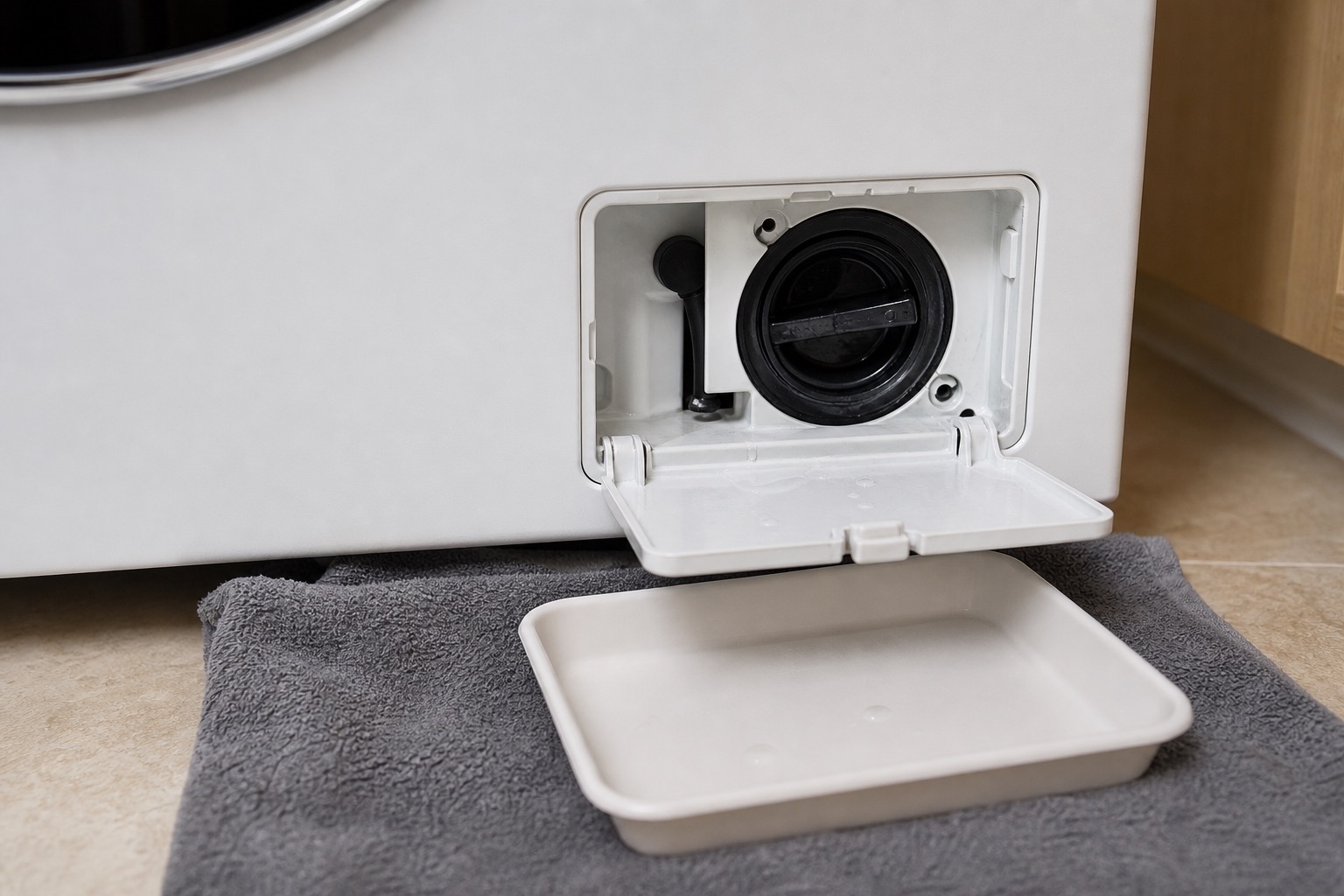
- clogged drain filter;
- blocked drain hose;
- failed drain pump;
- obstructed sump hose;
- household drain problem.
Possible symptoms include:
- visible water in the tub;
- clothes sitting in water;
- drain pump humming;
- drain error code;
- door remaining locked.
If the washer stops with water inside, the drain system should be checked first.
See the related guide:
Washer Not Draining: 7 Common Causes
5. The Drain Pump Is Blocked
Coins, lint, fabric, hair pins, or small clothing items may block the pump.
Possible symptoms include:
- loud humming;
- clicking or grinding;
- water draining slowly;
- washer stopping before spin;
- recurring drain error.
A blocked pump may overheat and stop temporarily.
6. The Drain Pump Is Failing
A drain pump can work intermittently before failing completely.
The washer may:
- drain normally on one cycle;
- stop with water inside on another;
- work again after cooling;
- make unusual pump noise.
The pump should be inspected and electrically tested before replacement.
7. The Drain Hose Is Kinked or Restricted
A kinked hose may allow some water to leave but not quickly enough for the control system.
Check for:
- crushed hose behind the washer;
- sharp bends;
- excessive hose length;
- blockage;
- incorrect standpipe installation.
A slow-draining washer may stop or display an error before reaching spin.
Water-Supply Problems
8. The Water Supply Is Interrupted
A washer may stop while waiting for water.
Check that:
- both supply valves are open;
- hoses are not kinked;
- household water is available;
- water pressure is adequate.
Some washers require both hot and cold water supplies even when a cold-water cycle is selected.
9. The Inlet Screens Are Clogged
Small screens inside the water inlet valve protect the washer from sediment.
Mineral deposits or debris can reduce water flow.
Possible symptoms include:
- very slow filling;
- washer pauses for a long time;
- fill error;
- cycle stops before washing begins;
- one temperature setting works better than another.
Turn off the household water before disconnecting supply hoses.
10. The Water Inlet Valve Is Failing
The inlet valve may work intermittently or fail on only one side.
Possible symptoms include:
- washer stops while filling;
- humming from the valve;
- no hot or cold water;
- slow filling;
- error code.
The valve coils, supply pressure, filters, and control voltage should be checked.
Water-Level and Pressure-Sensor Problems
11. The Pressure Sensor Is Reporting the Wrong Water Level
The washer uses a pressure sensor to determine how much water is inside.
If it sends incorrect information, the control may stop the cycle.
Possible symptoms include:
- washer stops after filling;
- overfilling;
- draining continuously;
- door staying locked;
- cycle never advancing;
- water-level error.
The problem may involve:
- pressure sensor;
- air hose;
- wiring;
- control board.
12. The Pressure Hose Is Blocked
Detergent residue, moisture, or debris can block the small pressure hose.
This may cause the washer to misread the water level.
Possible signs include:
- incorrect fill level;
- washer stopping before drain or spin;
- pump running unexpectedly;
- repeated water-level errors.
The hose should be checked for:
- blockage;
- cracks;
- water trapped inside;
- loose connections.
Lid and Door-Lock Problems
13. The Lid Lock Is Failing
Top-load washers often require the lid to remain locked during certain parts of the cycle.
A failing lock may cause:
- cycle stopping suddenly;
- repeated clicking;
- lid-lock light flashing;
- washer refusing to spin;
- error code.
The lock assembly, strike, wiring, and control signal should be checked.
Do not bypass the lid lock.
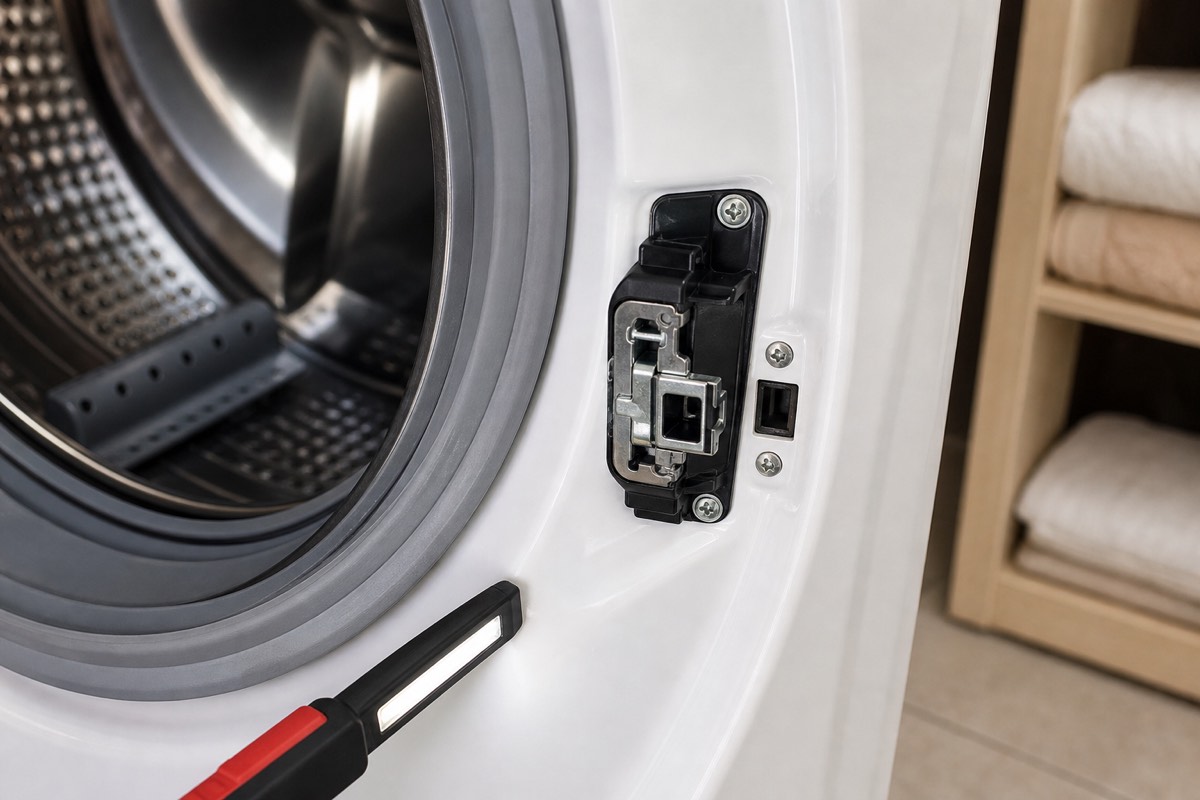
14. The Front-Load Door Lock Is Faulty
A front-load washer may stop if the control loses confirmation that the door is locked.
Possible symptoms include:
- cycle stops with water inside;
- door-lock error;
- repeated clicking;
- machine works when pressure is applied to the door;
- door remains locked after failure.
The lock and door alignment should be inspected.
15. The Door or Lid Is Misaligned
A good switch or lock may still fail to engage if the door is misaligned.
Possible causes include:
- loose hinge;
- damaged strike;
- sagging door;
- warped lid;
- foreign object preventing closure.
The mechanical alignment should be corrected before replacing electronic parts.
Excessive Suds and Detergent Problems
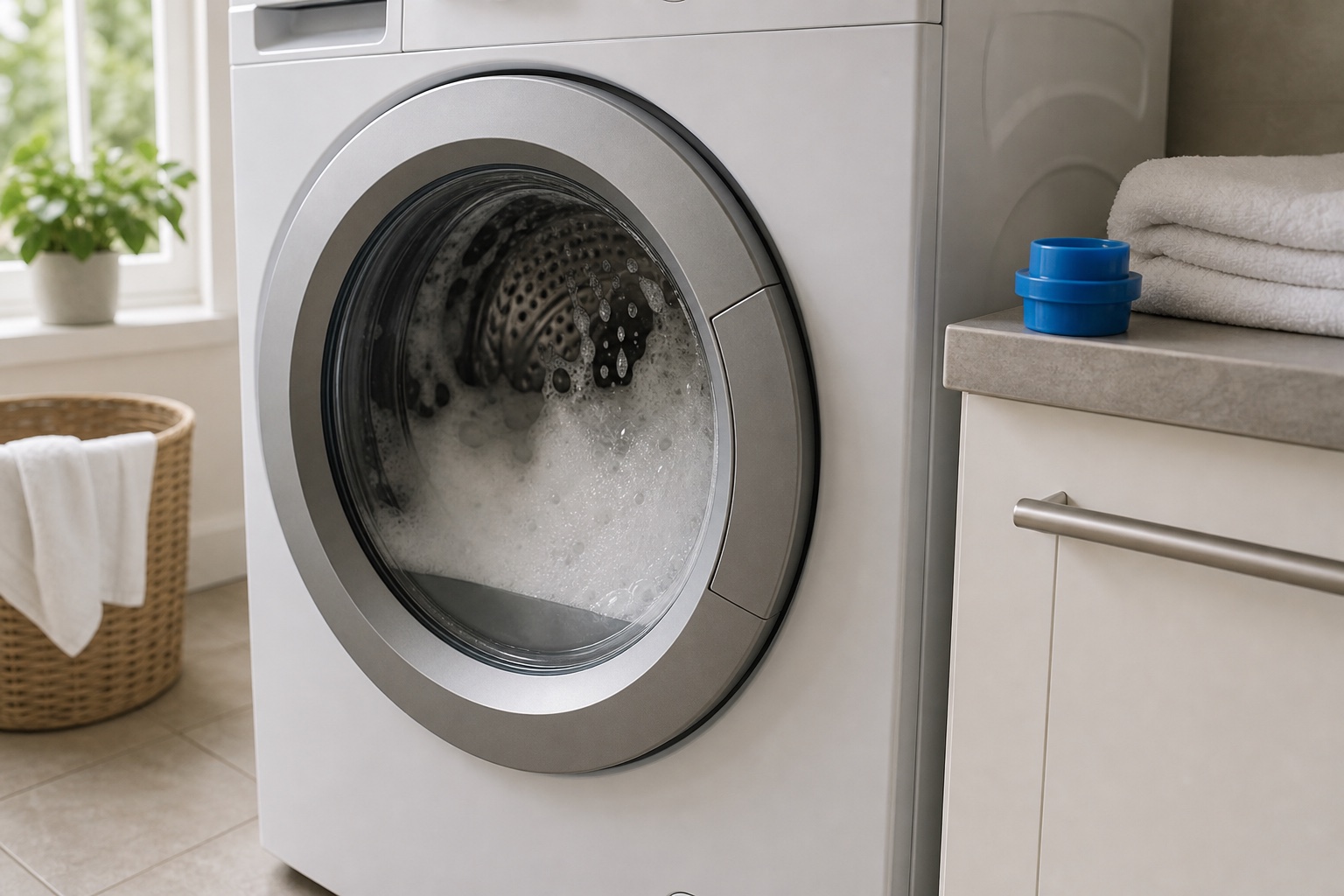
16. Too Much Detergent Is Being Used
Excessive suds can interfere with:
- water-level sensing;
- draining;
- spinning;
- load balancing.
The washer may pause repeatedly while trying to remove the foam.
Possible symptoms include:
- cycle time increasing;
- extra rinse cycles;
- suds error;
- clothes remaining wet;
- door staying locked.
Use HE detergent when required and reduce the amount for small or lightly soiled loads.
17. Non-HE Detergent Is Being Used
High-efficiency washers are designed for low-sudsing detergent.
Regular detergent can create enough foam to interrupt normal operation.
Running an empty rinse or cleaning cycle may help remove residual detergent after correcting the detergent type.
Motor and Drive Problems
18. The Motor Is Overheating
A motor may stop when its internal thermal protection opens.
After cooling, it may work again temporarily.
Possible causes include:
- overloaded washer;
- worn motor;
- weak capacitor;
- binding basket;
- damaged bearing;
- drive-system restriction.
Possible symptoms include:
- cycle stops after 10–30 minutes;
- motor becomes hot;
- washer works again later;
- burning smell;
- repeated motor-related errors.
A washer that repeatedly overheats should not be continuously restarted.
19. The Motor Capacitor Is Weak
Some washers use a capacitor to help the motor start and operate.
A weak capacitor may cause:
- motor humming;
- washer stopping under load;
- basket moving only slightly;
- machine working with an empty basket but failing with clothes.
Capacitors can retain electrical charge after power is disconnected and should be serviced correctly.
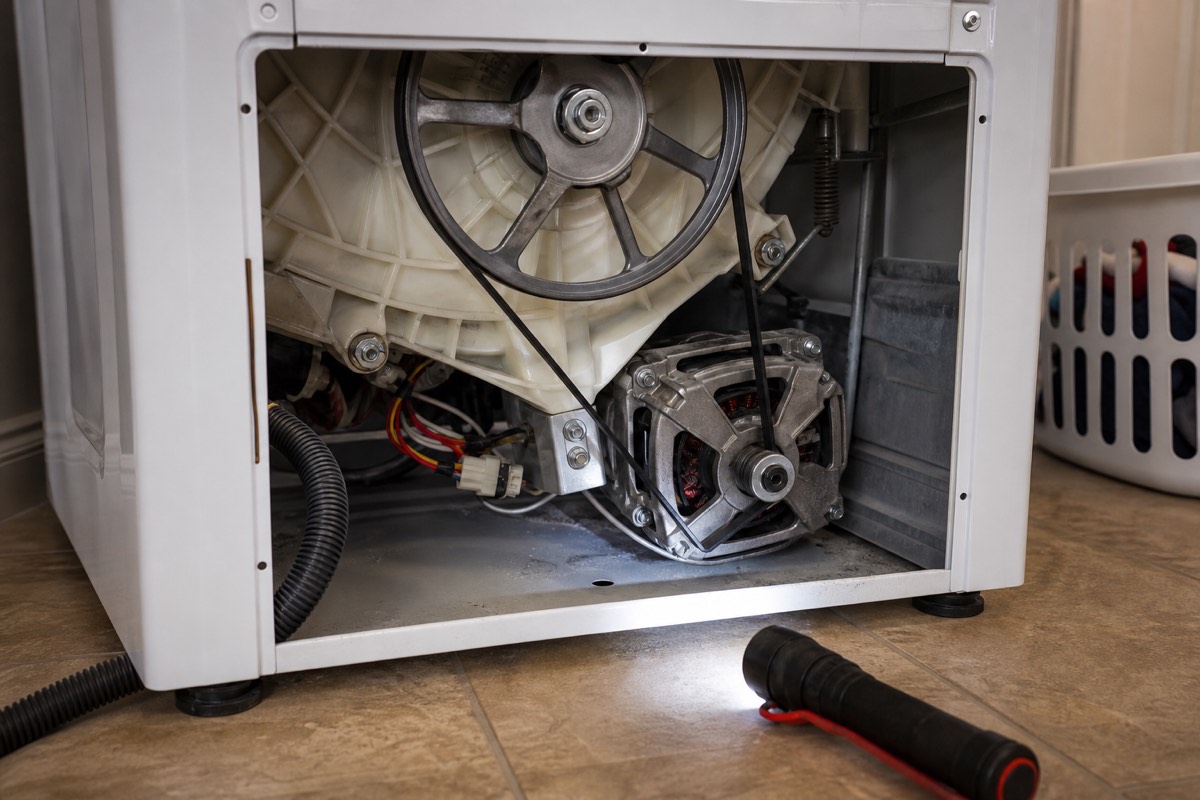
20. The Drive Belt Is Slipping or Damaged
A loose or damaged belt may allow washing movement but fail under heavier load.
Possible symptoms include:
- washer stops during agitation or spin;
- burning-rubber smell;
- belt squeal;
- basket moving slowly;
- belt material under the machine.
The belt, pulleys, basket, and motor should be inspected together.
21. The Shift Actuator Is Failing
Many top-load washers use an actuator to shift between wash and spin modes.
A failing actuator may cause the cycle to stop during transition.
Possible symptoms include:
- washer washes but will not spin;
- repeated clicking underneath;
- actuator error code;
- basket position error;
- washer stops before spin.
22. The Clutch or Splutch Is Worn
The clutch or splutch transfers motor power during spin.
A worn assembly may cause:
- repeated attempts to spin;
- clicking;
- slow basket movement;
- cycle stopping;
- clothes remaining wet.
23. The Gearcase or Transmission Is Failing
A damaged gearcase may create enough resistance to stop the motor or control cycle.
Possible signs include:
- grinding;
- oil underneath the washer;
- basket not moving;
- repeated drive errors;
- loud mechanical noise.
Major drive-system replacement should be considered only after other components are tested.
Sensor Problems
24. The Speed Sensor Is Not Reading Basket Movement
The control board needs feedback about basket or motor speed.
If the sensor fails, the washer may stop because it cannot confirm proper movement.
Possible symptoms include:
- basket moves briefly then stops;
- spin attempts repeat;
- motor or rotor error;
- cycle freezes during transition.
The sensor, motor, wiring, and control board should be tested together.
25. A Temperature Sensor Is Faulty
Some washers monitor incoming or internal water temperature.
An incorrect sensor reading may cause:
- cycle stopping;
- heater-related error on models with internal heating;
- unusually long wash phase;
- temperature-selection problems.
This is more common on certain front-load and premium washers.
Power and Electrical Problems
26. The Washer Is Losing Power
If the washer display goes completely dark, check the electrical supply.
Possible causes include:
- loose plug;
- damaged outlet;
- tripped breaker;
- GFCI trip;
- overheated connection;
- damaged power cord.
The washer should be connected directly to a properly grounded outlet.
27. The Breaker Is Tripping
A breaker that trips during the cycle may indicate:
- motor electrical failure;
- water reaching electrical components;
- damaged wiring;
- shorted component;
- overloaded circuit.
Do not repeatedly reset a breaker that continues to trip.
28. A Wiring Connection Is Loose
Washer vibration can affect electrical connectors.
Possible locations include:
- motor;
- drain pump;
- door lock;
- lid lock;
- sensors;
- control board.
Possible symptoms include:
- intermittent stopping;
- machine works after movement;
- error code disappears and returns;
- burning connector.
29. Wiring Is Damaged
Wires may be damaged by:
- vibration;
- moisture;
- sharp cabinet edges;
- overheating;
- previous repairs;
- insects or rodents.
Damaged wiring should be repaired using proper connectors and insulation.
Control-System Problems
30. The Control Board Has Temporarily Frozen
Electronic controls can occasionally stop responding.
A basic reset may help:
- Turn the washer off.
- Disconnect power.
- Wait approximately five minutes.
- Restore power.
- Select a simple cycle or Drain and Spin.
If the problem returns, a reset alone is not a repair.
31. The Main Control Board Is Failing
The main control board manages:
- filling;
- draining;
- motor operation;
- lid or door locking;
- water level;
- cycle timing;
- sensors.
A control failure may cause:
- cycle stopping at the same point;
- random errors;
- washer working after reset;
- no output to a known-good component;
- multiple systems behaving incorrectly.
The board should not be replaced before the connected components and wiring are tested.
32. The User Interface Is Malfunctioning
Some washers use a separate user-interface board.
A failing interface may cause:
- buttons not responding;
- cycle stopping;
- random selections;
- display freezing;
- machine restarting;
- error codes.
The interface, communication wiring, and main board should be diagnosed together.
Other Causes
33. The Washer Is Pausing Normally
Some cycles include intentional pauses for:
- soaking;
- load sensing;
- water heating;
- balancing;
- detergent activation;
- drain confirmation.
A pause does not always mean the washer has stopped.
Check whether:
- the cycle timer continues changing;
- the washer resumes after several minutes;
- no error code appears;
- the door remains correctly locked.
34. The Cycle Time Is Being Recalculated
Modern washers may add or remove time based on:
- load size;
- balance;
- water temperature;
- suds level;
- drainage speed.
The displayed time is often an estimate rather than a fixed countdown.
35. The Washer Has Entered Flood-Protection Mode
Some washers have a sensor in the base that detects water leakage.
If water is detected, the machine may:
- stop the normal cycle;
- run the drain pump;
- display a leak error;
- refuse to refill.
Possible leak sources include:
- drain pump;
- inlet valve;
- tub hose;
- door gasket;
- excessive suds.
The leak must be identified before normal operation resumes.
What Can You Safely Check?
Before scheduling service, you can:
- Note exactly when the washer stops.
- Record any error code.
- Check whether water remains inside.
- Try Drain and Spin.
- Redistribute the load.
- Remove excess clothing.
- Check that both water valves are open.
- Inspect supply and drain hoses for kinks.
- Confirm the lid or door closes correctly.
- Reduce detergent use.
- Make sure the washer is level.
- Check whether the outlet and breaker remain on.
- Disconnect power for approximately five minutes and restart once.
- Stop using the machine if it leaks, smells burned, or trips the breaker.
Do not bypass the lid or door lock.
Do not remove electrical panels while the washer is connected to power.
What Information Helps Diagnose an Intermittent Washer?
If the washer works normally when a technician arrives, the following information can be very helpful:
- exact cycle selected;
- approximate time when it stops;
- whether water remains;
- whether the door is locked;
- any error code;
- sounds immediately before stopping;
- whether the display remains on;
- whether unplugging restores operation;
- type and size of load.
A short video of the washer when the problem occurs can also help identify intermittent failures.
When Should You Stop Using the Washer?
Stop the washer and disconnect power when:
- water is leaking onto the floor;
- the breaker repeatedly trips;
- you smell burning wiring or plastic;
- the motor makes a loud grinding noise;
- the outlet or cord becomes hot;
- the washer moves violently;
- the machine continues filling without stopping;
- electrical components are wet.
Turn off the household water valves if the washer is leaking or filling uncontrollably.
When Should You Call a Washer Technician?
Professional diagnosis is recommended when:
- the washer repeatedly stops at the same point;
- water remains in the tub;
- the lid or door will not lock;
- the motor overheats;
- the cycle works only after a reset;
- the washer displays recurring error codes;
- the drain pump or motor stops intermittently;
- the machine loses power during the cycle;
- wiring or connectors show heat damage;
- the washer stops even with a normal balanced load;
- the problem continues on multiple cycle selections.
A technician can test the drain system, water valves, pressure sensor, lid or door lock, motor, capacitor, actuator, speed sensor, wiring, user interface, and control board.
Should You Repair or Replace the Washer?
Repair is often practical when the problem involves:
- drain pump;
- inlet valve;
- lid lock;
- door lock;
- pressure sensor;
- actuator;
- capacitor;
- wiring;
- user interface;
- control board.
Replacement may be more practical when:
- the washer has severe bearing or tub damage;
- the gearcase and control board both require replacement;
- the cabinet is heavily corroded;
- multiple expensive components have failed;
- critical parts are discontinued;
- repair cost approaches the value of a replacement machine.
A complete diagnosis should be performed before deciding.
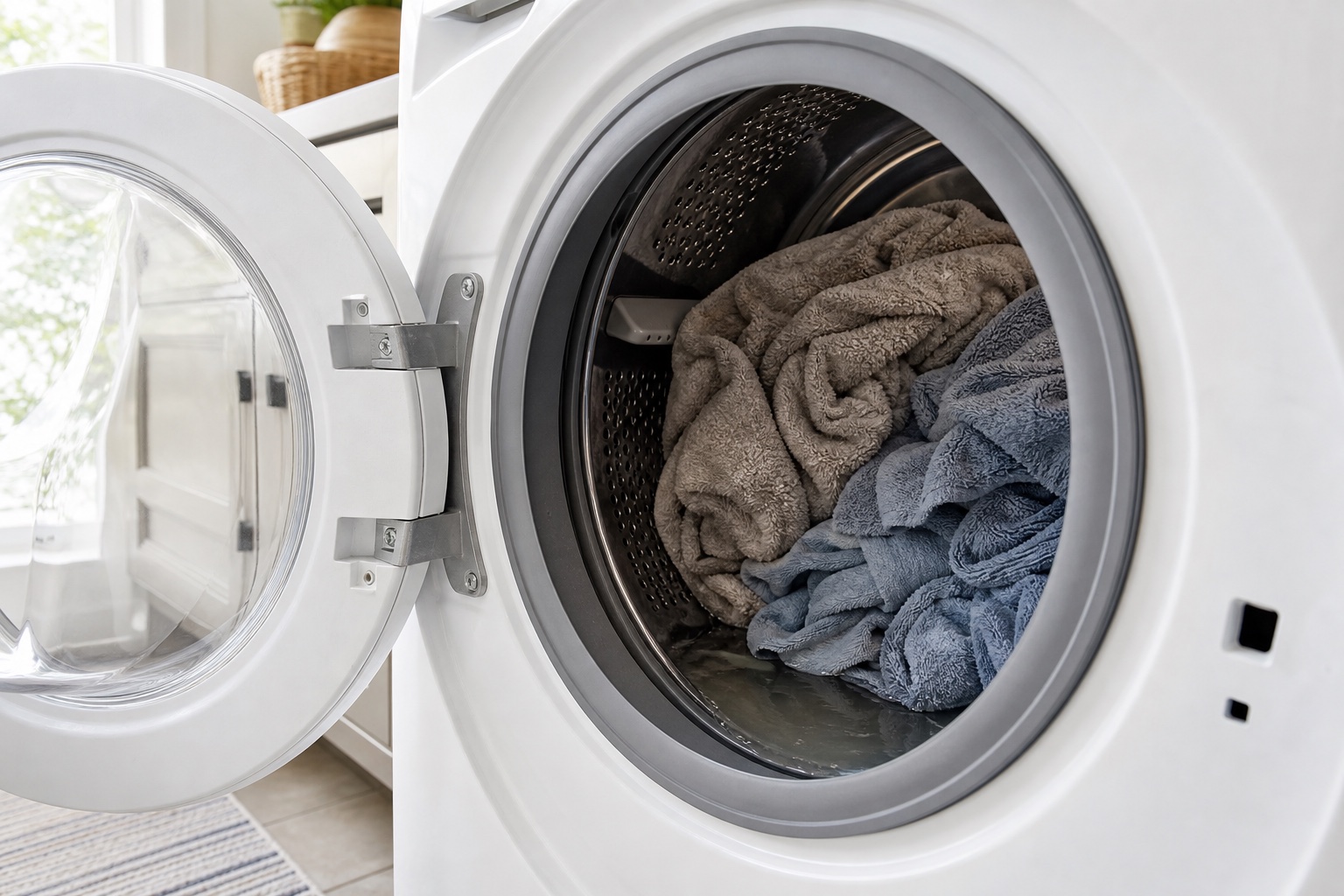
Photo guide
Diagnostic Photos
Local Washer Service
We provide washer repair in Cape Coral and Fort Myers, along with surrounding Southwest Florida service areas.
For scheduling, use the Contact page or call/text Art’s Appliance Repair directly.
Related Appliance Guides
Washer
Washer Shaking Violently During the Spin Cycle: What It Usually Means
Washer shaking, banging, or walking during spin? Learn how loads, leveling, suspension rods, shocks, bearings, and basket problems cause severe vibration.
Updated August 12, 2026
washer shaking violently during spin cycle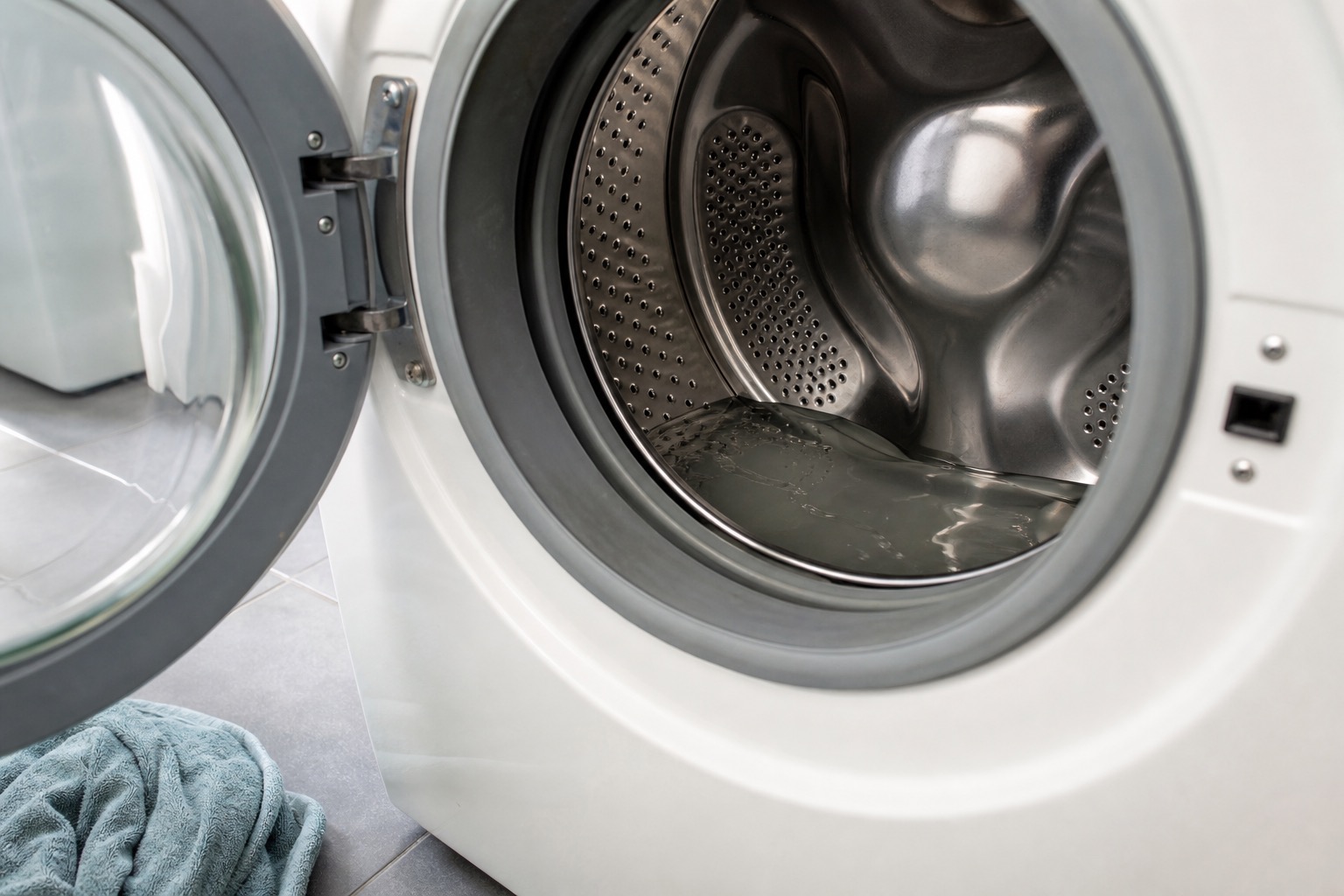
Washer
Washer Not Draining: 7 Common Causes
Washer not draining or leaving water inside? Learn the common causes, safe checks, and when to schedule washer repair in Cape Coral or Fort Myers.
Updated July 25, 2026
Washer Not Draining: 7 Common Causes
Washer
Washer Not Spinning: What Could Be Wrong?
Washer not spinning or clothes still wet? Check cycle settings, drainage and load balance, then know what to share for washer repair in Cape Coral or Fort Myers.
Updated September 21, 2026
Washer Not SpinningNeed service?
Washer Repair in Cape Coral, Fort Myers and Southwest Florida
Art’s Appliance Repair provides washer diagnostics and repair throughout Cape Coral, Fort Myers, North Fort Myers, Lehigh Acres, Estero, Bonita Springs, Naples, and surrounding Southwest Florida communities.
We diagnose washer problems including:
- washer stops in the middle of a cycle;
- washer not draining;
- washer not spinning;
- washer losing power;
- lid-lock and door-lock failures;
- drain-pump problems;
- water-level sensor faults;
- motor and actuator problems;
- washer shaking or going out of balance;
- intermittent error codes;
- control-board problems;
- washers that work intermittently.
Call or text (239) 688-9955 to schedule washer service.
The service call is $0 when the diagnosed repair is approved and completed. If no repair is completed, the diagnostic service call is $79.
View Washer Repair