Washer Fills With Water but Does Not Start Washing: What It Usually Means

If your washer fills with water but then seems to do nothing, the water valve is probably not the first place to look.

The more useful question is: did the washer finish filling and then stop, or does it keep filling without ever reaching the wash portion of the cycle?

Those two symptoms can look similar from across the laundry room, but they point in very different directions.

A washer that reaches its normal water level and then sits may have a lid or door-lock, cycle-selection, sensing, drive, motor, or control problem. A washer that keeps taking in water may instead have a siphoning, water-level, or fill-control problem.

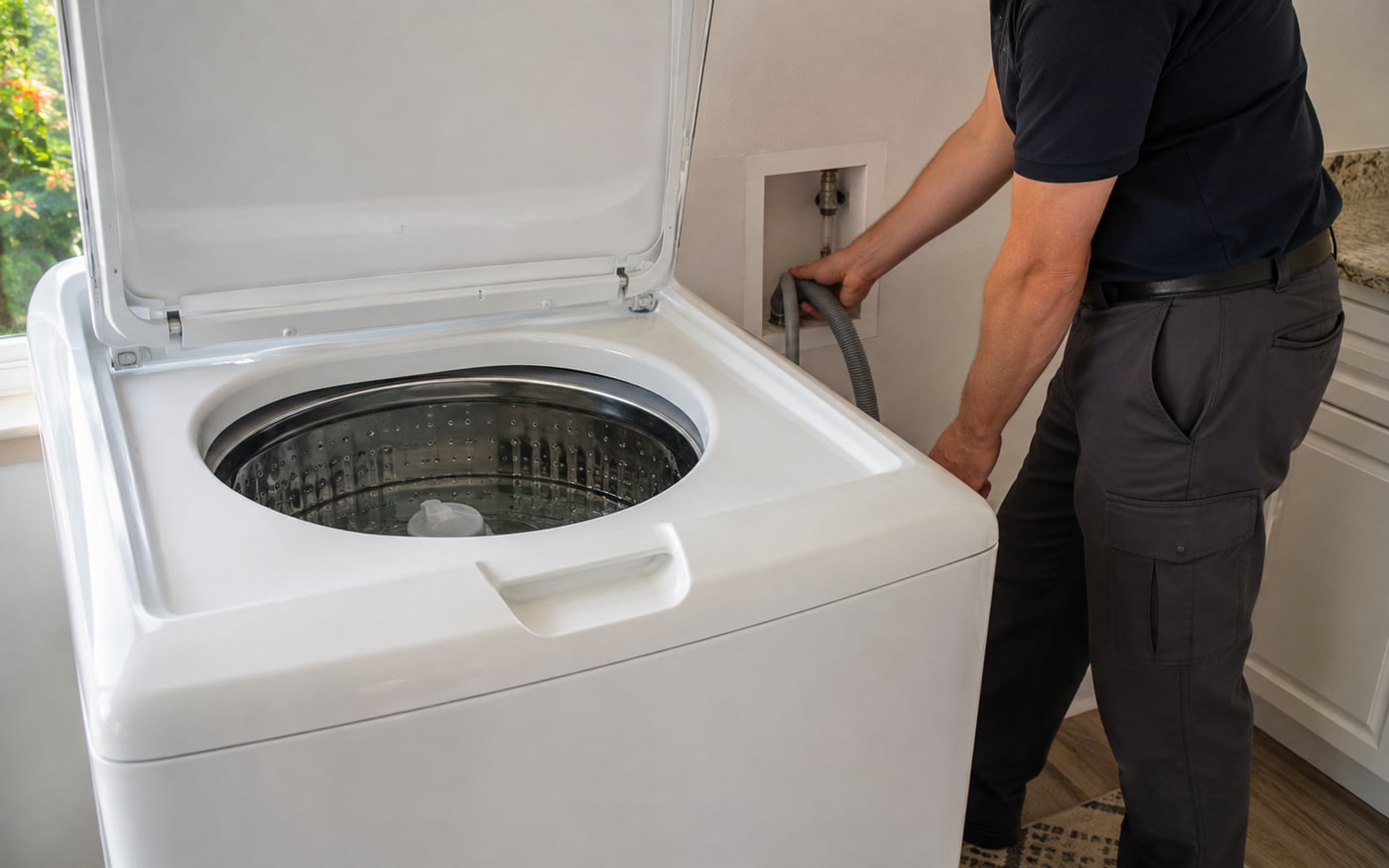
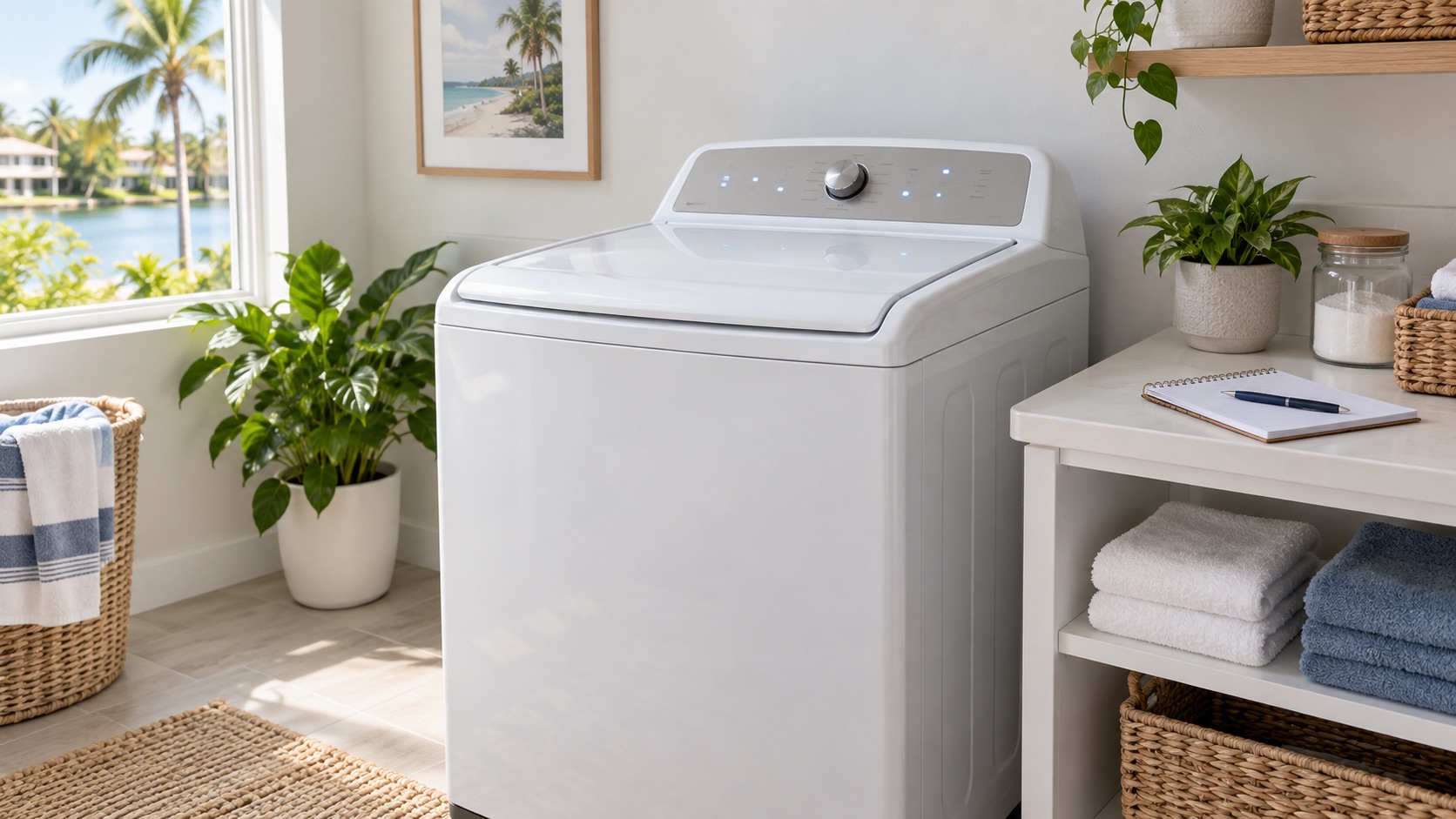
Top-load washer filled with water but not agitating during diagnosis

First: Did the Washer Actually Finish Filling?

Before diagnosing the motor or control board, watch the water level.

There are three common patterns.

Pattern 1 — It fills, stops filling, then nothing moves

This is the classic symptom.

Look more closely at:

  • lid or door lock;
  • paused cycle;
  • sensing delay;
  • drive system;
  • motor;
  • control.

Pattern 2 — It keeps filling and never starts washing

That is different.

Possible areas include:

  • drain hose siphoning;
  • water-level sensing;
  • fill control.

A washer can appear to fill forever if the drain hose is installed too low and water siphons out while the machine is trying to reach the selected level.

Pattern 3 — It fills, drains, then stops

This may indicate that the control detected a condition that prevents normal washing, depending on the model.

Record:

  • any error code;
  • lid-lock behavior;
  • whether the pump runs;
  • whether the washer restarts by itself.

The exact model matters here.

Do Not Mistake Normal Sensing for a Failure

Modern washers do not always begin obvious agitation the second the water valve closes.

Some newer top-load models may take around 20–30 seconds after filling to sense the load and engage the drive system.

During this time you may hear:

  • a click;
  • a low hum;
  • brief basket movement;
  • lid-lock operation;
  • nothing obvious for several seconds.

This can be normal.

If the washer eventually begins moving, there may be no fault at all. If it sits for several minutes and never attempts wash action, continue diagnosing.

Check Whether You Accidentally Selected a Soak Cycle

A washer can fill and then intentionally remain still.

Some models have a Soak function or a cycle that includes a long soaking period before normal wash action.

Before assuming the machine has failed, check:

  • cycle name;
  • Soak option;
  • Delay or Prewash options;
  • cycle indicator lights.

If you are unsure, choose a standard Normal cycle for your test.

The Lid Lock Is One of the First Things to Watch on a Top-Load Washer

A washer can fill with water and still refuse to agitate if the machine does not recognize the lid as safely closed.

Some top-load washers may fill without the lid being locked, while others will not advance until the lid is closed and latched. Many top-load washers can fill even though they will not agitate or spin with the lid open.

That means this symptom is possible: water enters normally, the washer reaches level, and the wash never begins because the machine is still waiting for a valid lid condition.

Watch the Lid-Lock Light

If your washer has a lid-lock indicator, watch what it does after filling.

Lock light becomes solid and stays normal

The lock may be completing its basic sequence. Move attention toward the drive system or control.

Lock light flashes repeatedly

The control may not be confirming the lock. Some top-load washers perform a lid-lock self-test and will not start if the locking sequence cannot be completed properly.

You hear repeated clicking

The lock may be trying to engage. Do not force the lid closed or bypass the lock.

The Lid Can Look Closed and Still Not Be Recognized

Depending on the design, the washer may use:

  • a lid switch;
  • a magnetic sensor;
  • a lock assembly;
  • another model-specific safety mechanism.

On some top-load designs, a missing or damaged lid-switch probe or magnet can prevent agitation and spin even when the lid appears closed.

Check only what is externally visible. Do not insert objects into the lid-lock opening or bypass the safety circuit.

Front-Load Washer: Focus on the Door Lock

A front-load washer must normally confirm that the door is properly closed and locked before normal cycle operation proceeds.

A front-load door may appear closed without being closed firmly enough to engage the locking mechanism; on some models it can take several seconds after Start for the lock to engage.

Look for:

  • door-lock light;
  • repeated clicking;
  • door error;
  • cycle stopping immediately after fill;
  • door not sitting flush.

Check for clothing trapped between the door and seal. Do not force the door.

Control Lock Is Different From Door Lock

This is easy to confuse.

Door or Lid Lock is a safety mechanism. Control Lock prevents buttons from responding.

On some front-load washers, Control Lock can prevent normal control operation and may display indicators such as LoC or LC, depending on the model.

If the controls do not respond normally, verify Control Lock is not active.

Check Whether the Washer Was Accidentally Paused

Sometimes the machine is doing exactly what it was told to do.

Confirm:

  • cycle is selected;
  • Start was pressed correctly;
  • Pause is not active;
  • cycle knob is not between positions on models where that matters.

On some front-load models, the Start button must be held for several seconds rather than tapped quickly.

Is the Washer Actually Washing Quietly?

Newer high-efficiency washers can move clothing differently from older machines.

The basket may make small movements instead of the aggressive back-and-forth action you expect from a traditional agitator.

On some top-load models, one simple observation is to note the position of an item, close the lid, let the machine run, then check whether the item has moved.

Do not repeatedly open the lid during normal operation if your model requires the lock to remain engaged.

Quiet operation is not the same as no wash action.

A Very Heavy or Tightly Packed Load Can Affect Wash Action

A washer needs room for the load to move.

An overloaded washer may fail to agitate properly and may also produce reduced spin performance.

For testing:

  • do not pack clothes tightly;
  • use a small or medium mixed load;
  • distribute items loosely.

If the washer works with a smaller load but repeatedly stops with heavy loads, that is useful diagnostic information.

What if the Washer Fills Normally but the Agitator Does Not Move?

On a traditional top-loader, you may immediately notice that the agitator remains still.

But there are several possibilities.

The issue could be:

  • lid or lock condition;
  • motor not engaging;
  • drive-system problem;
  • control not commanding movement;
  • mechanical failure between motor and basket or agitator.

The exact mechanism varies significantly between washer designs, so the model number matters before parts are ordered.

Listen for the Motor

After filling stops, listen.

Completely silent

Possible areas include:

  • lock or safety circuit;
  • control;
  • power interruption;
  • motor not being commanded.

Humming but no basket movement

A motor or drive system may be attempting to operate but unable to move correctly.

Stop the machine if the humming is strong, prolonged, or accompanied by a burning smell.

Brief attempt to move, then stop

This suggests the washer is at least trying to engage the drive. Record whether an error appears afterward.

This information is valuable during diagnosis.

A Power Interruption Can Leave the Washer in an Abnormal State

Electronic washers can occasionally become stuck after:

  • a power outage;
  • interrupted cycle;
  • Pause or Stop sequence;
  • control interruption.

A single reset is reasonable. Use the procedure specified for your washer model.

If the problem immediately returns, repeated resets are not a repair.

Do Not Use Model-Specific Reset Tricks on Every Washer

You may find videos online showing procedures such as:

  • unplugging;
  • opening and closing the lid a certain number of times;
  • turning a selector in a specific pattern.

Some of these are legitimate, but only for particular washer designs.

A lid-lift motor-reset procedure for one specific top-load design is not a universal washing-machine reset. Always verify the exact model before using a service sequence.

What if the Washer Never Stops Filling?

Do not diagnose this as a motor problem yet.

If water keeps entering and the washer never transitions to wash, ask: is the water level actually rising?

If the level stays low while water continuously enters, siphoning may be occurring through the drain hose.

Drain-hose height is one of the first installation details to check when a washer keeps filling and never begins agitation.

If the tub becomes excessively full, stop the washer and shut off the water supply. That becomes an overfill concern.

What if the Washer Fills and Drains at the Same Time?

This is another clue that can make the machine appear to never start washing.

If incoming water is immediately leaving through the drain system, the washer may never reach the expected water level.

Check the installation instructions for your exact model.

Do not simply replace the water valve because the valve is clearly allowing water into the washer.

The Water-Level System Can Affect the Transition to Wash

The washer needs to know when the correct water level has been reached.

On designs that use water-level sensing, a problem in that system can interfere with normal cycle progression.

Because sensor designs vary widely, this is usually a technician-level diagnostic rather than a part to replace based only on symptoms.

Top Load vs Front Load: Same Complaint, Different Diagnostic Path

Top load

Prioritize observations such as:

  • lid-lock behavior;
  • sensing pause;
  • agitator or impeller movement;
  • motor attempt;
  • cycle selection.

Front load

Pay closer attention to:

  • door-lock confirmation;
  • Control Lock;
  • door alignment;
  • drum movement;
  • displayed error codes.

This is why the same customer description, “it fills but won’t wash,” can lead to different repairs depending on machine design.

What We Often Find During Service Calls

When a washer fills normally and then becomes quiet, it is tempting to jump straight to the control board.

That is usually too early.

The useful diagnostic sequence is: did it reach water level, did the lid or door lock, does the motor attempt to move, does the basket or agitator respond, and is there an error?

If the lock never confirms, the drive system may never even receive the normal command to wash.

If the lock confirms and the motor clearly attempts to move, the diagnosis shifts toward the drive side.

That distinction helps avoid replacing expensive controls before the safety and mechanical systems are checked.

A Practical Test You Can Do Safely

Use a normal cycle with a small, balanced load.

Observe:

  1. Does water enter?
  2. Does filling stop?
  3. How long is the pause after filling?
  4. Does the lid or door lock?
  5. Do you hear a motor?
  6. Does the basket or agitator move at all?
  7. Does the machine drain?
  8. Does an error code appear?

Write the answers down.

That sequence gives a technician far more useful information than simply saying “washer won’t wash.”

What You Can Check Before Calling for Service

You can safely:

  • confirm the lid or door is fully closed;
  • check for clothing obstructing the door;
  • verify the correct cycle is selected;
  • make sure Soak or Pause is not active;
  • reduce an overloaded load;
  • record error codes;
  • verify whether filling stops;
  • check whether the drain hose installation looks obviously incorrect;
  • perform one manufacturer-approved power reset.

Do not:

  • bypass the lid lock;
  • bypass the door lock;
  • jumper safety switches;
  • reach into a moving washer;
  • test live electrical components without proper training.

When Should You Stop Using the Washer?

Stop the machine if:

  • water continues rising excessively;
  • it will not stop filling;
  • water leaks onto the floor;
  • you smell burning wiring or a hot motor;
  • the breaker trips;
  • the motor hums continuously without movement;
  • the washer produces severe grinding or mechanical binding.

If it is actively overfilling, turn off the water-supply valves.

Information That Helps Before a Service Visit

Send:

  • brand;
  • full model number;
  • top-load or front-load;
  • whether filling stops normally;
  • whether the lid or door locks;
  • whether you hear the motor;
  • whether the basket moves at all;
  • any error code;
  • whether the problem started after a power outage;
  • a short video showing what happens after the water stops.

The model number is especially useful because washer lock, drive, sensing, and reset procedures vary by design.

When Should You Call a Washer Technician?

Professional diagnosis is appropriate when:

  • the washer finishes filling but never begins washing;
  • lid or door lock repeatedly fails;
  • the motor hums but nothing moves;
  • the machine tries to move and immediately stops;
  • water continuously fills;
  • the problem returns after a normal reset;
  • an error code keeps returning;
  • burning smell or electrical symptoms occur.

A technician can determine whether the failure is in:

  • lid or door safety system;
  • drive system;
  • motor;
  • water-level sensing;
  • wiring;
  • electronic control.

Is It Worth Repairing?

Often, yes.

This symptom does not automatically mean the washer needs a control board or complete replacement.

The actual repair can range from a relatively contained lock or drive issue to a more significant motor or control problem.

The important step is to determine which part of the cycle stopped progressing before ordering parts.

Photo guide

Diagnostic Photos

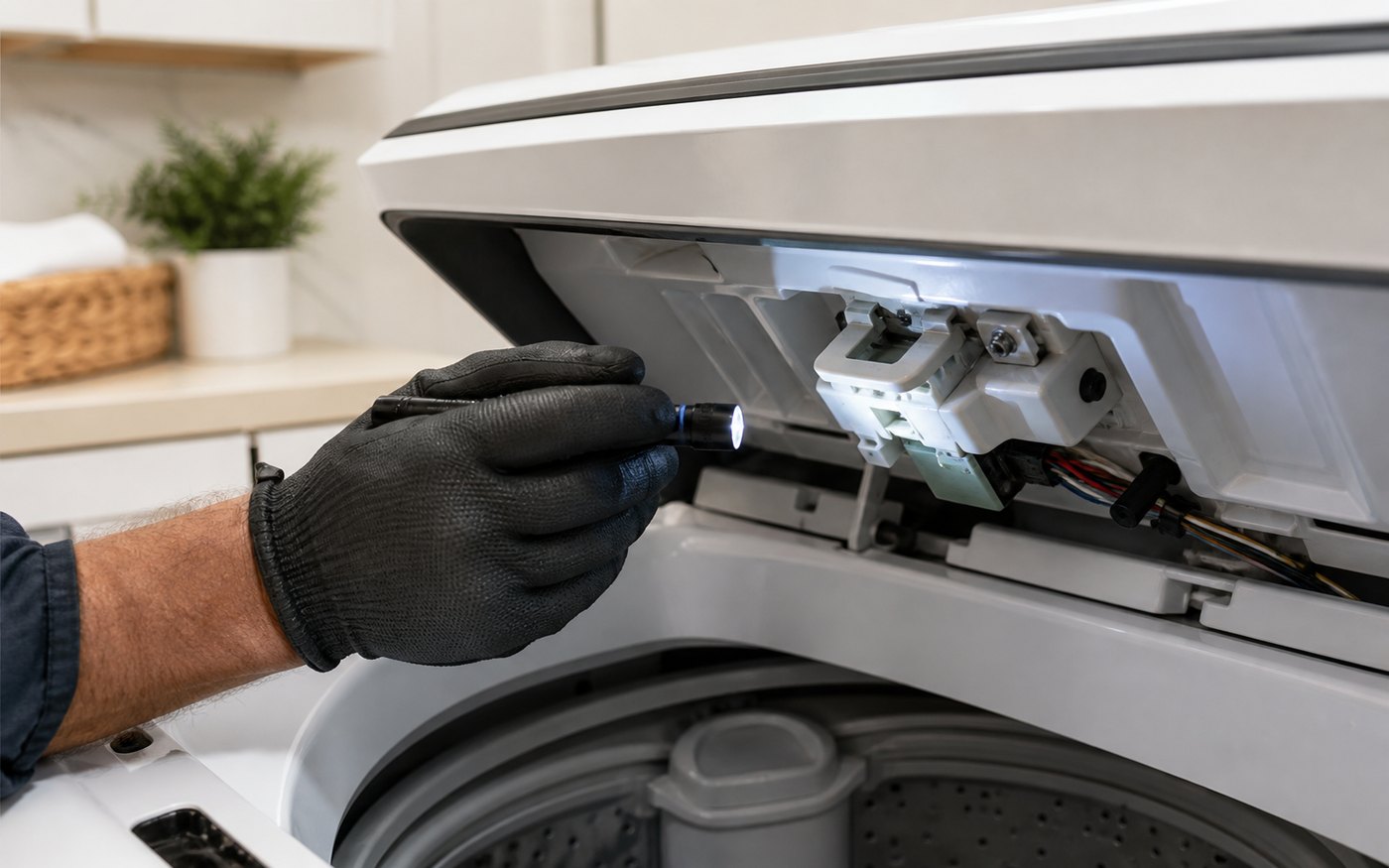
Technician inspecting a top-load washer lid-lock assembly with a small flashlight
A top-load washer may fill but refuse to wash if the lid lock or lid switch is not confirmed.
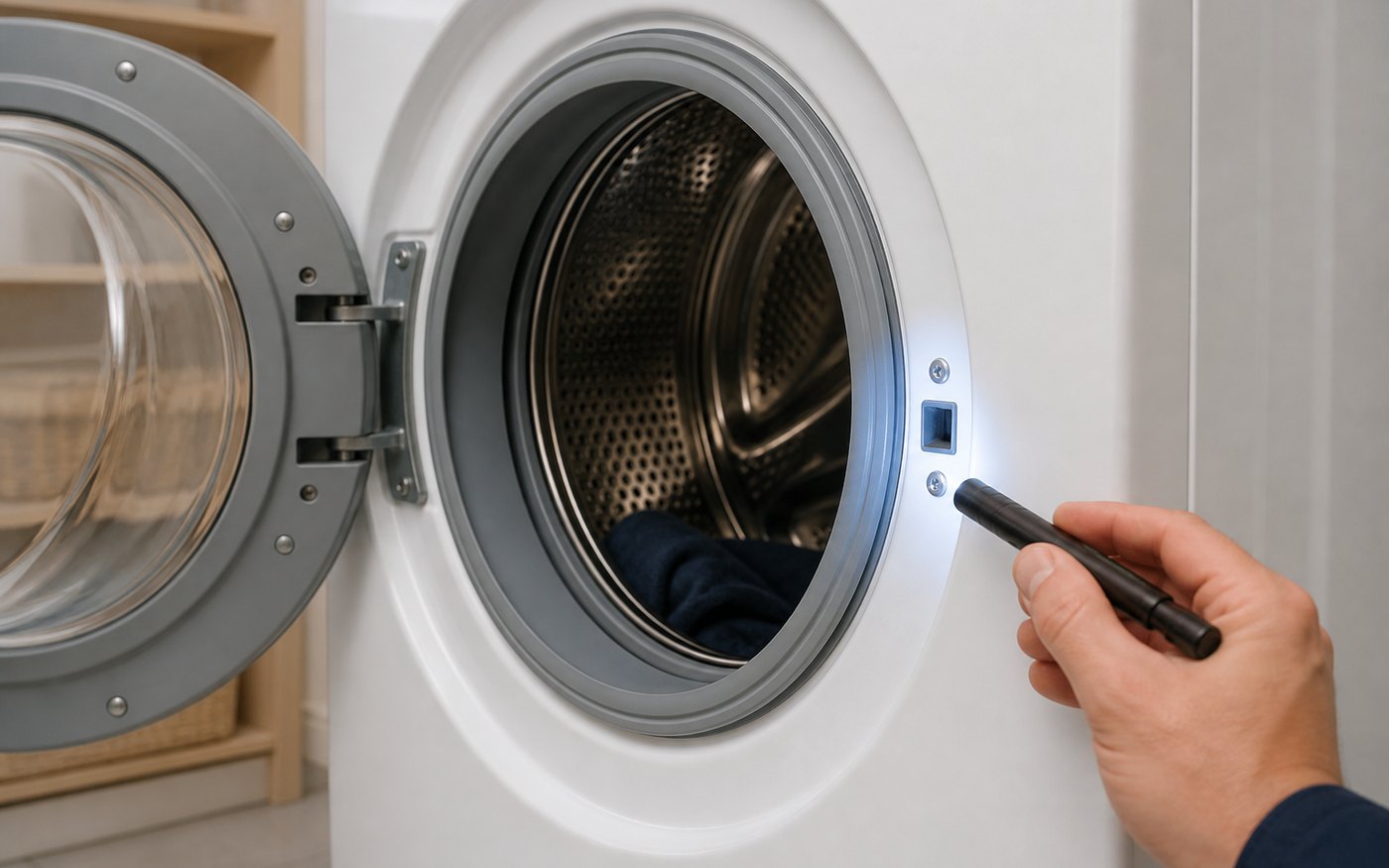
Front-load washer door-lock area being checked during service
Front-load washers normally need a valid door-lock signal before the drum begins normal wash action.
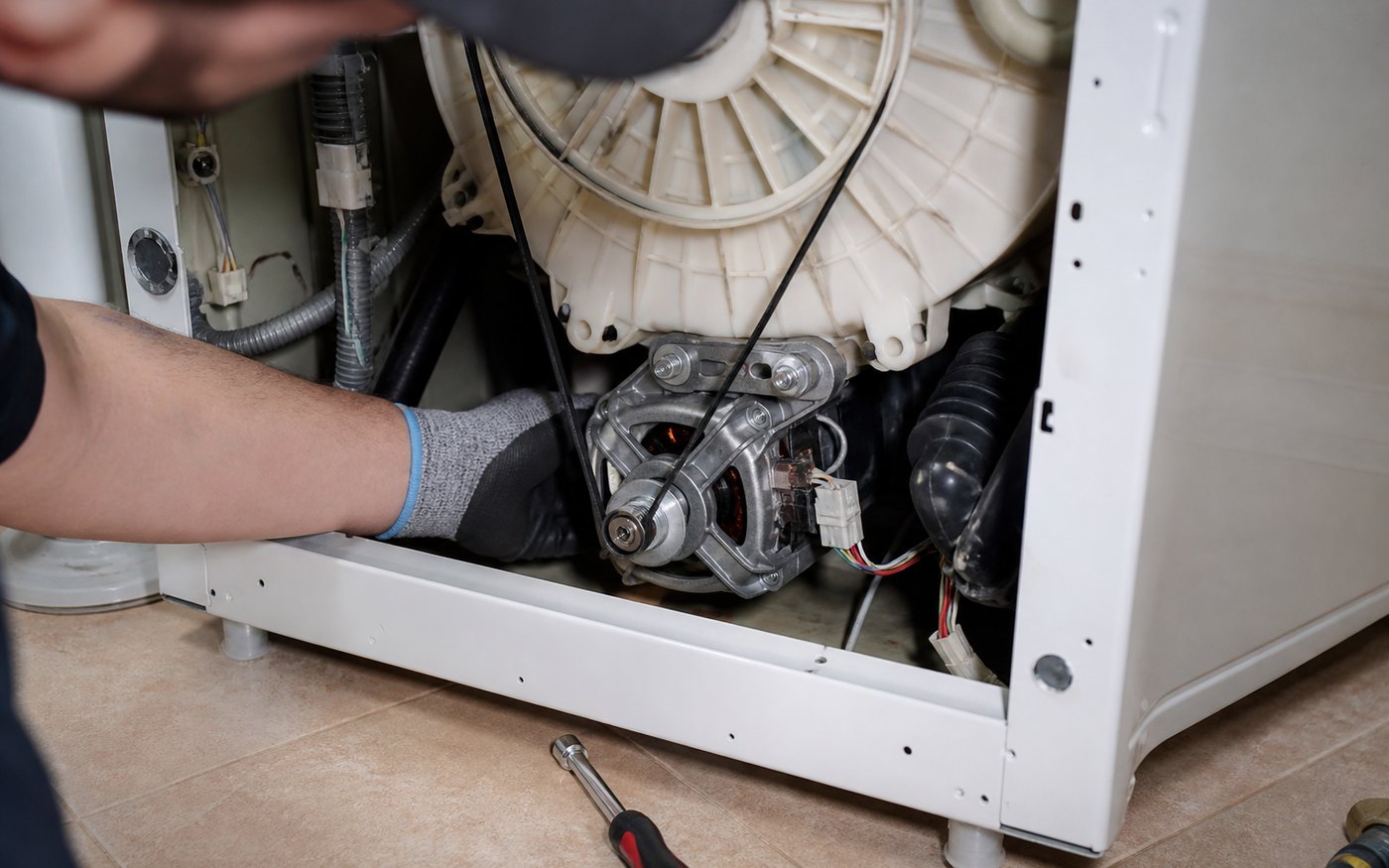
Washer drive system and motor area accessed during diagnosis
If the lock confirms but the washer still does not move, diagnosis may shift toward the motor or drive system.
Washer model-number sticker location shown near the open door frame
The model number helps identify the correct lock, sensing, reset, and drive-system procedure for that washer.

Local Washer Service

We provide washer repair in Cape Coral and Fort Myers, along with surrounding Southwest Florida service areas.

For scheduling, use the Contact page or call/text Art’s Appliance Repair directly.

Helpful Next Pages

These related guides and local service pages help connect the symptom to a practical repair path.

Washer Repair Service details for washer filling, washing, draining, spinning, lid-lock, motor, and cycle problems. Washer Stops Mid-Cycle Related guide for washers that stop during fill, wash, drain, rinse, or spin. Washer Not Spinning Related guide for lid locks, drain problems, drive issues, motors, and spin failures. Appliance Error Codes Use common display codes to describe oven, range, dishwasher, washer, dryer, refrigerator, and microwave symptoms.

Need service?

Washer Repair in Cape Coral, Fort Myers and Southwest Florida

Art’s Appliance Repair diagnoses washer cycle and wash-action problems throughout Cape Coral, Fort Myers, North Fort Myers, Lehigh Acres, Estero, Bonita Springs, Naples, and surrounding Southwest Florida communities.

We diagnose problems including:

  • washer fills but does not wash;
  • washer fills but does not agitate;
  • lid-lock problems;
  • door-lock problems;
  • washer stuck after filling;
  • motor and drive-system problems;
  • washer keeps filling;
  • washer fills and drains;
  • washer stops during the cycle;
  • washer error codes.

Call or text (239) 688-9955 to schedule washer service.

Service call: $0 with an approved repair. A $79 diagnostic fee may apply if the repair is declined.

View Washer Repair
Call Text for Service