Is Water Under a Refrigerator Normal?
A small amount of water in the drain pan underneath the refrigerator can be normal.
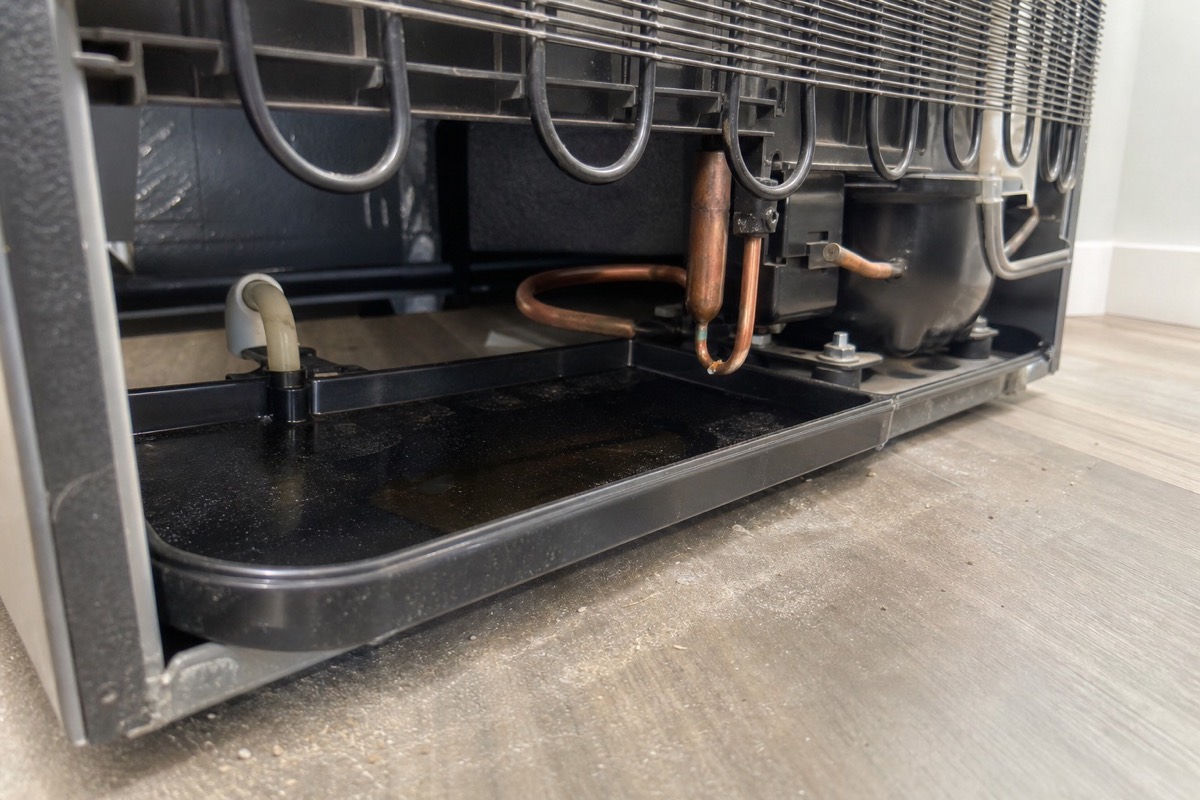
During an automatic defrost cycle, frost melts from the evaporator coils. This water flows through a drain tube into a pan near the compressor, where it normally evaporates.
Water on the floor is not normal when:
- A puddle continues to grow.
- Water returns after being cleaned.
- The leak occurs when the ice maker fills.
- Water appears after using the dispenser.
- The refrigerator is not cooling correctly.
- Ice forms on the freezer floor.
- The drain pan is overflowing.
- Cabinets or flooring remain wet.
- Water is near an electrical outlet or power cord.
Before You Begin: Protect the Floor and Electrical Area
If there is a large amount of water:
- Avoid stepping in water near an electrical outlet.
- Disconnect the refrigerator from power if it can be done safely.
- Close the refrigerator’s water-supply valve only if it is safely accessible.
- Move perishable food to a safe location if the appliance must remain unplugged.
- Dry the floor to prevent slipping and water damage.
- Do not continue using the dispenser or ice maker until the leak is identified.
If the outlet, plug, or power cord is wet, do not touch it. Shut off the circuit breaker and contact a qualified professional.
1. The Defrost Drain Is Clogged
A clogged defrost drain is one possible cause of water under or inside a refrigerator.
During the defrost cycle, water should flow through a small drain opening beneath the evaporator. Food debris, ice, dust, or biological buildup can block the drain.
When the water cannot drain correctly, it may:
- Collect under the crisper drawers.
- Freeze on the freezer floor.
- Leak from the front of the refrigerator.
- Overflow into the fresh-food compartment.
- Run underneath the appliance.
- Create repeated sheets of ice.
Common warning signs include:
- Water under the bottom drawers.
- Ice on the freezer floor.
- Water leaking from the freezer into the refrigerator.
- Leak returning every day or after a defrost cycle.
- Gurgling or dripping sounds followed by water on the floor.
Clearing the drain may require access to the evaporator area or rear drain tube. Ice must be removed carefully to avoid damaging the evaporator, wiring, or drain components.
Never use a knife, screwdriver, or sharp object to break ice inside the freezer.
2. The Drain Tube Is Frozen
The drain opening may be clear at the top while the tube remains frozen farther down.
This can happen because of:
- Food particles entering the drain.
- Excessive frost buildup.
- Door left open.
- Damaged door gasket.
- Defrost system problem.
- Improper drain-tube installation.
- High humidity entering the refrigerator.
- Drain heater failure on models that use one.
A frozen drain often causes water to collect beneath the evaporator and refreeze on the freezer floor.
Manually defrosting the refrigerator may temporarily restore drainage, but the problem can return if the underlying cause is not corrected.
3. The Water Supply Line Is Leaking
Refrigerators with an ice maker or water dispenser are connected to a household water line.
The supply tubing may leak because it is:
- Cracked.
- Kinked.
- Punctured.
- Loose at a fitting.
- Damaged when the refrigerator was moved.
- Rubbing against the cabinet or wall.
- Improperly installed.
- Deteriorated with age.
A water-line leak commonly appears behind or underneath the refrigerator.
Signs include:
- Water collecting near the rear wall.
- Leak continuing while the refrigerator is unplugged.
- Water appearing whenever the household valve is open.
- Wet tubing or fittings.
- Reduced water-dispenser pressure.
- Ice maker producing smaller cubes.
- Damage to the wall or baseboard behind the refrigerator.
If a supply-line leak is suspected, close the refrigerator’s water-supply valve only when it is safely accessible.
Do not pull a connected refrigerator forward to investigate a leak. A short water line or cord can be damaged; leave inaccessible checks to a qualified professional.
4. A Water-Line Connection Is Loose
Water lines are connected at several possible locations:
- Household shutoff valve.
- Rear refrigerator inlet connection.
- Water filter housing.
- Water inlet valve.
- Door hinge connection.
- Ice maker fill line.
- Water reservoir.
- Dispenser tubing.
A connection can loosen because of vibration, installation, filter replacement, or movement of the refrigerator.
Even a slow drip can create a large puddle over time.
Inspect accessible connections for:
- Water droplets.
- Mineral deposits.
- Corrosion.
- Wet insulation.
- Loose compression fittings.
- Tubing that is not fully inserted.
Do not overtighten plastic fittings. Excessive force can crack the fitting or valve body.
5. The Water Inlet Valve Is Leaking
The water inlet valve controls water flow to the ice maker and dispenser.
It is commonly located near the lower rear section of the refrigerator.
The valve may leak because of:
- Cracked plastic housing.
- Loose tubing connection.
- Internal seal failure.
- Mineral buildup.
- Excessive household water pressure.
- Freeze damage.
- Electrical or mechanical failure.
Possible symptoms include:
- Water under the rear of the refrigerator.
- Dripping even when the dispenser is not used.
- Ice maker overfilling.
- Water dispenser dripping.
- Frozen ice maker fill tube.
- Water entering slowly or continuously.
- Buzzing from the valve area.
A leaking valve normally requires replacement rather than repair.
The water supply should be turned off until the valve is diagnosed.
6. The Ice Maker Fill Tube Is Leaking or Frozen
The fill tube directs water from the inlet valve into the ice maker.
If the tube is cracked, misaligned, loose, or blocked with ice, water may miss the ice maker mold and leak into the freezer.
Possible symptoms include:
- Ice buildup near the ice maker.
- Frozen water trail down the freezer wall.
- Water appearing after each ice maker fill cycle.
- Ice cubes frozen together in the bin.
- Water dripping into lower freezer sections.
- Ice maker producing little or no ice.
A frozen fill tube can be caused by:
- Seeping water inlet valve.
- Low water pressure.
- Improper tube position.
- Freezer temperature problem.
- Air leak around the tube.
- Restricted water filter.
The fill tube should not be cleared with a sharp object.
7. The Ice Maker Is Overfilling
An ice maker may receive too much water because of:
- Failing inlet valve.
- Incorrect fill-time setting.
- Ice maker control failure.
- Low water pressure affecting valve closure.
- Improperly installed ice maker.
- Damaged ice mold.
- Misaligned fill tube.
Water may spill into the freezer and eventually reach the floor.
Other signs include:
- Large or joined ice cubes.
- Ice frozen around the ice maker.
- Water in the ice bin.
- Ice buildup beneath the ice maker.
- Fill cycle lasting longer than normal.
Turn the ice maker off temporarily to determine whether the leak stops.
8. The Water Filter Is Installed Incorrectly
A refrigerator water filter may leak if it is:
- Not fully inserted.
- Installed at an angle.
- Missing an O-ring.
- Using a damaged seal.
- Incorrect for the refrigerator model.
- Cracked.
- Installed with debris around the sealing surface.
The leak may begin immediately after replacing the filter.
Check for water around:
- Filter housing.
- Filter cover.
- Interior ceiling.
- Upper refrigerator compartment.
- Lower drawers.
- Rear filter connections.
Remove and reinstall the filter according to the manufacturer’s instructions.
Do not force an incompatible filter into the housing.
9. The Water Filter Housing Is Cracked
The filter housing can crack because of:
- Age.
- Excessive water pressure.
- Freeze damage.
- Incorrect filter installation.
- Impact during service.
- Manufacturing defect.
- Overtightening.
A housing leak may be slow and difficult to see because water can travel through insulation or along the cabinet before reaching the floor.
Possible symptoms include:
- Water appearing after dispenser use.
- Moisture around the filter.
- Water behind drawers.
- Dripping from the refrigerator ceiling.
- Leak continuing with a correctly installed filter.
The housing and connected tubing may need replacement.
10. The Water Reservoir Is Leaking
Some refrigerators contain a water reservoir or coiled tubing inside the fresh-food compartment. This stores chilled water for the dispenser.
The reservoir may leak because of:
- Cracked plastic.
- Loose tubing.
- Freeze damage.
- Excessive pressure.
- Age-related deterioration.
A reservoir leak often causes water to collect beneath the crisper drawers before reaching the floor.
The leak may become worse when:
- The dispenser is used.
- The water supply is turned on.
- The refrigerator door closes and pressure changes.
- The reservoir refills.
The reservoir should be inspected and replaced if damaged.
11. The Dispenser Tubing Is Leaking
Water tubing may run through the refrigerator cabinet and freezer door.
A leak can develop near:
- Lower door hinge.
- Dispenser connection.
- Door tubing coupler.
- Water reservoir.
- Inlet valve.
- Filter housing.
Common symptoms include:
- Water near the front corner.
- Leak after using the dispenser.
- Water running from beneath the freezer door.
- Reduced dispenser flow.
- Moisture around the lower hinge.
Door tubing can become damaged from repeated opening, pinching, or deterioration.
12. The Dispenser Is Dripping
A few drops after using the dispenser may be caused by water remaining in the line.
Continuous dripping can indicate:
- Air trapped in the water system.
- Filter not flushed after installation.
- Low water pressure.
- Failing inlet valve.
- Damaged dispenser switch.
- Loose dispenser tubing.
- Ice blocking the dispenser area.
After replacing a filter, flush the water system according to the manufacturer’s instructions.
If dripping continues, the valve and dispenser components may need testing.
13. The Drain Pan Is Cracked
The drain pan collects water from the automatic defrost system.
Although the water normally evaporates, a cracked pan can allow it to leak onto the floor.
Possible causes include:
- Age.
- Accidental damage.
- Improper installation.
- Contact with another component.
- Refrigerator being moved.
- Heat deterioration.
Signs include:
- Water appearing underneath after defrost cycles.
- No visible leak from the water line.
- Drain tube positioned correctly.
- Water marks or cracks in the pan.
- Leak originating near the center or compressor area.
Disconnect power before inspecting accessible lower components.
The compressor and surrounding tubing may be hot.
14. The Drain Pan Is Overflowing
A drain pan may overflow when more water enters it than can evaporate.
Possible causes include:
- Excessive frost melting.
- Door left open.
- High humidity.
- Defrost system problem.
- Refrigerator recently unplugged.
- Condenser fan not running.
- Drain pan incorrectly positioned.
- Large amount of ice manually defrosted.
The condenser fan and compressor heat normally help evaporate water from the pan. If airflow is poor, water may remain too long and overflow.
15. The Condenser Fan Is Not Running
On many refrigerators, the condenser fan moves air across the condenser coils, compressor, and drain pan.
If the fan stops:
- Water may evaporate slowly.
- The drain pan may overflow.
- The compressor may overheat.
- Cooling performance may decrease.
- The refrigerator may run continuously.
- Excessive heat may develop near the rear.
A blocked or failed condenser fan can therefore contribute to both cooling problems and water leakage.
16. The Refrigerator Door Is Not Sealing Properly
A damaged gasket or partially open door allows warm, humid air to enter.
The added moisture can create:
- Condensation.
- Frost buildup.
- Excessive defrost water.
- Water around the door.
- Ice on the freezer floor.
- Drain pan overflow.
- Longer compressor run times.
Inspect the gasket for:
- Cracks.
- Tears.
- Loose sections.
- Food residue.
- Warped areas.
- Gaps against the cabinet.
Also check whether food containers, drawers, or shelves prevent the door from closing.
Humid indoor air can make a door-sealing problem more noticeable; the symptom does not establish a particular failed part.
17. The Refrigerator Is Not Level
A refrigerator that is not level may not drain correctly.
Water may:
- Miss the drain opening.
- Collect in one corner.
- Overflow from a drain channel.
- Run toward the front.
- Prevent doors from closing correctly.
Check whether:
- The refrigerator rocks.
- Doors close by themselves.
- One corner is lower.
- Water consistently appears on one side.
- The drain pan is tilted.
Adjust the leveling feet according to the manufacturer’s instructions.
18. The Freezer Door Was Left Open
If the freezer door remains open, warm air enters and creates heavy frost.
When the frost melts during defrost, the drain system may receive more water than normal.
This can cause:
- Water under the refrigerator.
- Ice on the freezer floor.
- Frost around the evaporator fan.
- Condensation on food and shelves.
- Warm freezer temperatures.
- Drain pan overflow.
Close the door, check for obstructions, and allow the appliance time to stabilize.
If the drain remains blocked or cooling does not recover, professional service may be required.
19. Condensation Is Forming on the Exterior
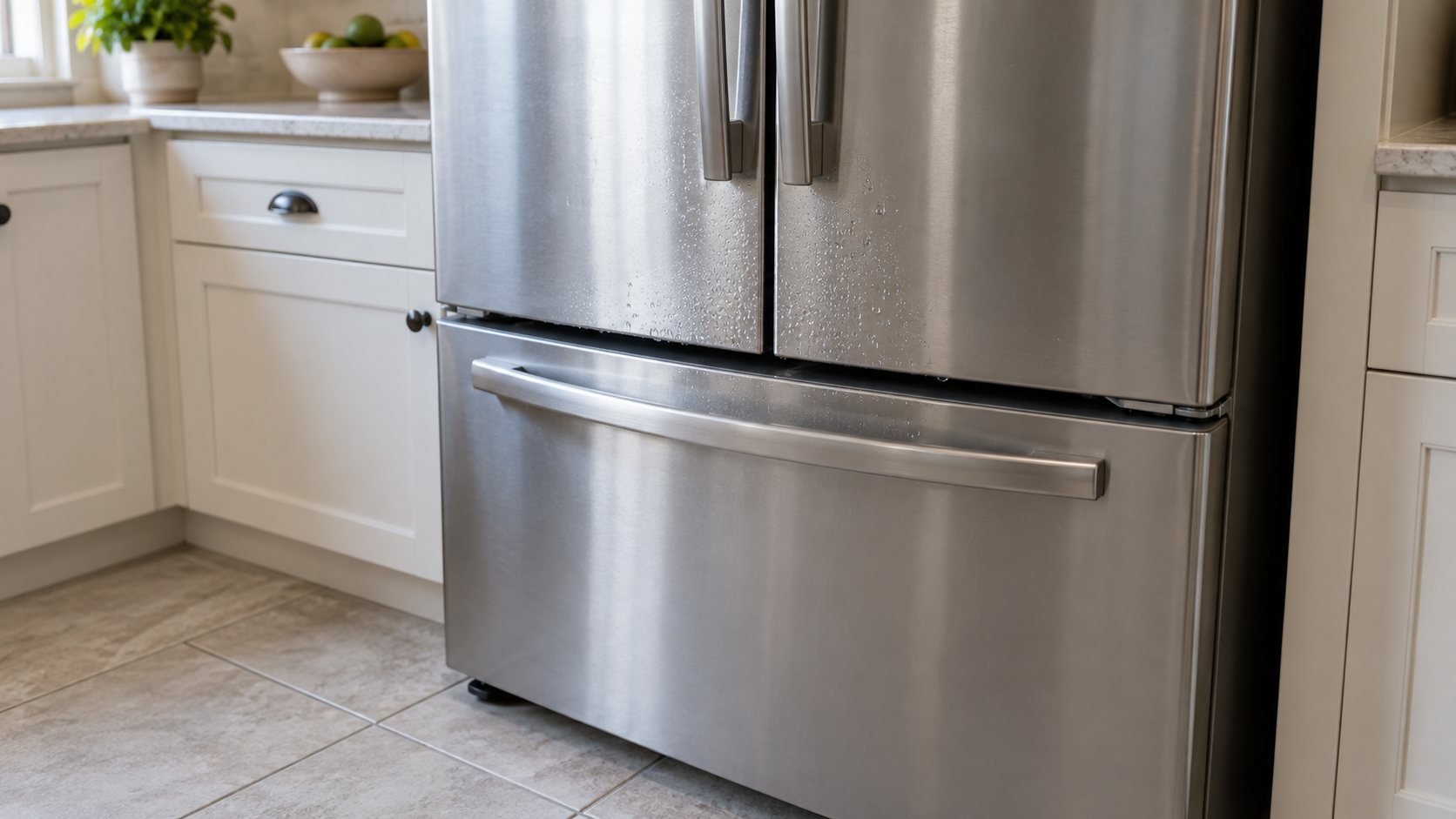
Fine beads or a thin film on the doors, cabinet edge or center divider can be condensation from humid room air. This observation differs from water flowing out of a fitting or repeatedly pooling under the refrigerator. Humidity alone does not identify the source of a floor leak.
Compare the pattern before changing anything
- Light surface moisture, dry floor and otherwise normal cooling: wipe the accessible surface dry, limit long door openings and check that the doors close completely.
- Moisture beside a visible gasket gap: look for a container or drawer holding the door open, trapped debris, or a torn seal. A wet edge does not by itself prove the gasket needs replacement.
- Drops around the filter or water connections, or a recurring floor puddle: treat this as a possible leak. Stop dispenser and ice-maker use and arrange diagnosis if the source is not safely apparent.
- Moisture accompanied by worsening cooling, recurring ice or cabinet damage: request service instead of repeatedly drying the surface and assuming it is normal.
Check the exact meaning of Energy Saver
Some refrigerators have a door-area heater or humidity control that reduces exterior moisture. On GE models with the Energy Saver feature described in its support guide, turning Energy Saver on turns those heaters off. Turning it off can reduce door moisture but uses more electricity. Other models use different controls or have no user setting at all.
Look up the model’s owner manual before changing that setting. Do not confuse Energy Saver with the cooling on/off control, Vacation mode or a temperature setting. Do not raise the food-compartment temperature just to make the outside look dry.
GE: exterior moisture and model-dependent Energy Saver controls
A warm strip around or between the doors can be part of the refrigerator’s normal moisture-control design. Warmth alone is not a reason to replace a heater. Burning odor, damaged wiring or a tripping breaker belongs in the stop-use safety path, not this condensation check.
GE: why the area between refrigerator doors can feel warm
Keep the checks external
Remove objects preventing full closure and gently clean accessible gasket surfaces as the owner manual directs. Check the required cabinet clearances in the installation instructions; there is no single clearance that fits every refrigerator. Do not pull a connected refrigerator forward, remove trim or open electrical panels to investigate moisture.
Whirlpool notes that moisture can collect on cabinet edges or the hinged center seal during humid conditions. If moisture persists despite proper closure and the model’s recommended settings, record the location and request an assessment. Do not add insulation or bypass a door heater yourself.
Whirlpool: normal condensation and moisture at the center seal
Whirlpool: moisture on the outside of the cabinet
20. The Refrigerator Was Recently Unplugged or Defrosted
When a refrigerator is unplugged, frost and ice inside the appliance begin to melt.
Water may overflow if:
- The drain is clogged.
- The drain pan is already full.
- The refrigerator is tilted.
- Towels were not placed around the appliance.
- A large amount of ice had accumulated.
- The refrigerator was moved before draining.
After manual defrosting, check the floor and drain pan before reconnecting power.
21. A Plumbing Leak Is Being Mistaken for a Refrigerator Leak
Water near the refrigerator may come from another source.
Possible sources include:
- Sink plumbing.
- Dishwasher connection.
- Water-softener line.
- Wall supply pipe.
- Air-conditioning drain.
- Ceiling leak.
- Adjacent cabinet plumbing.
- Refrigerator shutoff valve inside the wall.
If the refrigerator’s water supply is turned off and water continues to appear, another plumbing source may be involved.
How to Determine Where the Water Is Coming From
After the leak is controlled and the area is safe, dry accessible water and note its original location. Use observations already made; do not restart the dispenser or ice maker to create another leak.
Water near the back
Likely causes include:
- Supply line.
- Inlet valve.
- Rear tubing connection.
- Drain pan.
- Household shutoff valve.
Water near the front
Likely causes include:
- Clogged defrost drain.
- Water under crisper drawers.
- Door condensation.
- Dispenser tubing.
- Freezer floor ice melting.
Water inside the refrigerator
Likely causes include:
- Clogged drain.
- Filter housing.
- Water reservoir.
- Interior tubing.
- Door not sealing.
Water inside the freezer
Likely causes include:
- Frozen defrost drain.
- Ice maker overfilling.
- Misaligned fill tube.
- Door left open.
- Excessive frost.
Water appears only after using the dispenser
Likely causes include:
- Dispenser tubing.
- Filter housing.
- Water reservoir.
- Inlet valve.
- Loose connection.
Water appears during ice maker filling
Likely causes include:
- Fill tube.
- Ice maker overfilling.
- Inlet valve.
- Ice maker mold or alignment.
- Frozen fill tube.
What Can You Safely Check?
First make sure the floor and electrical area are safe to approach. Observe what has already happened; do not restart a leak to test or film it.
- From a dry position, note whether moisture starts on the door, inside the cabinet, near an accessible connection or on the floor.
- If only light door condensation is present, dry the accessible surface and check for blocked door closure or visible gasket damage.
- Note a recent filter change, dispenser use or ice-maker fill if you already observed it. Do not repeat those actions to provoke a leak.
- Look at visible tubing without moving the appliance or loosening fittings. A refrigerator without a connected water supply can still have a drainage or condensation problem.
- For an active suspected water-system leak, close the supply valve only if you can reach it safely and turn the ice maker off using the owner instructions.
- Follow the exact model instructions for any accessible filter inspection. Do not force parts, open panels, chip ice or reach toward fans.
If water is near the plug, outlet or wiring, do not touch them or step through the water. Power isolation must be possible from a dry, safe location; otherwise stay clear and obtain qualified help. A household valve or plumbing leak may need a plumber.
Whirlpool: floor leaks, filter installation and water connections
When Should You Turn Off the Water Supply?
Turn off the refrigerator’s water supply when:
- Water continues leaking from the rear.
- The supply line is cracked.
- The inlet valve is leaking.
- Water appears during every ice maker fill.
- A connection has separated.
- The filter housing is leaking heavily.
- Water is entering cabinets or walls.
- You cannot identify the source quickly.
Closing the water supply may control a water-system leak, but it does not make wet electrical components safe. It also will not stop every drainage-related leak.
The ice maker should also be switched off while the water supply is closed.
When Should You Unplug the Refrigerator?
Disconnect power when:
- Water reaches the outlet or plug.
- The power cord is wet.
- You smell burning.
- Water is entering an electrical compartment.
- The breaker or GFCI trips.
- The condenser fan is blocked by water or debris.
- A large amount of water has collected beneath the appliance.
Never touch a wet plug or cross water to reach it. Use the circuit breaker only from a dry, safe location; otherwise stay clear and get qualified help.
When Should You Call an Appliance Technician?
Professional refrigerator service is recommended when:
- The leak returns after basic checks.
- Water collects under the crisper drawers.
- Ice repeatedly forms on the freezer floor.
- The defrost drain is blocked or frozen.
- The inlet valve is leaking.
- The filter housing is cracked.
- The drain pan is damaged.
- The condenser fan is not running.
- Water appears during the ice maker fill cycle.
- The refrigerator is also not cooling properly.
- Water is entering electrical components.
- The leak has damaged flooring or cabinets.
- You cannot safely move the refrigerator.
A technician can test the water system, defrost drain, inlet valve, ice maker, filter housing, drain pan, fans, and related components.
Can a Small Refrigerator Leak Cause Serious Damage?
Yes.
A slow leak may cause:
- Swollen laminate flooring.
- Damaged wood cabinets.
- Mold or mildew.
- Stained baseboards.
- Corrosion.
- Electrical damage.
- Insect activity.
- Subfloor deterioration.
Water can travel under flooring or cabinets before it becomes visible.
Repairing the source early may prevent significantly more expensive property damage.
Should You Repair or Replace the Refrigerator?
A water leak is often repairable when it involves:
- Defrost drain.
- Water tubing.
- Inlet valve.
- Water filter housing.
- Drain pan.
- Ice maker fill tube.
- Door gasket.
- Water reservoir.
Replacement may be more practical when:
- The cabinet has severe internal corrosion.
- Multiple water-system components are damaged.
- The leak has entered inaccessible insulation.
- Critical parts are discontinued.
- The refrigerator also has a major sealed-system failure.
- Repair cost approaches the value of the appliance.
A complete diagnosis should be performed before deciding.
What to Include in a Local Repair Request
For refrigerator service in Cape Coral or Fort Myers, describe the moisture pattern and whether cooling changed. This helps us prepare for diagnosis; a description or photo cannot confirm which part has failed.
- Brand and model number from an already accessible label; do not move the refrigerator to find it.
- Where water first appeared, whether it is beads or a puddle, and when you noticed it.
- Any recent filter change, door left ajar, error code or cooling change.
- Your service city, safe photos of the visible symptom, and whether the water supply or power has been isolated. Do not recreate the leak for a photo.
Refrigerator repair in Cape Coral
Refrigerator repair in Fort Myers
An online appointment time is a request and requires confirmation. The service call is $0 when an approved repair is completed; $79 if no repair is completed after diagnosis. The repair price is explained before work begins.
Request a refrigerator service appointment
Read the service-call and warranty policy
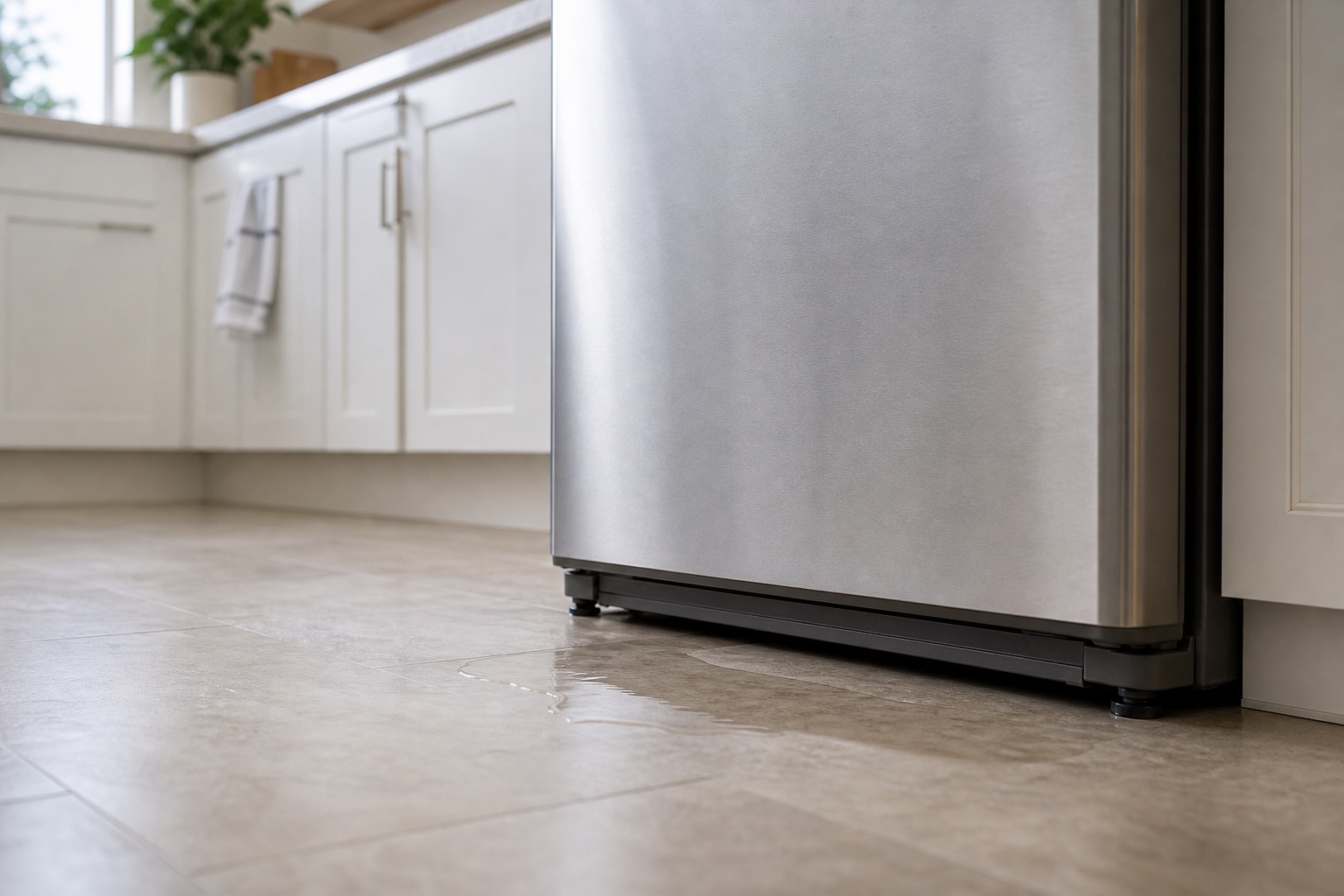
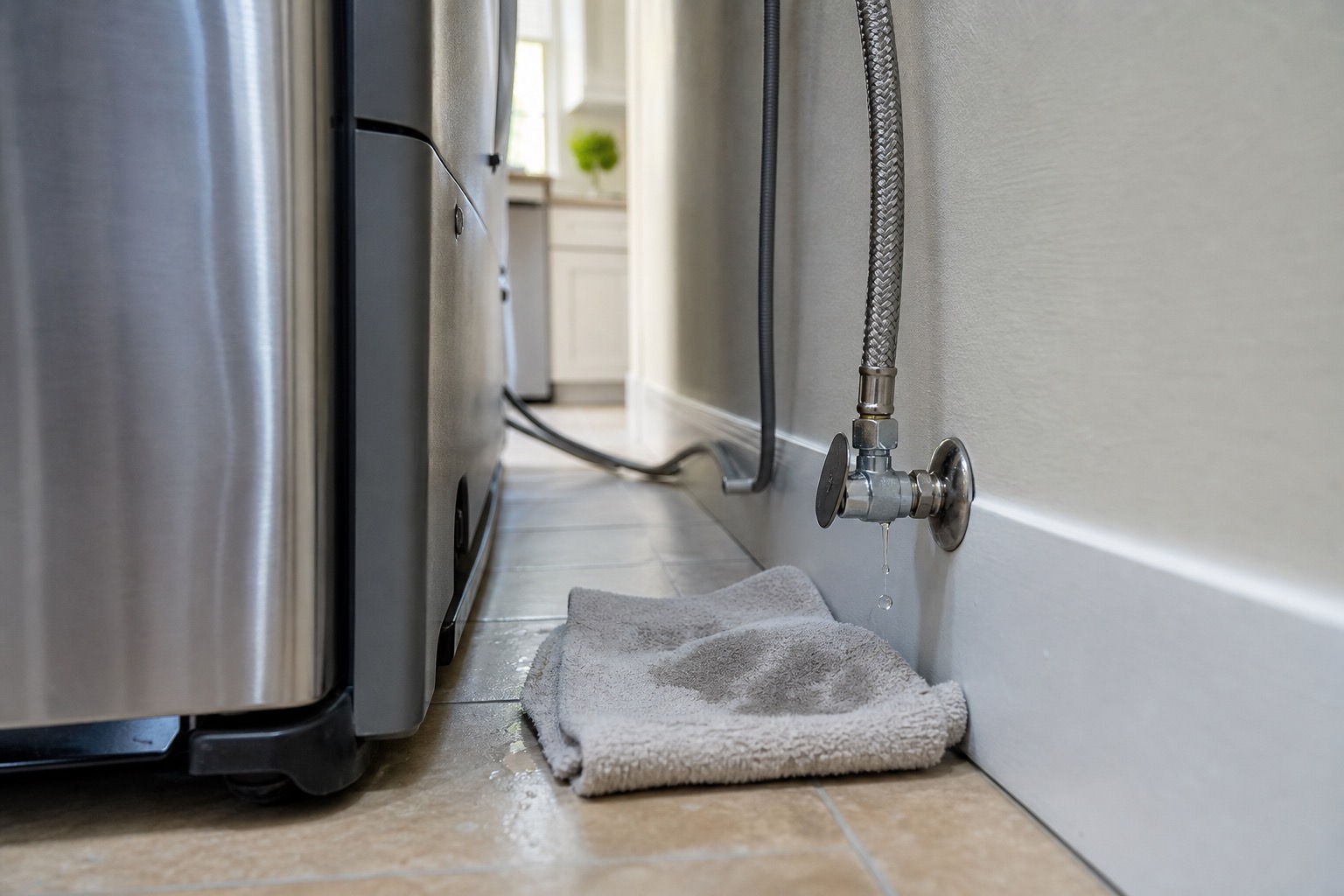
Photo guide
Diagnostic Photos
Local Refrigerator Service
We provide refrigerator repair in Cape Coral and Fort Myers, along with surrounding Southwest Florida service areas.
For scheduling, use the Contact page or call/text Art’s Appliance Repair directly.
Helpful Next Pages
These related guides and local service pages help connect the symptom to a practical repair path.
Related Appliance Guides
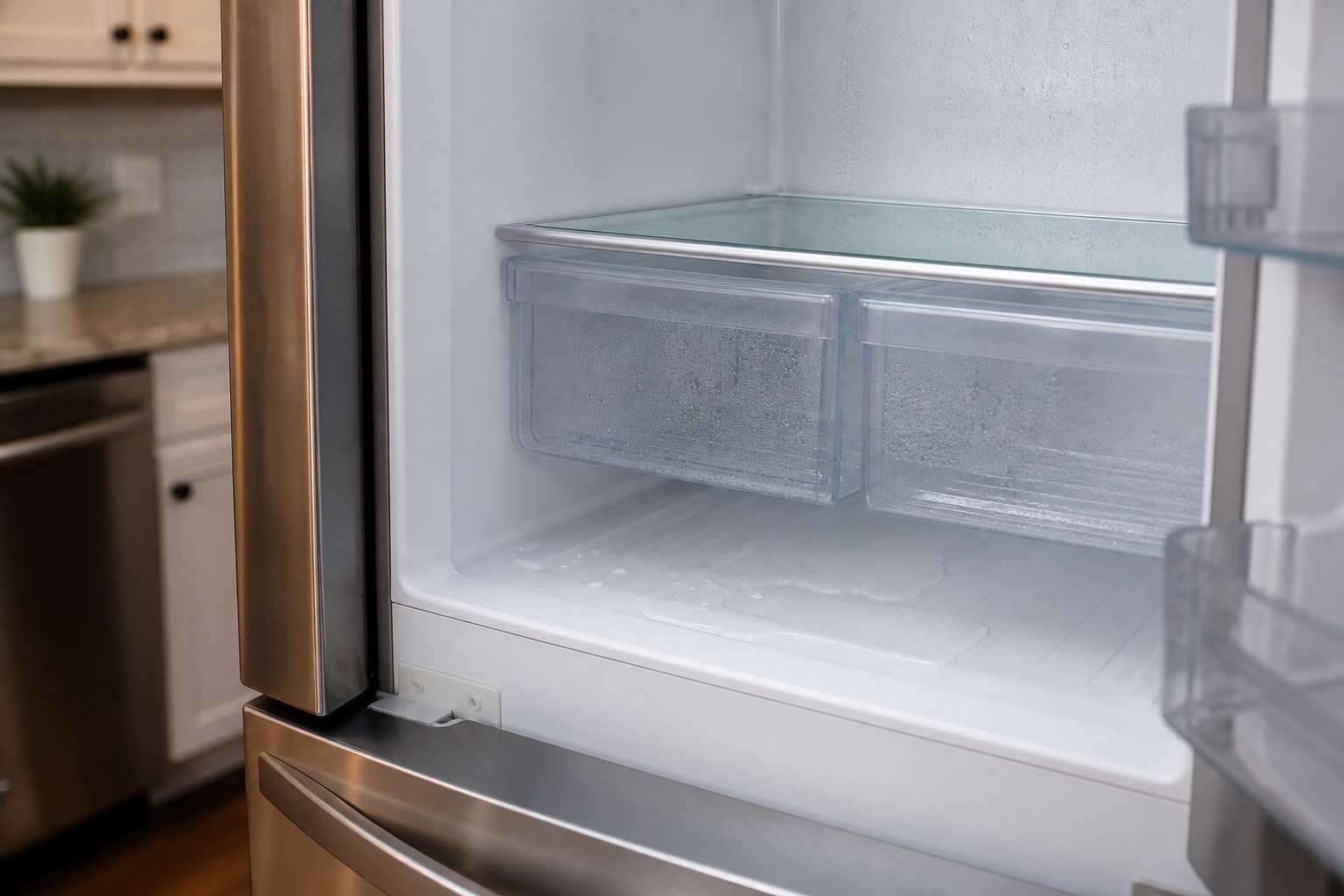
Refrigerator
Refrigerator Leaking Water Inside: Causes and Solutions
Water collecting inside your refrigerator? Learn the most common causes, safe checks, and when to schedule refrigerator repair in Cape Coral or Fort Myers.
Updated August 14, 2026
refrigerator leaking water inside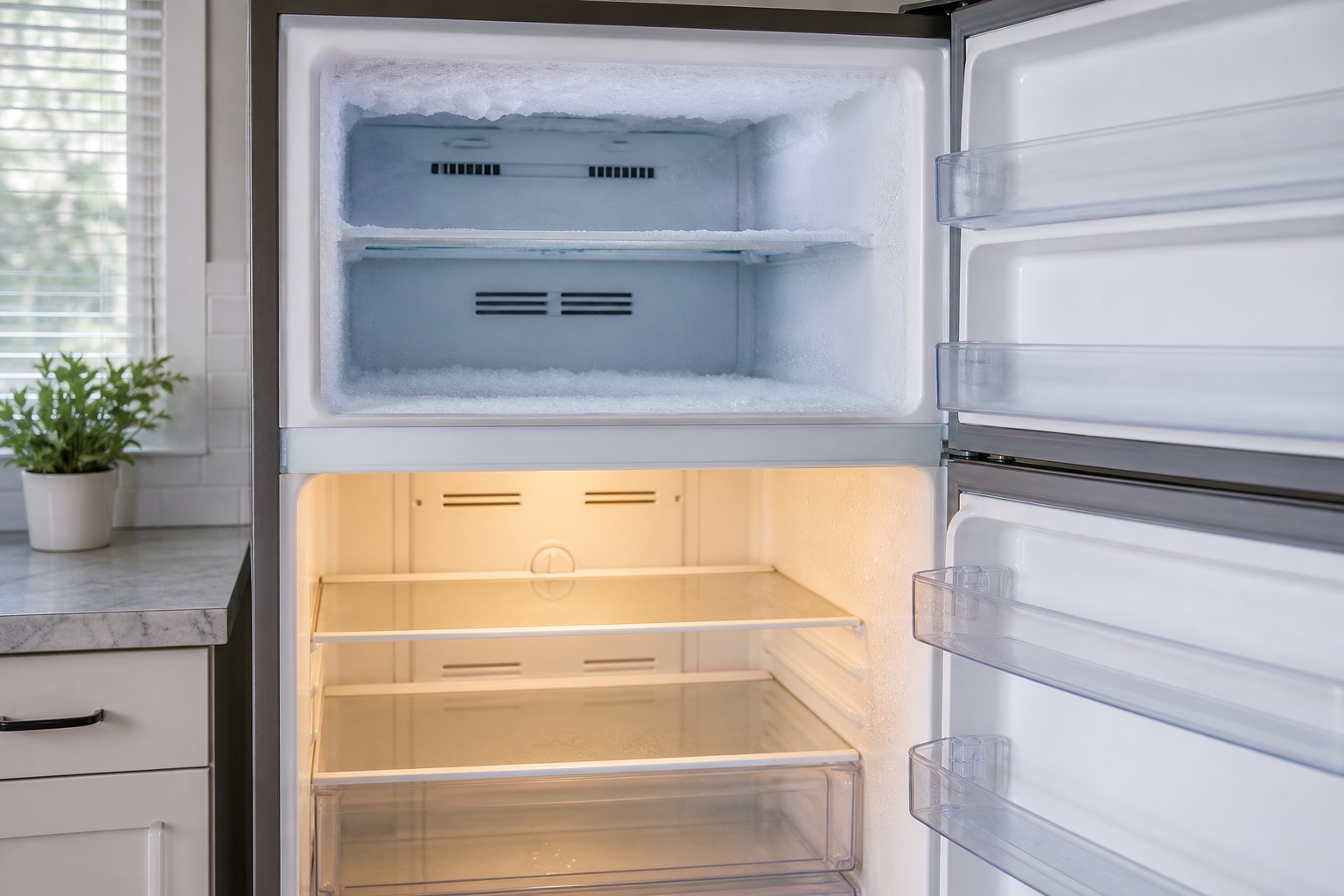
Refrigerator
Refrigerator Not Cooling but Freezer Is Working: Common Causes
Freezer cold but refrigerator warm? Learn the most common causes, safe checks, and when to schedule refrigerator repair in Cape Coral and Fort Myers.
Updated July 19, 2026
refrigerator not cooling but freezer is working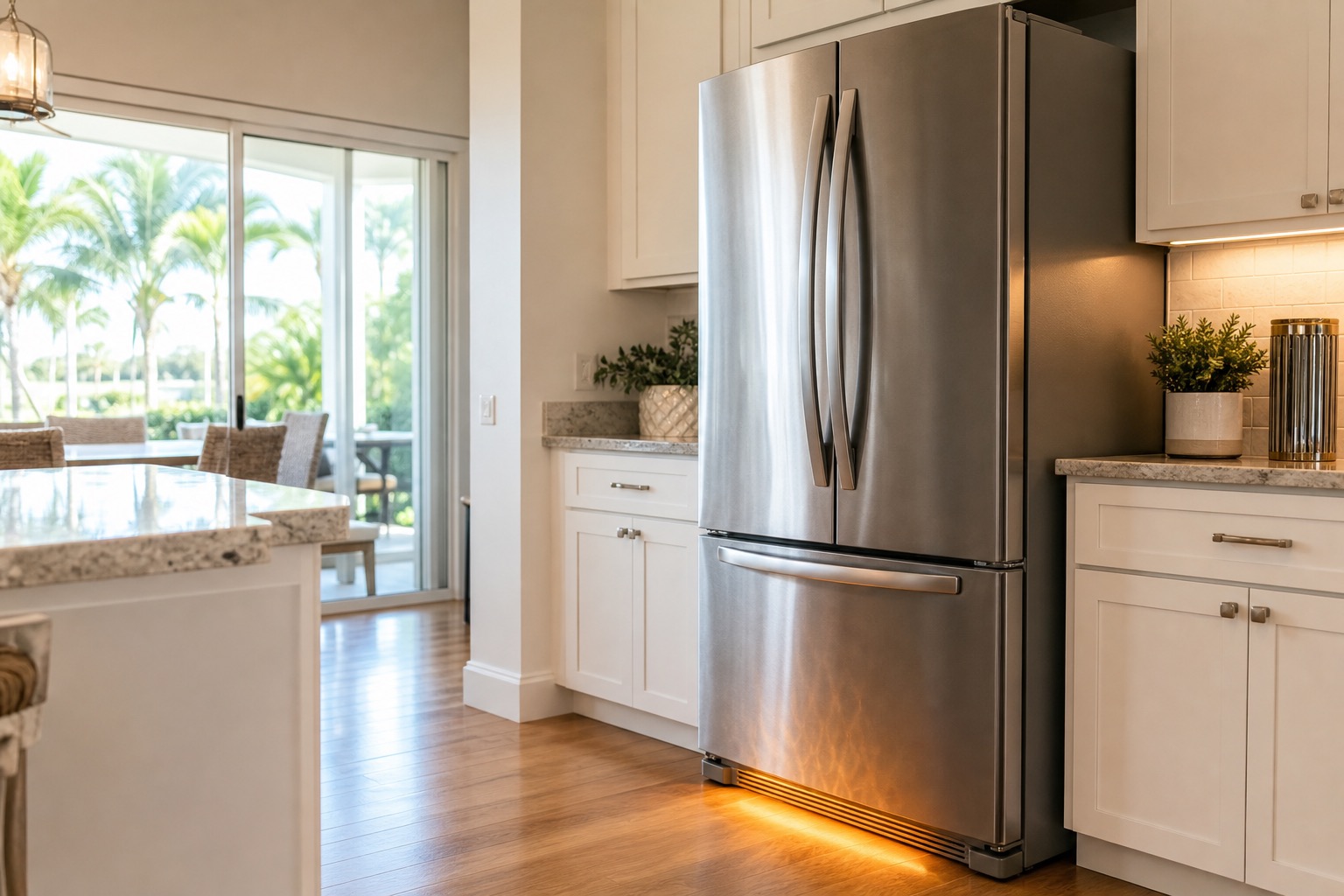
Refrigerator
Why Is My Refrigerator Running Constantly?
Is your refrigerator running nonstop? Learn the common causes, safe checks, and when to schedule refrigerator repair in Cape Coral and Fort Myers.
Updated July 19, 2026
refrigerator running constantlyNeed service?
Refrigerator Leak Repair in Cape Coral, Fort Myers and Southwest Florida
Art’s Appliance Repair provides refrigerator diagnostics and leak repair throughout Cape Coral, Fort Myers, North Fort Myers, Lehigh Acres, Estero, Bonita Springs, Naples, and surrounding Southwest Florida communities.
We diagnose refrigerator water problems including:
- Water under the refrigerator.
- Water under crisper drawers.
- Clogged defrost drains.
- Ice on the freezer floor.
- Leaking supply lines.
- Water inlet valve failures.
- Filter housing leaks.
- Ice maker overfilling.
- Frozen or misaligned fill tubes.
- Cracked drain pans.
- Door gasket and condensation problems.
- Refrigerator leaks combined with cooling problems.
Call or text (239) 688-9955 to schedule refrigerator service.
The service call is $0 when an approved repair is completed; $79 if no repair is completed after diagnosis.
View Refrigerator Repair