
Is the Dispenser Completely Dead or Is the Water Flow Weak?
Before diagnosing the refrigerator, determine what happens when the dispenser paddle or button is pressed.
The dispenser may:
- Produce no water and make no sound.
- Make a humming or buzzing sound but release no water.
- Dispense water very slowly.
- Work only after several attempts.
- Stop after a filter replacement.
- Drip after the glass is removed.
- Work intermittently.
- Dispense water but not make ice.
- Make ice but not dispense water.
- Work only when the refrigerator door is pushed closed.
These symptoms help narrow down whether the problem involves the water supply, valve, tubing, switches, or electronic controls.
Basic Settings and Water-Supply Problems
1. The Dispenser Lock Is Turned On
Many refrigerators have a control-lock feature that disables the water and ice dispenser.
Look for:
- Control Lock.
- Dispenser Lock.
- Lock icon.
- Child Lock.
- Key symbol.
The display and lights may still work normally while dispensing is disabled.
The unlock procedure varies by model and may require holding a button for several seconds.
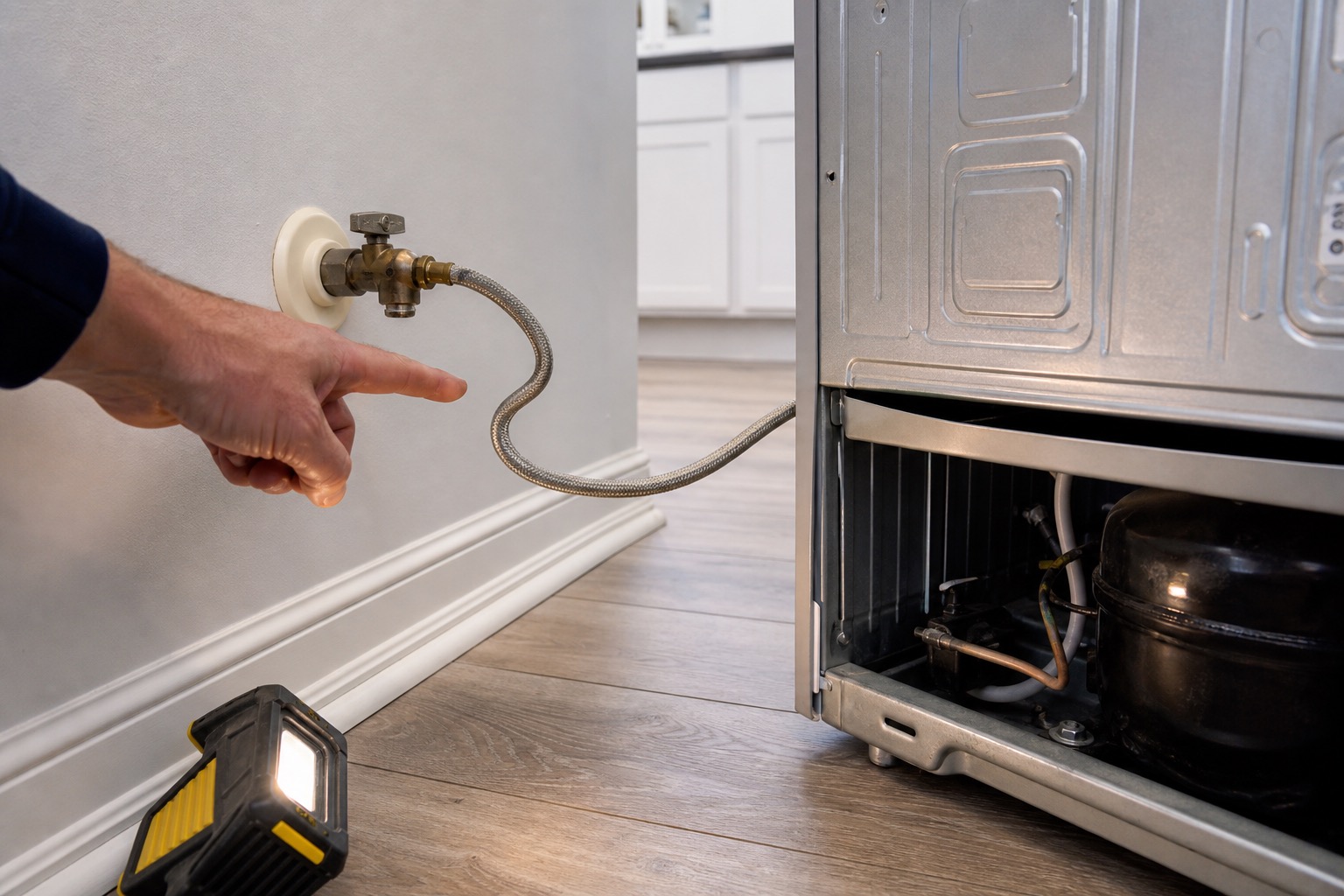
2. The Refrigerator Water Supply Is Turned Off
The dispenser cannot operate if the household shutoff valve is closed.
Check that:
- The shutoff valve is fully open.
- The water line is connected.
- The valve handle is in the correct position.
- The home water supply is active.
- No recent plumbing work interrupted the line.
A partially closed valve may cause slow flow rather than a complete loss of water.
3. The Water Supply Line Is Kinked or Crushed
The water line behind the refrigerator may become pinched when the appliance is pushed toward the wall.
Possible symptoms include:
- No water.
- Slow water flow.
- Inlet valve buzzing.
- Small or hollow ice cubes.
- Dispenser working intermittently.
Inspect accessible tubing carefully.
Do not pull the refrigerator out for this check; leave hidden or inaccessible tubing to the installer or technician.
4. Household Water Pressure Is Too Low
The refrigerator inlet valve requires adequate water pressure.
Low pressure may be caused by:
- Partially closed shutoff valve.
- Kinked line.
- Restricted saddle valve.
- Clogged water filter.
- Reverse-osmosis system.
- Household plumbing problem.
- Mineral buildup.
Possible symptoms include:
- Very slow dispenser flow.
- Small ice cubes.
- Water valve buzzing.
- Ice maker not filling.
- Dispenser working only occasionally.
If other fixtures also have weak flow, the problem may be in the household plumbing.
Water Dispenser Slow or Not Working After a Filter Change
Before buying another filter, write down whether flow was normal immediately before the change, whether any water now comes out, and the exact display message. Keep the old filter number or packaging for comparison. A similar shape alone does not confirm compatibility.
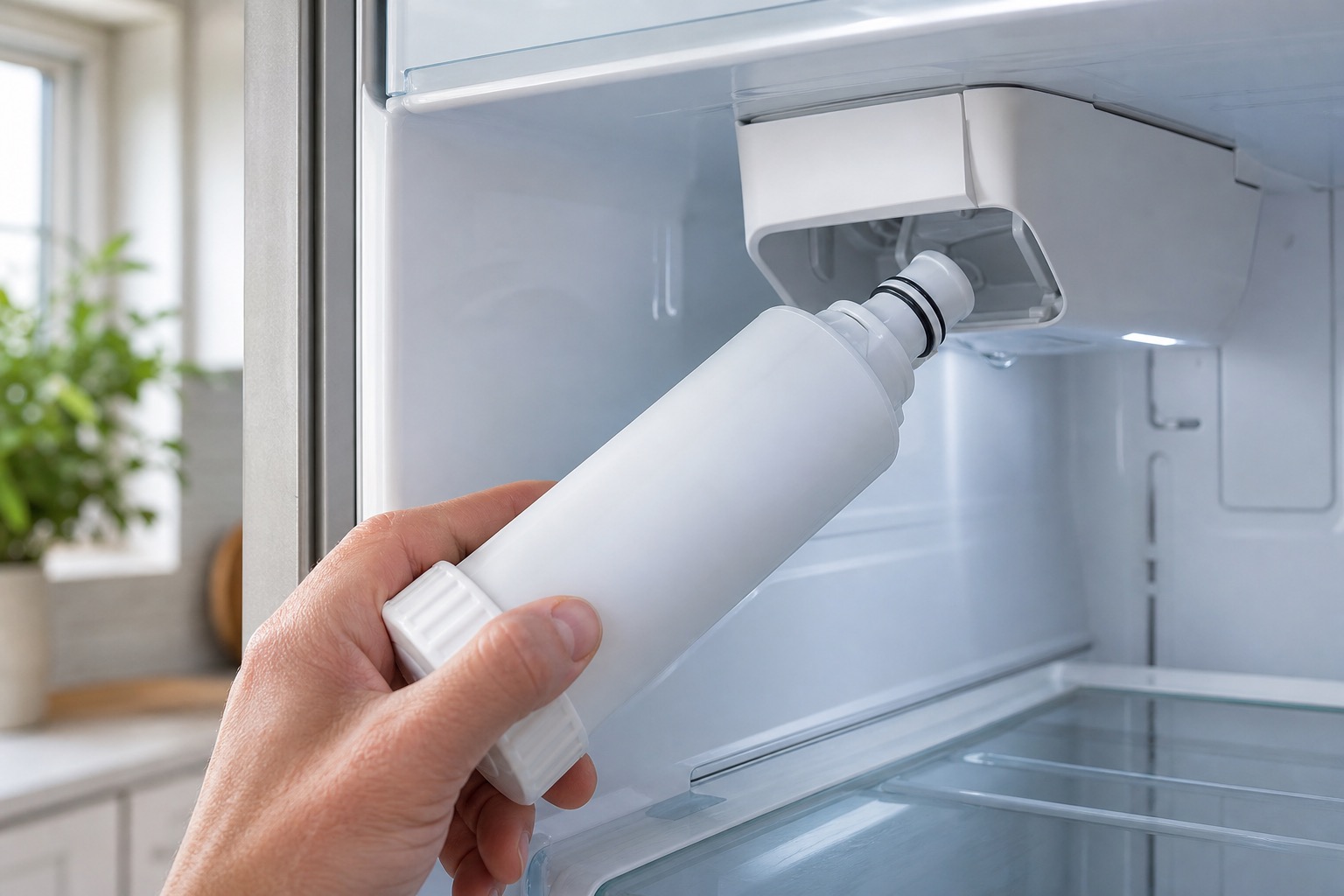
5. Check the Filter History and Correct Replacement
GE identifies a restricted filter as a cause of slow or absent flow. A gradual decline makes filter history useful; an immediate change after replacement makes fit and installation worth checking first. Use the replacement specified for the refrigerator model and follow its replacement interval. Do not keep purchasing parts based only on the symptom.
6. Check Installation Without Forcing the Housing
Follow the exact cartridge instructions, including any water-shutoff step, orientation marks, and normal seated position. Designs differ: do not copy a twist direction or release method from a different filter. If the cartridge will not seat normally, the housing leaks, or a seal appears damaged, stop and request help. Do not insert tools into the housing to make it fit.
Some GE bottom-freezer refrigerators using RPWFE filters also read an identification chip. GE documents that the wrong filter or incorrect installation can stop dispensing or produce a filter-related message. Its RPWFE reminder is handled differently from a simple manual-reset light. This example applies to that system; it is not a rule for every GE refrigerator. Record a leak warning instead of assuming it is harmless or trying to defeat the detection system.
GE Appliances: RPWFE filter recognition and installation limits
7. Flush Using the Instructions for That Filter
Whirlpool explains that flushing after a filter change removes trapped air and loose carbon. Air can cause spurting or dripping. Use a sturdy container and the specified dispensing-and-rest intervals. The required amount varies between filters, so there is no single gallon amount or uninterrupted run time that fits every refrigerator.
Follow the instructions for your refrigerator and replacement cartridge together. If water never begins flowing, a leak develops, or the model’s procedure does not resolve the problem, stop and arrange service. Resetting a filter reminder does not physically reseat the cartridge or flush the water path.
Whirlpool: flushing steps and why the amount varies by filter
Can You Test It With the Filter Removed?
Only if the model instructions explicitly permit it. GE’s slow-flow procedure uses the correct bypass plug in place of the filter; an empty housing is not an equivalent test. Do not improvise a plug, alter a chip, or defeat leak protection. If the approved bypass restores flow, report that result to help assess the filter path. If flow stays poor with a correctly installed new filter or permitted bypass, service may be needed.
GE Appliances: slow flow and the approved bypass-plug check
8. A Leaking or Damaged Filter Housing Needs Service
Stop using the dispenser if water appears around the filter connection. Turn off the refrigerator water supply only if the shutoff is safely accessible; do not disconnect tubing or reach past wet electrical parts. A leak, repeated installation failure, or recurring no-flow condition needs diagnosis before further flushing.
Frozen Water-Line Problems
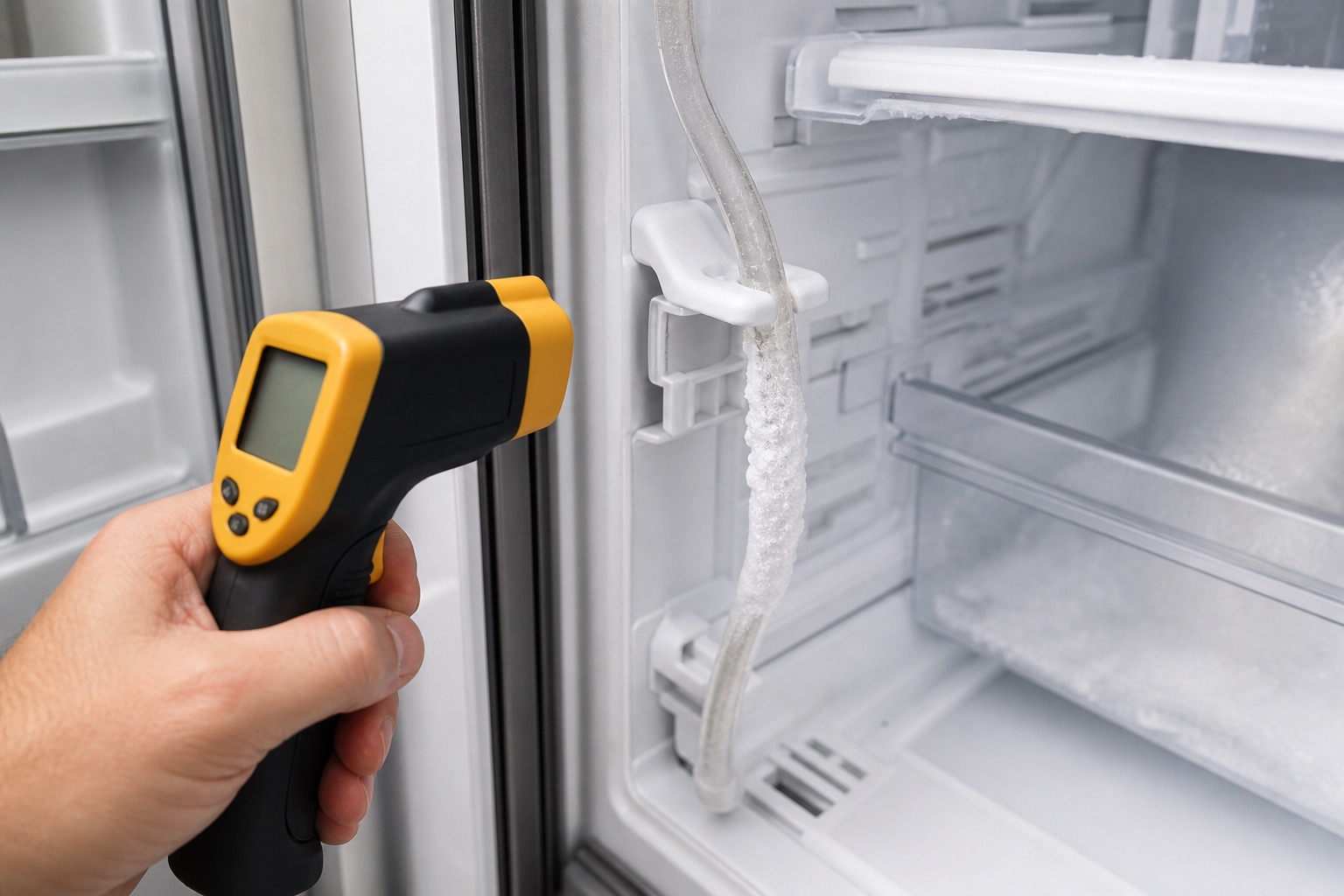
9. The Water Line Inside the Freezer Door Is Frozen
On many side-by-side refrigerators, dispenser tubing runs through the freezer door.
The line may freeze if:
- Freezer temperature is too low.
- Cold air leaks into the tubing area.
- Door insulation is damaged.
- Water remains stationary for a long time.
- The line is positioned incorrectly.
- The door heater has failed on models that use one.
Possible symptoms include:
- Dispenser switch and valve operate.
- A humming sound is heard.
- No water reaches the dispenser.
- Ice maker still works.
- Problem begins after lowering the freezer temperature.
Do not insert tools or apply heat to thaw dispenser tubing.
A frozen line may return if the underlying temperature or insulation problem is not corrected.
10. The Water Reservoir Is Frozen
Some refrigerators store chilled water in a reservoir or coiled tubing inside the fresh-food compartment.
The reservoir may freeze if:
- Refrigerator temperature is set too low.
- Food blocks airflow.
- A damper is stuck open.
- A temperature sensor is inaccurate.
- The reservoir is positioned against a very cold surface.
Possible symptoms include:
- No dispenser water.
- Frozen food nearby.
- Water flow returning after the refrigerator warms.
- Reservoir area visibly frozen.
The normal refrigerator setting is generally around 37°F.
11. The Refrigerator Is Freezing Food
A dispenser failure may be part of a broader temperature problem.
If food is freezing in the fresh-food section, possible causes include:
- Temperature set too low.
- Faulty thermistor.
- Stuck air damper.
- Blocked airflow.
- Control-board problem.
- Food positioned directly in front of a vent.
A frozen reservoir or tubing may be a symptom rather than the primary failure.
Water Inlet Valve Problems
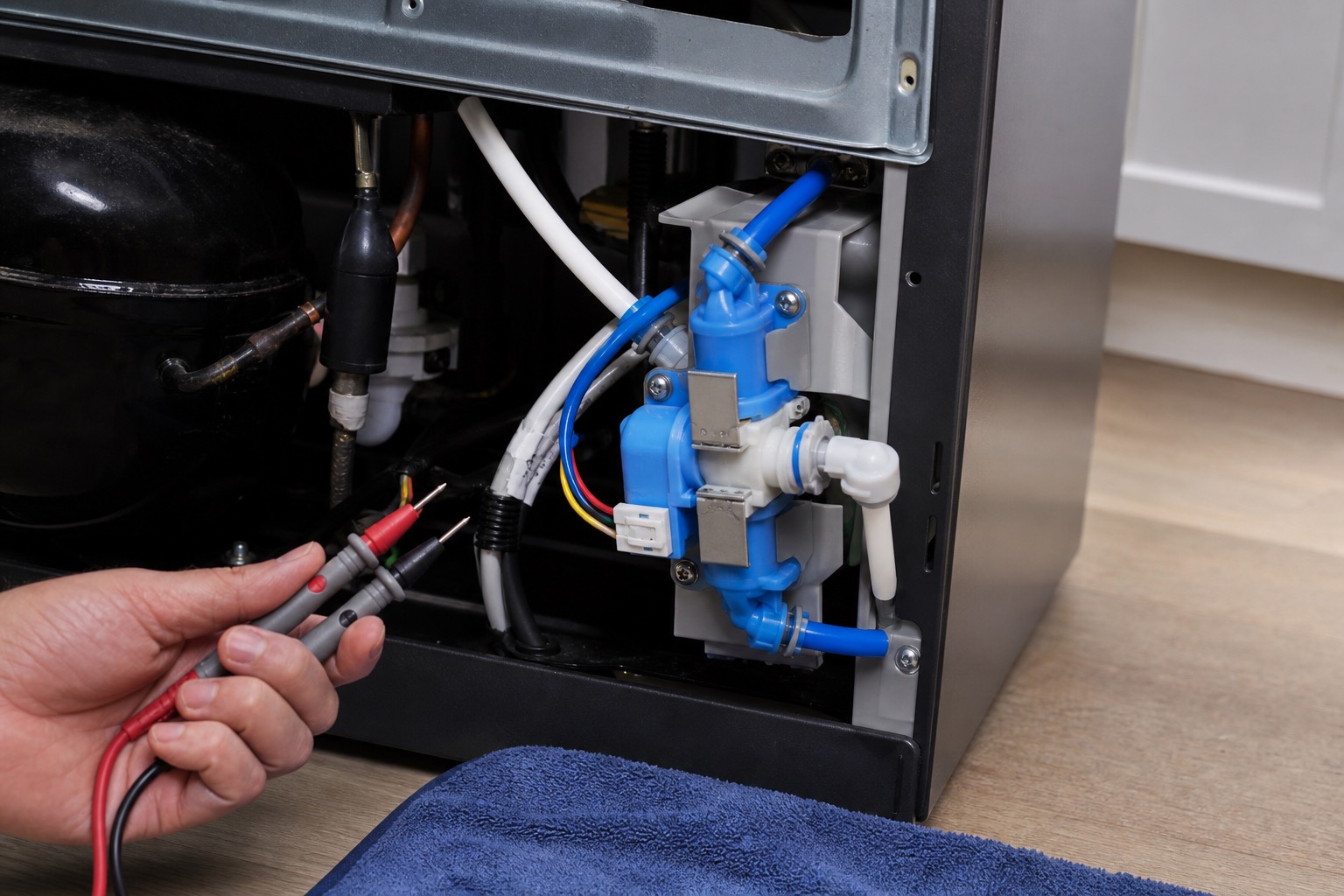
12. The Water Inlet Valve Has Failed
The inlet valve opens when the dispenser requests water.
It may fail electrically or mechanically.
Possible symptoms include:
- Buzzing but no water.
- No sound from the valve.
- Slow water flow.
- Intermittent dispensing.
- Ice maker also not filling.
- Water leaking from the rear.
- Valve receiving power but not opening.
The valve may fail because of:
- Internal coil failure.
- Mineral buildup.
- Damaged seal.
- Low water pressure.
- Age.
- Electrical damage.
The valve should be tested before replacement.
13. The Dispenser Side of a Dual Valve Has Failed
Many refrigerators use a dual or multiple water inlet valve.
One section may supply the ice maker while another supplies the dispenser.
This can cause:
- Ice maker works but dispenser does not.
- Dispenser works but ice maker does not.
- One valve coil tests open.
- Different flow problems in each system.
The complete valve assembly may require replacement even when only one section has failed.
14. The Valve Is Restricted by Mineral Buildup
Minerals and sediment can restrict the internal valve opening.
Possible symptoms include:
- Weak flow despite a new filter.
- Valve buzzing.
- Flow gradually worsening.
- Water pressure good before the refrigerator.
- Dispenser working intermittently.
A restricted valve is normally replaced rather than cleaned internally.
Dispenser Switch and Paddle Problems
15. The Dispenser Paddle Is Not Activating the Switch
The paddle or lever presses a small switch inside the dispenser assembly.
If the paddle is broken, misaligned, or obstructed, the switch may not activate.
Possible symptoms include:
- No sound when the paddle is pressed.
- Paddle feels loose.
- Dispenser works only when pressed in one location.
- Paddle does not return normally.
- Visible cracked plastic.
The paddle, bracket, spring, and switch should be inspected.
16. The Dispenser Switch Has Failed
The dispenser switch sends a signal to the control system or valve.
A failed switch may cause:
- No response when pressed.
- Intermittent dispensing.
- Water flowing only with heavy pressure.
- No audible click.
- Dispenser light working while water does not.
A qualified technician can test the switch and safely isolate electrical components.
Do not remove the dispenser cover or probe its wiring.
17. Ice or Debris Is Blocking the Dispenser Mechanism
Ice buildup, sticky residue, or debris may interfere with the paddle or internal mechanism.
Clean only the normally accessible exterior as directed in the owner’s manual.
Do not pour water into the dispenser housing; electronic components may be nearby.
Door-Switch Problems
18. The Refrigerator Door Is Not Fully Closed
Many refrigerators disable dispensing when a door is open.
Check for:
- Food blocking the door.
- Damaged gasket.
- Misaligned shelves.
- Sagging hinge.
- Ice buildup.
- Door not contacting the switch.
The dispenser may work when pressure is applied to the door if alignment is the issue.
19. The Door Switch Is Faulty
The control system uses the door switch to determine whether dispensing is safe.
A failed switch may cause:
- Water dispenser not working.
- Ice dispenser not working.
- Interior light behaving incorrectly.
- Door-open warning.
- Ice maker stopping.
- Dispenser working only intermittently.
The switch, wiring, and door alignment should be tested.
20. Wiring Inside the Door Hinge Is Damaged
Water and dispenser wiring often pass through the lower or upper door hinge.
Repeated door movement may damage:
- Wires.
- Connectors.
- Water tubing.
- Harness insulation.
Possible symptoms include:
- Dispenser works when the door moves.
- Intermittent lights or controls.
- Water leaking near the hinge.
- Ice dispenser and water dispenser failing together.
- Broken wires visible near the hinge.
Damaged hinge wiring should be repaired correctly and protected from further movement.
Internal Tubing and Reservoir Problems
21. A Water Tube Is Disconnected
A push-to-connect fitting may separate inside the refrigerator or door.
The valve may operate, but water may leak inside instead of reaching the dispenser.
Possible signs include:
- Water under drawers.
- Water near a lower hinge.
- Valve sound with no water at the dispenser.
- Leak during every dispensing attempt.
- Reduced water pressure.
Turn off the refrigerator’s water supply if an internal tubing leak is suspected.
22. The Water Tubing Is Cracked or Pinched
Tubing may become:
- Cracked.
- Kinked.
- Pinched.
- Frozen.
- Damaged during service.
- Worn from door movement.
Possible symptoms include:
- Weak or no flow.
- Water leak.
- Air entering the line.
- Intermittent dispenser operation.
Damaged tubing should be replaced rather than patched temporarily.
23. The Water Reservoir Is Cracked
A cracked reservoir may prevent normal pressure and cause leaking inside the refrigerator.
Possible symptoms include:
- Water under crisper drawers.
- Dispenser flow becoming weak.
- Water leaking only during dispensing.
- Visible crack or wet reservoir area.
The reservoir normally requires replacement.
Electronic Control Problems
24. The User Interface Is Not Registering the Command
Some refrigerators use electronic touch controls instead of a mechanical dispenser switch.
A user-interface problem may cause:
- Water selection not responding.
- Display button not working.
- Other dispenser functions failing.
- Intermittent operation.
- Error codes.
- Controls working after reset.
The interface, wiring, and control board should be tested before parts are replaced.
25. The Dispenser Control Board Has Failed
Some models use a separate dispenser board.
A failure may affect:
- Water dispenser.
- Ice dispenser.
- Dispenser light.
- Lock function.
- Display.
- Paddle input.
Possible signs include:
- Multiple dispenser features failing together.
- Burned or corroded board.
- No output to the inlet valve.
- Intermittent operation.
The board should not be replaced until switches, wiring, valve, and power supply are checked.
26. The Main Control Board Is Not Activating the Valve
The main refrigerator control may manage valve operation and door-switch logic.
Possible symptoms include:
- Dispenser input is detected but the valve receives no power.
- Ice maker and dispenser behave incorrectly.
- Problem returns after reset.
- Multiple components fail.
- Communication error appears.
Control-board diagnosis should come after testing the water supply, valve, switches, and wiring.
27. A Reset Is Model-Specific
Record any error or leak message before changing controls. Use a reset only when the manufacturer’s instructions for your model and symptom call for one. There is no universal five-minute reset for a water-dispenser problem, and a restart does not repair a leak or a damaged part.
Other Conditions That Can Stop Dispensing
28. The Refrigerator Is in Demo or Showroom Mode
In Demo mode:
- Lights and display may work.
- Cooling may remain off.
- Some dispenser functions may be disabled.
- Controls may appear normal.
Look for:
- Demo.
- Showroom.
- Cooling Off.
- OF OF.
- O FF.
Use the model-specific procedure to restore normal operation.
29. The Freezer Temperature Is Too Low
A freezer set much colder than necessary may freeze the door water line.
The recommended starting setting is generally near 0°F.
Do not raise the temperature too far because ice production and food storage can be affected.
30. The Refrigerator Was Recently Installed
A newly installed refrigerator may need time for:
- Water pressure to stabilize.
- Air to clear from the line.
- Filter to fill.
- Reservoir to fill.
- Refrigerator temperature to stabilize.
Flush the water system according to the manufacturer’s instructions.
31. The Refrigerator Was Recently Moved
Moving the refrigerator can:
- Kink the water line.
- Close or damage the shutoff valve.
- Loosen tubing.
- Disturb a connector.
- Pinch the power cord.
- Damage hinge wiring.
Inspect the installation if the dispenser problem began immediately after moving the appliance.
32. The Dispenser Works Only Intermittently
Intermittent operation may point to:
- Weak switch.
- Loose connector.
- Door-switch issue.
- Failing inlet valve.
- Frozen line that partially thaws.
- Damaged hinge wiring.
- Electronic control problem.
Note whether the problem changes with:
- Door position.
- Time of day.
- Freezer temperature.
- Filter removal.
- Repeated pressing.
- Refrigerator reset.
What Can You Safely Check?
Keep the checks external and follow the owner’s manual:
- Confirm the dispenser selection, lock status, and normal door closure.
- Check a safely accessible supply shutoff and visible tubing without pulling out the appliance or disconnecting plumbing.
- Note whether other household fixtures also have weak flow; this does not measure pressure at the refrigerator.
- Verify the replacement filter and complete only its permitted installation and flushing steps.
- Record whether ice production changed, any exact error message, and when the problem began.
Leave panel removal, electrical measurements, hinge wiring, valve replacement, and internal tubing to a qualified technician. Do not use tools or heat to clear a frozen water line.
GE Appliances: no-water checks and when service is required
When Should You Stop Using the Dispenser?
Stop using the dispenser and turn off the water supply when:
- Water leaks inside or behind the refrigerator.
- Tubing is cracked.
- Water reaches electrical components.
- The inlet valve does not close.
- The filter housing leaks.
- Water appears near the power cord or outlet.
- The dispenser activates without being pressed.
Do not touch a wet plug, outlet, or electrical part. Keep away from wet electrical areas and arrange qualified help. Whether cooling can safely continue depends on the fault; a leak near electrical parts is not a routine dispenser-only problem.
When Should You Call a Refrigerator Technician?
Professional diagnosis is recommended when:
- The dispenser remains inactive after basic checks.
- The valve buzzes but no water flows.
- The dispenser switch does not respond.
- The filter and supply pressure are normal.
- The door water line freezes repeatedly.
- Water leaks inside the refrigerator.
- The ice maker works but the dispenser does not.
- The dispenser works only when the door is moved.
- A control or communication error appears.
- The inlet valve does not receive power.
- The problem returns after reset.
A technician can test the filter housing, water pressure, inlet valve, dispenser switch, door switch, tubing, reservoir, hinge wiring, user interface, and control board.
Should You Repair or Replace the Refrigerator?
A water-dispenser failure is usually repairable.
Common repairable causes include:
- Clogged filter.
- Frozen water line.
- Inlet valve.
- Dispenser switch.
- Door switch.
- Filter housing.
- Water tubing.
- Reservoir.
- Wiring.
- Control board.
Replacement of the refrigerator may be more practical when:
- The cabinet has severe internal water damage.
- Door wiring and tubing are inaccessible or extensively damaged.
- Multiple major components have failed.
- Critical parts are discontinued.
- The refrigerator also has a major sealed-system failure.
- Repair cost approaches the value of the appliance.
A complete diagnosis should be performed before deciding.
What to Include in Your Repair Request
Share observations rather than a guessed part diagnosis. A useful request includes:
- Refrigerator brand and model, plus the replacement filter number if available.
- Whether the change was immediate after replacement or developed gradually.
- No flow, a weak stream, sputtering, leaking, or an exact display message.
- Whether ice production changed and whether the refrigerator was recently installed or moved.
- The installation, flushing, or approved bypass steps already tried.
- Your service city and a safe photo of the display or accessible filter packaging.
Art’s Appliance Repair serves Cape Coral, Fort Myers, and the listed Southwest Florida service area. Send your location so coverage can be confirmed. Online booking records a preferred appointment time; the visit still requires confirmation.
Refrigerator repair in Cape Coral
Refrigerator repair in Fort Myers
Request a refrigerator service appointment
Read the service call and warranty policy
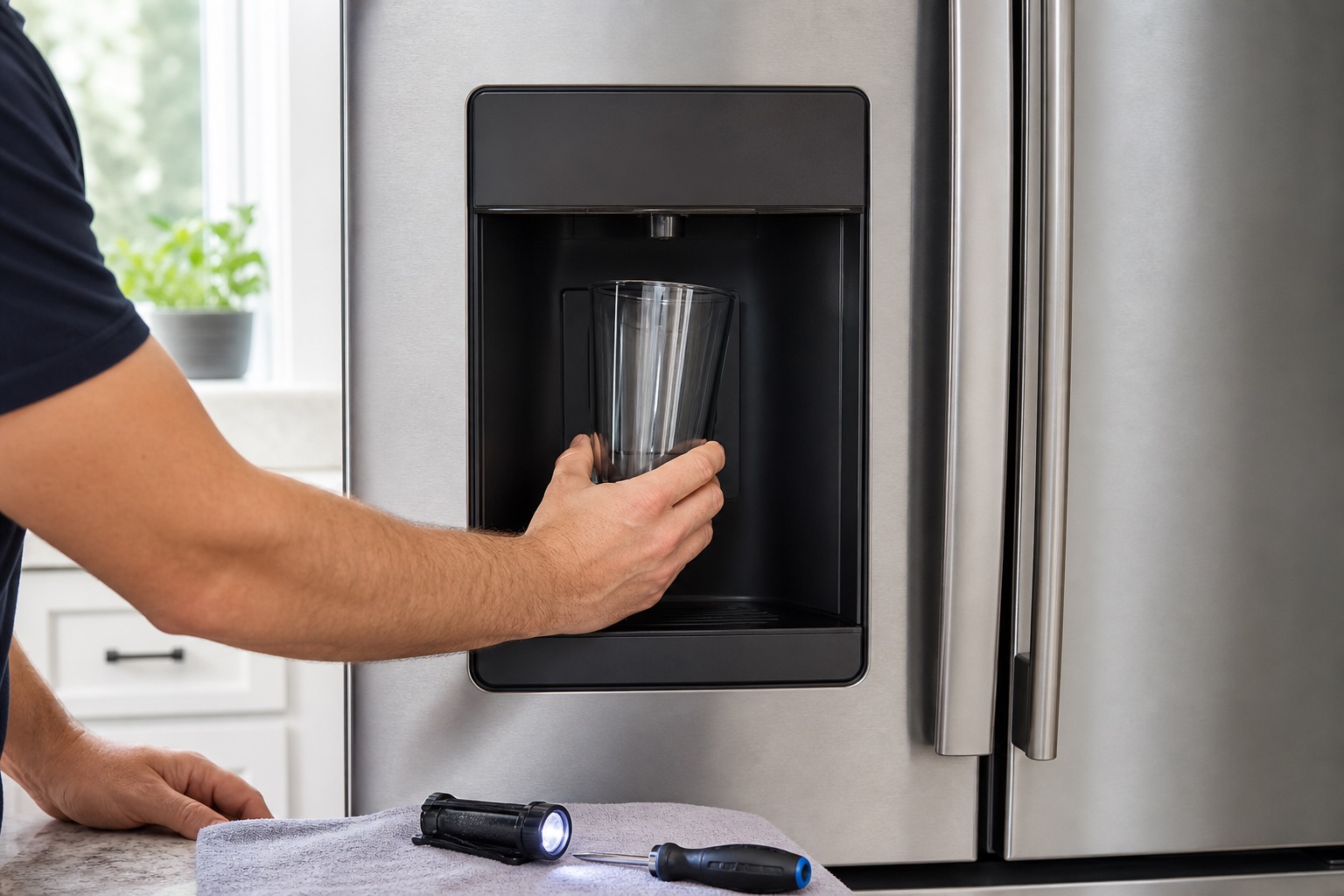
Photo guide
Diagnostic Photos
Local Refrigerator Service
We provide refrigerator repair in Cape Coral and Fort Myers, along with surrounding Southwest Florida service areas.
For scheduling, use the Contact page or call/text Art’s Appliance Repair directly.
Helpful Next Pages
These related guides and local service pages help connect the symptom to a practical repair path.
Related Appliance Guides
Refrigerator
Why Is There Water Under My Refrigerator?
Find the difference between refrigerator condensation and a floor leak, what you can safely check, and when to request repair in Cape Coral or Fort Myers.
Updated September 16, 2026
water under your refrigerator
Refrigerator
Refrigerator Leaking Water Inside: Causes and Solutions
Water collecting inside your refrigerator? Learn the most common causes, safe checks, and when to schedule refrigerator repair in Cape Coral or Fort Myers.
Updated August 14, 2026
refrigerator leaking water inside
Ice Maker
Ice Maker Not Making Ice: When to Wait and When to Call for Repair
Ice maker not making ice? Learn what to check, when to wait, and when to schedule ice maker repair in Cape Coral or Fort Myers.
Updated July 27, 2026
ice maker not making iceNeed service?
Refrigerator Water Dispenser Repair in Southwest Florida
Art’s Appliance Repair diagnoses water-dispenser, filter-housing, supply, and control problems. We explain the findings and repair price before work begins.
The service call is $0 when an approved repair is completed; $79 if no repair is completed after diagnosis.
View Refrigerator Repair