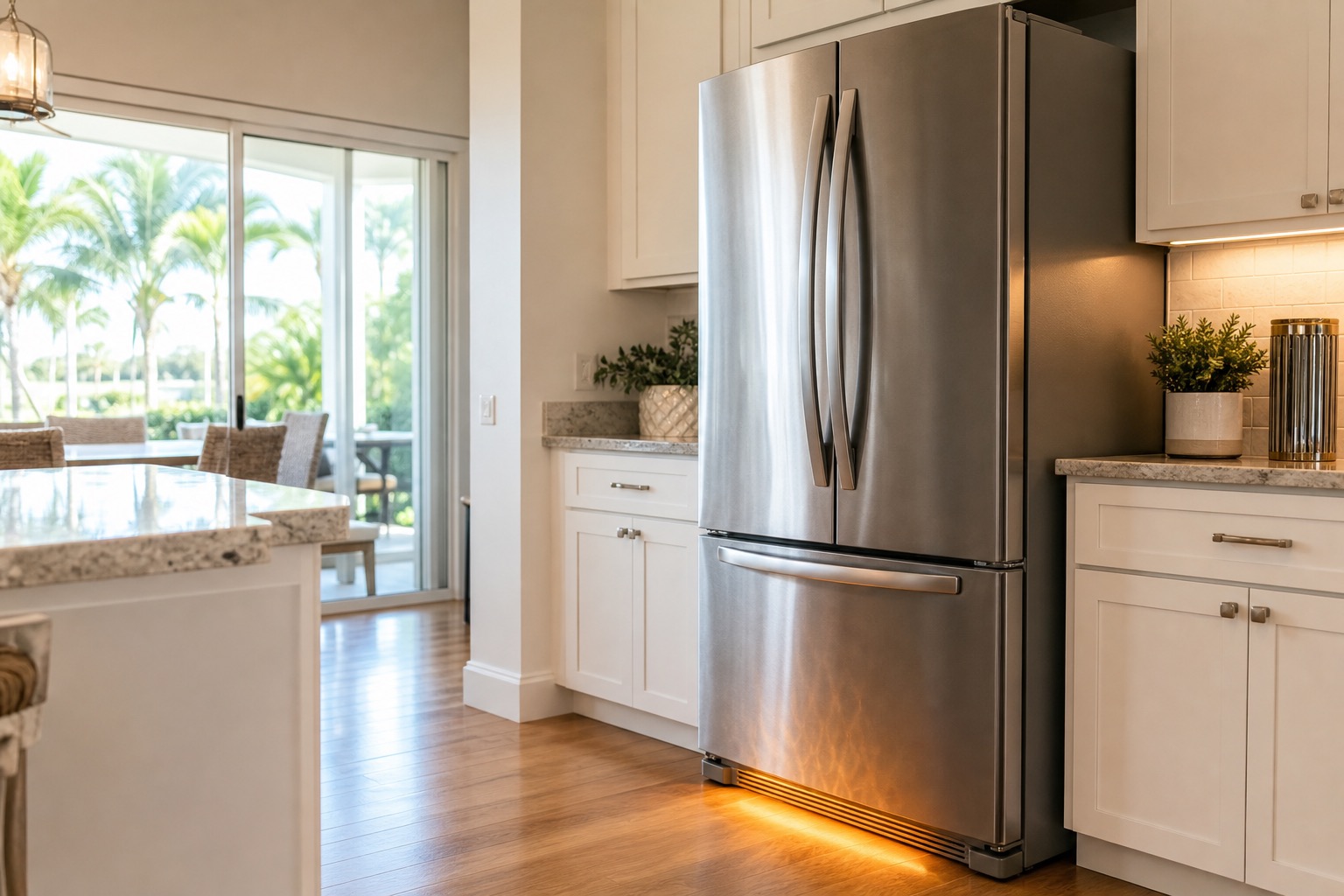
Is It Normal for a Refrigerator to Run for a Long Time?
Modern refrigerators often run longer than older models, especially energy-efficient units with variable-speed or inverter compressors.
Long operating cycles may be normal when:
- The refrigerator was recently installed.
- A large amount of warm food was added.
- The doors were opened repeatedly.
- The room or garage is hot.
- The temperature setting was recently changed.
- The refrigerator is recovering after a power outage.
- The automatic defrost cycle recently finished.
- The appliance uses a variable-speed compressor.
The refrigerator may need up to 24 hours to stabilize after installation, a power interruption, or a major temperature change.
Continuous operation becomes more concerning when the refrigerator stays warm, develops frost, leaks water, overheats, or runs without stopping for an extended period.
How Often Should a Refrigerator Cycle Off?
There is no single normal run time for every refrigerator.
Run time depends on:
- Refrigerator model and age.
- Room temperature.
- Humidity.
- Door-opening frequency.
- Amount of food inside.
- Temperature settings.
- Condition of the door gaskets.
- Condenser cleanliness.
- Compressor design.
An inverter compressor may operate almost continuously at a low speed. This can be normal if the refrigerator maintains the correct temperature and does not show other symptoms.
A conventional compressor usually cycles on and off more noticeably.
1. The Refrigerator Is Recovering From Warm Conditions
The refrigerator may run continuously after:
- A power outage.
- Initial installation.
- Cleaning.
- Moving the appliance.
- Loading groceries.
- Leaving a door open.
- Replacing a major component.
The appliance must remove heat from the cabinet, shelves, food, and internal air.
Check the temperature with an appliance thermometer. The refrigerator compartment should generally be around 37°F to 40°F, while the freezer should be near 0°F.
If the temperatures are improving, allow the refrigerator additional time to stabilize.
2. The Door Is Being Opened Too Often
Every time the door opens, warm and humid air enters the refrigerator.
The appliance must then run longer to restore the correct temperature and remove the additional moisture.
Frequent door opening may also cause:
- Condensation.
- Frost buildup.
- Moisture around the vents.
- Longer compressor cycles.
- Increased energy consumption.
Try to keep door openings brief and make sure the door closes completely after each use.
3. The Refrigerator Door Is Not Sealing Properly
A damaged, dirty, or loose door gasket allows warm air to enter continuously.
The refrigerator may run almost constantly because it cannot maintain the selected temperature.
Inspect the gasket for:
- Cracks or tears.
- Loose sections.
- Food residue.
- Warped areas.
- Gaps between the gasket and cabinet.
- Moisture around the door opening.
Clean the gasket with warm water and mild soap.
Also check whether food containers, shelves, or drawers are preventing the door from closing.
A damaged gasket may need replacement.
Moisture on the outside doors? Compare condensation with a refrigerator leak.
4. The Refrigerator Is Not Level
A refrigerator that is not positioned correctly may have difficulty closing or sealing its doors.
Some models are designed to tilt slightly backward so the doors close more easily.
Signs of a leveling problem include:
- Door opens by itself.
- Door does not close completely.
- One side of the refrigerator appears lower.
- Gasket does not contact the cabinet evenly.
- Condensation forms near one corner.
The leveling feet may need adjustment according to the manufacturer’s instructions.
5. The Temperature Is Set Too Low
Setting the refrigerator or freezer to the coldest possible setting does not make food cool faster.
Instead, it may cause the compressor to run longer than necessary.
Recommended settings are generally:
- Refrigerator: approximately 37°F.
- Freezer: approximately 0°F.
After changing the setting, wait several hours before checking the result. Avoid making repeated adjustments during the same day.
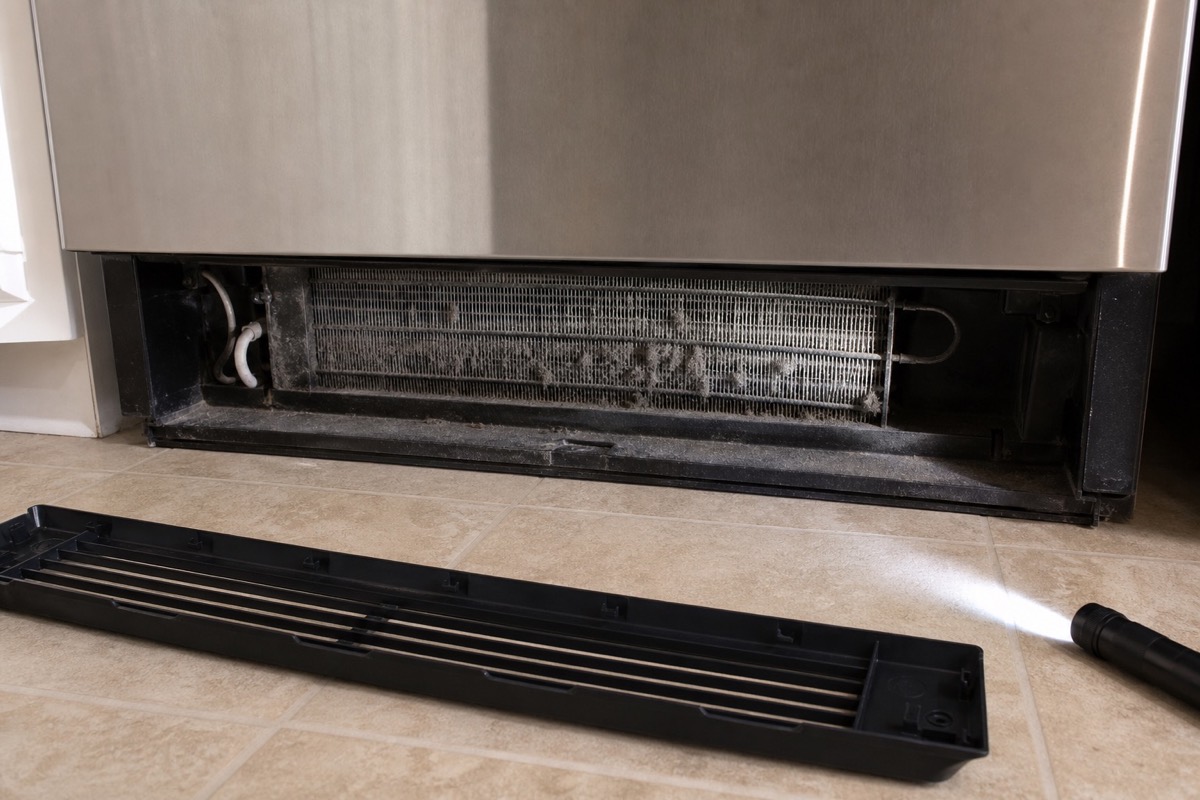
6. The Condenser Coils Are Dirty
The condenser coils release heat from the refrigerant.
When the coils become covered with dust, grease, lint, or pet hair, the refrigerator must run longer to remove heat.
Dirty condenser coils may cause:
- Continuous compressor operation.
- Poor cooling.
- Excessive heat near the refrigerator.
- Higher energy use.
- Compressor overheating.
- Premature component failure.
The coils may be located behind or underneath the refrigerator.
Disconnect the appliance from power before cleaning accessible coils. Use a soft brush or vacuum carefully and avoid damaging refrigerant tubing, wiring, or fan blades.
Some modern refrigerators use enclosed condenser systems that are not intended for routine homeowner cleaning.
7. The Condenser Fan Is Not Working
The condenser fan helps move air across the condenser coils and compressor.
If the fan stops, heat may build up around the sealed system. The compressor may run continuously or shut down from overheating.
Possible symptoms include:
- Refrigerator running constantly.
- Weak cooling.
- Excessive heat near the lower rear section.
- Clicking from the compressor area.
- Fan blade not moving.
- Unusual rattling or buzzing.
The fan may be blocked by debris, or the motor may have failed.
Electrical testing may be required to determine whether the fan is receiving proper voltage.
8. The Evaporator Fan Is Not Moving Enough Cold Air
The evaporator fan circulates cold air through the freezer and refrigerator compartments.
If the fan is weak, blocked by ice, or not running, the compressor may operate continuously because the temperature sensors continue to detect warm conditions.
Common signs include:
- Freezer cold but refrigerator warm.
- Weak airflow from the refrigerator vents.
- Scraping noise from the freezer.
- Intermittent cooling.
- Frost around the freezer’s rear panel.
- Refrigerator temperature changing throughout the day.
The fan blade, motor, wiring, and door switch may need inspection.
9. Food Is Blocking the Air Vents
The refrigerator depends on clear airflow paths.
Food containers, bags, and large packages may block the vents or prevent cold air from circulating.
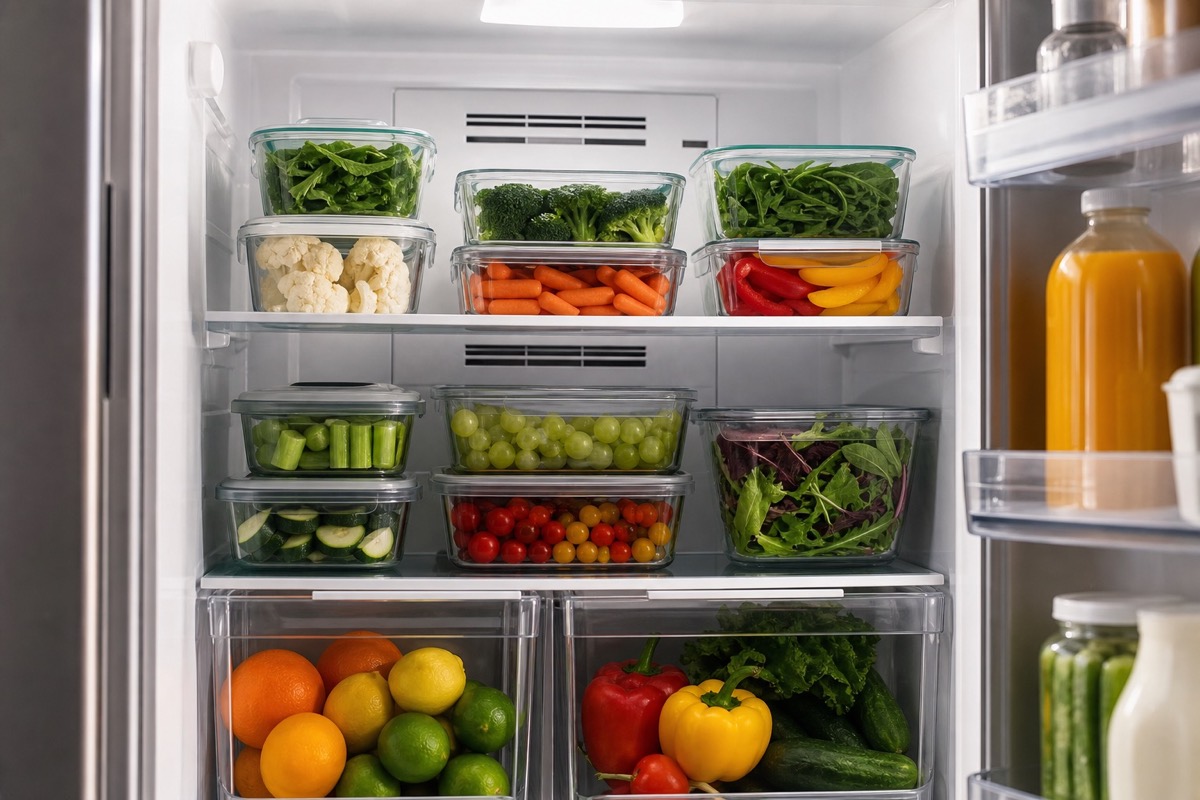
Check that:
- Food is not pressed against the rear wall.
- Interior vents are uncovered.
- The freezer is not packed too tightly.
- There is space between items.
- Drawers and shelves are installed correctly.
An overloaded refrigerator may create warm areas even while the compressor runs continuously.
10. The Refrigerator Is Nearly Empty
A nearly empty refrigerator may experience larger temperature changes every time the door opens.
Food and beverages help retain cold temperatures. However, the refrigerator should not be packed so tightly that airflow is restricted.
For more stable operation:
- Keep a moderate amount of food inside.
- Leave space around the vents.
- Avoid placing hot food directly into the refrigerator.
- Store liquids in covered containers.
11. Hot Food Was Placed Inside
Placing large amounts of hot or warm food inside can significantly increase refrigerator run time.
The appliance must remove heat from both the food and the surrounding air.
Allow hot food to cool safely before refrigeration, but do not leave perishable food at room temperature for an extended period.
Use shallow containers when appropriate so food cools more efficiently.
12. The Room or Garage Is Too Hot
High surrounding temperatures make the refrigerator work harder.
This is especially common in Southwest Florida garages, patios, outdoor kitchens, and poorly ventilated utility rooms.
Hot conditions may cause:
- Long compressor cycles.
- Reduced cooling performance.
- Excessive heat near the cabinet.
- Higher electricity consumption.
- Compressor and fan wear.
- Difficulty recovering after the door opens.
Make sure the refrigerator has adequate clearance around the sides, back, and top as required by the manufacturer.
A standard indoor refrigerator may not be designed for extreme garage temperatures.
13. The Refrigerator Is Too Close to the Wall
Insufficient ventilation can trap heat around the condenser and compressor.
The refrigerator may then run longer to maintain the selected temperature.
Check the installation instructions for the required clearances.
Do not block:
- Lower front ventilation openings.
- Rear condenser airflow.
- Top ventilation areas.
- Side clearances required for built-in models.
Built-in and counter-depth refrigerators may have specific ventilation requirements.
14. Frost Is Covering the Evaporator Coils
A failed defrost system can allow ice to cover the evaporator coils.
The compressor may continue running because the refrigerator cannot circulate enough cold air.
Possible causes include:
- Failed defrost heater.
- Faulty defrost thermostat.
- Defective temperature sensor.
- Control board failure.
- Damaged wiring.
- Door-sealing problem.
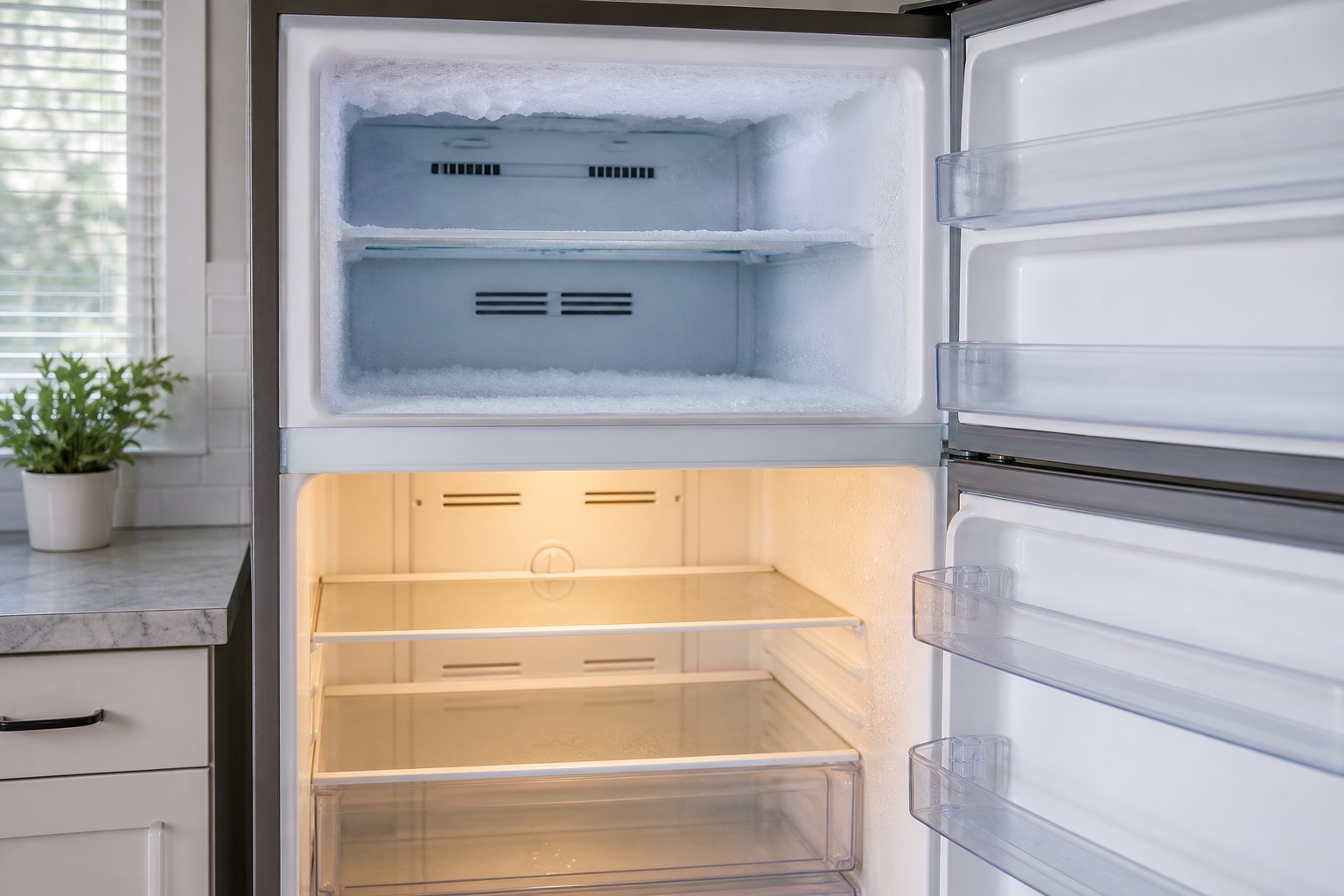
A thick layer of frost on the freezer’s rear interior wall is a common warning sign.
Manually defrosting the refrigerator may temporarily restore airflow, but it does not repair the failed component.
Never use a knife or sharp object to remove ice. Puncturing the evaporator can cause a refrigerant leak and major damage.
15. The Temperature Sensor Is Faulty
The refrigerator uses thermistors or temperature sensors to determine when cooling is required.
If a sensor reports an incorrect temperature, the compressor may continue running even when the compartment is already cold.
Possible symptoms include:
- Refrigerator running constantly.
- Food freezing in the refrigerator section.
- Incorrect temperature display.
- Irregular compressor cycles.
- Temperature changing without adjustment.
- Fan or damper operating incorrectly.
A technician can test the sensor resistance and compare it with the manufacturer’s specifications.
16. The Air Damper Is Not Operating Correctly
The air damper regulates airflow between the freezer and refrigerator compartments.
If the damper is stuck open, the refrigerator section may become too cold while the compressor continues operating.
If it is stuck closed, the refrigerator may remain warm and continuously request more cooling.
The problem may involve:
- Ice around the damper.
- Broken mechanical parts.
- Damper motor failure.
- Temperature sensor failure.
- Control board malfunction.
17. The Interior Light Is Staying On
A refrigerator light that remains on after the door closes adds heat inside the compartment.
This may happen because of:
- A failed door switch.
- Door alignment problems.
- A stuck switch.
- Wiring or control problems.
Signs may include:
- Warm area near the light housing.
- Discolored plastic.
- Food becoming warm near the bulb.
- Refrigerator running constantly.
On models with traditional bulbs, carefully check whether the bulb turns off when the door switch is pressed.
LED lighting systems may require different testing.
18. The Compressor Is Losing Efficiency
A worn compressor may run continuously but fail to create the correct refrigerant pressure.
Possible signs include:
- Refrigerator running constantly without reaching temperature.
- Both compartments remaining too warm.
- Compressor becoming extremely hot.
- Weak or uneven frost pattern.
- Repeated clicking.
- Very slow temperature recovery.
A compressor should not be diagnosed based only on noise or temperature. Sealed-system pressures, current draw, frost pattern, and component operation may need to be evaluated.
19. The Refrigerator Has a Refrigerant Leak
Refrigerant circulates through a sealed system and is not normally consumed.
If the refrigerator has low refrigerant, there is usually a leak.
Symptoms may include:
- Continuous compressor operation.
- Both compartments remaining warm.
- Only a small part of the evaporator developing frost.
- Poor cooling that gradually becomes worse.
- Oily residue around refrigerant tubing.
- Compressor running but condenser coils remaining unusually cool.
Simply adding refrigerant is not a complete repair. The leak should be located and repaired when practical.
20. There Is a Restriction in the Sealed System
A restriction in the capillary tube, filter drier, or refrigerant line can reduce refrigerant flow.
The compressor may run continuously while only part of the evaporator becomes cold.
This problem requires sealed-system diagnosis and specialized equipment.
21. The Control Board Is Not Cycling Components Correctly
The electronic control board manages the compressor, fans, defrost system, air damper, and temperature sensors.
A control problem may cause:
- Compressor running continuously.
- Fans staying on or failing to start.
- Defrost cycles not occurring.
- Incorrect temperature readings.
- Cooling improving temporarily after unplugging the refrigerator.
- Multiple components behaving unpredictably.
The control board should not be replaced until the connected components and wiring have been tested.
22. The Refrigerator Is in Fast Cool or Fast Freeze Mode
Many modern refrigerators have temporary operating modes such as:
- Fast Cool.
- Power Cool.
- Fast Freeze.
- Power Freeze.
- Max Ice.
These modes intentionally extend compressor and fan operation.
Check the control panel to determine whether one of these functions is active. The setting may turn off automatically after a specified period or may require manual cancellation.
What Can You Safely Check?
Before scheduling service, you can check the following:
- Measure the refrigerator and freezer temperatures.
- Confirm the temperature settings.
- Check whether Fast Cool or Fast Freeze is active.
- Make sure the doors close completely.
- Inspect and clean the door gaskets.
- Remove food blocking the air vents.
- Make sure the refrigerator is not overloaded.
- Listen for the evaporator and condenser fans.
- Look for frost on the freezer’s rear panel.
- Check for excessive heat near the compressor area.
- Clean accessible condenser coils after disconnecting power.
- Confirm that the refrigerator has proper ventilation.
- Allow up to 24 hours after installation, a power outage, or loading groceries.
Do not remove electrical panels or test live voltage without proper training and equipment.
When Should You Call an Appliance Technician?
Schedule professional refrigerator diagnosis when:
- The refrigerator runs constantly but remains too warm.
- Food freezes in the refrigerator compartment.
- The compressor is extremely hot.
- A fan is not operating.
- Heavy frost appears on the freezer’s rear panel.
- The appliance repeatedly clicks.
- The refrigerator leaks water.
- Cooling improves only temporarily after unplugging the appliance.
- The condenser coils remain unusually cool while the compressor runs.
- You suspect a refrigerant leak.
- The refrigerator displays an error code.
- The appliance does not stabilize after 24 hours.
Operating a refrigerator continuously while it is overheating or not cooling properly can cause additional damage.
Can a Constantly Running Refrigerator Increase the Electric Bill?
Yes. A refrigerator that operates longer than necessary may use more electricity.
The increase depends on:
- Compressor type.
- Refrigerator size.
- Room temperature.
- Condition of the door gaskets.
- Condenser cleanliness.
- Cooling performance.
- Age and efficiency of the appliance.
Cleaning accessible condenser coils and correcting door-sealing problems may improve efficiency. However, continuous operation caused by a failed fan, defrost problem, or sealed-system issue requires repair.
Should You Repair or Replace the Refrigerator?
Repair may be worthwhile when:
- The refrigerator is relatively new.
- The cabinet and doors are in good condition.
- The problem involves a fan, sensor, gasket, heater, relay, or damper.
- Parts are available.
- The repair cost is reasonable compared with replacement.
Replacement may be more practical when:
- The refrigerator is near the end of its service life.
- The cabinet has extensive corrosion.
- Multiple expensive components have failed.
- The sealed system has repeated problems.
- Parts are discontinued.
- The estimated repair cost is close to the cost of a new refrigerator.
A complete diagnosis should be performed before deciding.
Photo guide
Diagnostic Photos
Local Refrigerator Service
We provide refrigerator repair in Cape Coral and Fort Myers, along with surrounding Southwest Florida service areas.
For scheduling, use the Contact page or call/text Art’s Appliance Repair directly.
Related Appliance Guides
Refrigerator
Refrigerator Not Cooling but Freezer Is Working: Common Causes
Freezer cold but refrigerator warm? Learn the most common causes, safe checks, and when to schedule refrigerator repair in Cape Coral and Fort Myers.
Updated July 19, 2026
Refrigerator Not Cooling but Freezer Is Working: Common Causes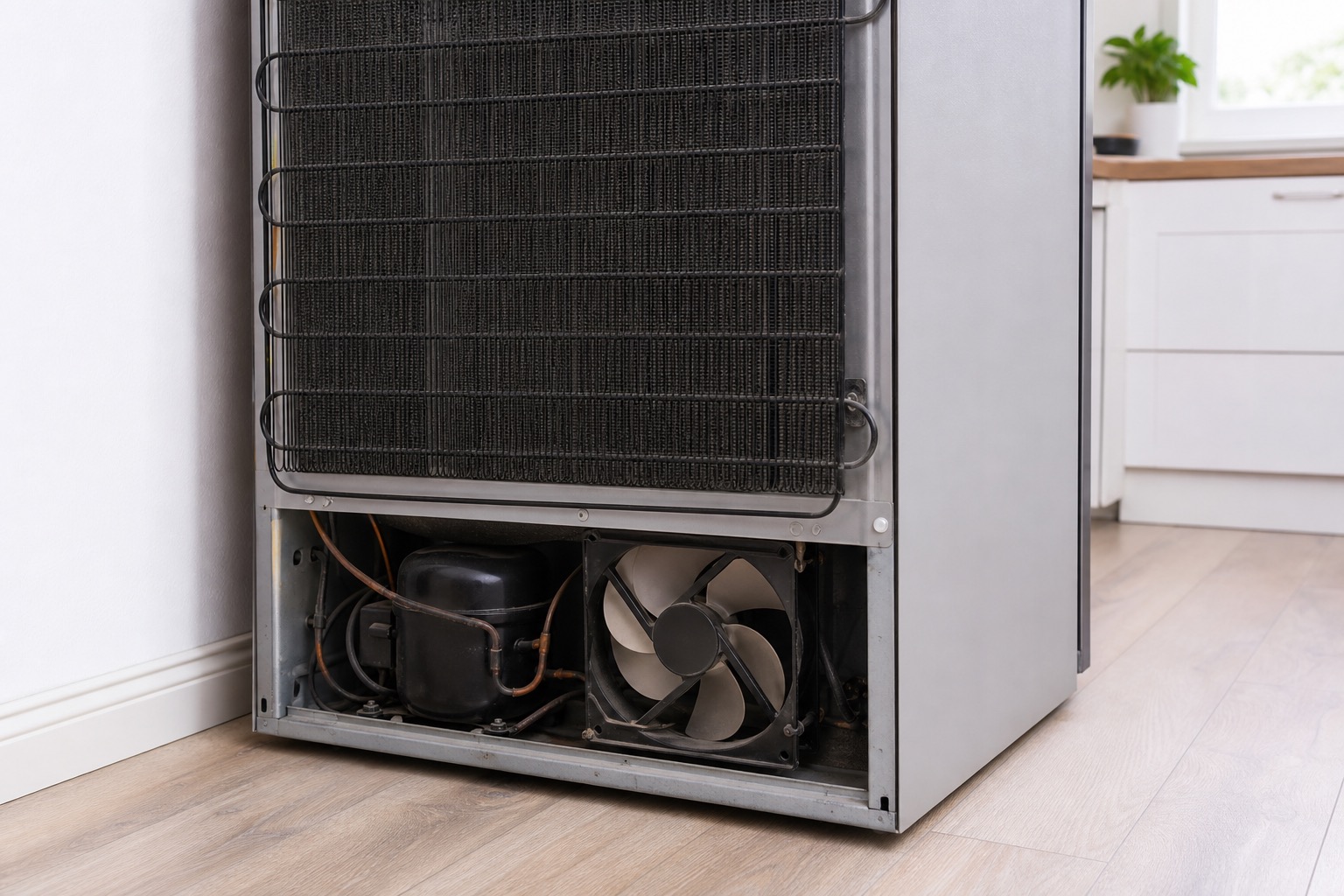
Refrigerator
Refrigerator Running but Not Getting Cold: What Could Be Wrong?
Is your refrigerator running but not cooling? Learn the common causes, safe checks, and when to schedule refrigerator repair in Cape Coral and Fort Myers.
Updated July 19, 2026
refrigerator is running but not getting cold
Refrigerator
Refrigerator Warm but Compressor Is Running: What the Symptom Means
A running compressor does not prove a refrigerator is cooling. Compare both compartments, protect food, make safe checks, and know when to request local repair.
Updated September 25, 2026
refrigerator is warm with the compressor runningNeed service?
Refrigerator Repair in Cape Coral, Fort Myers and Southwest Florida
Art’s Appliance Repair provides refrigerator diagnostics and repair throughout Cape Coral, Fort Myers, North Fort Myers, Lehigh Acres, Estero, Bonita Springs, Naples, and surrounding Southwest Florida communities.
We diagnose refrigerator problems including:
- Refrigerator running constantly.
- Refrigerator not cooling.
- Compressor overheating.
- Dirty condenser systems.
- Evaporator and condenser fan failures.
- Frost and ice buildup.
- Defrost system problems.
- Door gasket and sealing problems.
- Temperature sensor failures.
- Control board problems.
- Refrigerant leaks and sealed-system concerns.
- Ice maker and water-leak problems.
Call or text (239) 688-9955 to schedule refrigerator service.
The service call is $0 when the diagnosed repair is approved and completed. If no repair is completed, the diagnostic service call is $79.
View Refrigerator Repair