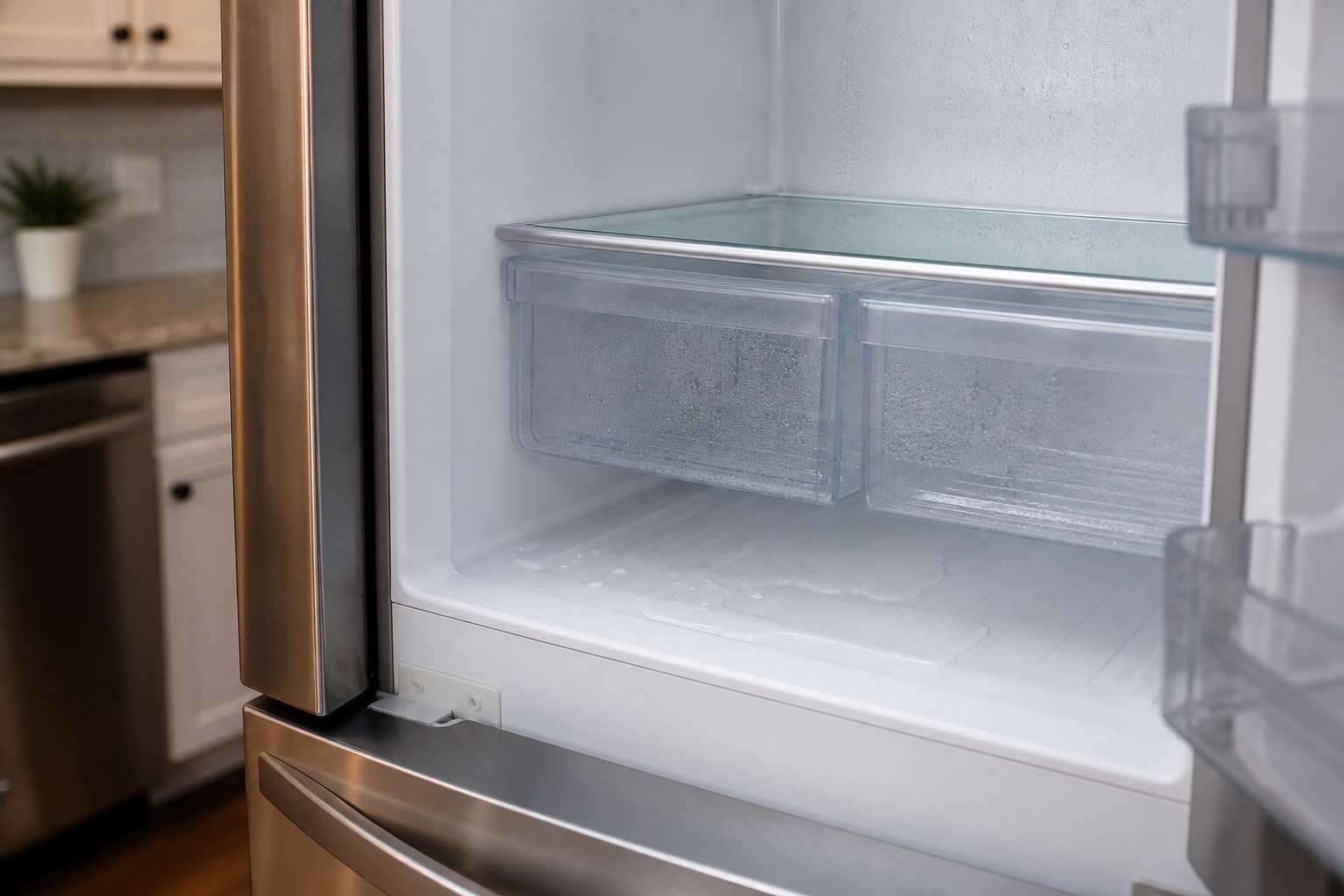
Where Is the Water Collecting?
The location of the water can help narrow down the cause.
Water under the crisper drawers
Common causes include:
- Clogged defrost drain.
- Frozen drain tube.
- Leaking water reservoir.
- Cracked interior tubing.
- Water filter housing leak.
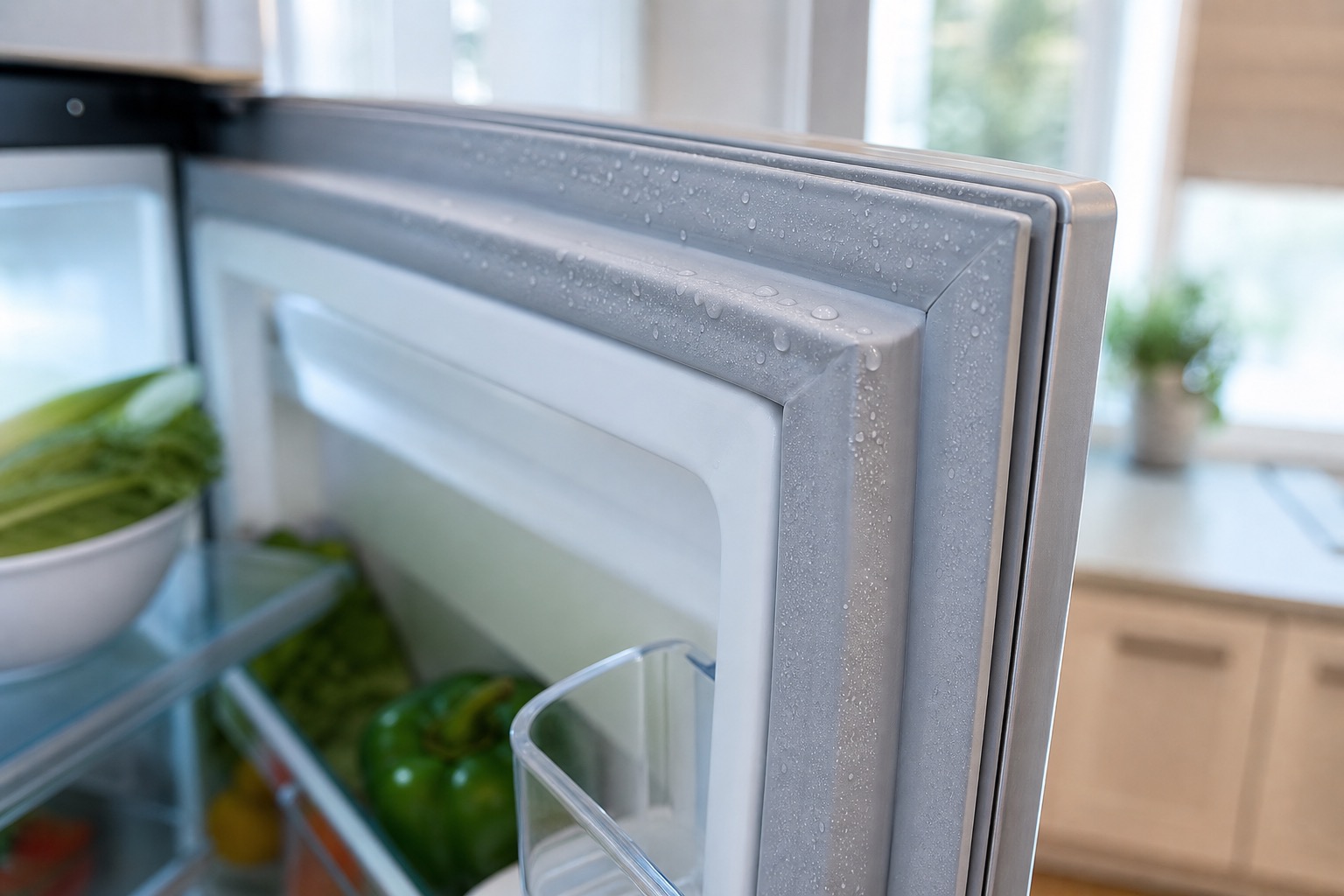
- Condensation caused by a door-sealing problem.
Water on the freezer floor
Common causes include:
- Frozen defrost drain.
- Ice maker overfilling.
- Misaligned fill tube.
- Freezer door left open.
- Excessive frost melting.
Water near the water filter
Common causes include:
- Filter installed incorrectly.
- Damaged filter seal.
- Cracked filter housing.
- Incorrect replacement filter.
- Loose tubing connection.
Water near the front of the refrigerator
Common causes include:
- Water overflowing from under the drawers.
- Door condensation.
- Dispenser drip tray overflow.
- Leaking dispenser tubing.
- Refrigerator not level.
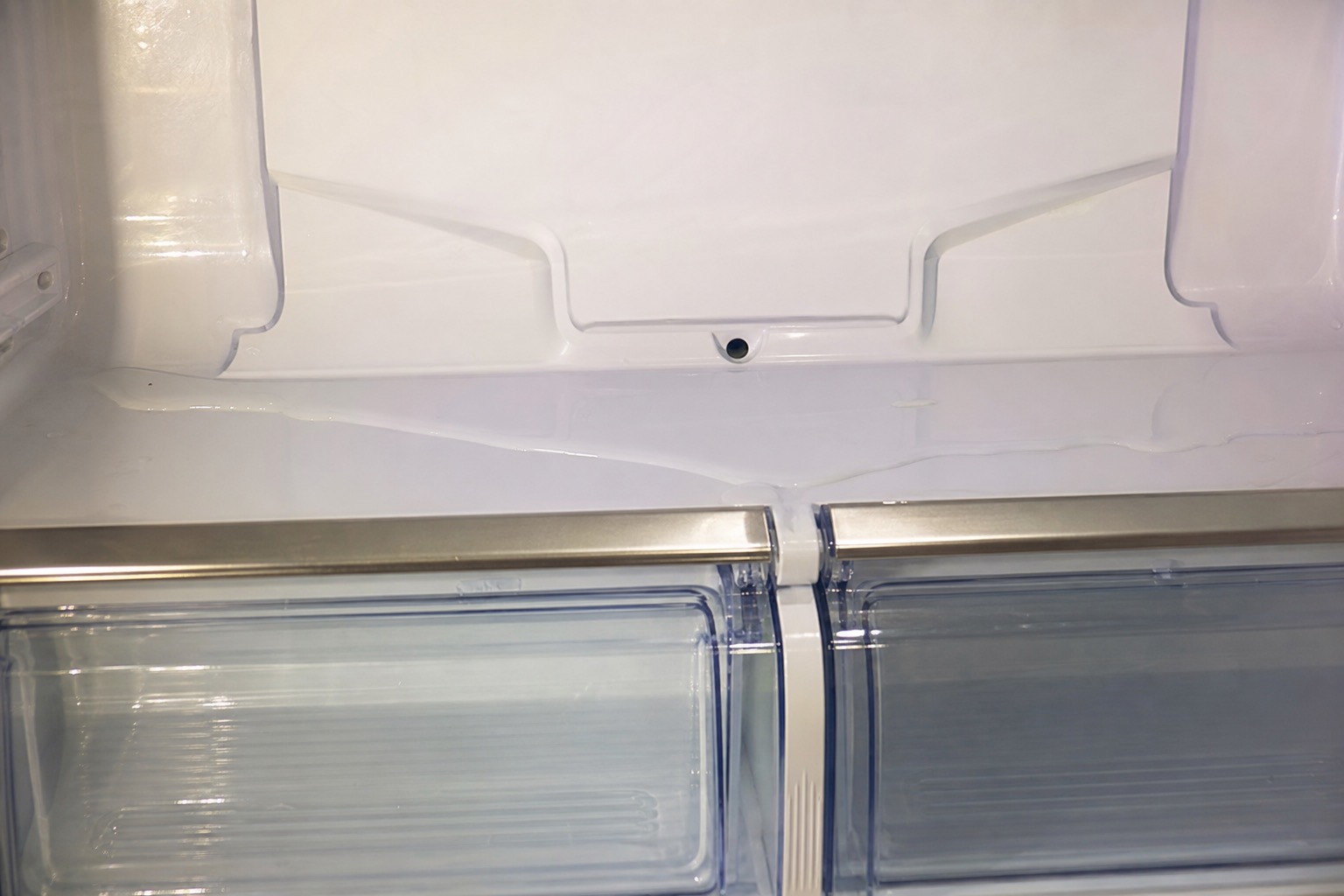
Water near the back interior wall
Common causes include:
- Defrost water not draining.
- Condensation.
- Water reservoir leak.
- Damaged tubing.
- Ice melting around an air vent.
Is Condensation Inside a Refrigerator Normal?
A small amount of moisture can form when warm, humid air enters the refrigerator.
This is especially common when:
- The door is opened frequently.
- Hot or uncovered food is placed inside.
- The room is very humid.
- The door remains open.
- The refrigerator was recently loaded with groceries.
Minor condensation should normally disappear as the refrigerator restores the correct temperature.
Standing water, recurring puddles, heavy moisture, or ice buildup usually indicates a problem.
1. The Defrost Drain Is Clogged
A blocked defrost drain is one of the most common reasons water collects inside a refrigerator.
During the automatic defrost cycle, frost melts from the evaporator coils. The water should flow through a drain opening and into a pan underneath the refrigerator.
If the drain becomes blocked, water may:
- Collect under the crisper drawers.
- Freeze on the freezer floor.
- Leak from the freezer into the refrigerator compartment.
- Overflow from the front of the appliance.
- Refreeze into a sheet of ice.
- Return after every defrost cycle.
The drain may become blocked by:
- Food particles.
- Dust.
- Ice.
- Packaging material.
- Biological buildup.
- Debris entering the drain opening.
Clearing the drain may require access behind the freezer panel or through a rear drain tube.
Do not use a knife, screwdriver, or sharp object to remove ice. Damage to the evaporator can cause a refrigerant leak.
2. The Defrost Drain Tube Is Frozen
The drain opening may appear clear while ice blocks the tube farther down.
A frozen drain tube may be caused by:
- Excessive frost.
- Door left open.
- Damaged door gasket.
- High humidity.
- Defrost system problem.
- Drain heater failure.
- Improper drain-tube position.
- Cold air entering the drain area.
Common signs include:
- Ice on the freezer floor.
- Water under refrigerator drawers.
- Leak returning after temporary defrosting.
- Water appearing after the compressor stops.
- Gurgling followed by a puddle.
A complete manual defrost may temporarily restore drainage, but the issue may return if the underlying cause is not corrected.
3. Food or Packaging Is Blocking the Drain
Small pieces of food, labels, plastic wrap, or packaging material may enter the drain channel.
This is more common when:
- Food is stored directly against the rear wall.
- Liquids spill in the refrigerator.
- Produce drawers are overfilled.
- Loose packaging falls behind shelves.
- The drain opening is exposed.
Keep food and packaging away from drain channels and air vents.
If a visible drain opening is accessible, remove only loose surface debris. Do not force tools into the drain.
4. The Refrigerator Door Is Not Closing Properly
A partially open door allows warm, humid air to enter continuously.
This moisture may condense on cold surfaces and collect inside the cabinet.
Check for:
- Food blocking the door.
- Shelves installed incorrectly.
- Overfilled door bins.
- Misaligned drawers.
- Sagging hinges.
- Refrigerator not level.
- Ice preventing the freezer door from closing.
- Damaged door gasket.
Florida humidity can make even a small door-sealing problem create significant condensation.
5. The Door Gasket Is Damaged
The gasket creates an airtight seal between the door and cabinet.
If it is torn, warped, loose, or dirty, moisture may enter and form water inside the refrigerator.
Inspect the gasket for:
- Cracks.
- Tears.
- Loose corners.
- Hardened rubber.
- Food residue.
- Mold.
- Areas that do not contact the cabinet.
Clean the gasket with warm water and mild soap.
A damaged gasket may need replacement.
Also inspect the door alignment. A new gasket will not solve the problem if the door is sagging or the cabinet is not level.
6. The Refrigerator Is Not Level
A refrigerator that tilts incorrectly may not direct water toward the drain.
It can also prevent doors from closing properly.
Signs include:
- Water collecting on one side.
- Door opening by itself.
- Door failing to close completely.
- Refrigerator rocking.
- Uneven gaps around the gasket.
- Drain water flowing toward the front.
Adjust the leveling feet according to the manufacturer’s instructions.
Many refrigerators are designed to tilt slightly backward so the doors close more easily.
7. The Water Filter Is Installed Incorrectly
A water filter may leak if it is not fully seated.
This often happens after a recent filter replacement.
Possible causes include:
- Filter inserted at an angle.
- Filter not locked into position.
- Incorrect filter model.
- Damaged O-ring.
- Debris on the sealing surface.
- Filter cap installed incorrectly.
- Cracked filter body.
Signs include:
- Water dripping near the filter.
- Moisture on the upper shelf.
- Water running down the rear wall.
- Leak appearing after dispenser use.
- Water under the crisper drawers.
Remove and reinstall the filter according to the manufacturer’s instructions.
Do not force an incompatible filter into the housing.
8. The Water Filter Is Cracked
A damaged filter may leak even when it appears to be installed correctly.
The filter can crack because of:
- Manufacturing defect.
- Impact.
- Freezing.
- Excessive water pressure.
- Incorrect installation.
- Age.
- Incompatible replacement part.
If the leak began immediately after filter replacement, remove the filter and inspect it carefully.
Use only a compatible replacement filter.
9. The Filter Housing Is Leaking
The filter housing holds the filter and seals the water connections.
It may crack or develop a leak because of:
- Age.
- Freeze damage.
- Excessive water pressure.
- Incorrect filter installation.
- Damaged internal seals.
- Overtightening.
- Impact during service.
A housing leak may be difficult to see because water can travel behind panels or through insulation.
Possible symptoms include:
- Water around the filter.
- Water behind shelves.
- Water under drawers.
- Leak only during dispenser use.
- Leak continuing after replacing the filter.
The filter housing normally requires replacement if cracked.
10. The Water Reservoir Is Leaking
Some refrigerators use a plastic reservoir or coiled tubing to chill dispenser water.
The reservoir may be located behind the crisper drawers or along the rear interior wall.
It may leak because of:
- Cracked plastic.
- Loose connection.
- Freeze damage.
- Excessive water pressure.
- Age-related deterioration.
- Damage during cleaning or service.
Possible signs include:
- Water under the drawers.
- Leak after using the dispenser.
- Water collecting near the rear wall.
- Reduced dispenser flow.
- Reservoir area remaining wet.
The reservoir and connected tubing should be inspected and replaced if damaged.
11. Interior Water Tubing Is Loose or Cracked
Refrigerator water tubing may run through the fresh-food compartment, cabinet, filter housing, door, and dispenser system.
Tubing can leak because it is:
- Cracked.
- Kinked.
- Pinched.
- Loose at a connector.
- Damaged by freezing.
- Rubbing against another component.
- Deteriorated with age.
Leaks may occur only when:
- The dispenser is used.
- The ice maker fills.
- The filter housing is pressurized.
- The water supply is turned on.
A loose push-to-connect fitting may need to be reseated. Damaged tubing should be replaced rather than patched.
12. The Water Dispenser Is Dripping
A few drops after using the dispenser can be normal.
Continuous dripping may indicate:
- Air trapped in the water line.
- Filter not flushed after installation.
- Low water pressure.
- Inlet valve not closing fully.
- Damaged dispenser tubing.
- Faulty dispenser switch.
- Ice buildup around the dispenser.
Water may run down the front of the refrigerator or collect inside the dispenser area.
After replacing a filter, flush the water system according to the manufacturer’s instructions.
If dripping continues, the inlet valve and dispenser system may need testing.
13. The Dispenser Drip Tray Is Overflowing
The dispenser tray is designed to catch small drips, not large amounts of water.
It may overflow when:
- The dispenser drips continuously.
- A glass is removed too early.
- Ice melts in the tray.
- The tray is not emptied.
- Water is spilled repeatedly.
- The dispenser chute is blocked.
Remove and clean the tray.
If water continues collecting, the source of the dispenser leak should be diagnosed.
14. The Water Inlet Valve Is Not Closing Properly
The inlet valve controls water flow to the dispenser and ice maker.
If it does not close completely, water may continue entering the system.
This can cause:
- Dispenser dripping.
- Ice maker overfilling.
- Frozen fill tube.
- Water inside the freezer.
- Water leaking around the filter or reservoir.
- Ice cubes frozen together.
The valve may fail because of:
- Mineral buildup.
- Internal seal damage.
- Low water pressure.
- Electrical failure.
- Excessive water pressure.
- Age.
A leaking inlet valve normally requires replacement.
15. The Ice Maker Is Overfilling
An ice maker may receive too much water and spill into the freezer.
Possible causes include:
- Defective water inlet valve.
- Incorrect fill-time setting.
- Ice maker control failure.
- Misaligned fill tube.
- Low water pressure.
- Damaged ice mold.
- Ice maker installed incorrectly.
Signs include:
- Water or ice beneath the ice maker.
- Ice cubes joined together.
- Ice bin containing frozen water.
- Water appearing after each fill cycle.
- Frozen trail down the freezer wall.
Turn the ice maker off temporarily to see whether the leak stops.
16. The Ice Maker Fill Tube Is Misaligned
The fill tube must direct water into the ice maker mold.
If it is loose or out of position, water may spray or spill into the freezer.
Possible causes include:
- Refrigerator recently moved.
- Ice maker replaced.
- Tube not installed fully.
- Ice buildup pushing the tube.
- Damaged mounting clip.
- Incorrect replacement part.
The leak may happen only during the short ice maker fill cycle.
Look for frozen water trails near the tube.
17. The Ice Maker Fill Tube Is Frozen
A frozen fill tube may cause water to back up or spray into the freezer.
Possible causes include:
- Inlet valve seeping.
- Low water pressure.
- Restricted water filter.
- Cold air leak around the tube.
- Incorrect freezer temperature.
- Tube positioned incorrectly.
Do not use sharp tools to clear the tube.
The valve and water pressure should be checked if the tube freezes repeatedly.
18. The Freezer Door Was Left Open
A freezer door left open allows warm, humid air to enter.
This can create heavy frost and ice.
When the appliance defrosts, the added moisture may produce more water than the drain system can handle.
Possible symptoms include:
- Water inside the refrigerator.
- Ice on the freezer floor.
- Frost around the evaporator fan.
- Condensation on food.
- Warm freezer temperature.
- Water under drawers.
- Drain pan overflow.
Close the door and check for obstructions.
If ice blocks the drain or fan, professional service may be needed.
19. Heavy Frost Is Melting
Excessive frost around the evaporator may melt and overwhelm the drain system.
Heavy frost may be caused by:
- Failed defrost heater.
- Faulty defrost sensor.
- Defrost thermostat failure.
- Control board problem.
- Door gasket leak.
- Door left open.
- Evaporator fan problem.
- High humidity.
A thick frost layer on the freezer’s rear panel is a common warning sign.
A manual defrost may temporarily stop the leak, but the frost will return if the failed component is not repaired.
20. The Defrost System Is Malfunctioning
The defrost system prevents excessive ice from covering the evaporator coils.
It may include:
- Defrost heater.
- Defrost thermostat.
- Thermistor.
- Control board.
- Timer.
- Wiring.
If the system fails, heavy ice buildup may block airflow and drainage.
Possible symptoms include:
- Water inside the refrigerator.
- Ice on the freezer floor.
- Freezer cold but refrigerator warm.
- Evaporator fan hitting ice.
- Frost on the rear freezer panel.
- Refrigerator running constantly.
The defrost components should be tested before parts are replaced.
21. Hot or Uncovered Food Is Creating Excess Moisture
Warm food releases moisture as it cools.
Uncovered liquids and food can also increase humidity inside the refrigerator.
This may cause:
- Condensation on shelves.
- Moisture on containers.
- Water droplets on the back wall.
- Increased frost.
- Longer cooling cycles.
Use covered containers and allow hot food to cool safely before placing it inside.
Do not leave perishable food at room temperature for extended periods.
22. The Refrigerator Is Overloaded
An overfilled refrigerator restricts airflow.
Poor airflow may create warm and cold zones, leading to condensation and frost.
Check that:
- Air vents are open.
- Food is not pressed against the rear wall.
- There is space between containers.
- Drawers close fully.
- Door bins do not interfere with the door.
- Food does not block the drain area.
The refrigerator should be reasonably full but not packed tightly.
23. Air Vents Are Blocked
Blocked vents can cause uneven temperatures and excess moisture.
Cold air may collect in one area while another area remains warm.
This may result in:
- Condensation.
- Food freezing near a vent.
- Water droplets on the rear wall.
- Refrigerator running longer.
- Poor cooling.
Move food away from the vents and allow several hours for temperatures to stabilize.
24. The Temperature Is Set Incorrectly
If the refrigerator is set too warm, condensation may form.
If it is set too cold, food or tubing may freeze and later leak.
Recommended starting temperatures are generally:
- Refrigerator: approximately 37°F.
- Freezer: approximately 0°F.
Use an appliance thermometer to verify the actual temperature.
Avoid repeated setting changes during the same day.
25. The Refrigerator Is Installed in a Humid Area
High room humidity increases condensation risk.
This is especially relevant in Southwest Florida, garages, patios, utility rooms, and homes with limited air conditioning.
High humidity can make small problems worse, including:
- Door gasket leaks.
- Frequent door opening.
- Poor airflow.
- Cold tubing condensation.
- Exterior sweating.
- Frost buildup.
A properly sealed refrigerator should still control normal moisture, but extreme humidity may reveal a weak gasket or door-alignment issue.
26. The Refrigerator Was Recently Unplugged
When a refrigerator is unplugged, frost begins to melt.
Water may collect inside if:
- The drain is clogged.
- The refrigerator is not level.
- The drain pan is full.
- A large amount of ice had accumulated.
- The appliance was moved.
- Towels were not placed around it.
After defrosting or moving the refrigerator, dry the interior and check the drain system before reconnecting power.
27. The Refrigerator Was Recently Moved
Moving the appliance can disturb:
- Water tubing.
- Filter connections.
- Reservoir connections.
- Ice maker fill tube.
- Drain pan.
- Drain tube.
- Door alignment.
A leak that begins immediately after moving the refrigerator should be checked at all accessible water connections.
Do not pull the appliance forward aggressively because the supply line may be short.
What Can You Safely Check?
Before scheduling service, you can:
- Dry the interior and identify where water returns.
- Check under the crisper drawers.
- Look for ice on the freezer floor.
- Inspect the door gaskets.
- Make sure both doors close completely.
- Confirm that food is not blocking the vents or drain area.
- Check whether the leak appears after dispenser use.
- Turn the ice maker off temporarily.
- Inspect the water filter installation.
- Look for moisture around the filter housing.
- Check for visible cracked or loose tubing.
- Measure the refrigerator and freezer temperatures.
- Confirm that the refrigerator is level.
- Turn off the water supply if the leak continues.
- Disconnect power if water reaches electrical components.
Do not remove electrical panels or use sharp tools to clear ice.
When Should You Turn Off the Water Supply?
Turn off the refrigerator water supply when:
- Water leaks near the filter.
- Water appears after using the dispenser.
- The ice maker overfills.
- Interior tubing is cracked.
- The inlet valve does not stop filling.
- Water continues leaking while the refrigerator is powered.
- The source cannot be identified quickly.
Switch off the ice maker while the water supply is closed.
When Should You Unplug the Refrigerator?
Disconnect power when:
- Water reaches the plug or outlet.
- Water is entering an electrical compartment.
- The breaker or GFCI trips.
- You smell burning.
- Water is near a fan motor or control board.
- A large amount of water is collecting inside.
If the plug cannot be reached safely, shut off the circuit breaker.
When Should You Call a Refrigerator Technician?
Professional service is recommended when:
- Water returns after basic cleaning.
- The defrost drain is blocked or frozen.
- Water remains under the crisper drawers.
- Ice repeatedly forms on the freezer floor.
- The filter housing is leaking.
- The reservoir is cracked.
- The inlet valve is not closing.
- The ice maker overfills.
- The fill tube freezes repeatedly.
- The refrigerator is also not cooling properly.
- Heavy frost appears on the freezer’s rear panel.
- Water reaches electrical components.
- The leak has damaged cabinets or flooring.
A technician can inspect the drain system, water filter, reservoir, tubing, inlet valve, ice maker, defrost system, door gasket, and related components.
Can Water Inside the Refrigerator Damage the Appliance?
Yes.
A continuing leak can cause:
- Corrosion.
- Mold or mildew.
- Damaged insulation.
- Electrical failures.
- Frozen drawers.
- Food contamination.
- Damaged shelves.
- Door gasket deterioration.
- Water leaking onto the floor.
- Control-board damage.
Early repair may prevent a small leak from becoming a more expensive problem.
Should You Repair or Replace the Refrigerator?
Most interior refrigerator leaks are repairable.
Repair is often reasonable when the problem involves:
- Defrost drain.
- Drain tube.
- Water filter.
- Filter housing.
- Water reservoir.
- Inlet valve.
- Ice maker fill tube.
- Door gasket.
- Interior tubing.
Replacement may be more practical when:
- The cabinet has severe corrosion.
- Water has damaged inaccessible insulation.
- Multiple water-system components have failed.
- Critical parts are discontinued.
- The refrigerator also has a major compressor or sealed-system problem.
- Repair cost approaches the value of the appliance.
A complete diagnosis should be performed before deciding.
Photo guide
Diagnostic Photos
Local Refrigerator Service
We provide refrigerator repair in Cape Coral and Fort Myers, along with surrounding Southwest Florida service areas.
For scheduling, use the Contact page or call/text Art’s Appliance Repair directly.
Helpful Next Pages
These related guides and local service pages help connect the symptom to a practical repair path.
Related Appliance Guides
Refrigerator
Why Is There Water Under My Refrigerator?
Find the difference between refrigerator condensation and a floor leak, what you can safely check, and when to request repair in Cape Coral or Fort Myers.
Updated September 16, 2026
water under refrigerator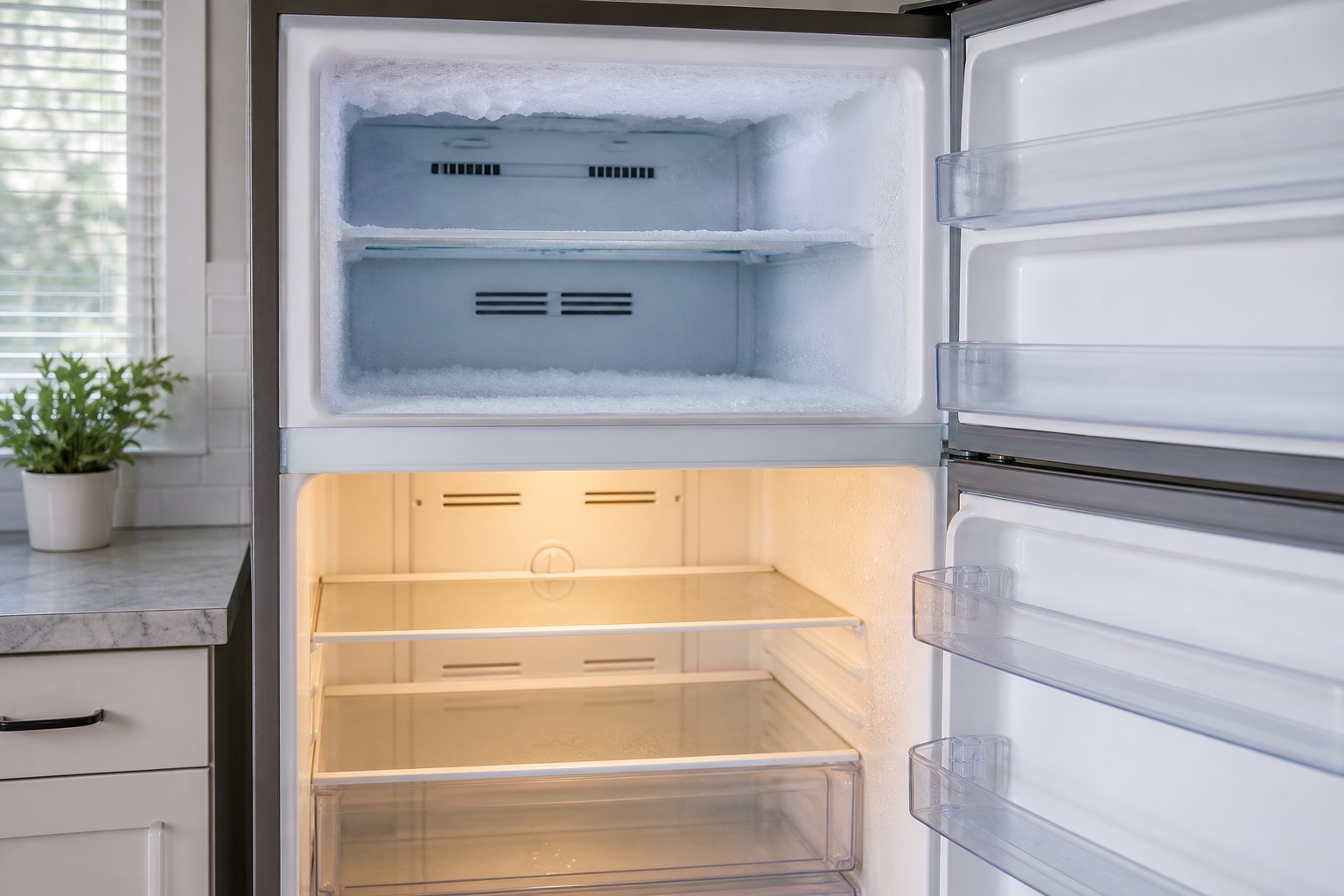
Refrigerator
Refrigerator Not Cooling but Freezer Is Working: Common Causes
Freezer cold but refrigerator warm? Learn the most common causes, safe checks, and when to schedule refrigerator repair in Cape Coral and Fort Myers.
Updated July 19, 2026
refrigerator not cooling but freezer is working
Refrigerator
Why Is My Refrigerator Running Constantly?
Is your refrigerator running nonstop? Learn the common causes, safe checks, and when to schedule refrigerator repair in Cape Coral and Fort Myers.
Updated July 19, 2026
refrigerator running constantlyNeed service?
Refrigerator Water Leak Repair in Cape Coral, Fort Myers and Southwest Florida
Art’s Appliance Repair provides refrigerator diagnostics and water-leak repair throughout Cape Coral, Fort Myers, North Fort Myers, Lehigh Acres, Estero, Bonita Springs, Naples, and surrounding Southwest Florida communities.
We diagnose refrigerator water problems including:
- Water inside the refrigerator.
- Water under crisper drawers.
- Frozen defrost drains.
- Ice on the freezer floor.
- Leaking water filters.
- Cracked filter housings.
- Water reservoir leaks.
- Ice maker overfilling.
- Frozen fill tubes.
- Door gasket and condensation problems.
- Interior tubing leaks.
- Refrigerator leaks combined with cooling problems.
Call or text (239) 688-9955 to schedule refrigerator service.
The service call is $0 when the diagnosed repair is approved and completed. If no repair is completed, the diagnostic service call is $79.
View Refrigerator Repair