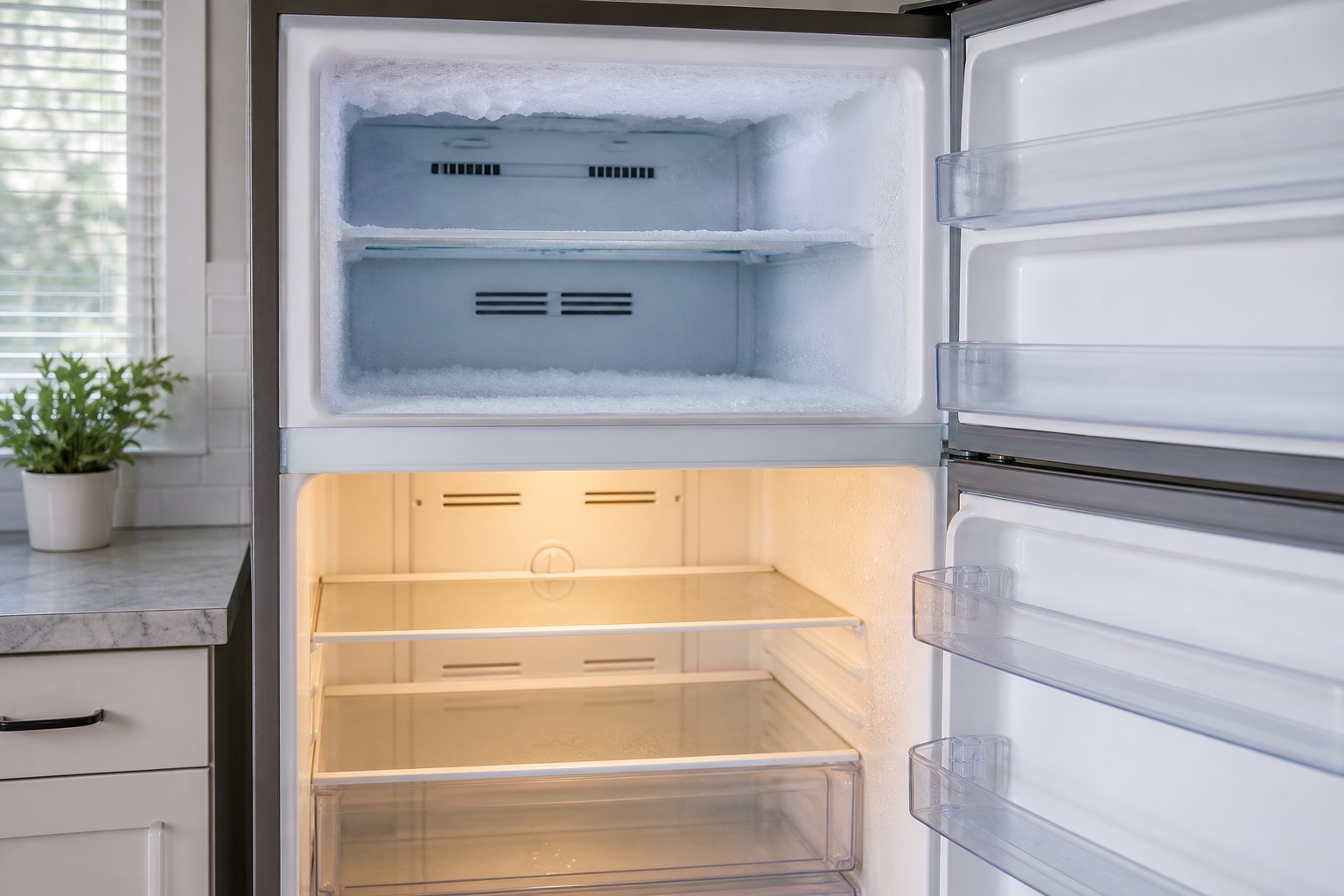
Why Is the Freezer Cold but the Refrigerator Warm?
In most modern refrigerators, cold air is produced in the freezer section. A fan then moves some of that cold air into the fresh-food compartment.
When airflow is restricted or the fan stops working, the freezer may continue to freeze normally while the refrigerator gradually becomes too warm.
A normal refrigerator temperature is approximately 37°F to 40°F. The freezer should usually remain near 0°F.
1. Air Vents Are Blocked
Food containers, bags, or large items may block the vents between the freezer and refrigerator compartments.
When these vents are covered, cold air cannot circulate properly.
Check that:
- Food is not pushed tightly against the rear wall.
- Air vents are not covered.
- The refrigerator is not overloaded.
- There is space between items for airflow.
After rearranging the food, allow several hours for the temperature to stabilize.
2. Evaporator Fan Is Not Working
The evaporator fan circulates cold air from the freezer into the refrigerator compartment.
When this fan fails, the freezer may remain cold near the evaporator coils, but little or no cold air reaches the refrigerator section.
Common signs of an evaporator fan problem include:
- The freezer is cold, but the refrigerator is warm.
- You do not hear the fan running when the compressor is operating.
- The refrigerator temperature changes from day to day.
- A scraping, buzzing, or rattling noise comes from the freezer.
- Ice buildup is interfering with the fan blade.
The fan motor may need to be tested and replaced.
3. Frost or Ice Is Blocking Airflow
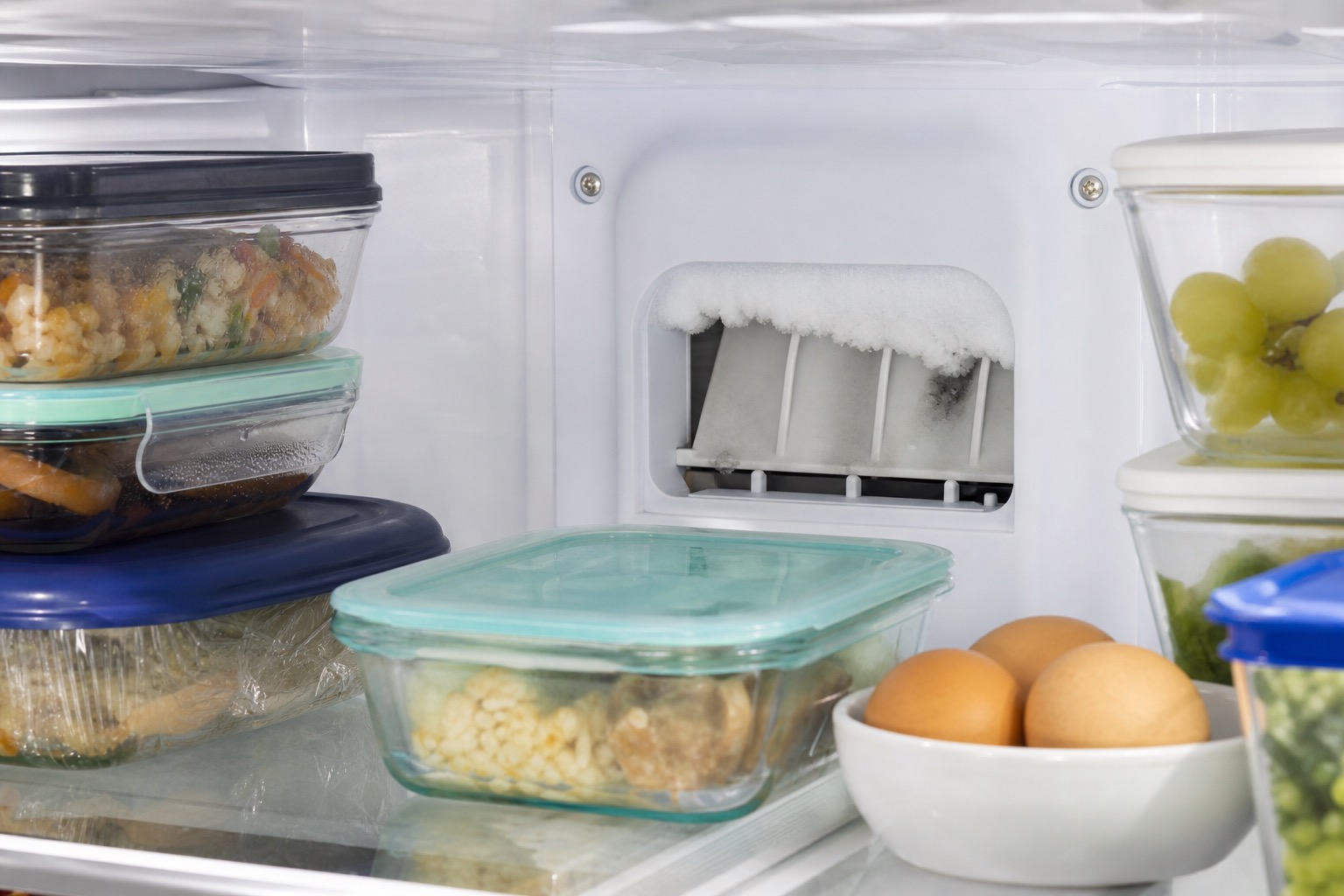
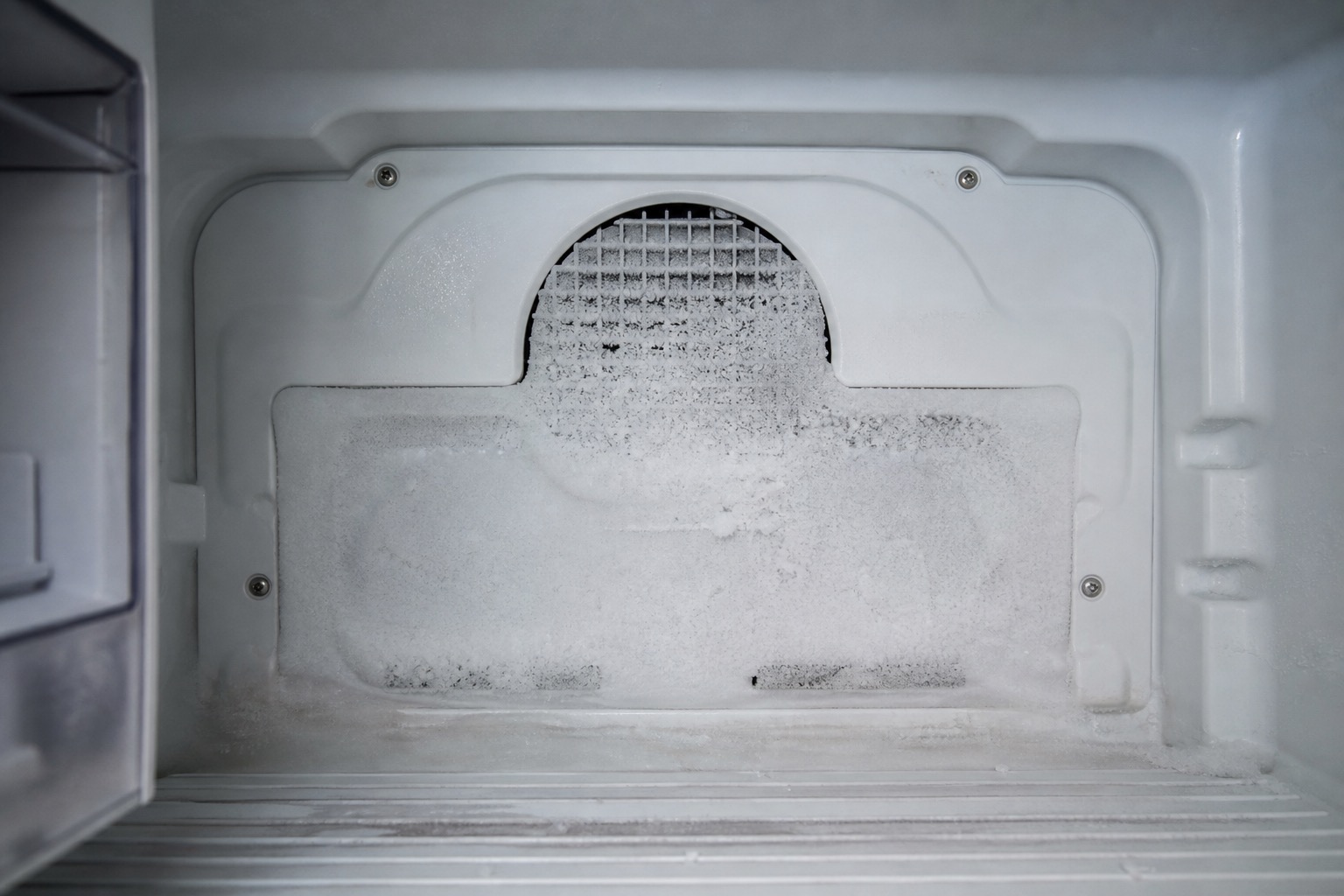
Heavy frost on the freezer’s rear interior panel may indicate a defrost system problem.
As ice builds up around the evaporator coils, airflow becomes restricted. The freezer may initially stay cold, but the refrigerator section becomes warmer.
Possible causes include:
- Failed defrost heater.
- Faulty defrost thermostat or sensor.
- Defective control board.
- Damaged wiring.
- Frozen drain or excessive moisture.
Manually defrosting the refrigerator may temporarily restore cooling, but it does not repair the underlying problem.
4. Damper Control Is Stuck Closed
The air damper controls how much cold air enters the refrigerator compartment from the freezer.
If the damper becomes stuck, broken, or blocked by ice, the refrigerator may not receive enough cold air.
A technician may need to inspect the damper assembly, temperature sensor, and electronic controls.
5. Refrigerator Temperature Sensor Is Faulty
The refrigerator uses a thermistor or temperature sensor to monitor the internal temperature.
If the sensor sends incorrect information to the control board, the refrigerator may reduce airflow or cooling even though the fresh-food compartment is too warm.
Possible symptoms include:
- Incorrect temperature readings.
- Intermittent cooling.
- Refrigerator section becoming too warm or too cold.
- Compressor and fans cycling irregularly.
A resistance test is usually required to determine whether the sensor is operating correctly.
6. Refrigerator Door Is Not Sealing Properly
A damaged or dirty door gasket allows warm, humid air to enter the refrigerator.
This makes it harder for the appliance to maintain the correct temperature and may also contribute to condensation or frost buildup.
Inspect the gasket for:
- Cracks or tears.
- Loose sections.
- Food residue.
- Areas that do not contact the cabinet.
- A door that is sagging or not closing completely.
Clean the gasket with warm water and mild soap. A damaged gasket may need replacement.
7. Condenser Coils Are Dirty
Dirty condenser coils reduce the refrigerator’s ability to release heat.
This may cause long run times, higher temperatures, and extra strain on the compressor.
In Southwest Florida, dust, pet hair, high indoor temperatures, and garage installations can make this problem worse.
Depending on the refrigerator model, the condenser coils may be located underneath or behind the appliance.
Disconnect power before cleaning accessible coils. Avoid removing electrical covers or reaching near moving components.
8. Condenser Fan Is Not Running
The condenser fan helps cool the compressor and condenser coils.
If the fan fails, the refrigerator may overheat and cool poorly, even if the freezer still feels cold at first.
Signs may include:
- Refrigerator running constantly.
- Excessive heat near the back or bottom.
- Unusual noise.
- Compressor shutting off after short periods.
- Gradual loss of cooling.
This issue should be diagnosed promptly to reduce the risk of compressor damage.
9. The Refrigerator Was Recently Unplugged or Lost Power
After a power outage, repair, cleaning, or control reset, the refrigerator may need time to return to the correct temperature.
In many cases:
- Initial cooling may begin within a few hours.
- The refrigerator may need up to 24 hours to fully stabilize.
- Frequent door opening can increase recovery time.
- A fully loaded refrigerator may cool more slowly.
If the freezer becomes cold but the refrigerator remains warm after 24 hours, there is likely an airflow or component problem.
10. Control Board Problem
The electronic control board operates the fans, compressor, sensors, damper, and defrost system.
A control board failure may cause intermittent or unusual cooling problems.
Possible signs include:
- Fans not receiving power.
- Refrigerator restarting unexpectedly.
- Cooling working only after unplugging the appliance.
- Incorrect temperature display.
- Multiple components behaving inconsistently.
A control board should not be replaced based only on symptoms. The connected components and wiring should be tested first.
What Can You Safely Check?
Before scheduling service, you can check the following:
- Confirm the temperature settings have not been changed.
- Make sure food is not blocking the vents.
- Check whether the refrigerator door closes completely.
- Inspect the door gasket for visible damage.
- Listen for the freezer fan.
- Look for heavy frost on the freezer’s rear panel.
- Allow up to 24 hours after a power interruption.
- Make sure the appliance has adequate ventilation.
Do not remove electrical panels or test live voltage unless you are trained and equipped to do so.
When Should You Call an Appliance Technician?
Schedule professional refrigerator repair when:
- The refrigerator remains above 40°F.
- The freezer is cold but no air enters the refrigerator.
- The evaporator fan is not running.
- Heavy frost returns after defrosting.
- The compressor starts and stops repeatedly.
- The refrigerator is leaking water.
- The appliance displays an error code.
- You notice a burning smell or electrical noise.
- Cooling does not improve after basic checks.
Continuing to operate a refrigerator with a failed fan, blocked evaporator, or overheating compressor may lead to additional damage.
Should You Repair or Replace the Refrigerator?
Repair is often reasonable when:
- The refrigerator is less than 10 years old.
- The cabinet and doors are in good condition.
- The problem involves a fan, sensor, damper, heater, or gasket.
- The repair cost is significantly lower than replacement.
Replacement may be more practical when the refrigerator has repeated sealed-system failures, severe corrosion, extensive electronic damage, or multiple expensive problems.
A proper diagnosis is the best way to make this decision.
Photo guide
Diagnostic Photos
Local Refrigerator Service
We provide refrigerator repair in Cape Coral and Fort Myers, along with surrounding Southwest Florida service areas.
For scheduling, use the Contact page or call/text Art’s Appliance Repair directly.
Related Appliance Guides
Refrigerator
Refrigerator Not Cooling After a Power Outage: What to Check
Refrigerator warm after a power outage? Separate PO from Cooling Off, protect food, and know when to request refrigerator repair in Cape Coral or Fort Myers.
Updated September 21, 2026
Refrigerator Not Cooling After a Power Outage: What to Check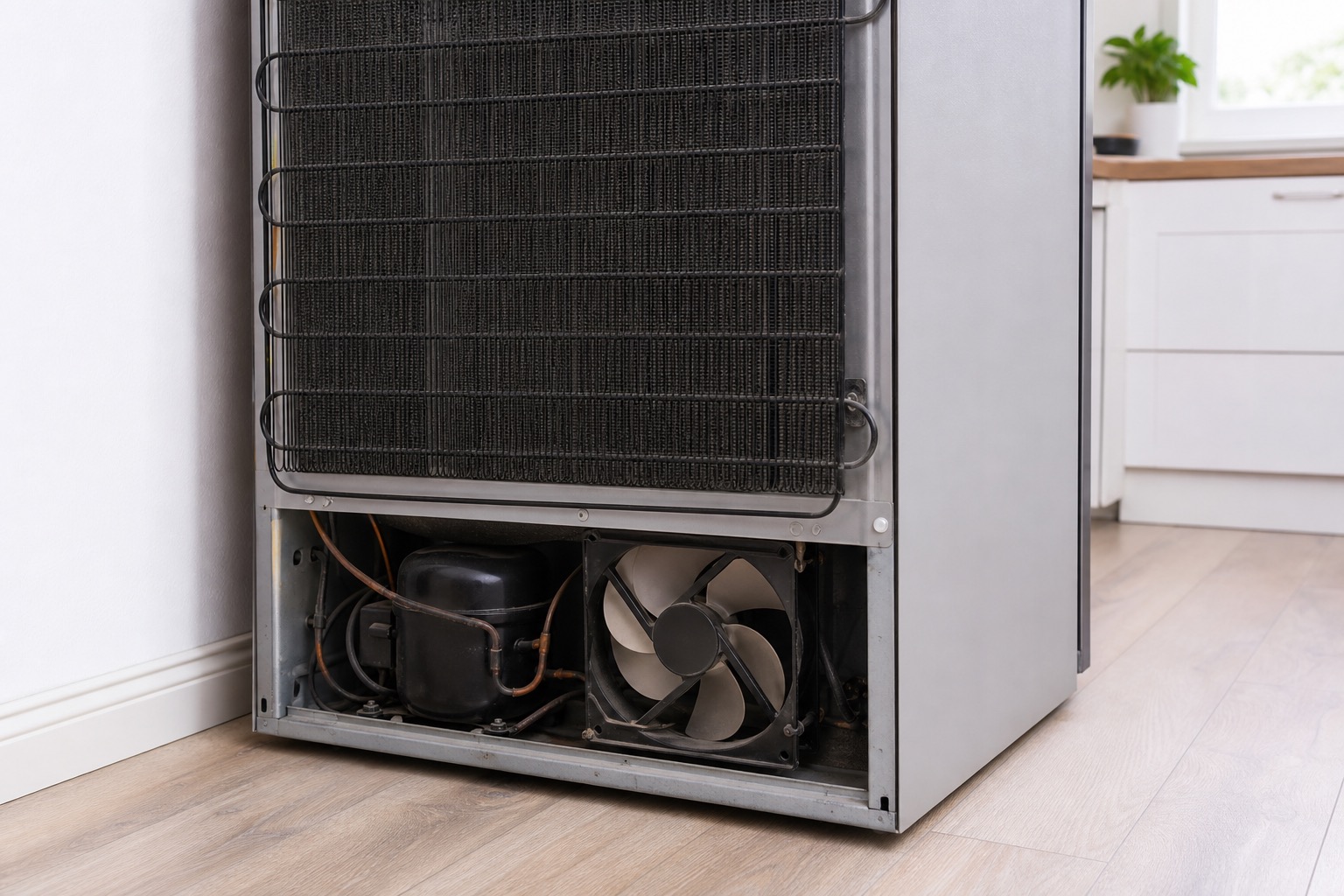
Refrigerator
Refrigerator Running but Not Getting Cold: What Could Be Wrong?
Is your refrigerator running but not cooling? Learn the common causes, safe checks, and when to schedule refrigerator repair in Cape Coral and Fort Myers.
Updated July 19, 2026
refrigerator running but not getting cold
Refrigerator
Why Is My Refrigerator Running Constantly?
Is your refrigerator running nonstop? Learn the common causes, safe checks, and when to schedule refrigerator repair in Cape Coral and Fort Myers.
Updated July 19, 2026
refrigerator running constantlyNeed service?
Refrigerator Repair in Cape Coral, Fort Myers and Southwest Florida
Art’s Appliance Repair provides refrigerator diagnostics and repair in Cape Coral, Fort Myers, North Fort Myers, Lehigh Acres, Estero, Bonita Springs, Naples, and surrounding Southwest Florida communities.
We service common refrigerator problems including:
- Refrigerator not cooling.
- Freezer cold but refrigerator warm.
- Ice and frost buildup.
- Fan motor problems.
- Water leaks.
- Temperature fluctuations.
- Ice maker failures.
- Defrost system problems.
- Control board and sensor issues.
Call or text (239) 688-9955 to schedule refrigerator service.
The service call is $0 when the diagnosed repair is approved and completed. If no repair is completed, the diagnostic service call is $79.
View Refrigerator Repair