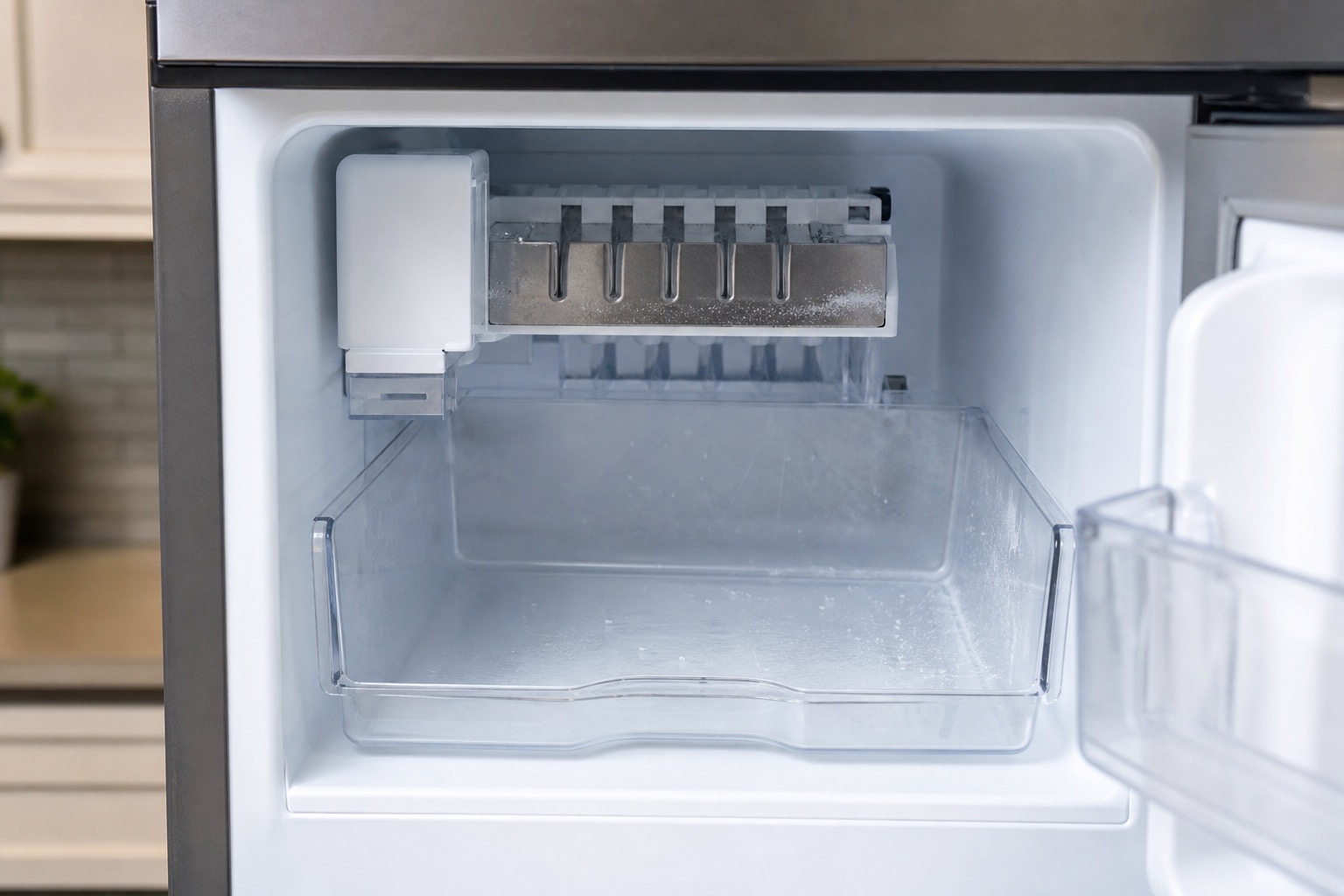
How Long Should an Ice Maker Take to Start Making Ice?
A newly installed or recently restarted ice maker may not produce ice immediately.
Typical recovery time may include:
- Several hours for the freezer to reach the correct temperature.
- 12 to 24 hours before the first full batch.
- Up to 48 hours for normal ice production to stabilize.
- Longer if the doors are opened frequently.
- Longer if the freezer is heavily loaded with warm food.
- Longer in a hot garage or poorly ventilated area.
Many ice makers produce one batch every 60 to 120 minutes once conditions are correct.
Production rate depends on:
- Freezer temperature.
- Ice maker design.
- Water pressure.
- Filter condition.
- Room temperature.
- Door-opening frequency.
- Selected ice-production mode.
Is the Ice Maker Turned On?
Before diagnosing a failure, verify that the ice maker is enabled.
Depending on the model, the control may be:
- A metal shutoff arm.
- A power switch.
- A control-panel setting.
- An Ice On or Ice Off button.
- A sensor inside the ice bin.
- A touch-screen option.
- A Max Ice or Fast Ice setting.
Check whether:
- The shutoff arm is in the down position.
- The power switch is on.
- The display does not show Ice Off.
- The ice bin is installed correctly.
- The bin-full sensor is not blocked.
- The control panel is not locked.
The ice maker may appear active while the electronic control has disabled production.
1. The Freezer Is Not Cold Enough
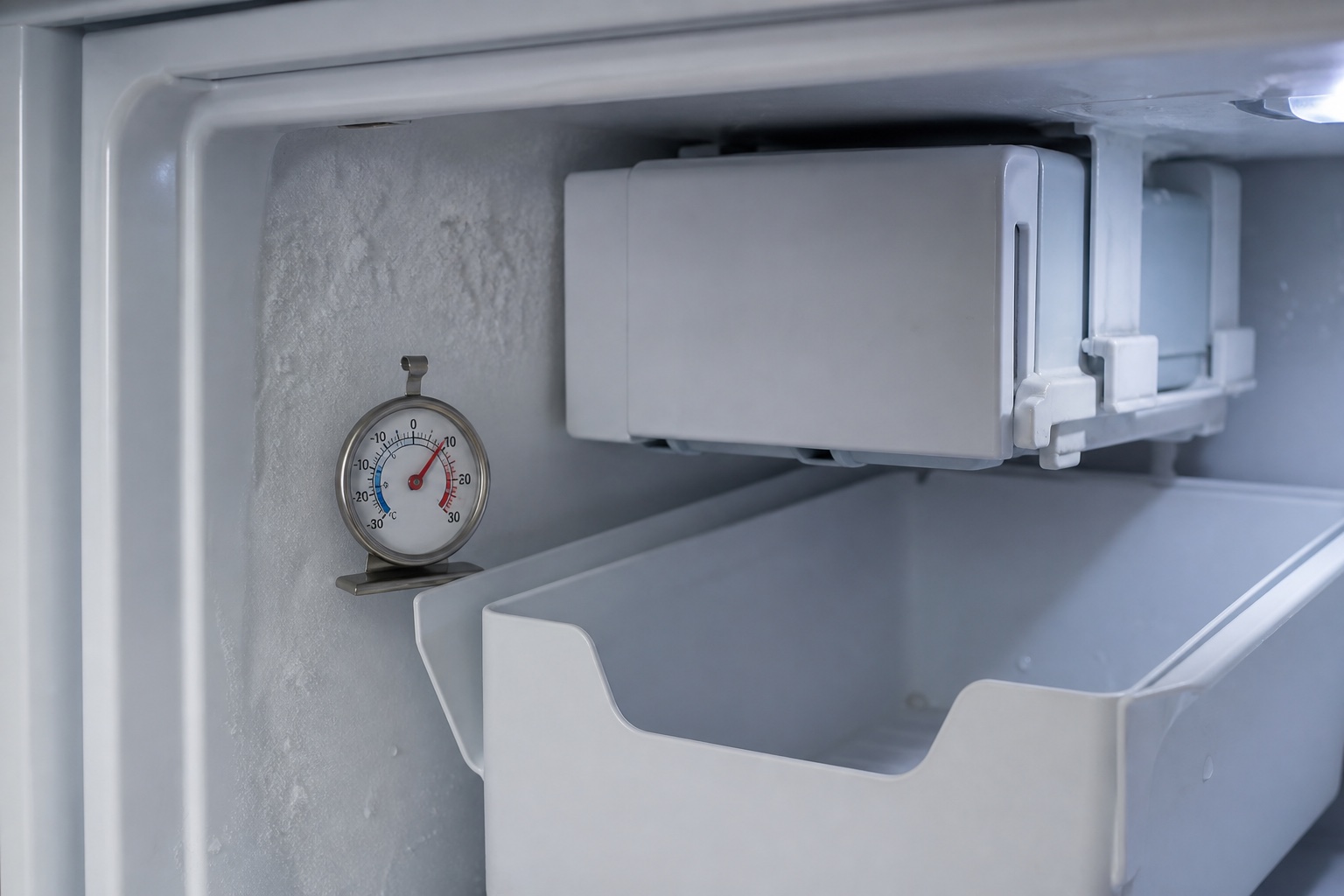
Most ice makers require the freezer to remain near 0°F.
Many models will not harvest ice if the compartment is warmer than approximately 10°F to 15°F.
Possible causes of a warm freezer include:
- Door not closing completely.
- Damaged door gasket.
- Blocked air vents.
- Evaporator fan problem.
- Dirty condenser coils.
- Condenser fan failure.
- Defrost system problem.
- Compressor or sealed-system issue.
- Temperature setting too warm.
Signs include:
- Soft ice cream.
- Food not fully frozen.
- Long compressor run times.
- Ice cubes melting together.
- Freezer temperature fluctuating.
- Ice maker working intermittently.
Use an appliance thermometer to verify the actual freezer temperature.
2. The Freezer Temperature Was Recently Changed
After adjusting the freezer setting, the ice maker may need several hours before production resumes.
Avoid repeatedly changing the temperature.
Recommended starting settings are generally:
- Freezer: approximately 0°F.
- Refrigerator: approximately 37°F.
Allow up to 24 hours after a major temperature adjustment.
3. The Refrigerator Was Recently Installed or Unplugged
A refrigerator may need time to cool after:
- Installation.
- Moving.
- Cleaning.
- Power outage.
- Repair.
- Extended door opening.
- Loading warm groceries.
The ice maker usually begins only after the freezer sensor detects a sufficiently low temperature.
If the refrigerator was transported on its side, follow the manufacturer’s instructions before connecting power.
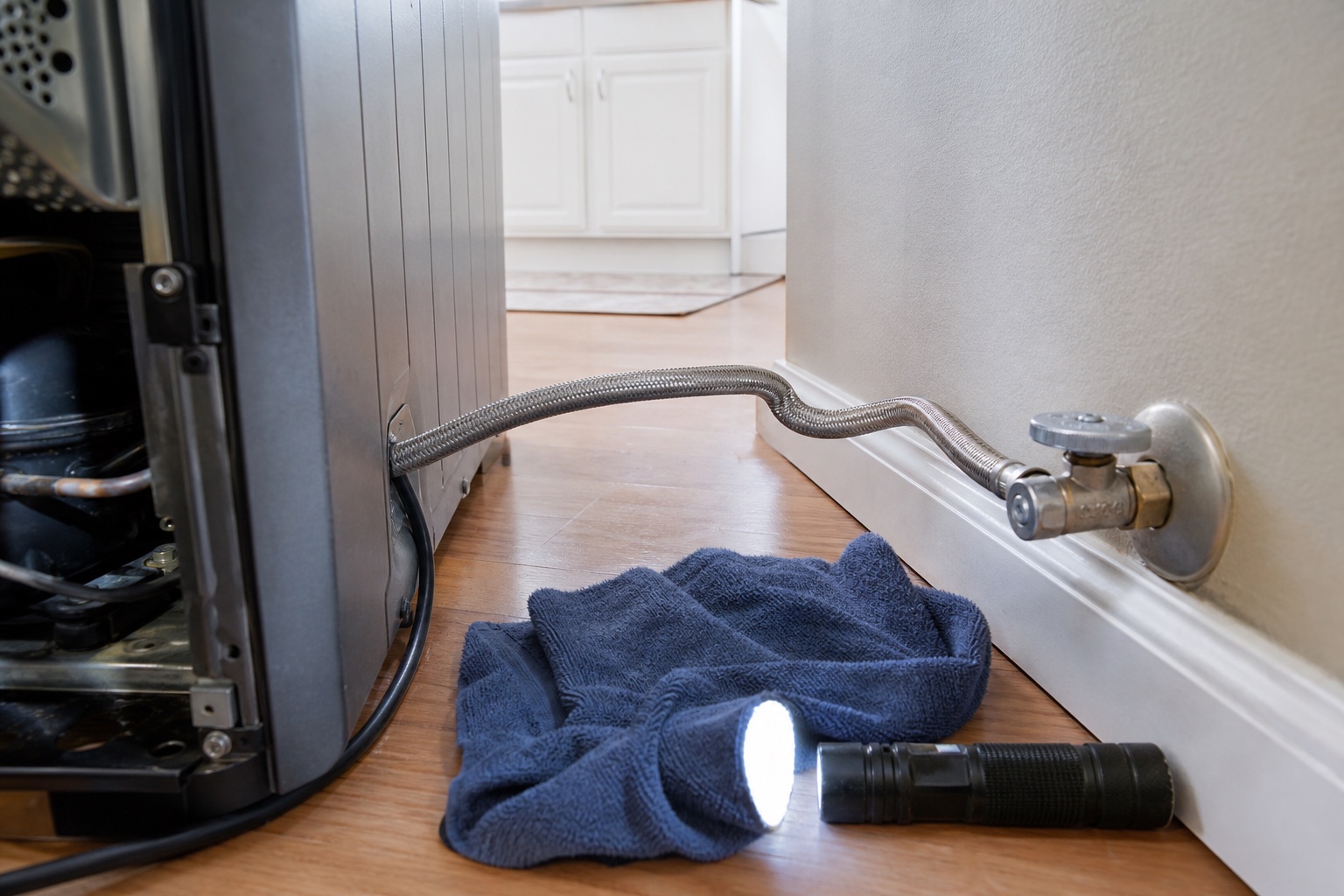
4. The Water Supply Is Turned Off
The ice maker cannot fill if the household water valve is closed.
Check that:
- The shutoff valve is fully open.
- The water line is connected.
- The supply tubing is not kinked.
- The valve handle is in the correct position.
- The home water supply is active.
If the refrigerator was recently installed, the water valve may still be closed.
A partially open valve may allow dispenser operation but provide insufficient flow for normal ice production.
5. The Water Supply Line Is Kinked or Crushed
The water line behind the refrigerator may become pinched when the appliance is pushed toward the wall.
Possible symptoms include:
- No ice.
- Small or hollow cubes.
- Slow dispenser flow.
- Inlet valve buzzing.
- Ice maker filling intermittently.
- Long delay between batches.
Carefully inspect accessible tubing.
Do not pull the refrigerator forward aggressively because the line may be short and can tear.
6. Water Pressure Is Too Low
The inlet valve requires adequate water pressure to open and fill correctly.
Low pressure may be caused by:
- Partially closed shutoff valve.
- Kinked supply line.
- Clogged water filter.
- Household plumbing issue.
- Reverse-osmosis system.
- Saddle valve restriction.
- Mineral buildup.
Possible symptoms include:
- Small ice cubes.
- Hollow ice.
- Slow dispenser.
- Ice maker not filling.
- Fill valve buzzing.
- Frozen fill tube.
The manufacturer may specify a minimum water-pressure requirement.
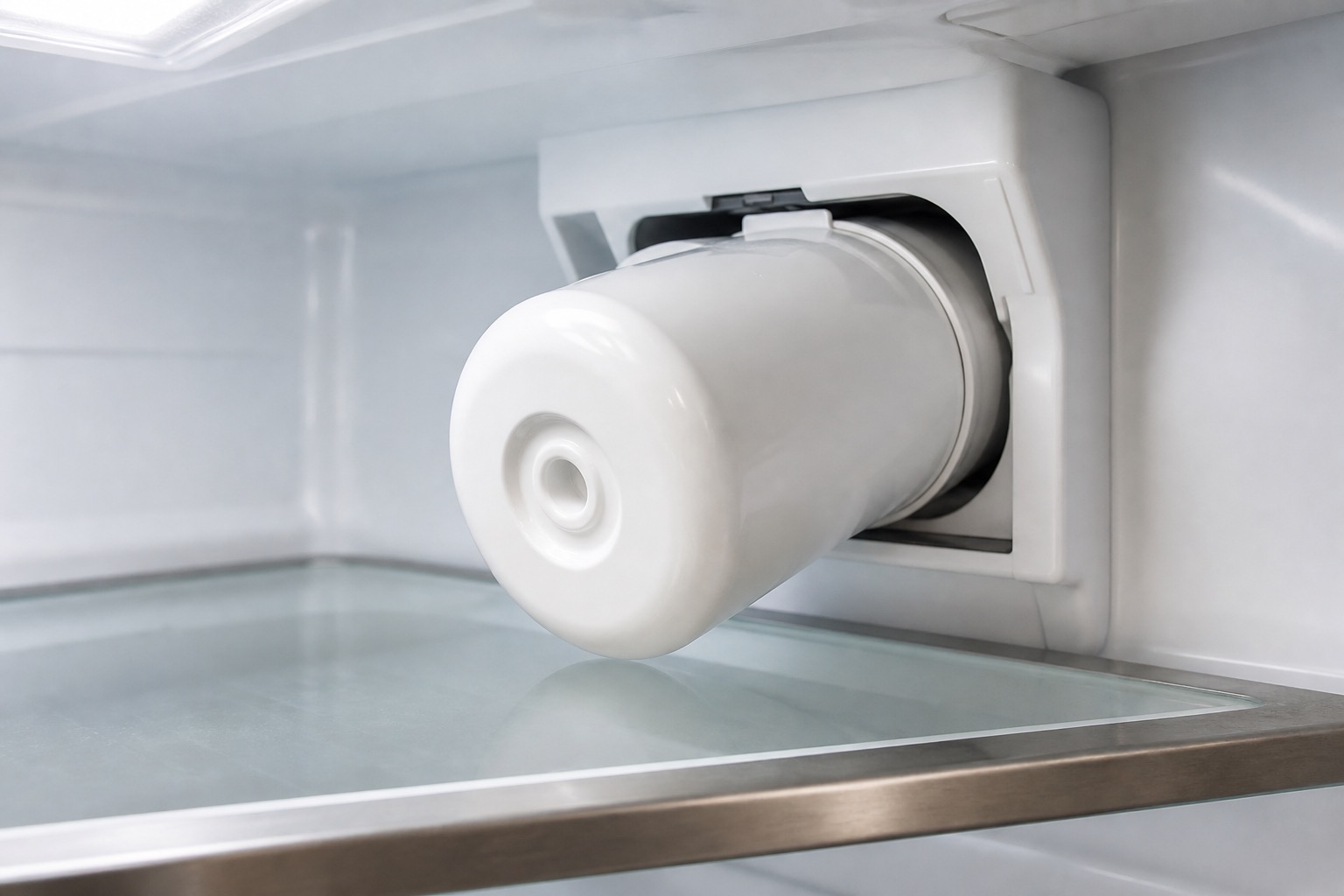
7. The Water Filter Is Clogged
A restricted water filter can reduce flow to the ice maker.
Possible symptoms include:
- No ice.
- Slow ice production.
- Small cubes.
- Hollow cubes.
- Weak dispenser flow.
- Longer fill cycle.
- Inlet valve noise.
Replace the filter if it is overdue or if flow has noticeably decreased.
Use a compatible filter and install it fully.
After replacement, flush the water system according to the manufacturer’s instructions.
8. The Water Filter Is Installed Incorrectly
An incorrectly installed filter may prevent water from reaching the ice maker.
Possible problems include:
- Filter not fully seated.
- Incorrect filter model.
- Damaged O-ring.
- Filter inserted at an angle.
- Debris around the seal.
- Bypass cap missing where required.
If the problem began immediately after filter replacement, remove and reinstall the filter.
Do not force an incompatible filter into the housing.
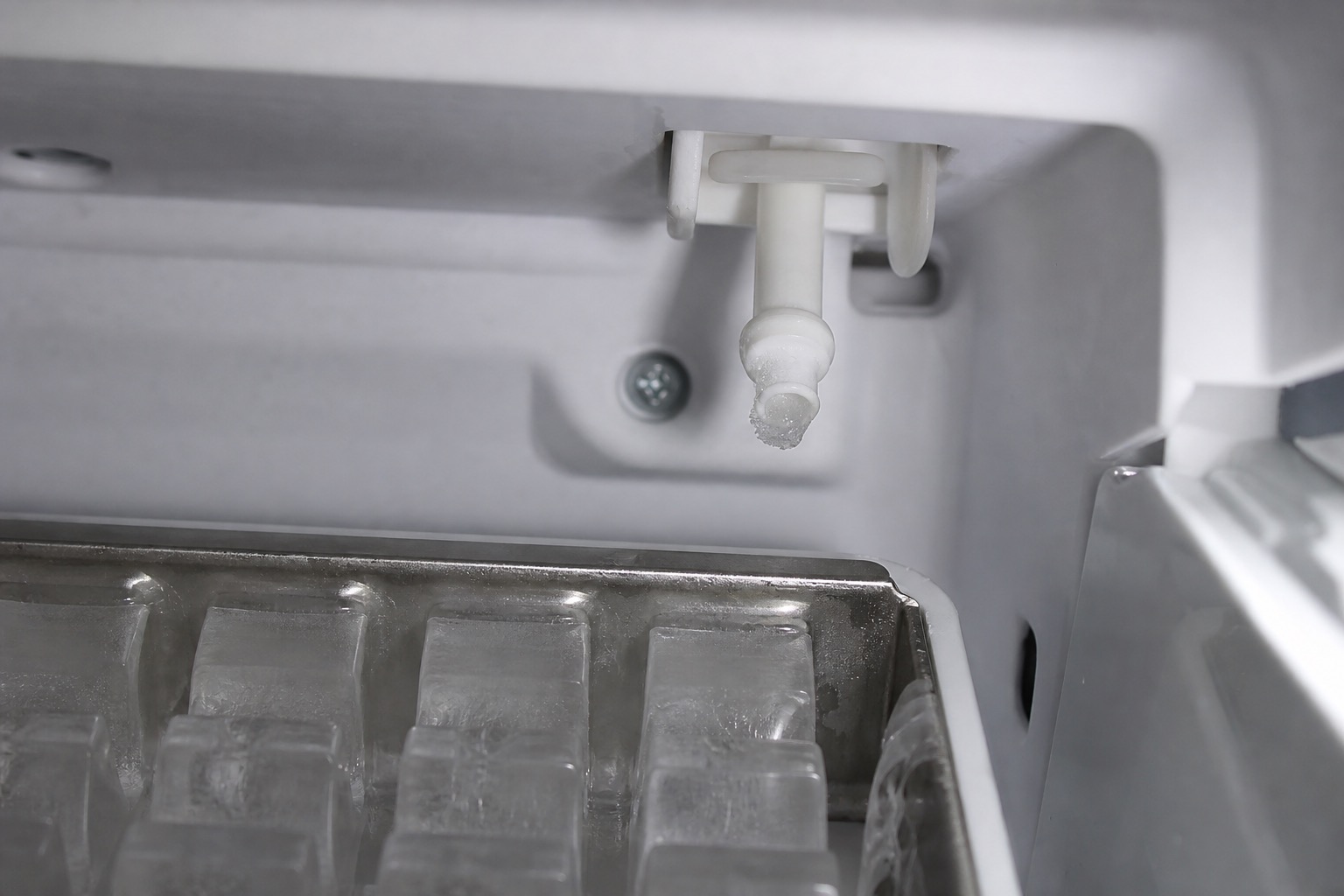
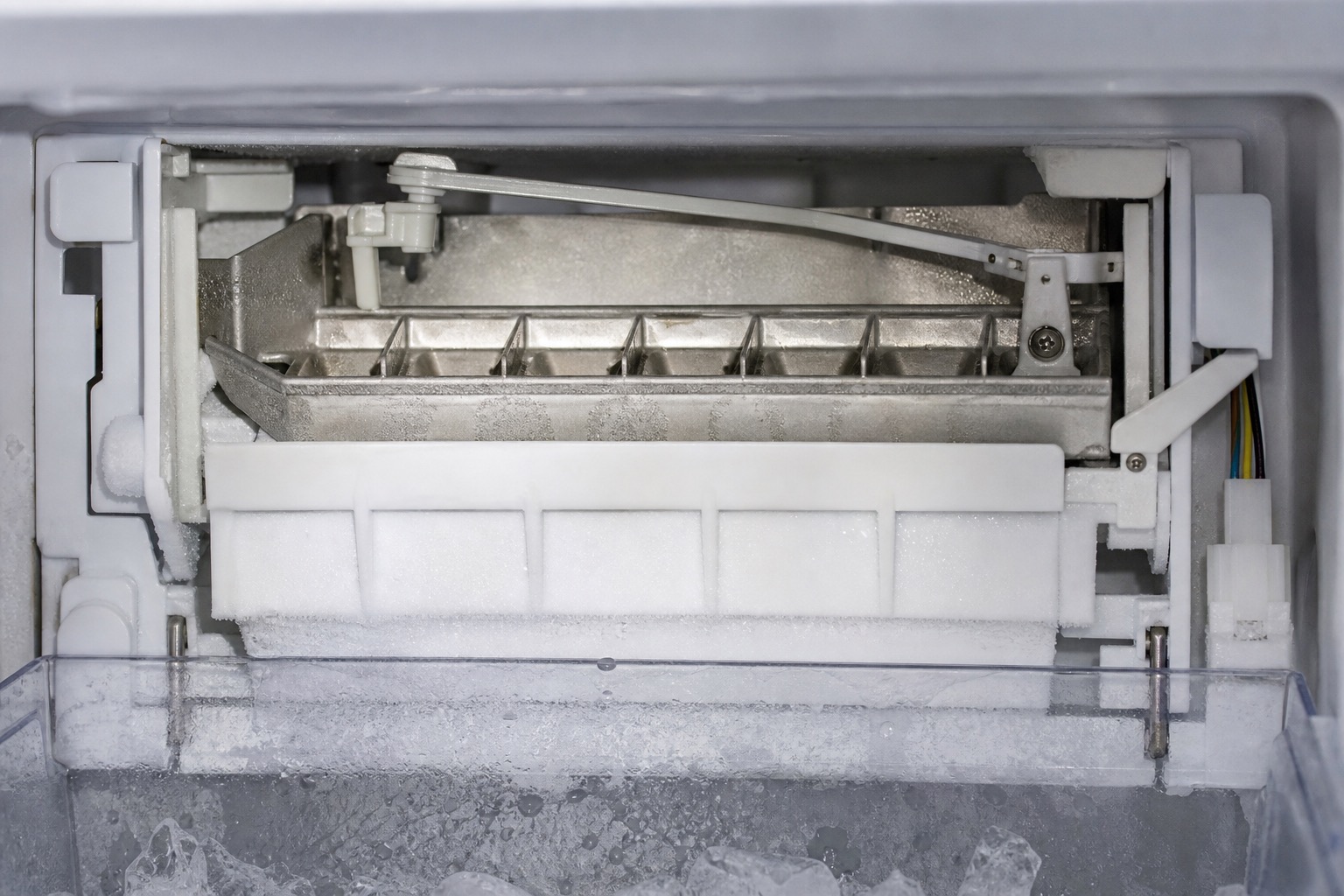
9. The Ice Maker Fill Tube Is Frozen
The fill tube directs water into the ice maker mold.
If it freezes, no water reaches the ice maker.
Possible causes include:
- Inlet valve seeping slowly.
- Low water pressure.
- Cold air leak around the tube.
- Freezer temperature set too low.
- Restricted filter.
- Fill tube positioned incorrectly.
- Insulation problem.
Signs include:
- No water in the ice mold.
- Ice around the fill tube.
- Water valve buzzing.
- Ice production stopping suddenly.
- Frozen trail near the ice maker.
Do not use a knife, screwdriver, or sharp object to clear the tube.
If the tube freezes repeatedly, the water valve and supply pressure should be checked.
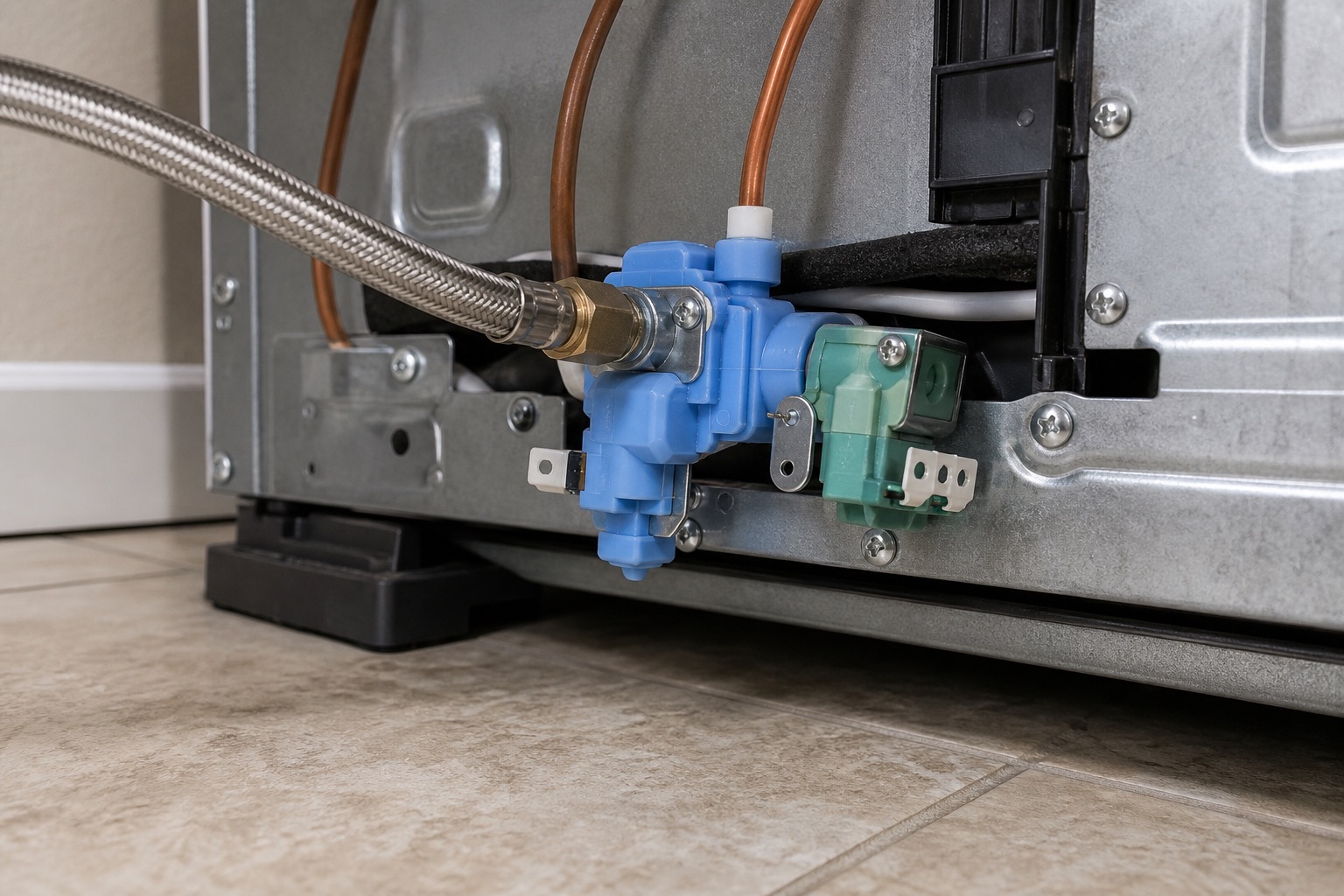
10. The Water Inlet Valve Has Failed
The inlet valve opens when the ice maker requests water.
It may fail electrically or mechanically.
Possible symptoms include:
- Ice maker cycles but does not fill.
- Valve buzzes but no water enters.
- Dispenser works but ice maker does not.
- Ice maker works intermittently.
- Valve leaks or overfills.
- Fill tube freezes repeatedly.
The valve may fail because of:
- Internal coil failure.
- Mineral buildup.
- Damaged seal.
- Low water pressure.
- Electrical problem.
- Age.
The valve should be tested before replacement.
11. The Ice Maker Mold Is Empty
If the mold is empty, the likely problem is in the water-supply side.
Possible causes include:
- Closed water valve.
- Clogged filter.
- Frozen fill tube.
- Failed inlet valve.
- Low water pressure.
- Broken wiring.
- Control board not activating the valve.
A technician may initiate a diagnostic fill test to determine whether the valve receives power.
12. The Ice Maker Mold Contains Frozen Cubes
If cubes are frozen in the mold but are not being released, the problem is likely in the harvest system.
Possible causes include:
- Failed ice maker motor.
- Defective mold heater.
- Temperature sensor problem.
- Broken ejector mechanism.
- Control-module failure.
- Jammed cubes.
- Ice maker not receiving proper voltage.
The ice maker may attempt to harvest but stop before completing the cycle.
13. The Ice Maker Motor Has Failed
The motor rotates the ejector mechanism and completes the harvest cycle.
Possible symptoms include:
- Ice remains in the mold.
- No movement during a test cycle.
- Clicking or grinding.
- Ejector fingers stop midway.
- Ice maker receives water but never dumps cubes.
- Test mode shows a harvest error.
On many models, the motor is part of the complete ice maker assembly.
14. The Mold Heater Is Not Working
Many ice makers briefly heat the mold to release the cubes.
If the heater fails, cubes may remain frozen in place.
Possible symptoms include:
- Ice present in the mold.
- Ejector attempting to move.
- Motor stalls.
- Ice maker clicks.
- Harvest test does not complete.
- Cubes release only after manual warming.
Testing may require checking resistance, wiring, and control output.
15. The Ice Maker Thermostat or Temperature Sensor Is Faulty
The ice maker must detect that the cubes are fully frozen before harvesting.
A faulty sensor may incorrectly report the temperature.
Possible symptoms include:
- Ice maker waits indefinitely.
- Harvest begins too early.
- Small or wet cubes.
- Intermittent operation.
- Diagnostic error.
- Ice maker works only after a reset.
The sensor should be tested according to the manufacturer’s specifications.
16. The Ejector Fingers Are Jammed
Ice cubes or foreign material may block the ejector mechanism.
Possible symptoms include:
- Ejector fingers stopped in the middle.
- Clicking.
- Grinding.
- Ice stuck together.
- Ice maker unable to return to the home position.
- Motor repeatedly trying to move.
Turn off the ice maker before removing loose ice.
Do not force the ejector fingers manually because the gears can break.
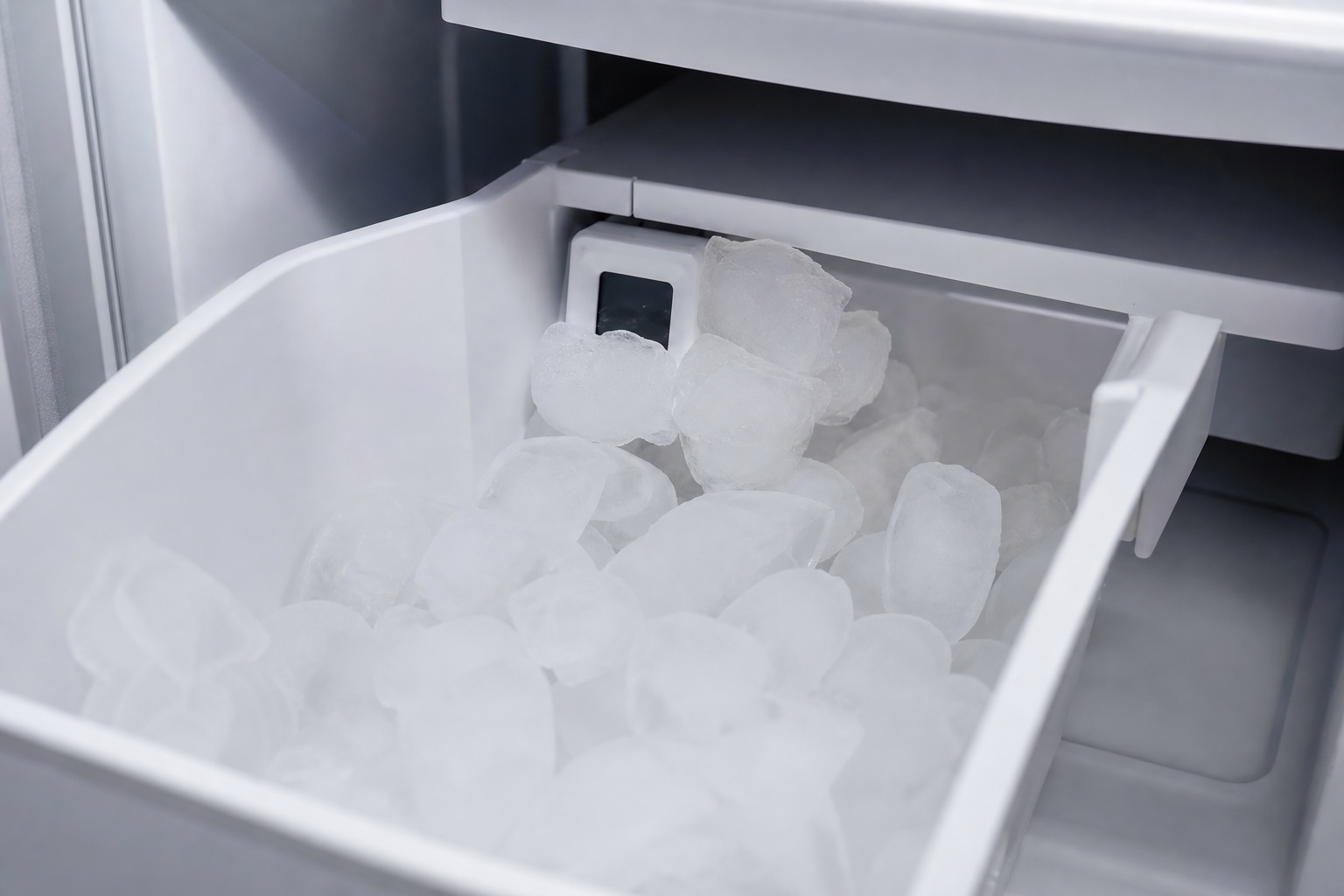
17. The Ice Bin Is Full or Installed Incorrectly
The ice maker may stop when it detects a full bin.
If the bin is misaligned, the ice maker may incorrectly interpret its position.
Check that:
- The bin is fully inserted.
- Ice is not piled against the sensor.
- The shutoff arm moves freely.
- The optical sensor is clean.
- The bin is not cracked or warped.
- The auger is not preventing correct installation.
Remove excess ice and reinstall the bin.
18. The Bin-Level Sensor Is Blocked
Some refrigerators use an optical or infrared sensor to detect the ice level.
The sensor may be blocked by:
- Ice buildup.
- Frost.
- Dirt.
- Food packaging.
- Misaligned ice bin.
- Failed emitter or receiver.
Possible symptoms include:
- Ice maker stops while the bin is empty.
- Ice Off indicator behaves incorrectly.
- Production resumes after moving the bin.
- Diagnostic test reports a sensor error.
Clean the sensor windows carefully.
Do not scratch the lenses.
19. The Shutoff Arm Is Stuck
Mechanical ice makers may use a wire arm to stop production when the bin is full.
If the arm is stuck in the raised position, the ice maker will remain off.
Check for:
- Ice blocking the arm.
- Bent wire.
- Broken mounting point.
- Arm disconnected from the mechanism.
- Bin installed incorrectly.
The arm should move freely without excessive force.
20. The Ice Maker Is Jammed With Clumped Ice
Ice cubes can melt slightly and refreeze together.
This may happen because of:
- Freezer temperature fluctuation.
- Door left open.
- Power outage.
- Warm food placed nearby.
- Air leak.
- Ice stored too long.
Clumped ice may block:
- Ejector.
- Shutoff arm.
- Bin sensor.
- Auger.
- Dispenser chute.
Remove the ice bin and discard large frozen clumps.
Do not strike the bin against a hard surface because it may crack.
21. The Refrigerator Door Is Not Closing Properly
A door-sealing problem can raise freezer temperature and stop ice production.
Check for:
- Food blocking the door.
- Damaged gasket.
- Sagging hinge.
- Ice buildup.
- Overfilled shelves.
- Misaligned drawers.
- Refrigerator not level.
In Southwest Florida, warm humid air entering the freezer can also cause frost and clumped ice.
22. The Door Switch Is Faulty
The refrigerator may disable the ice maker or dispenser when it believes a door is open.
A failed switch may cause:
- Ice maker not cycling.
- Dispenser not working.
- Interior light staying on.
- Ice maker operating intermittently.
- Door-open warning.
- Cooling issues.
The switch and wiring should be tested before replacement.
23. The Evaporator Fan Is Not Running
The evaporator fan circulates cold air through the freezer.
If airflow is weak, the ice maker area may not reach the required temperature even when another part of the freezer feels cold.
Possible symptoms include:
- Freezer cold at the bottom but warm at the top.
- Ice maker not producing.
- Weak airflow.
- Frost on the rear panel.
- Fan noise or no fan sound.
- Refrigerator section becoming warm.
On some French-door refrigerators, the ice maker has a separate fan or air duct.
24. The Ice Maker Fan Is Not Working
Some refrigerator ice makers, especially those located in the fresh-food compartment, rely on a dedicated fan to deliver cold air.
A failed fan may cause:
- Ice maker compartment too warm.
- Slow or no ice production.
- Ice melting in the bin.
- Fan error code.
- Ice maker working in test mode but not normally.
- Frost around the fan.
The fan, duct, sensor, and control should be inspected.
25. An Air Duct Is Blocked
Cold air may reach the ice maker through a dedicated duct.
The duct can be blocked by:
- Ice.
- Frost.
- Food packaging.
- Misaligned panel.
- Failed damper.
- Insulation.
Possible signs include:
- Freezer cold but ice maker compartment warm.
- No airflow near the ice maker.
- Ice buildup around the duct.
- Intermittent production.
The source of the frost or blockage should be corrected.
26. The Defrost System Is Malfunctioning
Heavy frost can restrict airflow to the ice maker.
Possible failed components include:
- Defrost heater.
- Defrost thermostat.
- Thermistor.
- Control board.
- Wiring.
- Drain system.
Signs include:
- Frost on the freezer’s rear panel.
- Evaporator fan hitting ice.
- Freezer temperature changing.
- Refrigerator running constantly.
- Ice maker stopping gradually.
Manually defrosting may temporarily restore production, but the problem will return if the failed part is not repaired.
27. The Ice Maker Control Module Has Failed
The control module manages harvest, fill, sensing, and motor operation.
Possible symptoms include:
- No response in test mode.
- Cycle stops midway.
- Valve not activated.
- Ejector not moving.
- Intermittent production.
- Error code.
- Ice maker works only after unplugging the refrigerator.
On many models, the control module is integrated into the complete ice maker assembly.
28. The Main Control Board Is Not Sending the Correct Signal
The refrigerator’s main board may control:
- Ice maker power.
- Water valve.
- Fans.
- Temperature sensors.
- Harvest timing.
- Door-switch logic.
A control problem may cause:
- Ice maker not receiving voltage.
- Valve not filling.
- Fan not running.
- Diagnostic mode showing communication errors.
- Ice production returning temporarily after reset.
The board should not be replaced until the ice maker, valve, sensors, wiring, and fans have been tested.
29. Wiring or a Connector Is Damaged
The ice maker depends on secure wiring between the control board, valve, sensors, and motor.
Possible causes of wiring problems include:
- Door movement.
- Moisture.
- Corrosion.
- Previous repair.
- Loose connector.
- Broken wire near a hinge.
- Insect damage.
Signs may include:
- Intermittent operation.
- Ice maker works when the door moves.
- Error codes.
- No power at the ice maker.
- Burned or corroded connector.
Damaged wiring should be repaired correctly.
30. The Ice Maker Needs a Reset
A temporary electronic error may stop production.
Possible reset methods vary by model and may include:
- Powering the ice maker off and on.
- Pressing a test or reset button.
- Using a control-panel combination.
- Disconnecting refrigerator power briefly.
- Running a diagnostic harvest test.
Use the manufacturer’s instructions for the exact model.
A reset is not a repair if the problem returns.
31. The Refrigerator Is in Demo or Cooling Off Mode
In Demo or Showroom mode:
- Lights may work.
- Display may operate.
- Ice maker controls may respond.
- Cooling may remain disabled.
- No ice will be produced.
Look for messages such as:
- Cooling Off.
- Demo.
- Showroom.
- OF OF.
- O FF.
Exit the mode using the model-specific procedure.
32. Ice Production Is Disabled by Sabbath or Vacation Mode
Some refrigerators limit ice-making functions in special operating modes.
Check whether the appliance is in:
- Sabbath mode.
- Vacation mode.
- Energy-saving mode.
- Ice Off mode.
The display or owner’s manual should explain how these settings affect ice production.
33. The Ice Maker Works in Test Mode but Not Normally
If a forced test completes successfully, the mechanical components may be functional.
The problem may instead involve:
- Freezer temperature.
- Temperature sensor.
- Door switch.
- Bin-level sensor.
- Control-board timing.
- Ice maker fan.
- Intermittent wiring.
- Error stored in the control system.
A successful test does not prove that all normal operating conditions are correct.
34. The Ice Maker Produces Ice Too Slowly
Slow production can be caused by:
- Freezer slightly too warm.
- Frequent door opening.
- Low water pressure.
- Clogged filter.
- Small fill volume.
- Hot room or garage.
- Ice maker fan problem.
- Max Ice mode turned off.
Normal production may be reduced during:
- Hot weather.
- Heavy refrigerator use.
- Initial installation.
- Recent power outage.
- Large grocery load.
35. The Refrigerator Is Installed in a Hot Garage
High ambient temperatures can reduce ice production.
This is common in Southwest Florida garages.
Possible effects include:
- Compressor running continuously.
- Freezer temperature rising during the day.
- Ice maker cycling slowly.
- Cubes melting together.
- Fan and compressor overheating.
- Long recovery after door opening.
A standard indoor refrigerator may not be designed for extreme garage temperatures.
What Can You Safely Check?
Before scheduling service, you can:
1. Confirm the ice maker is turned on.
2. Check that the ice bin is installed correctly.
3. Measure the freezer temperature.
4. Make sure the water-supply valve is open.
5. Inspect the water line for kinks.
6. Check dispenser flow.
7. Replace an overdue water filter.
8. Look for ice in the fill tube.
9. Check whether cubes are frozen in the mold.
10. Remove clumped ice from the bin.
11. Inspect the door gasket.
12. Make sure the freezer door closes completely.
13. Listen for the evaporator or ice maker fan.
14. Record any error code.
15. Allow up to 24 hours after installation or a power outage.
16. Run the model-specific ice maker test if instructed by the manufacturer.
Do not force the ejector mechanism or use sharp tools to remove ice.
Do not test live voltage unless you have the proper training and equipment.
When Should You Wait?
Waiting may be appropriate when:
- The refrigerator was just installed.
- Power was recently restored.
- The freezer temperature was adjusted.
- The filter was replaced.
- A large amount of warm food was added.
- The refrigerator was moved.
- The ice bin was recently emptied.
- The ice maker has produced at least some ice.
Allow approximately 24 hours under normal conditions.
When Should You Call an Ice Maker Technician?
Professional diagnosis is recommended when:
- No ice is produced after 24 hours.
- The freezer is near 0°F but the ice maker remains inactive.
- The mold is full but cubes do not harvest.
- The mold is empty and the valve does not fill.
- The fill tube freezes repeatedly.
- The ice maker works in test mode but not normally.
- The fan is not running.
- The ice maker displays an error code.
- Water leaks during filling.
- The valve buzzes but no water enters.
- Wiring or connectors are damaged.
- The problem returns after reset.
A technician can test the ice maker assembly, inlet valve, fill tube, fan, sensors, control board, door switch, water pressure, and wiring.
Should You Repair or Replace the Ice Maker?
Repair is often practical when the problem involves:
- Water filter.
- Frozen fill tube.
- Water inlet valve.
- Door switch.
- Ice maker fan.
- Sensor.
- Wiring.
- Ice maker assembly.
Replacement of the complete ice maker may be recommended when:
- The motor has failed.
- The heater is open.
- Gears are damaged.
- The mold is cracked.
- The control module is defective.
- Multiple internal components have failed.
The refrigerator itself usually does not need replacement for an isolated ice maker failure.
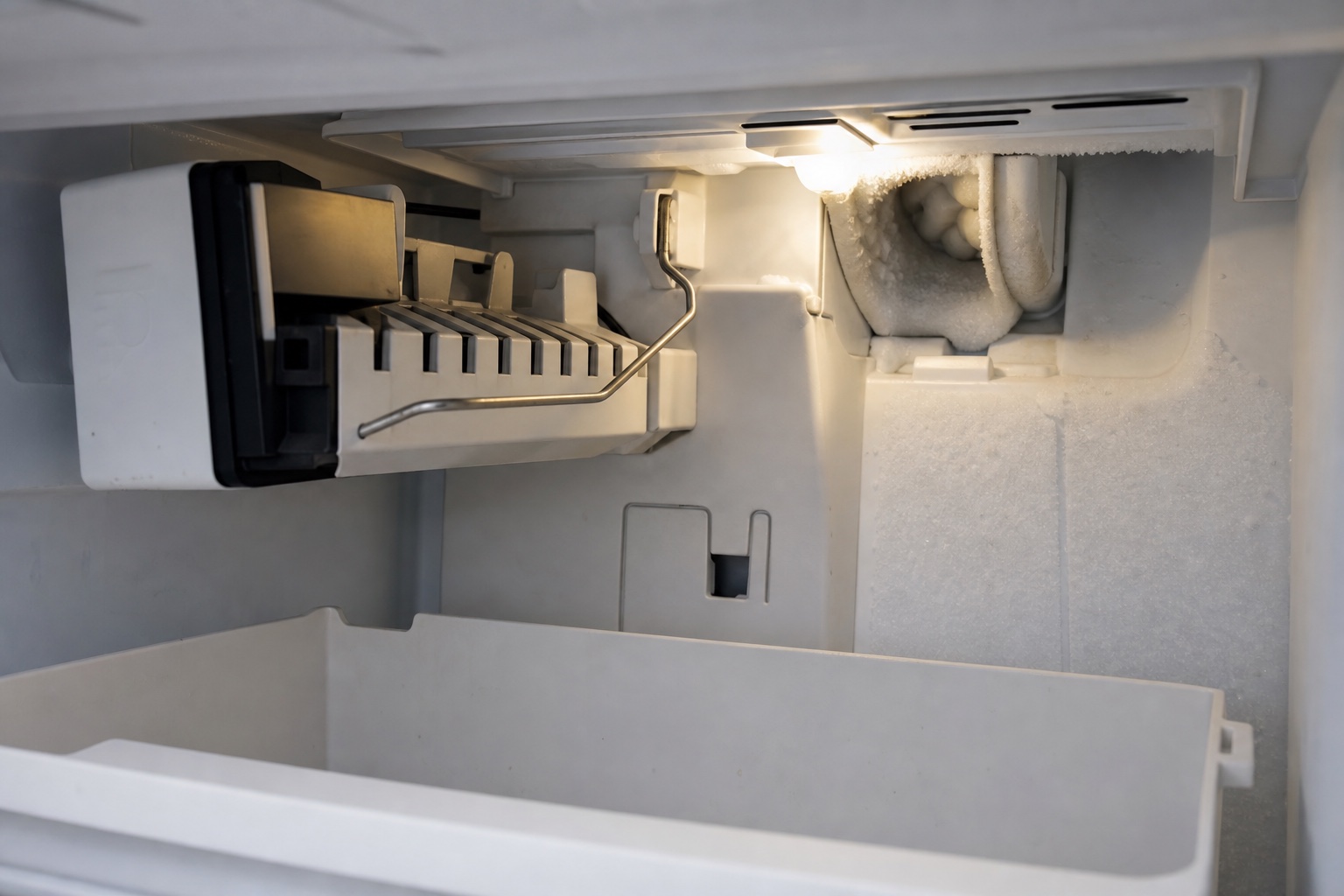
Photo guide
Diagnostic Photos
Local Ice Maker Service
We provide ice maker diagnostics and repair across Cape Coral, Fort Myers, and surrounding Southwest Florida service areas.
For scheduling, use the Contact page or call/text Art’s Appliance Repair directly.
Need service?
Ice Maker Repair in Cape Coral, Fort Myers and Southwest Florida
Art’s Appliance Repair provides ice maker diagnostics and repair throughout Cape Coral, Fort Myers, North Fort Myers, Lehigh Acres, Estero, Bonita Springs, Naples, and surrounding Southwest Florida communities.
We diagnose ice maker problems including:
- Ice maker not making ice.
- Ice maker not filling with water.
- Ice maker mold full but not harvesting.
- Frozen fill tubes.
- Water inlet valve failures.
- Small or hollow ice cubes.
- Slow ice production.
- Ice maker fan problems.
- Ice maker working only in test mode.
- Upper or lower ice maker failure.
- Ice maker leaks.
- Control-board and sensor problems.
Call or text (239) 688-9955 to schedule ice maker service.
Service call: $0 with an approved repair. A $40 diagnostic fee may apply if the repair is declined.
View Ice Maker Repair