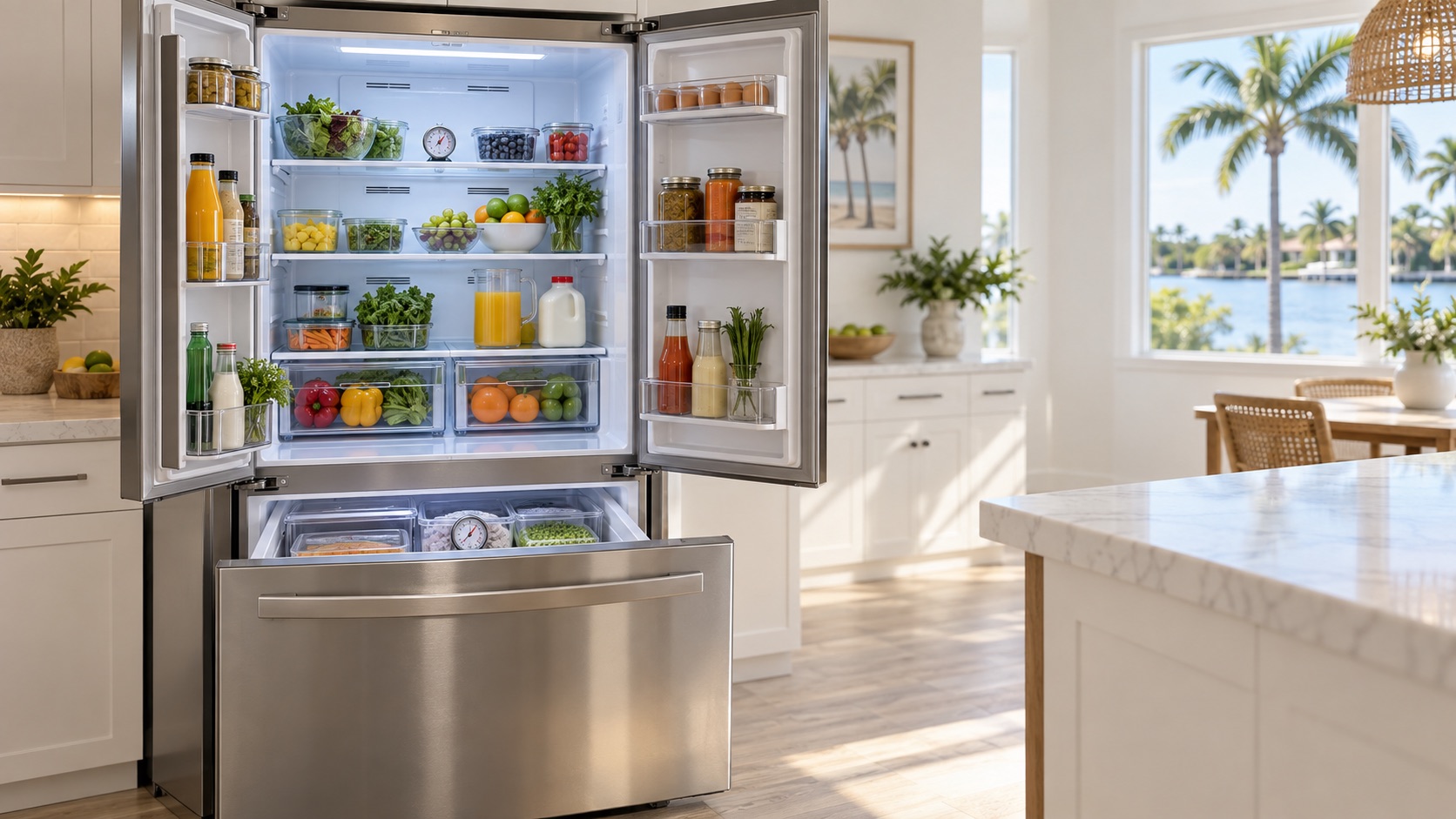
Protect Food Before Diagnosing the Refrigerator
Use an appliance thermometer rather than touch, sound or the control-panel setting. FDA guidance says the refrigerator should stay at 40°F or below and the freezer at 0°F. If you are unsure how long perishable food has been above 40°F, do not taste it to decide whether it is safe.
- Keep the doors closed while you record temperatures and decide where to move food.
- Move perishables to a verified cold refrigerator or an insulated cooler with a cold source when needed.
- Write down the measured temperature and time for each compartment.
- Use current FDA food-safety guidance for food exposed to unsafe temperatures.
FDA: refrigerator thermometers and food safety
What a Running Compressor Sound Does—and Does Not—Mean
A quiet motor-like sound can come from a compressor or fan. Even when the compressor is operating, cooling still depends on model-specific controls, refrigerant circulation, heat release at the condenser and airflow across the evaporator and into each compartment.
The sound alone cannot separate a blocked vent, door-seal problem, fan or defrost issue, control or sensor fault, installation condition, refrigerant restriction, leak, or compressor problem. It also cannot tell you which part to order.
Compare the Refrigerator and Freezer Temperatures
Freezer cold, refrigerator warm
This pattern often directs attention to fresh-food airflow. Check only what is visible and accessible: packages blocking interior vents, a door that cannot close, a dirty or folded gasket, heavy frost on an interior rear panel, or a missing fan sound. Do not remove the freezer panel or hold a door switch near moving parts.
Read the freezer-cold, refrigerator-warm guide
Both compartments warm
When both sections warm while the appliance keeps running, confirm settings, door closure, installation clearance and actual temperatures. If simple external conditions do not explain the change, professional diagnosis may need to separate fan, defrost, control, sealed-system and compressor performance.
Temperatures changed after an outage or move
A restart delay and the time needed to cool an already-warm cabinet are separate. Do not keep unplugging and reconnecting the refrigerator. Record any display message and follow the exact model manual for Cooling Off, Demo or other control modes.
Read the refrigerator power-outage guide
Safe Checks Before Requesting Refrigerator Repair
- Measure both compartments with appliance thermometers and keep the doors closed between readings.
- Confirm the set temperatures and check the display for an error, Cooling Off, Demo or other message. Use the manual for your complete model number.
- Move food packages away from visible interior air vents and make sure drawers and shelves are seated correctly.
- Check that each door closes completely and that the gasket is clean, attached and not folded or torn.
- Look through the open compartment for heavy frost on a rear interior panel. Do not chip ice or apply a hair dryer, heat gun or sharp tool.
- Confirm the refrigerator has the installation clearance required by its manual and is not beside a heat source or in direct sun.
- Note whether fans can be heard from outside the cabinet, whether the sound changes when a door opens, and whether the lower cabinet is unusually hot. Keep hands and tools away from fans and covers.
- Record the brand, complete model number, error message, recent outage or move, and the time the cooling change began.
GE and Samsung both list settings, door closure, food blocking airflow, installation clearance and ambient conditions among owner checks, but their exact clearances and temperature limits differ. Use the instructions for your model instead of applying one brand’s dimensions or control sequence to another refrigerator.
GE Appliances: refrigerator not cooling enough
Samsung: refrigerator or freezer cooling issues
Whirlpool: top-freezer refrigerator not cooling
A Refrigerator in a Southwest Florida Garage Needs Its Model Limits Checked
Cape Coral and Fort Myers garages and utility spaces can become much hotter than the living area. A label such as “garage ready” has model-specific limits; it does not mean every refrigerator can cool normally at every garage temperature.
Check the installation section of the exact manual and measure the surrounding air when conditions are extreme. GE, for example, publishes different ambient guidance for some garage-ready top-freezer models than for its general no-cool guidance. Do not assume those ranges apply to another brand or model.
GE Appliances: garage-ready top-freezer cooling guidance
Stop and Get Help for Electrical or Overheating Warning Signs
Do not remove the rear cover, touch a hot compressor, probe wiring, test live voltage, install a start device, puncture tubing, add refrigerant or use a universal diagnostic sequence. Conventional and inverter compressor systems require different model-specific tests.
What Professional Diagnosis May Need to Separate
- A fresh-food airflow or damper issue versus a whole-appliance cooling problem.
- Door, installation or ambient-temperature conditions versus an internal fault.
- Fan or defrost performance versus control and sensor behavior.
- Condenser heat transfer versus sealed-system or compressor performance.
- A household power problem versus a refrigerator electrical fault.
A technician may leave the refrigerator operating while observing temperature, fan behavior, frost pattern and system performance. Follow the service company’s instructions about food and power; do not keep a refrigerator energized when there is an electrical, smoke or fire warning.
What to Include in a Cape Coral or Fort Myers Repair Request
For service around Cape Coral and Fort Myers, share your city or ZIP code privately so we can confirm the route, appliance eligibility and appointment availability.
- Brand and complete model number.
- Measured refrigerator and freezer temperatures and the time checked.
- Whether the freezer is cold, partly cold or warm too.
- Whether the sound is steady, intermittent or followed by clicking or silence.
- Any error message, outage, move, recent installation or extreme garage temperature.
- Visible frost, blocked vents, door-seal gaps, unusual heat or odor observed without removing covers.
Art’s Appliance Repair services many refrigerator airflow, fan, defrost, control and no-cooling problems. Share the model so we can confirm whether we can help. An online appointment time is a request and requires confirmation. The service call is $0 when an approved repair is completed, or $79 if no repair is completed after diagnosis.
Request refrigerator diagnosis
Cape Coral refrigerator repair
Fort Myers refrigerator repair
Service-call and warranty policy
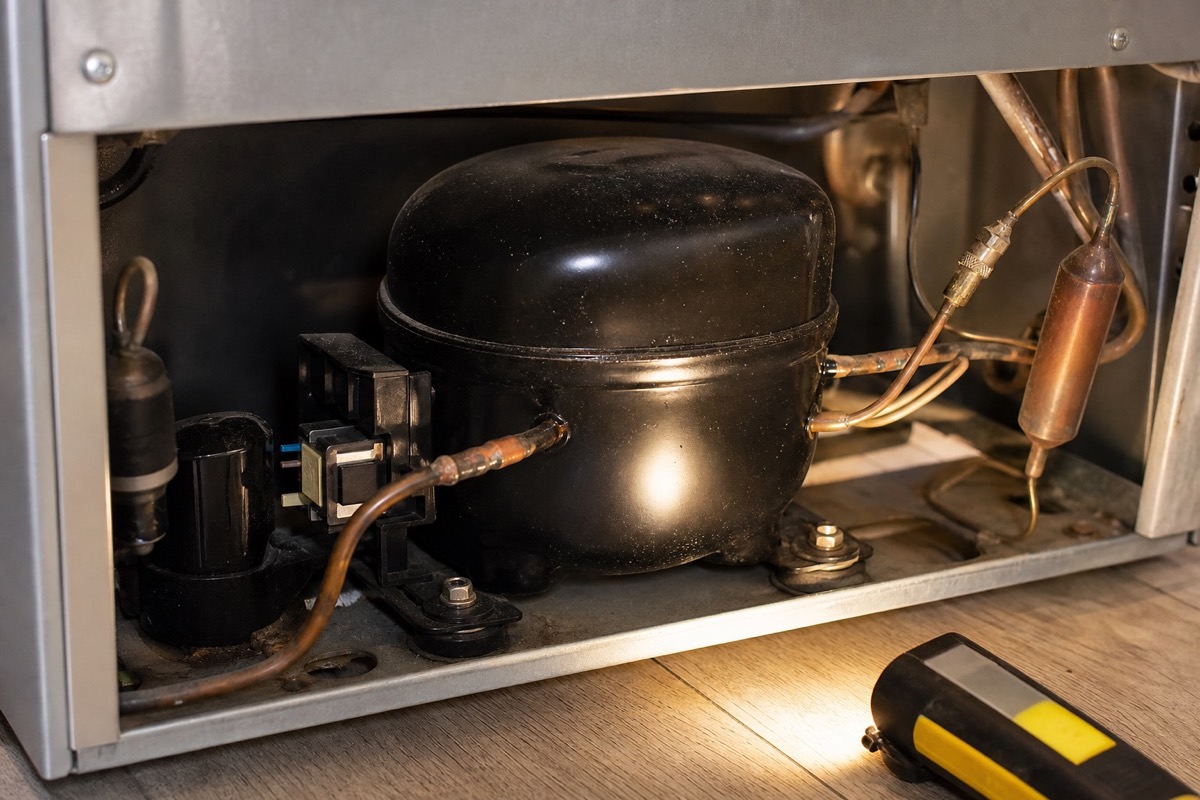
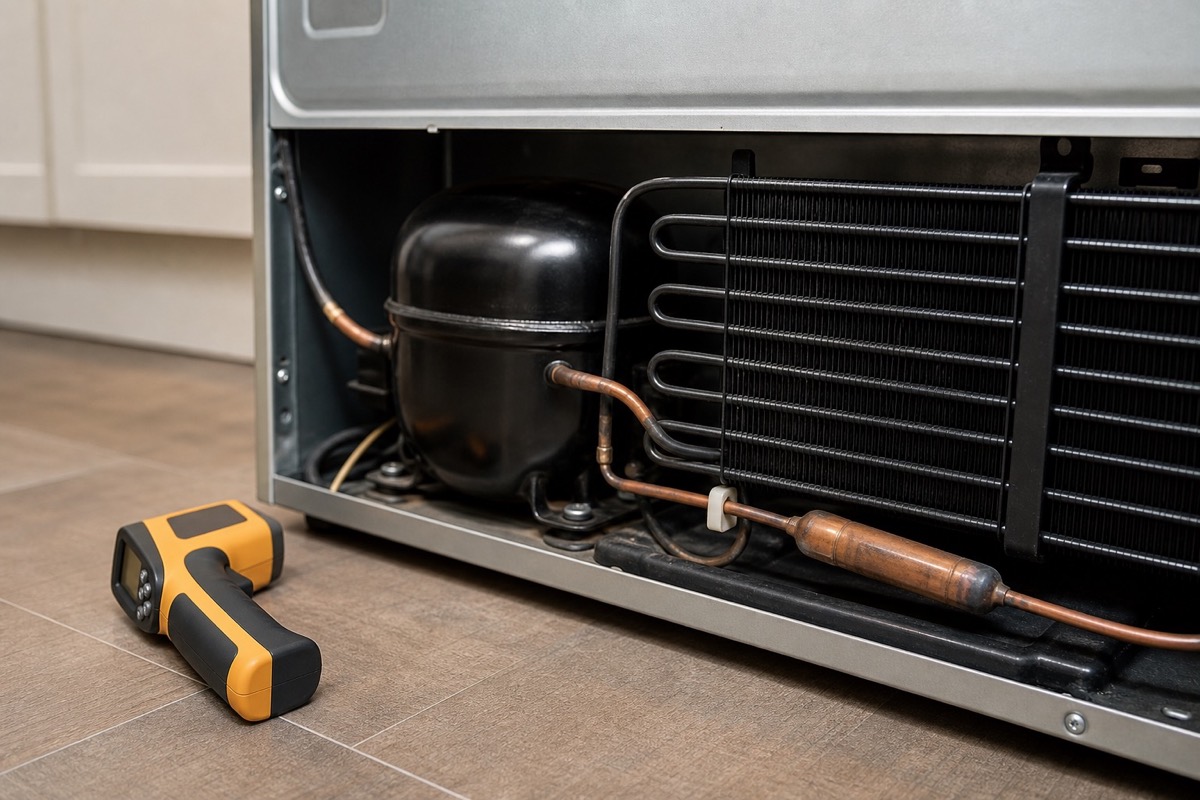
Photo guide
Diagnostic Photos
Local Refrigerator Service
Relevant local service pages include refrigerator repair in Cape Coral and Fort Myers refrigerator repair. We also serve surrounding Southwest Florida service areas.
For scheduling, use the Contact page or call/text Art’s Appliance Repair directly.
Related Appliance Guides
Refrigerator
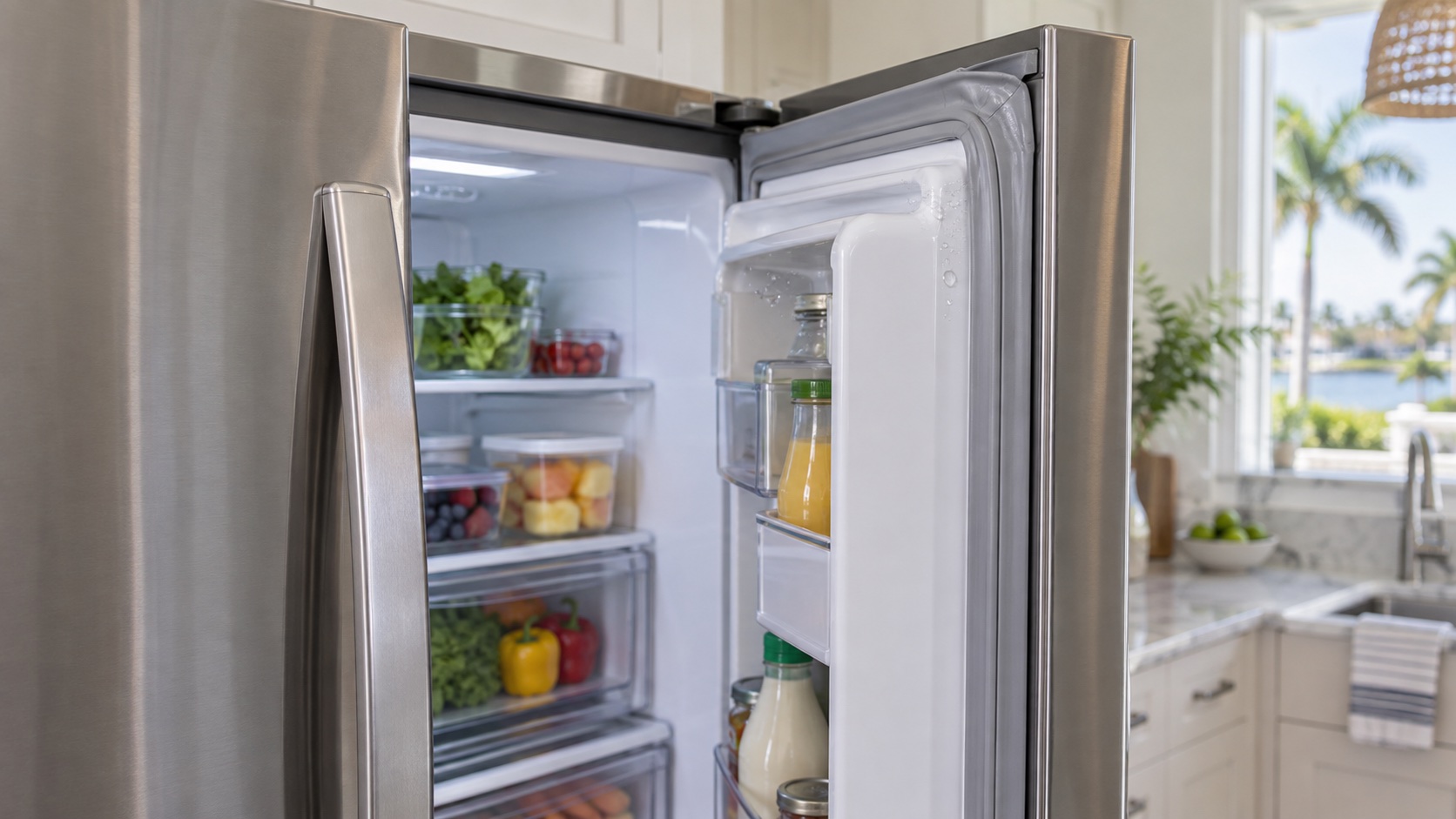
Refrigerator Door Not Sealing: Warm Air, Moisture, and Gasket Clues
A refrigerator door that will not seal can admit warm, humid air. Check obstructions, gasket condition, alignment, and food temperature before requesting local repair.
Updated September 27, 2026
the refrigerator door has a visible sealing gap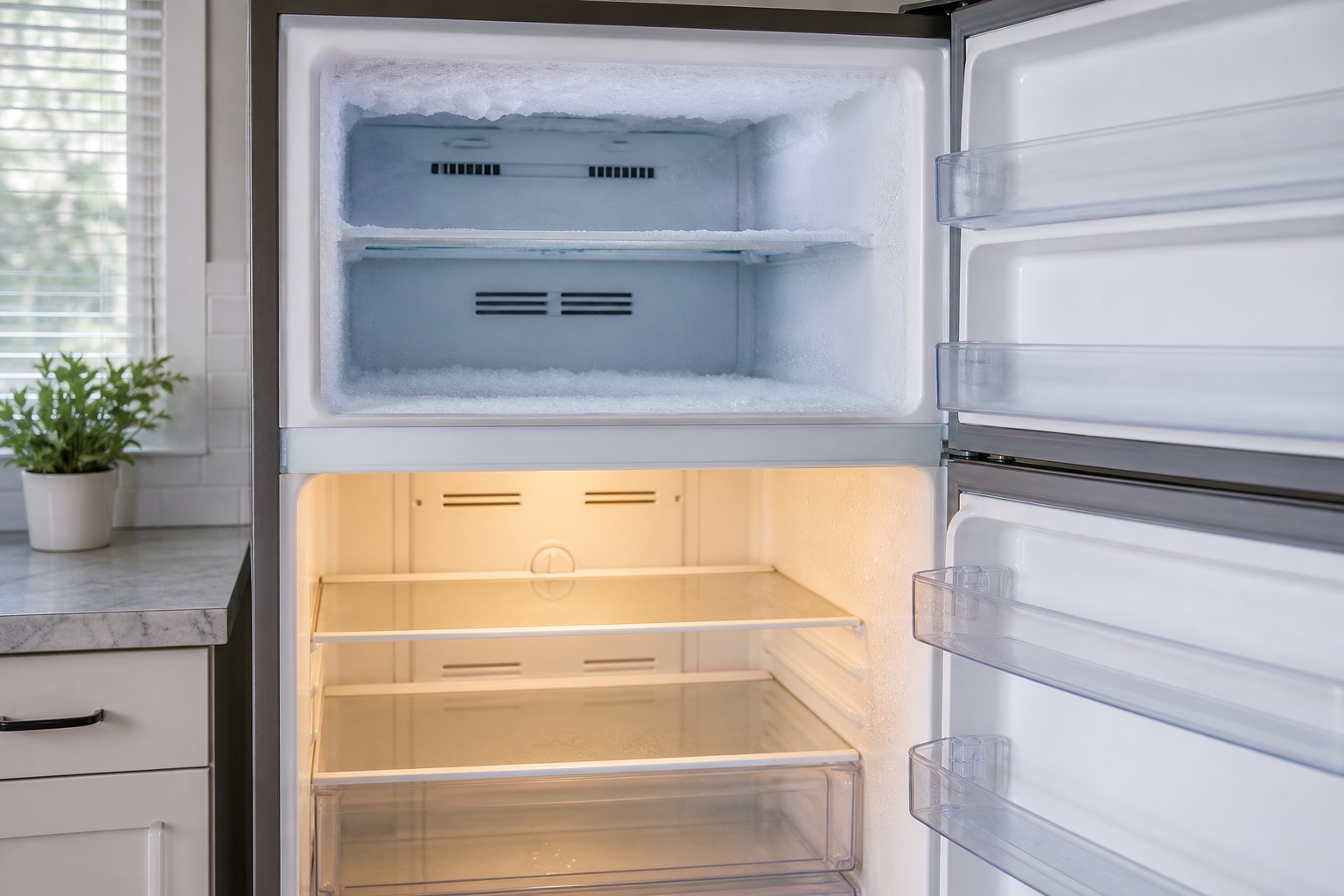
Refrigerator
Refrigerator Not Cooling but Freezer Is Working: Common Causes
Freezer cold but refrigerator warm? Learn the most common causes, safe checks, and when to schedule refrigerator repair in Cape Coral and Fort Myers.
Updated July 19, 2026
freezer is cold but the refrigerator is warm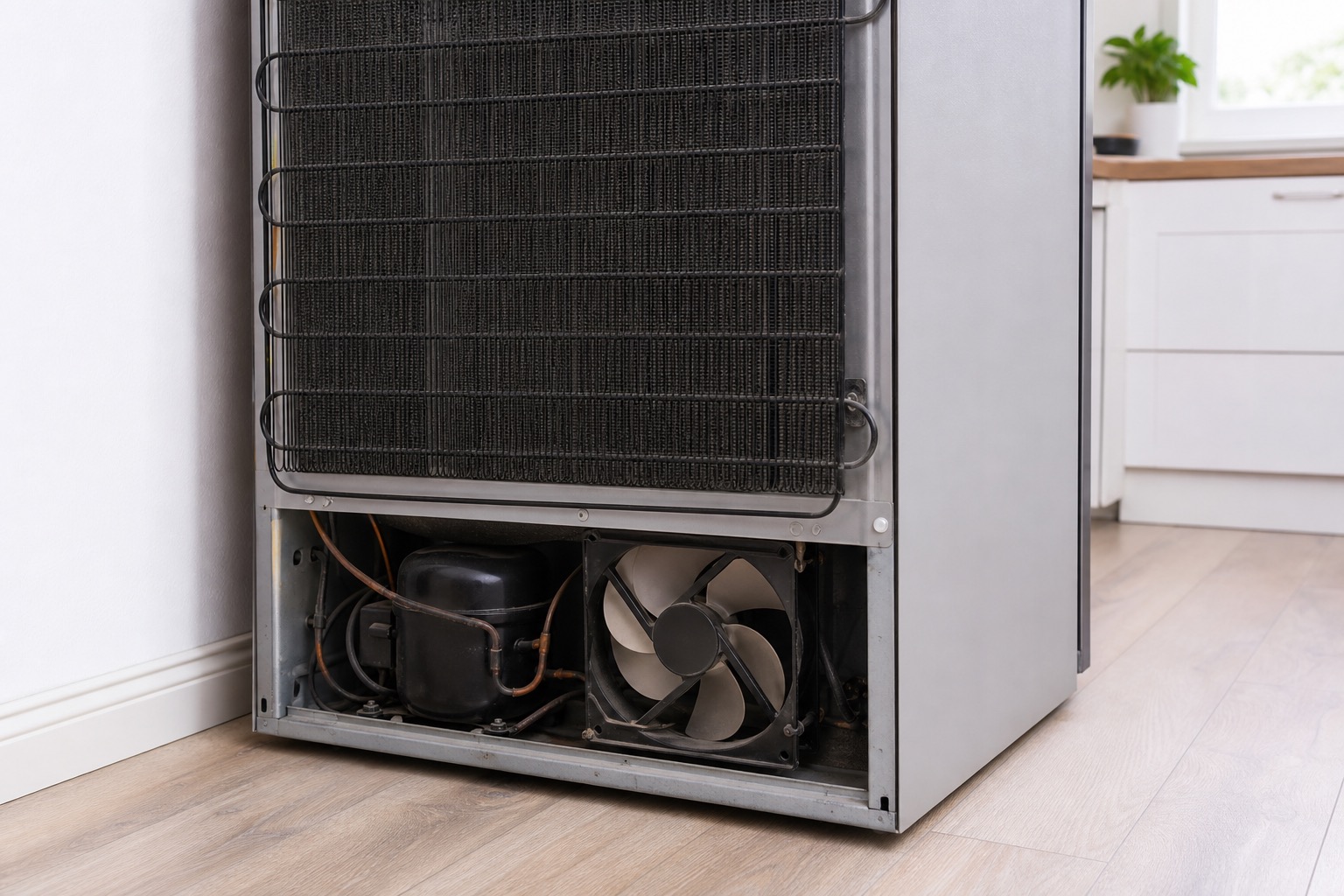
Refrigerator
Refrigerator Running but Not Getting Cold: What Could Be Wrong?
Is your refrigerator running but not cooling? Learn the common causes, safe checks, and when to schedule refrigerator repair in Cape Coral and Fort Myers.
Updated July 19, 2026
refrigerator is running but not getting cold