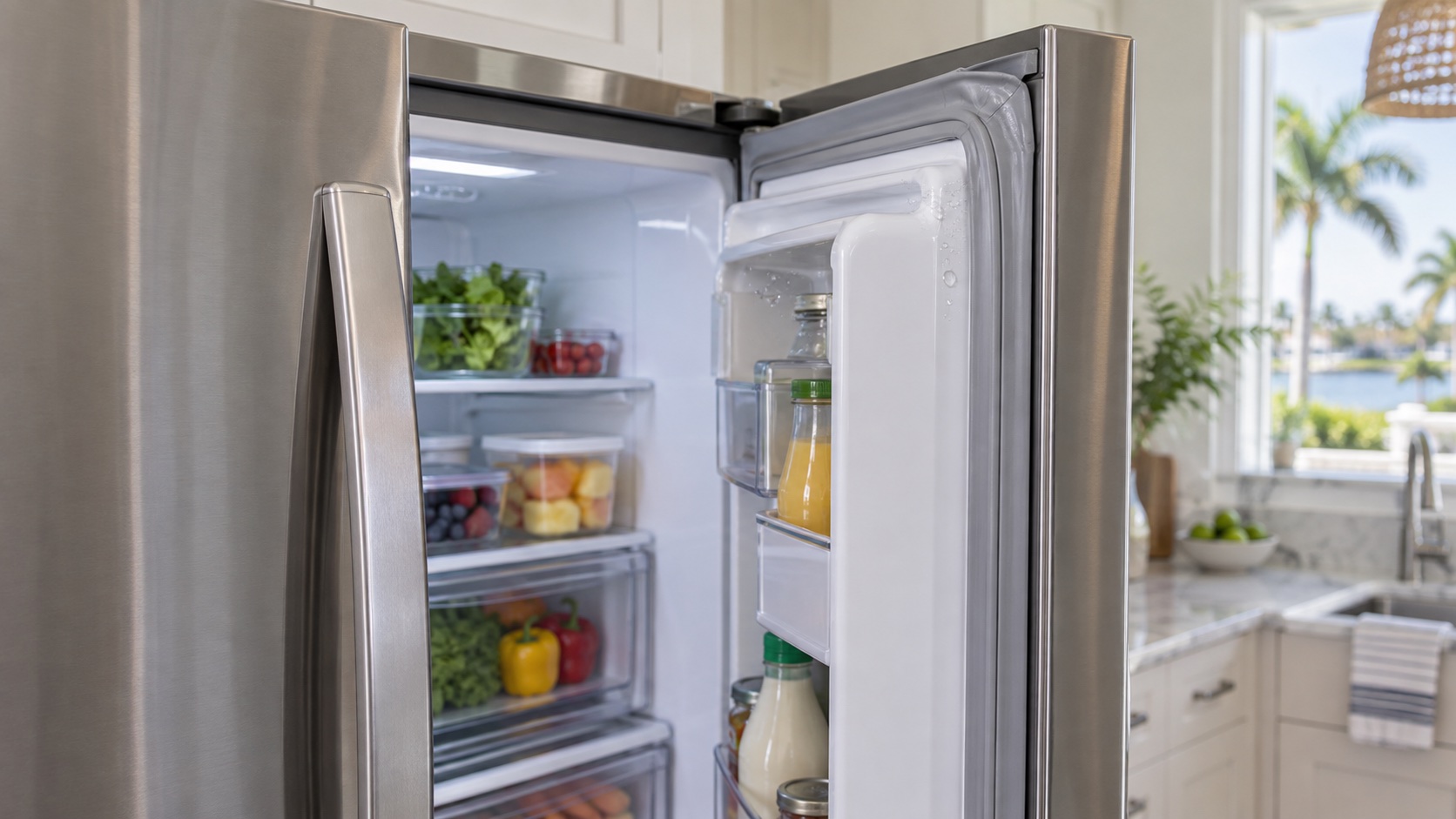
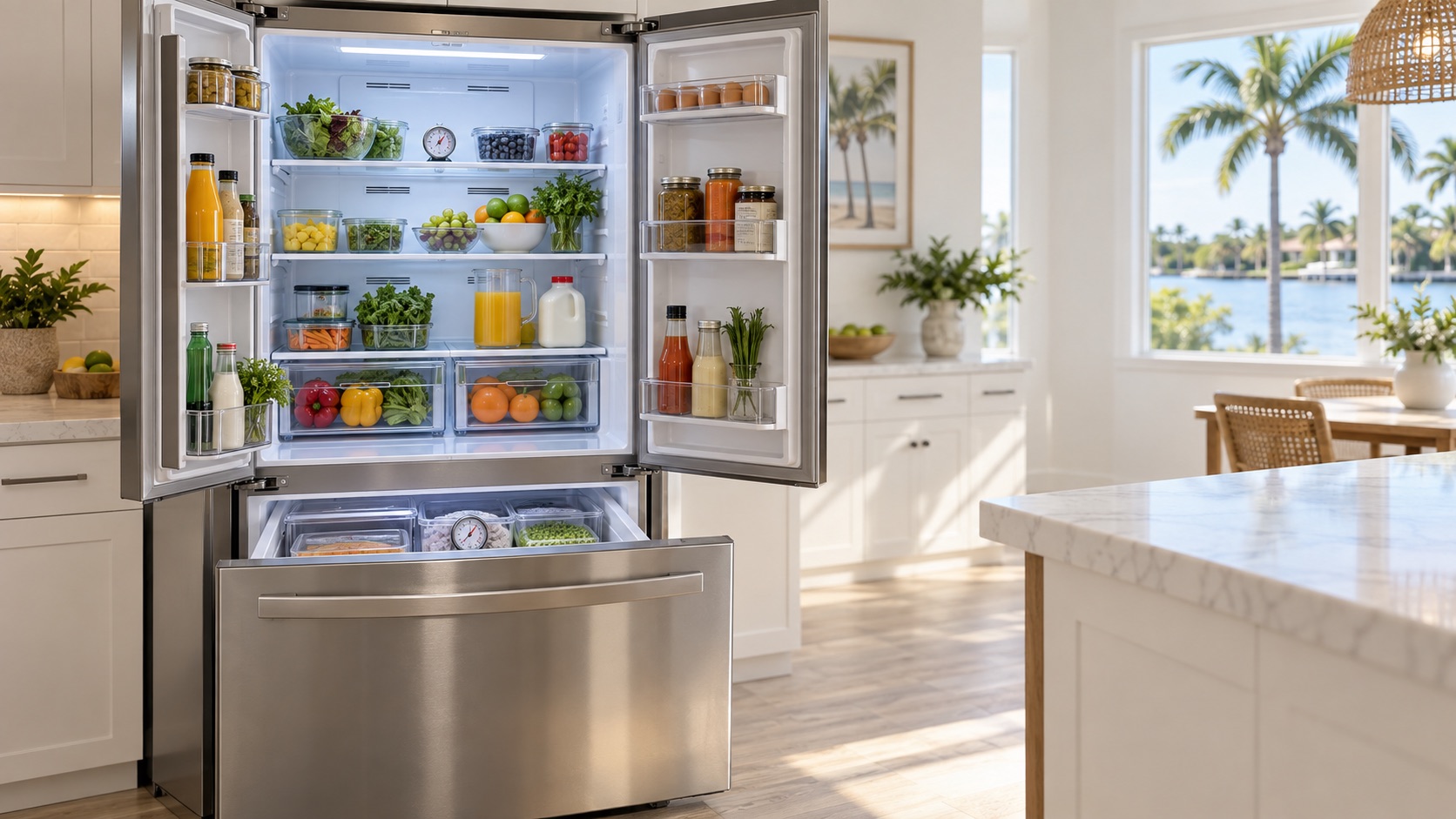
Protect Food Before Working on the Door
Use appliance thermometers rather than touch or the control-panel setting. FDA guidance says a refrigerator should stay at 40°F or below and a freezer at 0°F. Keep the doors closed between checks and move perishable food to verified cold storage when temperatures are unsafe or uncertain.
FDA: refrigerator thermometers and cold-food safety
A sealing problem is more urgent when food temperatures rise, the door will not remain closed, or frost is quickly limiting airflow. Do not taste food to decide whether it is safe. Food-safety guidance protects the contents; it does not identify which refrigerator part needs service.
A Door Gap Does Not Automatically Mean the Gasket Is Bad
Whirlpool lists food packages, dirty or sticky gaskets, refrigerator level, door adjustment, and the vertical hinge seal on some French-door models among possible reasons a door may not seal. A new gasket will not correct every one of those conditions.
Start by naming the exact door and corner. Note whether the problem began after loading a door bin, moving the refrigerator, changing the floor, removing a door, or adjusting a hinge. That history helps separate a simple obstruction from alignment, support, gasket-fit, or cabinet-level concerns.
Whirlpool: refrigerator door not sealing
Safe Checks for a Refrigerator Door That Will Not Seal
- Remove packages that extend beyond a shelf or door bin. Make sure drawers, shelves, baskets, and removable bins are seated normally.
- On a French-door refrigerator, watch whether the center flap or mullion moves into its normal closed position. Do not force or bend it.
- Look around the full gasket for crumbs, sticky residue, folds, tears, or a section pulled loose from its channel.
- Clean the gasket only with the mild method in the owner’s manual. A soft cloth with warm, soapy water is common manufacturer guidance; avoid solvents, sharp tools, and abrasive pads.
- Close the door normally and look for a consistent contact line. Do not slam the door or push the cabinet against a wall to make it stay shut.
- If the model manual describes a paper check, test several points and record where resistance changes. Paper movement is a location clue, not a part diagnosis.
- Check the model manual for leveling and door-adjustment instructions. Do not turn unfamiliar hinge or roller adjustments without the exact procedure and proper door support.
- Photograph the affected corner and record fresh-food and freezer temperatures, condensation or frost location, error messages, and when the symptom began.
Samsung notes that paper can slide more easily when door alignment or leveling affects contact, so a loose paper test does not prove the gasket must be replaced. Model design matters: some doors use magnetic gaskets, center flaps, closers, shims, or adjustable hinges that another model does not have.
Samsung: refrigerator and freezer cooling checks
Samsung: door-closing and gasket checks
What Moisture or Frost Near the Door Can Tell You
Warm, moisture-bearing room air can condense or freeze after passing a door gap. Repeated moisture or frost concentrated at the same edge gives a technician a useful inspection point. Moisture spread across another area may follow a different path, including airflow, defrost, drain, dispenser, water-line, or cabinet-sweating concerns.
Cape Coral and Fort Myers homes often operate in humid conditions. High room humidity can make condensation from an air leak more visible, but humidity alone does not establish that the gasket, hinge, or door is defective. Record indoor conditions if they are unusual and show where the moisture appears.
If water is on the floor under or behind the refrigerator, use the water-under-refrigerator guide and avoid assuming it came through the door seal. Keep away from a wet plug or outlet and shut off an accessible water supply only when a refrigerator water leak is active and it is safe to do so.
Samsung: frost caused by warm, moist air entering through a door gap
Check Fit and Alignment Before Buying a Gasket
- Door-bin weight can pull differently on an already misaligned or unsupported door.
- A shelf, drawer, basket, package, or center flap can block closure while the gasket remains usable.
- A refrigerator that is not set up according to its manual can change how the doors meet the cabinet.
- A gasket section may be dirty, folded, torn, or pulled from its channel; those conditions do not all require the same correction.
- A recently removed or reattached door may need installation or hinge work rather than a seal ordered by appearance alone.
- The replacement profile, magnetic strip, corner shape, and mounting method are model-specific.
Do not loosen a loaded door, bend a hinge, remove hinge covers, or work under an unsupported door. Refrigerators can have wiring or water tubing through a hinge area. Model-specific door removal and alignment are installer or technician work when they exceed the owner procedure.
What Professional Diagnosis May Need to Separate
- A replaceable gasket defect versus a loose or incorrectly seated gasket.
- Door, hinge, closer, mullion, cabinet-level, or installation alignment.
- A visible door gap versus a separate cooling, airflow, defrost, drain, or control problem.
- Condensation driven by room conditions versus moisture entering through a repeatable gap.
- A part that fits the exact model and door position versus a similar-looking but incompatible seal.
What to Include in a Cape Coral or Fort Myers Repair Request
Share your city or ZIP code privately so Art’s Appliance Repair can confirm route coverage, refrigerator eligibility, and appointment availability. A preferred online time is a request and requires confirmation.
- Brand and complete model number.
- Affected door and the exact corner or edge with a gap.
- A safe photo of the closed-door gap and the accessible gasket surface.
- Measured refrigerator and freezer temperatures with the time checked.
- Where condensation or frost returns and how quickly it becomes noticeable.
- Recent move, floor work, door removal, hinge adjustment, heavy door loading, or gasket cleaning.
The service call is waived when the diagnosed repair is approved and completed. Diagnosis is $79 for one appliance or $100 total for two appliances. The recommended repair and price are provided for approval before billable repair work begins.
Request refrigerator diagnosis
Cape Coral refrigerator repair
Fort Myers refrigerator repair
Service-call and warranty policy
Refrigerator Door and Gasket Diagnosis in Southwest Florida
Art’s Appliance Repair diagnoses refrigerator door closure, alignment, gasket, moisture, frost, and cooling concerns in Cape Coral, Fort Myers, and the confirmed Southwest Florida service area. Share the model and observations above so we can verify whether the appliance and route are eligible before scheduling.
Local Refrigerator Service
Relevant local service pages include refrigerator repair in Cape Coral and Fort Myers refrigerator repair. We also serve surrounding Southwest Florida service areas.
For scheduling, use the Contact page or call/text Art’s Appliance Repair directly.
Related Appliance Guides
Refrigerator
Refrigerator Warm but Compressor Is Running: What the Symptom Means
A running compressor does not prove a refrigerator is cooling. Compare both compartments, protect food, make safe checks, and know when to request local repair.
Updated September 25, 2026
refrigerator is warm while the compressor runs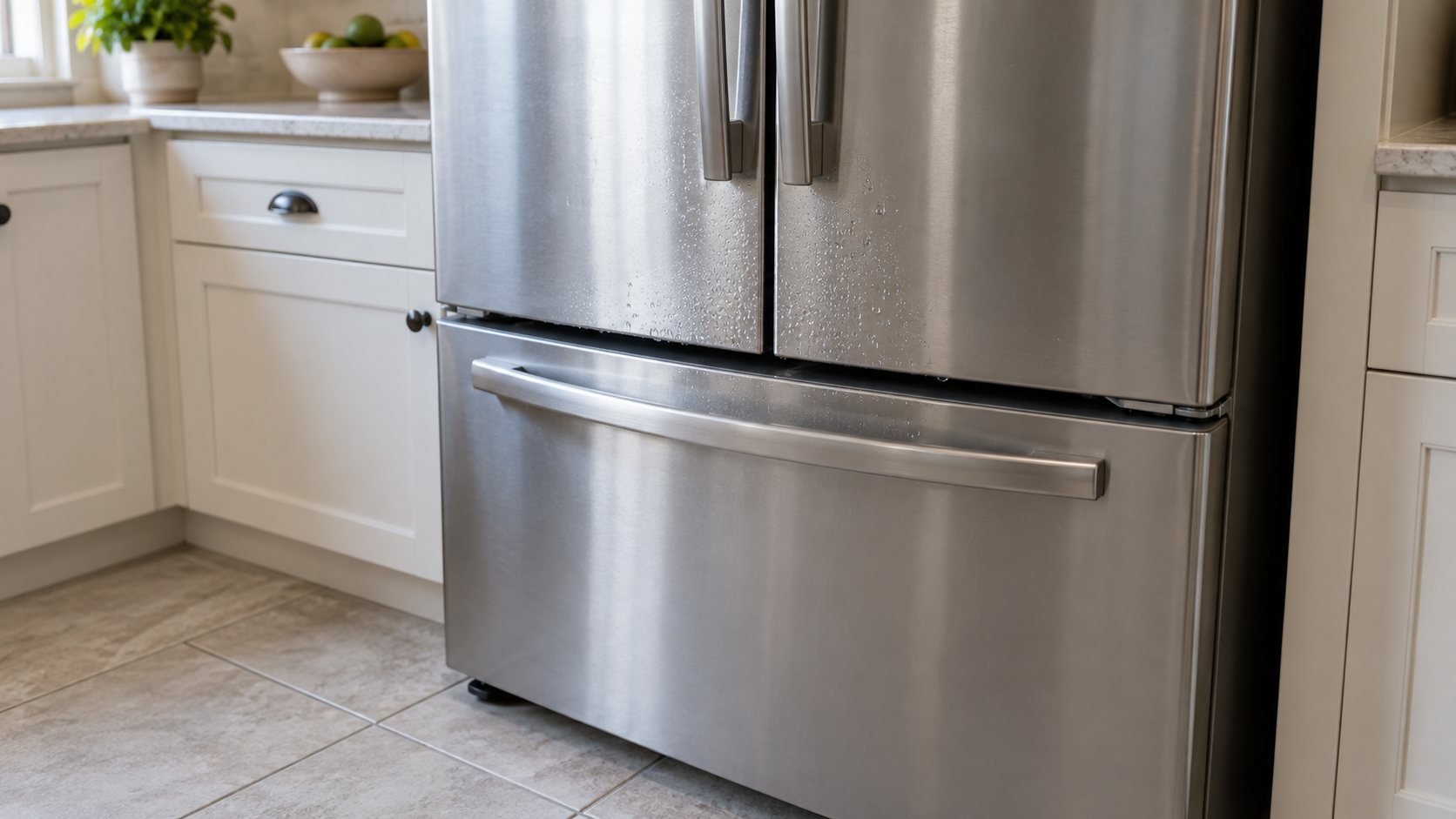
Refrigerator
Why Is There Water Under My Refrigerator?
Find the difference between refrigerator condensation and a floor leak, what you can safely check, and when to request repair in Cape Coral or Fort Myers.
Updated September 16, 2026
water is collecting under or behind the refrigerator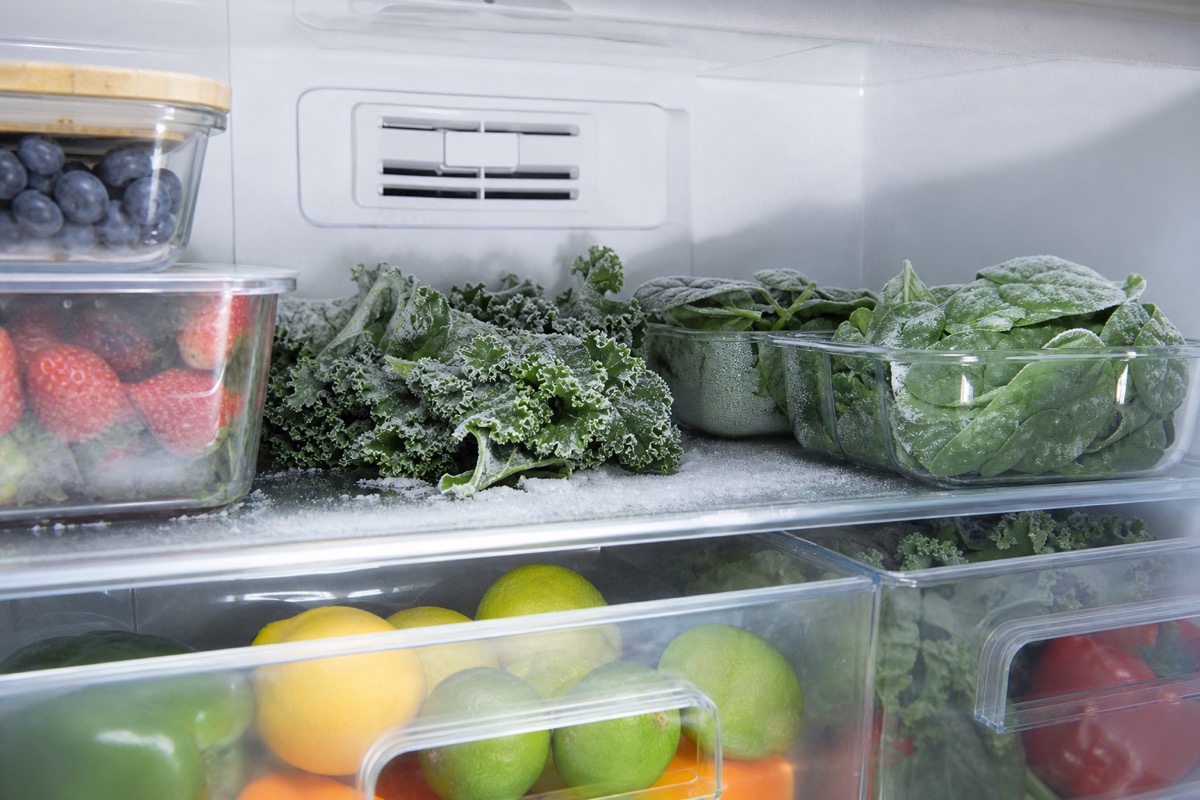
Refrigerator
Why Is My Refrigerator Freezing Food in the Fresh Food Section?
Food freezing in the refrigerator section? Check temperature settings, air vents, food placement, the air damper, temperature sensor and control system.
Updated August 31, 2026
refrigerator freezing food