How Cold Should a Refrigerator Be?
The refrigerator compartment should normally remain between 37°F and 40°F. The freezer should generally be close to 0°F.
A refrigerator may still feel slightly cool even when it is not maintaining a safe temperature. Use an appliance thermometer rather than judging the temperature by touch.
If the refrigerator remains above 40°F for an extended period, perishable food may no longer be safe.
Why Is the Refrigerator Running Without Cooling?
A refrigerator does not cool simply because it makes noise or because the compressor appears to be operating. The appliance must also:
- Move cold air through the compartments.
- Release heat through the condenser.
- Prevent excessive frost from covering the evaporator.
- Maintain the correct refrigerant pressure.
- Receive accurate information from its temperature sensors.
- Control the compressor and fans correctly.
A failure in any of these areas can cause the refrigerator to run without producing enough cooling.
1. The Temperature Setting Was Changed
Start by checking the refrigerator and freezer temperature settings.
The controls may have been changed accidentally while cleaning, loading groceries, or using the control panel.
Confirm that:
- Cooling is turned on.
- The refrigerator is set near 37°F.
- The freezer is set near 0°F.
- The appliance is not in Demo, Showroom, Vacation, or Cooling Off mode.
Some refrigerators display lights and operate fans while cooling is disabled. Refer to the manufacturer’s instructions if the display shows an unfamiliar symbol or message.
After correcting the settings, allow several hours for the temperature to begin improving.
2. Air Vents Are Blocked
Cold air must move freely between the freezer and refrigerator compartments.
Large containers, food packages, plastic bags, or ice buildup can block the vents. An overloaded refrigerator can also prevent proper air circulation.
Check that:
- Food is not pressed against the rear wall.
- Interior vents are uncovered.
- There is space between food items.
- The freezer is not packed tightly around the air outlets.
Rearranging the contents may improve airflow, but the appliance may need several hours to stabilize.
3. The Evaporator Fan Is Not Working
The evaporator fan moves cold air across the evaporator coils and distributes it through the refrigerator.
If the fan motor fails, the compressor may continue running, but cold air will not circulate properly.
Common symptoms include:
- Freezer colder than the refrigerator section.
- Little or no airflow from the refrigerator vents.
- No fan sound from the freezer.
- Scraping or buzzing noises.
- Intermittent cooling.
- Ice interfering with the fan blade.
On many models, the evaporator fan stops when the freezer door is open. A door switch may need to be held closed to determine whether the fan operates.
Do not place your hands near the fan blade or remove energized electrical covers.
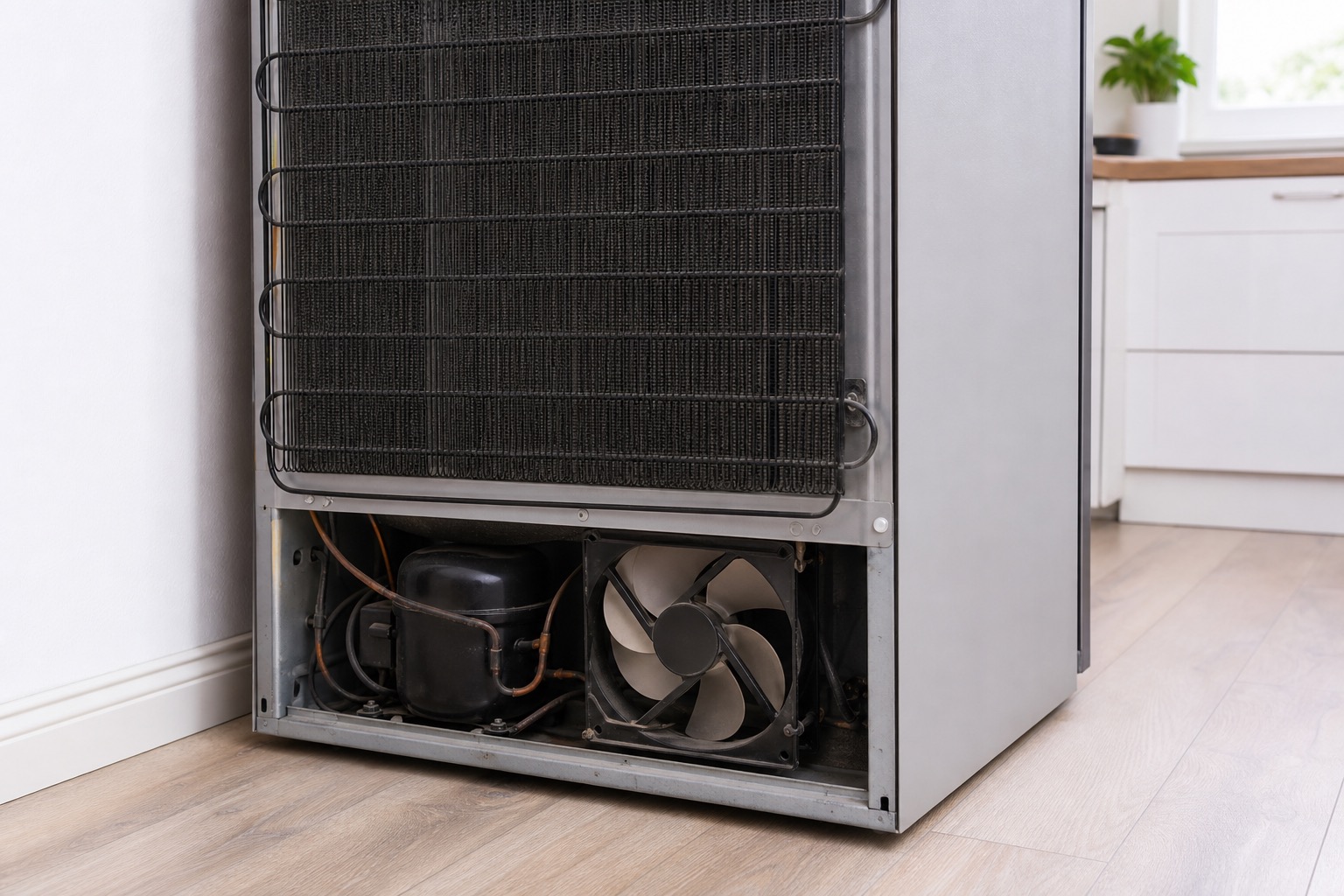
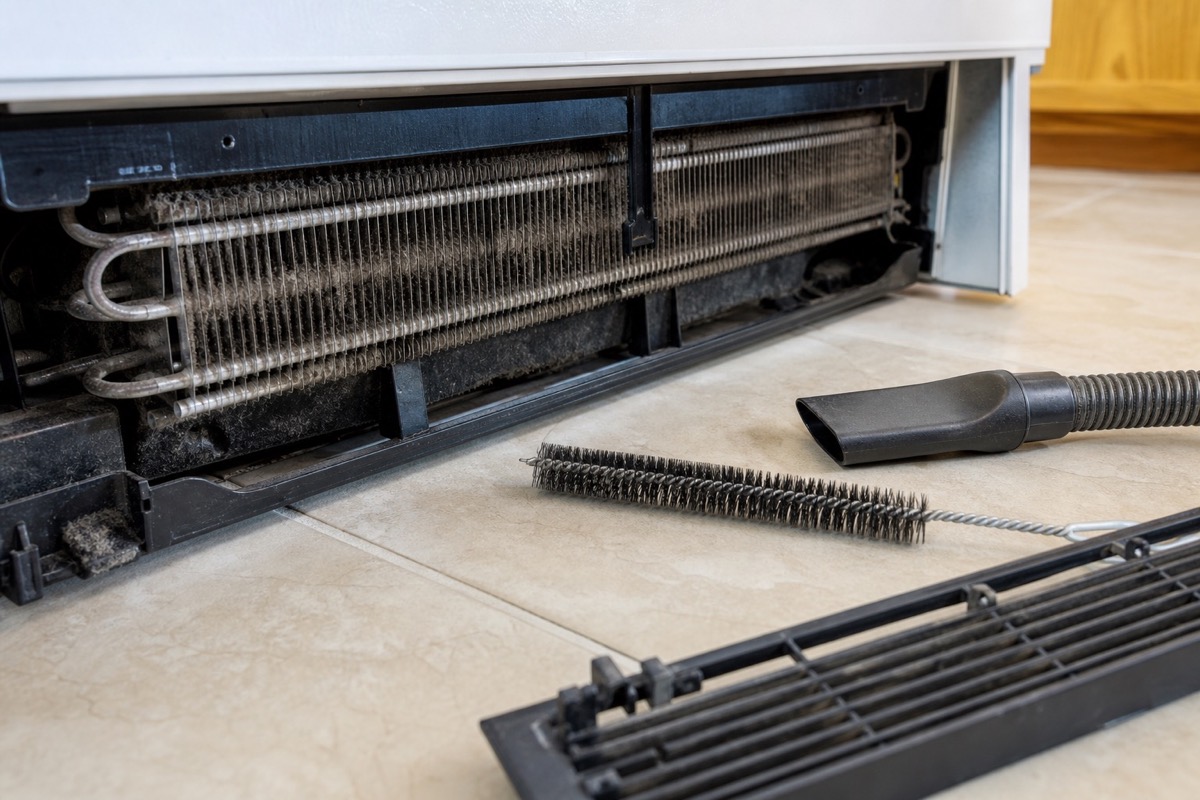
4. The Condenser Coils Are Dirty
The condenser coils release heat removed from inside the refrigerator.
When the coils are covered with dust, lint, grease, or pet hair, the refrigerator cannot release heat efficiently. The compressor may run for long periods while the internal temperature remains too high.
Dirty condenser coils may cause:
- Long or nearly continuous run times.
- Weak cooling.
- Excessive heat around the refrigerator.
- Higher electricity consumption.
- Premature compressor failure.
Depending on the model, the coils may be located behind the refrigerator or underneath it.
Disconnect the appliance from power before cleaning accessible coils. Use a soft brush or vacuum carefully, and avoid damaging tubing, wiring, or fan blades.
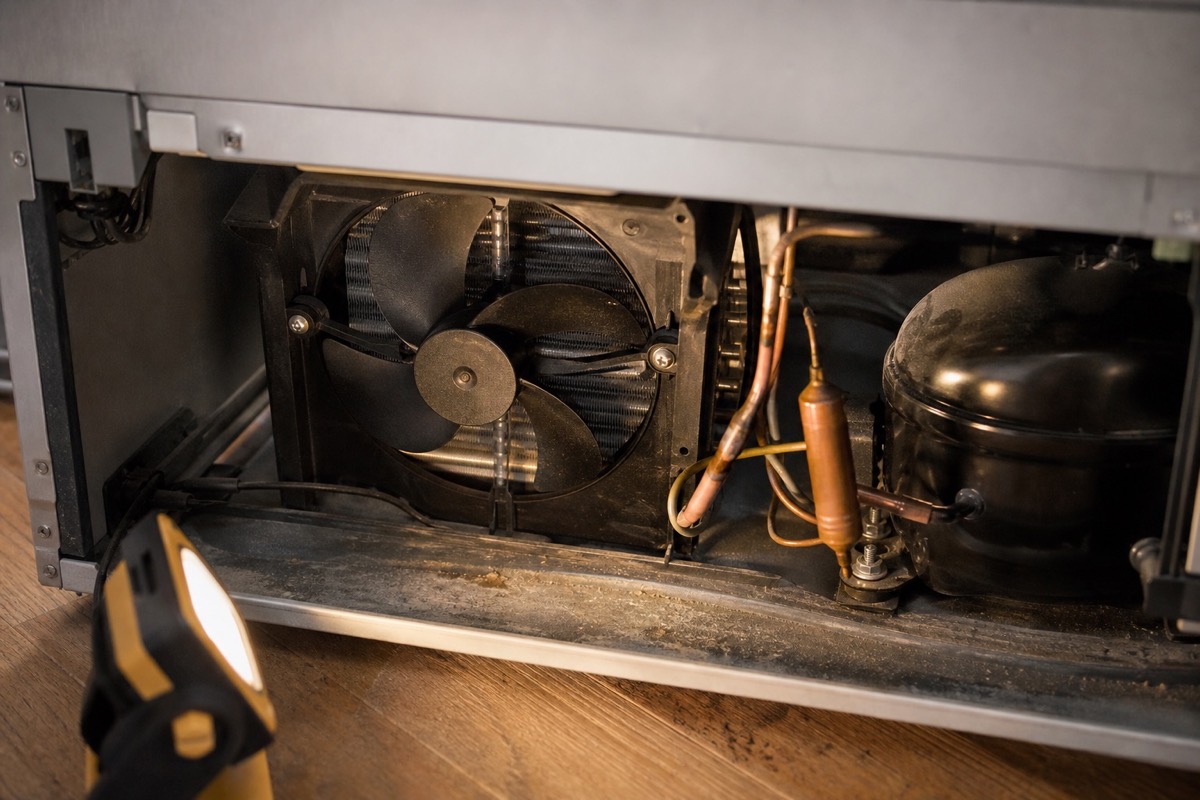
5. The Condenser Fan Is Not Running
Many refrigerators use a condenser fan near the compressor.
This fan pulls air across the condenser coils and helps remove heat from the sealed system. If it stops, the compressor may overheat and cooling performance may decrease.
Possible symptoms include:
- Compressor running but the refrigerator staying warm.
- Excessive heat near the lower rear section.
- Repeated compressor shutdowns.
- Clicking sounds.
- A fan blade that does not move.
- Noise caused by debris touching the blade.
The fan motor, wiring, and control voltage may need professional testing.
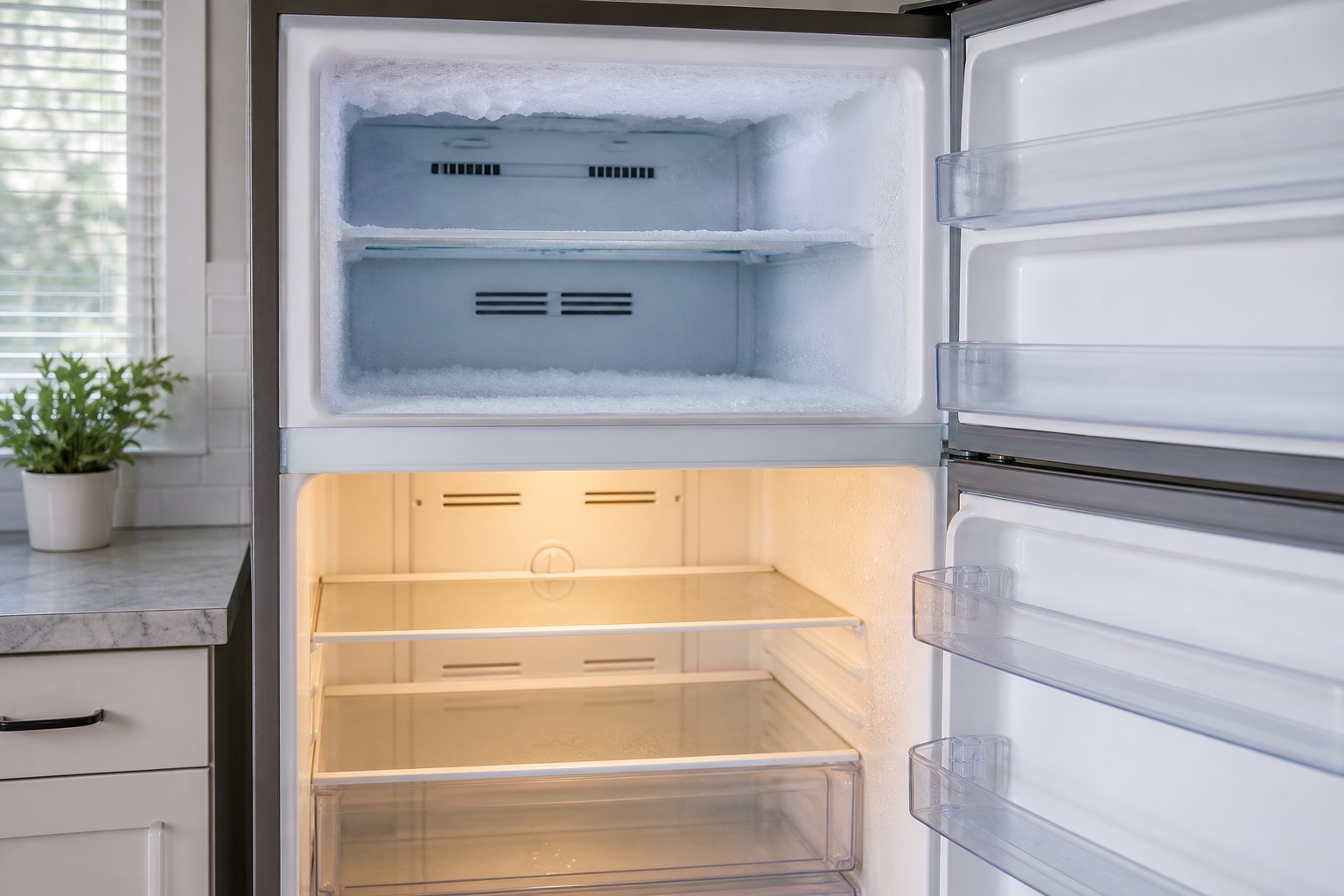
6. Frost Is Covering the Evaporator Coils
The evaporator coils are normally hidden behind an interior freezer panel.
A small amount of frost is normal, but a thick layer of ice can block airflow and insulate the coils. The refrigerator may continue running but produce very little usable cooling.
Heavy frost commonly indicates a failure involving:
- Defrost heater.
- Defrost thermostat.
- Temperature sensor.
- Control board.
- Wiring.
- Drain system.
- Door gasket or door alignment.
A visible layer of frost or snow on the freezer’s rear wall is a common warning sign.
Unplugging and fully defrosting the refrigerator may temporarily restore cooling, but the frost will usually return if the underlying problem is not repaired.
7. The Air Damper Is Stuck or Broken
The air damper regulates the amount of cold air entering the fresh-food compartment.
If the damper remains closed, the freezer may receive most of the cooling while the refrigerator section becomes warm.
The damper may be:
- Blocked by food.
- Frozen in place.
- Mechanically damaged.
- Receiving incorrect commands from a temperature sensor.
- Controlled incorrectly by the main board.
A technician may need to inspect the damper assembly and verify that it opens when cooling is required.
8. A Temperature Sensor Is Sending Incorrect Information
Modern refrigerators use thermistors or temperature sensors to monitor internal conditions.
If a sensor incorrectly reports that the compartment is already cold, the control board may reduce compressor operation or close the air damper too early.
Possible signs include:
- Incorrect display temperature.
- Temperature changing unpredictably.
- Refrigerator becoming warm and then cooling again.
- Fans or compressor cycling irregularly.
- Food freezing in one area while remaining warm in another.
The sensor should be tested according to the manufacturer’s resistance and temperature specifications.
9. The Door Is Not Sealing Properly
A refrigerator cannot maintain the correct temperature if warm, humid air continuously enters through the door.
Check for:
- Torn or loose door gaskets.
- Food packages preventing the door from closing.
- Misaligned hinges.
- A refrigerator that is not level.
- Dirty gasket surfaces.
- Damaged shelves or bins interfering with the door.
Florida’s warm and humid climate can make a small sealing problem more noticeable. Moist air entering the cabinet can also contribute to condensation and frost buildup.
Clean the gasket with warm water and mild soap. A torn or deformed gasket may require replacement.
10. The Compressor Is Running but Not Pumping Correctly
The compressor circulates refrigerant through the sealed system.
A compressor may make noise or vibrate without creating the correct refrigerant pressure. Internal mechanical wear can reduce cooling even though the compressor appears to be running.
Possible signs include:
- Compressor running continuously.
- Both compartments remaining too warm.
- Condenser coils not becoming warm.
- Only a small section of the evaporator becoming cold.
- Repeated clicking or short cycling.
- Compressor becoming extremely hot.
- No significant temperature improvement after several hours.
Compressor and sealed-system diagnosis requires specialized tools and training.
11. There May Be a Refrigerant Leak or Restriction
Low refrigerant, a partial restriction, or another sealed-system problem can cause weak or uneven cooling.
Unlike fuel, refrigerant is not normally consumed during operation. If the system is low, there is usually a leak.
Potential signs include:
- Refrigerator running constantly.
- Very slow cooling.
- Only one small area of the evaporator developing frost.
- No frost pattern on most of the evaporator.
- Oily residue near refrigerant tubing.
- Both refrigerator and freezer temperatures remaining too high.
Adding refrigerant without finding and repairing the leak is not a complete repair.
12. The Start Relay or Inverter Is Failing
The compressor may not actually be running even though other refrigerator components are operating.
A failed start relay or inverter board can cause the compressor to:
- Attempt to start and then stop.
- Click every few minutes.
- Run for only a few seconds.
- Become hot without staying on.
- Receive power but fail to operate normally.
Inverter compressors require different testing procedures than conventional compressors. A universal start device should not be installed on an inverter compressor.
13. The Main Control Board Is Malfunctioning
The main control board may control the compressor, fans, defrost heater, air damper, and temperature sensors.
A board problem can cause the refrigerator to run incorrectly or fail to activate one of the necessary cooling components.
Possible symptoms include:
- Fans not receiving power.
- Compressor not starting consistently.
- Cooling returning temporarily after unplugging the refrigerator.
- Unexplained beeping or display problems.
- Multiple components operating irregularly.
- Defrost cycles not occurring correctly.
The control board should not be replaced until the connected components, wiring, and power supply have been checked.
14. The Refrigerator Is Installed in a Hot Garage
Garage refrigerators in Southwest Florida operate under especially difficult conditions.
During hot weather, garage temperatures may become much higher than normal indoor temperatures. The refrigerator must run longer to remove heat, and an older or partially failing system may no longer maintain safe temperatures.
Garage conditions can contribute to:
- Continuous compressor operation.
- Slow temperature recovery.
- Overheating.
- Increased energy consumption.
- Condenser fan and compressor wear.
- Poor cooling after the door is opened.
The refrigerator should have adequate clearance for ventilation and should not be positioned directly against a wall or near another major heat source.
15. The Refrigerator Was Recently Moved or Unplugged
A refrigerator needs time to cool after:
- Initial installation.
- Transportation.
- A power outage.
- Cleaning.
- Repair.
- Extended door opening.
- Loading a large amount of warm food.
Initial cooling may begin within several hours, but the appliance may require up to 24 hours to fully stabilize.
If the refrigerator was transported on its side, it may need to remain upright before being connected to power. Follow the manufacturer’s instructions for the specific model.
What Can You Safely Check Before Scheduling Service?
You can perform these basic checks without disassembling the refrigerator:
- Confirm that cooling is turned on.
- Verify the temperature settings.
- Make sure the refrigerator is not in Demo or Cooling Off mode.
- Remove food blocking the air vents.
- Check whether both doors close completely.
- Inspect and clean the door gaskets.
- Listen for the fans and compressor.
- Look for frost on the freezer’s rear panel.
- Check for excessive heat near the compressor area.
- Clean accessible condenser coils after disconnecting power.
- Allow up to 24 hours after a power interruption or temperature adjustment.
- Measure the temperature with an appliance thermometer.
Do not puncture ice with a knife or sharp object. This can damage the evaporator and cause an expensive refrigerant leak.
Do not test live electrical circuits unless you have the correct training and equipment.
When Should You Call a Refrigerator Technician?
Professional diagnosis is recommended when:
- The refrigerator remains above 40°F.
- Both compartments are warm.
- The compressor runs continuously without adequate cooling.
- The compressor starts and stops repeatedly.
- The condenser or evaporator fan is not operating.
- Heavy frost appears on the freezer’s rear panel.
- The compressor is extremely hot.
- You hear repeated clicking.
- Cooling works only temporarily after unplugging the appliance.
- There is evidence of a refrigerant leak.
- The appliance displays an error code.
- Basic airflow and temperature checks do not solve the problem.
Continuing to operate an overheating refrigerator may damage the compressor and increase the final repair cost.
Is the Food Still Safe?
Perishable food should generally be stored at 40°F or below.
When the refrigerator becomes warm:
- Avoid opening the doors unnecessarily.
- Move food to another working refrigerator or a cooler with ice.
- Use an appliance thermometer to check the actual temperature.
- Discard food that may have remained unsafe for an extended period.
- Follow current food-safety guidance when uncertain.
Smell and appearance alone cannot always determine whether food is safe.
Should You Repair or Replace the Refrigerator?
Repair may be practical when:
- The refrigerator is relatively new.
- The cabinet and doors are in good condition.
- The problem involves a fan, sensor, relay, heater, gasket, or damper.
- Replacement parts are available.
- The estimated repair cost is reasonable compared with a new appliance.
Replacement may be more appropriate when:
- The refrigerator is near the end of its expected service life.
- The cabinet has severe corrosion.
- Multiple major components have failed.
- The sealed system has repeated problems.
- Repair parts are unavailable.
- The cost of repair approaches the cost of replacement.
A complete diagnosis is necessary before making this decision.
Photo guide
Diagnostic Photos
Local Refrigerator Service
We provide refrigerator repair in Cape Coral and Fort Myers, along with surrounding Southwest Florida service areas.
For scheduling, use the Contact page or call/text Art’s Appliance Repair directly.
Related Appliance Guides
Refrigerator
Refrigerator Not Cooling but Freezer Is Working: Common Causes
Freezer cold but refrigerator warm? Learn the most common causes, safe checks, and when to schedule refrigerator repair in Cape Coral and Fort Myers.
Updated July 19, 2026
freezer is cold but the refrigerator is warm
Refrigerator
Refrigerator Not Cooling After a Power Outage: What to Check
Refrigerator warm after a power outage? Separate PO from Cooling Off, protect food, and know when to request refrigerator repair in Cape Coral or Fort Myers.
Updated September 21, 2026
Refrigerator Not Cooling After a Power Outage: What to Check
Refrigerator
Why Is My Refrigerator Running Constantly?
Is your refrigerator running nonstop? Learn the common causes, safe checks, and when to schedule refrigerator repair in Cape Coral and Fort Myers.
Updated July 19, 2026
Why Is My Refrigerator Running ConstantlyNeed service?
Refrigerator Repair in Cape Coral, Fort Myers and Southwest Florida
Art’s Appliance Repair provides refrigerator diagnostics and repair throughout Cape Coral, Fort Myers, North Fort Myers, Lehigh Acres, Estero, Bonita Springs, Naples, and surrounding Southwest Florida communities.
We diagnose refrigerator problems including:
- Refrigerator running but not cooling.
- Freezer and refrigerator both warm.
- Compressor starting and stopping.
- Fan motor failures.
- Frost and ice buildup.
- Defrost system problems.
- Dirty or overheating condenser systems.
- Temperature sensor failures.
- Control board problems.
- Refrigerant leaks and sealed-system concerns.
- Water leaks and ice maker problems.
Call or text (239) 688-9955 to schedule refrigerator service.
The service call is $0 when the diagnosed repair is approved and completed. If no repair is completed, the diagnostic service call is $79.
View Refrigerator Repair