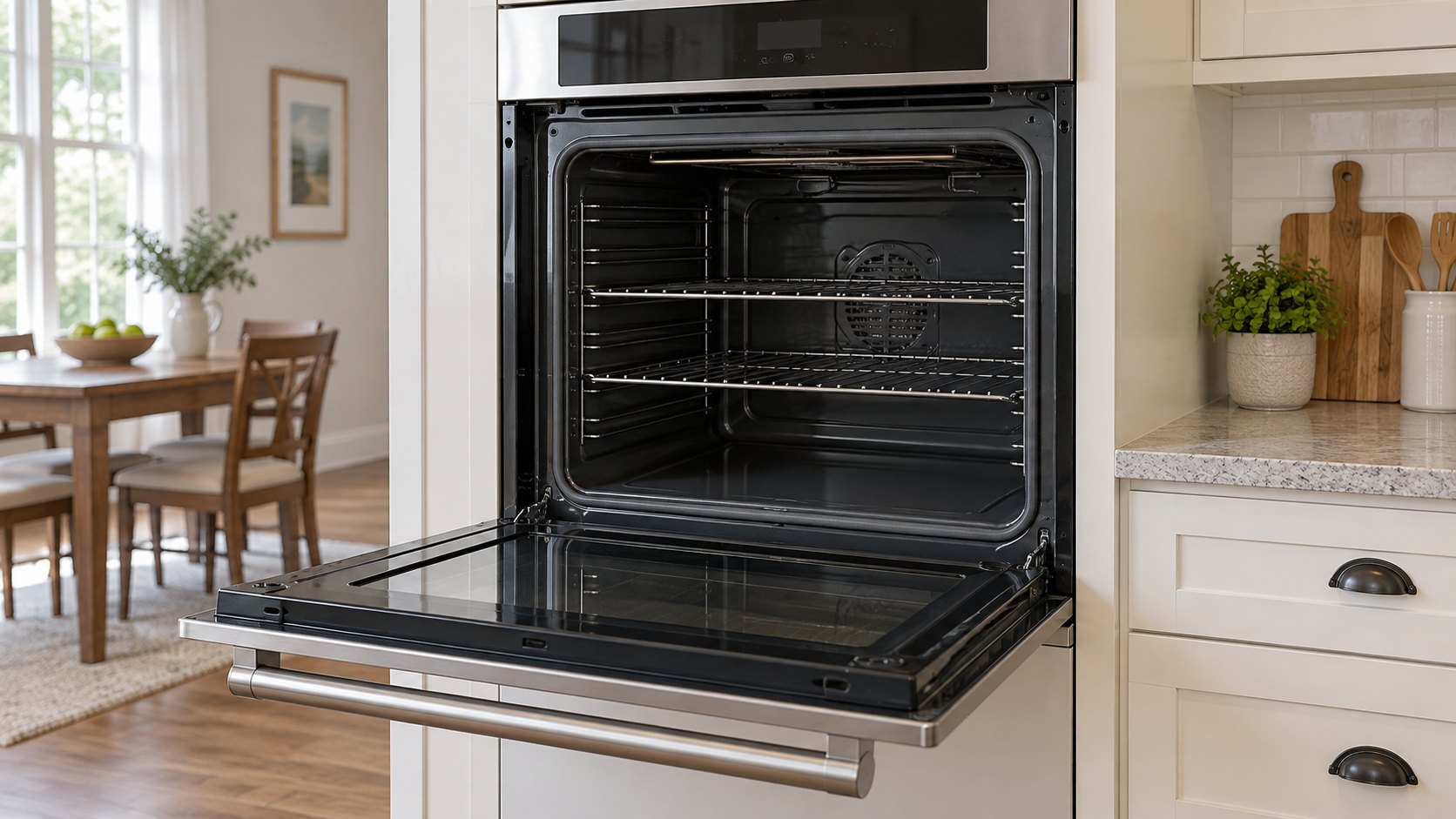
First: How Long Is Too Long?
Oven heats normally, but a surface burner stays cold? Check the electric cooktop guide.
There is no single failure threshold for every oven. GE publishes different expectations for visible-bake, hidden-bake, and fast-preheat designs. Selected temperature, starting temperature, room temperature, and rack load also affect the comparison. Use the instructions for your model rather than a universal 10-, 20-, or 30-minute rule.
A meaningful change under similar conditions is more useful than comparison with a neighbor’s appliance. Note whether the oven eventually signals ready and how cooking performs afterward.
GE Appliances: model-dependent preheat times and installation factors
Compare Current Preheat Time With the Oven’s Normal Behavior
Rather than comparing your oven with someone else’s appliance, compare it with itself.
Ask whether it preheated faster six months ago, whether the problem began suddenly, whether it started after a repair, whether it started after installation or moving, whether it eventually reaches temperature, and whether cooking performance remains normal afterward.
This distinction helps separate a normal design characteristic from a developing failure.
Electric Oven Broils but Won’t Bake: What That Tells You
Use observations from normal operation; you do not need to run repeated high-heat tests. GE explains that its electric ovens can use bake and broil elements together during preheat, while Broil does not use the bake element on the designs described. Broil heating therefore does not verify the entire Bake function.
The technician may need to distinguish the bake element, its wiring and switching circuit, and the control’s response to the selected mode. Treat these as areas to check, not a parts-shopping list. On a double oven, identify which cavity has the problem.
Do not diagnose by orange glow alone
GE notes that an upper element may be heating without glowing visibly, and its output can differ by mode. Hidden-bake designs also conceal the lower element. Do not touch elements, remove the oven floor, or hold a door switch to inspect operation.
GE Appliances: how Bake and Broil element operation differs
Check the controls before assuming a failed element
Confirm Bake is selected for the intended cavity, follow the normal Start sequence, and check for a delayed-start setting. Whirlpool documents that delayed Bake will wait for its scheduled start. Use the exact manual to cancel it or change control-lock settings; button combinations vary.
Close the door normally. Whirlpool notes that some models stop element operation with the door open. Demo mode is another no-heat setting to check if neither mode actually heats; it does not explain away a clearly observed difference between heating modes. Record the message on the display before changing settings.
Whirlpool: electric oven controls, door position, and delayed start
Some Heat Does Not Confirm the Whole Heating System
The oven becoming warm is different from normal preheat and baking performance. Record whether the preheat signal arrives, whether food later cooks normally, and which mode has changed. A qualified technician can compare the behavior with the model’s heating sequence before recommending a part.
A Smooth Oven Floor Can Hide the Bake Element
An intact floor without an exposed lower coil can be normal for a hidden-bake oven. Consult the model information; do not remove panels to look for a glow. Hidden-bake and fast-preheat designs have different timing expectations, so a smooth floor alone is not evidence of slow operation or a failed element.
Gas Oven? Keep Ignition Problems Separate
Electric element comparisons do not apply to a gas burner. GE’s gas-oven guidance includes controls, the ignition system, and model-specific settings. Report any ignition delay or failure already noticed during normal use. Leave gas valves, burner access, wiring, and ignition measurements to a qualified technician.
GE Appliances: gas-oven operation and service guidance
Read the separate gas-oven ignition guide
Peoples Gas: what to do if you suspect a gas leak
Electrical Supply Can Make an Electric Oven Very Slow
An electric range can appear to have power and still have an electrical-supply problem affecting oven performance.
This is especially worth investigating when the oven has always been slow since installation, the appliance was recently moved, or electrical work was recently performed.
The Oven Door Can Add Several Minutes
Every time the oven door opens during preheat, heat escapes. If you are checking temperature every few minutes by opening the door, you may be extending the preheat yourself.
If normal operation is safe, compare a cold start using the same mode and temperature, with the door closed as the manual requires. Record the preheat signal time without repeatedly opening the door.
A Door That Does Not Seal Properly Is Different
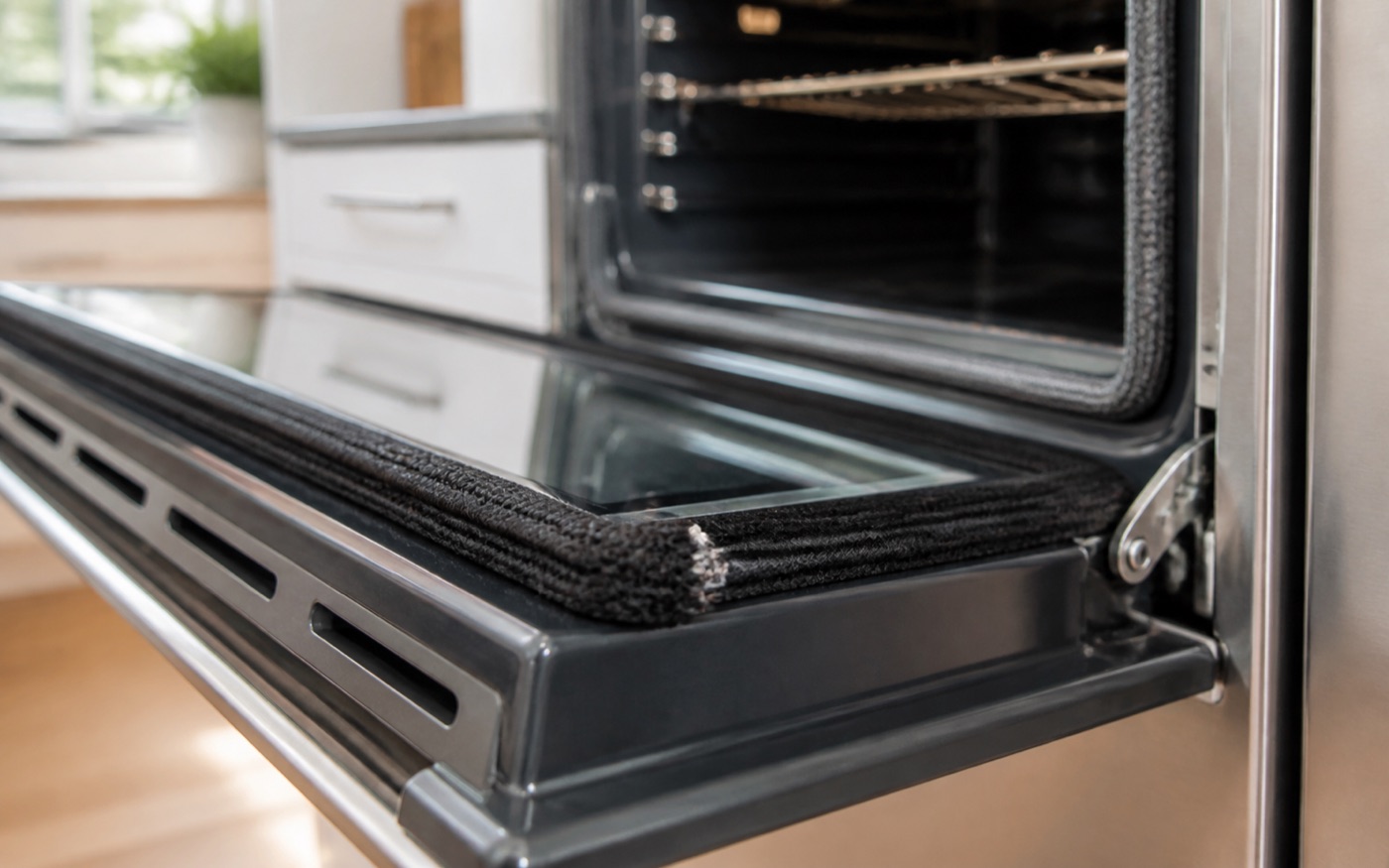
You do not need to open the door for heat to escape. A damaged gasket or misaligned door can continuously leak heat.
Look for a torn gasket, flattened section, door not closing fully, bent hinge, visible gap, or food debris around the seal.
A severe sealing problem can cause both long preheat and poor temperature maintenance afterward.
Remove Unnecessary Items Before Testing
An oven heats everything inside it. Extra thermal mass requires additional energy and time.
With the oven off and completely cool, remove unused heavy cookware before comparing preheat performance, following the manufacturer’s rack and accessory instructions.
Normal oven racks can remain according to the manufacturer’s instructions, but extra heavy items can meaningfully affect the test.
More Racks Can Increase Preheat Time
Extra oven racks can affect heating performance and preheat behavior. This effect is usually modest and should not explain an oven suddenly taking twice as long as before.
What Does the Preheat Beep Actually Mean?
GE distinguishes between signals for reaching the selected temperature and signals indicating readiness to add food on certain models. The beep is therefore not a universal precision temperature reading. Follow your model’s loading instructions instead of treating one instant thermometer reading as proof of a fault.
GE Appliances: the two types of preheat signal
Do Not Use an Infrared Thermometer to Judge Oven Air Temperature
An infrared thermometer measures surface temperature. It does not directly measure the air temperature inside the oven.
Depending on where it is aimed, it may read an oven wall, rack, pan, glass, or heating element. Those surfaces can be much hotter or colder than the average air temperature.
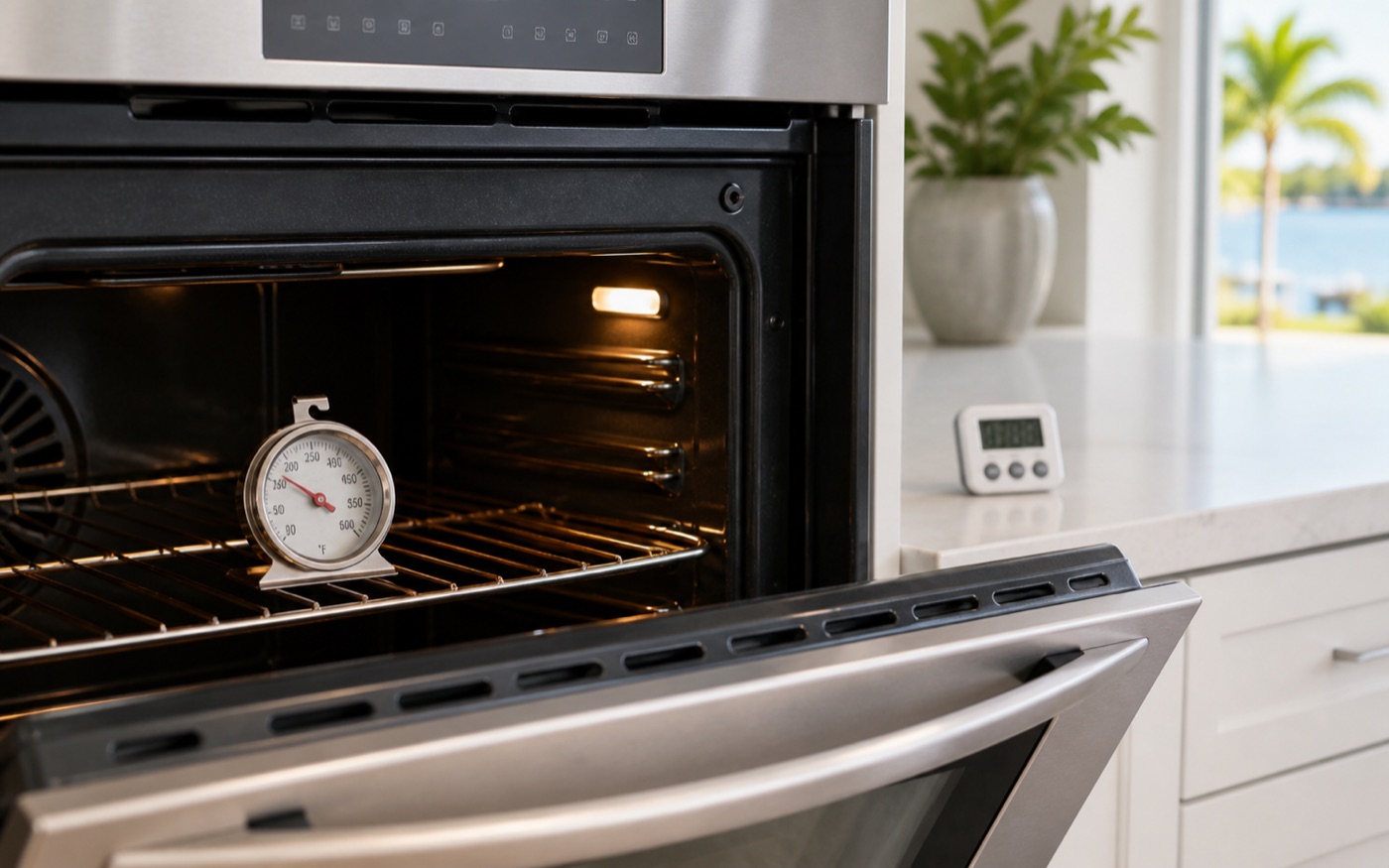
For temperature evaluation, use an appropriate oven thermometer or professional temperature probe and consider cycling behavior over time rather than a single instant reading.
The Temperature Sensor Can Affect Preheat
Modern ovens use a temperature sensor to tell the control how hot the cavity is. If the sensor reports an incorrect temperature, the control may stop heating too early, delay heating, cycle incorrectly, or display a temperature that does not match reality.
Sensor problems are more likely when long preheat is accompanied by incorrect cooking temperature, large temperature errors, error codes, or inconsistent cycling.
A sensor should be tested against model-specific specifications rather than replaced based on preheat time alone.
Calibration Is Not the First Fix for Slow Preheat
Oven calibration can be appropriate when an oven consistently cooks slightly too hot or too cold. But calibration will not repair a dead element, weak igniter, missing voltage, broken wiring, or bad door seal.
If the oven is taking 30 minutes because one heating source is not operating, changing calibration does not solve the underlying problem.
The Control Board Can Cause Slow Preheat
The electronic control determines when heating components operate. A relay or control problem can result in one element not energizing, intermittent heat, unusually long preheat, failure to maintain temperature, or occasional normal operation after reset.
Control boards can be expensive, so they should not be the first part replaced. A proper diagnosis should first verify heating components, sensor, wiring, and supply voltage.
What if It Preheats Normally Sometimes?
Intermittent slow preheat can be more difficult than a complete failure. Possible clues include one element occasionally failing to energize, an intermittent relay, a gas igniter changing behavior as it ages, a connector heating and losing contact, or a temperature sensor reporting incorrectly.
Try to note cold start versus warm restart, Bake temperature selected, whether Broil works, any error code, and the exact preheat time. Patterns matter.
What if Preheat Became Slow After a Power Outage?
A power interruption can leave some electronic ranges in an unusual control state or produce an error. Only follow a reset when the manufacturer’s instructions for the model and symptom call for it.
If the slow-preheat problem returns, repeated breaker resets are not a repair.
Record One Comparable Preheat Observation
Only do this if the appliance operates safely and its manual permits normal use. If Bake does not heat, ignition is abnormal, or there are electrical warning signs, skip testing and request help.
- Start with the oven off and completely cool; arrange racks and remove unused heavy cookware as the manual allows.
- Choose the same ordinary Bake setting used in your earlier comparison and confirm the intended cavity and no delayed start.
- Keep the door in its normal operating position and remain nearby.
- Record the time to the preheat signal and the exact display message. Stop when the model’s instructions or abnormal behavior call for it.
- Report the prior Bake/Broil difference without touching elements, removing covers, or running extra cycles to recreate a fault.
If the manual’s expected behavior is unclear, provide the model number and existing observations. You do not need to collect a temperature measurement or complete a test before requesting service.
Symptom Map
- Always slow, but normal baking afterward: check the model’s expected timing and comparable starting conditions.
- Preheat suddenly slower under similar conditions: report the change for diagnosis.
- Broil heats but Bake does not: confirm Bake controls, then have the heating path checked.
- Preheat signals ready but cooking is consistently wrong: use the temperature-performance guide.
- Gas ignition is delayed or fails: stop repeat attempts and arrange qualified service; use the emergency guidance above for suspected leakage.
- Slow since installation: include that history so installation and supply can be checked.
What Diagnosis Should Clarify
A useful diagnosis explains whether the observed timing is normal for the model, whether a control setting is responsible, or whether a heating function or installation needs attention. Ask for the findings and repair price before authorizing work. A long preheat time alone does not establish that the control board needs replacement.
What You Can Safely Check Yourself
- Read the exact model’s expected preheat behavior and normal controls.
- Check the mode, cavity, delayed start, and door closure.
- With the appliance off and cool, inspect only the normally visible gasket and remove unused heavy cookware.
- Record a change from previous use, a Bake/Broil difference already observed, and any error message.
- Stop for abnormal ignition, electrical smell, sparking, or a tripping breaker; use the gas-emergency instructions if leakage is suspected.
Check common appliance error codes
When Should You Call an Oven Technician?
Professional diagnosis is appropriate when:
- preheat time has suddenly increased significantly;
- preheat is substantially outside the model’s expected behavior under comparable conditions;
- Bake or Broil does not operate;
- gas burner is delayed;
- oven never reaches the selected temperature;
- door does not seal properly;
- error code returns;
- breaker trips;
- wiring smells burned;
- temperature remains significantly incorrect after preheat.
A technician can test bake and broil circuits, gas igniter, temperature sensor, electrical supply, wiring, and control-board outputs.
Is It Worth Repairing?
Slow preheat is often repairable. Common repair areas include the bake element, broil element, gas igniter, temperature sensor, wiring, door gasket, and control relay.
A slow-preheating oven does not automatically require replacement. The important part is identifying whether the long preheat is actually abnormal for the model and, if so, which heating function has been lost.
What to Include in Your Oven Repair Request
- Brand and model; gas or electric; range or wall oven; upper or lower cavity.
- Selected cooking mode and temperature, starting condition, and observed preheat time if safely available.
- Whether Broil previously heated while Bake did not, or neither mode heats.
- Exact error message and whether the problem followed installation, electrical work, a power interruption, or cleaning.
- Your service city and a photo of the display or accessible model label, without pulling the appliance out.
Art’s Appliance Repair serves Cape Coral, Fort Myers, and its listed Southwest Florida service area. Send your location and appliance details so coverage and availability can be confirmed. An online appointment time is a request and requires confirmation.
Oven and range repair in Cape Coral
Oven and range repair in Fort Myers
Request an oven service appointment
Read the service call and warranty policy
Photo guide
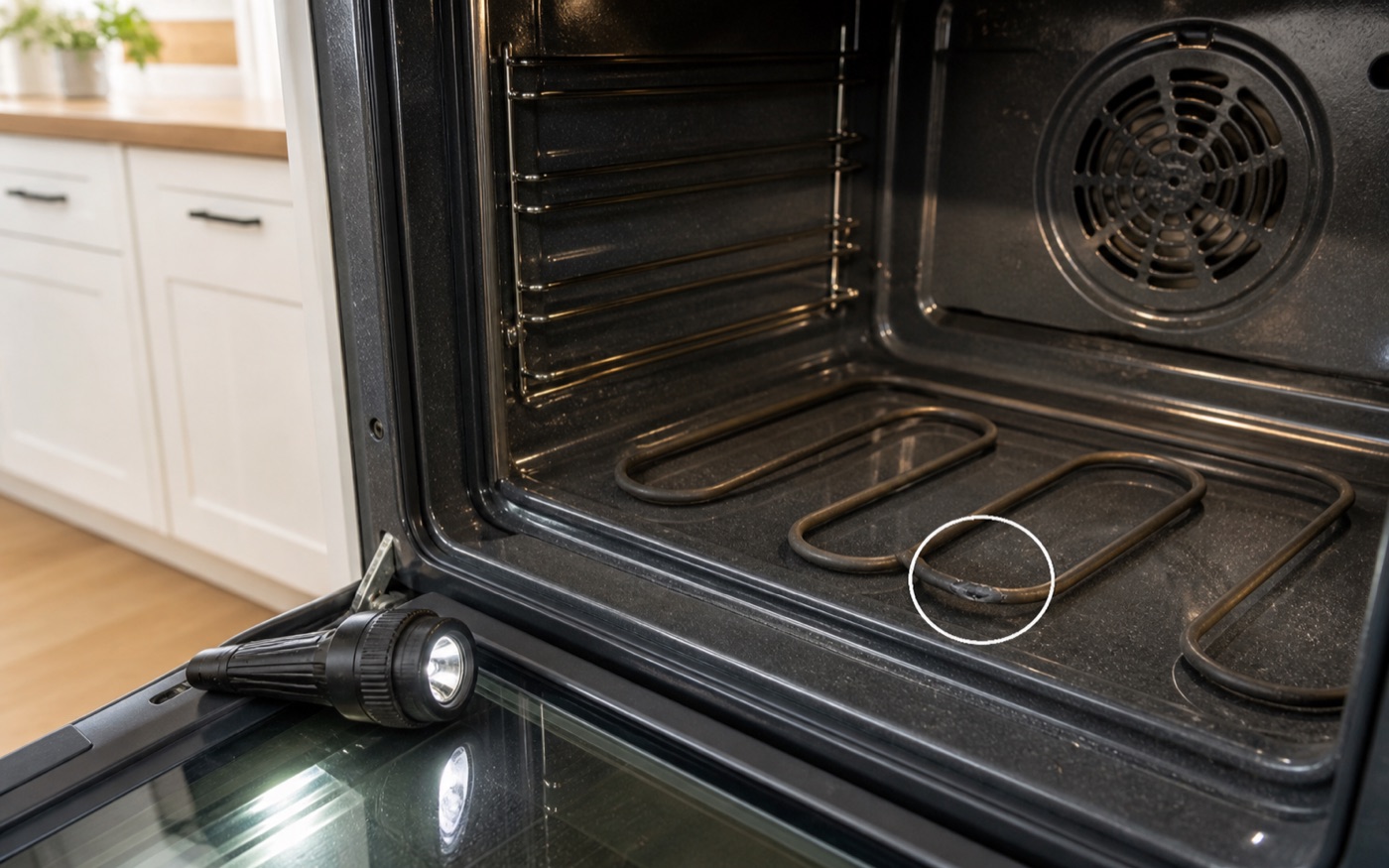
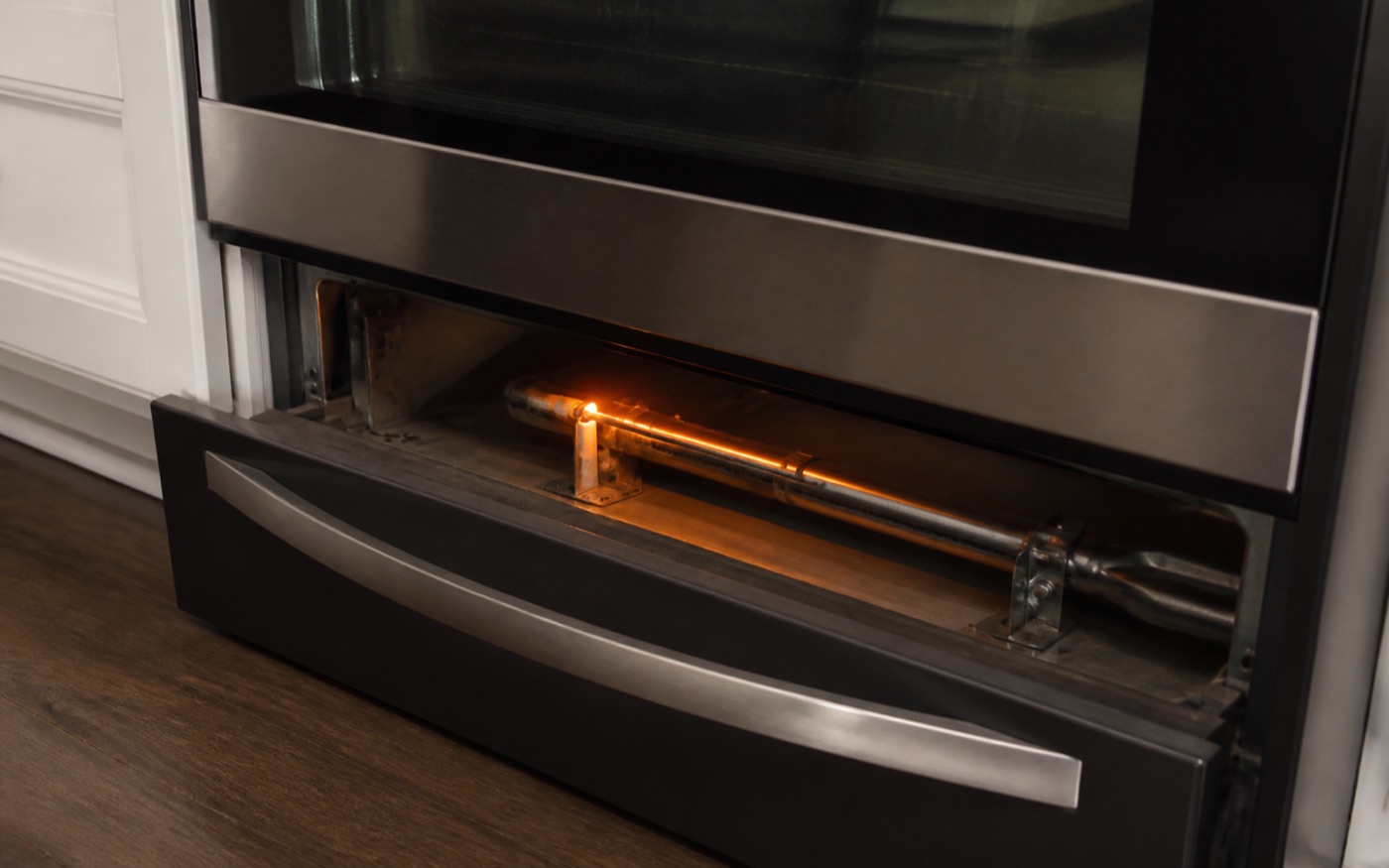
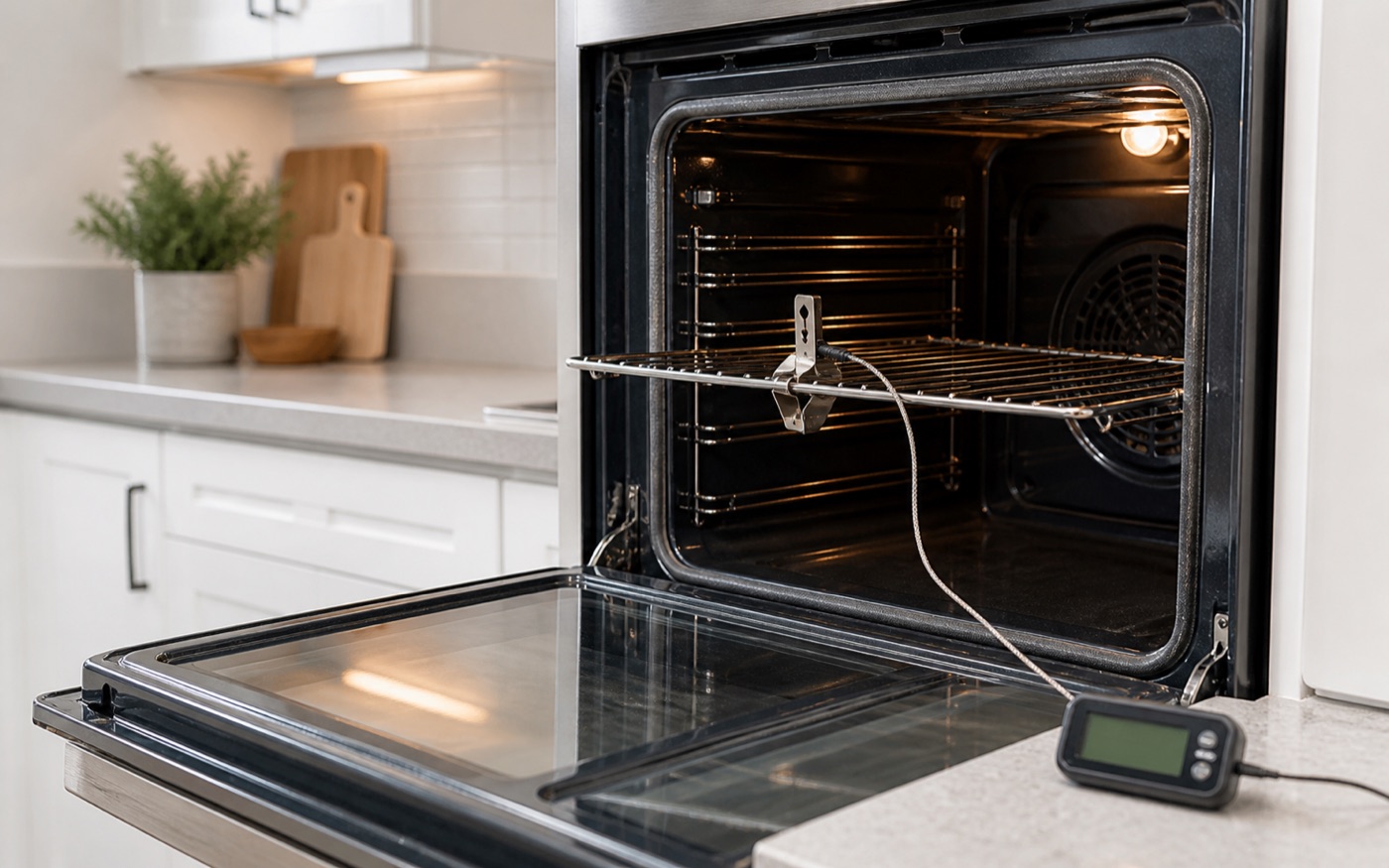
Diagnostic Photos
Local Oven Service
We provide oven repair in Cape Coral and Fort Myers, along with surrounding Southwest Florida service areas.
For scheduling, use the Contact page or call/text Art’s Appliance Repair directly.
Helpful Next Pages
These related guides and local service pages help connect the symptom to a practical repair path.
Related Appliance Guides
Oven
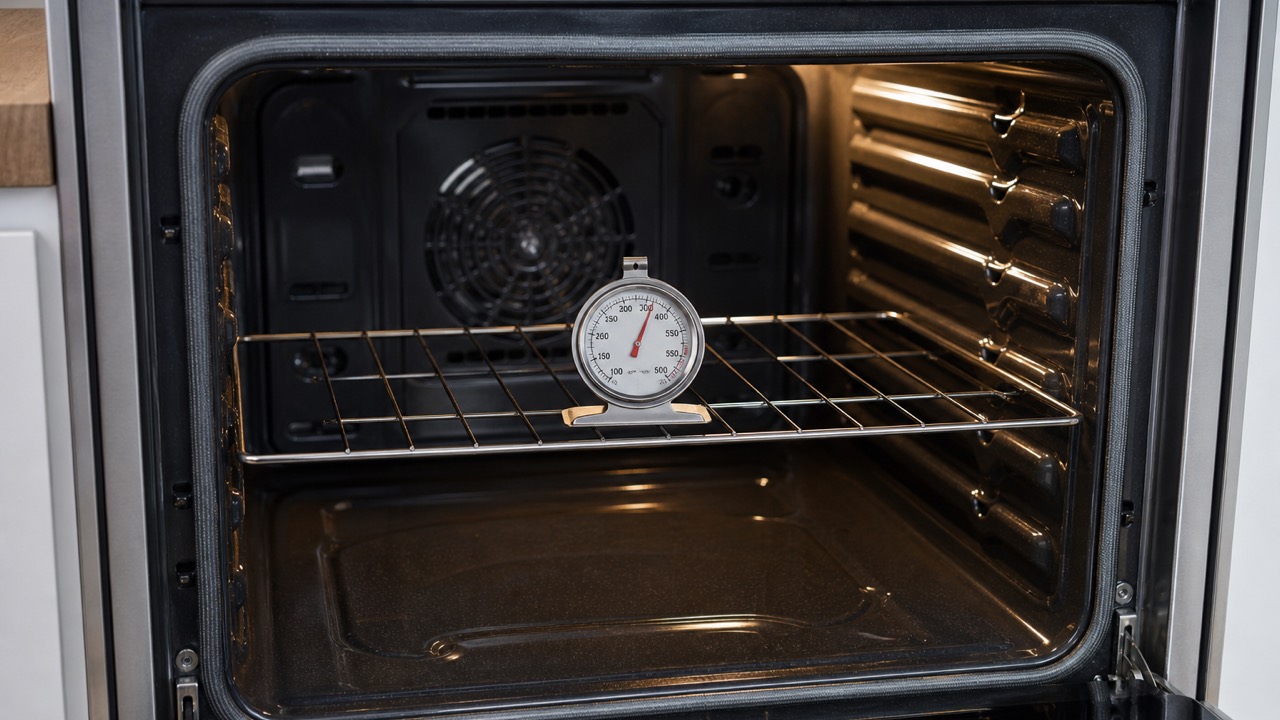
Oven Not Heating to the Correct Temperature: Common Causes
Oven too hot, too cold, or heating unevenly? Learn the common causes, safe checks, and when to schedule oven repair in Cape Coral or Fort Myers.
Updated August 11, 2026
oven not heating to the correct temperature
Oven
Gas Oven Igniter Glows but No Flame: What Usually Causes It?
Gas oven igniter glows but the burner will not light? Learn how a weak igniter, gas supply, safety valve, burner, wiring, or control can cause no flame.
Updated September 1, 2026
Gas oven igniter glows but no flame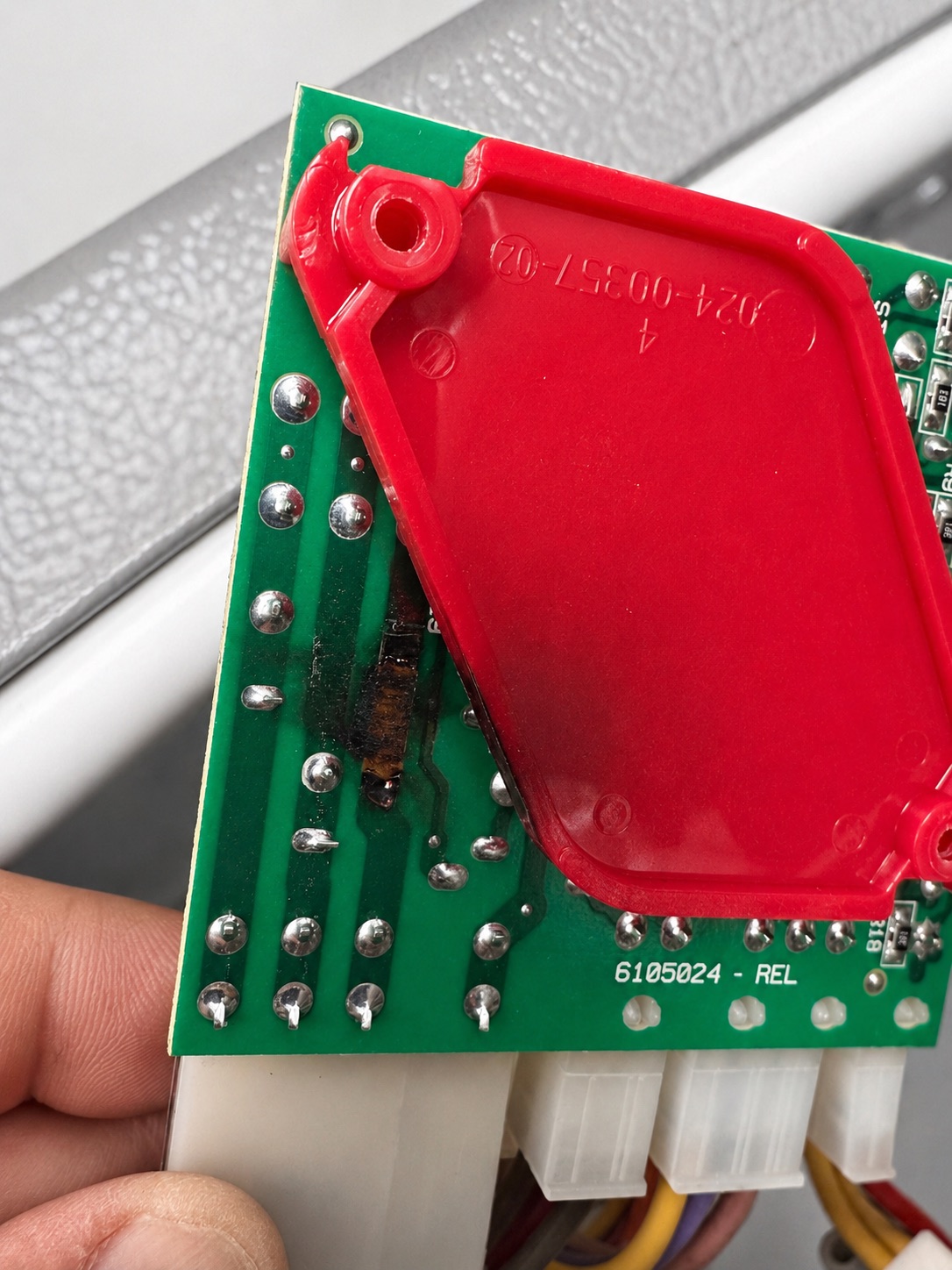
Appliance Tips
Appliances After a Power Surge: Warning Signs and Safe Next Steps
Appliance acting differently after a surge, outage, or Florida storm? Separate a home electrical problem from one appliance symptom and know when to stop and request service.
Updated October 18, 2026
Appliance warning signs after a power surgeNeed service?
Oven Repair in Southwest Florida
Art’s Appliance Repair diagnoses slow-preheat and oven heating problems. We explain the findings and repair price before work begins. Share the observations above to help us prepare for the visit.
The service call is $0 when an approved repair is completed; $79 if no repair is completed after diagnosis.
View Oven Repair