How Accurate Should an Oven Be?
An oven does not maintain one exact temperature continuously.
For example, when set to 350°F, the temperature may rise above and fall below 350°F as the heating system cycles. The average temperature over several cycles should remain close to the selected setting.
A difference of approximately 10°F to 25°F may be normal on some models.
A problem is more likely when:
- The average temperature is off by more than 25°F to 35°F.
- Temperature changes dramatically during the cycle.
- The oven never reaches the selected temperature.
- Preheating takes much longer than normal.
- Food burns on one side.
- Baking results vary from one cycle to another.
- The oven displays an error code.
- The temperature continues rising after reaching the setting.
Before Testing: Use a Reliable Oven Thermometer
Do not judge oven temperature only by cooking time.
To test more accurately:
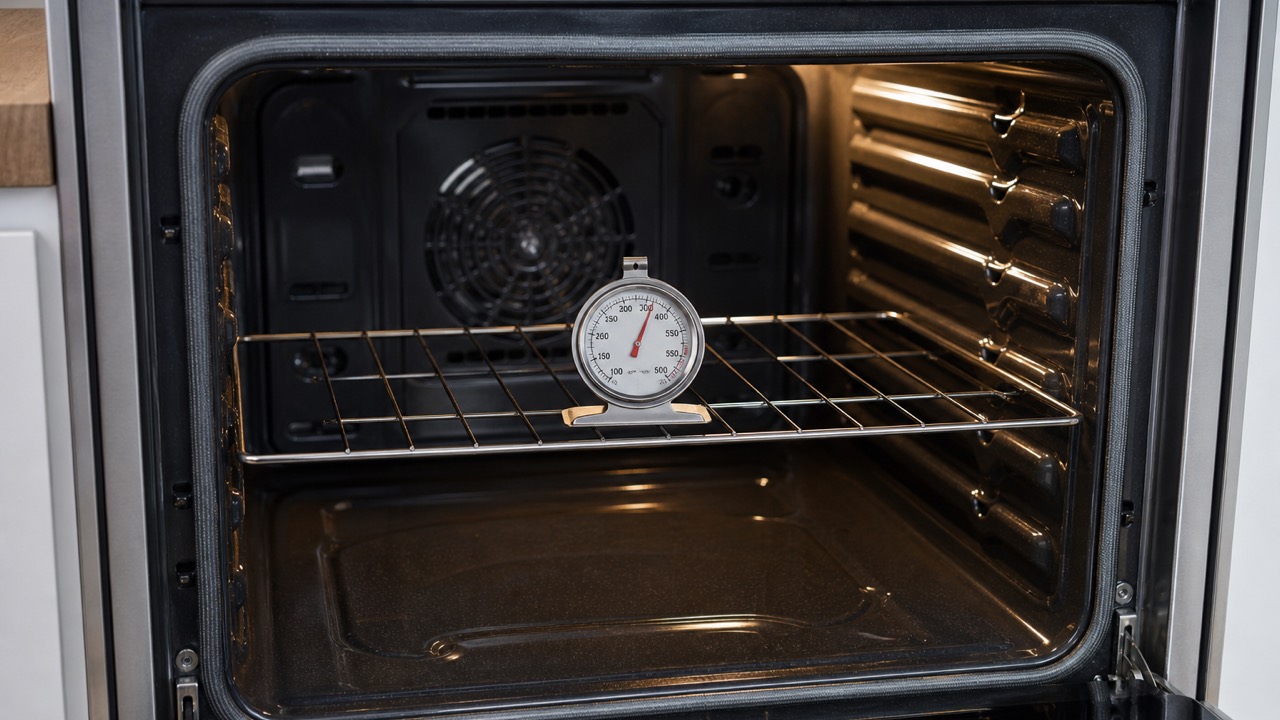
- Place a reliable oven thermometer near the center of the middle rack.
- Set the oven to 350°F.
- Allow the oven to complete preheating.
- Wait at least 15 to 20 additional minutes.
- Record the temperature.
- Continue checking through several heating cycles.
- Calculate the approximate average.
Avoid opening the door frequently because each opening releases heat and changes the reading.
A small inexpensive thermometer may react slowly. Digital temperature probes designed for oven testing may provide more detailed results.
Common Reasons an Oven Temperature Is Incorrect
1. The Oven Has Not Fully Preheated
The preheat indicator may turn off before every surface inside the oven reaches a stable temperature.
The air may be hot, but the walls, racks, cookware, and oven cavity may still be absorbing heat.
This can cause:
- Food cooking slowly at the beginning.
- Weak browning.
- Inconsistent baking.
- Temperature dropping quickly when the door opens.
After the preheat signal, allow an additional 10 to 20 minutes for baking that requires precise temperature.
Large ovens, heavy racks, baking stones, and cold cookware may require more time.
2. The Oven Temperature Needs Calibration
Many electronic ovens allow temperature adjustment without replacing parts.
Calibration changes the relationship between the selected temperature and the actual average temperature.
For example, if the oven averages 20°F too cold, a positive calibration adjustment may correct it.
Typical adjustment ranges may be:
- Plus or minus 20°F.
- Plus or minus 30°F.
- Plus or minus 35°F.
The exact process varies by model.
Calibration is appropriate when:
- Temperature is consistently off by a similar amount.
- Heating remains stable.
- All components operate normally.
- The error is relatively small.
- The oven reaches temperature but averages too high or low.
Calibration will not repair a failed sensor, element, igniter, relay, or control board.
3. The Oven Temperature Sensor Is Faulty
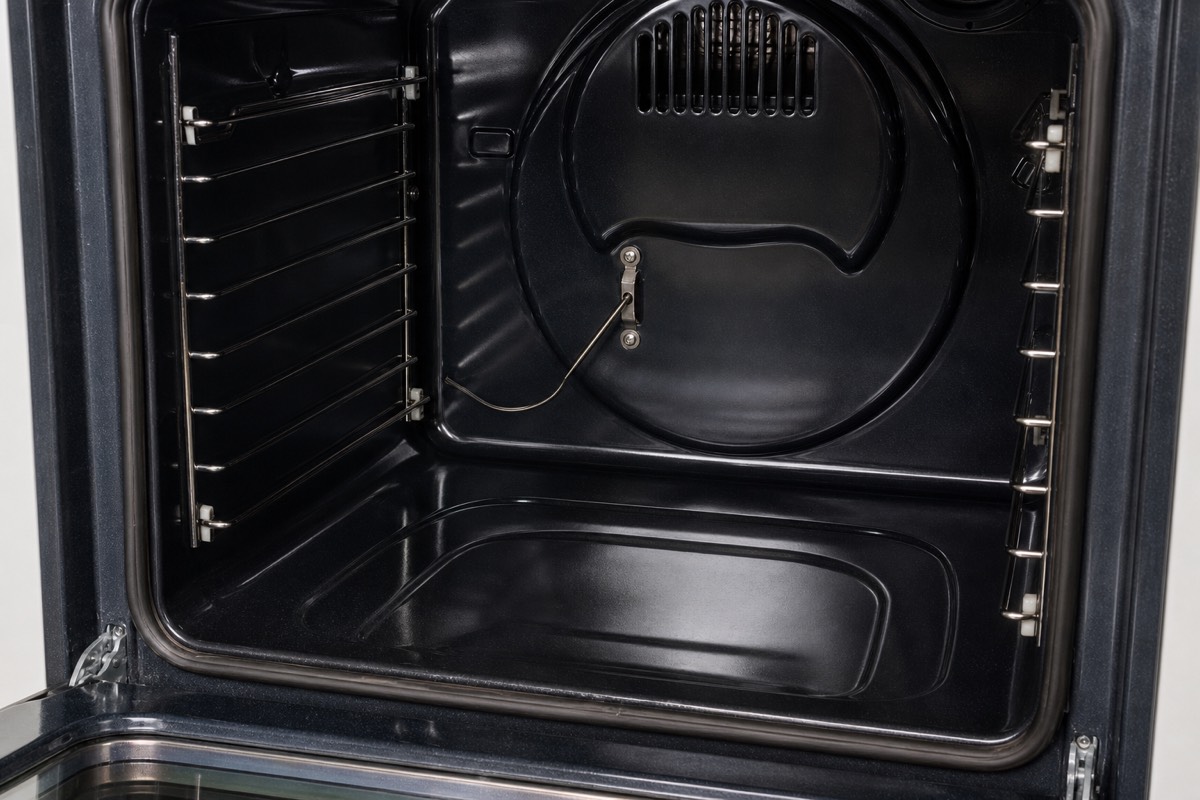
The temperature sensor monitors heat inside the oven and sends information to the control board.
It is often a thin metal probe mounted on the rear interior wall.
A faulty sensor may cause:
- Oven too hot.
- Oven too cold.
- Long preheat time.
- Temperature fluctuating.
- Heat shutting off too early.
- Heat remaining on too long.
- Error code.
- Inconsistent baking.
The sensor may fail because of:
- Internal electrical change.
- Heat damage.
- Loose connection.
- Damaged wiring.
- Moisture.
- Physical impact.
The sensor resistance should be tested and compared with manufacturer specifications at a known temperature.
4. The Temperature Sensor Is Touching the Oven Wall
The sensor probe should normally remain positioned away from the oven wall.
If it bends and touches the metal liner, it may sense the wall temperature rather than the oven air correctly.
This can cause inaccurate readings and irregular cycling.
Inspect whether:
- The probe is bent.
- Mounting screws are loose.
- The sensor has shifted.
- A rack or pan struck the probe.
Do not force or sharply bend the sensor.
5. The Sensor Wiring Is Damaged
Even if the sensor itself is good, damaged wiring may send incorrect information to the control board.
Possible causes include:
- Burned connector.
- Loose plug.
- Pinched wire.
- Corrosion.
- Rodent or insect damage.
- Heat-damaged insulation.
- Previous repair.
Symptoms may include:
- Intermittent temperature errors.
- Error codes.
- Oven working after movement or reset.
- Temperature jumping unexpectedly.
- Sensor readings changing when the harness is touched.
Wiring should be inspected with power disconnected.
Electric Oven Heating Problems
6. The Bake Element Is Weak or Partially Failed
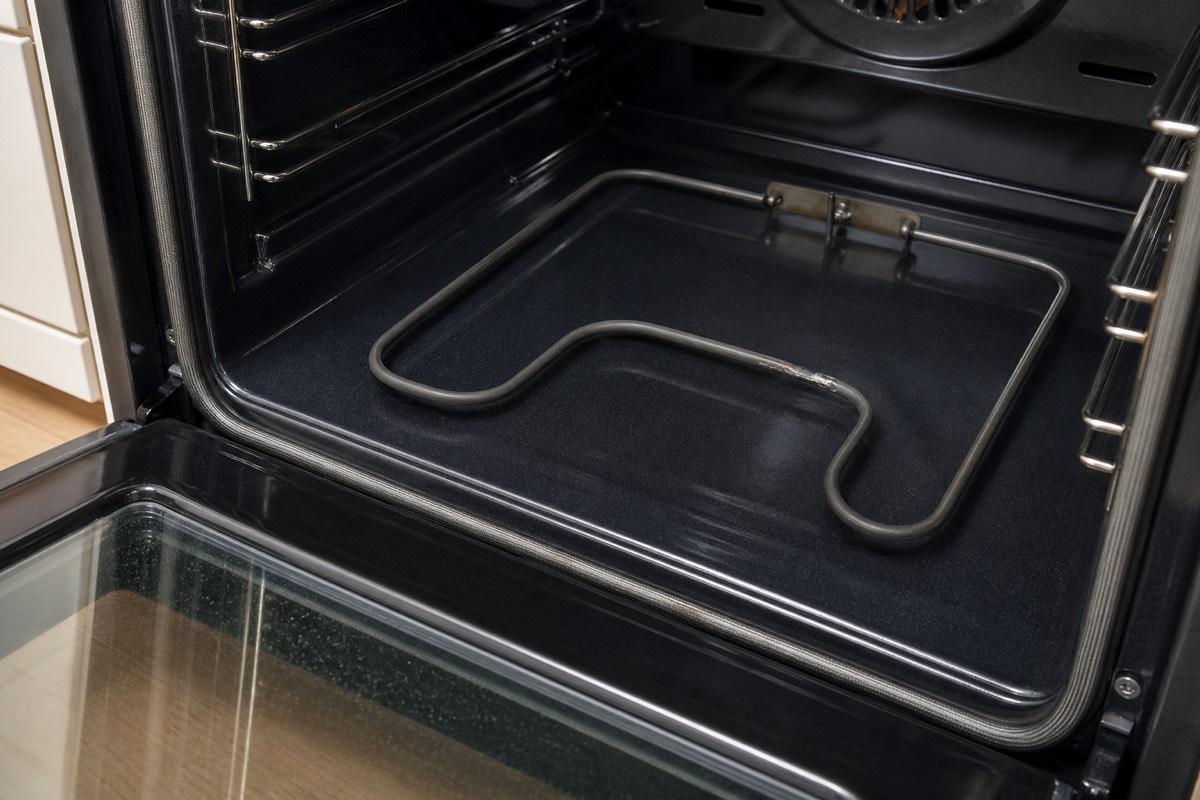
Electric ovens commonly use a bake element near the bottom of the oven cavity.
Some elements are visible. Others are hidden beneath the oven floor.
A heating element may fail completely or develop a damaged area that heats inconsistently.
Possible symptoms include:
- Oven takes too long to preheat.
- Bottom of food remains undercooked.
- Oven reaches only part of the selected temperature.
- Element has a blister or break.
- Element heats in one section but not another.
- Breaker trips.
- Burning smell.
A visually normal element may still be electrically open.
The element should be tested for continuity and checked for a short to ground.
7. The Broil Element Is Not Working
Many ovens use both bake and broil elements during preheating and temperature recovery.
If the broil element fails, the oven may still heat but preheat slowly or cook unevenly.
Possible symptoms include:
- Long preheat.
- Weak top browning.
- Food cooking unevenly.
- Oven struggling to recover after the door opens.
- Broil mode not working.
- No visible heat from the upper element.
The broil element, wiring, relay, and control output should be tested.
8. The Convection Element Is Faulty
Convection ovens may use a separate heating element around the convection fan.
If this element fails:
- Convection baking may be too cool.
- Food may cook unevenly.
- Fan runs but temperature is low.
- Regular Bake may work better than Convection Bake.
- Preheat may take longer in convection mode.
The convection element may be hidden behind the rear interior panel.
17. The Oven Is Receiving Incorrect Voltage
Electric ovens typically require a full 240-volt power supply for proper heating.
The display, light, and controls may still work if part of the power supply is missing.
Possible causes include:
- One side of the double breaker tripped.
- Loose terminal connection.
- Burned power wiring.
- Faulty outlet.
- Damaged breaker.
- Improper installation.
Symptoms may include:
- Oven powers on but heats weakly.
- Only one element works.
- Preheat takes very long.
- Temperature never reaches the setting.
- Breaker trips.
Voltage testing should be performed safely by a trained technician.
18. The Power Connection Is Burned or Loose
A loose connection at the terminal block can reduce power and create excessive heat.
Warning signs include:
- Burning smell.
- Melted insulation.
- Discolored terminal.
- Intermittent heating.
- Crackling sound.
- Hot power cord.
- Breaker tripping.
Disconnect power immediately if electrical heat damage is suspected.
30. A Thermal Fuse or High-Limit Device Is Weak
Some ovens use a thermal fuse or high-limit thermostat for safety.
If it opens completely, the oven may stop heating.
An intermittent or damaged connection may cause inconsistent heating.
Possible symptoms include:
- Oven stops during preheat.
- Heating returns after cooling.
- Display works but elements do not.
- Problem began after self-clean.
- One cooking mode fails.
The safety device and the reason for overheating should both be checked.
Gas Oven Heating Problems
9. The Gas Oven Igniter Is Weak
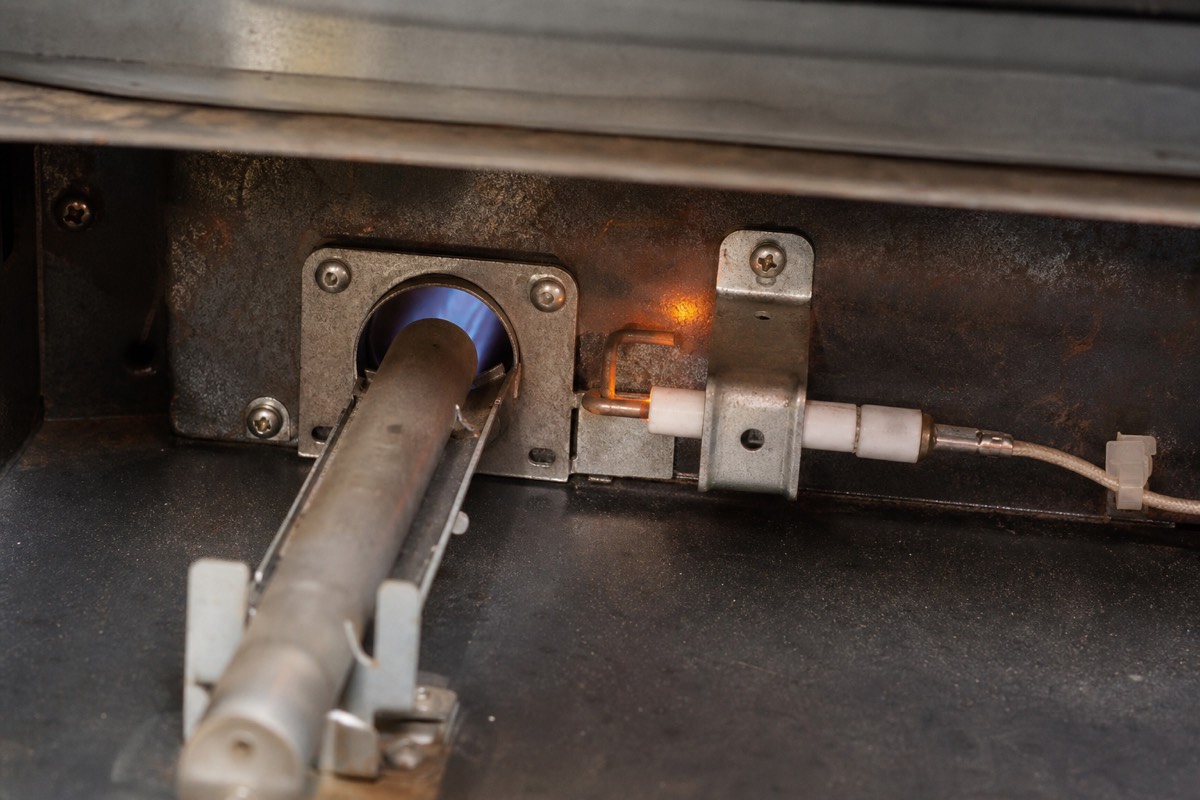
A gas oven igniter can glow without drawing enough electrical current to open the gas valve properly.
A weak igniter is one of the most common causes of gas oven temperature problems.
Possible symptoms include:
- Long preheat time.
- Oven heats intermittently.
- Burner takes a long time to ignite.
- Gas odor before ignition.
- Oven reaches temperature slowly.
- Heat stops during the cycle.
- Igniter glows but flame does not appear.
The igniter should be tested by measuring current draw according to the oven’s specifications.
A glowing igniter is not proof that it is working correctly.
10. The Gas Burner Is Not Lighting Consistently
The burner may ignite during preheat but fail to relight during later temperature cycles.
Possible causes include:
- Weak igniter.
- Dirty burner ports.
- Misaligned igniter.
- Gas valve problem.
- Loose wiring.
- Control relay failure.
- Insufficient gas supply.
This can cause the oven temperature to drop significantly after initial preheating.
If delayed ignition or gas odor occurs, stop using the oven and schedule service.
11. The Gas Supply Is Restricted
Insufficient gas flow can reduce burner performance.
Possible causes include:
- Shutoff valve partially closed.
- Kinked flexible gas line.
- Low household gas pressure.
- Incorrect fuel conversion.
- Regulator problem.
- Supply interruption.
Possible symptoms include:
- Small flame.
- Long preheat.
- Burner shutting off.
- Other gas appliances also performing poorly.
- Oven not reaching high temperatures.
Gas-system diagnosis should be performed by a qualified professional.
Door, Airflow and Installation Problems
19. The Oven Door Is Not Closing Properly
A door that does not seal allows heat to escape.
Possible causes include:
- Bent hinge.
- Weak hinge spring.
- Door not installed correctly.
- Rack or cookware blocking the door.
- Damaged latch.
- Warped door frame.
- Broken hinge receiver.
Signs include:
- Visible gap.
- Heat escaping near one side.
- Long preheat.
- Control panel becoming unusually hot.
- Temperature dropping quickly.
- Food cooking unevenly.
The door should close evenly without needing excessive force.
20. The Door Gasket Is Damaged
The gasket helps seal heat inside the oven.
Inspect it for:
- Tears.
- Missing sections.
- Hard or brittle material.
- Loose mounting clips.
- Grease buildup.
- Compression damage.
A damaged gasket may cause:
- Heat loss.
- Long preheat time.
- Uneven baking.
- Hot exterior surfaces.
- Increased energy use.
Some oven gaskets intentionally have a small gap by design. Confirm the model’s correct gasket configuration before replacing it.
21. The Door Was Opened Too Often
Every time the oven door opens, a significant amount of heat escapes.
Repeated opening can cause:
- Longer cooking time.
- Poor baking results.
- Temperature readings that appear low.
- Heating elements cycling more frequently.
- Delayed browning.
Use the oven light and window when possible.
If the recipe requires frequent checking, expect the cooking time to increase.
22. The Oven Rack Is in the Wrong Position
Rack position affects how food receives heat.
For example:
- A low rack increases bottom heat.
- A high rack increases top browning.
- A pan too close to an element may burn.
- Multiple racks can restrict airflow.
Follow the recipe and manufacturer recommendations.
For general baking, the center rack is often the best starting position.
23. Cookware Is Affecting Baking Results
The pan can affect how quickly food cooks and browns.
Dark metal pans absorb more heat and may cause faster browning.
Glass cookware may require temperature or time adjustments.
Shiny metal pans reflect more heat.
Oversized pans can block airflow.
Before assuming the oven temperature is wrong, consider whether the problem happens with:
- One specific pan.
- Dark cookware.
- Glass dishes.
- Insulated baking sheets.
- Very large roasting pans.
- Multiple trays.
24. Aluminum Foil Is Blocking Airflow
Covering the oven floor or racks with foil can disrupt airflow and reflect heat incorrectly.
It may also damage the oven liner or hidden heating element.
Possible effects include:
- Uneven temperature.
- Slow preheat.
- Burned food.
- Underheated areas.
- Damaged oven surface.
- Incorrect sensor readings.
Do not cover the oven floor unless the manufacturer specifically allows it.
25. The Convection Fan Is Not Running
A convection fan circulates hot air for more even cooking.
If the fan fails:
- Convection temperature may be inaccurate.
- Food may cook unevenly.
- One side may brown faster.
- Preheat may take longer.
- Fan-related error may appear.
Possible causes include:
- Failed fan motor.
- Blade obstruction.
- Wiring problem.
- Door switch failure.
- Control-board issue.
Some convection fans cycle on and off by design.
26. The Convection Fan Is Turning Slowly
A weak fan motor may rotate but fail to move enough air.
Possible symptoms include:
- Uneven cooking.
- Longer cooking time.
- Noise from the rear.
- Weak airflow.
- Fan stopping when hot.
- Convection mode performing worse than regular Bake.
The fan blade and motor should be inspected.
27. The Oven Vent Is Blocked
Ovens require controlled ventilation.
The vent may be located:
- Under the control panel.
- Near a rear burner.
- At the back of the cooktop.
- Above the door.
- Inside a trim area.
Do not block the vent with:
- Foil.
- Pans.
- Towels.
- Cookware.
- Decorative covers.
A blocked vent can affect temperature regulation and create excessive exterior heat.
28. The Oven Is Very Dirty
Heavy grease and food buildup can affect heat distribution, airflow, and sensor performance.
Buildup may also produce:
- Smoke.
- Burning odor.
- Uneven cooking.
- False temperature impressions.
- Excessive heat near one area.
Clean the oven according to manufacturer instructions.
Avoid spraying cleaner directly onto heating elements, igniters, fans, or sensor openings.
29. The Self-Clean Cycle Damaged a Component
Self-clean cycles operate at extremely high temperatures.
After self-cleaning, some ovens may develop:
- Blown thermal fuse.
- Failed control board.
- Damaged door lock.
- Sensor error.
- Burned wiring.
- Heating failure.
If temperature problems began immediately after self-clean, the high-limit safety system and controls should be inspected.
Control and Electrical Problems
12. The Oven Control Board Is Malfunctioning
The electronic control board regulates heating based on sensor information.
A failing relay or circuit may cause the oven to:
- Heat too much.
- Heat too little.
- Stop heating intermittently.
- Energize only one element.
- Fail to cycle correctly.
- Display errors.
- Work temporarily after reset.
Possible signs include:
- Correct sensor readings but incorrect control output.
- Burned relay area.
- No voltage sent to an element.
- Temperature overshooting repeatedly.
- Oven continuing to heat after reaching the setting.
The board should not be replaced until the sensor, elements, igniter, wiring, and power supply are tested.
13. A Relay Is Stuck Closed
A stuck relay may keep a heating element energized longer than intended.
This can cause:
- Oven overheating.
- Temperature continuing to rise.
- Element staying red.
- Food burning.
- Oven remaining hot after cancellation.
- Burning smell.
- Error code.
If the oven continues heating after it is turned off, disconnect power at the breaker and stop using it.
This is a safety issue that requires prompt diagnosis.
14. A Relay Is Not Closing
A relay may fail to send power to the bake, broil, or convection element.
Possible symptoms include:
- One element not heating.
- Slow preheat.
- Oven too cold.
- Intermittent heating.
- Correct display but no heat.
- Heating restored temporarily after tapping or resetting.
Relay failure may require control-board repair or replacement depending on the model.
15. The Mechanical Thermostat Is Faulty
Some older ovens use a mechanical thermostat rather than an electronic sensor and control board.
A worn thermostat may cause:
- Oven too hot.
- Oven too cold.
- Wide temperature swings.
- Heat not shutting off.
- Heat not starting.
- Inaccurate knob setting.
The thermostat sensing bulb and capillary tube should also be inspected for damage or incorrect placement.
16. The Selector Switch Is Faulty
Older ovens may use a selector switch to route power to different cooking functions.
Burned or worn contacts may cause:
- Bake working but broil failing.
- Broil working but bake failing.
- Heat only on certain settings.
- Intermittent operation.
- Incorrect element activation.
The selector switch should be tested according to the wiring diagram.
31. The Oven Is in Celsius Instead of Fahrenheit
Some ovens can switch between Fahrenheit and Celsius.
If the display shows Celsius unexpectedly:
- 175°C is approximately 350°F.
- 200°C is approximately 392°F.
- 230°C is approximately 446°F.
Check the display setting before assuming the oven is heating incorrectly.
32. The Oven Is in Demo or Showroom Mode
In Demo mode, the display and controls may work while the heating system remains disabled or limited.
Look for:
- Demo.
- Showroom.
- Control display working without heat.
- Oven recently installed.
- Oven reset after power outage.
Use the model-specific instructions to exit Demo mode.
33. The Oven Control Needs a Reset
A temporary electronic error may affect heating.
A basic reset may help:
- Turn off the oven.
- Disconnect power at the breaker.
- Wait approximately five minutes.
- Restore power.
- Set the clock if required.
- Test Bake at 350°F.
A reset is not a repair if the problem returns.
34. The Oven Displays an Error Code
Error codes may identify problems involving:
- Temperature sensor.
- Overheating.
- Control board.
- Door lock.
- Communication.
- Cooling fan.
- Heating circuit.
Photograph or write down the code before resetting the oven.
The exact meaning depends on the brand and model.
What Can You Safely Check?
Before scheduling service, you can:
- Confirm the oven is set to Fahrenheit.
- Verify the selected cooking mode.
- Allow additional time after the preheat signal.
- Test with a reliable oven thermometer.
- Average several temperature cycles.
- Inspect whether the door closes completely.
- Check the gasket for visible damage.
- Confirm that foil is not covering the oven floor.
- Check rack position.
- Try different cookware.
- Reset the double breaker for an electric oven.
- Record any error code.
- Check whether Bake, Broil, and Convection behave differently.
- Stop using the oven if it overheats or smells electrical.
Do not remove electrical panels or test live voltage without proper training.
Do not disassemble gas components or attempt to detect gas leaks with a flame.
When Is Calibration Appropriate?
Calibration may help when:
- The oven is consistently off by a small amount.
- The temperature error is similar across several tests.
- Heating cycles remain stable.
- Bake and broil components work normally.
- No error codes appear.
- The door seals correctly.
Calibration is not appropriate when:
- Temperature changes unpredictably.
- Preheat is extremely slow.
- One element does not work.
- The burner fails to relight.
- The oven overheats continuously.
- The sensor is damaged.
- An error code is present.
When Should You Stop Using the Oven?
Stop using the oven and disconnect power when:
- The oven continues heating after being turned off.
- Temperature rises uncontrollably.
- You smell burning wiring or plastic.
- The breaker repeatedly trips.
- Smoke comes from an electrical area.
- The power cord or connection becomes hot.
- A heating element sparks.
- Gas odor is present.
- Gas ignition is delayed.
If you smell gas, avoid electrical switches and contact the gas company or emergency service.
When Should You Call an Oven Technician?
Professional diagnosis is recommended when:
- The oven is consistently more than 25°F to 35°F off.
- Calibration does not solve the problem.
- Preheat takes much longer than normal.
- The bake or broil element does not heat.
- The gas igniter glows but the burner does not light.
- The burner fails to relight during the cycle.
- The oven overheats.
- Temperature changes unpredictably.
- An error code returns.
- The door does not close properly.
- Wiring or terminals show heat damage.
- The problem began after self-clean.
A technician can test the sensor, heating elements, igniter, gas valve, thermostat, control board, relays, door components, wiring, and power supply.
Should You Repair or Replace the Oven?
Repair is often reasonable when the problem involves:
- Temperature sensor.
- Heating element.
- Gas igniter.
- Door hinge.
- Door gasket.
- Thermal fuse.
- Wiring connection.
- Control relay.
- Calibration.
Replacement may be more practical when:
- Multiple major components have failed.
- The oven has severe cabinet or liner damage.
- Critical parts are discontinued.
- The control board and heating system both require expensive repairs.
- The appliance has repeated electrical or gas-related failures.
- Repair cost approaches the value of a replacement oven.
A complete diagnosis should be performed before deciding.
Photo guide
Diagnostic Photos
Local Oven Service
We provide oven repair in Cape Coral and Fort Myers, along with surrounding Southwest Florida service areas.
For scheduling, use the Contact page or call/text Art’s Appliance Repair directly.
Need service?
Oven Repair in Cape Coral, Fort Myers and Southwest Florida
Art’s Appliance Repair provides electric and gas oven diagnostics and repair throughout Cape Coral, Fort Myers, North Fort Myers, Lehigh Acres, Estero, Bonita Springs, Naples, and surrounding Southwest Florida communities.
We diagnose oven problems including:
- Oven not heating to the correct temperature.
- Oven too hot or too cold.
- Long preheat times.
- Failed bake and broil elements.
- Weak gas igniters.
- Temperature sensor failures.
- Uneven baking.
- Convection fan problems.
- Door gasket and hinge issues.
- Control-board and relay failures.
- Oven error codes.
- Oven not heating after self-clean.
Call or text (239) 688-9955 to schedule oven service.
Service call: $0 with an approved repair. A $40 diagnostic fee may apply if the repair is declined.
View Oven Repair