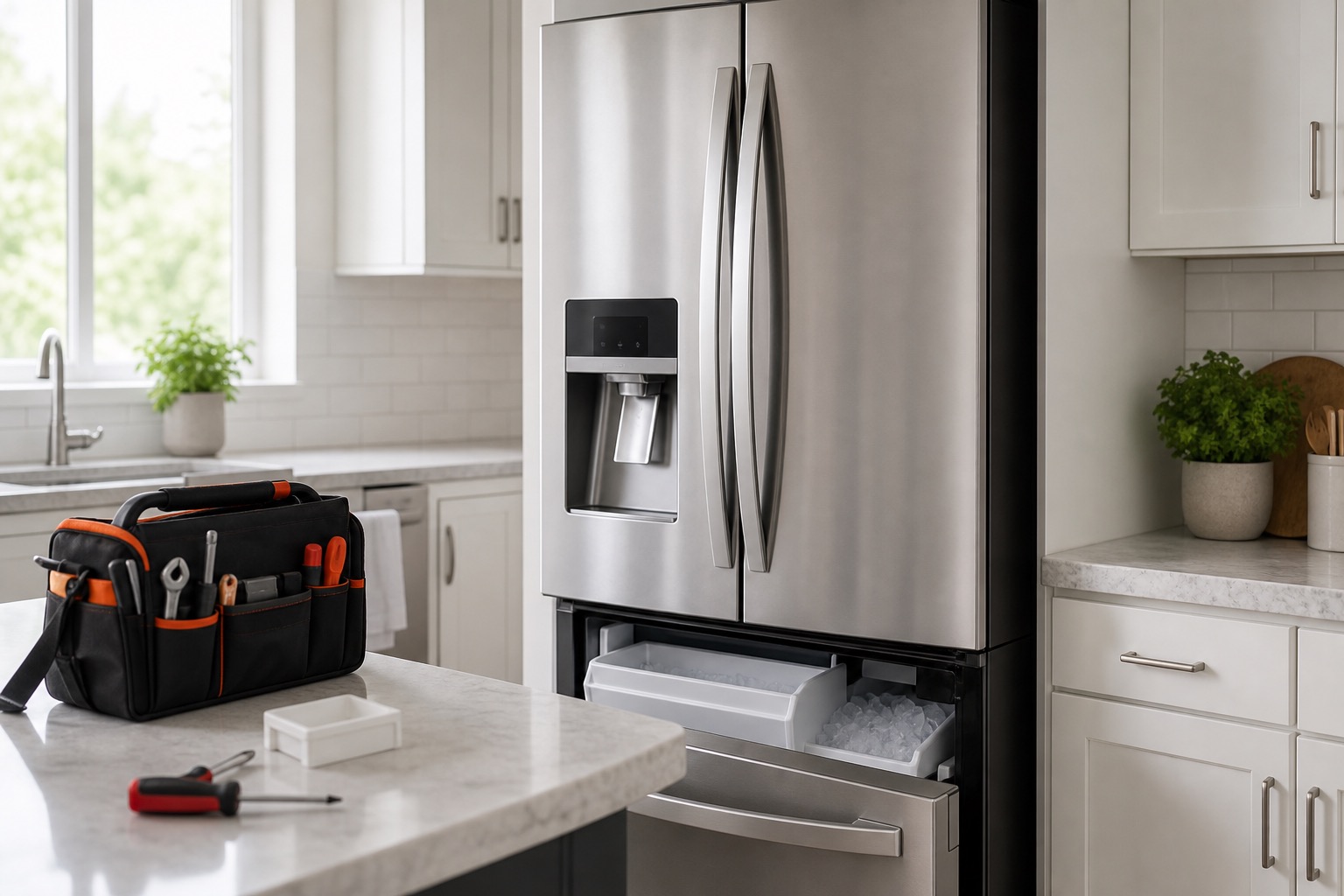
First Decide Whether This Is Cooling or Ice Making
Refrigerator and freezer are both warm
Do not start by replacing the ice maker. If both compartments are warm after power returns, the refrigerator has a broader cooling problem.
Possible diagnostic areas can include compressor startup, inverter control, fans, sensors, cooling mode, control communication, or sealed-system operation.
Use the Refrigerator Not Cooling After a Power Outage guide first.
Refrigerator is cold, but freezer is still warmer than normal
The ice maker may simply not be cold enough to operate yet. A freezer can feel cold to your hand while still being too warm for reliable ice production.
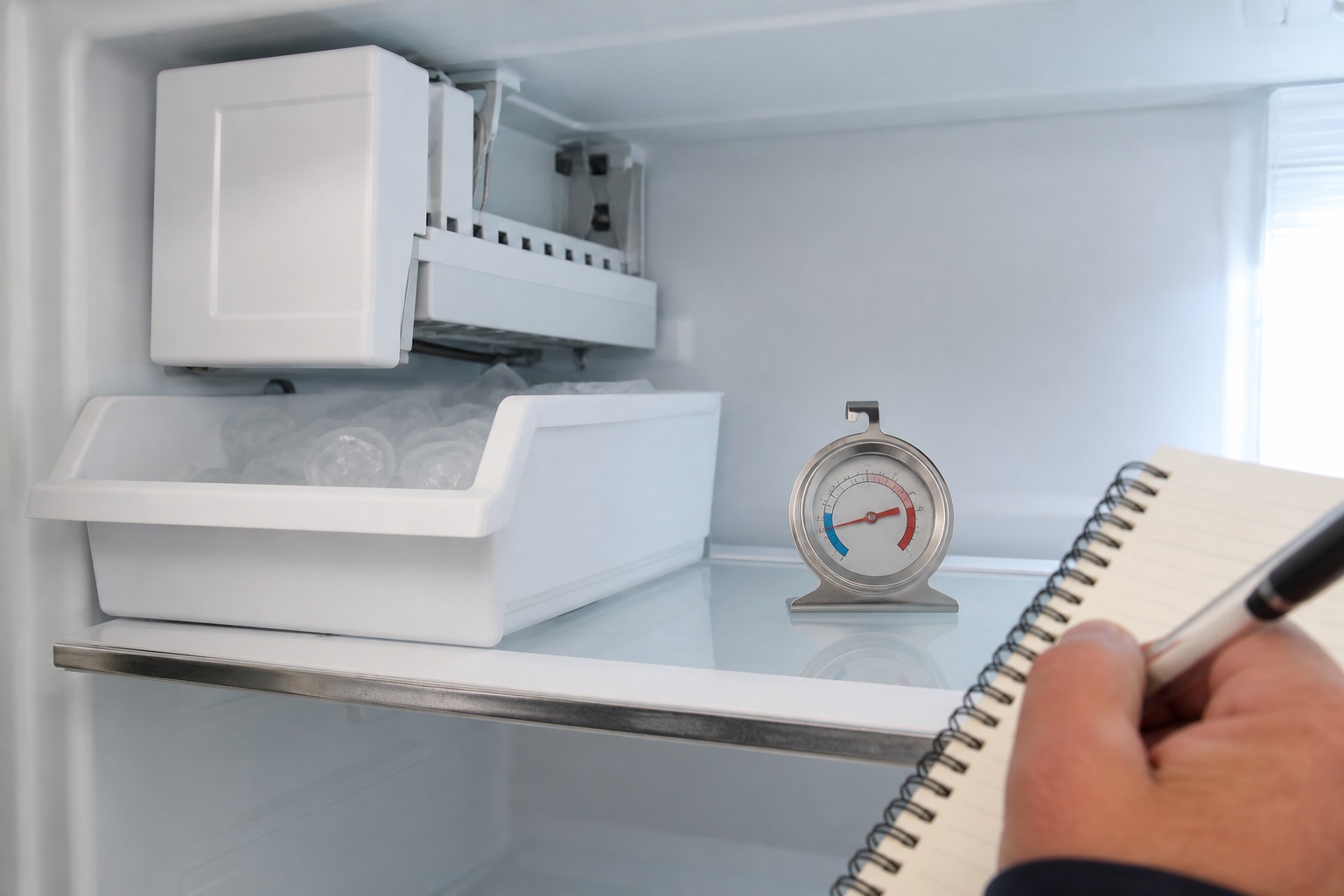
Measure the actual freezer temperature instead of relying only on touch or the display setting.
Freezer is fully cold, but there is still no ice
Now the diagnosis can move toward ice-maker status, water supply, filter restriction, fill behavior, test/reset response, sensors, control logic, and ice-room airflow.
Why Temperature Matters After an Outage
Ice makers do not simply fill with water whenever the refrigerator has power. Normal operation depends on temperature conditions.
Whirlpool lists freezer temperature as a primary cause of ice maker problems and recommends a freezer setting around 0 to 5 degrees F for optimal ice production. Samsung states that the freezer needs to be about 0 degrees F or colder for normal ice production.
Power restored does not mean ice production should immediately resume. The freezer must recover first.
How Long Should You Wait?
There is no single recovery time for every refrigerator. It depends on how long power was off, how warm the cabinet became, how much food is inside, room temperature, door-opening frequency, and refrigerator design.
LG notes that after initial power-up, refrigerator compartments may need up to about 24 hours to reach the desired temperature and begin normal ice production. An outage is not exactly the same as a new installation, but the same principle applies.
If the refrigerator is still recovering, give cooling priority before diagnosing the ice maker.
Check Whether the Ice Maker Is Still Turned On
Modern refrigerators may control the ice maker electronically, so check the correct control instead of assuming it restarted automatically.
- Ice On or Ice Off setting.
- Ice Maker setting.
- Craft Ice setting.
- Cubed Ice setting.
- Separate upper or lower ice-maker setting.
- Mechanical shutoff arm or power switch.
- Ice bin position or bin-level sensor.
On refrigerators with two ice makers, make sure you are checking the correct ice maker. One unit can be disabled, blocked, or too warm while the other still works.
Check Water Flow and the Filter
If your refrigerator has a water dispenser, check the flow after power returns. Good dispenser flow suggests the home water supply is available, but it does not prove that the ice-maker fill valve, fill tube, or ice-maker water path is working.
No water or very weak flow points toward the shutoff valve, kinked supply line, filter restriction, household water supply, or refrigerator water system.
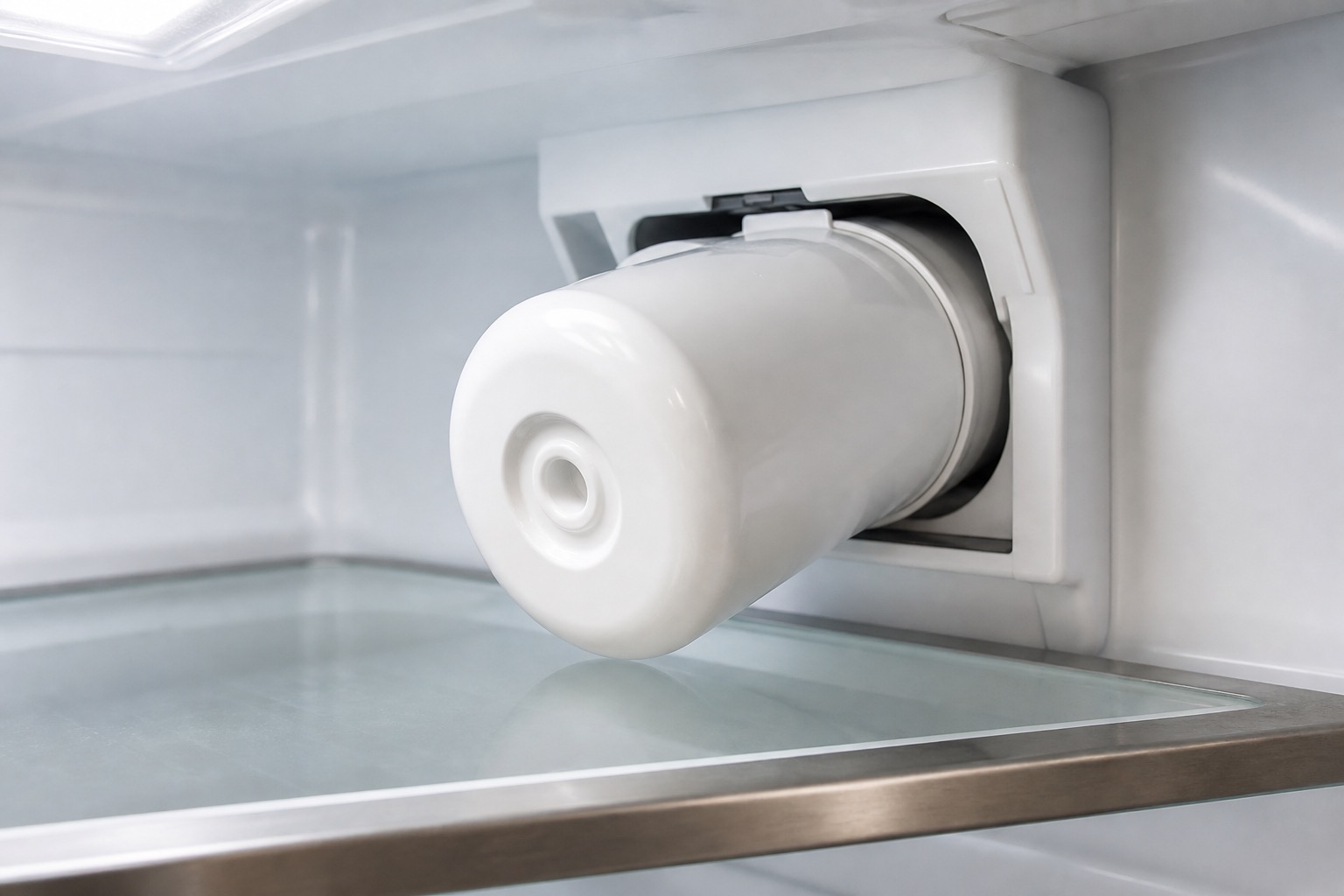
Whirlpool specifically notes that a clogged or incorrectly installed filter can reduce water flow to the ice maker and dispenser, causing reduced ice production or slow water flow.
A Storm Can Affect Water Supply Too
After severe weather, homeowners often focus only on electricity. The house may also have had temporary water shutoff, reduced pressure, plumbing work, or a refrigerator shutoff valve that was moved.
- Confirm the refrigerator water valve is open.
- Look for a pinched or kinked supply line behind the refrigerator.
- Check whether the water filter was overdue before the outage.
- Notice whether the dispenser is slow, weak, or dry.
- Do not pull the refrigerator forward aggressively if the water line may be short.
Look for an Error Code Before Resetting
Take a photo before clearing or resetting anything. A refrigerator may display post-outage faults involving communication, fan operation, temperature sensing, the ice maker, water system, or control electronics.
An error code can be more useful than an immediate reset because it preserves the symptom pattern for diagnosis.
Use the Appliance Error Codes guide to identify the code family.
Should You Reset the Ice Maker?
Sometimes. But reset should be a diagnostic step, not something you have to do every day.
Use the manufacturer-approved reset or test procedure for the exact model. Samsung describes the ice-maker reset/test as a last-resort check after other troubleshooting steps. LG also gives model-specific ice-maker reset and test guidance.
Do not assume one brand's reset procedure applies to every refrigerator.
What a Successful Test Actually Means
A successful forced test is useful, but it does not prove the entire ice-making system is working normally.
If the tray rotates, water fills, and the test completes, the system can perform those steps when commanded. Automatic ice production can still fail because of insufficient temperature, a sensor condition, bin detection, door-switch logic, ice-room fan operation, or normal-cycle control timing.
Read more: Ice Maker Works in Test Mode but Not During Normal Operation.
Test Works and Water Fills, but Still No Ice
This changes the diagnostic direction. You have confirmed that the ice maker can cycle and the fill path can operate during the test.
- If the water does not freeze, verify freezer or ice-room temperature.
- If water freezes but never harvests automatically, check harvest logic, temperature sensing, and controls.
- If another manual test dumps the frozen cubes, the mechanism can harvest when commanded, but normal automatic operation is not being initiated.
Read more: Ice Maker Fills With Water but Does Not Make Ice.
Test Runs but No Water Enters
Now investigate the water side: supply valve, filter restriction, low water pressure, fill tube, inlet valve, wiring, or control output to the valve.
Do not jump straight to the ice maker assembly when the actual failure step is no fill.
Upper Ice Makers Can Have a Different Problem Than the Freezer
Many French-door refrigerators have an ice maker in the refrigerator door or a separate ice-room compartment. In those designs, the freezer can be near 0 degrees F while the upper ice compartment is too warm.
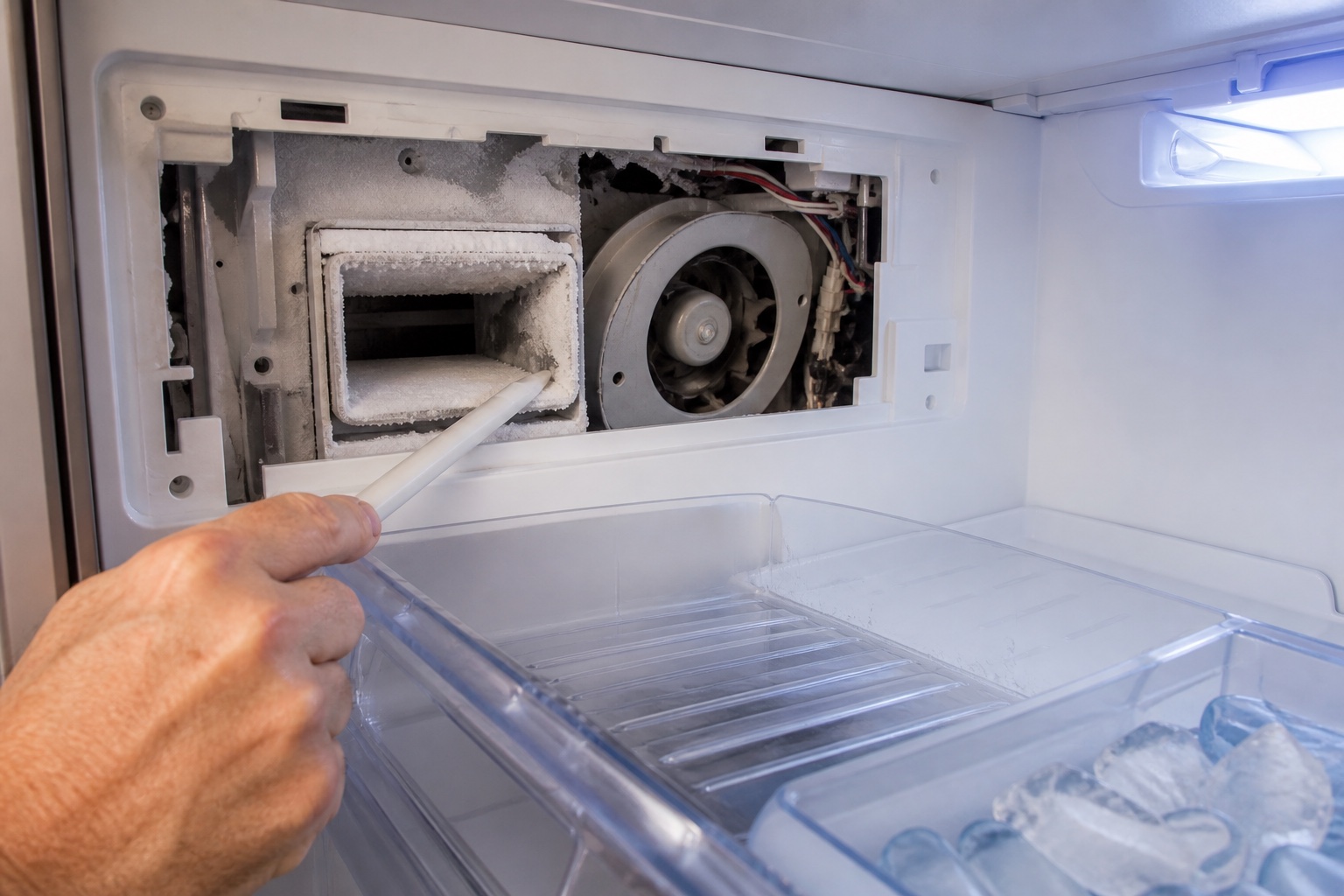
- Ice-room fan not operating.
- Blocked cold-air duct.
- Frost buildup around the duct or fan.
- Air leak around the ice compartment.
- Ice-room sensor or control issue.
If the lower ice maker works and the upper ice maker does not, focus on the parts of the system unique to the failed ice maker.
Check the Ice Bucket
After an outage, melted and refrozen ice can fuse together, form a large block, jam the dispenser, block sensors, or interfere with the ice bucket.
If the bucket already has plenty of ice but nothing comes out of the dispenser, troubleshoot the dispenser path and bucket position before calling it a no-ice problem.
Power Surge Damage Is Possible, but Do Not Assume It
A storm or outage may coincide with electrical damage, but the timing alone is not a diagnosis.
Possible post-surge symptoms include repeated display resets, new error codes, fan or compressor commands missing, control-board damage, or a refrigerator that will not start normally.
Read more: Appliances After a Power Surge.
What We Usually Check During a Service Call
- Verify refrigerator and freezer cooling.
- Confirm the ice maker is enabled.
- Record error codes before clearing them.
- Check water flow, filter condition, and supply-line restrictions.
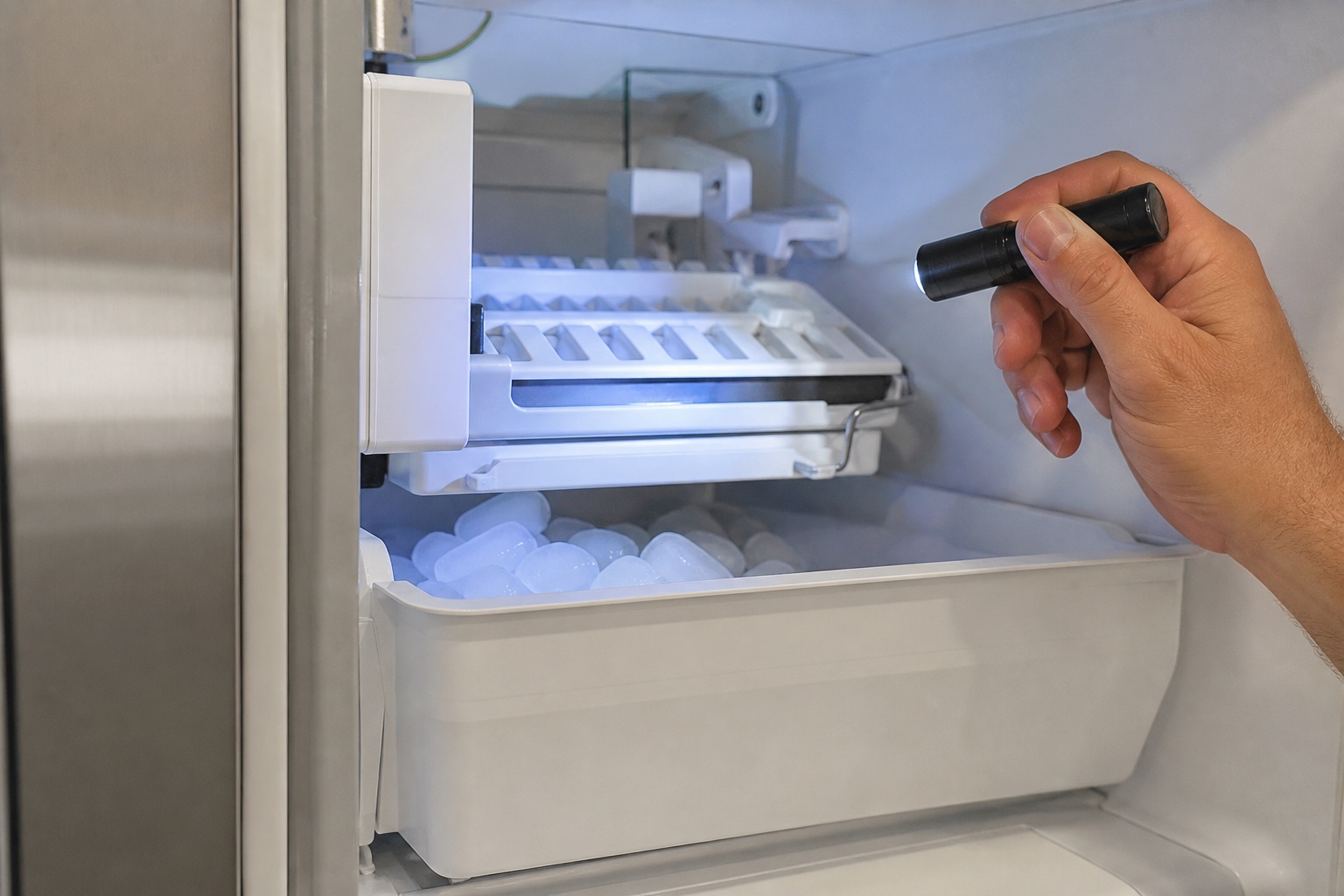
- Look at the ice mold: empty, liquid water, or frozen cubes.
- Run the appropriate manufacturer test when the model supports it.
- Separate the failed step: movement, fill, freeze, or harvest.
That sequence helps avoid replacing a working ice maker when the actual problem is cooling, water supply, airflow, or control logic.
What Can You Safely Check?
- Check the actual freezer temperature.
- Verify Ice Maker is ON.
- Check water-dispenser flow if the refrigerator has one.
- Look for error codes and take a photo.
- Inspect the ice bucket for refrozen clumps.
- Check whether the mold contains water, frozen cubes, or nothing.
- Note whether only one of multiple ice makers is affected.
- Record how long the power was out and when power returned.
Avoid opening energized electrical compartments or forcing the ejector mechanism.
When Should You Call a Technician?
Schedule refrigerator or ice maker diagnosis when the freezer has returned to normal temperature but ice production does not resume, the ice maker does not respond to its approved test, the test completes but automatic operation never resumes, the tray fills but cubes do not harvest, the tray never receives water despite normal household water flow, only the upper ice maker fails while the freezer remains cold, or the problem returns after resets.
A useful message for scheduling is: the ice maker worked normally before the outage, the freezer is now back to temperature, but the ice maker still does not produce ice.
Manufacturer Guidance Used
This guide was written around official manufacturer troubleshooting guidance for freezer temperature, water supply, filter restriction, ice-maker status, model-specific reset behavior, dual ice makers, and post-power-up recovery.
Whirlpool: Ice Maker Not Working - Troubleshooting
Whirlpool: Water Filter and Ice Production
Samsung: Ice Maker Is Not Working
Samsung: Test and Reset Ice Maker
Samsung: Ice Bucket and Ice Maker Troubleshooting
Samsung: Dual Ice Maker Troubleshooting
LG: Refrigerator Not Making Ice
Photo guide
Diagnostic Photos
Local Ice Maker Service
We provide ice maker diagnostics and repair across Cape Coral, Fort Myers, and surrounding Southwest Florida service areas.
For scheduling, use the Contact page or call/text Art’s Appliance Repair directly.
Helpful Next Pages
These related guides and local service pages help connect the symptom to a practical repair path.
Related Appliance Guides
Refrigerator
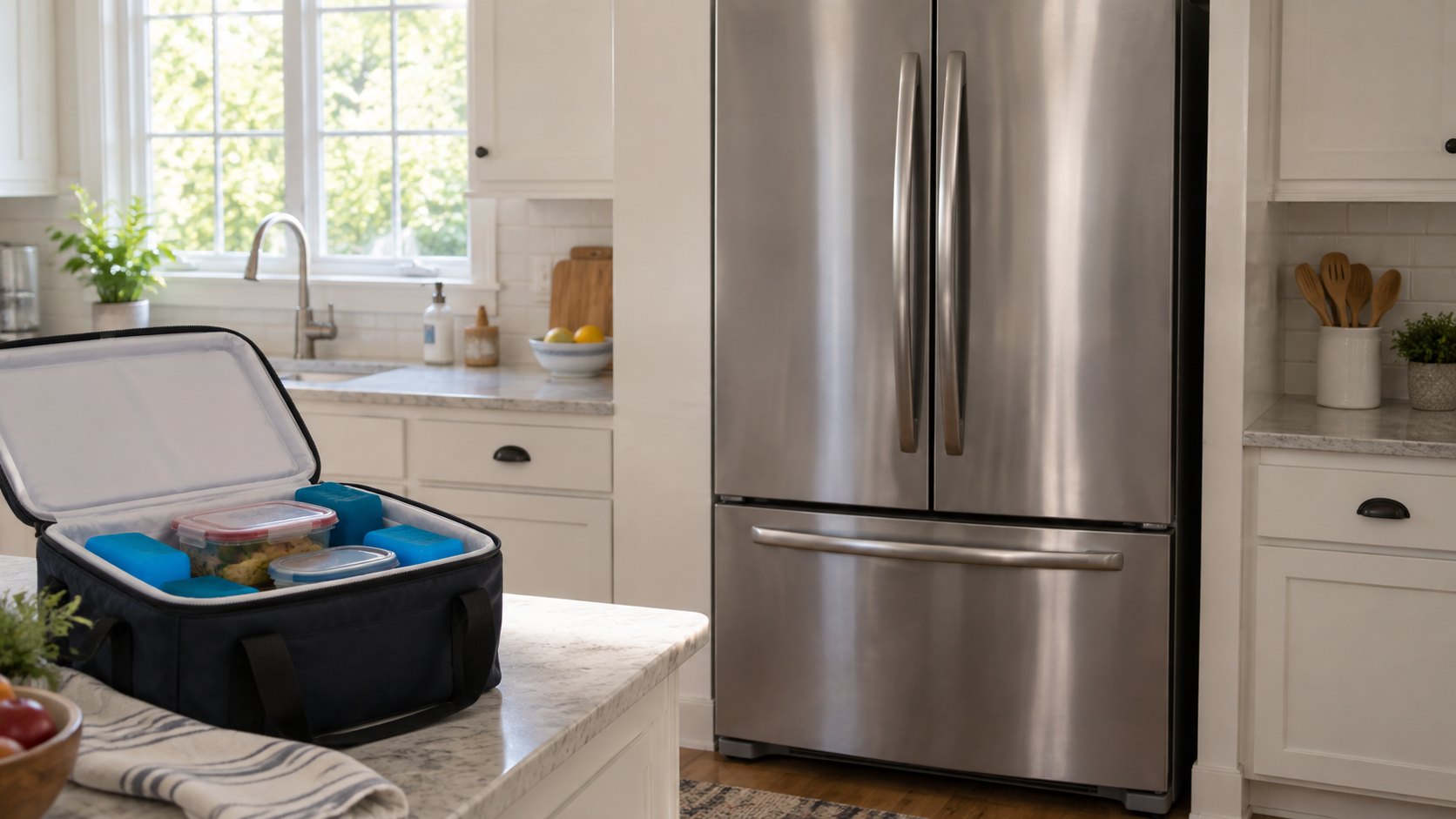
Refrigerator Not Cooling After a Power Outage: What to Check
Refrigerator warm after a power outage? Separate PO from Cooling Off, protect food, and know when to request refrigerator repair in Cape Coral or Fort Myers.
Updated September 21, 2026
refrigerator not cooling after a power outage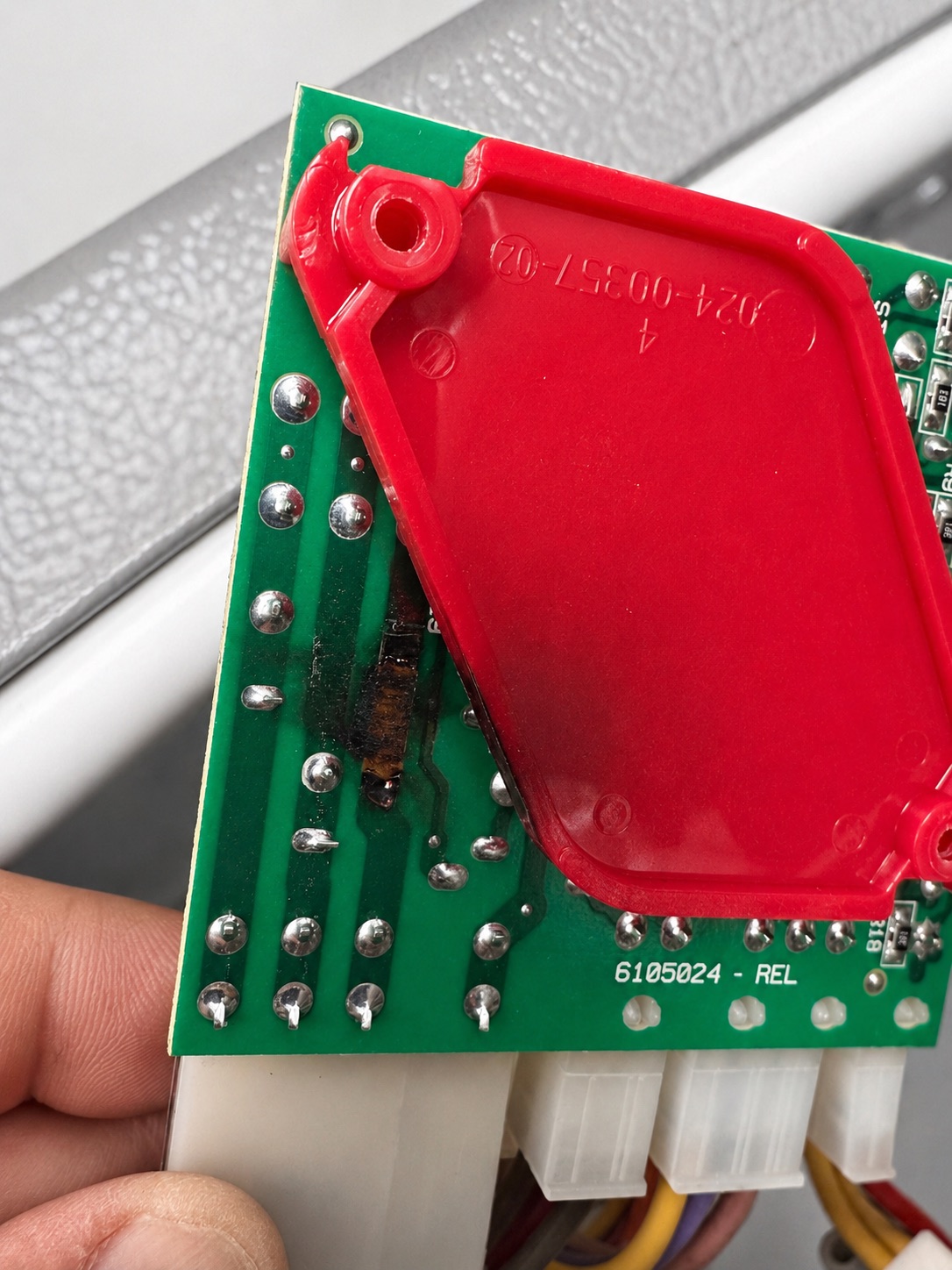
Appliance Tips
Appliances After a Power Surge: Warning Signs and Safe Next Steps
Appliance acting differently after a surge, outage, or Florida storm? Separate a home electrical problem from one appliance symptom and know when to stop and request service.
Updated October 18, 2026
appliances after a power surge
Ice Maker
Ice Maker Works in Test Mode but Not During Normal Operation
Ice maker passes Test Mode but still makes no ice? Learn what the test proves and how temperature, water, sensors, airflow, and controls affect normal operation.
Updated August 18, 2026
ice maker works in test mode but not normallyNeed service?
Ice Maker Repair After Power Outages in Southwest Florida
Art’s Appliance Repair diagnoses ice-maker and refrigerator problems after power outages, storms, and electrical interruptions throughout Cape Coral, Fort Myers, North Fort Myers, Lehigh Acres, Estero, Bonita Springs, Naples, and surrounding Southwest Florida communities.
We diagnose ice makers that stop after outages, work only after reset, pass test mode but stop during normal operation, cycle but do not fill, fill but do not harvest, have upper ice-room airflow problems, show refrigerator error codes, or have freezer temperature problems after power restoration.
Call or text (239) 688-9955 to schedule service.
Service call: $0 with an approved repair. $79 if no repair is completed.
View Ice Maker Repair