First Question: Is There Frozen Ice Sitting in the Mold?
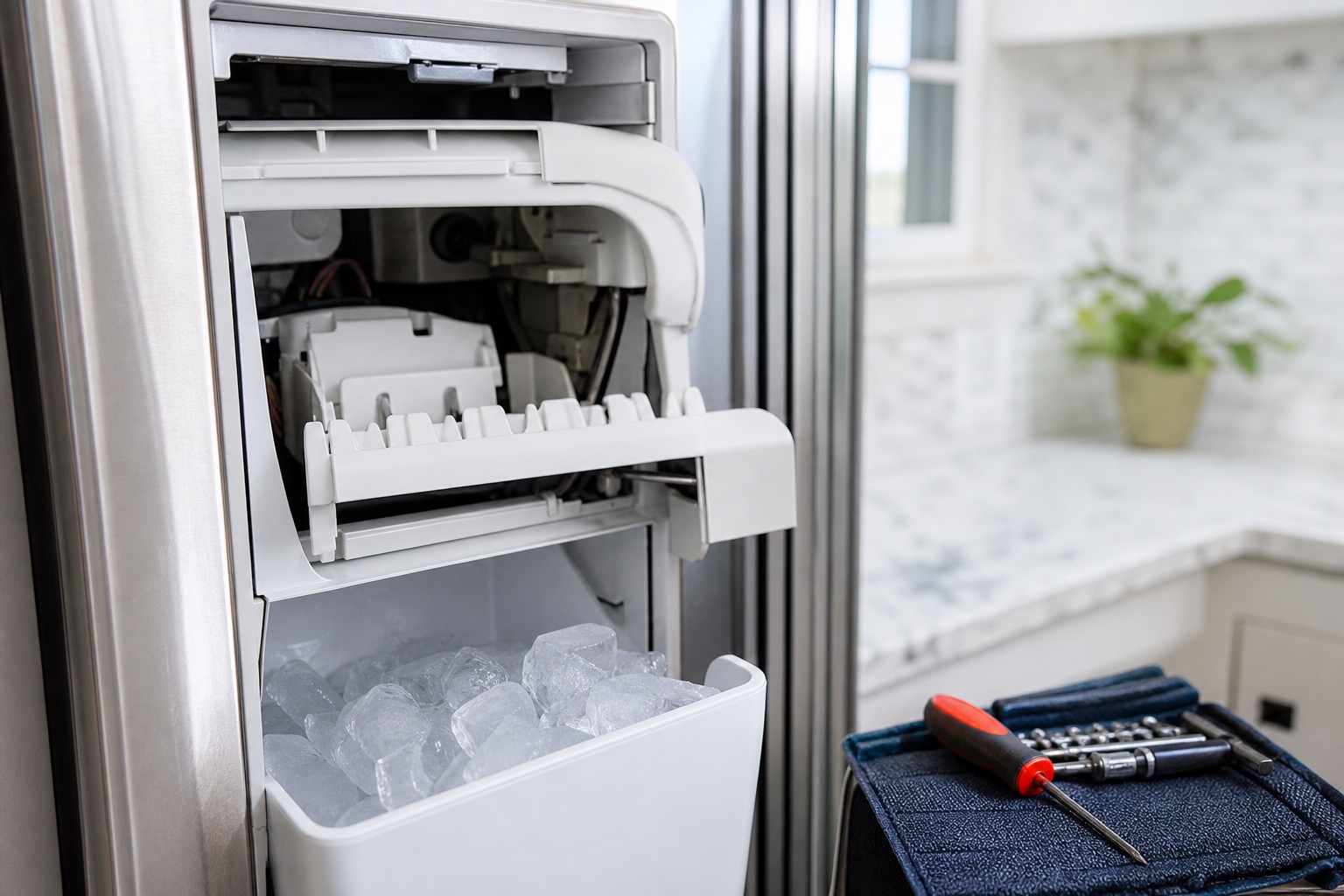
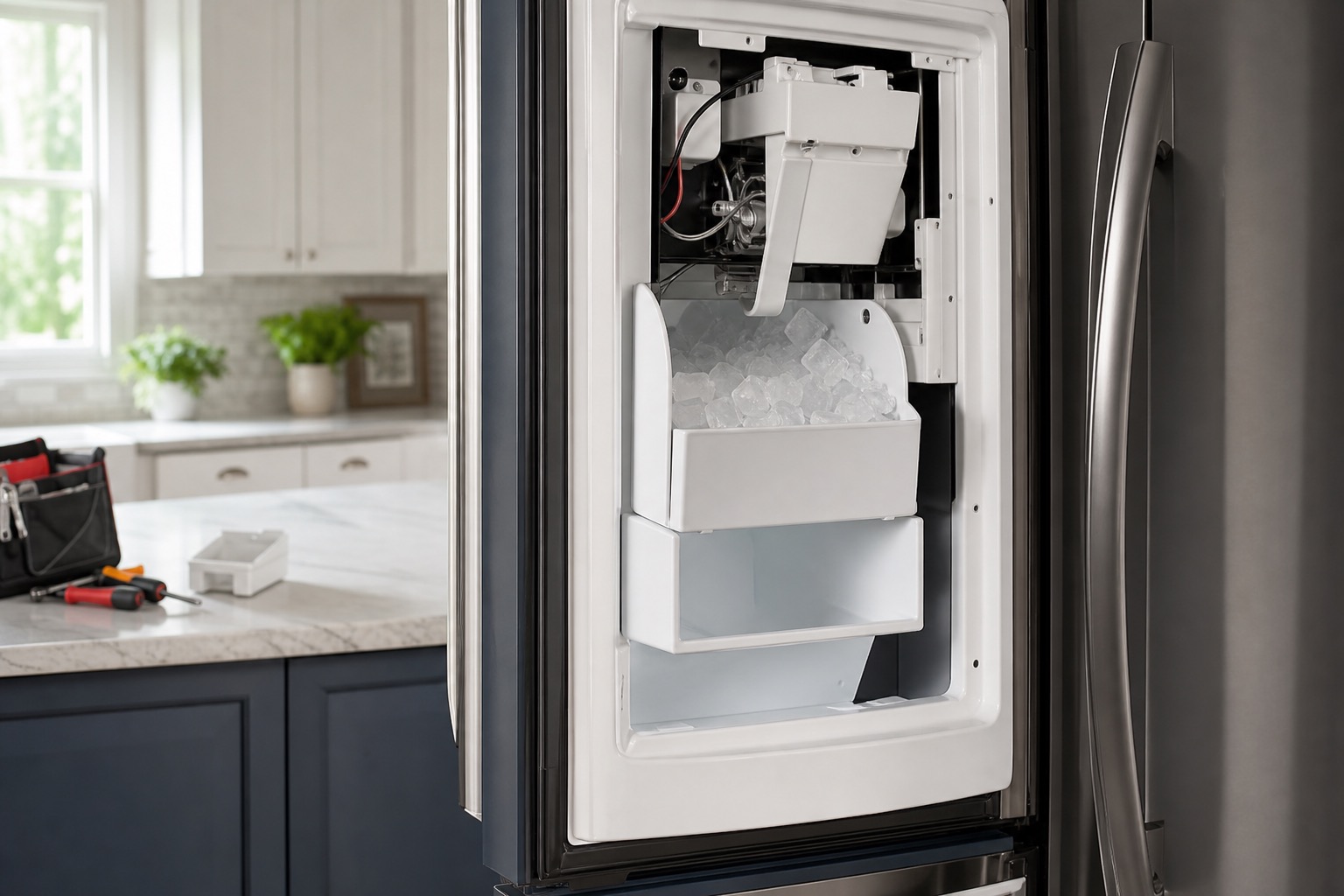
This is the most useful first observation. If the ice maker mold is safely visible, look at what is actually inside it.
If there is liquid water in the mold
The ice maker has filled, but the water is not getting cold enough to freeze. That points more toward cooling, airflow, or ice-room temperature than a failed fill valve.
If there are solid cubes in the mold
The freezer or ice maker compartment was cold enough to freeze the water. Now the question becomes why the ice maker is not harvesting those cubes.
- Ice maker temperature sensor.
- Harvest motor.
- Mold heater.
- Internal switch.
- Control board.
- Wiring.
- Door-switch logic.
If the mold is empty
The ice maker may have filled earlier but already attempted a cycle, leaked, overfilled, or failed to refill consistently. That is a different diagnostic path.
When the Water Does Not Freeze
The freezer may be cold, but not cold enough for ice production
A freezer can feel cold and still be too warm for reliable ice production. Food may remain frozen while the ice maker produces ice very slowly, leaves water in the mold, makes soft cubes, or stops harvesting.
The first step is to measure the actual freezer temperature, not just look at the temperature displayed on the control panel. A target around 0°F is normal for most household freezers.
Do not trust the display alone
On many refrigerators, the number on the display is the selected temperature, not necessarily the actual temperature inside the compartment.
For example, the panel may show 0°F while an appliance thermometer inside the freezer shows 12°F. That difference matters before replacing the ice maker.
Airflow can affect the ice maker before the rest of the freezer
Many ice makers depend on cold air being directed into or around the ice maker compartment. This is especially important on refrigerators with an ice maker in the refrigerator door, a separate ice room, dual evaporators, dedicated ice-box fans, or air ducts feeding the ice compartment.
A blocked vent or failed fan may allow the freezer to remain reasonably cold while the ice maker compartment becomes too warm.
- Water fills normally.
- Ice takes many hours to freeze.
- Cubes are soft.
- Ice production stops intermittently.
- Refrigerator and freezer otherwise seem normal.
This is one reason replacing the ice maker alone may not solve the problem.
When the Water Freezes but the Ice Never Comes Out
This is a much more specific symptom. If fully frozen cubes are sitting in the mold, the water supply worked, the fill valve opened, the fill tube delivered water, and the compartment was cold enough to freeze it.
The failure is now mainly in the harvest side of the system.
The ice maker may not know the cubes are frozen
Automatic ice makers normally wait until the mold reaches a sufficiently low temperature before beginning a harvest cycle. Depending on design, temperature may be monitored by an internal thermostat, thermistor, sensor integrated into the ice maker, or refrigerator control logic.
If the sensor incorrectly reports that the mold is still too warm, the ice maker can sit indefinitely with frozen cubes inside.
The harvest motor may not be turning
Once the ice maker decides that the cubes are frozen, a motor normally drives the harvest mechanism. A failing motor can leave cubes in the mold, stop ejector fingers, click, hum, move only partially, or stop repeatedly at the same position.
The mold heater can prevent harvest
Many automatic ice makers briefly warm the mold before ejecting the cubes. The heater does not melt the ice completely. Its job is to loosen the bottom surface of the cubes so the ejector mechanism can push them out.
If the mold heater fails, water may freeze normally while cubes remain stuck and the motor stalls or cycles incorrectly.
One Very Useful Test: Does the Ice Maker Work in Test Mode?
Many modern refrigerators provide a manual or diagnostic ice maker test. The exact procedure varies by manufacturer and model.
A forced test may command the ice maker to rotate, harvest, return to home position, and open the fill valve.
If test mode completes normally
Suppose the ice maker rotates, ejects cubes, fills with water, and returns to position but then does nothing during normal operation. That suggests the mechanical system may be capable of working.
- Freezer or ice-room temperature.
- Temperature sensor.
- Door switch.
- Ice-level sensor.
- Control-board logic.
- Communication between boards.
- Intermittent wiring.
A successful forced cycle does not automatically prove the refrigerator is repaired.
If test mode stops during harvest
That points more toward frozen or stuck cubes, a motor problem, ice maker assembly failure, heater issue, or mechanical obstruction. Record exactly where the cycle stops.
If test mode harvests but does not fill
That becomes more of a water-system problem. Possible areas include the water valve, frozen fill tube, wiring, control output, or low water pressure.
The Ice-Level System Can Stop Production
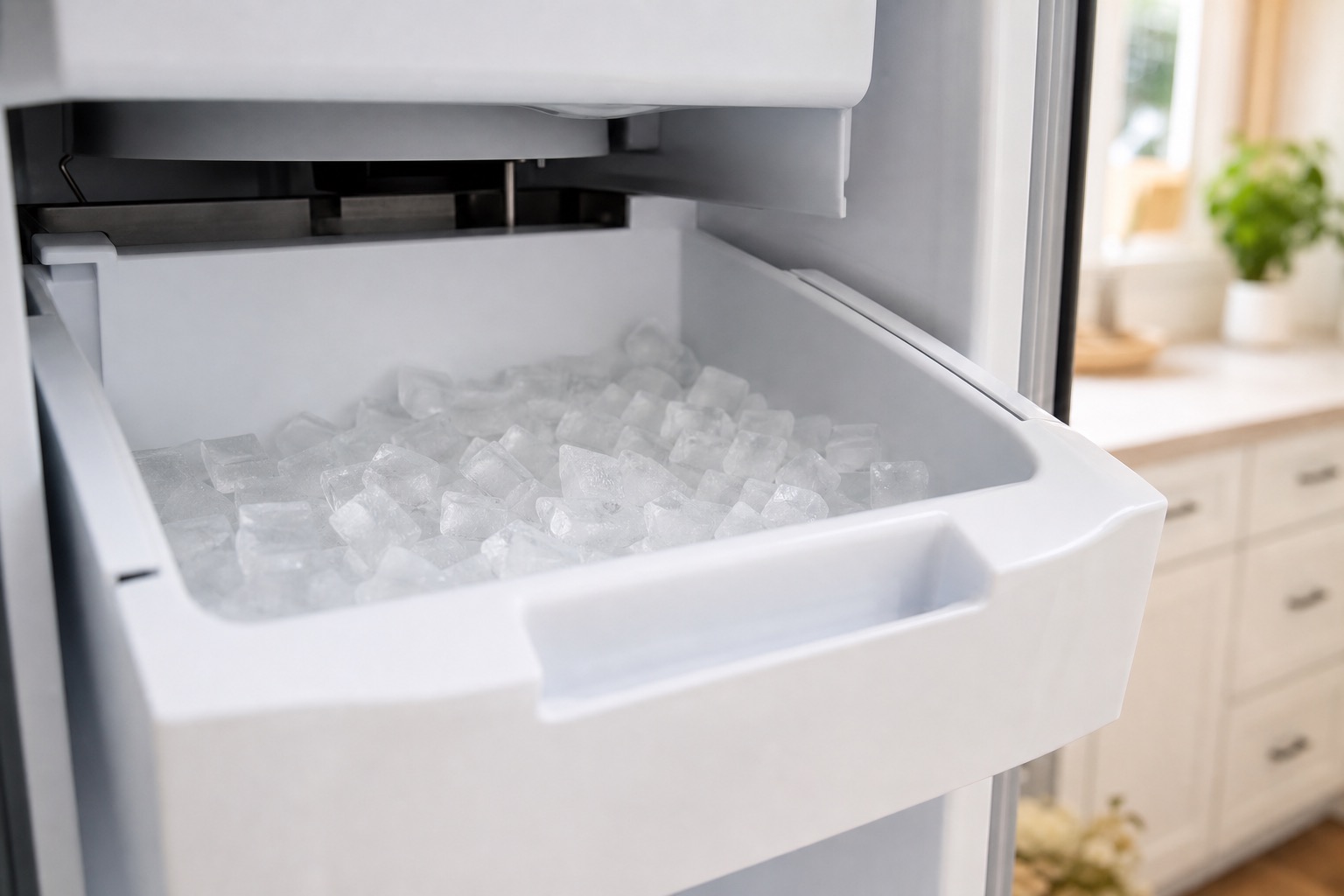
An ice maker must know when the storage bin is full. Different refrigerators may use mechanical shutoff arms, infrared emitter and receiver sensors, optical sensors, or internal switches.
If the refrigerator incorrectly thinks the bin is full, automatic ice production can stop even when the bin is empty. A forced diagnostic test may still operate.
- Ice blocking the sensor.
- Damaged shutoff arm.
- Dirty optical windows.
- Bin installed incorrectly.
- Sensor error.
Door Switches Can Matter More Than They Appear
Some refrigerators disable ice maker operation when a door is considered open. A failed or misread door switch can therefore cause strange combinations of symptoms.
- Ice maker does not cycle automatically.
- Dispenser does not work.
- Interior lights behave incorrectly.
- Door-open warning stays active.
- Forced tests behave differently from normal operation.
What if the Ice Maker Makes One Batch and Then Stops?
If the ice maker produces one batch after a reset, test mode, or power cycle and then stops again, replacing the ice maker immediately may be premature.
That pattern can indicate a system that is mechanically capable of harvesting but is not receiving the correct condition or command for the next automatic cycle.
- Mold temperature sensing.
- Freezer temperature.
- Ice-room airflow.
- Door-switch status.
- Bin sensor.
- Control logic.
Small Cubes, Overflowing Water, or Ice Around the Assembly
If the cubes are frozen but very small
Small or hollow cubes often indicate that the mold is receiving too little water, even though it technically fills. Possible causes include a restricted filter, low water pressure, partially restricted inlet valve, short fill time, or partially frozen fill tube.
If water overflows the mold
Too much water can stop normal ice production. Signs include a large block of ice around the mold, cubes frozen together, water entering the storage bin, icicles near the ice maker, or a harvest mechanism frozen in place.
Possible causes include a leaking inlet valve, excessive fill duration, incorrect control, unusually high pressure, or an ice maker fill-control problem.
If ice is frozen around the ice maker
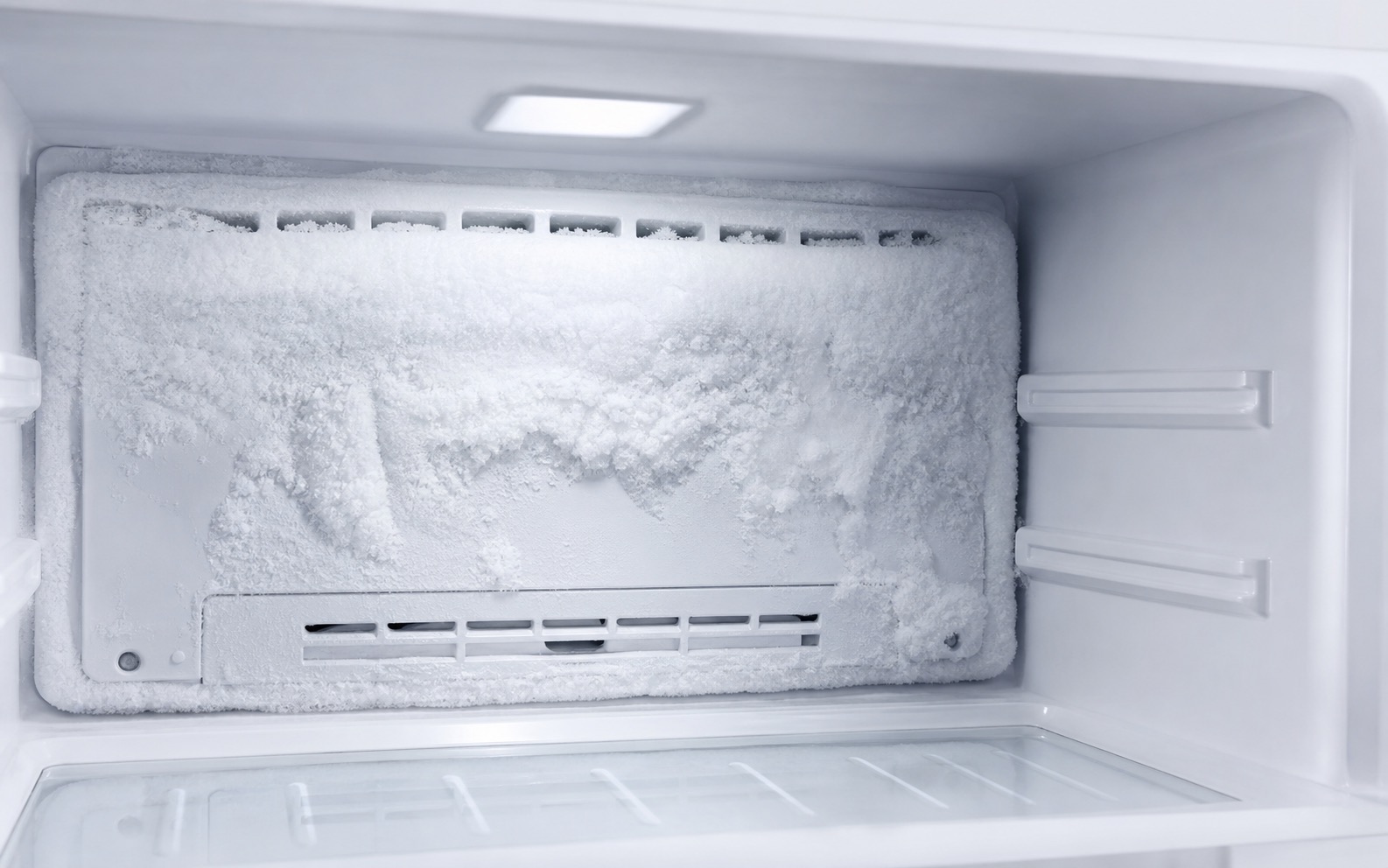
Heavy frost or solid ice around the assembly can interfere with ejector movement, fan airflow, sensors, wiring, or ice-bin detection.
Removing ice may restore operation temporarily, but if the moisture source remains, the problem usually returns.
Resetting the Ice Maker Is a Test, Not a Repair
Some ice maker problems temporarily disappear after unplugging the refrigerator, resetting the ice maker, or running a test cycle.
If the ice maker stops again after several hours or days, note whether cubes remain in the mold, whether the mold is empty, whether water froze, whether the fan is running, and whether an error code appears.
A Practical Diagnostic Sequence
- Check actual freezer or ice-room temperature.
- Inspect the mold for liquid water, frozen ice, or no water.
- Check airflow to the ice maker compartment.
- Look for mechanical obstruction or ice jammed around the ejector.
- Run the manufacturer’s diagnostic cycle if the model provides one.
- Compare test operation with normal automatic operation.
If test mode works but automatic operation does not, investigate the conditions that authorize the normal cycle: temperature, sensors, switches, and controls.
What You Can Safely Check Yourself
- Freezer temperature with an appliance thermometer.
- Whether the ice maker is turned on.
- Whether cubes are frozen inside the mold.
- Whether the ice bin is installed correctly.
- Whether the shutoff arm is stuck.
- Whether visible air vents are blocked.
- Whether heavy frost surrounds the ice maker.
- Whether the freezer door closes fully.
- Whether the refrigerator displays an error code.
When the Ice Maker Itself Is Probably Bad
The ice maker assembly becomes a stronger suspect when water freezes fully in the mold, freezer temperature is correct, airflow is normal, the ice-level system is not blocking production, wiring and power are correct, and harvest still does not start.
On many refrigerators, the motor, heater, sensors, and internal switches are sold together as one assembly. The surrounding refrigerator systems should still be checked first.
When the Ice Maker Is Probably Not the Real Problem
Replacing the ice maker may not solve the complaint when freezer temperature is too high, the ice-room fan has failed, the door switch reports an open door, the bin sensor incorrectly reports full, the fill tube leaks or overfills, the control board does not initiate cycles, wiring is damaged, or sealed-system performance is weak.
Information That Helps Before a Service Visit
- Refrigerator brand.
- Full model number.
- Photo of the model sticker.
- Photo of the ice maker.
- Whether water is frozen in the mold.
- Actual freezer temperature.
- Any error code.
- Whether a manual test completes.
- Whether the ice maker fills during the test.
- Whether the problem started suddenly or gradually.
For refrigerators with two ice makers, specify upper ice maker or lower ice maker. That distinction can completely change the diagnosis.
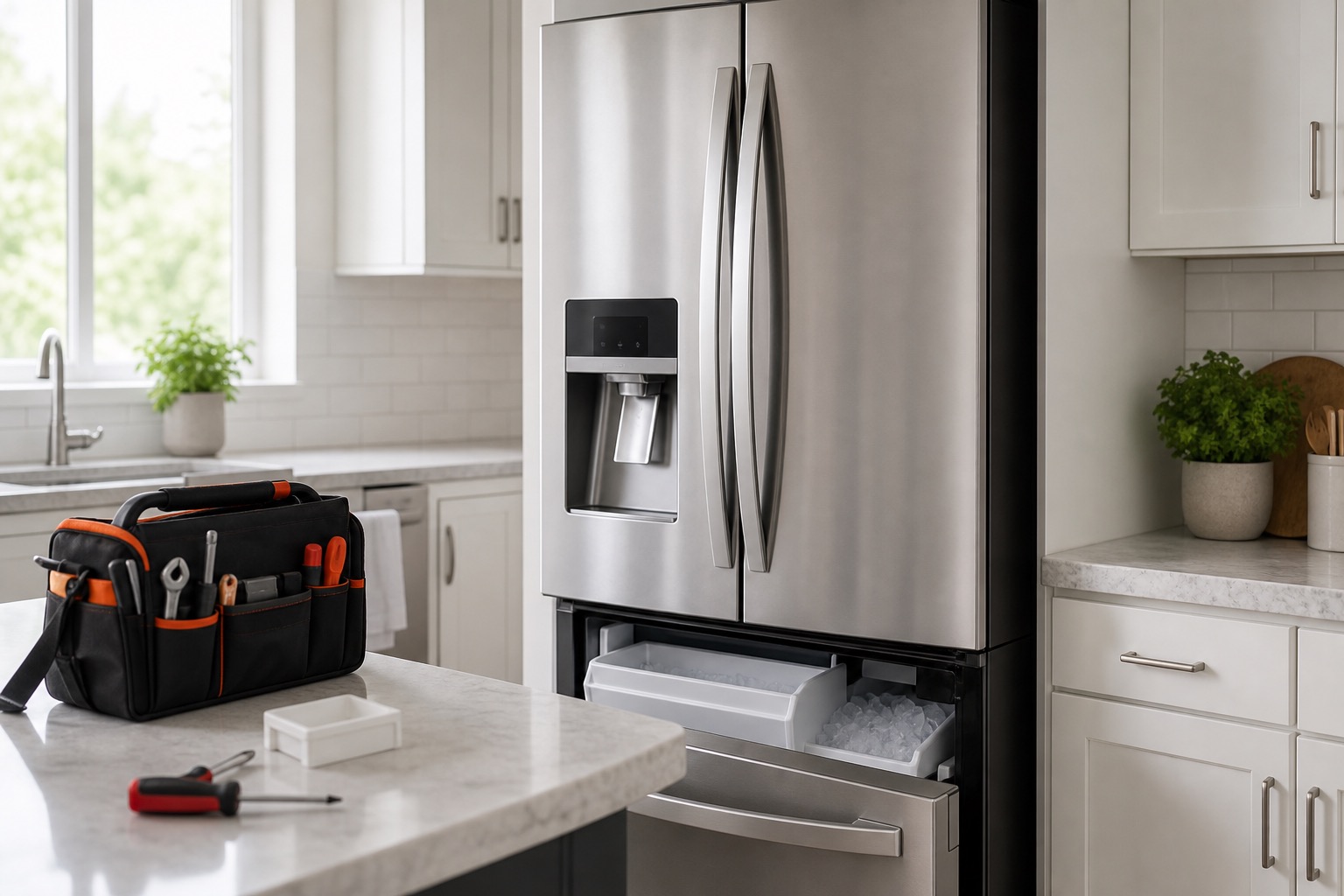
Photo guide
Diagnostic Photos
Local Ice Maker Service
We provide ice maker diagnostics and repair across Cape Coral, Fort Myers, and surrounding Southwest Florida service areas.
For scheduling, use the Contact page or call/text Art’s Appliance Repair directly.
Related Appliance Guides
Ice Maker
Ice Maker Not Working After a Power Outage: What to Check
Ice maker stopped after a power outage? Check freezer temperature, water supply, reset behavior, airflow, error codes, and when to schedule repair.
Updated August 21, 2026
ice maker not working after a power outage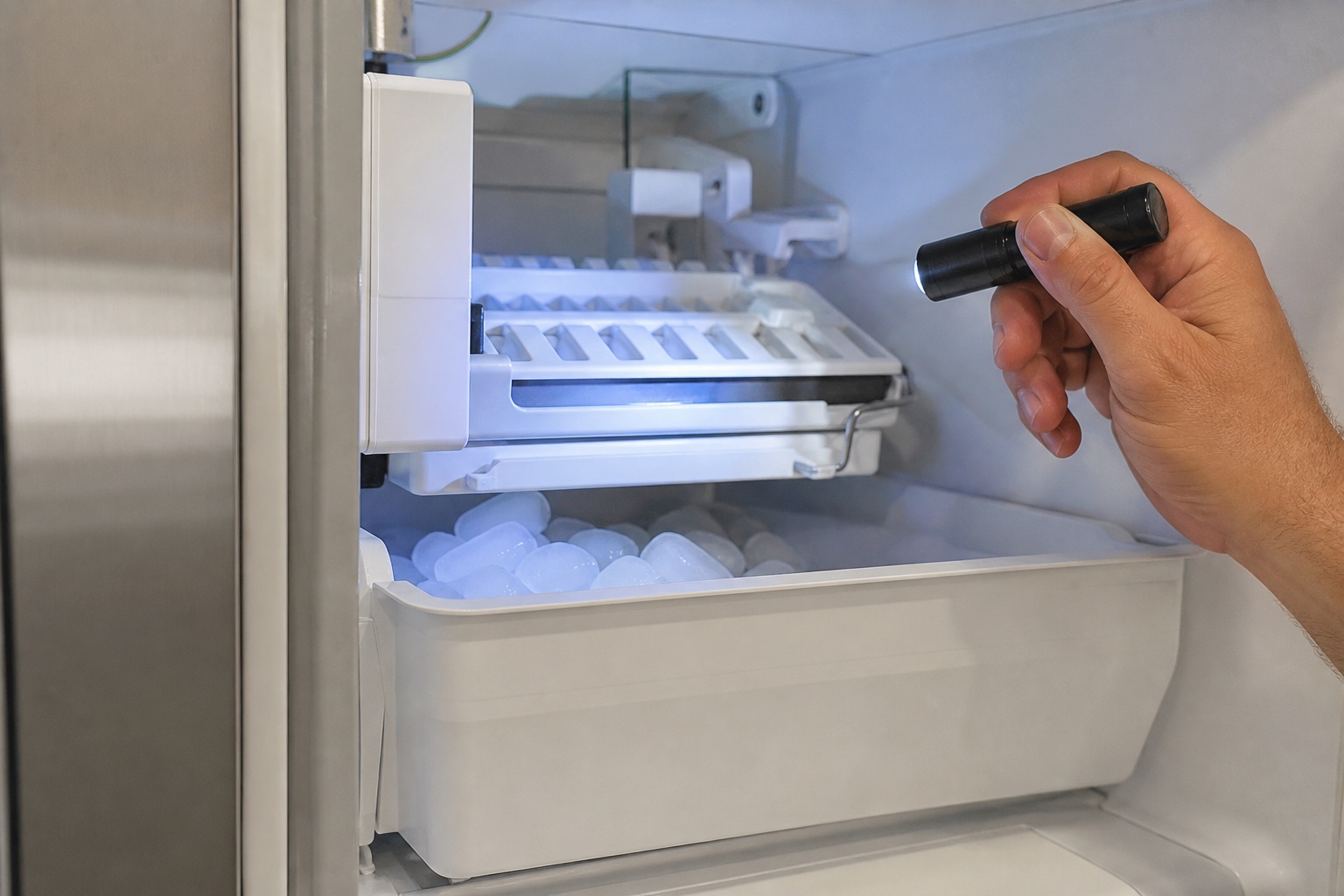
Ice Maker
Ice Maker Works in Test Mode but Not During Normal Operation
Ice maker passes Test Mode but still makes no ice? Learn what the test proves and how temperature, water, sensors, airflow, and controls affect normal operation.
Updated August 18, 2026
ice maker works in test mode but not normally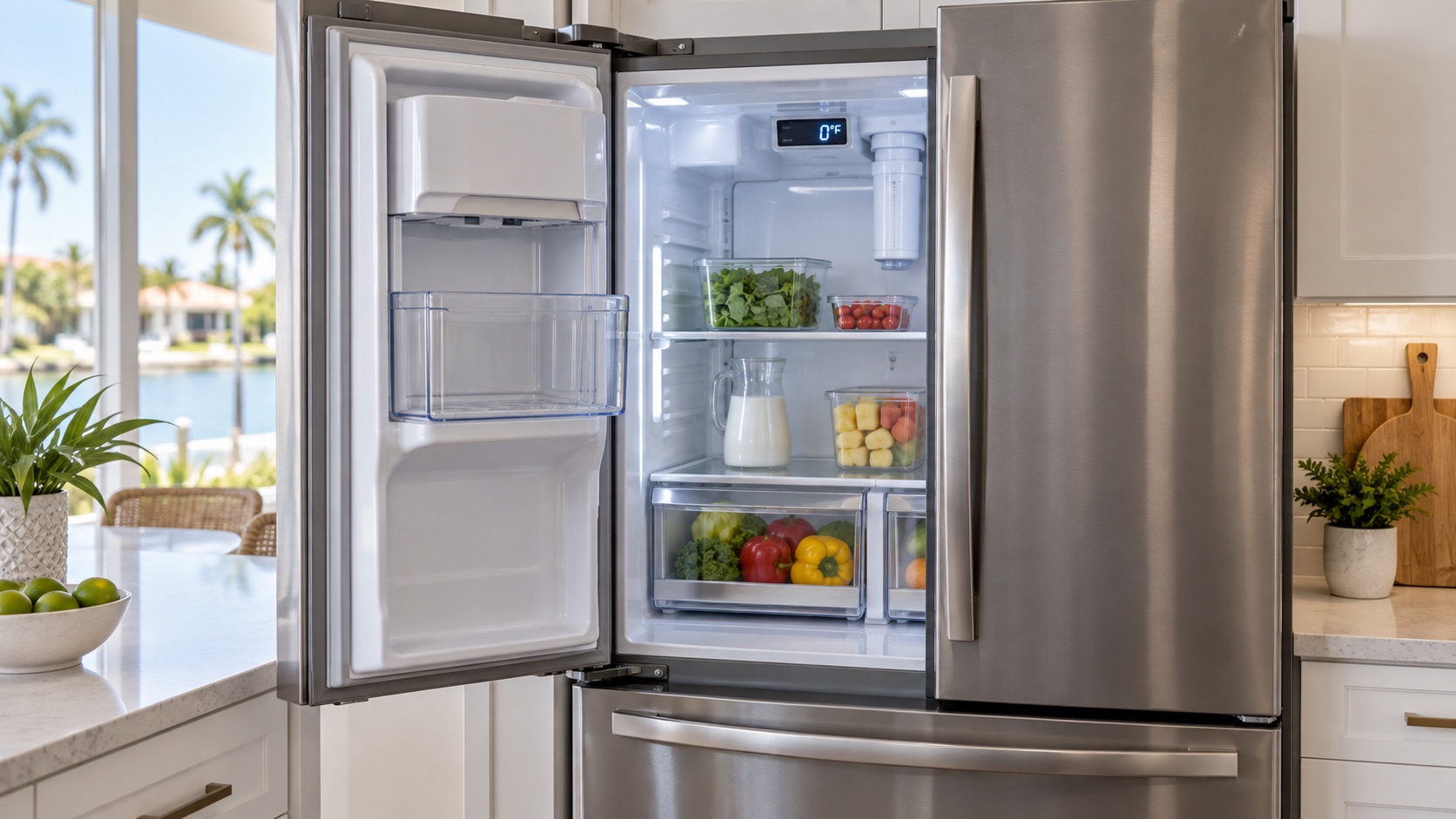
Ice Maker
Ice Maker Not Making Ice: Temperature, Water, Filter, and Brand Clues
Ice maker not making ice? Separate production from dispensing, then record temperature, water, filter, and model clues before local service.
Updated October 2, 2026
ice maker not making iceNeed service?
Ice Maker Repair in Cape Coral, Fort Myers and Southwest Florida
Art’s Appliance Repair diagnoses refrigerator and ice maker problems throughout Cape Coral, Fort Myers, North Fort Myers, Lehigh Acres, Estero, Bonita Springs, Naples, and surrounding Southwest Florida communities.
We diagnose problems including ice maker fills but does not make ice, frozen cubes stuck inside the mold, ice maker works only in test mode, ice-room fan problems, overfilling, small or hollow cubes, frozen fill tubes, inlet valve problems, sensor problems, door-switch issues, motor and heater failures, and refrigerator control problems.
Call or text (239) 688-9955 to schedule service.
The service call is $0 when the diagnosed repair is approved and completed. If no repair is completed, the diagnostic service call is $79.
View Ice Maker Repair