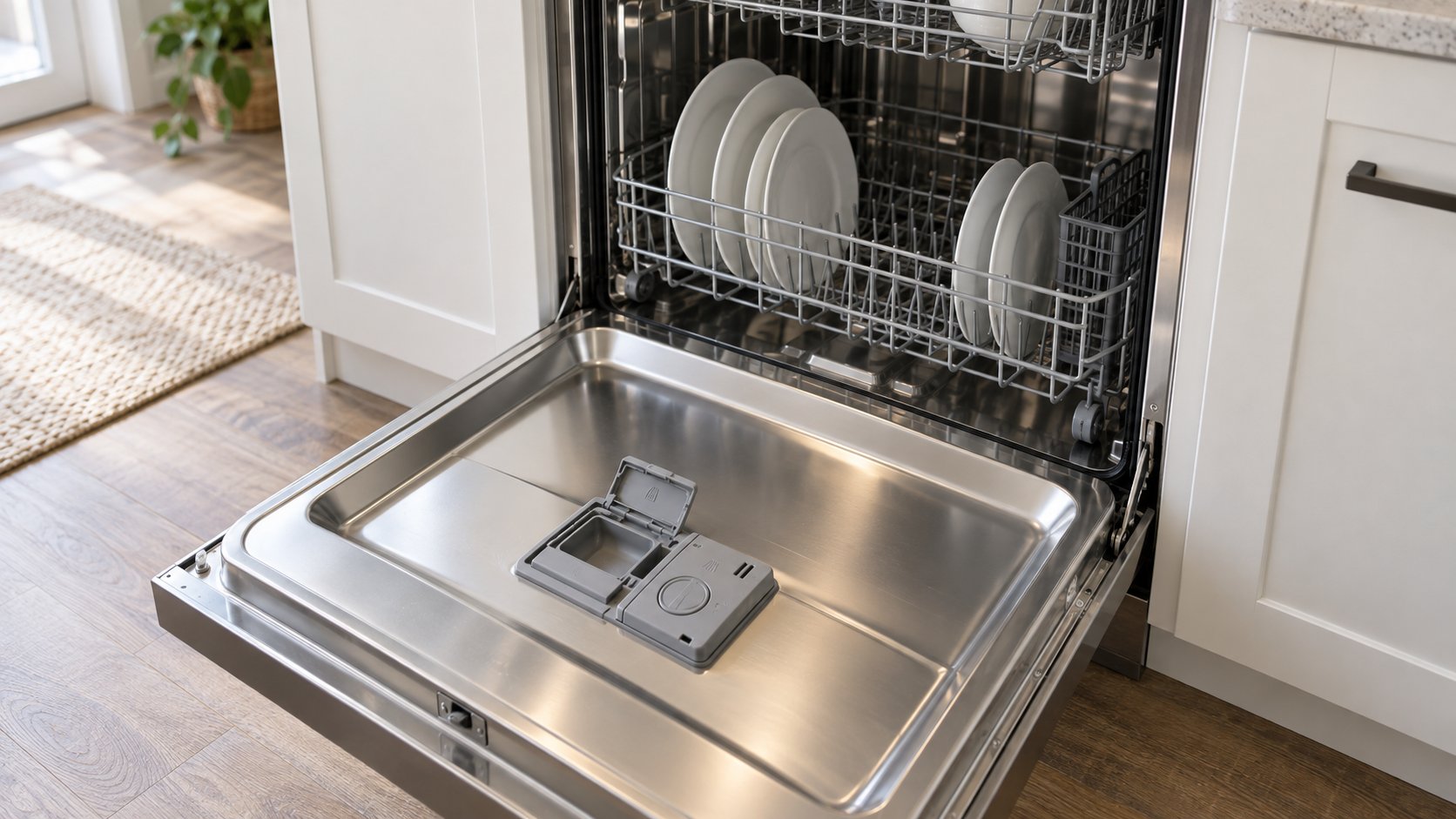
Dishwasher Pod Not Dissolving: Find Where It Stopped
Make these observations after an ended cycle, with the machine off and cool. Photograph the detergent’s location before cleaning it away. Do not reach into an operating dishwasher or run extra cycles just to reproduce a fault.
The dispenser stayed closed
Look for a plate, pan handle or utensil in the lid’s path. Remove accessible caked detergent as your manual directs; do not pry the lid or force its latch. If it repeatedly stays shut with the loading corrected and the intended cycle completed, request diagnosis before buying a dispenser.
The pack was released but stayed partly intact
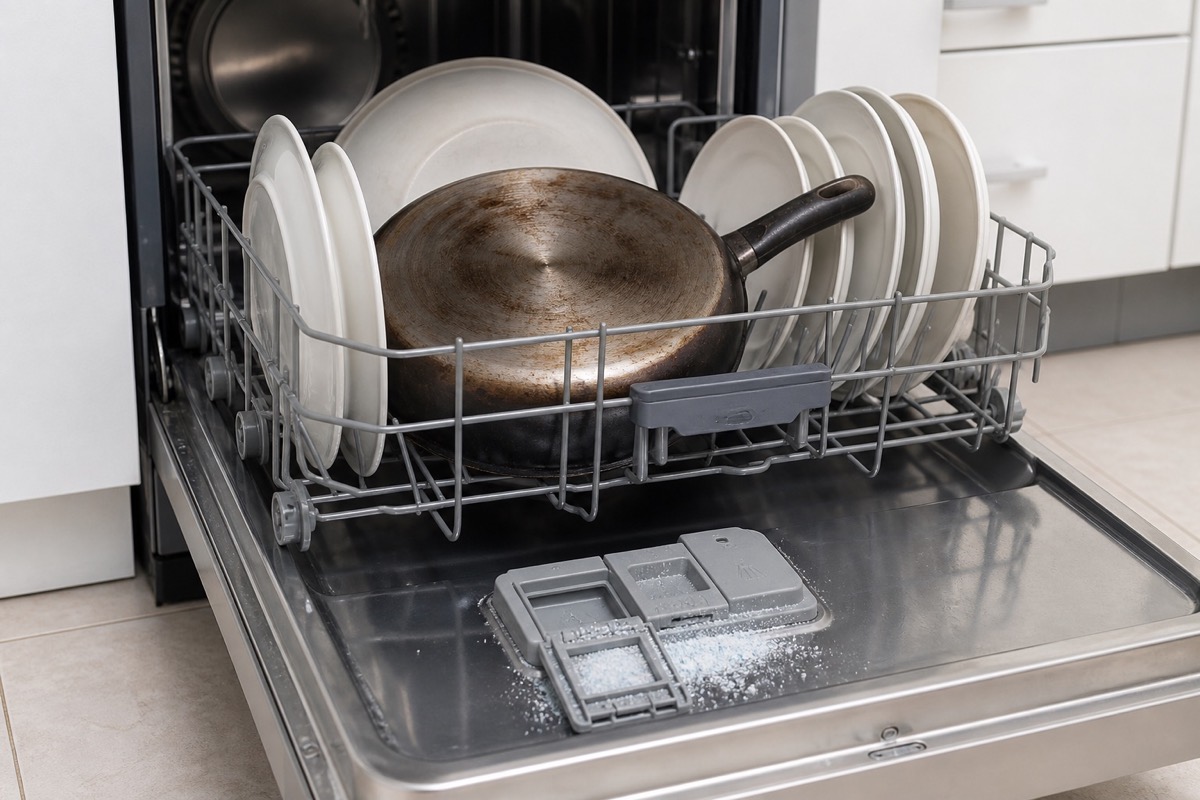
An open lid does not prove detergent reached the wash. On Bosch models with a tablet-collecting tray, keep that tray clear of handles and cookware. Other designs release detergent differently. Check your model’s loading diagram; do not assume every rack has a collecting tray. Blocked spray access, inadequate filling or an unsuitable cycle can also interfere with dissolving.
Bosch: tablet-collecting tray and spray-access checks
Powder is caked or detergent residue remains
Check whether the cycle finished and whether detergent has clumped in storage. Keep it sealed in a cool, dry place, and add fresh detergent shortly before washing. Check the manual’s water-temperature and cycle requirements instead of choosing a hotter setting as a universal fix.
Whirlpool: caked detergent, loading and incomplete cycles
Use automatic-dishwasher detergent and follow both the appliance manual and product label. Whirlpool places premeasured packs in the main detergent compartment with the lid closed; powder or gel may have different prewash instructions. Do not move a pod to the tub floor or add extra packs to compensate for poor washing unless your exact instructions call for that placement or dose.
Whirlpool: detergent type, amount and compartment placement
When reporting the problem, distinguish “lid closed,” “pack left in the open cup,” and “pack released but undissolved.” Also record an interrupted cycle, an error code, and whether one or both racks are dirty. These observations help narrow the inspection without guessing a failed part.
What Kind of Cleaning Problem Do You Have?
The condition of the dishes can help narrow down the cause.
Food remains on the dishes
Likely areas include:
- Clogged filter.
- Blocked spray arms.
- Weak circulation pump.
- Poor loading.
- Not enough water.
Grease remains on plates and cookware
Possible causes include:
- Water too cold.
- Weak detergent.
- Heating problem.
- Short or eco cycle.
- Poor circulation.
Detergent remains in the dispenser
Possible causes include:
- Blocked dispenser door.
- Weak water circulation.
- Spray arm not reaching the dispenser.
- Detergent pod getting wet before the cycle.
- Dispenser problem.
Glasses look cloudy
This may involve:
- Hard water.
- Too much detergent.
- Too little detergent.
- Rinse-aid setting.
- Mineral deposits.
- Permanent glass etching.
Only the upper or lower rack is dirty
This often points to:
- Blocked spray arm.
- Damaged rack feed tube.
- Diverter problem.
- Circulation problem.
- Incorrect rack position.
Loading and Cycle Problems
1. The Dishwasher Is Overloaded
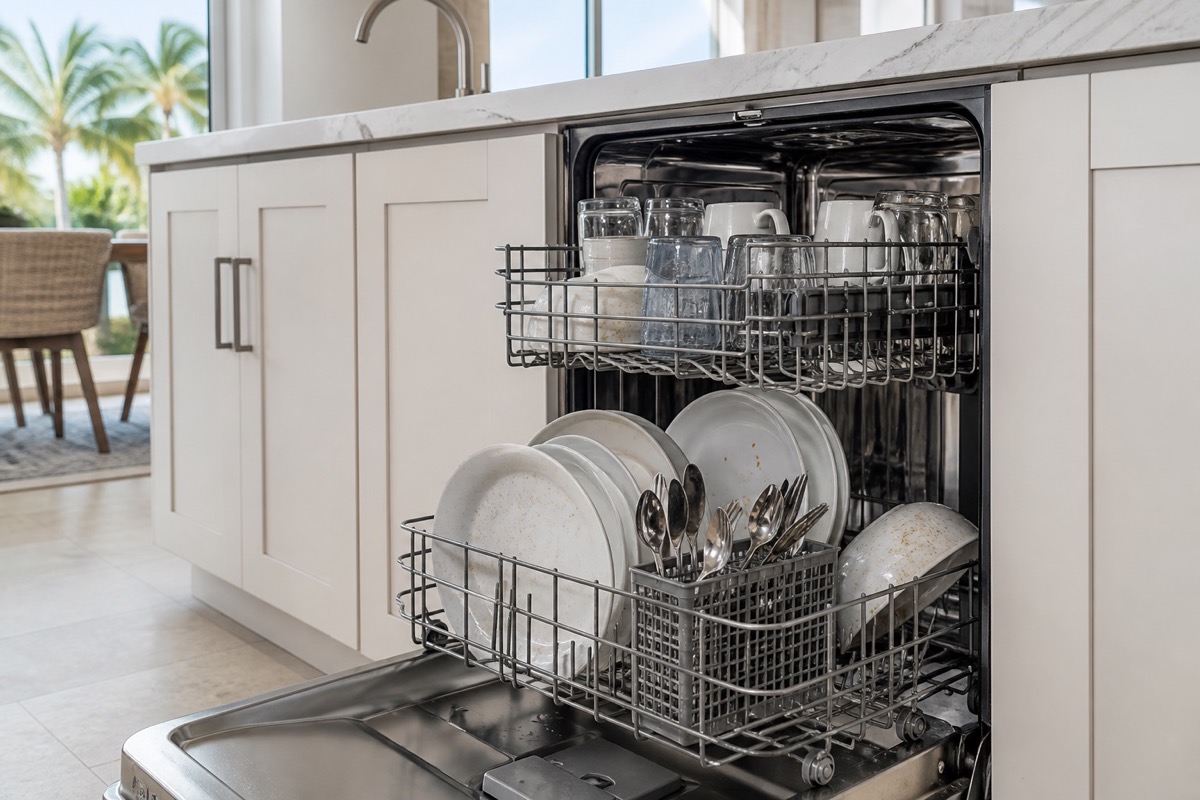
Packing too many dishes into the dishwasher can block water from reaching all surfaces.
Common signs include:
- Dishes touching each other.
- Bowls nested together.
- Utensils stacked tightly.
- Large pans blocking spray arms.
- Glasses shielding dishes below.
Water needs clear paths between items.
Leave enough space for the spray to reach the dirty surfaces.
2. Dishes Are Loaded Incorrectly
A dishwasher can be fully loaded without being overloaded, but placement still matters.
Avoid:
- Bowls facing upward.
- Plates facing away from the spray.
- Large pans blocking the detergent dispenser.
- Tall items preventing the spray arm from rotating.
- Utensils nested together.
Place dirty surfaces toward the center and spray path.
3. A Large Item Is Blocking a Spray Arm
With the appliance off and cool, check spray-arm clearance only as the owner’s manual allows; do not force unfamiliar moving parts.
They should move freely without hitting:
- Baking sheets.
- Tall plates.
- Pot handles.
- Utensils.
- Cutting boards.
If a spray arm cannot rotate, an entire rack may remain dirty.
4. The Wrong Cycle Is Selected
Choose a cycle appropriate for the load according to the model’s manual. Quick, light-soil and eco programs have different purposes; their duration, water use and heating vary. Record the selected program and whether it completed before treating poor cleaning as a part failure.
5. The Cycle Is Being Interrupted
Opening the door frequently can reduce wash temperature and interrupt circulation.
A power interruption may also prevent the dishwasher from completing the expected wash sequence.
If the dishwasher repeatedly stops or resets, the problem should be diagnosed separately.
Filter and Sump Problems
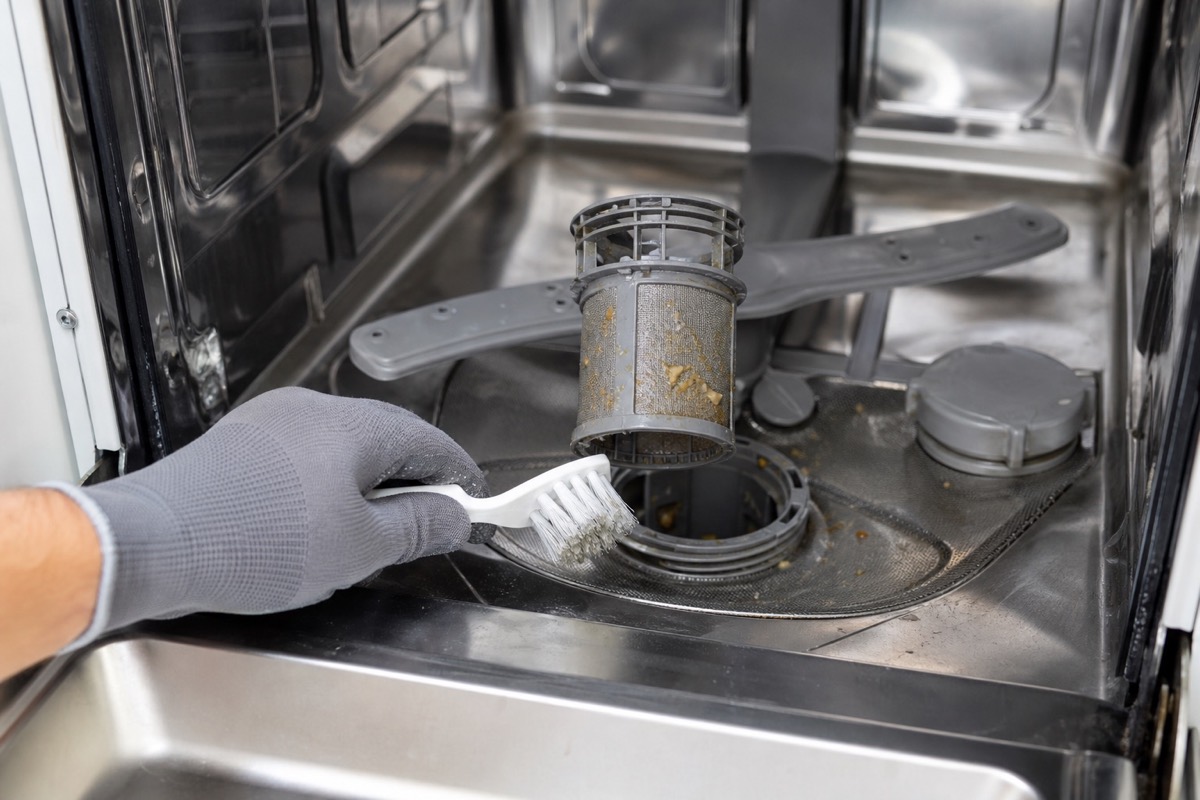
6. The Dishwasher Filter Is Clogged
A dirty filter can reduce circulation and allow food particles to return to the dishes.
Common debris includes:
- Food.
- Paper labels.
- Grease.
- Seeds.
- Broken glass.
- Detergent buildup.
Possible symptoms include:
- Dirty dishes.
- Food particles inside glasses.
- Bad odor.
- Standing water.
- Weak spray.
- Grinding noise.
Clean a filter only when the exact owner’s manual identifies it as user-serviceable and explains safe removal and reinstallation.
Use warm water and a soft brush when appropriate.
7. The Sump Area Is Blocked
Debris near the wash-system inlet can interfere with circulation. Leave access below the owner-serviceable filter, pump covers and electrical panels to a qualified technician. Do not reach blindly into the sump or handle suspected broken glass.
Spray-Arm Problems
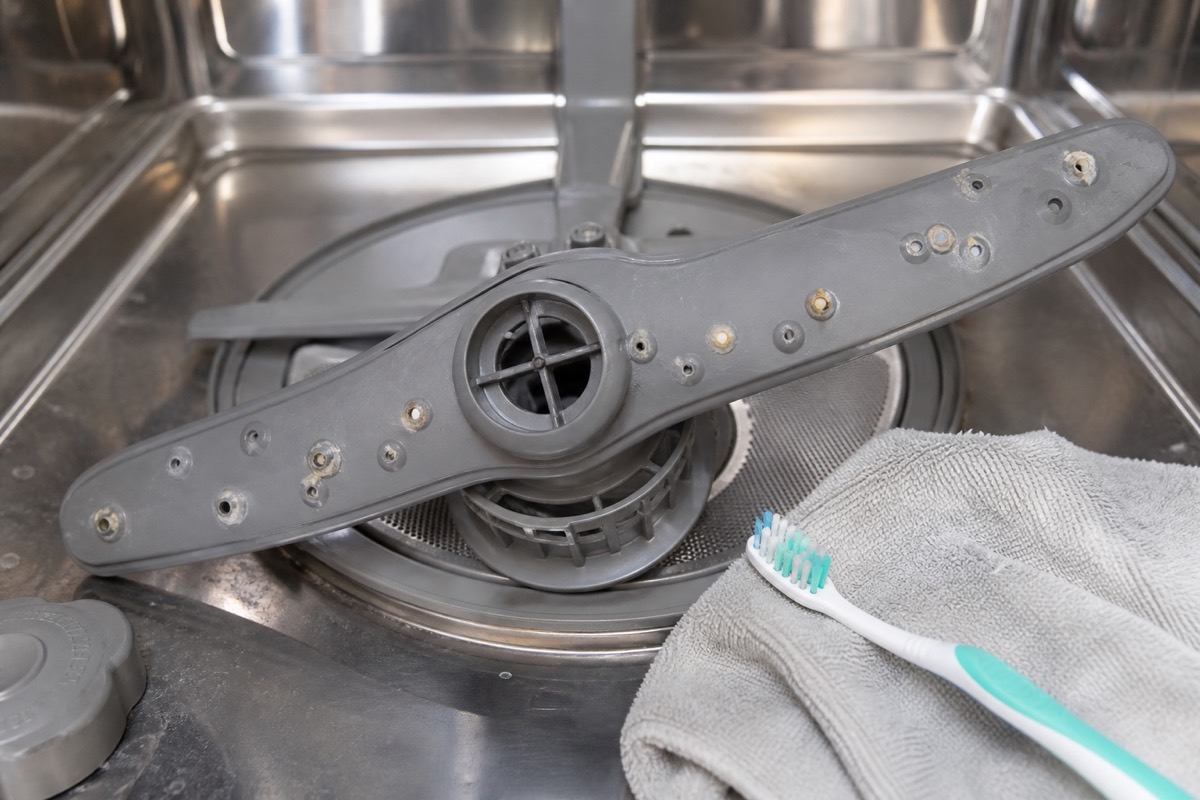
8. Spray-Arm Holes Are Clogged
Minerals, food debris, and detergent residue can block the small openings in a spray arm.
Possible symptoms include:
- Weak cleaning in one rack.
- Food remaining in the same locations.
- Spray arm moving slowly.
- Uneven cleaning.
Remove accessible debris carefully according to the owner’s manual.
Do not enlarge spray holes with a drill or sharp tool.
9. The Spray Arm Is Cracked
A cracked spray arm may leak water from the wrong location instead of directing pressure through the spray holes.
Possible signs include:
- Poor cleaning.
- Unusual water noise.
- Arm not rotating correctly.
- Visible split in the plastic.
A damaged spray arm generally needs replacement.
10. The Spray Arm Is Not Rotating
Spray arms rotate because of water pressure.
If an arm remains stationary, possible causes include:
- Obstruction from dishes.
- Clogged spray holes.
- Damaged bearing.
- Low water pressure inside the dishwasher.
- Weak circulation pump.
Report weak spraying already noticed during ordinary use; do not run an extra cycle or open a running dishwasher to watch the arms.
Any interruption or door opening must follow the manual’s pause procedure; wait for spraying to stop and keep clear of hot water or steam.
11. The Upper Rack Water Feed Is Not Connecting
Many dishwashers feed the upper spray arm through a tube at the rear or side.
If the rack is not fully seated, the water connection may not seal correctly.
Possible symptoms include:
- Lower rack cleans normally.
- Upper rack remains dirty.
- Upper spray arm has little pressure.
Check that the rack is positioned correctly and that the feed connection is not damaged.
Water-Fill Problems
12. The Dishwasher Is Not Getting Enough Water
A dishwasher may fill but still have an insufficient water level.
Possible causes include:
- Partially closed water valve.
- Clogged inlet screen.
- Low household pressure.
- Faulty inlet valve.
- Float problem.
- Control issue.
Low water level can cause:
- Weak spray.
- Poor detergent dissolving.
- Circulation pump noise.
- Dishes remaining dirty.
13. The Water Inlet Valve Is Restricted
The inlet valve controls water entering the dishwasher.
A valve can become restricted by:
- Mineral buildup.
- Debris.
- Internal wear.
- Electrical failure.
Possible symptoms include:
- Slow filling.
- Low water level.
- Weak circulation.
- Long pauses before washing.
- Fill-related error code.
The valve should be tested before replacement.
14. The Float Is Stuck
Fill-protection designs vary. GE distinguishes owner-accessible floats on some models from designs that require service. Follow only the instructions for your exact appliance; do not pry an unfamiliar cover, force a float or hold it down to make the dishwasher run.
GE Appliances: model-specific float and drainage guidance
15. Household Water Pressure Is Low
Low supply pressure can reduce the amount of water entering during the programmed fill time.
Possible causes include:
- Partially closed shutoff valve.
- Plumbing restriction.
- Clogged supply line.
- Household pressure problem.
If other nearby fixtures also have unusually low pressure, the problem may not be inside the dishwasher.
Circulation-Pump Problems
16. The Circulation Pump Is Weak
The circulation pump sends wash water through the spray arms.
A pump may still make noise while producing insufficient pressure.
Possible symptoms include:
- Dishwasher fills normally.
- Wash motor can be heard.
- Spray arms barely move.
- Dishes stay dirty.
- Detergent remains.
- Water appears calm instead of forceful during washing.
A weak pump may result from:
- Worn motor.
- Damaged impeller.
- Internal blockage.
- Electrical problem.
17. The Circulation Pump Is Not Running
If the dishwasher fills and then becomes unusually quiet, the wash pump may not be operating.
Possible symptoms include:
- Water enters normally.
- Little or no spraying sound.
- Detergent remains in the dispenser.
- Dishes stay completely dirty.
- Drain pump still works.
The circulation motor, wiring, capacitor if used, and control output should be tested.
18. The Pump Impeller Is Damaged
A broken or loose impeller may allow the motor to run without producing normal water pressure.
Possible signs include:
- Weak spray.
- Unusual rattling.
- Intermittent circulation.
- Poor cleaning on both racks.
On many dishwashers, the circulation pump is replaced as an assembly.
Water-Temperature Problems
19. Incoming Water Is Too Cold
Dishwasher detergent and grease removal work better with adequately hot water.
If your model’s manual recommends running the nearby hot faucet first, follow its instructions and avoid contact with hot water.
This helps prevent the dishwasher from beginning with a long supply of cold water.
Do not raise the home water-heater setting beyond safe recommendations simply to improve dishwasher performance.
20. The Dishwasher Is Not Heating Properly
Many dishwashers heat water during parts of the cycle.
A heating problem may cause:
- Greasy dishes.
- Detergent residue.
- Long cycle times.
- Dishes not drying.
- Temperature-related error codes.
Possible causes include:
- Heating element.
- Heater assembly.
- Temperature sensor.
- Wiring.
- Control relay.
The heating system should be tested according to the model’s service information.
21. The Temperature Sensor Is Faulty
A thermistor or temperature sensor tells the control how warm the water is.
Incorrect readings may cause:
- Wash temperature too low.
- Unusually long cycle.
- Heating stopping too early.
- Error code.
A qualified technician can test the sensor against the manufacturer’s specifications.
Detergent and Water-Quality Problems
22. The Wrong Detergent Is Being Used
Use automatic-dishwasher detergent. Hand dish soap can create excessive suds, leakage and residue; it is not a substitute. For suds or a leak, stop use and follow the model’s troubleshooting instructions before another cycle.
Samsung: detergent-related suds and leak guidance
23. Too Little Detergent Is Being Used
Use the dose on the detergent label and in the dishwasher manual for your water conditions and load. A dirty result does not automatically mean you need more detergent.
24. Too Much Detergent Is Being Used
Do not overfill the dispenser or add extra packs to compensate for a failed wash. Follow product and model instructions; persistent residue requires checking the cycle and wash performance as well as the dose.
25. The Detergent Is Old or Damp
Check for clumped detergent and a poorly sealed container. The detergent checks near the start of this guide explain storage and cycle-completion checks.
26. The Detergent Dispenser Is Blocked
Loading can block the dispenser or, on applicable models, the tablet-collecting tray. Use the model’s loading diagram and distinguish a closed lid from detergent that was released but did not dissolve.
Compare the three detergent observations
27. The Detergent Dispenser Is Failing
A dispenser that remains shut after a completed cycle and corrected loading needs assessment. A technician can check its mechanism and operation before recommending replacement. Do not force the lid or open the door assembly to inspect wiring.
Hard-Water and Rinse Problems
28. Hard Water Is Leaving Mineral Deposits
Water hardness depends on the home’s supply and treatment. Use your water provider’s information or a suitable hardness test when following detergent or rinse-aid instructions; the city name does not diagnose mineral buildup.
Hard-water deposits may appear as:
- White film.
- Cloudy glassware.
- Spots.
- Scale on spray arms.
- Buildup around the filter.
Mineral buildup can also restrict spray-arm openings.
A water softener or dishwasher-safe maintenance product may help where appropriate.
29. The Rinse Aid Is Empty
Rinse aid helps water sheet off dishes during rinsing and drying.
Low rinse aid can contribute to:
- Spots.
- Film.
- Poor drying.
- Water remaining on glassware.
Check the dispenser and setting.
30. The Rinse-Aid Setting Is Incorrect
Some models allow adjustment of rinse-aid dosage.
Too little may leave spots.
Too much may contribute to streaking or residue.
Follow the dishwasher manufacturer’s instructions.
Diverter and Rack-Specific Problems
31. The Diverter Is Not Directing Water Correctly
Some dishwashers alternate water pressure between different spray arms using a diverter.
A failed diverter may cause:
- Upper rack dirty.
- Lower rack dirty.
- One spray arm not operating.
- Recurring diverter error.
The diverter motor, seal, position sensor, and control should be checked.
32. The Rack Is Installed Incorrectly
An upper rack that is not fully engaged can prevent proper water connection.
This may happen after:
- Removing the rack.
- Adjusting rack height.
- Loading oversized items.
Confirm that both sides of the rack are aligned and fully seated.
Control and Electrical Problems
33. The Control Board Is Not Running the Wash Pump Correctly
The main control board manages:
- Water fill.
- Circulation.
- Heating.
- Drain pump.
- Detergent dispenser.
- Cycle timing.
A control failure may cause:
- Circulation stopping early.
- Heater not activating.
- Wash pump not receiving power.
- Cycle skipping part of the wash.
The control board should not be replaced until the connected components and wiring are tested.
34. Wiring or a Connector Is Damaged
A loose or corroded connection may interrupt power to:
- Circulation pump.
- Heater.
- Inlet valve.
- Sensors.
- Diverter.
Possible symptoms include:
- Intermittent cleaning.
- Error codes.
- Dishwasher works after being moved or reset.
- Burned connector.
35. The Dishwasher Needs a Reset
Record the error and cycle behavior before clearing the controls. Reset steps vary by model and should follow its instructions for the specific symptom. A reset does not fix a blocked dispenser or a water-delivery fault. Skip restarts for leaks, burning smells, electrical warnings or recurring faults.
What Can You Safely Check?
- Let the completed cycle end and the dishwasher cool before inspecting the dispenser or racks.
- Check whether the dispenser lid, spray path or model-specific collecting tray is blocked by dishes.
- Confirm the correct detergent, dose and placement from the package and owner’s manual.
- Check the selected cycle and any interruption or error; compare temperature requirements with your manual.
- Clean only the filter or spray parts explicitly designated for owner maintenance, following safe removal and reinstallation instructions.
- Record whether water entered, detergent was released and one or both racks stayed dirty. Share observations you already have; no extra fault-reproduction cycle is required.
Do not pull out the appliance, disconnect water lines, open electrical panels, bypass a latch or sensor, or reach below the owner-serviceable filter. If access is unclear, leave it for service.
When Should You Stop Using the Dishwasher?
Samsung: leak warnings and disconnecting power
When Should You Call a Dishwasher Technician?
Professional diagnosis is recommended when:
- The filter and spray arms are clean but dishes remain dirty.
- The spray arms do not rotate.
- The dishwasher fills but there is little spraying sound.
- The circulation pump is weak or silent.
- Water level appears too low.
- The dishwasher does not heat properly.
- One rack consistently does not clean.
- Detergent repeatedly remains in the dispenser.
- The dishwasher displays recurring error codes.
- The problem returns after cleaning and reloading correctly.
A technician can test the circulation pump, inlet valve, heater, temperature sensor, diverter, spray system, wiring, and control board.
Should You Repair or Replace the Dishwasher?
Repair is often practical when the problem involves:
- Filter.
- Spray arm.
- Inlet valve.
- Circulation pump.
- Heater.
- Temperature sensor.
- Diverter.
- Detergent dispenser.
- Wiring.
- Control board.
Replacement may be more practical when:
- The tub is damaged.
- Severe corrosion is present.
- Several major components have failed.
- Critical parts are discontinued.
- The dishwasher has repeated leaks.
- Repair cost approaches the value of a replacement appliance.
A complete diagnosis should be performed before deciding.
What to Include in a Local Repair Request
- Brand and model, using an accessible label without moving the dishwasher.
- Whether the dispenser stayed closed, detergent remained in the open cup, or the pack was released but stayed intact.
- Selected cycle, any error, whether it ended normally, and whether one or both racks are affected.
- Your service city, any recent installation or plumbing work, and a photo of the cooled dispenser or display if safely available.
Art’s Appliance Repair serves Cape Coral, Fort Myers and its listed Southwest Florida service area. Send your city and appliance details so coverage and availability can be confirmed. An online appointment time is a request and requires confirmation.
The service call is $0 when an approved repair is completed; $79 if no repair is completed after diagnosis.
Dishwasher repair in Cape Coral
Dishwasher repair in Fort Myers
Request a dishwasher service appointment
Read the service call and warranty policy
Photo guide
Diagnostic Photos
Local Dishwasher Service
We provide dishwasher repair in Cape Coral and Fort Myers, along with surrounding Southwest Florida service areas.
For scheduling, use the Contact page or call/text Art’s Appliance Repair directly.
Related Appliance Guides
Dishwasher
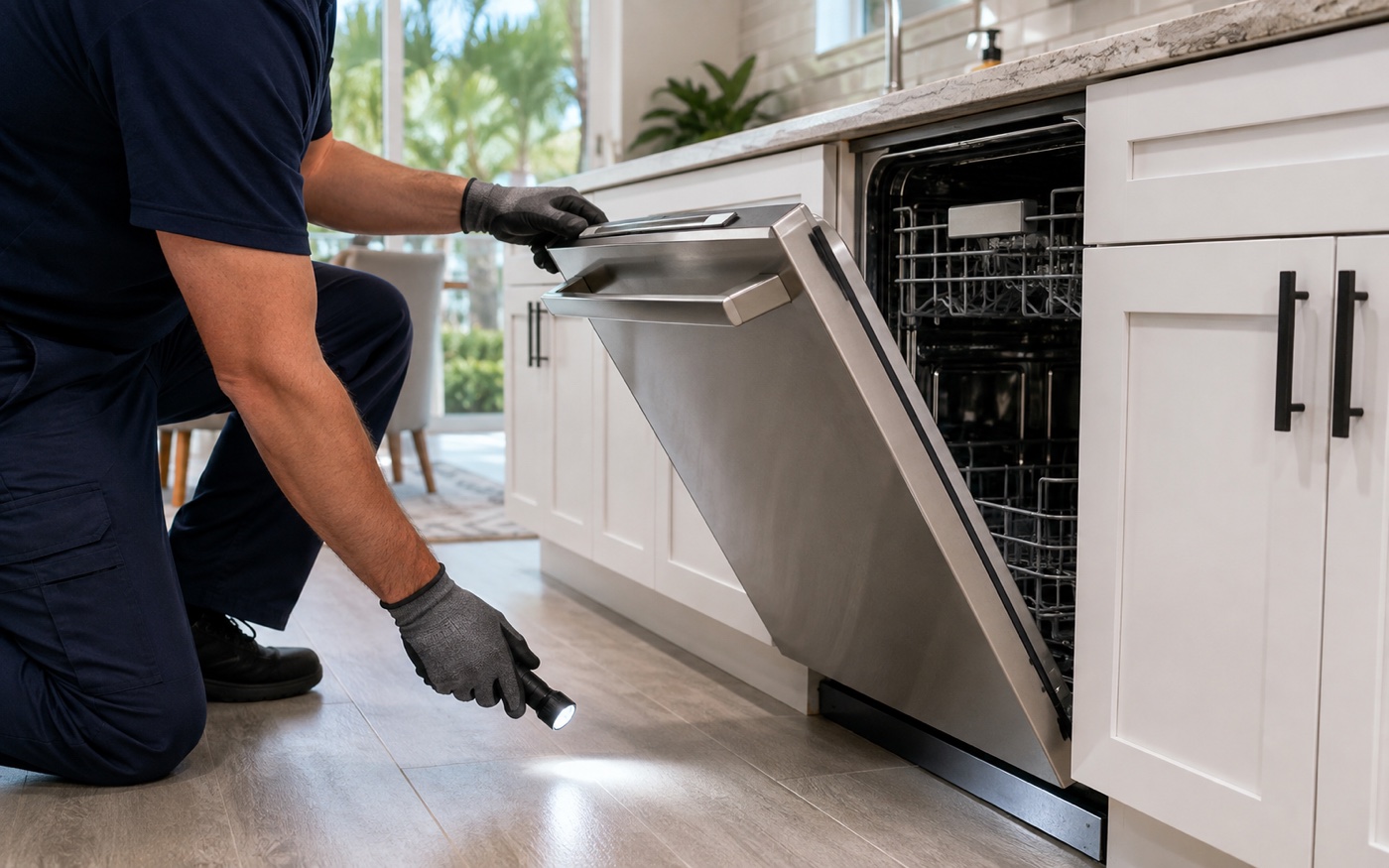
Dishwasher Is Leaking From Under the Door: What Usually Causes It?
Dishwasher leaking from the bottom of the door? Learn how gasket problems, suds, spray arms, leveling, loading, and overfilling can cause front leaks.
Updated September 3, 2026
dishwasher leaking from under the door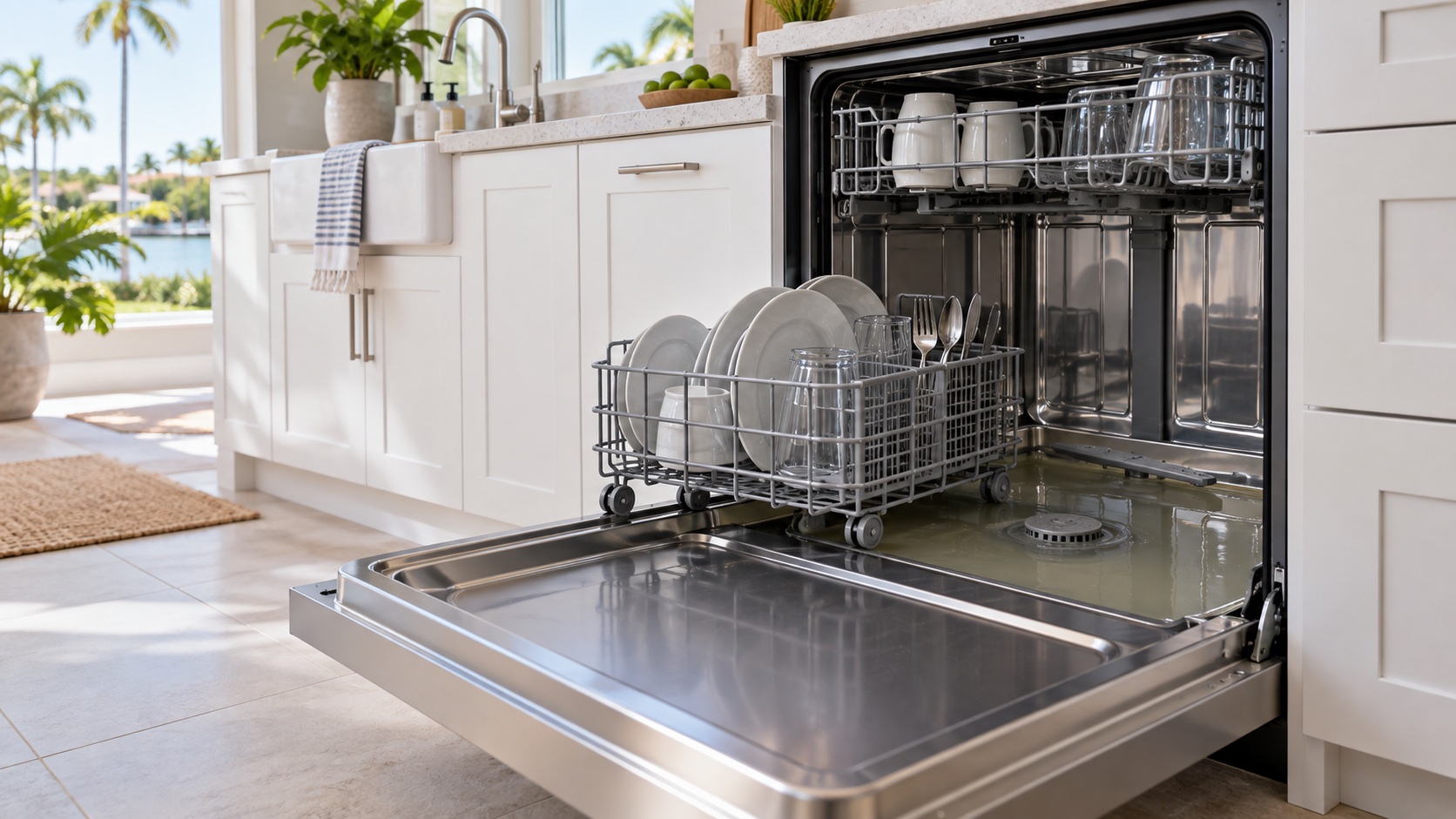
Dishwasher
Dishwasher Has Standing Water: Appliance Drain or Household Plumbing?
Standing water after a dishwasher cycle can come from the filter area, drain hose, disposal connection, or household plumbing. Use safe checks before local repair.
Updated September 28, 2026
dishwasher standing water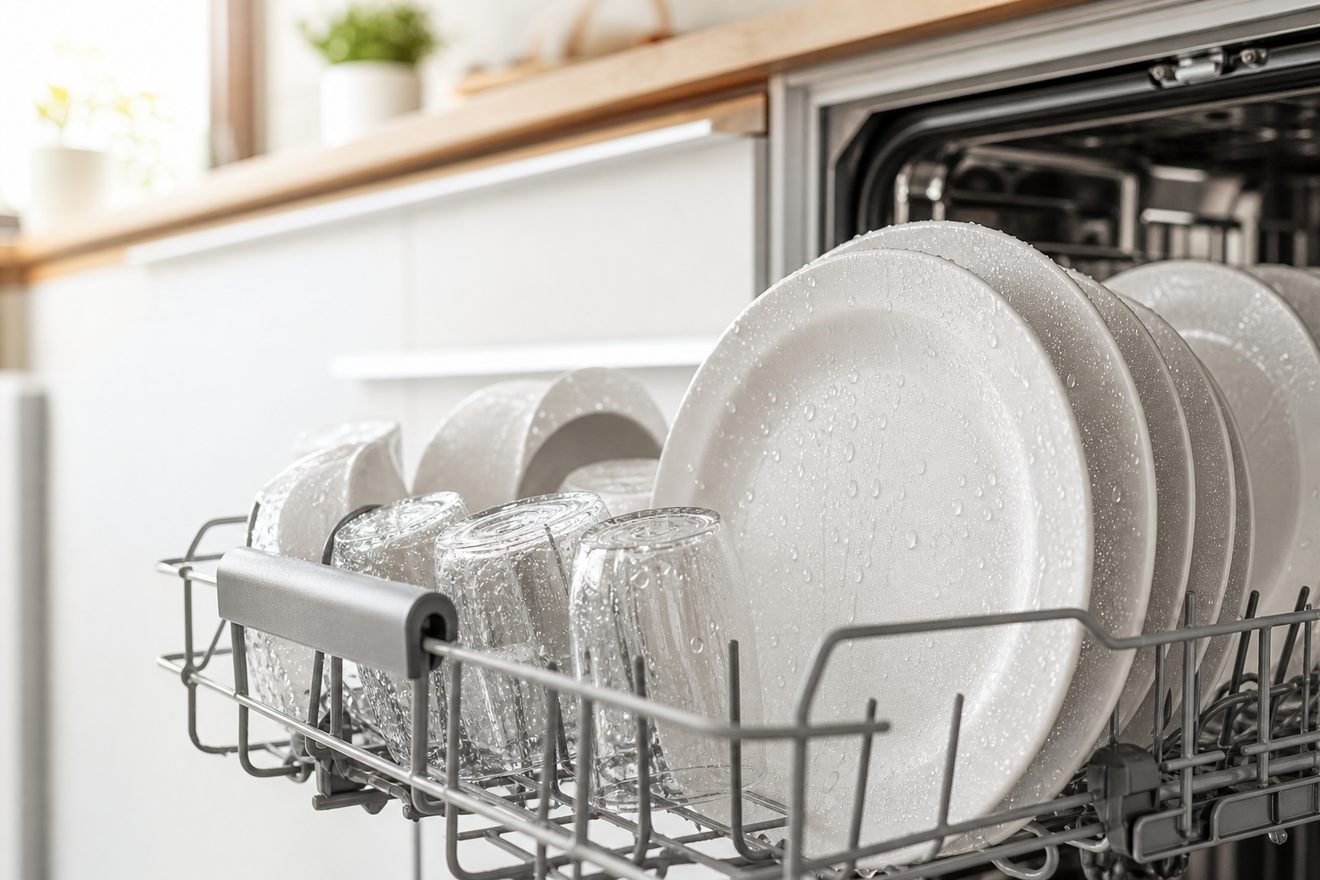
Dishwasher
Dishwasher Is Not Drying the Dishes: What Usually Causes It?
Dishwasher leaving dishes wet? Learn how rinse aid, loading, dry settings, water temperature, heating, vents, and drain problems affect drying.
Updated August 20, 2026
dishwasher not drying dishesNeed service?
Dishwasher Repair in Cape Coral, Fort Myers and Southwest Florida
Art’s Appliance Repair provides dishwasher diagnostics and repair throughout Cape Coral, Fort Myers, North Fort Myers, Lehigh Acres, Estero, Bonita Springs, Naples, and surrounding Southwest Florida communities.
We diagnose dishwasher problems including:
- Dishwasher runs but does not clean dishes.
- Weak water circulation.
- Circulation-pump failures.
- Clogged spray arms.
- Low water level.
- Heating problems.
- Detergent not dissolving.
- Upper or lower rack not cleaning.
- Hard-water buildup.
- Dishwasher not draining.
- Dishwasher leaking.
- Control-board and sensor problems.
Call or text (239) 688-9955 to schedule dishwasher service.
The service call is $0 when an approved repair is completed; $79 if no repair is completed after diagnosis.
View Dishwasher Repair