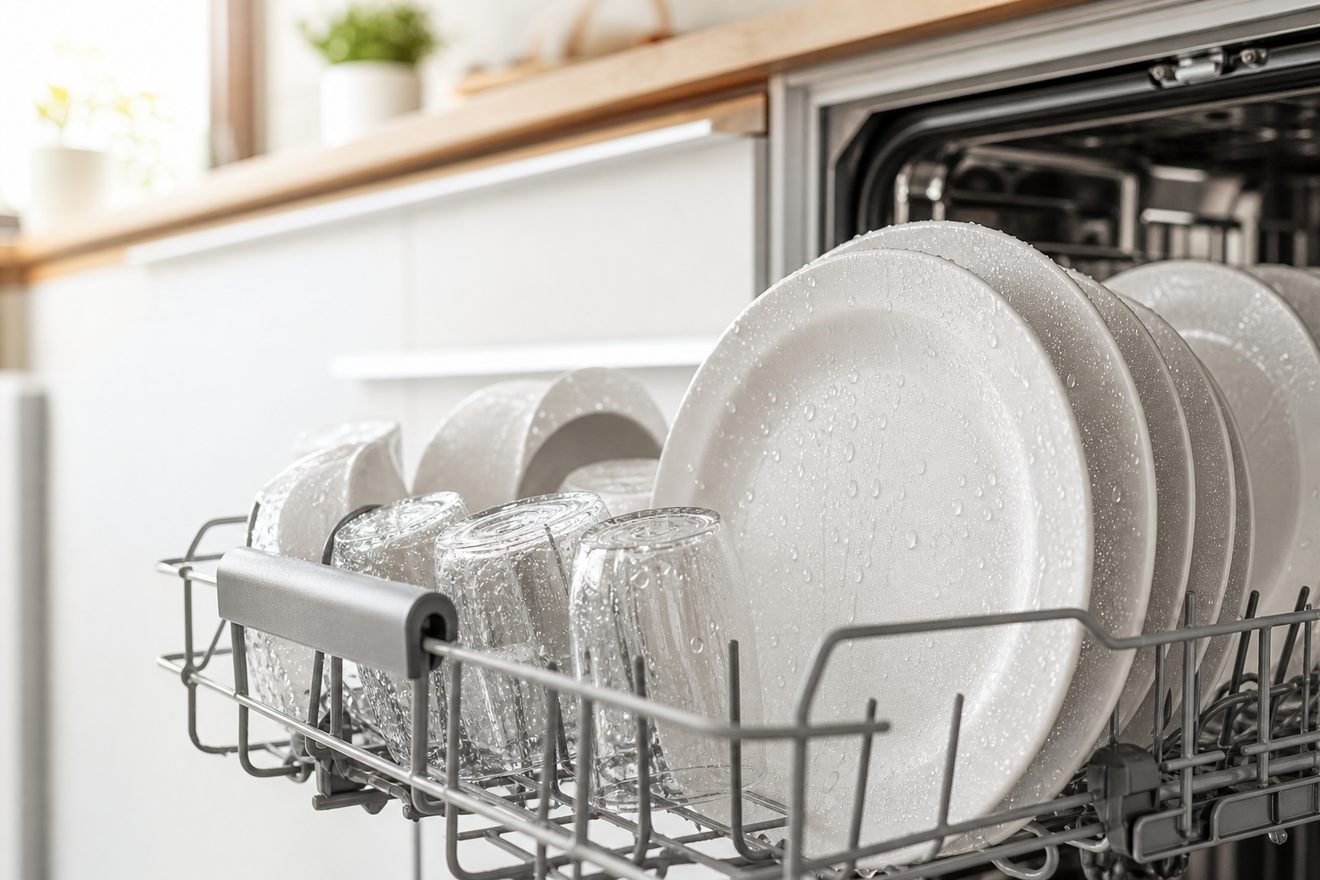
First: Is the Dishwasher Not Drying, or Not Draining?
This distinction can prevent unnecessary parts replacement.
The dishes are wet, but the tub is basically drained
This is primarily a drying-performance problem. Continue with the checks below.
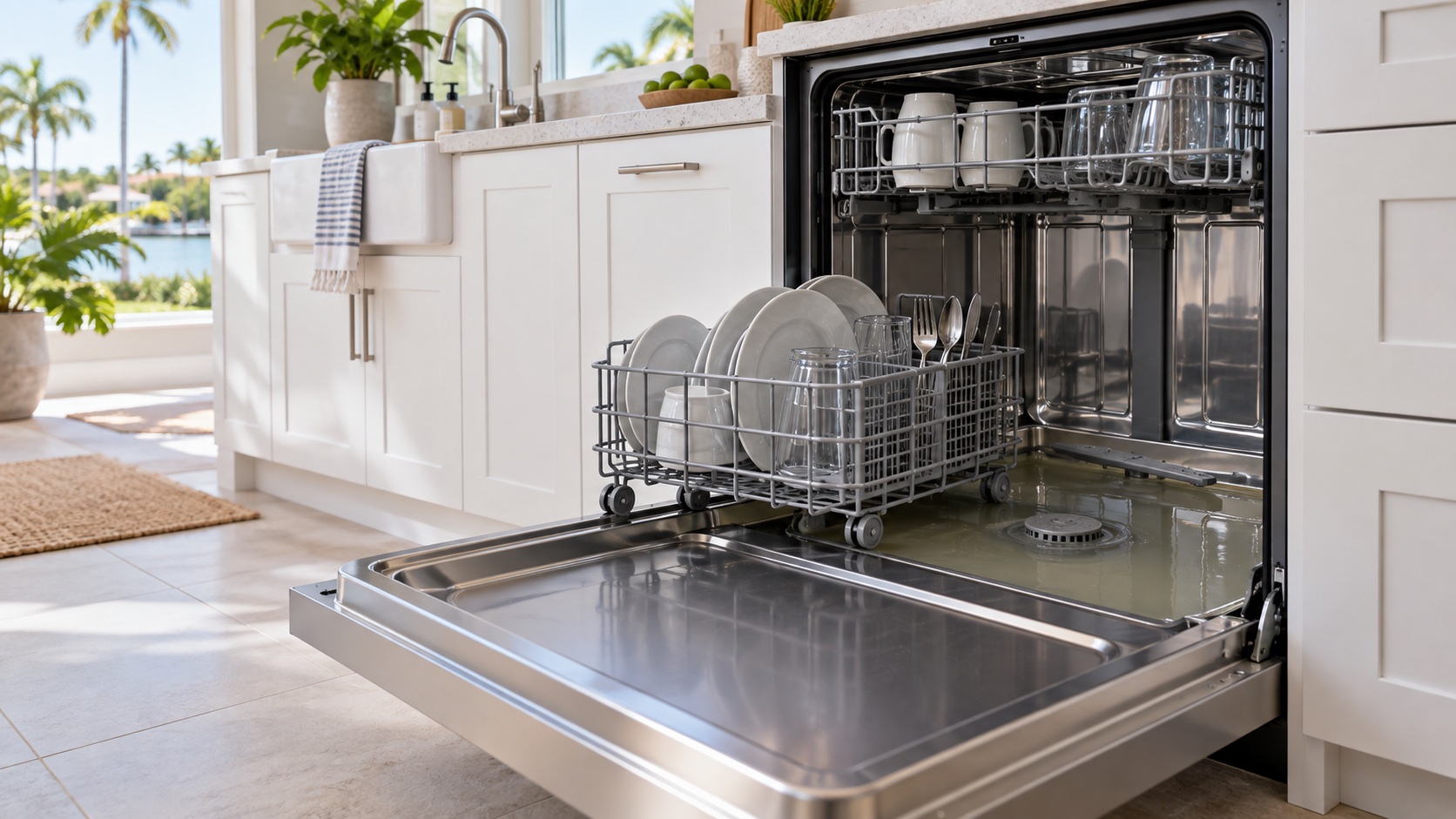
Water remains pooled in the bottom of the dishwasher
That points first toward a drain problem. Possible causes can involve drain hose restrictions, a garbage disposal connection, a disposal knockout plug, the drain pump, a check valve, the filter, the sump, or the household drain connection.
Read the dishwasher standing water guide
This is why standing water should not immediately be diagnosed as a drying-system failure.
Is Rinse Aid Being Used?
Rinse aid changes how water behaves on dishes. Instead of forming droplets that remain attached to glasses and plates, water can sheet off more easily.
Check whether the dispenser is empty, was recently filled, is adjusted unusually low, or is actually dispensing rinse aid.
Do not assume that using a detergent pod means rinse aid is unnecessary. Many dishwashers still depend on the liquid rinse-aid dispenser for better drying.
Rinse Aid Is Full, but the Dishes Are Still Wet
If the dispenser is full, diagnosis moves one step further.
- Is the dispenser actually releasing rinse aid?
- Is the dosage appropriate for the water conditions?
- Is Heated Dry selected?
- Is the final rinse getting hot enough?
- Are only plastic items wet?
- Are dishes holding puddles because of their shape?
If the dispenser remains full for an unusually long time and drying performance is poor, the dispenser itself may need inspection.
Check Which Drying Option Was Selected
Not every dishwasher cycle uses the same drying process. Depending on the model, you may see options such as Heated Dry, Heat Dry, Extended Dry, Extra Dry, ProDry, Fan Dry, Air Dry, Door Open Dry, or Sanitize.
A quick or energy-saving cycle may provide different drying results than a cycle with additional heat or drying time. Before diagnosing a component failure, confirm that the desired drying option was actually enabled.
Air Dry and Heated Dry Are Not the Same
If additional heat is not selected, some dishwashers rely more heavily on natural airflow and residual heat.
So if the dishwasher runs normally but everything is wet, one of the first questions is which cycle and drying option were used. A normal result on an energy-saving setting can look like a drying failure if the user expects heated-dry performance.
Are Only the Plastic Items Wet?
Plastic does not retain heat as effectively as ceramic, glass, or stainless steel. As a result, plastic containers and cups often remain wetter at the end of a dishwasher cycle.
If plates, glasses, and silverware are mostly dry but plastics still have droplets, the dishwasher may be operating normally. That is different from everything being cold and soaking wet.
Loading Can Make a Working Dishwasher Look Like It Has a Drying Problem
Dishwasher loading affects both washing and drying. Water needs a path to leave the surface of dishes.
- Bowls are almost horizontal.
- Cups have deep recessed bottoms.
- Containers trap puddles.
- Dishes touch each other.
- Items are nested together.
- Too many dishes restrict airflow.
A heater cannot effectively evaporate a large puddle trapped in the bottom of an upside-down cup.
Check the Cups and Bowls Before Blaming the Dishwasher
Some dish designs naturally collect water, including mugs with recessed bases, plastic food containers, bowls positioned too flat, lids, and utensils with deep handles.
If only a few specific items remain wet every cycle, rearrange them before assuming there is a component failure.
Incoming Water Temperature Matters
A dishwasher usually begins with hot water supplied from the home. The dishwasher may add heat during portions of the cycle, but incoming water temperature still affects performance.
Many dishwashers perform best with hot incoming water around 120°F. If the hot-water line has cooled between uses, the first fill may initially contain cooler water.
Do not raise a household water-heater setting beyond safe manufacturer recommendations simply to improve dishwasher drying.
Do the Dishes Feel Warm at the End?
Dishes are warm but still have some droplets
Look first at rinse aid, loading, plastic items, pooled water, and cycle selection.
Everything is cold and very wet
Now the heating or drying system deserves more attention. This does not identify the failed component by itself, but it separates poor drying performance from a possible no-heat condition.
The Heating Element May Be Involved, but Do Not Start There
A common repair mistake is treating wet dishes as proof of a bad heating element. That is too simple.
Before replacing a heater, verify cycle selection, rinse aid, incoming water temperature, actual end-of-cycle heat, error codes, and the model-specific drying design.
On some models, the heater plays a direct role in drying. Other dishwashers rely more heavily on condensation drying, residual heat, fan-assisted drying, automatic door opening, or another model-specific drying system.
What if the Heating Element Is Not Working?
- Dishes remain cold.
- The tub remains cold.
- Poor drying occurs on every load.
- A sanitize or high-temperature cycle does not complete normally.
- Heating-related error codes appear.
- Some cycles run unusually long.
A Failed Heater Is Not Always a Failed Heating Element
The heating element is only one part of the system. Heating problems can involve the element, temperature sensor, thermostat, thermal protection, wiring, connector damage, control board, relay, or a circulation and heating assembly on some models.
Resistance testing one component without understanding the control logic can lead to the wrong diagnosis.
What About Dishwashers Without an Exposed Heating Element?
Do not assume a dishwasher is missing a drying system because you cannot see a conventional heating element at the bottom of the tub. Different brands use different designs.
Some dishwashers rely heavily on residual heat, rinse aid, and model-specific drying technologies rather than a simple exposed-heater strategy.
Condensation Drying Can Leave the Tub Wet
A dishwasher interior being wet does not automatically mean the dishes should also be soaking wet. Some drying systems intentionally move moisture toward cooler dishwasher surfaces.
Judge the result by the dishes, glassware, silverware, temperature, and amount of retained water rather than expecting every interior surface to be completely dry.
Does the Dishwasher Have a Drying Fan?
Some models use a fan to move humid air during the drying phase. If a dishwasher is designed with fan-assisted drying, diagnosis may involve the fan motor, fan obstruction, wiring, vent path, or control output.
Do not assume every dishwasher has a drying fan. Check the model-specific parts diagram and service information.
Check the Vent
Moist air needs somewhere to go. Depending on dishwasher design, a vent system may help manage steam and moisture.
- Blocked vent.
- Damaged vent assembly.
- Failed fan on fan-assisted models.
- Moisture or debris around the vent area.
What if Heated Dry Is Selected but It Still Does Not Dry?
Dishes are hot but wet
Focus first on rinse aid, rinse-aid dispensing, loading, plastics, water pooling, and drying duration.
Dishes are cold and wet
Focus more on heating, temperature sensing, control behavior, and selected cycle.
Dishwasher contains standing water
Stop treating this as only a drying problem. Move to drainage diagnosis.
Dishes are dry except plastics
The dishwasher may be functioning normally.
Hard Water Can Affect Drying Results
Southwest Florida homes can have mineral-heavy water conditions. Hard-water deposits and spotting can make dishes look as though drying performance is worse than it actually is.
Do not confuse white mineral film with water still physically remaining on dishes. Those are different problems.
Does the Door Open Automatically at the End?
Some newer dishwashers have automatic door-opening drying. The door opens slightly near the end of the cycle to allow humid air to escape.
If your dishwasher is supposed to use this feature but the door never opens, verify that the option is enabled, check the owner’s manual, and look for error codes. Do not force the door mechanism.
Why Did My Old Dishwasher Dry Better Than My New One?
Newer dishwashers may behave differently from older machines. Modern designs often emphasize lower energy consumption, lower water use, different drying technology, increased reliance on rinse aid, and longer but more efficient cycles.
Replacing an older dishwasher and immediately noticing more moisture does not automatically mean the new dishwasher is defective. First verify the recommended operating settings.
Dishwasher Finishes but Dishes Are Soaking Wet
If everything is unusually wet every time, gather a few details before scheduling service.
- Which cycle is being used?
- Is Heated Dry or Extra Dry selected?
- Is rinse aid full?
- Are the dishes warm afterward?
- Is water standing at the bottom?
- Is there an error code?
- Does the dishwasher complete the entire cycle?
- Did the problem start suddenly?
A sudden change after months of normal operation deserves more diagnostic attention than drying behavior that has been the same since installation.
The Dishwasher Stops Before the Drying Stage
A dishwasher cannot complete normal drying if it does not complete the cycle.
- The machine shuts off.
- An error appears.
- The dishwasher continually drains.
- The cycle stops mid-cycle.
- The appliance loses power.
Identify where the cycle stops before replacing drying components.
Error Codes Can Change the Diagnostic Path
Modern dishwashers may detect problems involving heating, temperature, draining, water level, circulation, door status, or electronics.
Take a photo of the error before resetting the dishwasher. An error code is diagnostic information, not automatically the name of the failed part.
View common appliance error codes
What We Usually Separate During a Service Call
When a customer says the dishwasher is not drying, the first goal is to determine which category the complaint actually belongs to.
- Normal moisture behavior: mostly plastics or water trapped in cups.
- Usage or settings issue: rinse aid empty or dry option not selected.
- Heating issue: everything remains cold and wet.
- Vent or fan issue: the dishwasher heats, but humid air is not managed correctly on a model using assisted drying.
- Drain issue: water remains in the tub after the cycle.
A Good Diagnostic Order
- Confirm whether the complaint is wet dishes or standing water.
- Check the selected cycle and drying options.
- Check whether rinse aid is filled and dispensing.
- Inspect loading and whether cups or bowls are holding water.
- Check final-cycle temperature.
- Check for heating or drain-related error codes.
- Identify the dishwasher’s actual drying design.
- Only then test components.
Safe Checks You Can Do
- Check rinse-aid level.
- Review cycle and drying options.
- Adjust dishwasher loading.
- Check whether cups are holding water.
- Notice whether only plastics remain wet.
- Look for water remaining at the bottom.
- Check whether dishes feel warm.
- Record any error code.
- Find the dishwasher model number.
When Should You Schedule Dishwasher Repair?
- Dishes suddenly stopped drying after previously drying normally.
- Everything remains cold and wet.
- The dishwasher does not appear to heat.
- A heating-related error code appears.
- The drying fan or vent system is not operating correctly.
- A drying option is selected but performance remains abnormally poor.
- The dishwasher stops before completing the cycle.
- Standing water remains after the cycle.
- The problem continues after checking rinse aid, loading, and cycle settings.
If the main symptom is water remaining inside the dishwasher, tell the technician that specifically. A dishwasher that does not dry and a dishwasher that does not drain lead to different diagnostic paths.
Manufacturer References Used
- Whirlpool dishwasher drying guidance.
- Whirlpool rinse aid guidance.
- Whirlpool heated dry guidance.
- Bosch dishwasher drying guidance.
- GE Appliances poor drying and dry cycle guidance.
Photo guide
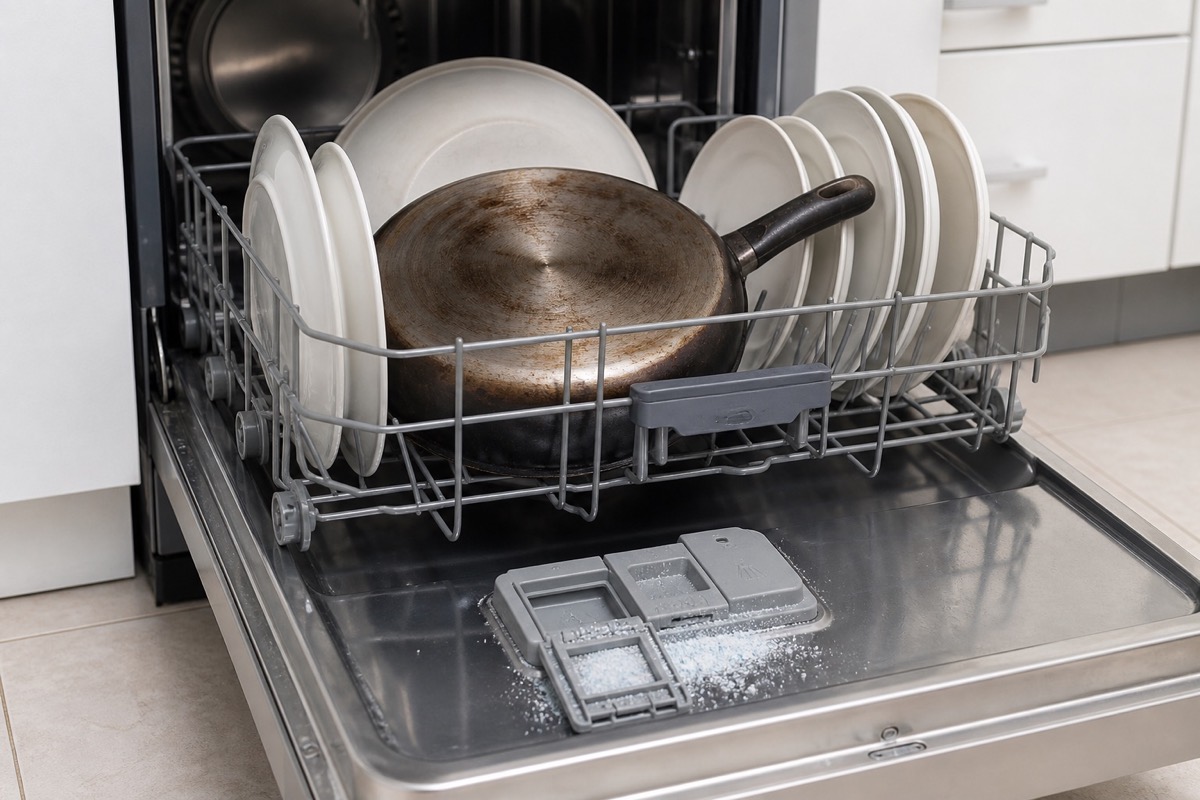
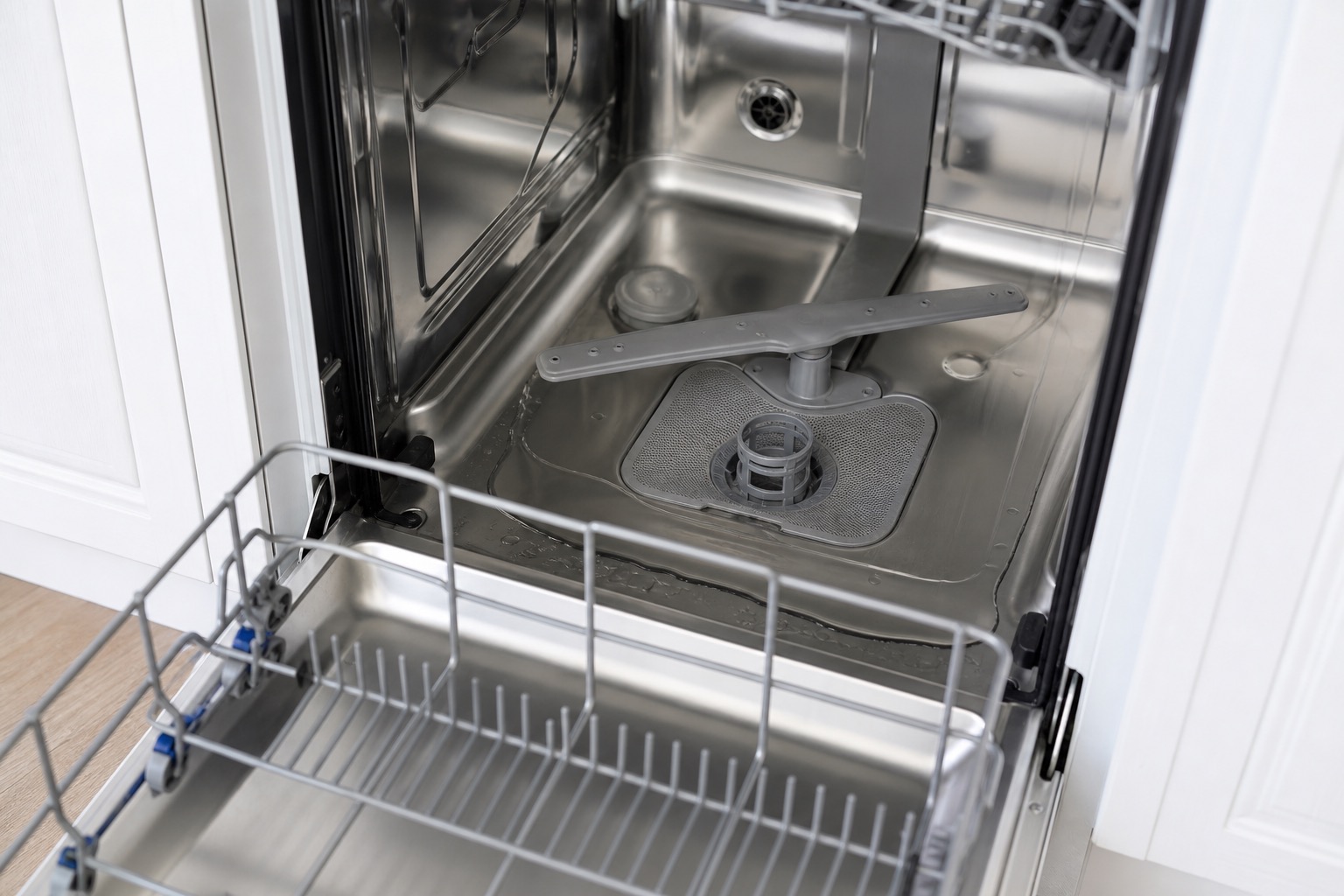
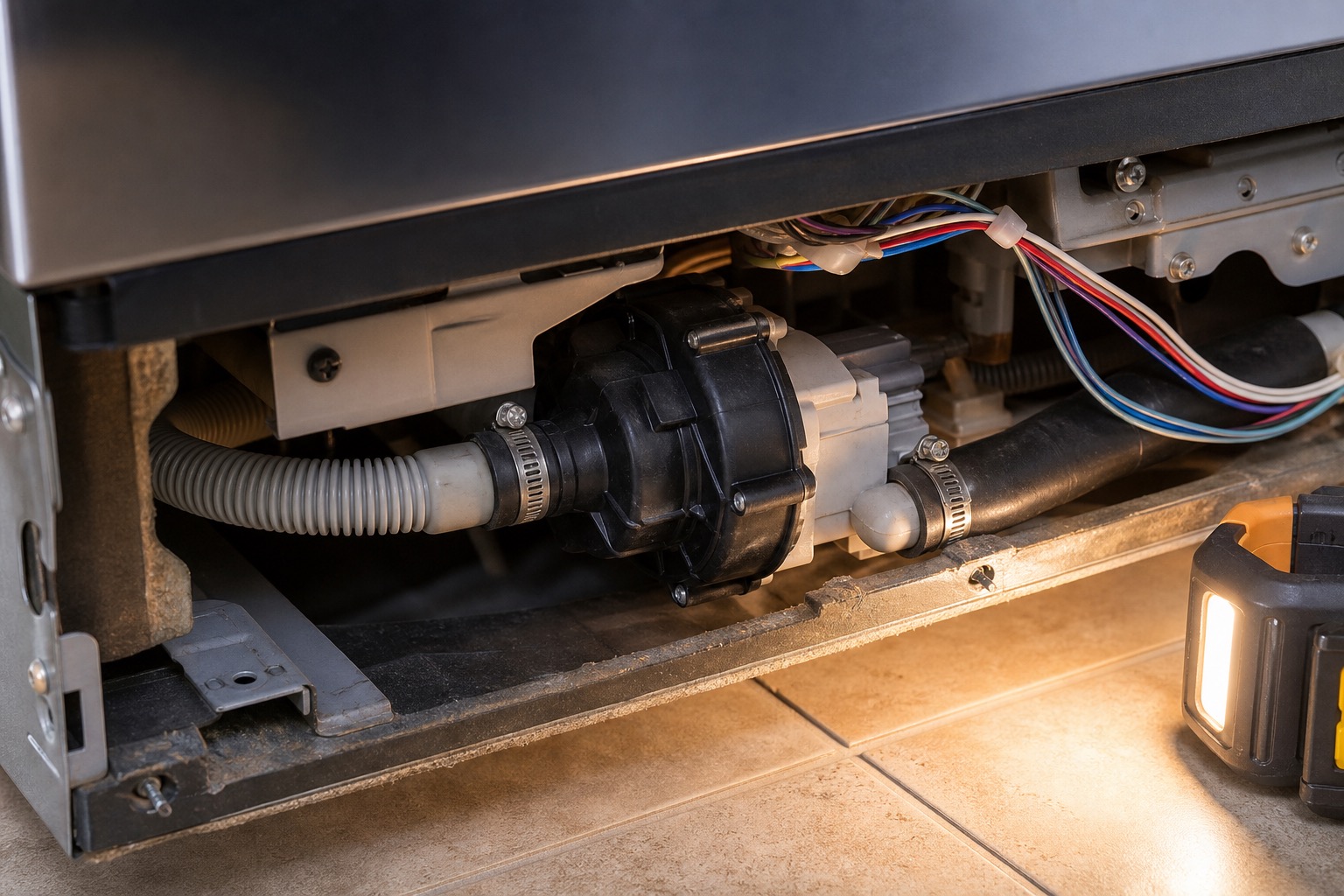
Diagnostic Photos
Local Dishwasher Service
We provide dishwasher repair in Cape Coral and Dishwasher Repair in Fort Myers, along with surrounding Southwest Florida service areas.
For scheduling, use the Contact page or call/text Art’s Appliance Repair directly.
Helpful Next Pages
These related guides and local service pages help connect the symptom to a practical repair path.
Related Appliance Guides
Dishwasher
Dishwasher Has Standing Water: Appliance Drain or Household Plumbing?
Standing water after a dishwasher cycle can come from the filter area, drain hose, disposal connection, or household plumbing. Use safe checks before local repair.
Updated September 28, 2026
dishwasher standing water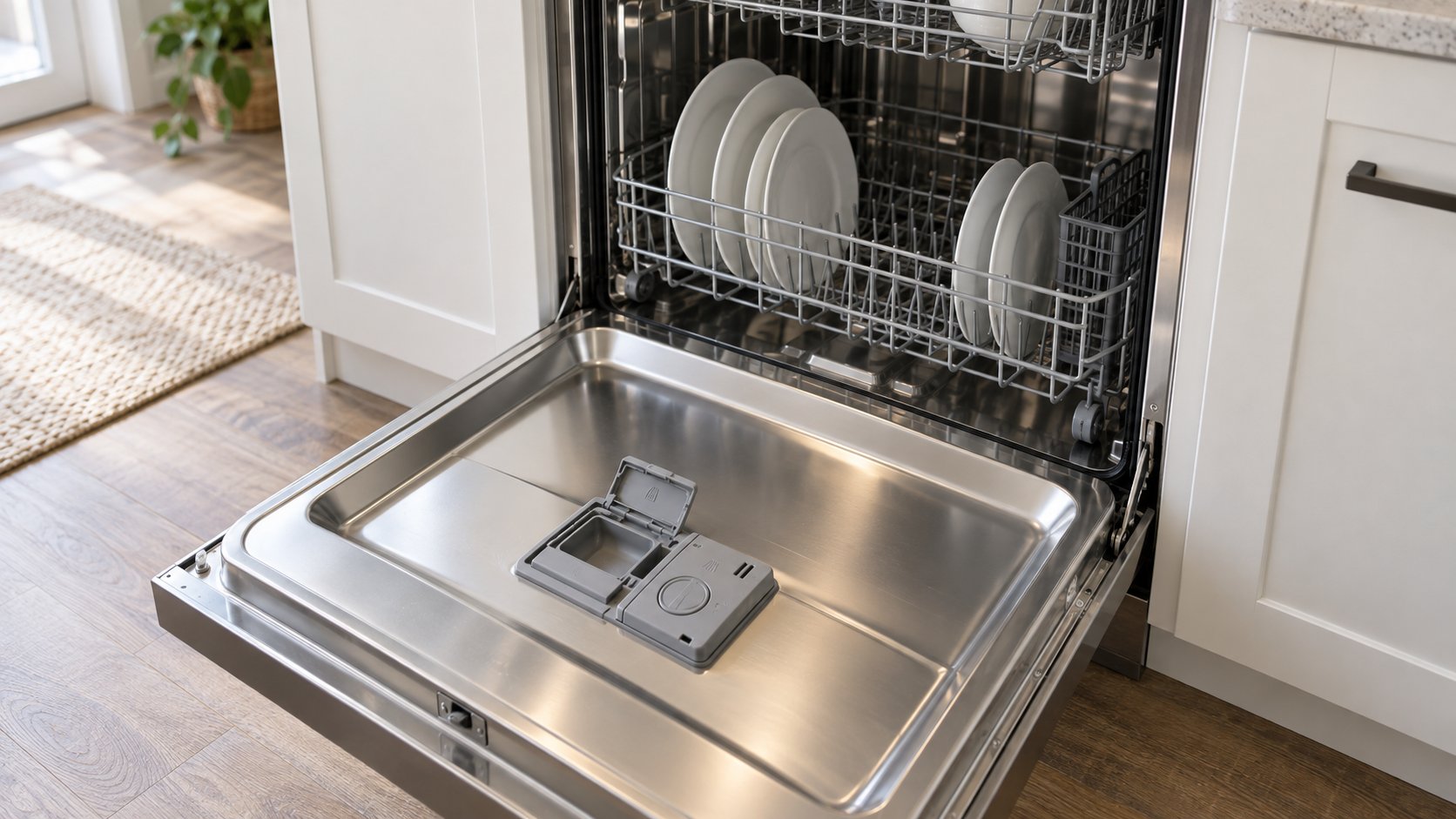
Dishwasher
Dishwasher Runs but Does Not Clean the Dishes: Common Causes
Dishwasher leaves dirty dishes or an undissolved pod? Check dispenser access, detergent and wash symptoms, then find local repair in Cape Coral or Fort Myers.
Updated September 14, 2026
dishwasher runs but does not clean
Dishwasher
Dishwasher Is Leaking From Under the Door: What Usually Causes It?
Dishwasher leaking from the bottom of the door? Learn how gasket problems, suds, spray arms, leveling, loading, and overfilling can cause front leaks.
Updated September 3, 2026
dishwasher leaking from under the doorNeed service?
Dishwasher Repair in Fort Myers, Cape Coral and Southwest Florida
Art’s Appliance Repair diagnoses dishwasher drying, heating, draining, circulation, and control problems throughout Cape Coral, Fort Myers, North Fort Myers, Lehigh Acres, Estero, Bonita Springs, Naples, and surrounding Southwest Florida communities.
We diagnose dishwasher not drying dishes, dishwasher not heating, wet dishes after the cycle, drying fan or vent problems, rinse-aid dispenser problems, dishwasher standing water, dishwasher not draining, heating and temperature error codes, and dishwashers stopping before the end of the cycle.
Call or text (239) 688-9955 to schedule service.
Service call: $0 with an approved repair. $79 if no repair is completed.
View Dishwasher Repair