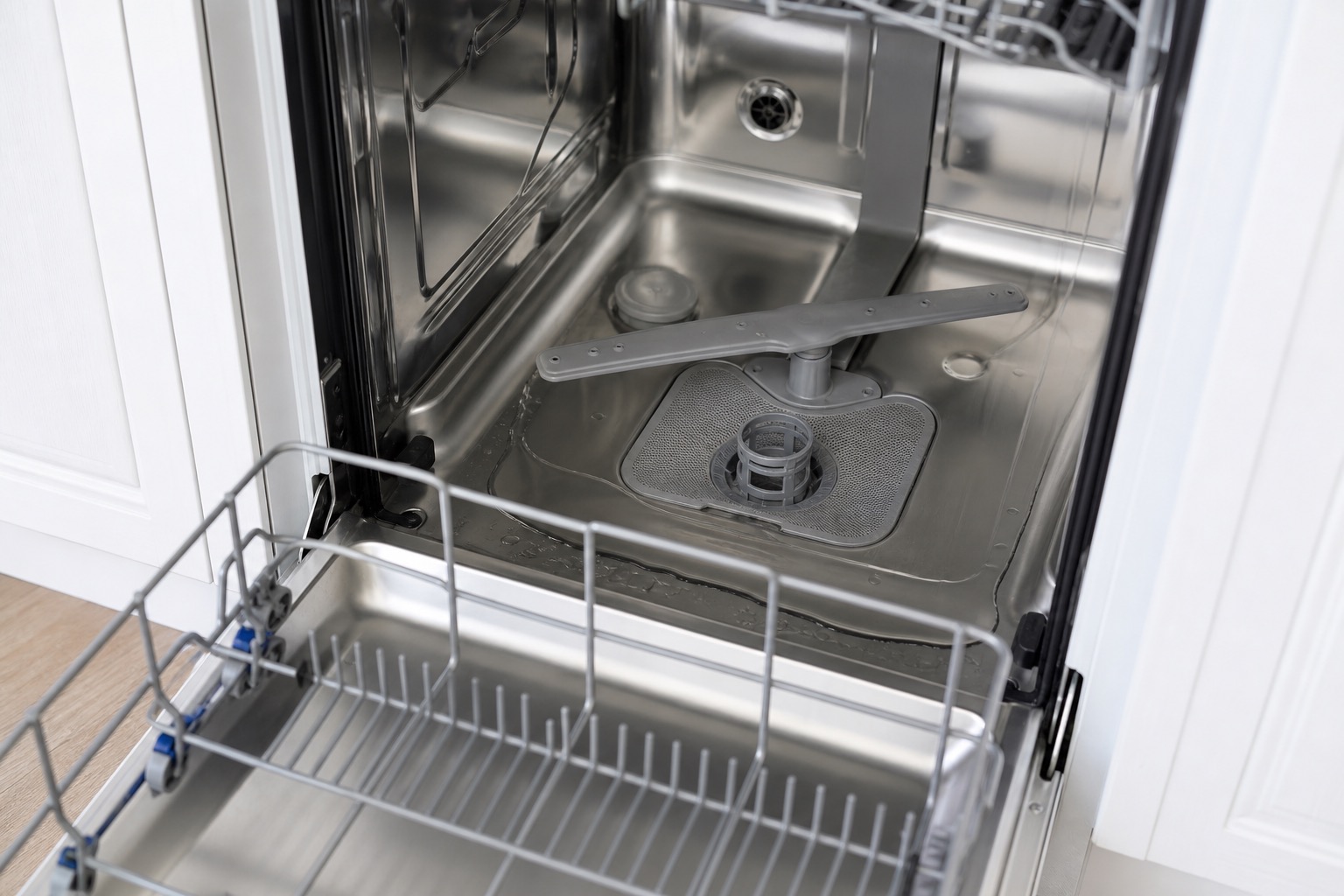
Is a Small Amount of Water Normal?
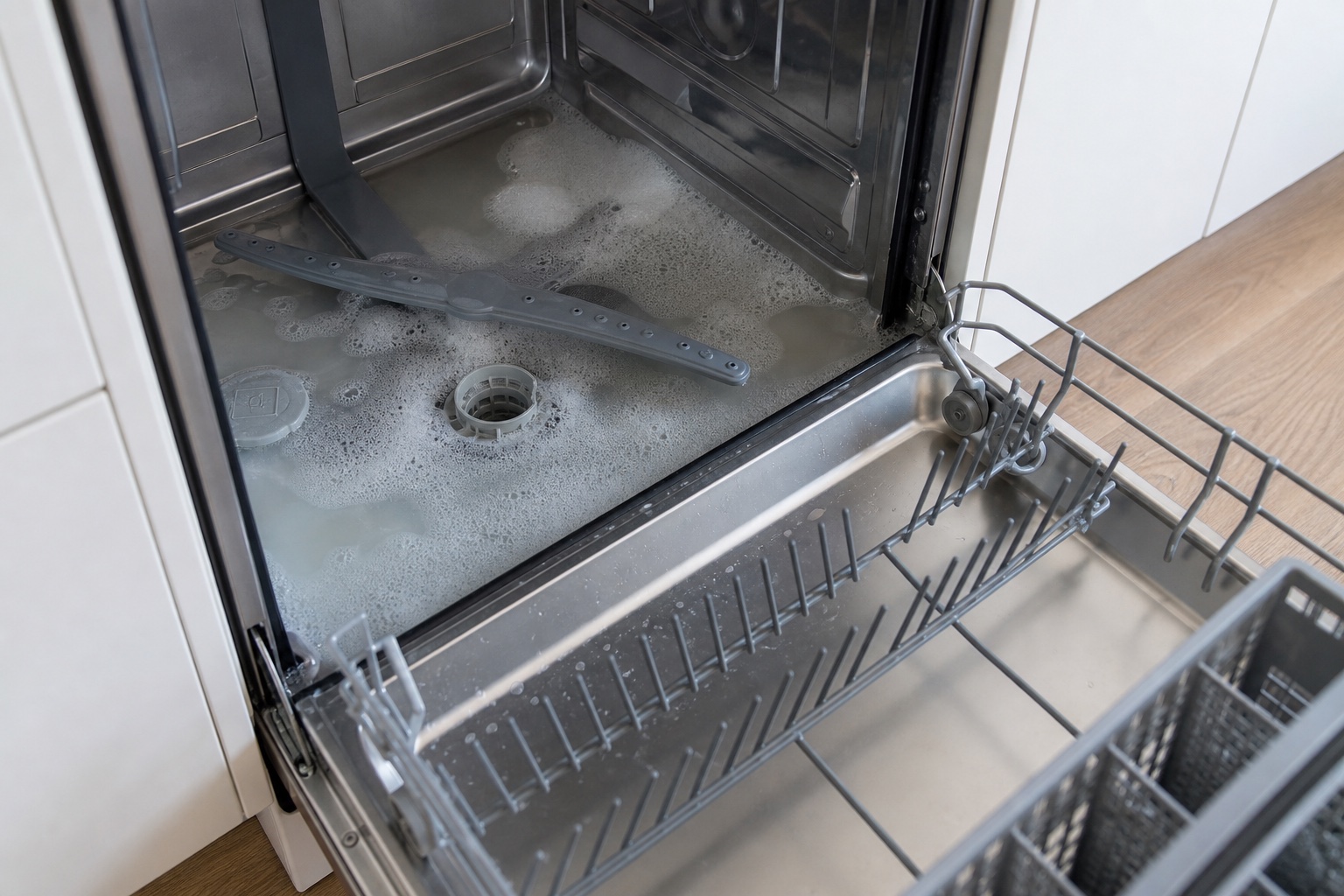
Some dishwashers are designed to retain a small amount of clean water below or around the filter.
This water can help:
- Keep pump seals from drying out.
- Prevent odors from entering through the drain.
- Support normal pump operation.
- Maintain moisture around internal components.
The water may indicate a problem when:
- It covers most of the dishwasher floor.
- It reaches the heating element.
- It contains food debris.
- It smells bad.
- It returns after being removed.
- The dishwasher displays a drain error.
- Water remains after Cancel or Drain is selected.
- Water leaks through the door.
- Dirty sink water flows into the dishwasher.
Is the Dishwasher Not Draining or Filling Again?
Before diagnosing the appliance, determine when the water appears.
The dishwasher may:
- Finish the cycle with water still inside.
- Drain normally and fill again later.
- Back up when the kitchen sink is used.
- Collect water only after the garbage disposal runs.
- Stop in the middle of the cycle.
- Make a humming noise without draining.
- Drain slowly but not completely.
Water remaining immediately after the cycle usually points to a dishwasher drainage problem.
Water appearing hours later may indicate backflow from the sink, garbage disposal, or household plumbing.
1. The Dishwasher Filter Is Clogged
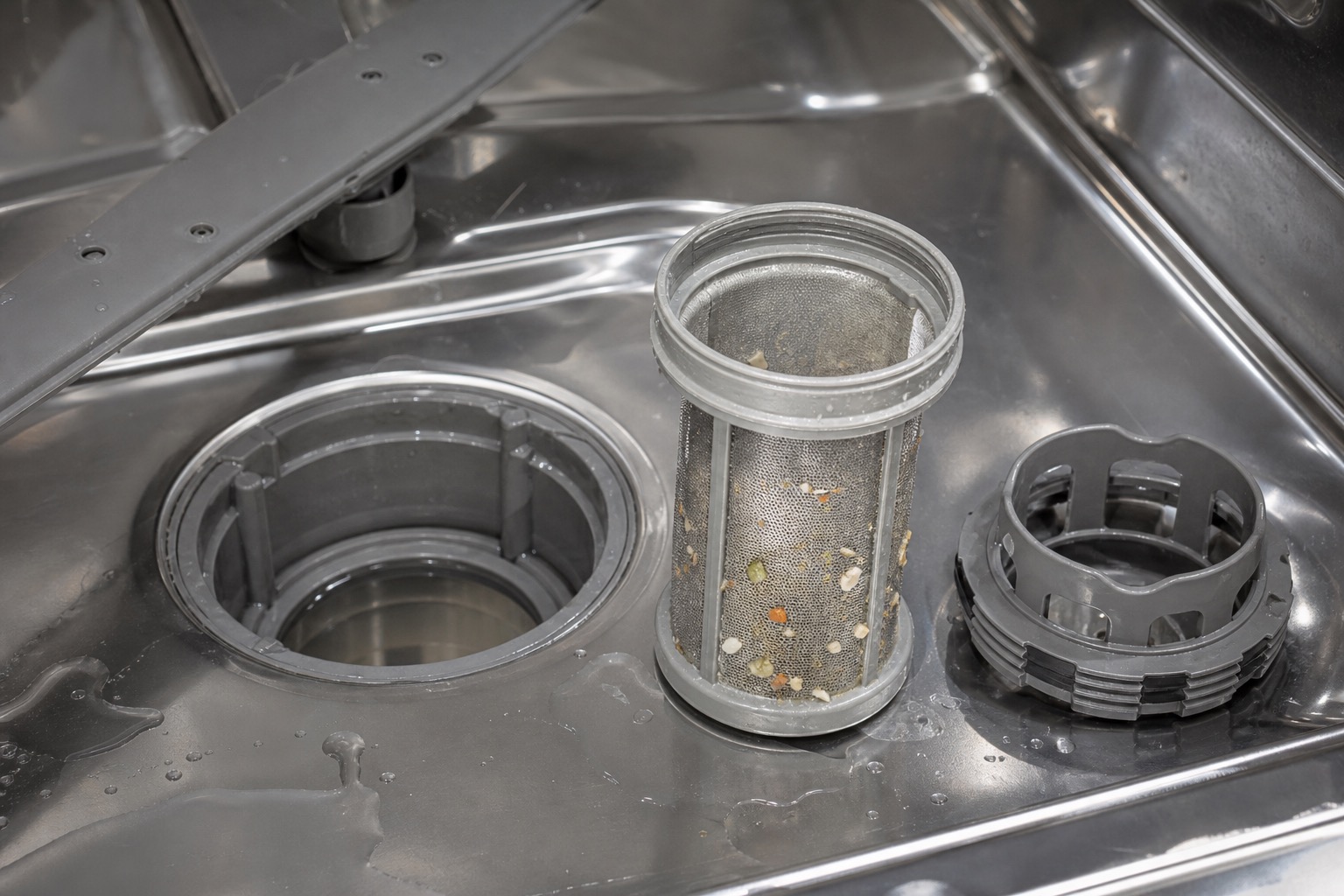
The filter prevents food particles and debris from reaching the circulation and drain systems.
A clogged filter can restrict water movement and leave standing water inside the tub.
Common debris includes:
- Food particles.
- Paper labels.
- Broken glass.
- Bones.
- Seeds.
- Grease.
- Detergent residue.
- Plastic pieces.
- Toothpicks.
Possible symptoms include:
- Water remaining after the cycle.
- Dirty dishes.
- Unpleasant odor.
- Food debris around the bottom.
- Grinding noise.
- Slow drainage.
- Cloudy water.
Remove and clean the filter according to the manufacturer’s instructions.
Most filters can be rinsed with warm water and cleaned using a soft brush.
Do not force the filter if it does not release easily. Some models use screws or locking tabs.
2. Food Debris Is Blocking the Sump Area
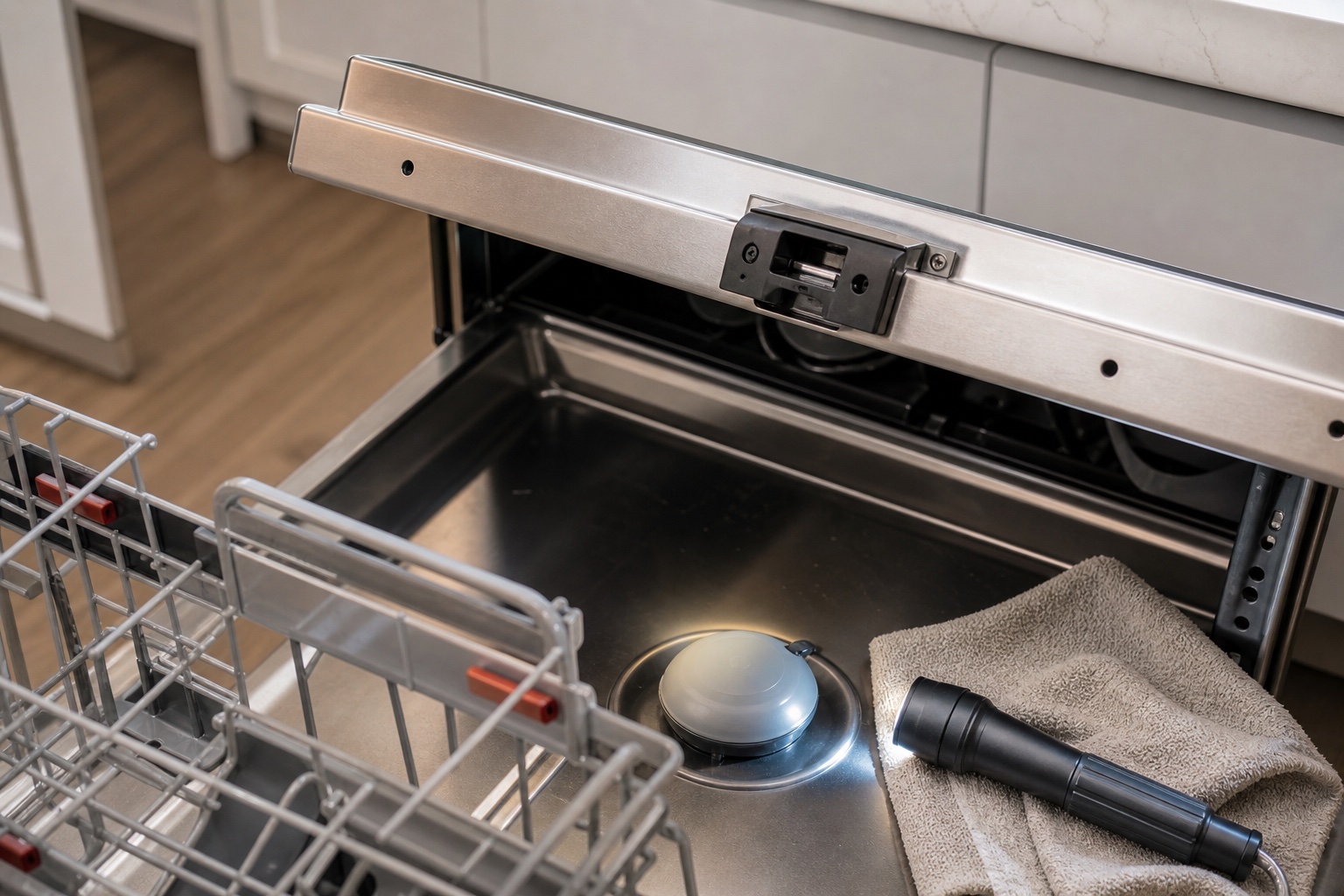
The sump is the recessed area beneath the filter where water enters the pump system.
Even if the filter looks clean, debris may be trapped below it.
Possible obstructions include:
- Broken glass.
- Plastic.
- Food fragments.
- Paper.
- Ceramic pieces.
- Bones.
- Seeds.
- Labels from jars or containers.
A blocked sump may cause:
- Drain pump humming.
- Grinding or clicking.
- Water moving only slightly.
- Drain error.
- Pump stopping during operation.
Disconnect power before reaching near the pump or removing internal covers.
Wear gloves because broken glass may be present.
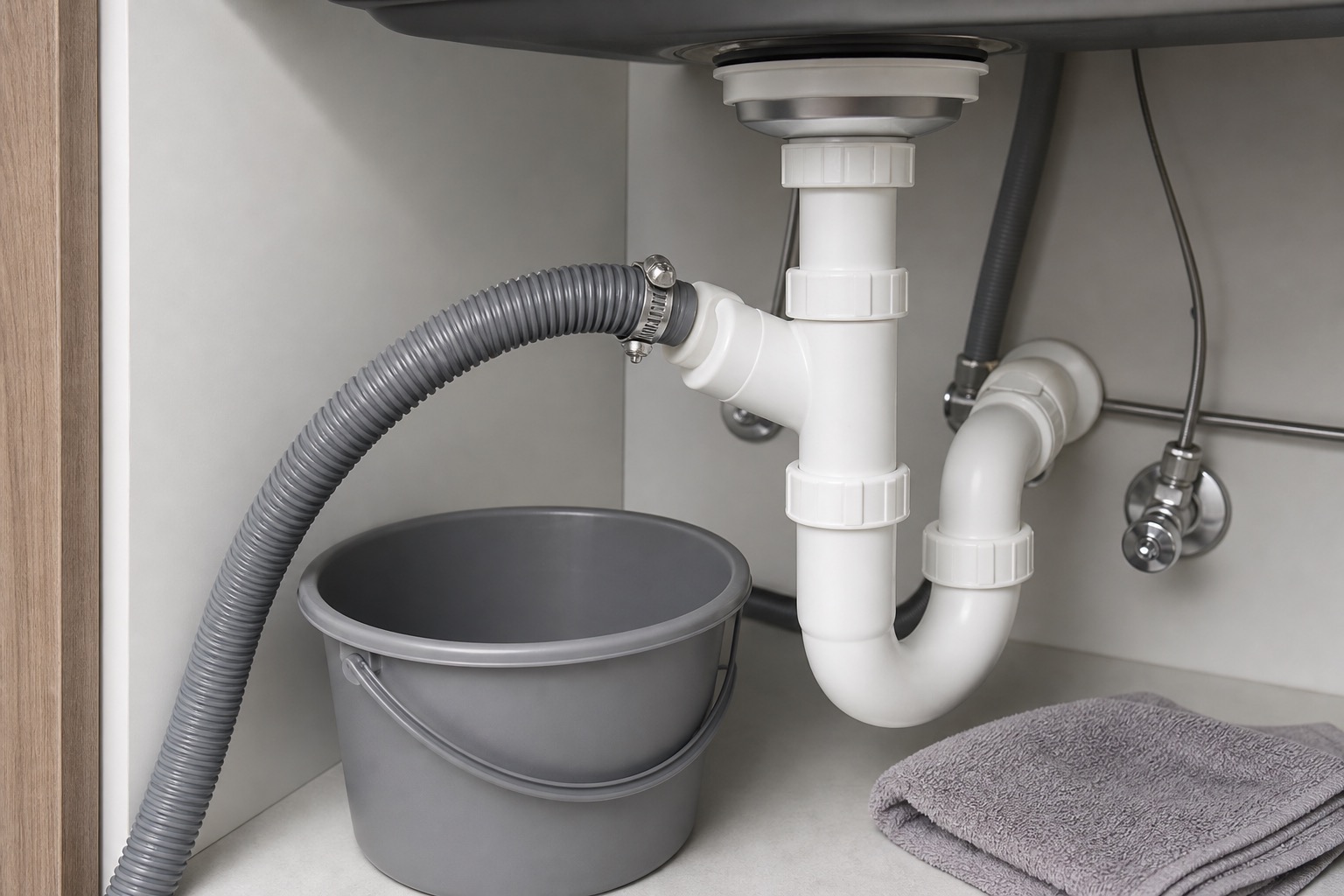
3. The Drain Hose Is Kinked
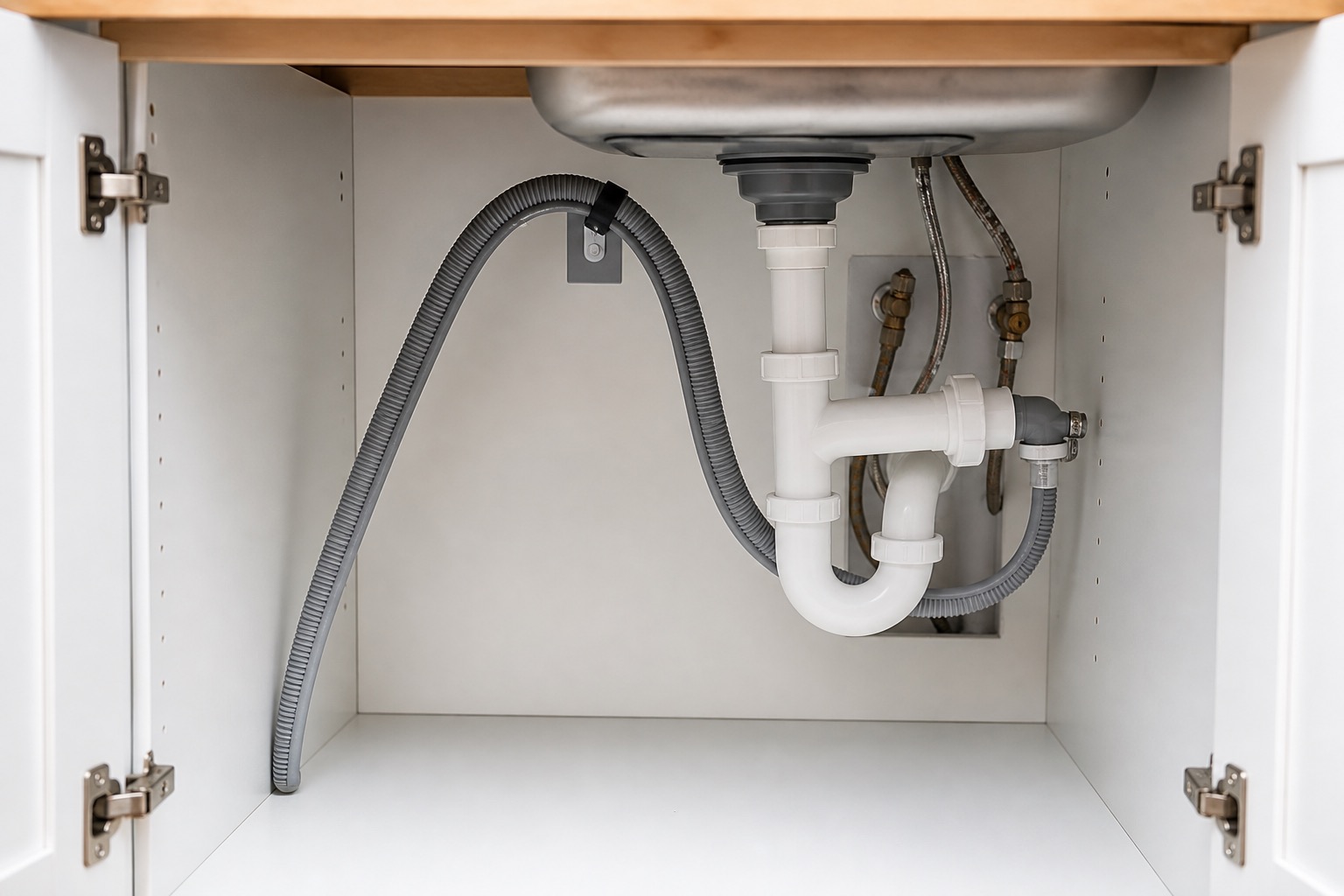
The dishwasher drain hose carries water to the garbage disposal, sink drain, or air gap.
If the hose is bent or crushed, water may not leave the appliance correctly.
Check for:
- Sharp bends.
- Hose pinched behind the dishwasher.
- Cabinet items pressing against the hose.
- Dishwasher pushed too far backward.
- Hose twisted during installation.
- Damaged or collapsed tubing.
Accessing the entire hose may require removing the dishwasher from the cabinet.
Do not pull the appliance forward aggressively because electrical wiring, water lines, and the drain hose may be short.
4. The Drain Hose Is Clogged
Grease, food debris, detergent residue, or foreign objects can block the drain hose.
A partial blockage may cause:
- Slow drainage.
- Water remaining after the cycle.
- Pump running longer than normal.
- Drain error code.
- Water backing up intermittently.
A complete blockage may prevent any water from leaving.
The hose may need to be disconnected and flushed or replaced.
Prepare for water to spill when the hose is removed.
Disconnect power and turn off the dishwasher water supply before servicing internal connections.
5. The Drain Hose Is Installed Incorrectly
The drain hose must be installed with the correct routing.
A proper installation usually includes a high loop or approved air gap to prevent dirty sink water from flowing back into the dishwasher.
Installation problems may include:
- No high loop.
- Hose lying low inside the cabinet.
- Hose connected below the proper drain point.
- Hose inserted incorrectly.
- Hose too long and sagging.
- Air gap missing where required.
- Improper connection to the disposal.
Signs of backflow include:
- Dishwasher drains but water returns later.
- Water appears after using the sink.
- Dishwasher water smells like the garbage disposal.
- Food debris enters the dishwasher.
- Water level changes when the sink drains.
The exact installation requirements depend on local plumbing codes and the dishwasher manufacturer.
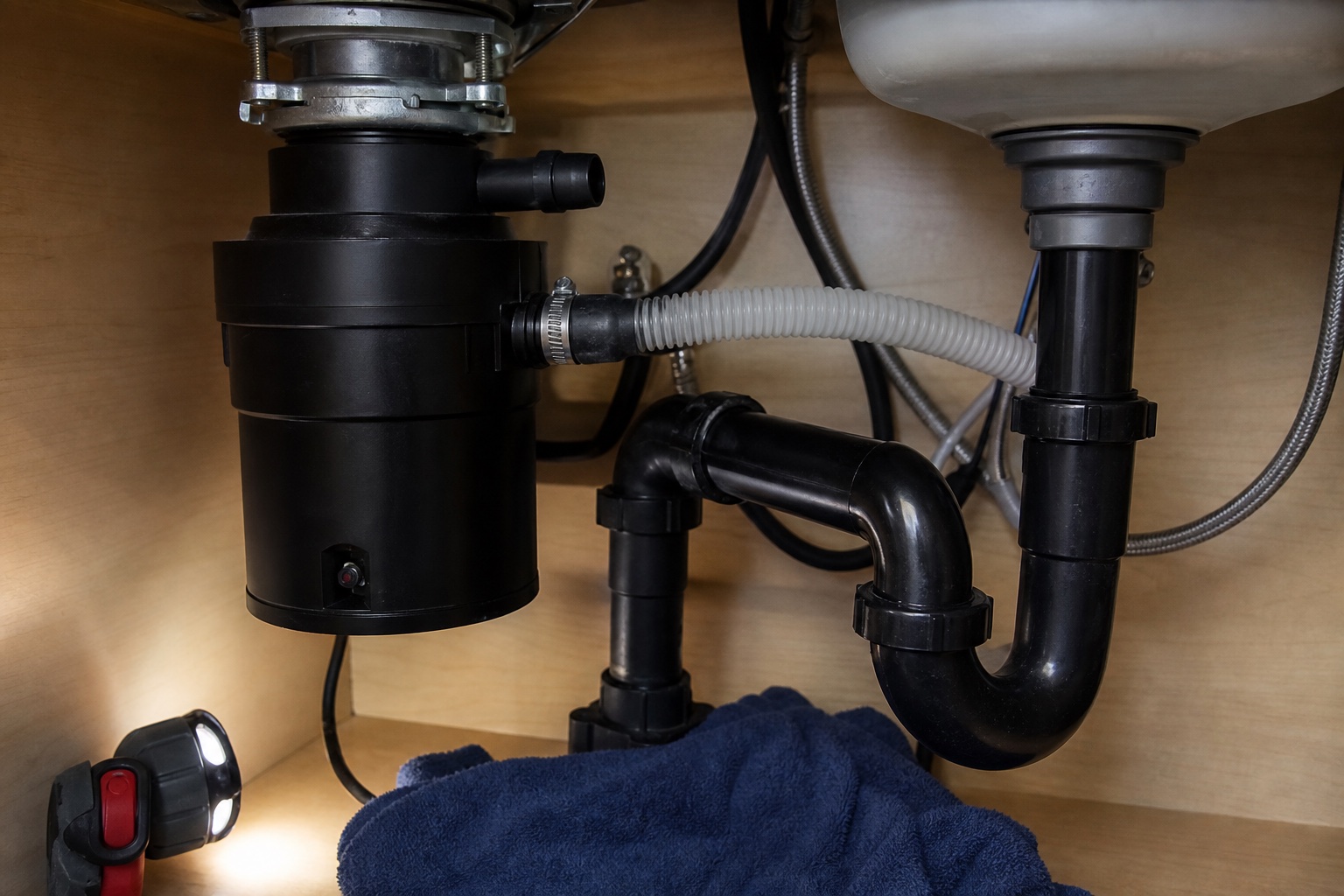
6. The Garbage Disposal Is Clogged
Many dishwashers drain through the garbage disposal.
If the disposal or sink drain is clogged, dishwasher water may have nowhere to go.
Possible signs include:
- Sink draining slowly.
- Water backing up into the sink.
- Dishwasher water returning after draining.
- Gurgling noises.
- Disposal not operating normally.
- Water appearing in the dishwasher when the sink is used.
Run the garbage disposal before starting the dishwasher.
Do not place your hand inside the disposal.
If the sink and disposal both drain slowly, the household plumbing may need attention.
7. The Disposal Knockout Plug Was Not Removed
A new garbage disposal has a solid plug inside the dishwasher drain connection.
This plug must be removed before the dishwasher hose is connected.
If it remains in place:
- The dishwasher cannot drain.
- The drain pump may run loudly.
- Water remains after every cycle.
- The dishwasher may display a drain error.
- The problem begins immediately after disposal installation.
This is a common issue after replacing a garbage disposal.
The hose must be disconnected and the plug removed correctly.
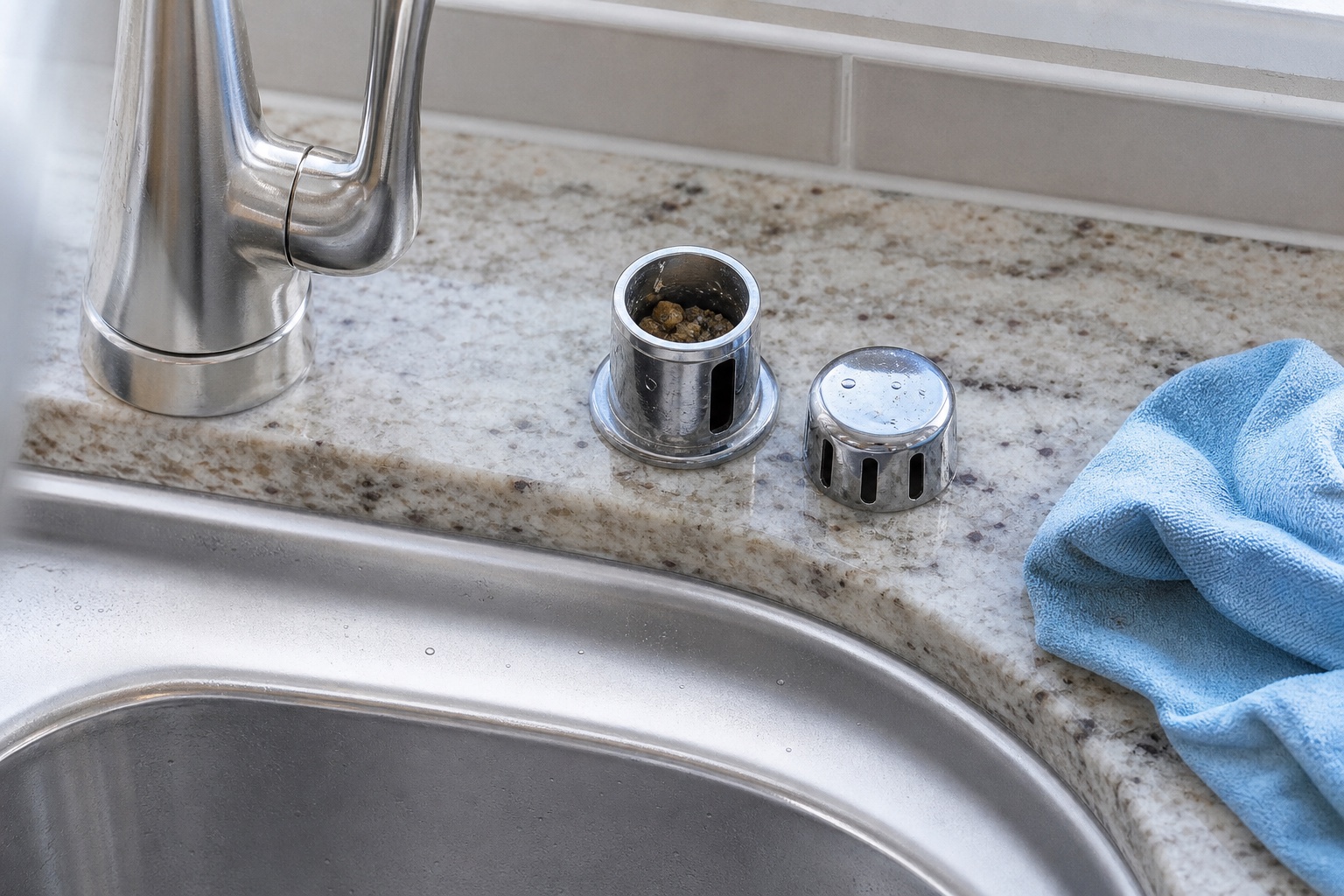
8. The Air Gap Is Clogged
Some dishwasher installations use a small air-gap fitting mounted near the sink faucet.
The air gap prevents dirty sink water from entering the dishwasher.
Food particles or grease can block it.
Possible symptoms include:
- Water remaining inside the dishwasher.
- Water leaking from the air gap.
- Water spraying onto the sink.
- Dishwasher draining slowly.
- Gurgling during drain.
The air-gap cover may be removable for cleaning.
Do not force or damage the internal fitting.
9. The Drain Pump Is Blocked
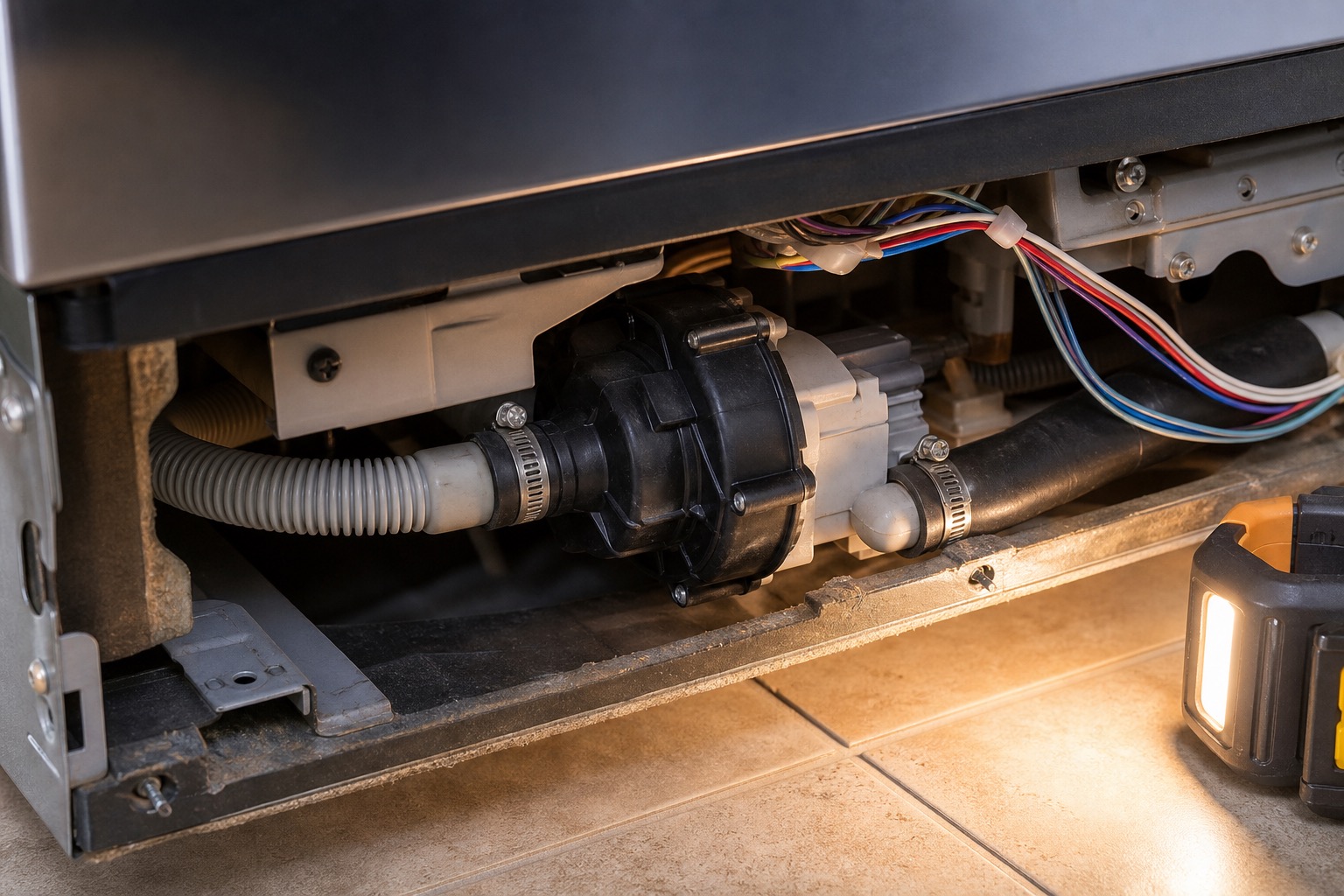
The drain pump moves water from the dishwasher into the drain hose.
A foreign object may prevent the impeller from turning.
Common objects include:
- Broken glass.
- Food pieces.
- Plastic.
- Labels.
- Small bones.
- Screws.
- Toothpicks.
- Ceramic fragments.
Symptoms may include:
- Humming during drain.
- Clicking or grinding.
- Water moving only slightly.
- Pump starting and stopping.
- Drain error code.
- Standing water after Cancel or Drain.
The obstruction may be inside the pump housing and not visible from the filter area.
Access often requires removing internal covers or the lower service panel.
10. The Drain Pump Has Failed
A drain pump may fail electrically or mechanically.
Possible signs include:
- No drain-pump sound.
- Humming without water movement.
- Pump receiving power but not operating.
- Intermittent drainage.
- Burning smell.
- Water leaking from the pump housing.
- Recurring drain error.
The pump can fail because of:
- Age.
- Repeated blockages.
- Damaged impeller.
- Motor winding failure.
- Overheating.
- Water intrusion.
- Electrical damage.
The pump should be tested before replacement because a blocked hose or control problem can produce similar symptoms.
11. The Drain-Pump Impeller Is Damaged
The impeller is the rotating component that pushes water through the drain system.
It may become:
- Cracked.
- Loose.
- Worn.
- Detached from the motor shaft.
- Jammed by debris.
The motor may run while the pump moves little or no water.
Possible symptoms include:
- Pump sounds normal but drainage is weak.
- Intermittent draining.
- Grinding or rattling.
- Water remaining after every cycle.
- Pump replacement temporarily improves operation only if another blockage remains.
A damaged impeller normally requires replacement of the drain-pump assembly.
12. The Check Valve Is Stuck
A dishwasher may use a check valve to prevent drained water from flowing back into the tub.
If the valve is stuck closed, the dishwasher may not drain.
If it is stuck open, dirty water may return after draining.
Possible symptoms include:
- Water drains and then comes back.
- Gurgling after the pump stops.
- Dishwasher water smells like the sink.
- Water level rises when the sink is used.
- Drainage is inconsistent.
The valve may be blocked by grease, food debris, or a damaged internal flap.
13. The Drain Solenoid Has Failed
Some older dishwashers use a drain solenoid to direct water toward the drain.
If it fails, the dishwasher may wash normally but not empty at the end of the cycle.
Possible symptoms include:
- Motor runs but water remains.
- Drain works only occasionally.
- Solenoid does not move.
- Burned or damaged linkage.
- Dishwasher drains on one cycle but not another.
Many newer dishwashers use a separate electric drain pump and do not have this component.
14. The Dishwasher Cycle Was Interrupted
Opening the door, losing power, or canceling a cycle at the wrong time may leave water inside.
Try:
- Closing and latching the door.
- Selecting Cancel or Drain.
- Allowing the drain cycle to complete.
- Waiting several minutes before opening the door.
A small amount of water after an interrupted cycle may be normal.
If the dishwasher repeatedly stops before draining, there may be a door-lock, power, sensor, or control problem.
15. The Door Latch Is Not Engaging
Many dishwashers will not continue or drain if the control system cannot confirm that the door is closed.
A faulty latch may cause:
- Cycle stopping with water inside.
- Dishwasher not responding to Cancel or Drain.
- Door-open error.
- Controls lighting but cycle not starting.
- Machine working only when pressure is applied to the door.
- Intermittent operation.
The latch, switch, wiring, and door alignment should be inspected.
Do not bypass the door switch.
16. The Float Switch Is Stuck
The float monitors the water level inside the dishwasher.
If it becomes stuck, the control board may receive incorrect information.
A stuck float can cause:
- Dishwasher not filling.
- Drain pump running continuously.
- Cycle stopping unexpectedly.
- Water-level errors.
- Standing water remaining after an incomplete cycle.
The float may be blocked by:
- Food debris.
- Detergent residue.
- Broken plastic.
- Grease.
- Improperly installed lower rack.
The float should move freely when the dishwasher is off and cool.
17. The Water-Level Sensor Is Faulty
Some dishwashers use a pressure sensor or electronic water-level system.
Incorrect readings may cause the dishwasher to:
- Stop before draining.
- Drain continuously.
- Overfill.
- Leave water inside.
- Display an error code.
- Run unusually long cycles.
The problem may involve:
- Blocked pressure chamber.
- Damaged hose.
- Sensor failure.
- Wiring problem.
- Control board fault.
Testing should follow the manufacturer’s service information.
18. Excessive Detergent Is Creating Too Many Suds
Dishwashers require automatic dishwasher detergent.
Regular hand dish soap or too much detergent can create excessive foam.
Suds may interfere with:
- Water-level sensing.
- Pump operation.
- Drainage.
- Door sealing.
- Normal circulation.
Possible symptoms include:
- Foam inside the dishwasher.
- Water leaking through the door.
- Standing water.
- Long cycle.
- Pump running continuously.
- Error codes.
Do not add more detergent to correct dirty dishes.
If regular dish soap was used, remove as much foam as possible and follow the manufacturer’s instructions for clearing the suds.
19. Grease Has Built Up in the Drain System
Grease can collect in:
- Filter.
- Sump.
- Drain hose.
- Air gap.
- Garbage-disposal connection.
- Check valve.
Over time, grease may harden and restrict drainage.
Possible signs include:
- Slow drainage.
- Bad odor.
- Cloudy standing water.
- Greasy filter.
- Water draining better when hot.
- Recurring blockage.
Scrape food from dishes before loading, but follow the dishwasher manufacturer’s recommendations about pre-rinsing.
Use the correct detergent and water temperature.
20. The Household Drain Is Blocked
The dishwasher may operate correctly while the sink drain or plumbing is obstructed.
Signs include:
- Sink drains slowly.
- Water backs up in the sink.
- Disposal gurgles.
- Dishwasher water returns after draining.
- Water leaks from the air gap.
- Other kitchen drains are affected.
If the dishwasher drain hose releases water but the household drain cannot accept it, plumbing service may be required.
21. The Control Board Is Not Activating the Drain Pump
The electronic control board controls the drain-pump cycle.
A damaged relay or control circuit may prevent the pump from receiving power.
Possible signs include:
- Pump and drain hose are clear.
- Pump does not receive voltage during drain.
- Dishwasher freezes at the end of the cycle.
- Drain works after a temporary reset.
- Display shows errors.
- Multiple functions operate incorrectly.
- Cycle does not advance.
The control board should not be replaced before testing the pump, wiring, door latch, sensors, and power supply.
22. The Timer Is Faulty
Older dishwashers may use a mechanical timer.
Worn contacts can prevent the drain pump or solenoid from operating.
Possible symptoms include:
- Dishwasher stops at the same cycle position.
- Timer does not advance.
- Drain works on one setting but not another.
- Manually moving the timer changes operation.
- Dishwasher washes but never drains.
The timer should be tested according to the wiring diagram.
23. Wiring or a Connector Is Damaged
Drainage depends on secure wiring between the control board, pump, latch, and sensors.
A loose, corroded, or burned connection may cause intermittent operation.
Possible causes include:
- Moisture.
- Vibration.
- Previous repair.
- Heat.
- Insect damage.
- Loose harness.
- Corrosion.
Signs may include:
- Pump works intermittently.
- Burning smell.
- Error code.
- Melted connector.
- Dishwasher drains when the door or wiring is moved.
Damaged wiring should be repaired correctly rather than temporarily twisted together.
24. Water Has Entered the Dishwasher Base
Some dishwashers have flood-protection systems.
If water collects in the base beneath the tub, the dishwasher may:
- Run the drain pump continuously.
- Refuse to start a normal cycle.
- Display a leak or flood error.
- Stop with water inside.
- Continue pumping after the tub appears empty.
Possible leak sources include:
- Door gasket.
- Pump seal.
- Hose connection.
- Water inlet valve.
- Excessive suds.
- Cracked sump.
- Loose internal tubing.
The source must be found before resetting the flood-protection system.
25. The Dishwasher Was Recently Installed
A new or recently reinstalled dishwasher may have drainage problems because of:
- Disposal knockout plug left in place.
- Drain hose routed incorrectly.
- Hose kinked behind the cabinet.
- Electrical connection problem.
- Dishwasher not level.
- Air gap installed incorrectly.
- Shipping material left inside.
If the problem started immediately after installation, inspect the installation before replacing appliance parts.
How to Safely Remove Standing Water
Before inspecting the filter, remove excess water.
You may use:
- Cup or small container.
- Towels.
- Sponge.
- Wet vacuum.
Disconnect power before reaching into the bottom of the dishwasher.
Wear gloves because broken glass or sharp food fragments may be present.
Do not pour chemical drain cleaner into the dishwasher. It can damage components, create dangerous fumes, and expose the technician to hazardous chemicals during service.
What Can You Safely Check?
Before scheduling service, you can:
- Select Cancel or Drain.
- Listen for the drain pump.
- Remove standing water with a cup or wet vacuum.
- Clean the dishwasher filter.
- Inspect the sump for visible debris.
- Run the garbage disposal.
- Check whether the kitchen sink drains normally.
- Inspect the air gap if one is installed.
- Look for a kinked drain hose under the sink.
- Confirm that the drain hose has a proper high loop.
- Check whether the problem began after disposal installation.
- Use only automatic dishwasher detergent.
- Record any error code.
- Stop the dishwasher if water leaks onto the floor.
Do not remove electrical panels while the appliance is connected to power.
Do not place your hand inside a garbage disposal.
When Should You Stop Using the Dishwasher?
Stop using the dishwasher when:
- Water leaks onto the floor.
- Water reaches electrical components.
- The breaker repeatedly trips.
- You smell burning.
- The drain pump makes loud grinding noises.
- Dirty sink water backs into the dishwasher.
- The dishwasher overfills.
- The pump runs continuously while controls are off.
- Water damages surrounding cabinets.
Turn off power at the breaker if the plug is not safely accessible.
When Should You Call a Dishwasher Technician?
Professional service is recommended when:
- Water remains after cleaning the filter.
- The drain hose and household drain are clear.
- The pump hums but does not move water.
- The drain pump does not run.
- The dishwasher displays a recurring drain error.
- Water returns after draining.
- The dishwasher stops at the end of every cycle.
- The door latch does not engage.
- The flood-protection system activates.
- Wiring shows heat or moisture damage.
- Water leaks from the pump or sump.
- The problem returns after a reset.
A technician can inspect the drain pump, check valve, hose, sump, float, door latch, wiring, sensors, timer, and control board.
Should You Repair or Replace the Dishwasher?
Repair is often reasonable when the problem involves:
- Clogged filter.
- Blocked drain hose.
- Drain pump.
- Check valve.
- Door latch.
- Float switch.
- Air gap.
- Disposal connection.
- Wiring.
- Control relay.
Replacement may be more practical when:
- The tub is cracked.
- The cabinet has severe corrosion.
- Multiple major components have failed.
- Critical parts are discontinued.
- The dishwasher has repeated leaks.
- Repair cost approaches the value of a replacement appliance.
A complete diagnosis should be performed before deciding.
Photo guide
Diagnostic Photos
Local Dishwasher Service
Relevant local service pages include dishwasher repair in Cape Coral, Dishwasher Repair in Fort Myers, North Fort Myers dishwasher repair, and Lehigh Acres dishwasher repair. We also serve surrounding Southwest Florida service areas.
For scheduling, use the Contact page or call/text Art’s Appliance Repair directly.
Helpful Next Pages
These related guides and local service pages help connect the symptom to a practical repair path.
Related Appliance Guides
Dishwasher
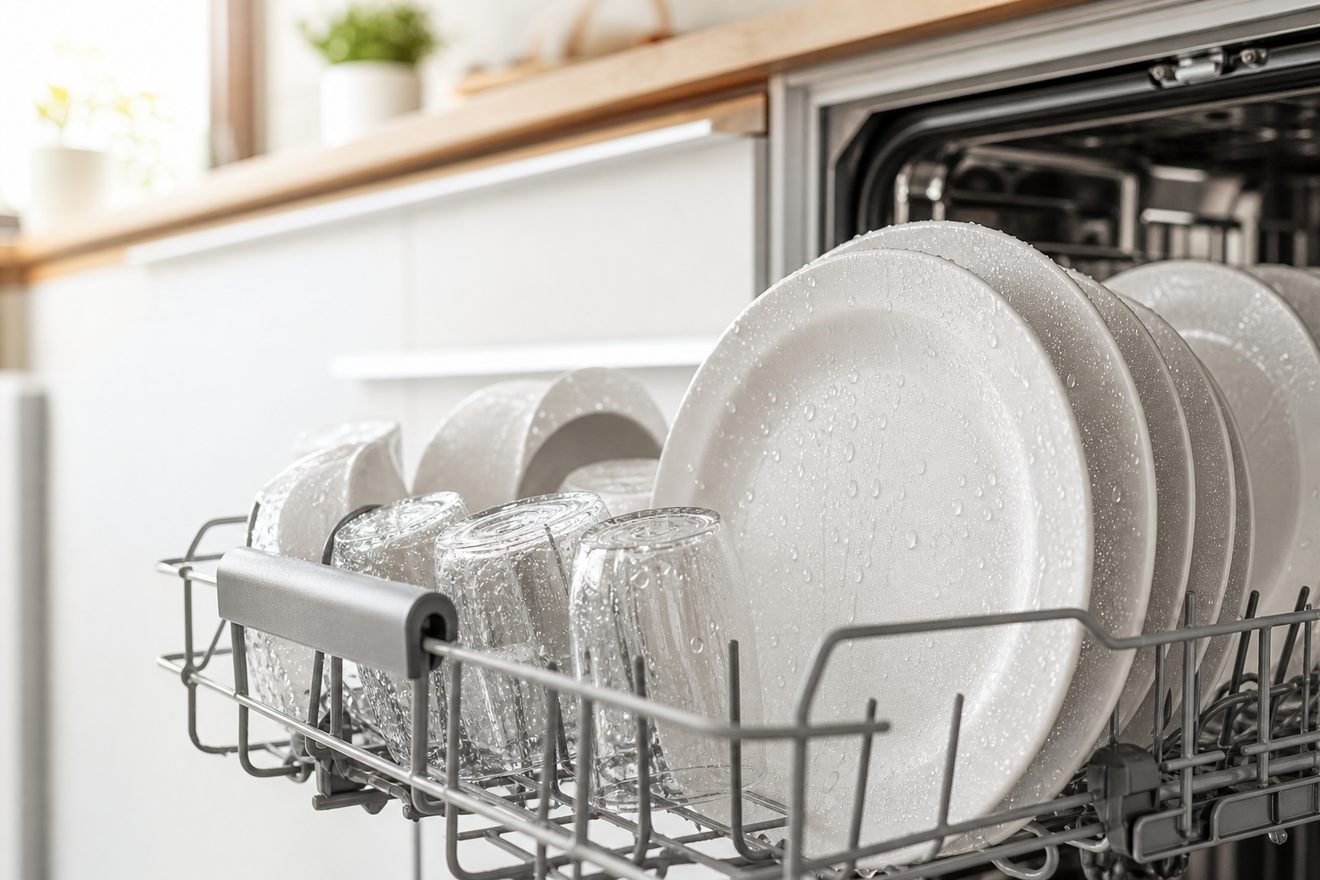
Dishwasher Is Not Drying the Dishes: What Usually Causes It?
Dishwasher leaving dishes wet? Learn how rinse aid, loading, dry settings, water temperature, heating, vents, and drain problems affect drying.
Updated August 20, 2026
dishwasher not drying dishes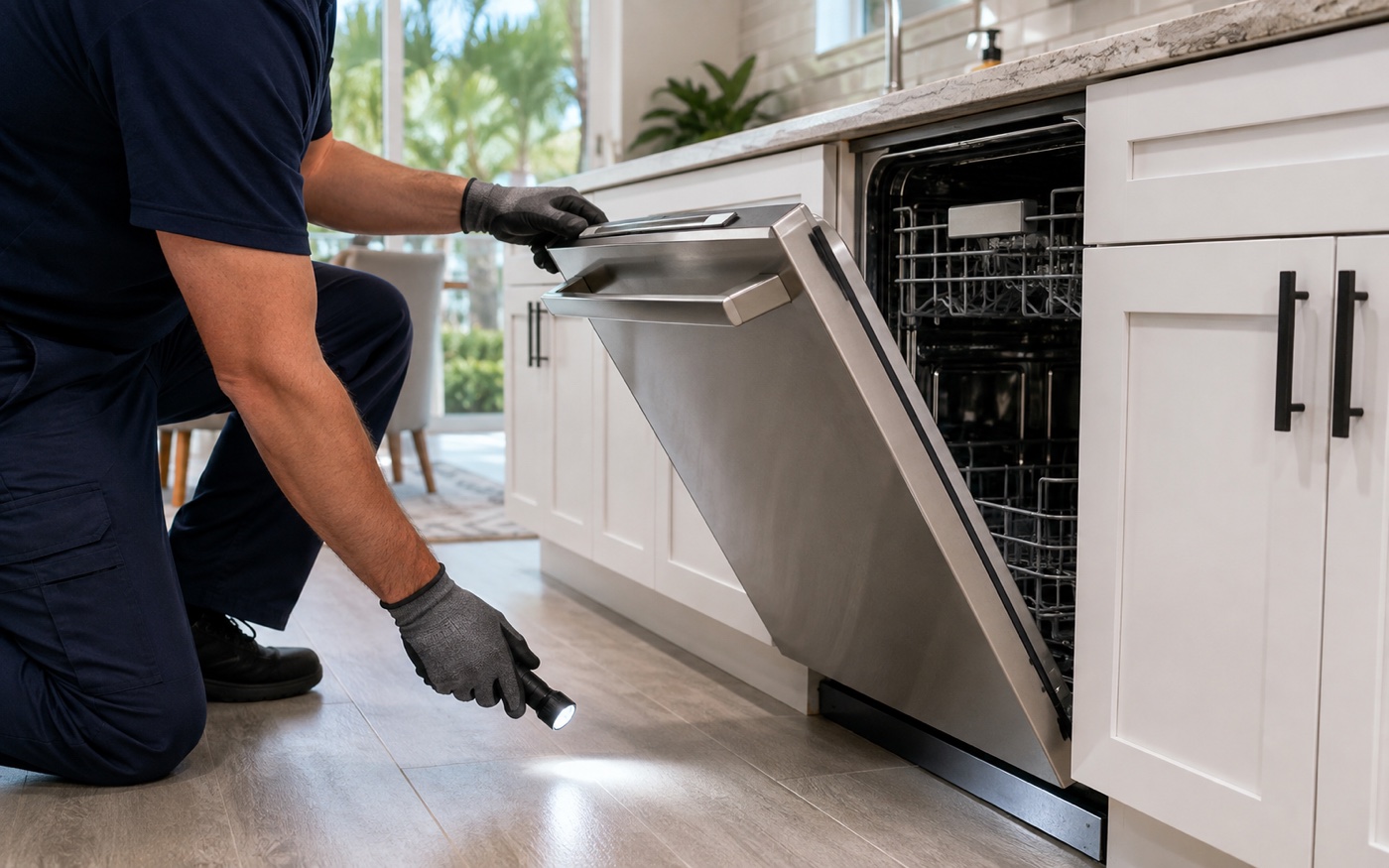
Dishwasher
Dishwasher Is Leaking From Under the Door: What Usually Causes It?
Dishwasher leaking from the bottom of the door? Learn how gasket problems, suds, spray arms, leveling, loading, and overfilling can cause front leaks.
Updated September 3, 2026
dishwasher leaking from under the door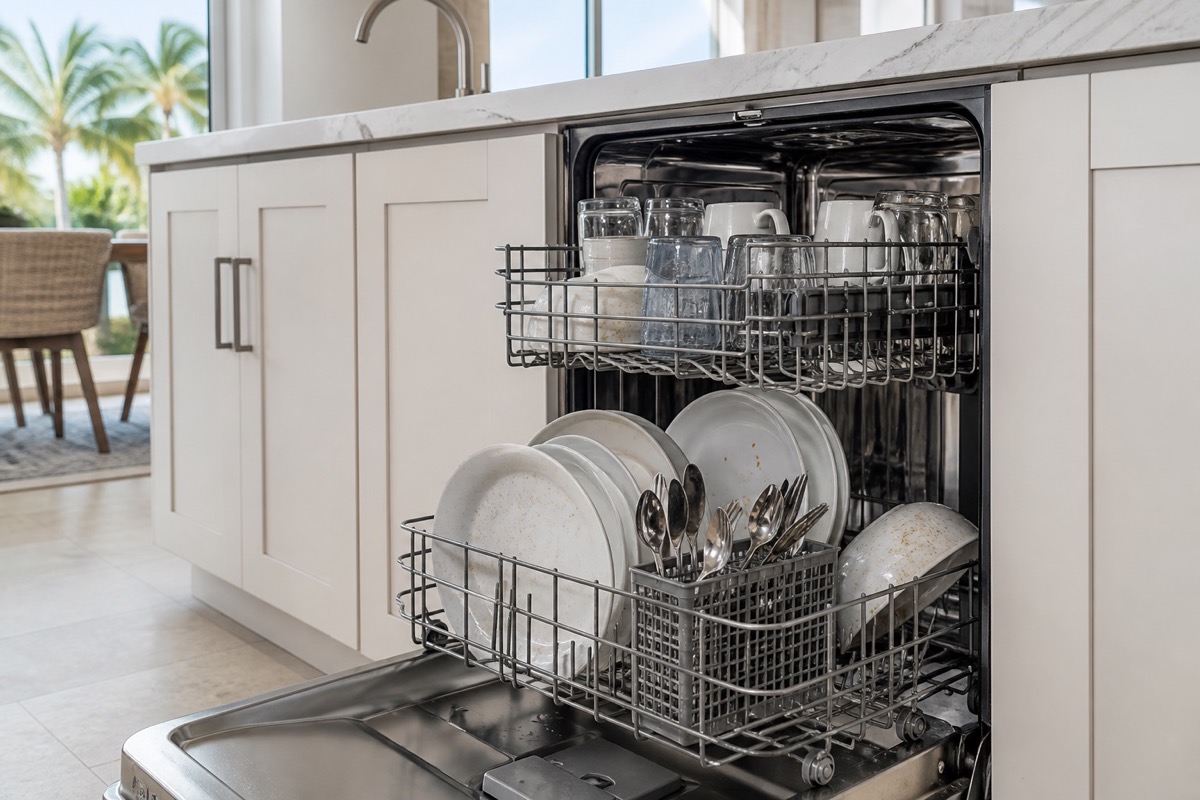
Dishwasher
Dishwasher Runs but Does Not Clean the Dishes: Common Causes
Dishwasher running but dishes still dirty? Learn the common filter, spray arm, pump, water, heating, and detergent problems and when repair is needed.
Updated August 7, 2026
dishwasher runs but does not clean dishesNeed service?
Dishwasher Repair in Cape Coral, Fort Myers and Southwest Florida
Art’s Appliance Repair provides dishwasher diagnostics and repair throughout Cape Coral, Fort Myers, North Fort Myers, Lehigh Acres, Estero, Bonita Springs, Naples, and surrounding Southwest Florida communities.
We diagnose dishwasher problems including:
- Standing water at the bottom.
- Dishwasher not draining.
- Clogged filters and drain hoses.
- Failed drain pumps.
- Garbage-disposal connection problems.
- Dishwasher leaking.
- Drain and flood error codes.
- Door-latch failures.
- Dishwasher stopping during a cycle.
- Dirty water backing into the tub.
- Control-board and wiring problems.
Call or text (239) 688-9955 to schedule dishwasher service.
Service call: $0 with an approved repair. A $79 diagnostic fee may apply if the repair is declined.
View Dishwasher Repair