Refrigerator Clicking On and Off: Common Causes

A refrigerator may make an occasional click during normal operation. Relays, valves, fans, dampers, and electronic controls can all produce clicking sounds.

However, repeated clicking every few minutes—especially when the refrigerator is not cooling—may indicate that the compressor is trying and failing to start. Other possible causes include a defective start relay, compressor overload, inverter board failure, unstable power, a blocked fan, or an electronic control problem.

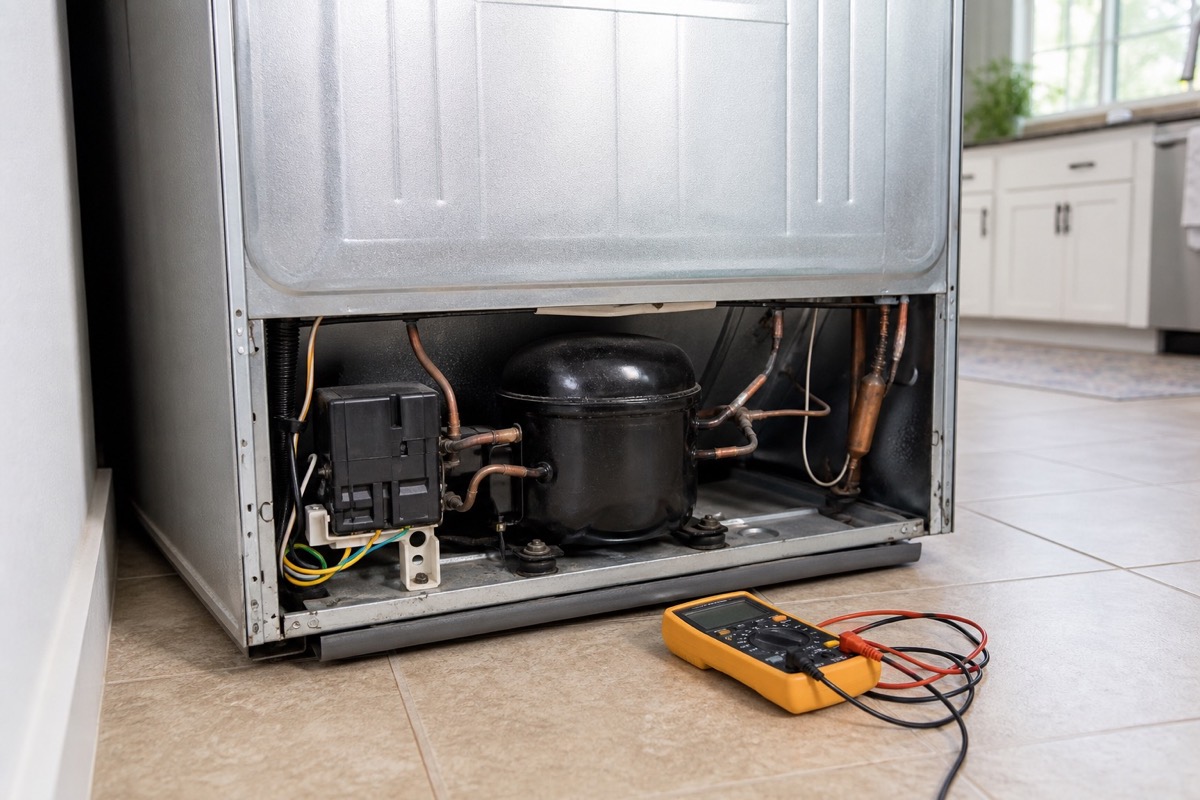
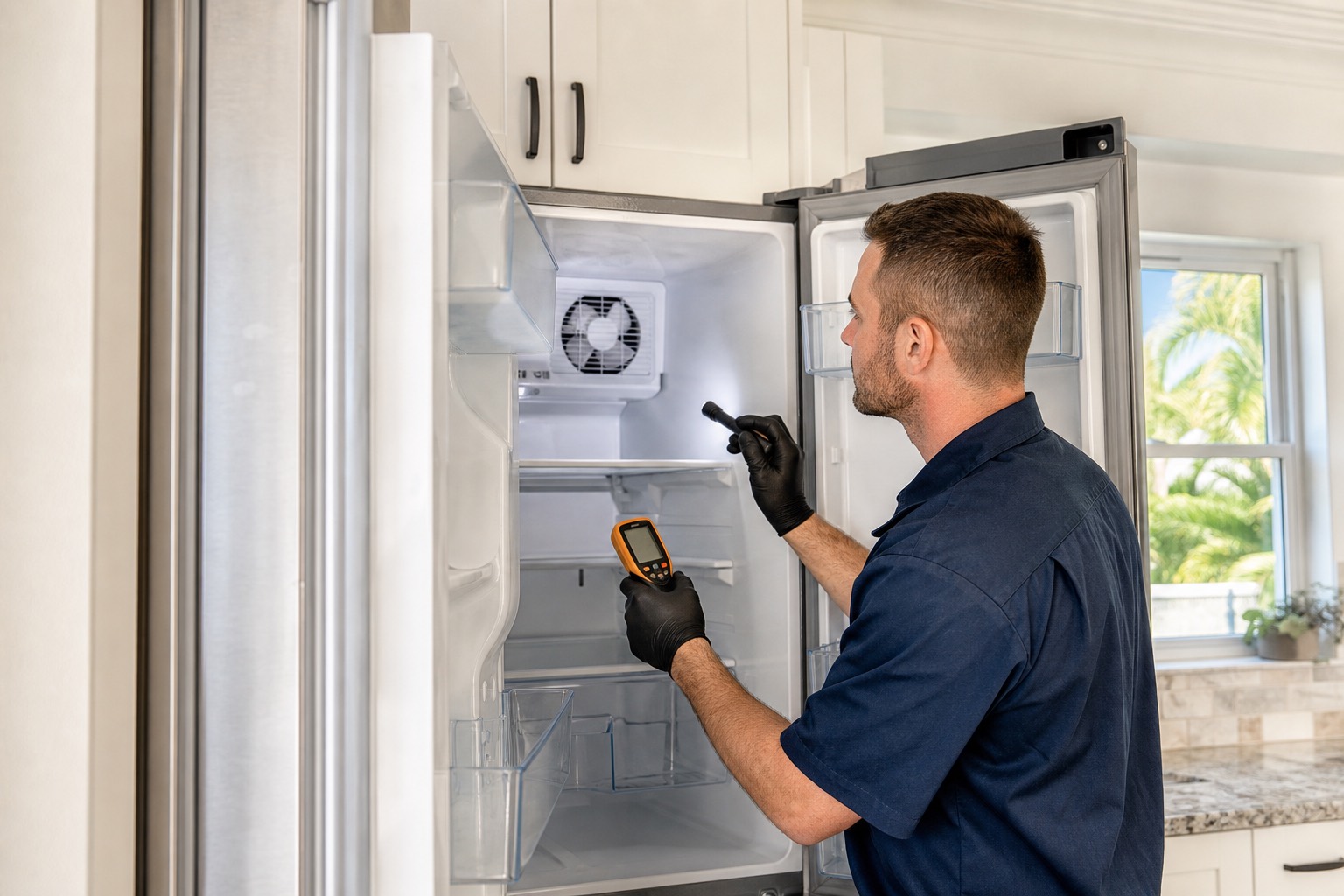
Technician discussing repeated refrigerator clicking and service options

Is It Normal for a Refrigerator to Click?

Some clicking sounds are normal.

You may hear a click when:

  • The compressor starts or stops.
  • The refrigerator enters or exits a defrost cycle.
  • The ice maker begins a harvest cycle.
  • The water inlet valve activates.
  • The air damper opens or closes.
  • The electronic control board switches a component.
  • Interior materials expand or contract.
  • A fan changes speed.

A single click followed by normal compressor operation is usually not a concern.

Repeated clicking may indicate a problem when:

  • The compressor does not remain running.
  • The refrigerator is getting warm.
  • The compressor becomes extremely hot.
  • The clicking repeats every few minutes.
  • Lights and fans work, but there is no cooling.
  • The refrigerator resets or the display flickers.
  • A breaker or GFCI outlet trips.
  • The sound began after a power outage or surge.
  • Clicking is followed by humming or buzzing.

Where Is the Clicking Coming From?

Before diagnosing the problem, listen for the approximate location of the sound.

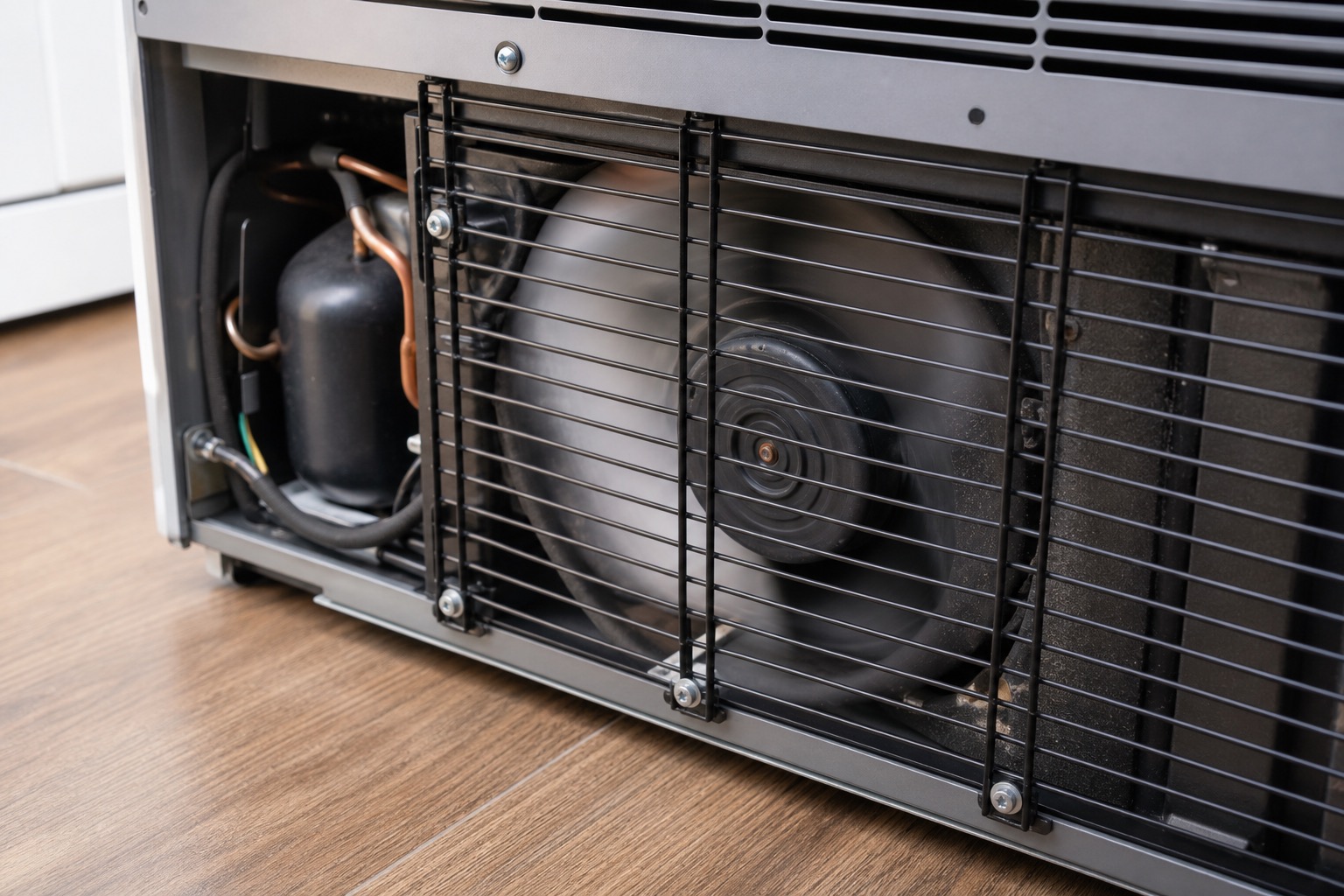
Lower rear section

Clicking near the compressor may involve:

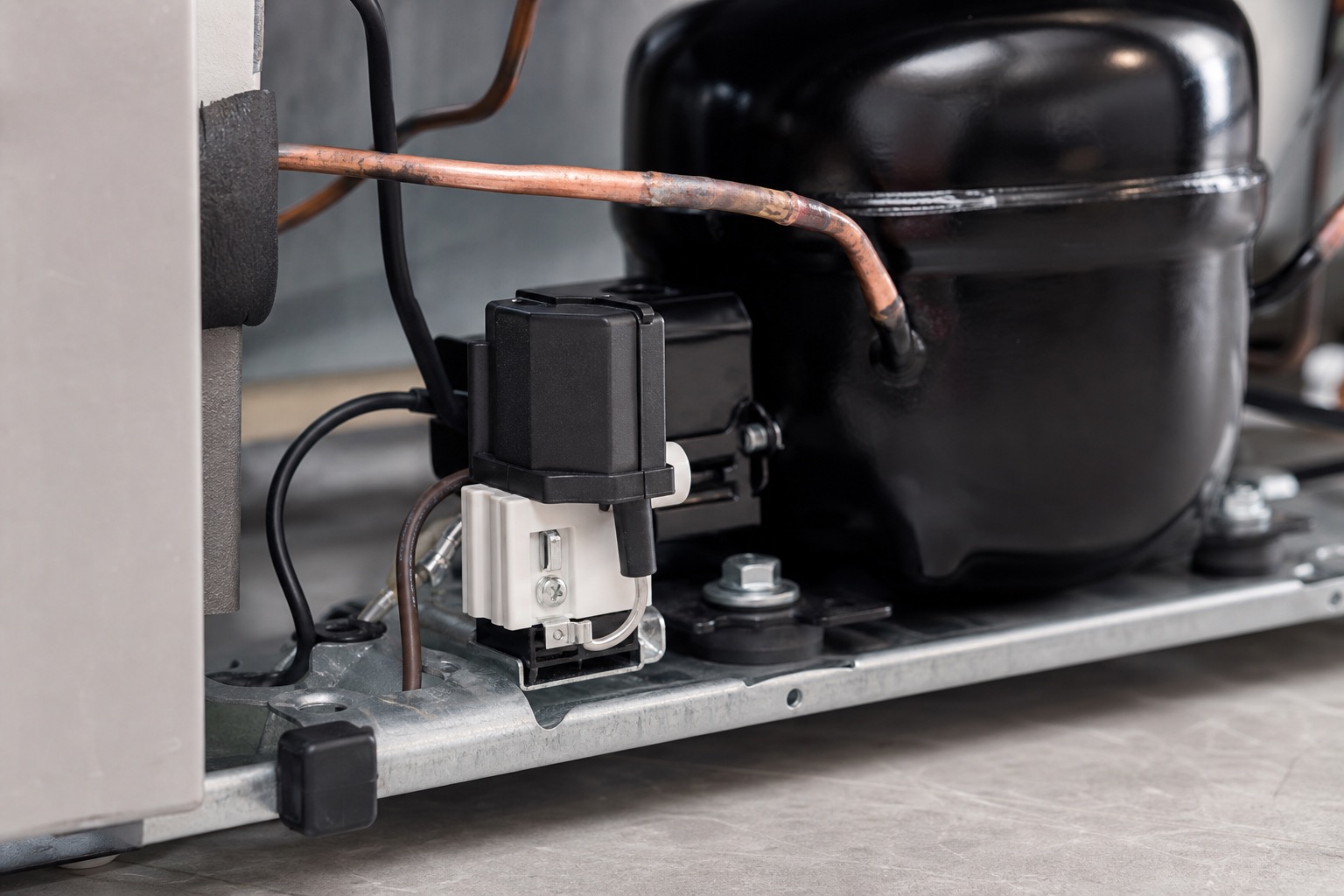
  • Compressor start relay.
  • Compressor overload protector.
  • Inverter board.
  • Compressor itself.
  • Main control board relay.
  • Condenser fan obstruction.

Inside the freezer

Clicking inside the freezer may involve:

  • Evaporator fan hitting ice.
  • Ice maker mechanism.
  • Air damper.
  • Loose interior panel.
  • Defrost components expanding or contracting.

Near the water connection

Clicking may be related to:

  • Water inlet valve.
  • Low water pressure.
  • Ice maker fill cycle.
  • Dispenser valve.
  • Water line movement.

Near the control panel

Possible causes include:

  • Electronic control board relay.
  • User interface problem.
  • Damper motor.
  • Ice maker control.
  • Unstable electrical power.

1. The Compressor Is Starting and Stopping Normally

A refrigerator compressor cycles on and off to maintain the selected temperature.

When a normal cooling cycle begins or ends, you may hear one click.

Normal operation usually looks like this:

  • A click occurs.
  • The compressor starts.
  • The compressor runs steadily.
  • The refrigerator cools normally.
  • The compressor shuts off after completing the cycle.

The sound is more likely to be normal when:

  • Temperatures remain correct.
  • The compressor runs for a reasonable period.
  • Clicking is not frequent.
  • There is no burning smell.
  • The refrigerator does not reset.
  • No error codes appear.

2. The Start Relay Is Failing

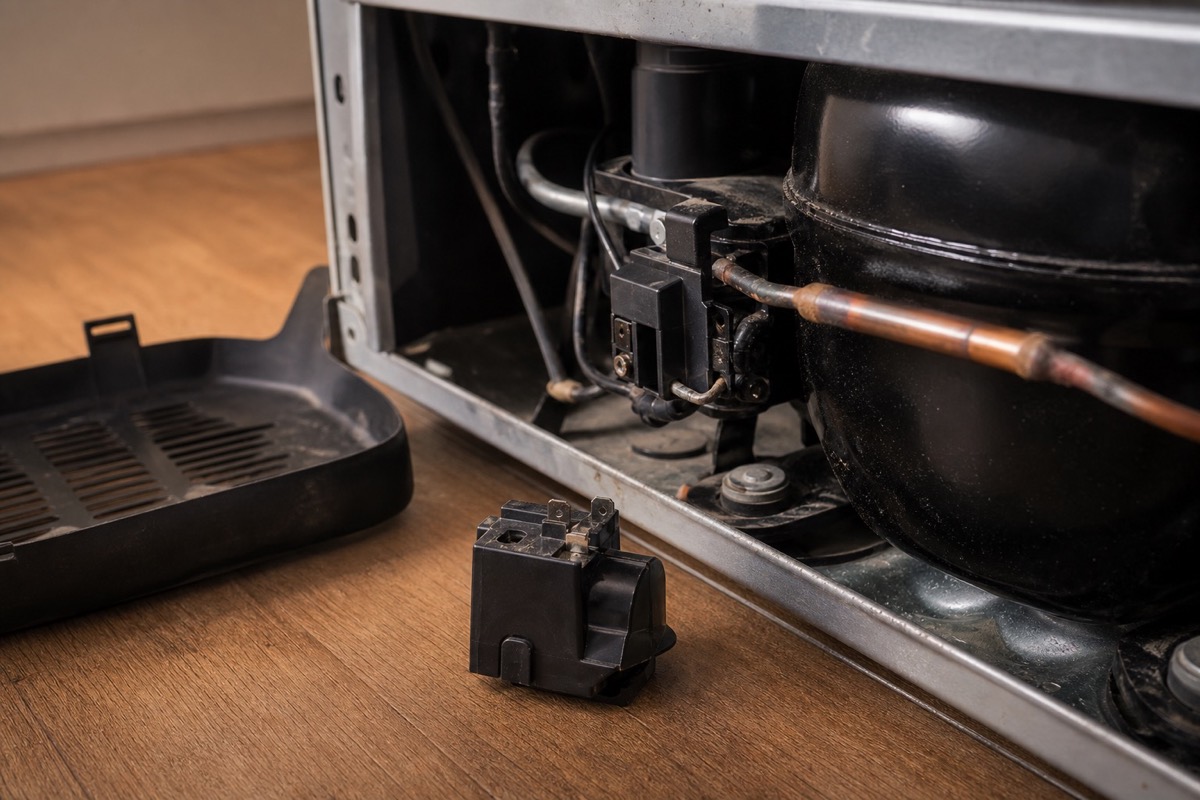
Many conventional refrigerator compressors use a start relay.

The relay temporarily provides the electrical conditions needed to start the compressor. If it fails, the compressor may hum briefly and then stop.

The overload protector may then click as it opens the circuit.

Common symptoms include:

  • Click every few minutes.
  • Short humming sound before the click.
  • Compressor not staying on.
  • Refrigerator lights and fans still working.
  • Poor or no cooling.
  • Compressor becoming very hot.
  • Repeated attempts to restart.

A defective start relay is one of the most common causes of repeated clicking on refrigerators with conventional compressors.

The relay, overload, compressor windings, and supply voltage should be tested before replacing parts.

3. The Compressor Overload Protector Is Opening

The overload protector disconnects power when the compressor becomes too hot or draws excessive current.

After cooling down, the overload may reset and allow another start attempt.

This creates a repeating pattern:

  • Compressor attempts to start.
  • Compressor hums or vibrates.
  • Overload clicks and stops the compressor.
  • Compressor cools for several minutes.
  • Another start attempt occurs.

Possible reasons include:

  • Defective start relay.
  • Locked compressor.
  • Low supply voltage.
  • Compressor overheating.
  • Dirty condenser coils.
  • Failed condenser fan.
  • Internal compressor damage.

Repeatedly allowing the compressor to attempt starting can lead to additional overheating.

4. The Compressor Is Mechanically Locked

A locked compressor cannot begin normal rotation even when it receives power.

The compressor may:

  • Hum loudly.
  • Vibrate briefly.
  • Draw excessive current.
  • Become extremely hot.
  • Shut off through the overload protector.
  • Repeat the attempt every few minutes.

A locked compressor is a major failure.

However, the compressor should not be condemned until the start components, electrical supply, windings, grounding, and control system have been tested.

5. The Inverter Board Is Failing

Many newer refrigerators use variable-speed inverter compressors.

These compressors do not use a traditional universal start relay. An inverter board controls the power and compressor speed.

A failing inverter may cause:

  • Clicking near the compressor.
  • Compressor starting briefly and stopping.
  • Repeated restart attempts.
  • Compressor not running at all.
  • Weak or intermittent cooling.
  • Error codes.
  • Lights and fans working normally.
  • Correct input voltage but no proper compressor operation.

Testing may require verification of:

  • Incoming power.
  • Control signal.
  • Compressor winding resistance.
  • Compressor insulation to ground.
  • Inverter output.
  • Stored diagnostic codes.

A universal hard-start kit should not be installed on an inverter compressor.

6. The Compressor Is Overheating

A compressor may shut off through its overload protector when it becomes too hot.

Possible causes include:

  • Dirty condenser coils.
  • Failed condenser fan.
  • Restricted airflow.
  • Very high room or garage temperature.
  • Low voltage.
  • Sealed-system restriction.
  • Internal compressor wear.
  • Repeated short cycling.

Signs of overheating may include:

  • Compressor too hot to touch safely.
  • Clicking every few minutes.
  • Refrigerator cooling weakly.
  • Condenser fan not running.
  • Excessive heat near the bottom rear area.
  • Burning or overheated smell.

Disconnect power and schedule service when the compressor repeatedly overheats.

7. The Condenser Fan Is Not Running

The condenser fan helps remove heat from the compressor and condenser coils.

If it stops, the compressor may overheat and cycle off through the overload protector.

Possible symptoms include:

  • Clicking near the compressor.
  • Refrigerator running but not cooling properly.
  • Excessive heat at the bottom or back.
  • Fan blade not moving.
  • Buzzing or scraping near the fan.
  • Compressor shutting down after a short period.

The fan may be:

  • Blocked by debris.
  • Damaged.
  • Electrically open.
  • Receiving incorrect voltage.
  • Controlled improperly by the main board.

8. The Condenser Coils Are Dirty

Dust, pet hair, grease, and lint can prevent the refrigerator from releasing heat efficiently.

The compressor may run longer and become hotter than normal.

In severe cases, the overload protector may repeatedly open and close, producing clicking sounds.

Dirty coils may also cause:

  • Long cooling cycles.
  • Higher electricity use.
  • Warm refrigerator temperatures.
  • Excessive cabinet heat.
  • Premature compressor wear.

Disconnect the refrigerator from power before cleaning accessible condenser coils.

Use a soft brush or vacuum carefully. Avoid damaging tubing, wiring, or fan blades.

Some modern refrigerators have enclosed condenser systems that are not designed for homeowner cleaning.

9. The Refrigerator Is Short Cycling

Short cycling means the compressor starts and stops more often than it should.

Possible causes include:

  • Start relay failure.
  • Compressor overheating.
  • Faulty temperature sensor.
  • Main control board problem.
  • Unstable electrical power.
  • Inverter failure.
  • Sealed-system pressure problem.
  • Incorrect temperature setting.
  • Door left open.
  • Poor condenser airflow.

Short cycling can increase component wear and prevent the refrigerator from reaching the correct temperature.

10. The Power Supply Is Unstable

Low voltage, voltage fluctuations, or a damaged outlet can prevent the compressor from starting correctly.

The refrigerator may click as the controls or compressor repeatedly attempt to restart.

Check for:

  • Loose plug.
  • Damaged outlet.
  • Partially tripped breaker.
  • Tripped GFCI outlet.
  • Extension cord or overloaded power strip.
  • Flickering display.
  • Other appliances behaving abnormally.
  • Clicking that began after a power outage.

The refrigerator should generally be connected directly to a properly grounded wall outlet.

Do not continue operating the appliance from an outlet that is hot, damaged, loose, or discolored.

11. The Refrigerator Was Affected by a Power Surge

A power surge can damage electronic components even when the refrigerator still has lights.

Possible affected parts include:

  • Main control board.
  • Compressor inverter.
  • Start relay.
  • User interface.
  • Fan motors.
  • Sensors.
  • Ice maker controls.
  • Power supply circuits.

Signs may include:

  • Clicking after power restoration.
  • Display resetting.
  • Compressor not starting.
  • Error codes.
  • Fans operating incorrectly.
  • Refrigerator working temporarily after unplugging.
  • Burning smell.
  • Breaker or GFCI tripping.

Photograph any error codes before resetting the refrigerator.

12. The Main Control Board Relay Is Clicking

Electronic control boards use relays or switching components to operate the compressor, fans, heater, and valves.

A click from the control area may be normal when a component is switched on or off.

Repeated clicking may indicate:

  • Relay failing to remain engaged.
  • Unstable incoming power.
  • Shorted component.
  • Control board damage.
  • Wiring problem.
  • Compressor or fan drawing excessive current.

The board should not be replaced without testing the component it controls.

A failed compressor, fan, or heater can cause symptoms that appear to be a board problem.

13. The Refrigerator Is Resetting Repeatedly

A control board may restart if power is unstable or an electronic component is failing.

Possible symptoms include:

  • Display turning off and on.
  • Interior lights flickering.
  • Beeping.
  • Clicking from the board.
  • Fans starting and stopping.
  • Compressor never remaining on.
  • Error codes appearing and disappearing.

Possible causes include:

  • Low voltage.
  • Damaged outlet.
  • Loose connector.
  • Power-supply board failure.
  • Main control board problem.
  • Shorted load.
  • Moisture or corrosion.

Repeated electronic resets require professional electrical diagnosis.

14. The Evaporator Fan Is Hitting Ice

Clicking or tapping inside the freezer may be caused by the evaporator fan blade contacting ice.

The noise may change when:

  • The freezer door opens.
  • The door switch is pressed.
  • The fan changes speed.
  • The refrigerator enters a defrost cycle.
  • Ice partially melts.

Other symptoms may include:

  • Frost on the freezer’s rear panel.
  • Weak airflow.
  • Refrigerator section becoming warm.
  • Scraping or buzzing.
  • Fan stopping completely.

Ice around the fan may indicate a defrost system failure, air leak, blocked drain, or door left open.

Do not use a sharp tool to remove ice.

15. A Fan Blade Is Hitting an Object

The condenser or evaporator fan may contact:

  • Ice.
  • Wiring.
  • Insulation.
  • Debris.
  • A loose cover.
  • A warped fan shroud.
  • A damaged blade.

The sound may be rhythmic and occur only while the fan is turning.

Disconnect power before inspecting accessible areas.

Do not bend the fan blade or move refrigerant tubing.

16. The Ice Maker Is Operating

An ice maker can make several normal clicking sounds while:

  • Beginning a harvest cycle.
  • Rotating the ejector.
  • Releasing ice cubes.
  • Activating the water valve.
  • Returning to its home position.

The sound is more likely related to the ice maker when:

  • It comes from the upper freezer or refrigerator area.
  • It occurs at regular intervals.
  • Ice production has changed.
  • The noise stops when the ice maker is switched off.
  • Cubes are stuck in the mechanism.

Turn the ice maker off temporarily to determine whether the clicking stops.

Do not force the ejector fingers manually.

17. The Water Inlet Valve Is Activating

The water inlet valve may make a click when it opens or closes.

This is normally followed by the sound of water entering the ice maker or dispenser.

A problem may exist when:

  • The valve clicks but no water flows.
  • The valve activates repeatedly.
  • Water pressure is too low.
  • The supply line is kinked.
  • The household valve is closed.
  • The filter is clogged.
  • The valve is failing.

If the refrigerator is not connected to a water supply, the ice maker should be turned off.

18. The Air Damper Is Clicking

The air damper controls cold-air movement between the freezer and refrigerator compartments.

A small motor may open or close the damper as temperatures change.

Clicking from the upper refrigerator section may indicate:

  • Damper gear slipping.
  • Damper blocked by ice.
  • Broken damper door.
  • Motor attempting to move repeatedly.
  • Incorrect temperature-sensor information.
  • Control board problem.

Other symptoms may include:

  • Refrigerator too warm.
  • Refrigerator freezing food.
  • Uneven airflow.
  • Repeated noise from the vent area.

19. Interior Materials Are Expanding or Contracting

Plastic liners, metal panels, and refrigerant tubing can expand and contract as temperatures change.

This may cause occasional:

  • Clicking.
  • Popping.
  • Cracking.
  • Ticking.

These sounds are usually normal when:

  • Cooling performance is correct.
  • They occur occasionally.
  • The compressor operates normally.
  • There is no burning smell.
  • No error codes are present.

The sounds may be more noticeable after a defrost cycle or when the refrigerator has recently been installed.

20. A Loose Panel or Drain Pan Is Vibrating

A rear cover, drain pan, toe kick, or interior panel may move slightly as the compressor starts or stops.

This can produce a click, tap, or rattle.

The sound may change when:

  • The refrigerator is moved slightly.
  • Gentle pressure is applied to the cabinet.
  • The compressor turns off.
  • The fan changes speed.

Disconnect power before inspecting or tightening accessible covers.

What Can You Safely Check?

Before scheduling service, you can:

  • Determine where the clicking is loudest.
  • Note how often the click repeats.
  • Check whether the compressor starts and remains running.
  • Measure the refrigerator and freezer temperatures.
  • Listen for humming before each click.
  • Check whether the display resets or flickers.
  • Confirm that the refrigerator is plugged directly into the outlet.
  • Check the breaker and nearby GFCI outlets.
  • Look for excessive heat near the compressor.
  • Confirm that the condenser fan is turning.
  • Look for frost on the freezer’s rear panel.
  • Turn the ice maker off temporarily.
  • Check whether the water supply is open.
  • Move the refrigerator slightly away from the wall.
  • Clean accessible condenser coils after disconnecting power.

Do not remove electrical covers or touch compressor terminals while the refrigerator is connected to power.

When Should You Unplug the Refrigerator?

Disconnect power immediately if:

  • You smell burning plastic or wiring.
  • Smoke is present.
  • The outlet or plug is hot.
  • The breaker repeatedly trips.
  • The compressor becomes extremely hot.
  • Clicking is accompanied by loud humming and no cooling.
  • The display and lights repeatedly reset.
  • A damaged fan blade is striking another component.
  • Electrical arcing is visible or audible.

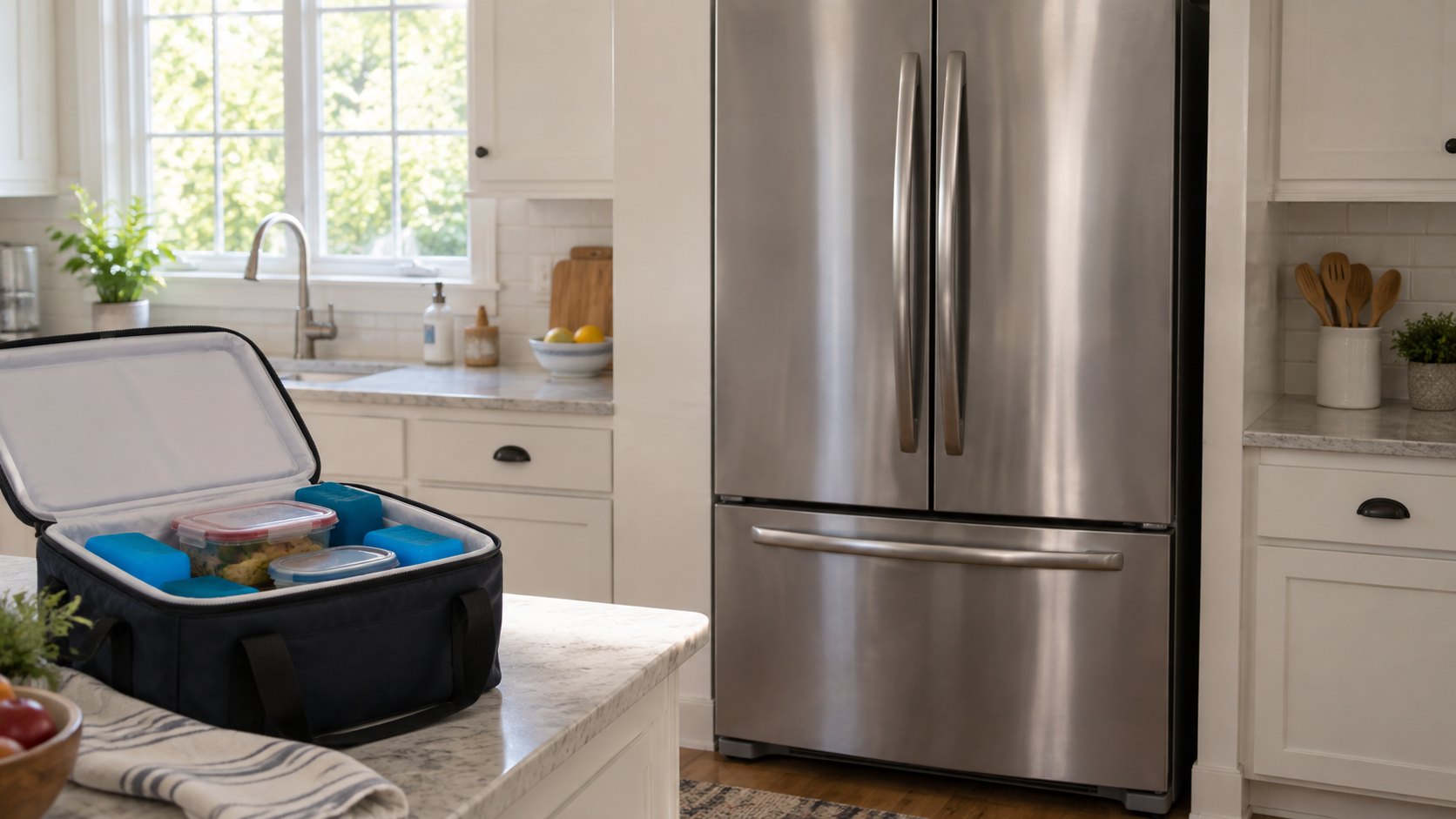
Move perishable food to another refrigerator or a cooler if the appliance is not maintaining a safe temperature.

When Should You Call a Refrigerator Technician?

Professional diagnosis is recommended when:

  • Clicking repeats every few minutes.
  • The compressor will not remain running.
  • The refrigerator is not cooling.
  • The compressor is extremely hot.
  • Buzzing or humming occurs before every click.
  • The condenser fan is not operating.
  • The display resets repeatedly.
  • The noise began after a power surge.
  • A breaker or GFCI continues to trip.
  • The refrigerator works only temporarily after being unplugged.
  • The appliance displays an error code.
  • Ice is interfering with the evaporator fan.

A technician can test the start components, compressor, inverter, fans, control boards, sensors, and electrical supply before recommending a repair.

Is the Refrigerator Still Safe to Use?

The refrigerator may continue operating if:

  • The clicking is occasional.
  • Temperatures remain normal.
  • The compressor starts and runs steadily.
  • There is no electrical smell.
  • The outlet and cord remain cool.
  • No breaker trips occur.

Stop using the refrigerator when repeated clicking is accompanied by poor cooling, overheating, electrical odor, smoke, or power problems.

Should You Repair or Replace the Refrigerator?

Repair may be worthwhile when the problem involves:

  • Start relay.
  • Overload protector.
  • Condenser fan.
  • Evaporator fan.
  • Temperature sensor.
  • Air damper.
  • Wiring connection.
  • Electronic control board.

Replacement may be more practical when:

  • The compressor is mechanically locked.
  • The refrigerator has repeated sealed-system failures.
  • Multiple electronic parts were damaged by a surge.
  • The appliance has extensive corrosion.
  • Critical parts are discontinued.
  • Repair cost approaches the price of a replacement refrigerator.

A complete diagnosis should be performed before deciding.

Local Refrigerator Service

We provide refrigerator repair in Cape Coral and Fort Myers, along with surrounding Southwest Florida service areas.

For scheduling, use the Contact page or call/text Art’s Appliance Repair directly.

Need service?

Refrigerator Repair in Cape Coral, Fort Myers and Southwest Florida

Art’s Appliance Repair provides refrigerator diagnostics and repair throughout Cape Coral, Fort Myers, North Fort Myers, Lehigh Acres, Estero, Bonita Springs, Naples, and surrounding Southwest Florida communities.

We diagnose clicking and compressor-related problems including:

  • Refrigerator clicking on and off.
  • Compressor not starting.
  • Failed start relay.
  • Compressor overload opening.
  • Inverter board problems.
  • Compressor overheating.
  • Condenser fan failure.
  • Control board problems.
  • Refrigerator not cooling.
  • Power-surge damage.
  • Evaporator fan hitting ice.
  • Ice maker and water-valve noises.

Call or text (239) 688-9955 to schedule refrigerator service.

Service call: $0 with an approved repair. A $40 diagnostic fee may apply if the repair is declined.

View Refrigerator Repair
Call Text for Service