Which Refrigerator Fan Is Not Running?
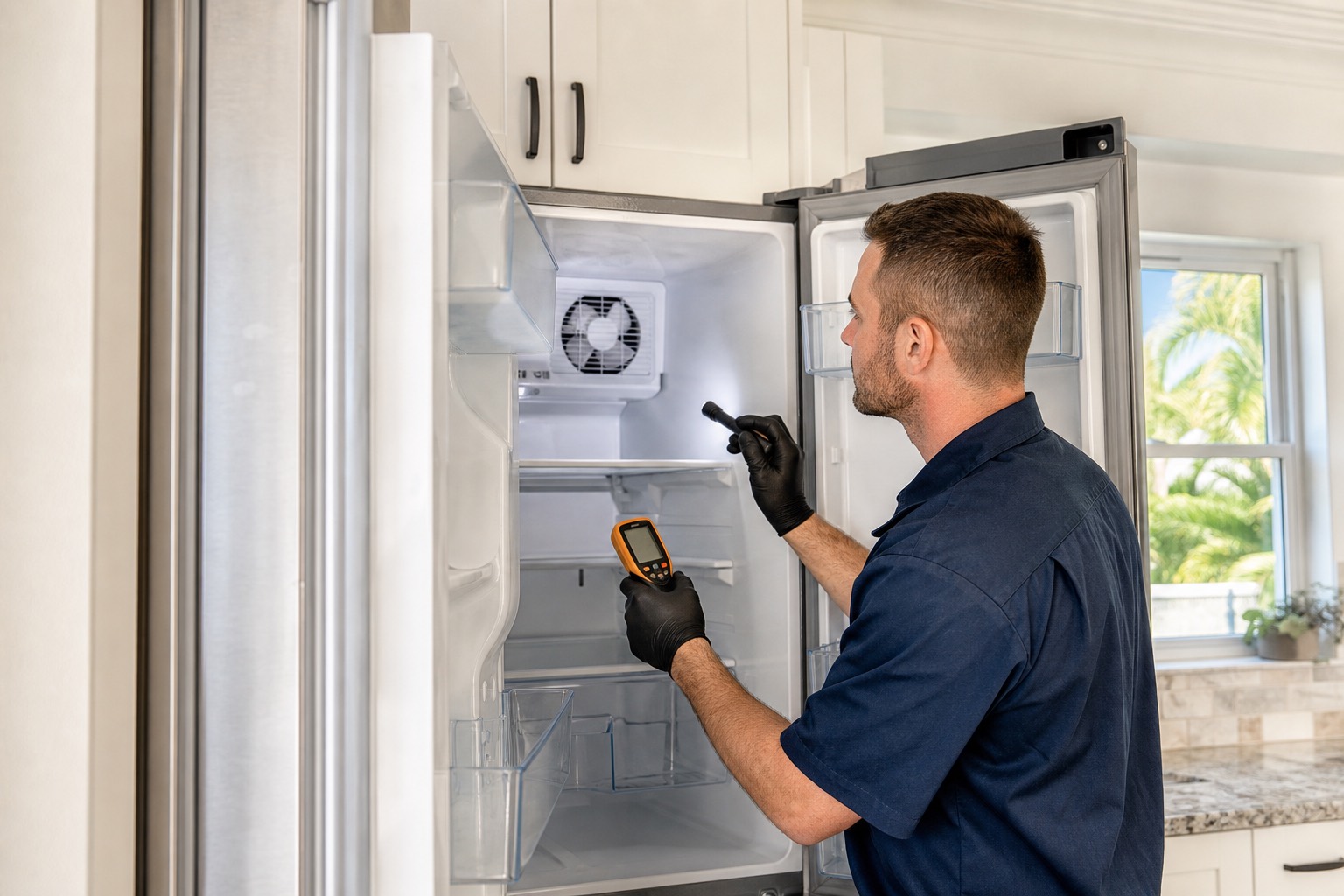
Before diagnosing the refrigerator, identify where the fan is located.
Evaporator fan
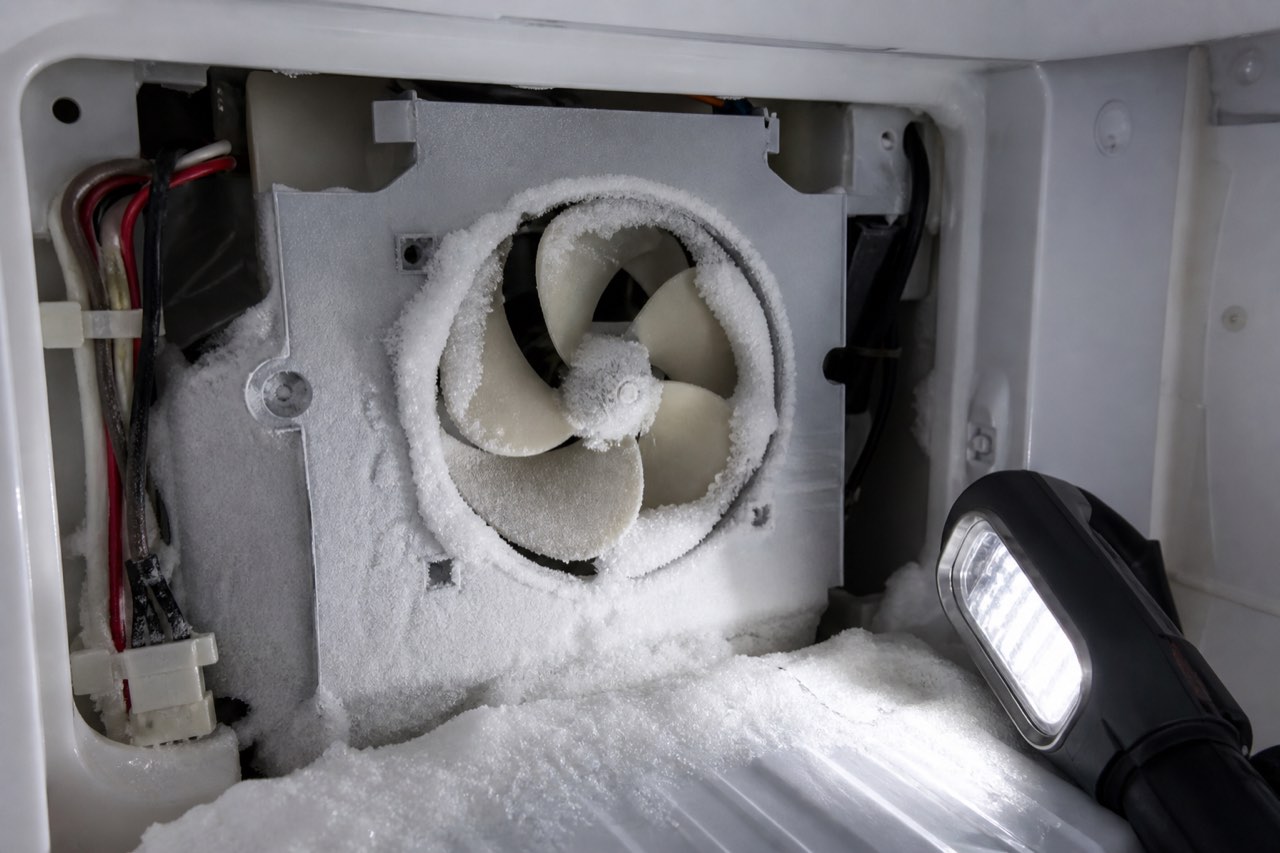
The evaporator fan is usually located behind an interior panel in the freezer.
Its purpose is to move cold air across the evaporator coils and distribute it through the freezer and refrigerator compartments.
A failed evaporator fan may cause:
- Freezer cold near the back but warm elsewhere.
- Refrigerator section becoming warm.
- Little or no airflow from the vents.
- Uneven temperatures.
- Frost on the freezer’s rear panel.
- Scraping or buzzing from inside the freezer.
- Compressor running for long periods.
Condenser fan
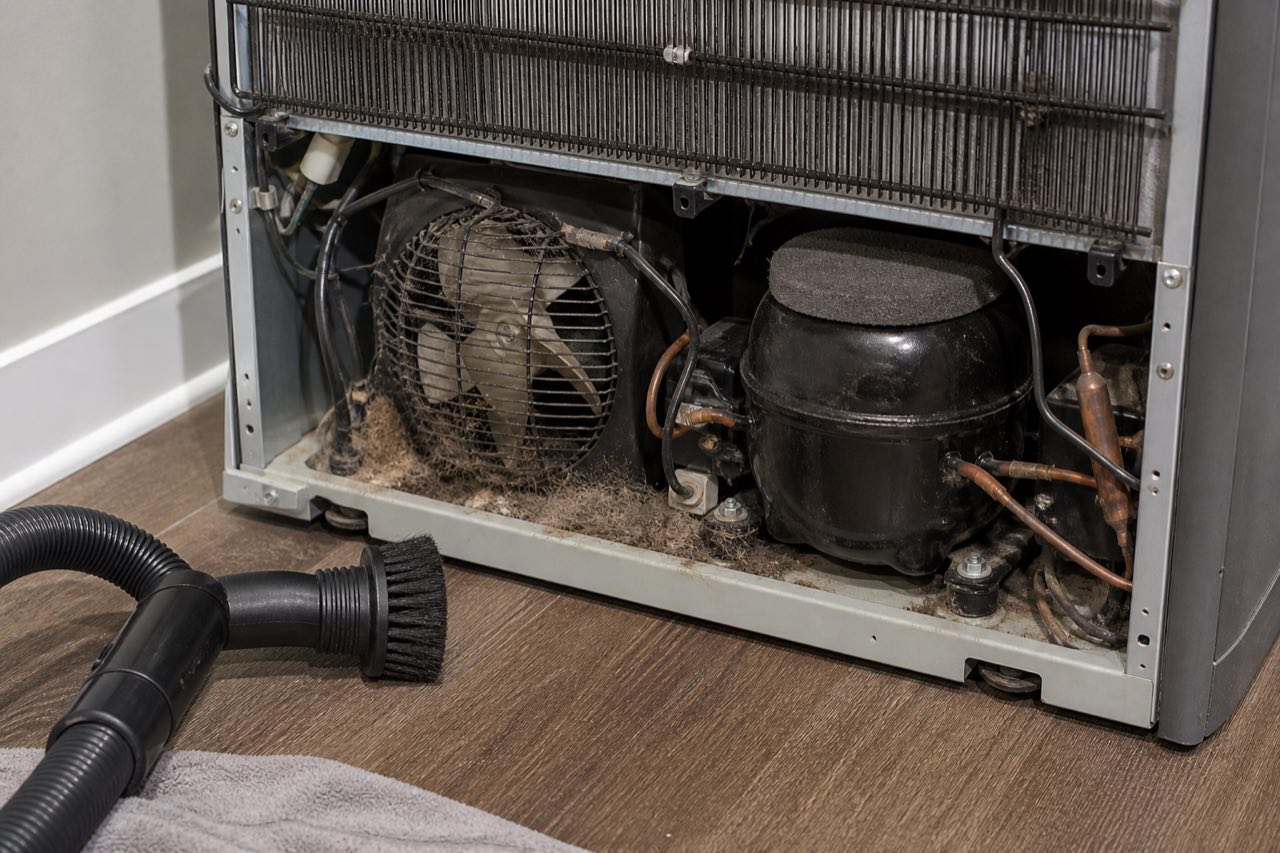
The condenser fan is generally located near the compressor at the bottom rear of the refrigerator.
It helps move air across the condenser and compressor area so the refrigerator can release heat.
A failed condenser fan may cause:
- Excessive heat near the compressor.
- Refrigerator running constantly.
- Weak cooling in both compartments.
- Compressor starting and stopping.
- Clicking from the rear.
- High cabinet temperature.
- Little airflow underneath or behind the appliance.
Ice maker fan
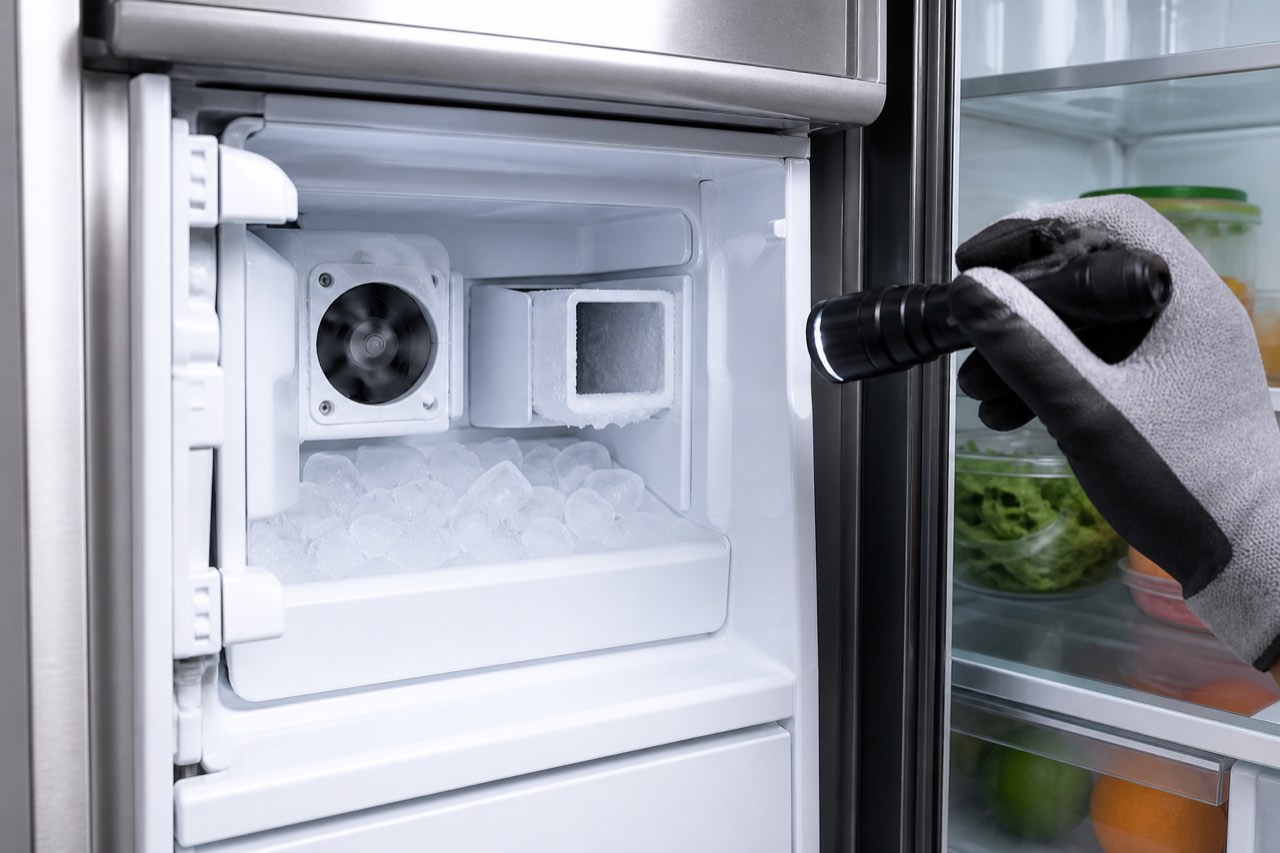
Some refrigerators use a separate fan to deliver cold air to an ice maker located in the fresh-food compartment.
A failed ice maker fan may cause:
- Refrigerator and freezer cooling normally.
- Ice maker compartment becoming too warm.
- Ice maker producing slowly or not at all.
- Ice melting or clumping in the bin.
- Fan-related error code.
- Frost near the ice maker duct.
Refrigerator evaporator and condenser fans normally circulate air as part of the cooling system, and a soft airflow or fan sound can be normal during operation.
Is the Fan Supposed to Run All the Time?
A refrigerator fan does not necessarily run continuously.
Fan operation may depend on:
- Compressor operation.
- Compartment temperature.
- Defrost cycle.
- Door position.
- Cooling demand.
- Refrigerator design.
- Control-board programming.
- Selected operating mode.
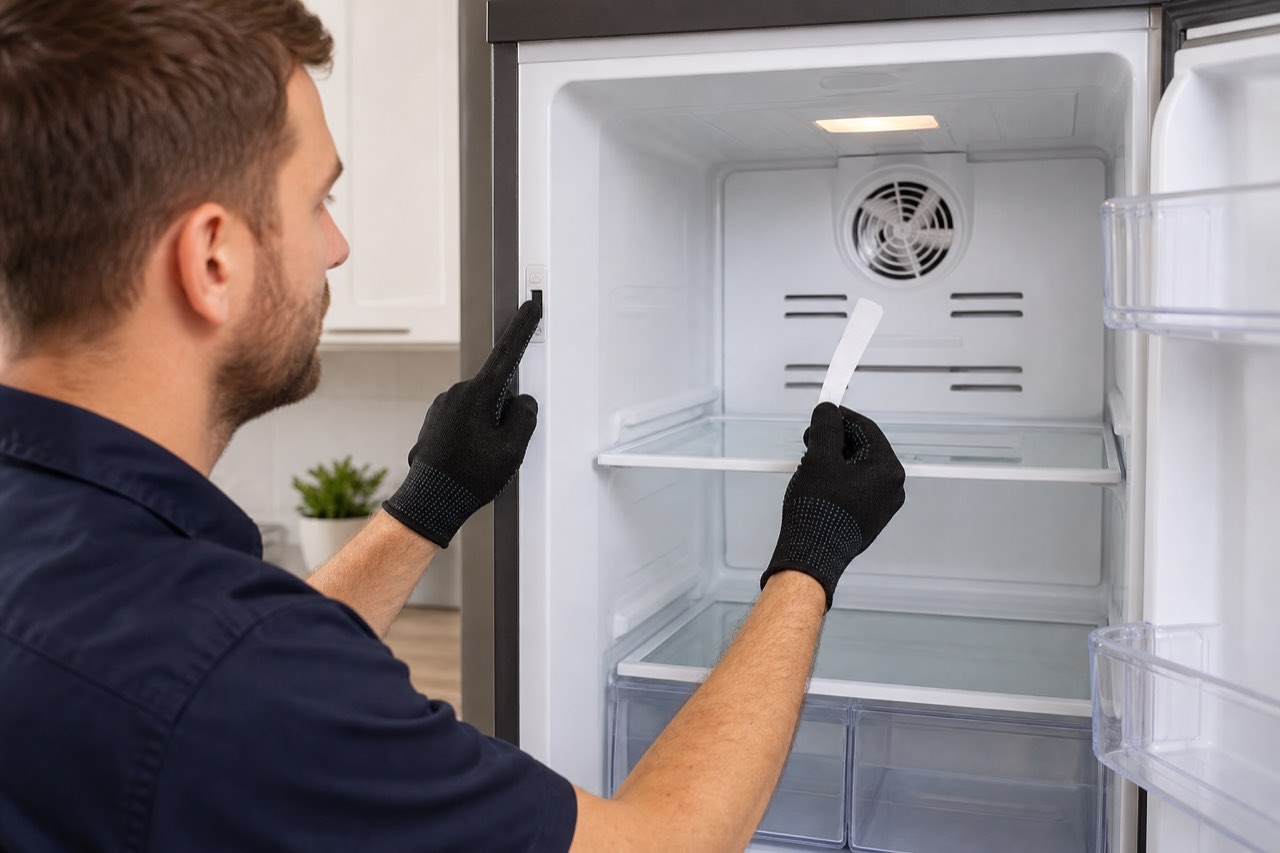
On many models, the evaporator fan stops when a refrigerator or freezer door is opened. The door switch may need to be held closed before deciding that the fan has failed.
Some newer refrigerators use variable-speed fans that may run very quietly or at different speeds.
Allow several minutes of closed-door operation before determining that a fan is not running.
Basic Operating and Airflow Problems
1. The Door Is Open
Many refrigerators stop the evaporator fan when the freezer or refrigerator door is open.
This prevents cold air from being blown out of the compartment.
To check safely:
- Close the doors.
- Wait several minutes.
- Listen for airflow.
- Check for air at the interior vents.
Do not assume the fan has failed only because it stops when the door opens.
2. The Door Switch Is Not Being Activated
The door switch tells the refrigerator whether the door is open or closed.
If the door is misaligned or does not contact the switch, the control may keep the evaporator fan off.
Possible symptoms include:
- Fan not running.
- Interior light staying on.
- Door-open warning.
- Ice maker not working.
- Dispenser disabled.
- Refrigerator warm while freezer remains partially cold.
- Fan starts when pressure is applied to the door.
Check whether food, shelves, drawers, or ice prevent the door from closing completely.
3. The Door Switch Is Faulty
A failed door switch may incorrectly report that the door is open.
Possible symptoms include:
- No evaporator fan.
- Interior light behaving incorrectly.
- Door alarm remaining active.
- Ice maker or dispenser not operating.
- Fan working intermittently.
- Fan starting when the switch or door is moved.
The switch and wiring should be tested before replacement.
Do not permanently bypass a door switch.
4. Cooling Is Turned Off
Some refrigerators allow cooling to be disabled while the lights and display remain active.
Look for:
- Cooling Off.
- Demo.
- Showroom.
- OF OF.
- O FF.
- Vacation mode.
If cooling is disabled, the compressor and fans may remain off.
Use the model-specific instructions to restore normal operation.
5. The Refrigerator Is in a Defrost Cycle
During automatic defrost, the compressor and evaporator fan may stop temporarily.
The defrost heater melts frost from the evaporator coils before normal cooling resumes.
Possible normal signs include:
- Fan temporarily silent.
- Compressor off.
- Water dripping.
- Hissing or light popping.
- Refrigerator restarting after the cycle.
A normal defrost cycle should end automatically.
If the fan never restarts or the refrigerator becomes warm, another problem may be present.
6. The Temperature Is Already Satisfied
The control board may turn the fan off when the refrigerator has reached the selected temperature.
Before diagnosing a failure:
- Measure the actual temperatures.
- Wait for a cooling cycle.
- Avoid repeatedly opening the doors.
- Confirm that the compressor starts.
A fan that runs during active cooling but stops afterward may be operating normally.
7. Air Vents Are Blocked
Food containers, bags, or ice can block airflow between compartments.
The fan may be running, but little air reaches the refrigerator section.
Check that:
- Food is not pressed against the rear wall.
- Freezer vents are uncovered.
- Refrigerator vents are open.
- The freezer is not packed tightly.
- There is room between food items.
Whirlpool’s refrigerator guidance emphasizes keeping the vents between the freezer and refrigerator clear so cold air can enter and return through the compartments.
Ice and Physical Obstructions
8. Ice Is Blocking the Fan Blade
Ice around the evaporator fan can prevent the blade from turning.
Possible symptoms include:
- Fan buzzing or humming.
- Scraping noise.
- Noise stops when the door opens.
- Refrigerator section becoming warm.
- Frost on the freezer’s rear panel.
- Fan attempting to start.
- Cooling improving temporarily after defrosting.
Ice may form because of:
- Defrost-system failure.
- Door left open.
- Damaged door gasket.
- Blocked defrost drain.
- Excessive humidity.
- Air leak.
- Failed sensor or control.
Samsung notes that a fan striking ice may stop making noise when the door opens; manually removing the ice may be temporary because service is needed to correct the original cause.
9. The Evaporator Is Covered With Frost
A thick frost layer around the evaporator restricts airflow even if the fan motor is still working.
Possible causes include:
- Failed defrost heater.
- Faulty defrost thermostat.
- Defective thermistor.
- Control-board failure.
- Damaged wiring.
- Door-sealing problem.
Common symptoms include:
- Heavy frost on the freezer’s back wall.
- Freezer partially cold.
- Refrigerator warm.
- Weak airflow.
- Fan blade contacting ice.
- Compressor running constantly.
A manual defrost may temporarily restore airflow, but the frost will return if the failed component is not repaired.
Do not use a knife, screwdriver, hair dryer, heat gun, or open flame to remove ice. Sharp tools can puncture the evaporator, and excessive heat can damage plastic, wiring, insulation, and refrigerant components. Samsung specifically warns against using a hair dryer or other external heat source to accelerate refrigerator defrosting.
10. A Foreign Object Is Touching the Fan
A fan blade may be obstructed by:
- Loose insulation.
- Wiring.
- Plastic packaging.
- Food debris.
- Ice.
- Broken fan shroud.
- Loose panel.
- Drain material.
The fan may produce:
- Clicking.
- Scraping.
- Buzzing.
- Rhythmic tapping.
- Intermittent airflow.
Disconnect power before inspecting an accessible fan area.
Do not bend the fan blade or move refrigerant tubing.
11. The Fan Blade Is Damaged
A cracked, loose, or warped blade may fail to move air correctly.
Possible symptoms include:
- Fan motor runs but airflow is weak.
- Blade wobbles.
- Repeated clicking.
- Vibration.
- Blade touches the housing.
- Uneven cooling.
The blade should fit securely on the motor shaft and rotate without contacting surrounding components.
12. The Fan Shroud Is Misaligned
The shroud directs air and protects the fan blade.
If it becomes loose or warped, it may stop the blade from turning freely.
Possible causes include:
- Previous repair.
- Ice buildup.
- Broken mounting tabs.
- Impact from food or shelves.
- Incorrect panel installation.
The shroud should be inspected before replacing the fan motor.
Evaporator Fan Motor and Electrical Problems
13. The Evaporator Fan Motor Has Failed
An evaporator fan motor may fail electrically or mechanically.
Possible symptoms include:
- No fan sound during cooling.
- Freezer cold near the evaporator but warm elsewhere.
- Refrigerator section too warm.
- Motor receives power but does not turn.
- Fan starts only after being moved.
- Burning or overheated smell.
- Intermittent airflow.
The motor may fail because of:
- Age.
- Moisture.
- Ice contact.
- Worn bearings.
- Damaged winding.
- Overheating.
- Repeated obstruction.
The motor, blade, wiring, and control signal should be tested before replacement.
14. The Fan Motor Bearings Are Worn
Worn bearings can make the fan difficult to start.
Possible symptoms include:
- Squealing.
- Grinding.
- Fan starts slowly.
- Fan stops after warming up.
- Blade feels loose.
- Motor becomes hot.
- Noise changes with fan speed.
A bearing problem generally requires replacement of the fan motor.
15. The Fan Motor Is Frozen or Seized
A motor may receive power but remain unable to turn.
Possible signs include:
- Humming.
- Motor heating up.
- Blade difficult to rotate with power disconnected.
- No airflow.
- Fan stops after repeated attempts.
- Control displays a fan error.
Do not continue operating a motor that is overheating or producing an electrical smell.
16. A Fan Connector Is Loose
Vibration, moisture, previous repair, or ice buildup may loosen an electrical connector.
Possible symptoms include:
- Fan works intermittently.
- Fan starts when the panel or harness moves.
- Corrosion at the connector.
- Error code appearing and disappearing.
- No power reaching the motor.
The connector should be inspected for:
- Loose terminals.
- Moisture.
- Burned plastic.
- Corrosion.
- Broken locking tab.
- Damaged wire.
17. Fan Wiring Is Damaged
A broken or pinched wire can prevent power from reaching the fan.
Possible causes include:
- Ice damage.
- Sharp cabinet edge.
- Previous disassembly.
- Door movement.
- Heat.
- Moisture.
- Insect or rodent damage.
Damaged wiring should be repaired using correctly rated materials and protected from future movement.
18. The Temperature Sensor Is Faulty
A thermistor tells the control board when cooling and airflow are required.
If it reports an incorrect temperature, the control may fail to activate the fan.
Possible symptoms include:
- Fan not starting during warm conditions.
- Temperature display inaccurate.
- Refrigerator alternates between warm and cold.
- Compressor and fan cycling incorrectly.
- Fan operates in diagnostic mode but not normally.
- Sensor-related error code.
The sensor resistance should be tested according to the manufacturer’s specifications.
19. The Main Control Board Is Not Activating the Fan
The control board may manage:
- Evaporator fan.
- Condenser fan.
- Ice maker fan.
- Compressor.
- Defrost heater.
- Air damper.
- Temperature sensors.
A failed relay or electronic circuit may cause:
- Fan not receiving voltage.
- Fan running intermittently.
- Cooling returning temporarily after a reset.
- Multiple components behaving incorrectly.
- Communication or fan error.
- Fan working in test mode but not normal operation.
The control board should not be replaced until the motor, sensors, switches, wiring, and connectors have been checked.
20. The Fan Is Receiving Incorrect Voltage
A variable-speed DC fan may require specific supply and control voltages.
A motor may fail to run because of:
- Missing power supply.
- Missing control signal.
- Damaged ground connection.
- Control-board failure.
- Shorted motor.
- Corroded connector.
The correct voltage depends on the refrigerator model.
Do not apply external power to a fan motor without model-specific service information.
Condenser Fan Problems
21. Debris Is Blocking the Condenser Fan
The condenser fan area can collect:
- Dust.
- Pet hair.
- Insulation.
- Paper.
- Plastic.
- Insect debris.
- Grease.
A blocked fan may produce:
- Buzzing.
- Scraping.
- Weak airflow.
- Compressor overheating.
- Refrigerator running continuously.
- Poor cooling.
Disconnect power before removing accessible debris.
Avoid damaging refrigerant tubing, wiring, or the fan blade.
22. The Condenser Fan Motor Has Failed
A failed condenser fan can prevent heat from leaving the refrigerator efficiently.
Possible symptoms include:
- Compressor extremely hot.
- Refrigerator and freezer becoming warm.
- Compressor clicking on and off.
- No airflow near the compressor.
- Fan motor humming.
- Refrigerator running constantly.
- Cabinet exterior becoming unusually hot.
GE notes that if the condenser fan malfunctions, the compressor can eventually overheat; GE also explains that failed condenser airflow can raise refrigerant temperature and make cabinet surfaces unusually hot.
23. The Condenser Coils Are Heavily Restricted
Dirty condenser coils increase the amount of heat around the compressor and fan.
This may cause:
- Long run times.
- Weak cooling.
- Fan operating continuously.
- Compressor overheating.
- Higher electricity use.
- Premature fan or compressor wear.
Unplug the appliance before cleaning accessible coils or performing maintenance near the condenser. GE’s support guidance similarly recommends disconnecting power before condenser maintenance.
Some refrigerators use enclosed or low-maintenance condenser systems. Follow the instructions for the specific model.
24. The Compressor Is Overheating
If the condenser fan is not moving air, the compressor may stop through its overload protector.
Possible signs include:
- Repeated clicking.
- Compressor starts and stops.
- Refrigerator temporarily cools and then warms.
- Compressor too hot to touch safely.
- Condenser fan not moving.
- Burning or overheated smell.
Continuing to operate the refrigerator under these conditions may cause additional damage.
Ice Maker Fan and Air-Duct Problems
25. The Dedicated Ice Maker Fan Has Failed
Some French-door refrigerators use a separate fan to cool the ice maker compartment.
Possible symptoms include:
- Freezer and refrigerator temperatures normal.
- Ice maker not producing ice.
- Ice maker works during a forced test but not normally.
- Ice melts or clumps.
- No airflow near the ice compartment.
- Fan-related error code.
The fan, sensor, duct, and control-board command should be checked.
26. Ice Is Blocking the Ice Maker Fan
Warm, humid air may enter the ice compartment and freeze around the fan.
Possible causes include:
- Ice-room gasket leak.
- Door not closing correctly.
- Defrost problem.
- Blocked drain.
- Damaged duct.
- Failed heater.
- Water leak.
The fan may buzz or scrape before stopping completely.
A temporary defrost does not correct the source of recurring moisture or frost.
27. The Ice Maker Air Duct Is Blocked
A dedicated duct may carry freezer air to the ice maker.
The duct can be blocked by:
- Ice.
- Frost.
- Food packaging.
- Misaligned insulation.
- Failed damper.
- Loose panel.
Possible symptoms include:
- Fan running but no cold air reaches the ice maker.
- Ice production slow.
- Ice maker compartment too warm.
- Frost near the duct opening.
The Fan Works in Test Mode but Not Normally
If a fan operates during a forced diagnostic test, the motor may still be functional.
The problem may instead involve:
- Temperature sensor.
- Door switch.
- Control-board logic.
- Intermittent wiring.
- Defrost cycle.
- Incorrect compartment temperature.
- Fan-speed feedback.
- Stored error.
A successful test does not prove that every normal operating condition is correct.
The refrigerator’s model-specific diagnostic information should be used to interpret the result.
How to Identify Which Fan Is Failing
Noise from inside the freezer
Likely areas include:
- Evaporator fan.
- Ice around the fan.
- Fan shroud.
- Loose interior panel.
- Defrost problem.
Noise or silence near the compressor
Likely areas include:
- Condenser fan.
- Debris around the blade.
- Failed condenser fan motor.
- Compressor start components.
- Loose drain pan.
Ice maker stopped but cooling is otherwise normal
Likely areas include:
- Dedicated ice maker fan.
- Ice maker air duct.
- Ice-room sensor.
- Ice buildup.
- Door or gasket problem.
Refrigerator warm but freezer partially cold
Likely areas include:
- Evaporator fan.
- Frost-covered evaporator.
- Blocked air vents.
- Air damper.
- Door switch.
Both compartments warm and compressor hot
Likely areas include:
- Condenser fan.
- Dirty condenser.
- Compressor problem.
- Sealed-system issue.
- Control-board failure.
What Can You Safely Check?
Before scheduling service, you can:
- Determine where the fan is located.
- Confirm that cooling is turned on.
- Check for Demo or Showroom mode.
- Close the doors and wait for a cooling cycle.
- Listen for airflow at the interior vents.
- Make sure food is not blocking the vents.
- Look for frost on the freezer’s rear panel.
- Listen for scraping, buzzing, or humming.
- Check whether the interior light turns off when the door switch is activated.
- Inspect the condenser area for visible debris after disconnecting power.
- Check for excessive heat near the compressor.
- Record any error code.
- Reset the refrigerator once by disconnecting power for approximately five minutes.
- Allow time for the compressor and fans to restart.
Do not place fingers or tools near a moving fan.
Do not remove electrical covers or test live voltage without the correct training and equipment.
Do not use sharp tools or external heat sources to remove ice.
When Should You Stop Using the Refrigerator?
Disconnect power and arrange service when:
- A fan motor smells burned.
- Smoke is present.
- Wiring or connectors are melted.
- A fan blade is broken and striking another component.
- The compressor repeatedly clicks and overheats.
- The breaker or outlet becomes hot.
- Water reaches electrical components.
- The fan continues humming without turning.
- Cooling has stopped in both compartments.
Move perishable food to another refrigerator or a cooler if temperatures are unsafe.
When Should You Call a Refrigerator Technician?
Professional diagnosis is recommended when:
- The evaporator fan does not run during an active cooling cycle.
- The condenser fan is stopped while the compressor is running.
- Ice repeatedly blocks the fan.
- The fan works in test mode but not normal operation.
- The refrigerator section is warm but the freezer remains cold.
- The compressor becomes extremely hot.
- A fan-related error code returns.
- The motor receives power but does not turn.
- Wiring or connectors are damaged.
- The control board does not activate the fan.
- Cooling does not improve after clearing basic airflow obstructions.
A technician can test the fan motor, blade, door switch, thermistors, defrost components, wiring, voltage supply, control signal, and main control board.
Should You Repair or Replace the Refrigerator?
A refrigerator fan problem is usually repairable.
Common repairable causes include:
- Evaporator fan motor.
- Condenser fan motor.
- Ice maker fan.
- Door switch.
- Fan blade.
- Wiring connector.
- Temperature sensor.
- Defrost component.
- Control board.
Replacement of the refrigerator may be more practical when:
- The cabinet has severe corrosion or water damage.
- A major sealed-system failure is also present.
- Multiple expensive electronic components have failed.
- Critical parts are discontinued.
- The appliance has repeated major failures.
- Repair cost approaches the value of a replacement refrigerator.
A complete diagnosis should be performed before deciding.
Photo guide
Diagnostic Photos
Local Refrigerator Service
We provide refrigerator repair in Cape Coral and Refrigerator Repair in Fort Myers, along with surrounding Southwest Florida service areas.
For scheduling, use the Contact page or call/text Art’s Appliance Repair directly.
Related Appliance Guides
Freezer
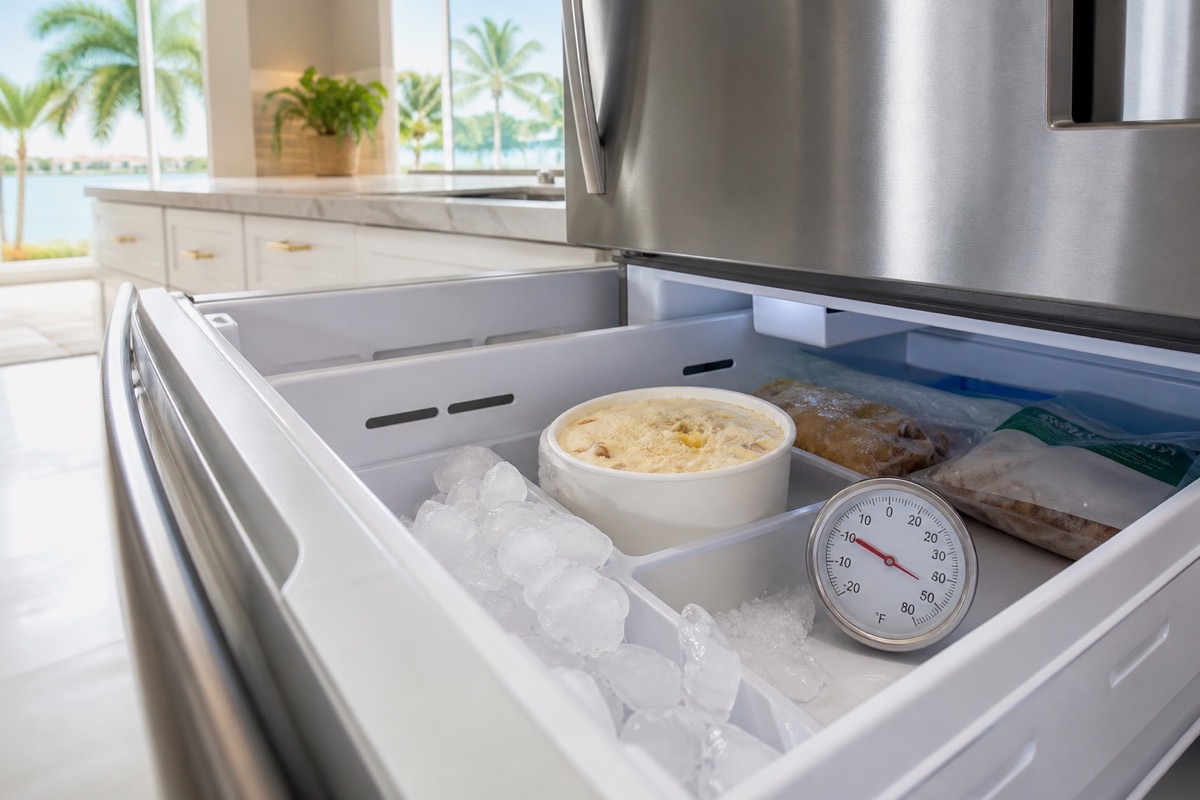
Freezer Not Freezing but Refrigerator Is Still Cold: Common Causes
Freezer not freezing while the refrigerator stays cold? Learn the common airflow, fan, frost, sensor, compressor, and sealed-system causes.
Updated August 8, 2026
freezer not freezing but refrigerator is cold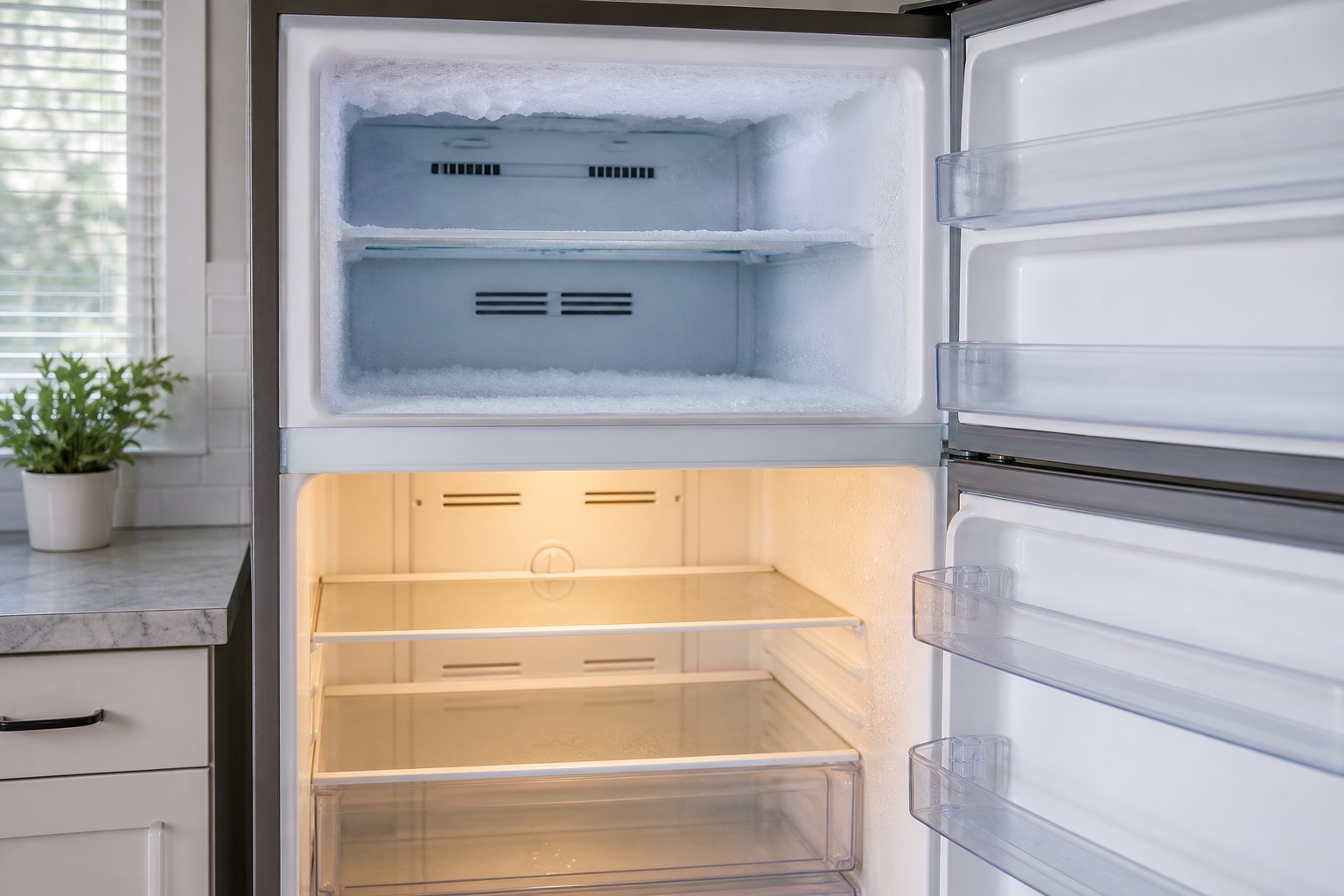
Refrigerator
Refrigerator Not Cooling but Freezer Is Working: Common Causes
Freezer cold but refrigerator warm? Learn the most common causes, safe checks, and when to schedule refrigerator repair in Cape Coral and Fort Myers.
Updated July 19, 2026
refrigerator not cooling but freezer is working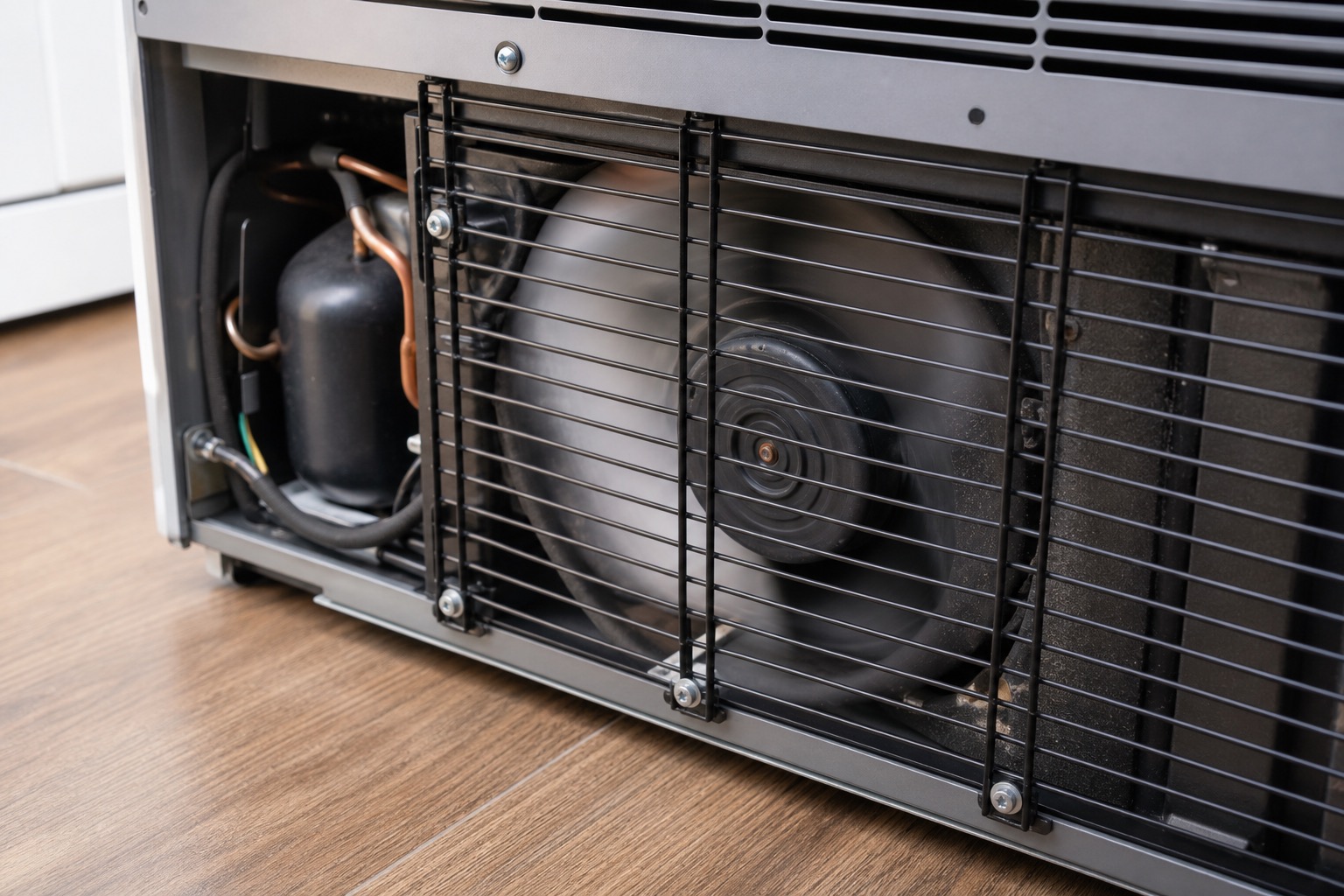
Refrigerator
Why Is My Refrigerator Making a Loud Buzzing Noise?
Is your refrigerator making a loud buzzing noise? Learn the common causes, safe checks, and when to schedule repair in Cape Coral or Fort Myers.
Updated July 19, 2026
refrigerator making a loud buzzing noiseNeed service?
Refrigerator Fan Repair in Cape Coral, Fort Myers and Southwest Florida
Art’s Appliance Repair provides refrigerator fan diagnostics and repair throughout Cape Coral, Fort Myers, North Fort Myers, Lehigh Acres, Estero, Bonita Springs, Naples, and surrounding Southwest Florida communities.
We diagnose refrigerator airflow problems including:
- Evaporator fan not running.
- Condenser fan not running.
- Ice maker fan failure.
- Fan hitting ice.
- Loud buzzing or scraping.
- Freezer cold but refrigerator warm.
- Weak airflow from refrigerator vents.
- Compressor overheating.
- Frost-covered evaporator.
- Door-switch and sensor problems.
- Fan wiring and control-board failures.
- Refrigerator not cooling correctly.
Call or text (239) 688-9955 to schedule refrigerator service.
Service call: $0 with an approved repair. A $79 diagnostic fee may apply if the repair is declined.
View Refrigerator Repair