Is a Buzzing Refrigerator Normal?
Some refrigerator noises are normal, especially on newer models with high-efficiency compressors and multiple fans.
Normal buzzing may occur when:
- The compressor starts or changes speed.
- The condenser fan is running.
- The evaporator fan is circulating cold air.
- The ice maker fills with water.
- The water dispenser is used.
- The refrigerator enters a defrost cycle.
- Refrigerant moves through the sealed system.
- The appliance is recovering after the door was opened.
- A variable-speed compressor operates at a low level.
The noise may be abnormal when it:
- Becomes much louder than before.
- Continues without stopping.
- Is accompanied by clicking.
- Comes with poor cooling.
- Causes strong vibration.
- Starts only when a door is opened or closed.
- Is accompanied by a burning smell.
- Occurs while the compressor repeatedly starts and stops.
- Stops when the ice maker is turned off.
- Comes from a fan striking ice or another object.
1. The Compressor Is Operating Normally
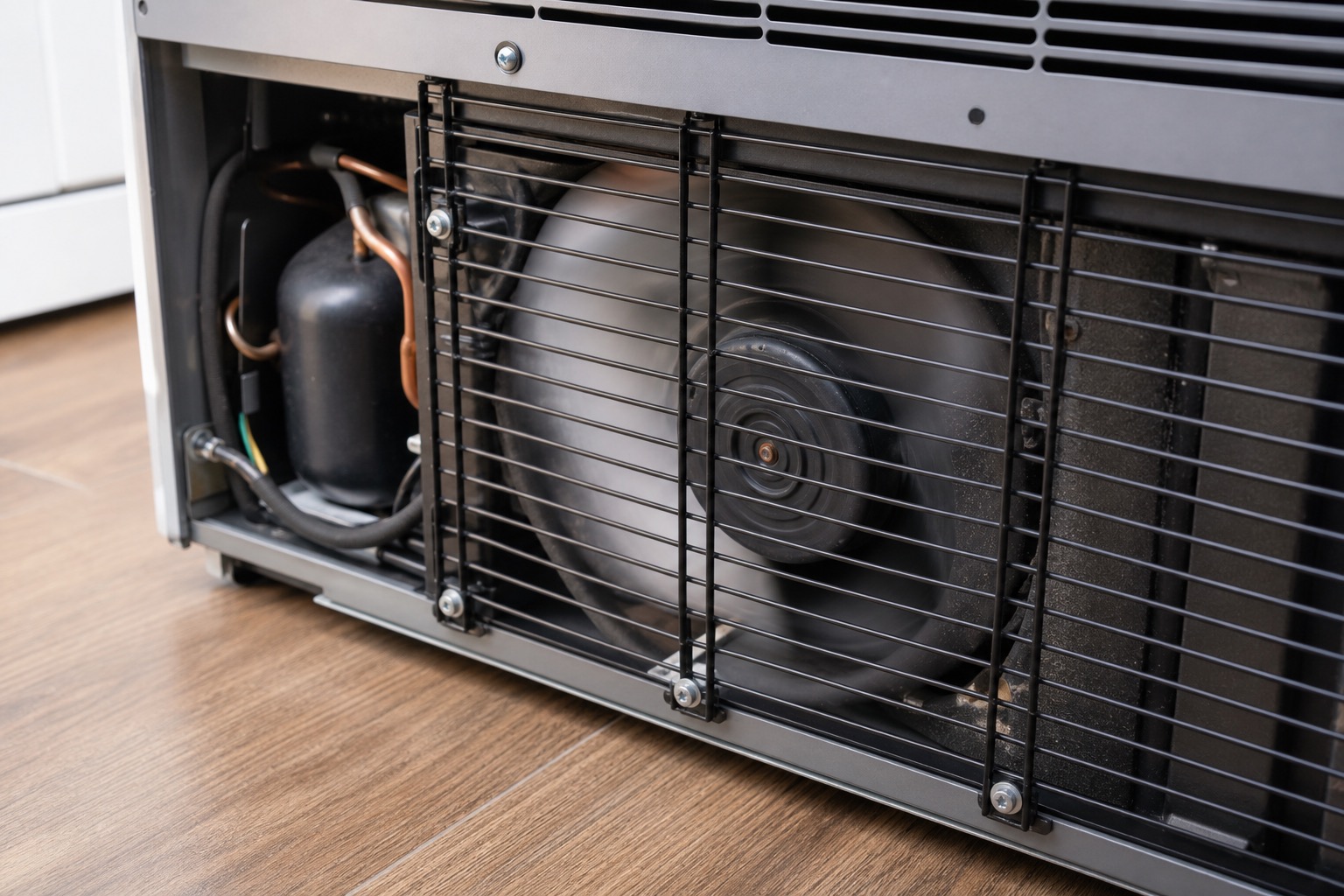
The compressor is usually located near the bottom rear of the refrigerator.
When running, it may produce:
- A low hum.
- Mild vibration.
- A soft buzzing sound.
- A slightly louder sound during startup.
- Changes in pitch on inverter models.
A normal compressor sound should generally remain steady and should not be accompanied by repeated clicking, overheating, or loss of cooling.
If the compressor becomes much louder than usual, internal wear or mounting problems may be developing.
2. The Refrigerator Is Touching the Wall or Cabinets
Vibration from the compressor and fans can transfer into nearby surfaces.
This may make a normal operating sound seem much louder.
Check whether the refrigerator is touching:
- A rear wall.
- Kitchen cabinets.
- A countertop.
- Water lines.
- Electrical cords.
- Metal panels.
- Nearby appliances.
Move the refrigerator slightly away from surrounding surfaces while maintaining the manufacturer’s required ventilation clearance.
Make sure the power cord and water line are not vibrating against the cabinet.
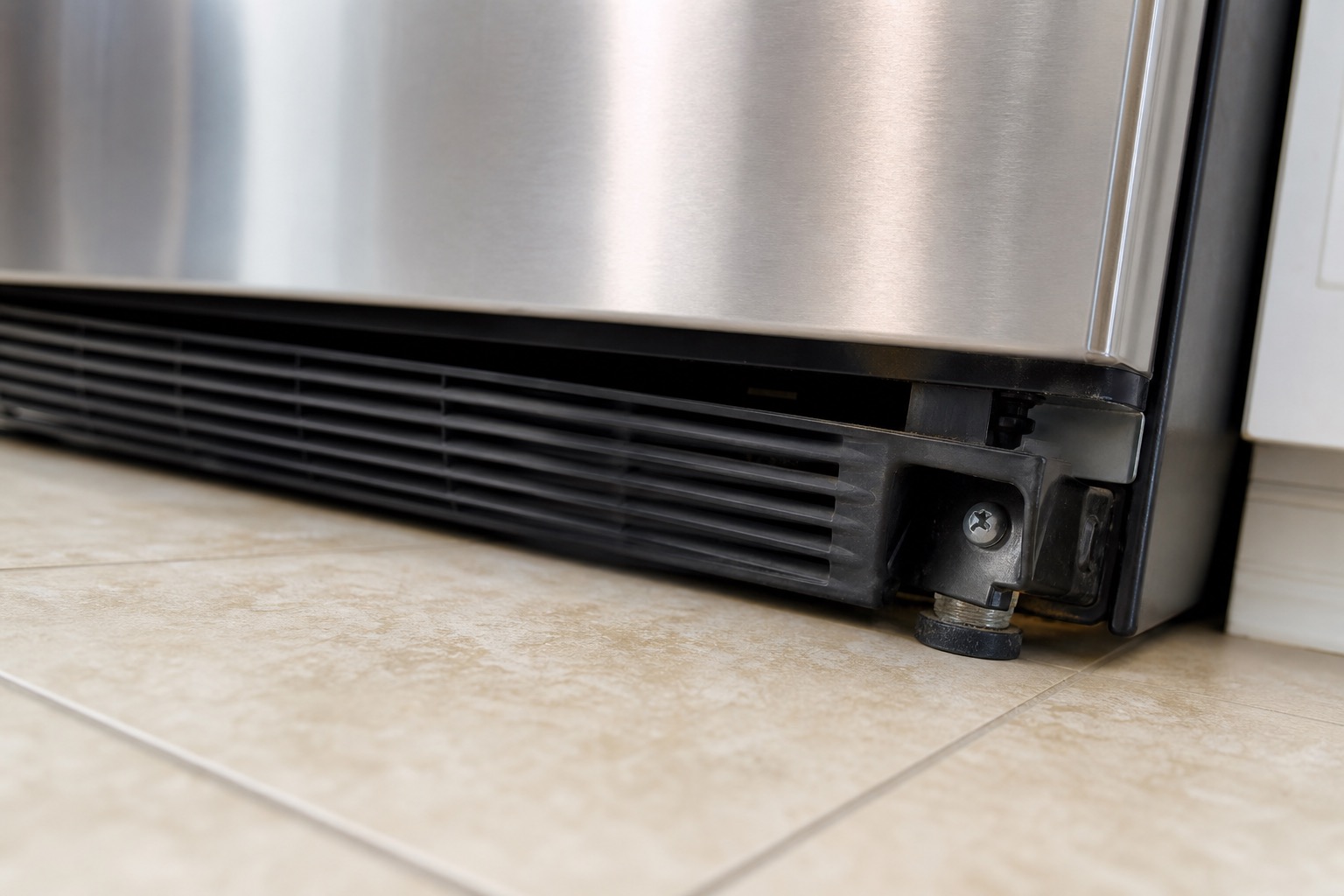
3. The Refrigerator Is Not Level
An uneven refrigerator may vibrate or produce buzzing and rattling sounds.
The compressor, drain pan, tubing, and cabinet panels may resonate if the appliance is unstable.
Signs of a leveling problem include:
- Refrigerator rocking when pushed.
- Doors not closing correctly.
- One front corner sitting higher than the other.
- Noise changing when pressure is applied to the cabinet.
- Strong vibration through the floor.
Adjust the leveling feet according to the manufacturer’s instructions.
The appliance should stand firmly without rocking.
4. The Drain Pan Is Vibrating
Many refrigerators have a drain pan near the compressor.
Water from the automatic defrost system collects in the pan and evaporates.
If the pan is loose, bent, or incorrectly positioned, compressor vibration may cause it to buzz or rattle.
The noise may:
- Come from the bottom rear area.
- Stop when the refrigerator is moved slightly.
- Change when the compressor turns off.
- Sound like thin metal or plastic vibrating.
Disconnect power before inspecting any accessible lower components.
Do not reach near electrical terminals, hot compressor surfaces, or moving fan blades.
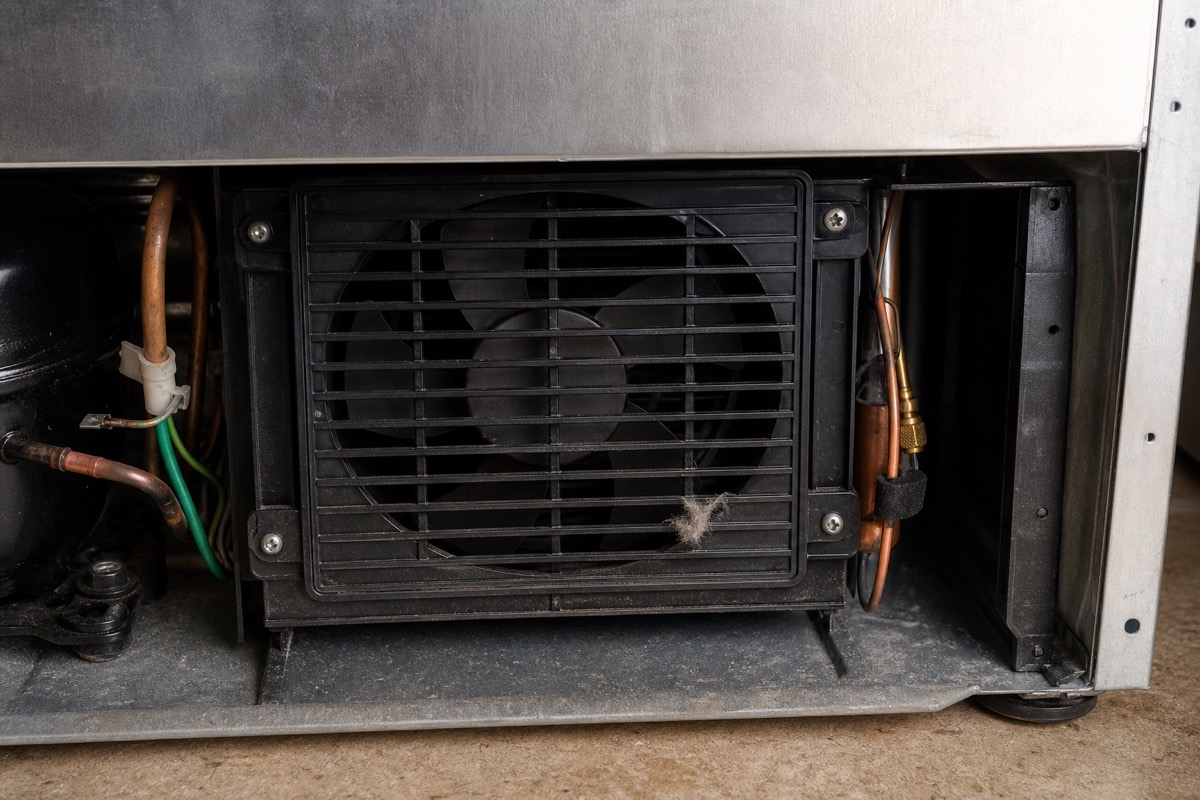
5. The Condenser Fan Is Hitting Debris
The condenser fan is commonly located near the compressor.
Dust, insulation, paper, pet hair, or another object may touch the fan blade and create a buzzing or rattling noise.
Possible signs include:
- Noise from the lower rear section.
- Noise only while the compressor is running.
- Reduced airflow near the compressor.
- Excessive heat around the refrigerator.
- Fan blade starting and stopping.
- A scraping sound mixed with the buzz.
Disconnect the refrigerator from power before checking for visible debris.
Do not bend the fan blade or refrigerant tubing.
6. The Condenser Fan Motor Is Failing
A worn condenser fan motor may produce a loud buzzing, humming, squealing, or grinding noise.
As the motor deteriorates, the fan may turn slowly or fail to start.
Possible symptoms include:
- Refrigerator running constantly.
- Excessive heat near the compressor.
- Weak cooling.
- Fan blade not turning consistently.
- Noise becoming louder over time.
- Compressor shutting off from overheating.
The motor should be inspected and electrically tested before replacement.
7. The Evaporator Fan Is Hitting Ice
The evaporator fan is usually located behind the rear panel inside the freezer.
Ice buildup around the fan blade can cause a loud buzzing, scraping, or vibrating sound.
The noise may change when:
- The freezer door opens.
- The door switch is pressed.
- The refrigerator enters a cooling cycle.
- Ice partially melts.
- The fan speed changes.
Other symptoms may include:
- Freezer cold but refrigerator warm.
- Weak airflow.
- Frost on the rear freezer wall.
- Intermittent cooling.
- Fan stopping completely.
Ice around the fan may be caused by a defrost system failure, air leak, blocked drain, or door left open.
8. The Evaporator Fan Motor Is Wearing Out
A failing evaporator fan motor may buzz even when the blade is not touching ice.
Common symptoms include:
- Loud noise from inside the freezer.
- Noise changing when the freezer door opens.
- Fan running slowly.
- Uneven refrigerator temperatures.
- Weak airflow from the vents.
- Intermittent fan operation.
On many models, the fan stops when the freezer door is opened. If the buzzing stops immediately when the door opens, the evaporator fan area is a likely source.
Do not place fingers or tools near the fan blade.
9. The Ice Maker Water Valve Is Buzzing
The water inlet valve may buzz briefly when the ice maker requests water.
A short buzzing sound during the fill cycle can be normal.
However, a loud or prolonged buzz may occur when:
- The household water supply is turned off.
- Water pressure is too low.
- The supply line is kinked.
- The refrigerator filter is clogged.
- The valve is failing.
- The ice maker requests water but none is available.
If the refrigerator is connected to an ice maker but not to a water supply, turn the ice maker off.
Allowing the valve to activate without water may create repeated buzzing and unnecessary wear.
10. The Water Supply Is Turned Off
A refrigerator may continue trying to fill the ice maker even when the water shutoff valve is closed.
This can cause a buzzing sound from the rear of the appliance.
Check that:
- The household water valve is open.
- The supply line is not kinked.
- The line is not frozen.
- The filter is installed correctly.
- The refrigerator is receiving adequate water pressure.
If you do not use the ice maker or water dispenser, switch the ice maker off.
11. The Water Filter Is Clogged or Incorrectly Installed
A restricted water filter can reduce water flow and cause the inlet valve to become louder during operation.
Possible symptoms include:
- Slow water dispenser flow.
- Small or hollow ice cubes.
- Ice maker filling slowly.
- Repeated buzzing during fill.
- Water sputtering.
- No water reaching the ice maker.
Replace the filter according to the manufacturer’s recommended interval.
Use a compatible filter and make sure it is fully seated.
After replacement, flush the water system according to the owner’s manual.
12. The Ice Maker Is Jammed
Ice cubes may become stuck in the ice maker or storage bin.
The ice maker motor may buzz while attempting to complete a harvest cycle.
Possible signs include:
- Buzzing from the upper freezer or refrigerator area.
- Ice maker not producing ice.
- Ice cubes stuck together.
- Ejector fingers not moving.
- Ice bin overfilled.
- Noise repeating at regular intervals.
Turn the ice maker off before attempting to remove loose ice.
Do not force the ejector mechanism by hand.
13. The Ice Dispenser Motor Is Struggling
A refrigerator with an ice dispenser may buzz when the auger motor attempts to move frozen or compacted ice.
Possible causes include:
- Ice cubes frozen together.
- Ice bin installed incorrectly.
- Foreign object in the bin.
- Damaged auger.
- Frozen dispenser chute.
- Failing auger motor.
Remove the ice bin and inspect it for visible blockage.
Do not reach into the dispenser mechanism while the refrigerator is powered.
14. The Compressor Start Relay Is Failing
A conventional compressor uses a start relay and overload device.
A failing relay may cause a loud buzz or hum when the compressor tries to start.
The sound may be followed by a click when the overload opens.
Common symptoms include:
- Buzzing for several seconds.
- A click afterward.
- Compressor not remaining on.
- Refrigerator not cooling.
- Compressor becoming hot.
- The cycle repeating every few minutes.
The relay, overload, compressor windings, and supply voltage should be tested before parts are replaced.
15. The Inverter Board Is Having Trouble Starting the Compressor
Many newer refrigerators use an inverter compressor rather than a conventional start relay.
A failing inverter board may cause:
- Buzzing near the compressor.
- Compressor starting briefly.
- Repeated restart attempts.
- Weak cooling.
- Compressor operating at an unusual speed.
- Error codes.
- Intermittent cooling.
Inverter systems require model-specific testing.
A universal start kit should not be installed on an inverter compressor.
16. The Compressor Is Mechanically Failing
Internal compressor wear may cause a louder-than-normal buzzing or humming sound.
Possible warning signs include:
- Refrigerator not cooling properly.
- Compressor running continuously.
- Compressor becoming extremely hot.
- Buzzing followed by clicking.
- Strong vibration.
- Noise increasing over time.
- Breaker or overload tripping.
A compressor may produce noise while still running but fail to create the correct refrigerant pressure.
Proper diagnosis may require checking current draw, winding resistance, refrigerant pressures, and frost pattern.
17. Refrigerant Is Moving Through the System
Refrigerant movement may sometimes sound like:
- Buzzing.
- Gurgling.
- Hissing.
- Bubbling.
- Flowing liquid.
These sounds are often normal, particularly:
- After the compressor starts.
- During a defrost cycle.
- After the refrigerator door has been open.
- When the compressor changes speed.
- Shortly after installation.
Refrigerant noise is generally not a concern when cooling temperatures remain normal and there are no other symptoms.
18. The Refrigerator Is in a Defrost Cycle
During automatic defrost, the refrigerator may produce unusual sounds.
You may hear:
- Buzzing.
- Hissing.
- Popping.
- Water dripping.
- Cracking as ice melts.
- Fan and compressor changes.
These sounds are often temporary.
A normal defrost cycle should not cause the refrigerator to remain warm for an extended period.
19. A Control Board or Electrical Component Is Buzzing
A relay, transformer, or power component on an electronic control board may produce a faint buzz.
A loud electrical buzz may indicate:
- Failing relay.
- Damaged control board.
- Loose electrical connection.
- Unstable supply voltage.
- Power-surge damage.
- Compressor or fan receiving improper power.
Possible warning signs include:
- Burning smell.
- Flickering display.
- Random resets.
- Components turning on and off.
- Error codes.
- Visible heat damage.
- Breaker or GFCI tripping.
Disconnect power and schedule service if the noise appears electrical or is accompanied by a burning smell.
20. A Loose Cabinet Panel Is Vibrating
A rear access cover, hinge cover, toe kick, or interior panel may vibrate while the compressor or fan is running.
The noise may stop when gentle pressure is applied to the panel.
Do not remove or adjust panels while the appliance is connected to power.
A missing screw, broken clip, or incorrectly installed cover may need correction.
21. Refrigerant Tubing Is Touching the Cabinet
Copper or aluminum refrigerant tubing may vibrate against:
- The cabinet.
- Another tube.
- A rear cover.
- The drain pan.
- Insulation.
- Electrical wiring.
This can create a loud metallic buzzing sound.
Refrigerant tubing should not be bent, pulled, or repositioned aggressively. Damage can cause a leak.
A technician can safely isolate the vibrating area.
22. The Refrigerator Is Recovering After a Power Outage
After power is restored, the refrigerator may operate more aggressively to recover temperature.
You may notice:
- Louder compressor operation.
- Higher fan speed.
- Longer cooling cycles.
- Increased vibration.
- Water valve operation.
- Ice maker activity.
The sound should usually decrease as the appliance reaches the correct temperature.
If loud buzzing continues for more than 24 hours or cooling remains poor, service may be required.
23. The Refrigerator Was Recently Installed
A newly installed refrigerator may produce unfamiliar noises while:
- Reaching operating temperature.
- Filling the ice maker.
- Removing air from the water line.
- Running fans at different speeds.
- Adjusting refrigerant pressures.
- Expanding and contracting internally.
Allow up to 24 hours for temperature stabilization.
Check that shipping materials have been removed and that the refrigerator is level and not touching surrounding surfaces.
24. The Refrigerator Is Working Hard in a Hot Garage
High ambient temperatures can make the compressor and fans operate longer and at higher speeds.
This is common with garage refrigerators in Southwest Florida.
A refrigerator in a hot garage may produce more noise because:
- The compressor runs continuously.
- The condenser fan operates at high speed.
- Heat builds up around the cabinet.
- Cooling recovery takes longer.
- The system approaches its operating limits.
Make sure there is adequate ventilation around the refrigerator.
A standard indoor refrigerator may not be designed for extreme garage temperatures.
How Can You Identify Where the Buzzing Comes From?
Listen carefully without removing any panels.
Noise from inside the freezer
Possible causes include:
- Evaporator fan hitting ice.
- Failing evaporator fan motor.
- Ice maker motor.
- Ice dispenser auger.
- Loose interior panel.
Noise from the lower rear area
Possible causes include:
- Compressor.
- Condenser fan.
- Start relay.
- Inverter board.
- Drain pan.
- Refrigerant tubing.
Noise near the water connection
Possible causes include:
- Water inlet valve.
- Closed water supply.
- Low water pressure.
- Clogged filter.
- Kinked supply line.
Noise from the control panel or top of the cabinet
Possible causes include:
- Electronic control board.
- Damper motor.
- Ice maker.
- Electrical relay.
- Loose cover.
What Can You Safely Check?
Before scheduling service, you can:
- Determine where the sound is loudest.
- Note when the noise occurs.
- Check whether cooling temperatures are normal.
- Move the refrigerator slightly away from the wall.
- Make sure the cabinet is level and stable.
- Check whether the power cord or water line is vibrating.
- Turn the ice maker off temporarily.
- Confirm that the water supply is open.
- Check the water line for kinks.
- Inspect the ice bin for frozen or jammed ice.
- Look for frost on the freezer’s rear panel.
- Listen for changes when the freezer door opens.
- Check for excessive heat near the compressor.
- Disconnect power before removing visible debris near accessible areas.
Do not remove electrical covers, touch compressor terminals, or place tools near moving fans while the refrigerator is connected to power.
When Should You Call a Refrigerator Technician?
Schedule professional diagnosis when:
- The buzzing is much louder than normal.
- The refrigerator is not cooling properly.
- Buzzing is followed by repeated clicking.
- The compressor starts and stops every few minutes.
- The evaporator or condenser fan is not turning.
- A fan appears to be hitting ice.
- The compressor is extremely hot.
- The noise is accompanied by a burning smell.
- The breaker or GFCI trips.
- The water valve buzzes but no water enters.
- The noise continues after the ice maker is turned off.
- Strong vibration comes from the compressor.
- The refrigerator displays an error code.
A technician can isolate the sound and test the relevant motor, compressor, valve, board, or starting components.
Should You Unplug a Buzzing Refrigerator?
Unplug the refrigerator immediately if:
- You smell burning plastic or wiring.
- Smoke is present.
- The power cord or outlet is hot.
- The breaker repeatedly trips.
- The buzzing is electrical and unusually loud.
- The compressor attempts to start repeatedly without running.
- A fan blade appears damaged or blocked.
If the sound is mild and cooling remains normal, monitor the appliance and note when the noise occurs.
Move perishable food to a safe location if the refrigerator is not maintaining 40°F or below.
Can a Loud Buzz Lead to More Damage?
Yes, depending on the cause.
Continuing to operate the refrigerator with a failed fan may cause the compressor to overheat.
A blocked evaporator fan can reduce airflow and cause temperature problems.
A failing start relay or inverter can place additional stress on the compressor.
A water valve operating without an adequate water supply may eventually fail.
Early diagnosis may prevent additional damage and reduce repair costs.
Photo guide
Diagnostic Photos
Local Refrigerator Service
We provide refrigerator repair in Cape Coral and Fort Myers, along with surrounding Southwest Florida service areas.
For scheduling, use the Contact page or call/text Art’s Appliance Repair directly.
Related Appliance Guides

Refrigerator
Why Is My Refrigerator Running Constantly?
Is your refrigerator running nonstop? Learn the common causes, safe checks, and when to schedule refrigerator repair in Cape Coral and Fort Myers.
Updated July 19, 2026
refrigerator running constantly
Refrigerator
Refrigerator Clicking On and Off: Common Causes
Refrigerator clicking repeatedly? Separate normal ice, valve and relay sounds from poor-cooling or electrical warning signs before requesting local repair.
Updated September 22, 2026
refrigerator clicking on and off
Refrigerator
Refrigerator Warm but Compressor Is Running: What the Symptom Means
A running compressor does not prove a refrigerator is cooling. Compare both compartments, protect food, make safe checks, and know when to request local repair.
Updated September 25, 2026
compressor running without proper coolingNeed service?
Refrigerator Repair in Cape Coral, Fort Myers and Southwest Florida
Art’s Appliance Repair provides refrigerator diagnostics and repair throughout Cape Coral, Fort Myers, North Fort Myers, Lehigh Acres, Estero, Bonita Springs, Naples, and surrounding Southwest Florida communities.
We diagnose refrigerator noises and related problems including:
- Loud buzzing and humming.
- Compressor noise.
- Condenser fan problems.
- Evaporator fan hitting ice.
- Ice maker and water-valve noise.
- Refrigerator clicking on and off.
- Inverter and start-relay problems.
- Excessive vibration.
- Frost and airflow problems.
- Refrigerator not cooling.
- Electrical control issues.
- Water and ice dispenser failures.
Call or text (239) 688-9955 to schedule refrigerator service.
The service call is $0 when the diagnosed repair is approved and completed. If no repair is completed, the diagnostic service call is $79.
View Refrigerator Repair