Protect the Food Before Troubleshooting Frost
Frost can exist while the freezer is still cold, or it can restrict airflow enough to accompany rising temperatures. Use an appliance thermometer instead of touch, ice hardness, or the control setting. FDA guidance says a freezer should be at 0°F or below.
Keep the door closed while deciding where food should go. If cooling history is uncertain after an outage or warm period, use current FDA guidance and actual food temperature. Appearance and odor alone do not establish safety, and food-safety guidance does not diagnose the appliance.
FDA: refrigerator thermometers and freezer temperature
FDA: food safety during power outages
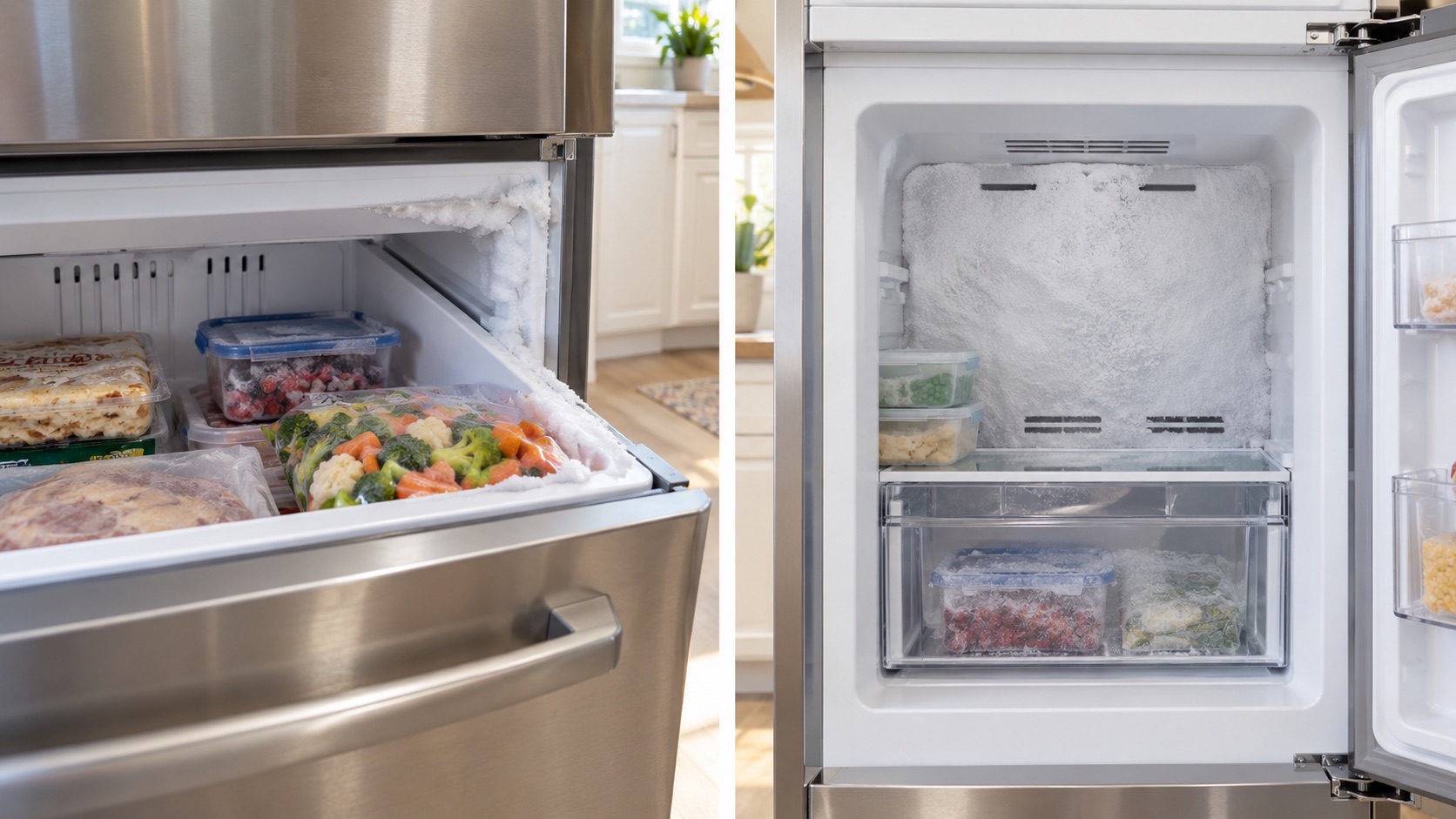
Door-Edge Frost and Rear-Panel Frost Mean Different Things
Frost or ice crystals around a door or drawer opening make warm, moist air entry a useful first hypothesis. GE and Samsung both tell owners to check for packages, shelves, baskets, dirty or damaged seals, and doors or drawers that do not close completely. The location identifies where to inspect; it does not prove the gasket itself needs replacement.
A dense frost sheet across a rear interior wall deserves a different route on a frost-free refrigerator or freezer. GE says ice accumulation on the freezer wall is not expected on frost-free models and lists door use, humidity, warm food, packages, gasket sealing, and fan operation as separate categories. Repeated rear-panel frost can restrict airflow, but a photograph alone cannot identify a heater, sensor, control, fan, wiring, or sealed-system failure.
GE Appliances: frost in the freezer
GE Appliances: ice on a freezer wall
Samsung: frost in the freezer or refrigerator
Safe Checks Before Freezer Frost Service
- Photograph the full frost pattern before wiping, moving food, or beginning any model-approved defrost procedure.
- Record the actual freezer temperature and whether the refrigerator section, ice production, or airflow changed at the same time.
- Confirm that packages, baskets, shelves, drawers, or an ice bin are not preventing normal door closure.
- Inspect the visible gasket for dirt, folds, tears, loose sections, or a gap at the same edge where frost is heaviest. Do not pull the gasket off.
- Check whether frost followed grocery loading, a door-left-open event, an outage, cleaning, relocation, or a recent defrost.
- Keep food away from visible vents according to the exact model manual; vent location and required clearance vary by model.
- Record alerts, exact codes, fan-contact sounds, weak airflow, water, unusual heat, burning odor, or repeated power events.
- Find the complete model number before using a defrost, control, alignment, or cleaning procedure.
Check Door Fit Before Ordering a Freezer Gasket
A package, basket, mis-seated drawer, door load, cabinet level, hinge alignment, or gasket section pulled from its channel can change how the door meets the cabinet. A dirty, folded, loose, torn, and misaligned gasket do not all require the same correction.
GE’s bottom-freezer guidance separates package interference, basket seating, gasket fit, and door adjustment. Use the exact model manual before changing feet, rollers, hinges, or a door. Do not loosen or work under a loaded or unsupported door; water tubing or wiring may pass through a hinge area on some refrigerators.
GE Appliances: bottom-freezer drawer sealing checks
Samsung: refrigerator or freezer door will not close
Manual-Defrost and Frost-Free Models Need Different Expectations
Some manual-defrost freezers are designed to accumulate frost and require periodic defrosting under the owner’s manual. A frost-free model manages routine defrosting automatically, so a recurring dense frost pattern deserves a different diagnosis. Confirm the model and defrost type before treating any thickness or schedule as universal.
A complete model-approved defrost may temporarily restore airflow and can reveal whether the pattern returns, but recurrence is evidence for diagnosis rather than proof of a specific failed part. Do not remove an interior panel, reach a fan, expose wiring, or test energized components to identify the cause.
GE Appliances: manual-defrost refrigerator guidance
What Professional Diagnosis May Need to Separate
- Humid-air entry from a door, drawer, gasket, obstruction, alignment, or cabinet-level concern.
- Normal manual-defrost accumulation versus an abnormal recurring pattern on a frost-free model.
- A visible rear-panel frost pattern versus hidden evaporator frost that is restricting airflow.
- Fan contact with ice, weak airflow, a sensor or control concern, or an automatic-defrost circuit issue.
- Frost caused by a recent door-open, loading, outage, or defrost event versus a pattern that returns during normal use.
- A freezer-only problem versus a broader refrigerator or sealed-system cooling concern.
These are diagnostic categories, not part recommendations. The model, defrost type, measured temperatures, untouched frost photo, door history, recurrence, airflow, sounds, alerts, and cooling behavior determine which service information and tests apply.
Documented Southwest Florida Frost Examples
A documented Fort Myers GE refrigerator case involved heavy evaporator frost that restricted freezer airflow. A separate North Fort Myers garage-freezer case involved afternoon warming and rear-panel frost; the visit checked the door seal, condenser airflow, frost pattern, defrost circuit, and temperature control. Those records show why similar-looking frost may require different tests. They do not establish the cause in another appliance.
See the documented Fort Myers evaporator-frost case
What to Include in a Local Freezer Frost Repair Request
Share your city or ZIP code privately so Art’s Appliance Repair can confirm route coverage, appliance eligibility, and appointment availability in Cape Coral, Fort Myers, North Fort Myers, Naples, and the confirmed Southwest Florida service area. An online time selection is a request and requires confirmation.
- Brand, complete model number, and whether the appliance is a refrigerator freezer, upright freezer, or chest freezer.
- Measured freezer temperature and any refrigerator-compartment temperature if applicable.
- A safe photo of the full untouched frost pattern and close photo of the affected door edge or panel.
- Whether frost is on packages, around an opening, on one corner, or evenly across a rear wall.
- Door-open, grocery-loading, outage, cleaning, relocation, or prior defrost history.
- Whether frost returns during normal use and whether airflow or cooling changes with it.
- Exact alerts, codes, fan-contact sounds, unusual heat, odor, water, or power symptoms.
The service call is waived when the diagnosed repair is approved and completed. Diagnosis is $79 for one appliance or $100 total for two appliances. The recommended repair and price are provided for approval before billable repair work begins.
North Fort Myers freezer repair
How appliance diagnosis and repair pricing work
Service-call and warranty policy
Freezer Frost Diagnosis in Southwest Florida
Art’s Appliance Repair diagnoses freezer door-seal, frost, airflow, fan, automatic-defrost, control, and cooling concerns across the confirmed Southwest Florida service area. Send the model, measured temperatures, frost location, recurrence pattern, and door history so the correct service path can be confirmed before scheduling.
Local Freezer Service
Relevant local service pages include freezer repair in Cape Coral, Fort Myers freezer repair, North Fort Myers freezer repair, and freezer repair in Naples. We also serve surrounding Southwest Florida service areas.
For scheduling, use the Contact page or call/text Art’s Appliance Repair directly.
Helpful Next Pages
These related guides and local service pages help connect the symptom to a practical repair path.
Related Appliance Guides
Refrigerator
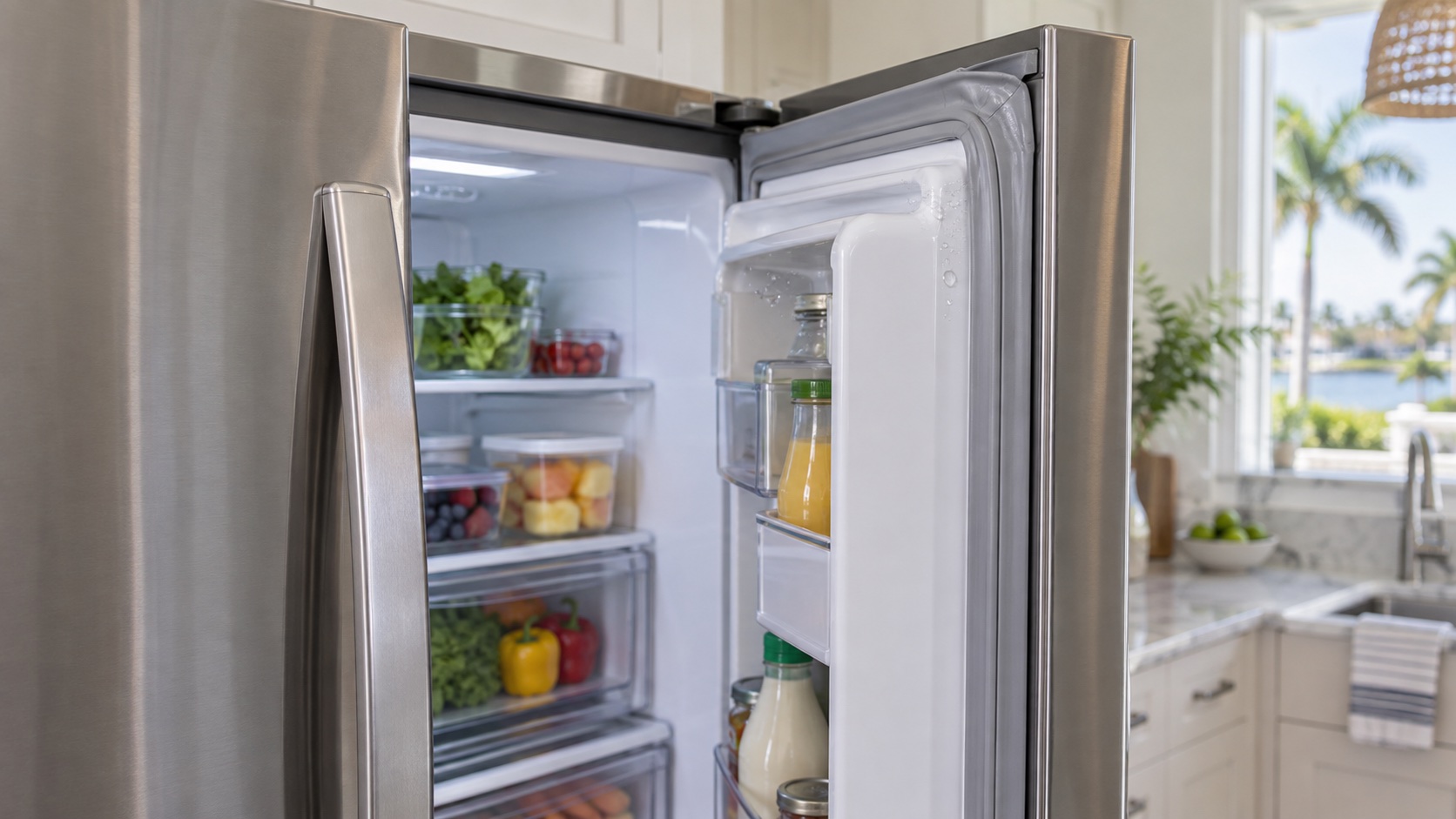
Refrigerator Door Not Sealing: Warm Air, Moisture, and Gasket Clues
A refrigerator door that will not seal can admit warm, humid air. Check obstructions, gasket condition, alignment, and food temperature before requesting local repair.
Updated September 27, 2026
a refrigerator or freezer door is not sealing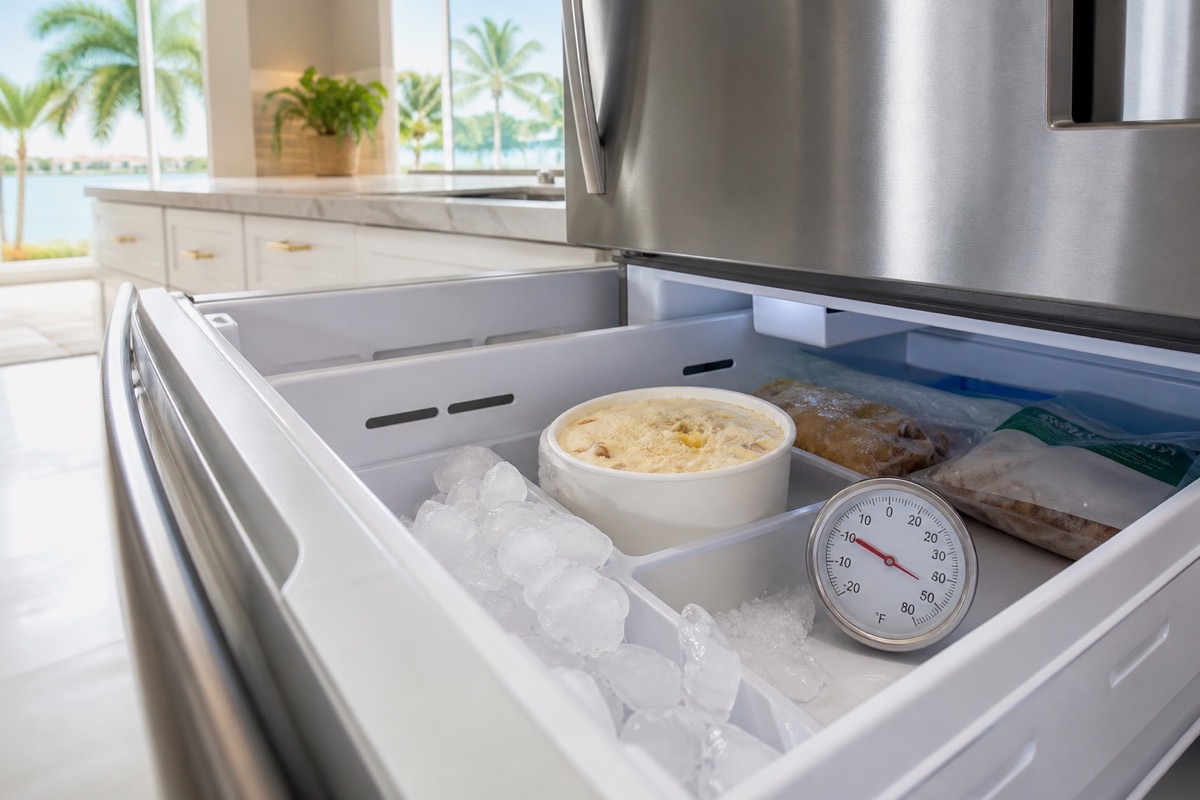
Freezer
Freezer Not Freezing but Refrigerator Is Still Cold: Common Causes
Freezer not freezing while the refrigerator stays cold? Learn the common airflow, fan, frost, sensor, compressor, and sealed-system causes.
Updated August 8, 2026
the freezer is warm while the refrigerator stays cold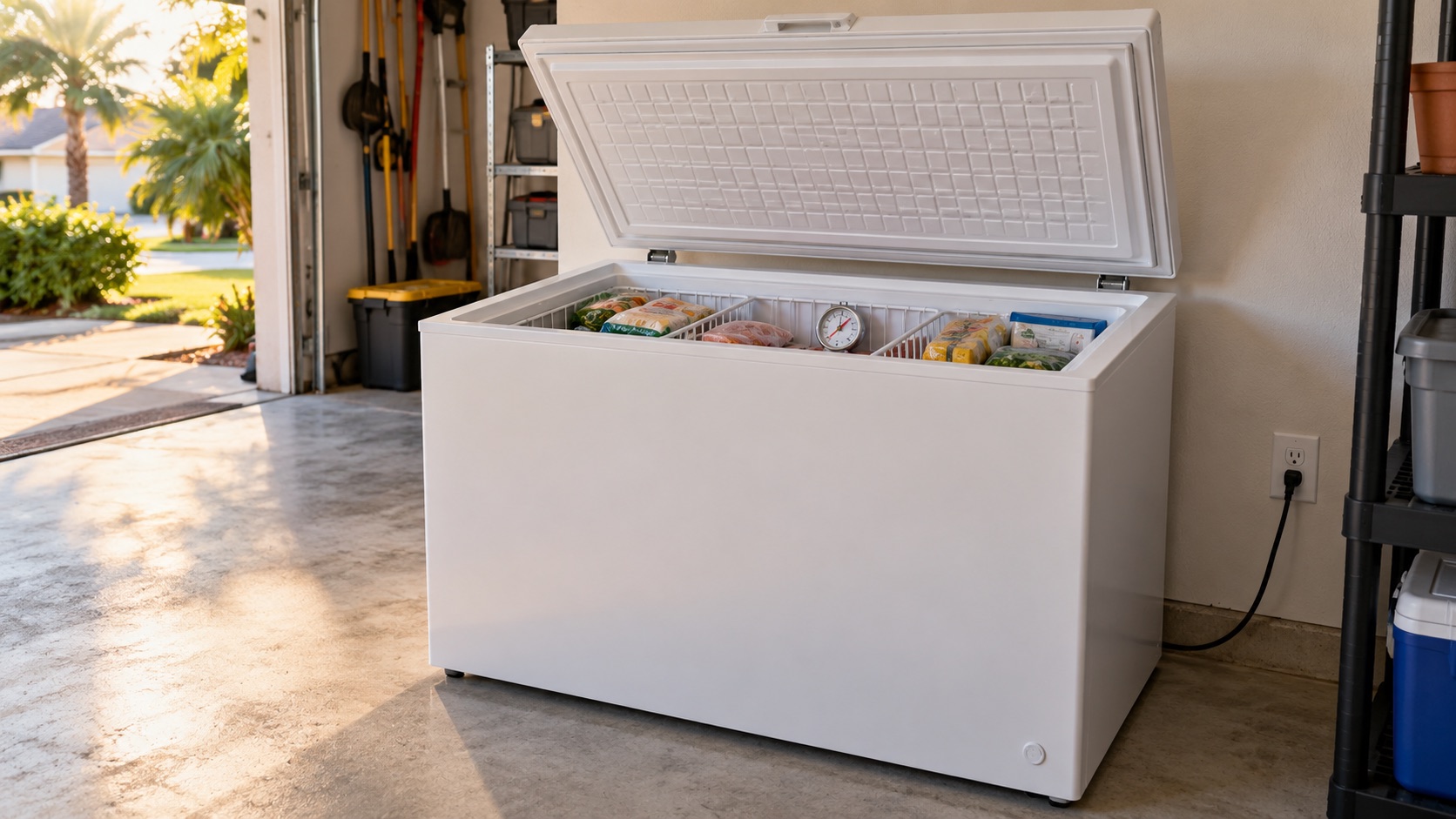
Freezer
Chest Freezer Not Freezing in a Florida Garage: Heat, Location, and Cooling Clues
Chest freezer warming in a Florida garage? Compare the model’s rated ambient range, measured food temperature, lid seal, airflow, and frost clues before local service.
Updated October 3, 2026
a chest freezer warms in a Florida garage