How Cold Should a Freezer Be?
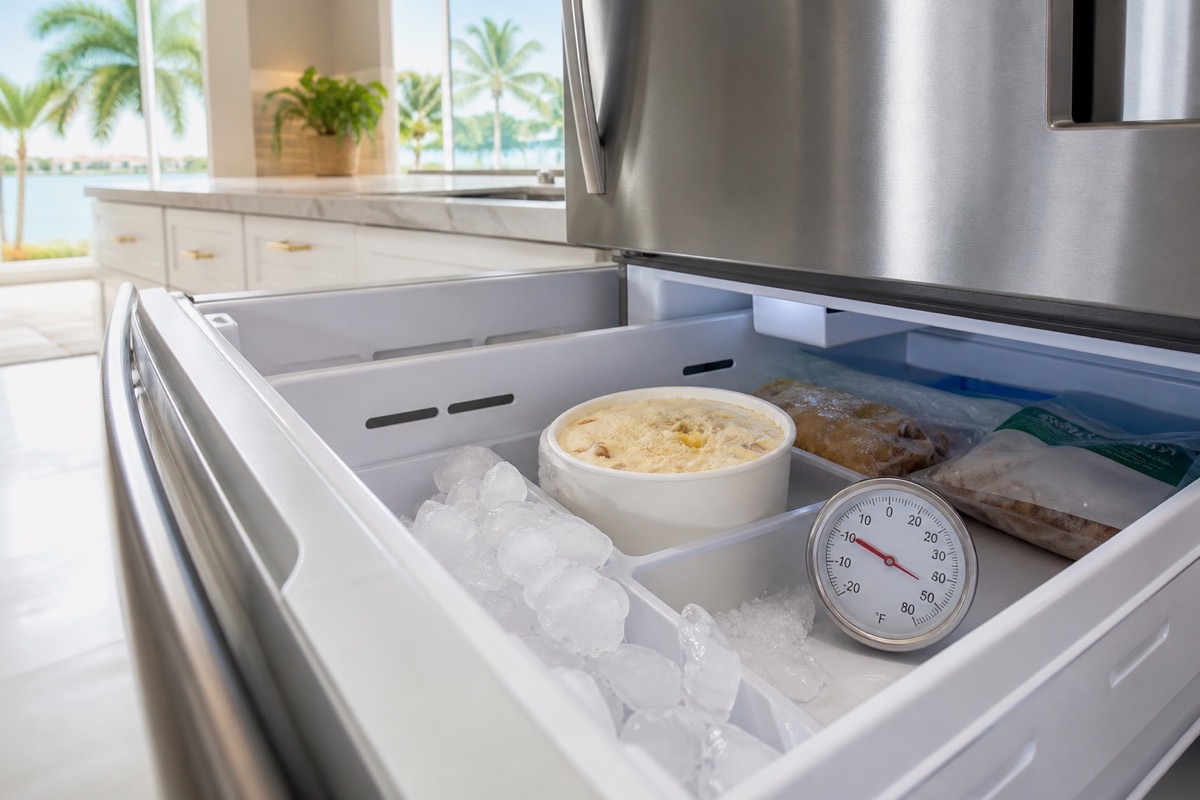
A household freezer should generally remain close to:
0°F (-18°C)
Food may still feel cold at temperatures above this level, but ice cream may become soft and frozen food may begin to thaw.
Warning signs include:
- Ice cream becoming soft.
- Frozen vegetables becoming flexible.
- Ice cubes melting together.
- Freezer temperature above 10°F.
- Food thawing near the door.
- Freezer taking a very long time to freeze new food.
- Ice maker production slowing or stopping.
Use an appliance thermometer if possible.
Do not rely only on the control-panel display because it may show the selected temperature rather than the actual compartment temperature.
Is the Refrigerator Really Cooling Normally?
Before focusing only on the freezer, check the refrigerator temperature too.
A normal refrigerator compartment is generally around:
37°F to 40°F
If the refrigerator is also gradually warming, the appliance may have a broader cooling-system problem.
If the refrigerator remains correctly cold while the freezer is significantly warmer than expected, airflow, sensor, door, or compartment-specific problems become more likely.
Temperature and Setting Problems
1. The Freezer Temperature Setting Is Too Warm
The freezer setting may have been changed accidentally.
Check for:
- Temperature set above 0°F.
- Energy-saving mode.
- Vacation mode.
- Recently changed controls.
- Child touching the control panel.
- Power outage resetting the settings.
Return the freezer to the manufacturer’s recommended setting.
Allow several hours before evaluating the result.
2. The Refrigerator Was Recently Reset
After:
- A power outage.
- Unplugging.
- Repair.
- Cleaning.
- Control-board reset.
the appliance may need time to stabilize.
The freezer often takes longer than the refrigerator section to reach the final temperature.
Allow up to 24 hours after a major power interruption or temperature adjustment.
3. Too Much Warm Food Was Added
Adding a large amount of room-temperature or warm food can temporarily raise freezer temperature.
This is common after:
- Grocery shopping.
- Preparing large meals.
- Transferring food from another freezer.
Avoid opening the door frequently while the freezer recovers.
If the temperature does not improve after 12–24 hours, another problem may be present.
4. Fast Freeze or Power Freeze Is Turned Off
Some refrigerators offer modes such as:
- Fast Freeze.
- Power Freeze.
- Max Freeze.
- Quick Freeze.
These modes temporarily increase cooling after loading large amounts of food.
They are not normally required for everyday operation, but may help the freezer recover more quickly after a large load.
Door and Gasket Problems
5. The Freezer Door Is Not Closing Completely
A partially open freezer door allows warm, humid air to enter.
Possible causes include:
- Food blocking the door.
- Ice buildup.
- Drawer not fully seated.
- Basket installed incorrectly.
- Door gasket folded over.
- Hinge problem.
Signs include:
- Frost around the door.
- Condensation.
- Soft frozen food.
- Compressor running constantly.
- Ice buildup inside.
Make sure nothing prevents the door from closing.
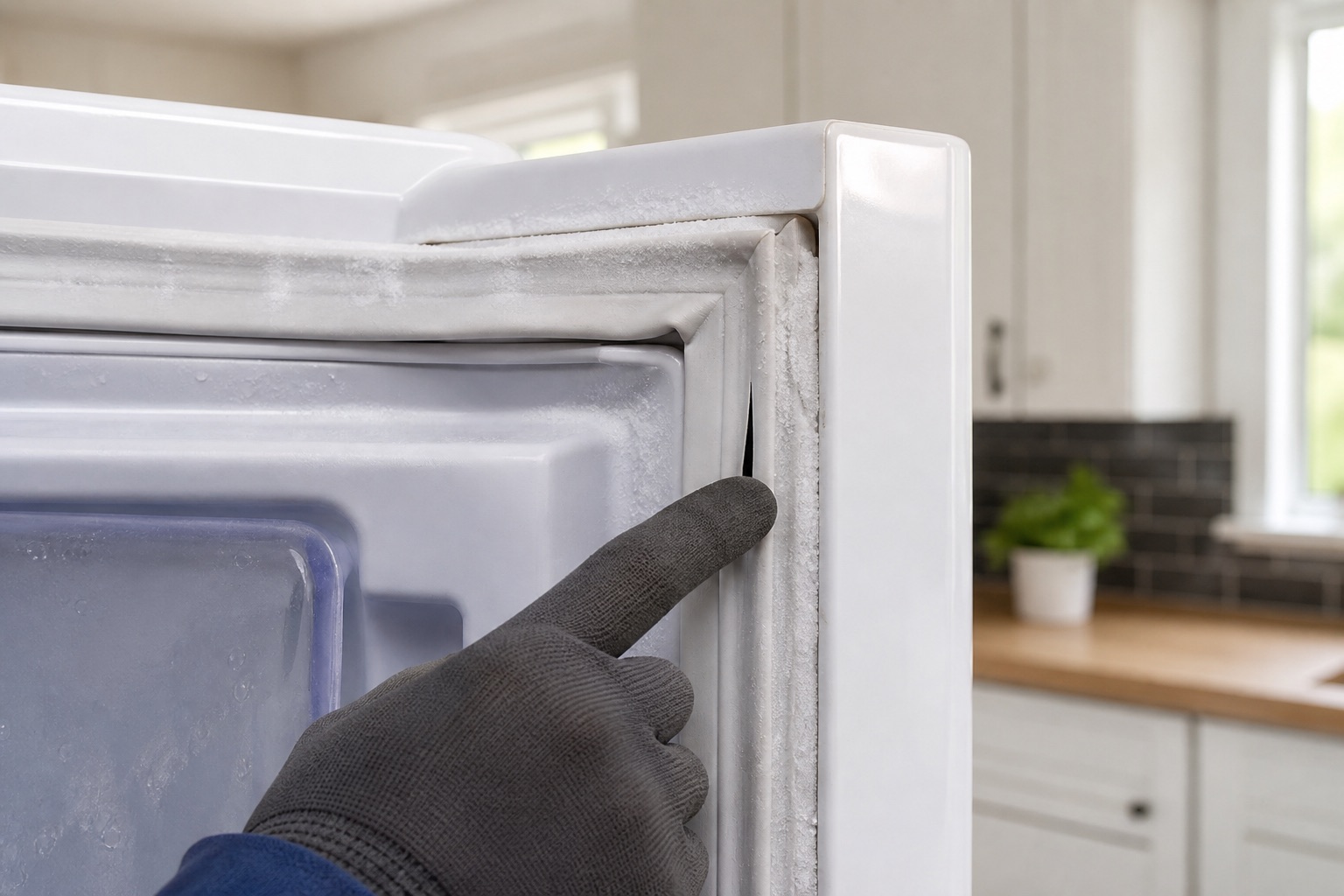
6. The Freezer Door Gasket Is Damaged
The gasket creates an air seal between the freezer door and cabinet.
A damaged gasket may allow warm air to enter continuously.
Inspect for:
- Cracks.
- Tears.
- Loose sections.
- Warped areas.
- Food residue.
- Gaps around the corners.
Clean the gasket with warm water and mild soap.
A damaged or permanently deformed gasket may require replacement.
7. The Door Is Misaligned
A good gasket cannot seal correctly if the door itself is sagging or misaligned.
Possible causes include:
- Loose hinge.
- Worn hinge bushing.
- Overloaded door bins.
- Refrigerator not level.
- Damaged drawer slides on bottom-freezer models.
Look for an uneven gap around the door.
8. The Refrigerator Is Not Level
An improperly leveled cabinet can affect:
- Door closure.
- Gasket contact.
- Drawer alignment.
- Drainage.
The refrigerator should stand firmly without rocking.
Follow the manufacturer’s leveling instructions.
Airflow Problems
9. Freezer Air Vents Are Blocked
Cold air needs to move through the freezer.
Food packages may block:
- Evaporator outlets.
- Return vents.
- Fan openings.
- Air ducts.
Possible symptoms include:
- One section cold while another is warm.
- Freezer warm near the door.
- Food freezing only near the back.
- Weak airflow.
Rearrange food so that the vents remain clear.
10. The Freezer Is Overpacked
A completely packed freezer can prevent cold air from circulating.
Avoid pressing food directly against:
- The rear wall.
- Fan cover.
- Ceiling vents.
- Side ducts.
Leave small gaps between packages to allow airflow.
11. The Freezer Is Almost Empty
An almost empty freezer may experience larger temperature changes whenever the door opens.
Frozen food helps stabilize temperature.
You do not need to fill the freezer completely, but a moderate load helps maintain stable conditions.
Evaporator Fan Problems
12. The Evaporator Fan Is Not Running
The evaporator fan moves cold air across the evaporator coils and through the freezer.
If the fan stops:
- Cold may remain near the evaporator.
- Other areas become warm.
- Freezer temperature becomes uneven.
- Refrigerator airflow may also change.
Possible symptoms include:
- No fan sound.
- Weak airflow.
- Freezer warm at the top.
- Scraping before the fan stopped.
- Fan-related error code.
On many refrigerators, the fan stops when the door opens.
Close the door or activate the door switch before deciding that the fan has failed.
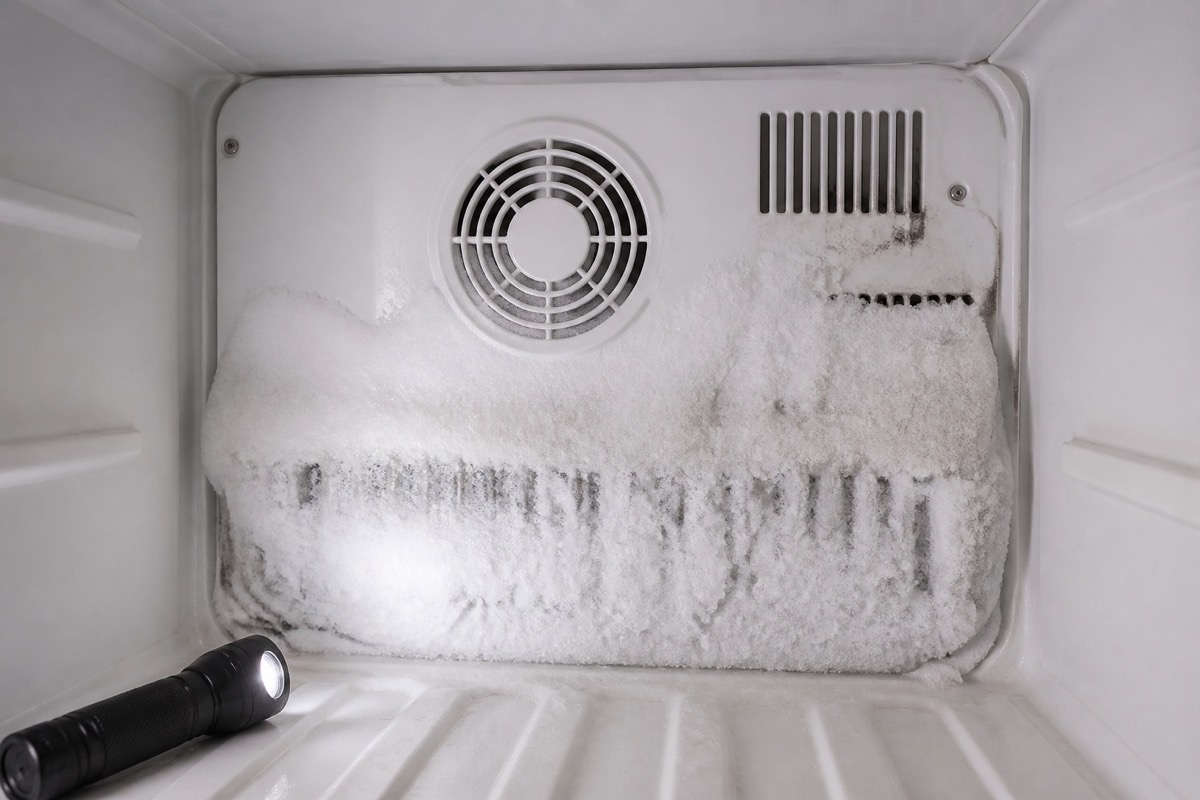
13. Ice Is Blocking the Evaporator Fan
Ice buildup can physically stop the fan blade.
Possible signs include:
- Scraping.
- Clicking.
- Buzzing.
- Noise stops when the freezer door opens.
- Heavy frost on the back wall.
Ice buildup may be caused by:
- Door left open.
- Damaged gasket.
- Defrost failure.
- Blocked drain.
- Excessive humidity.
Do not use a knife or sharp object to remove ice.
14. The Evaporator Fan Motor Is Weak
A fan motor may still rotate but not reach normal speed.
Possible symptoms include:
- Weak airflow.
- Intermittent cooling.
- Fan starts slowly.
- Fan stops when warm.
- Unusual squealing or grinding.
The motor and supply voltage may need professional testing.
Frost and Defrost Problems
15. The Evaporator Is Covered With Frost
A thick layer of frost acts like insulation and prevents normal heat transfer.
Possible symptoms include:
- Freezer gradually becoming warmer.
- Weak airflow.
- Frost on the rear panel.
- Fan hitting ice.
- Compressor running frequently.
Possible causes include:
- Defrost heater.
- Defrost sensor.
- Defrost thermostat.
- Control board.
- Wiring.
Manually defrosting may temporarily restore cooling, but the problem usually returns if the failed component is not repaired.
16. The Defrost Heater Has Failed
The defrost heater melts frost from the evaporator.
If it fails, ice may accumulate over several days or weeks.
The heater normally requires continuity or resistance testing according to the model.
17. The Defrost Sensor or Thermistor Is Faulty
The refrigerator uses temperature information to control defrost.
A faulty sensor may cause:
- Insufficient defrost.
- Excessive frost.
- Incorrect cooling cycles.
- Error codes.
The sensor should be tested against manufacturer specifications.
18. The Control Board Is Not Starting Defrost
A control-board failure may prevent the automatic defrost cycle.
Before replacing a board, the heater, sensor, wiring, and other components should be tested first.
Temperature-Sensor Problems
19. The Freezer Thermistor Is Reading Incorrectly
The freezer thermistor tells the control board how cold the compartment is.
If it incorrectly reports a lower temperature than the actual temperature, the control may reduce cooling too early.
Possible symptoms include:
- Freezer warmer than display.
- Compressor cycles off too soon.
- Intermittent cooling.
- Freezer temperature fluctuates.
20. The Sensor Has a Wiring Problem
A good sensor may send incorrect information if its:
- Connector is loose.
- Wire is damaged.
- Terminal is corroded.
- Harness is pinched.
Sensor and wiring should be tested as a circuit.
Damper and Multi-Compartment Problems
21. The Air Damper Is Operating Incorrectly
Some refrigerators use dampers to control how cold air moves between compartments.
A damper problem can create unusual temperature differences.
Depending on refrigerator design, symptoms may include:
- Refrigerator normal but freezer abnormal.
- Food freezing in the refrigerator.
- Weak airflow.
- Damper clicking repeatedly.
The damper, motor, sensor, and control board may need inspection.
22. A Multi-Evaporator System Has a Compartment-Specific Problem
Some refrigerators use separate evaporators or cooling circuits for the refrigerator and freezer.
This means the refrigerator can remain cold even when the freezer develops a problem.
Possible causes include:
- Freezer evaporator fan.
- Freezer sensor.
- Refrigerant valve.
- Compartment control.
- Frost buildup.
- Sealed-system restriction.
These systems often require model-specific diagnostic testing.
Condenser and Heat-Rejection Problems
23. The Condenser Coils Are Restricted
Some refrigerator designs require accessible condenser coils to remain reasonably clean.
Dust, pet hair, and debris can reduce heat transfer.
Possible symptoms include:
- Compressor running longer.
- Cabinet becoming hot.
- Weak cooling.
- Freezer struggling first under heavy load.
Disconnect power before cleaning accessible condenser areas.
Follow the manufacturer’s maintenance instructions for the specific model.
24. The Condenser Fan Is Not Running
A condenser fan helps remove heat from the compressor and condenser.
If it fails:
- Compressor temperature rises.
- Cooling efficiency decreases.
- Freezer may fail to reach 0°F.
- Compressor may shut off on overload.
Possible signs include:
- No airflow near the compressor.
- Excessive heat.
- Clicking.
- Fan humming but not moving.
Compressor and Sealed-System Problems
25. The Compressor Is Running but Cooling Is Weak
A compressor can run and still fail to pump refrigerant efficiently.
Possible symptoms include:
- Compressor runs almost continuously.
- Freezer remains too warm.
- Condenser temperature seems abnormal.
- Evaporator develops only partial frost.
- Cooling gradually worsens.
A compressor should not be diagnosed only by sound.
Proper sealed-system testing may be required.
26. The Compressor Is Starting and Stopping
A compressor that runs briefly and stops may not provide enough cooling.
Possible causes include:
- Compressor overheating.
- Start relay problem.
- Inverter problem.
- Low voltage.
- Internal compressor failure.
Repeated clicking or short cycling requires diagnosis.
27. The Inverter Board Is Failing
Many newer refrigerators use variable-speed inverter compressors.
A failing inverter may cause:
- Compressor not starting.
- Compressor running intermittently.
- Weak cooling.
- Error codes.
- Unusual compressor speed.
The inverter, compressor windings, incoming power, and control signal should be tested together.
28. The Start Relay Is Failing
Traditional compressors may use a start relay.
A failed relay can cause:
- Humming.
- Clicking.
- Compressor becoming hot.
- Refrigerator cooling intermittently.
The relay and compressor should be tested before replacement.
29. The Refrigerator Has a Refrigerant Leak
Refrigerant is contained in a sealed system and should not normally need regular refilling.
A leak may cause:
- Gradual loss of freezer performance.
- Long compressor run times.
- Incomplete evaporator frost pattern.
- Both compartments eventually becoming warm.
Simply adding refrigerant without finding the reason for the loss is not a complete repair.
30. The Sealed System Has a Restriction
A restriction in:
- Filter drier.
- Capillary tube.
- Refrigerant tubing.
can reduce refrigerant flow.
Possible symptoms include:
- Partial frost pattern.
- Freezer unable to reach 0°F.
- Compressor running continuously.
- Unusual tubing temperatures.
Sealed-system diagnosis requires specialized equipment.
31. A Refrigerant Valve Is Not Directing Flow Correctly
Some multi-compartment refrigerators use valves to direct refrigerant between different evaporators.
A valve failure may cause:
- Refrigerator section normal.
- Freezer warm.
- One evaporator cooling and the other not.
- Unusual temperature cycling.
This is a model-specific sealed-system repair.
Ice Maker Clues
32. The Ice Maker Has Stopped Making Ice
Ice production often slows before frozen food noticeably thaws.
If:
- Refrigerator feels normal.
- Freezer seems slightly warm.
- Ice maker suddenly stops.
measure the actual freezer temperature.
Many ice makers require sufficiently low freezer temperature before harvesting ice normally.
33. Ice Cubes Are Small or Melting Together
Small, wet, or clumped cubes may indicate that freezer temperature is too high.
This can help identify a developing cooling problem before food fully thaws.
Installation and Environmental Problems
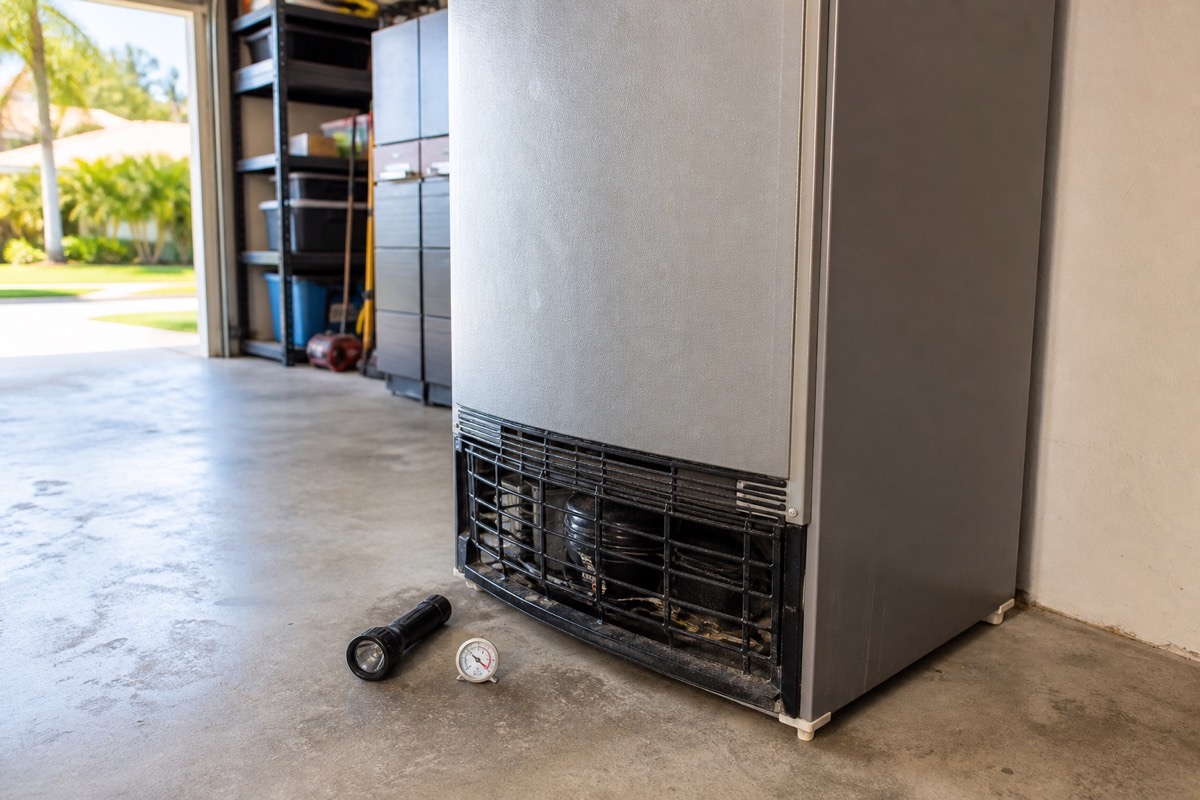
34. The Refrigerator Is in a Hot Garage
High ambient temperature makes the refrigerator work harder.
This is especially relevant in Southwest Florida.
A garage freezer may struggle during hot weather because:
- Condenser heat cannot dissipate as easily.
- Compressor runs longer.
- Doors are opened in hot humid air.
- Surrounding temperature exceeds design conditions.
A standard indoor refrigerator may not be rated for extreme garage conditions.
35. The Refrigerator Does Not Have Enough Ventilation
Built-in, counter-depth, and freestanding refrigerators require specified clearances.
Insufficient ventilation can trap heat around the condenser.
Follow the manufacturer’s required clearances around:
- Back.
- Top.
- Sides.
- Toe-kick ventilation.
36. The Appliance Was Recently Moved
Moving the refrigerator can cause:
- Door misalignment.
- Damaged water line.
- Loose connector.
- Cabinet not level.
- Compressor oil displacement if transported improperly.
If the refrigerator was transported on its side, follow manufacturer guidance before connecting power.
What Can You Safely Check?
Before scheduling service, you can:
- Measure the freezer temperature with an appliance thermometer.
- Confirm the freezer is set near 0°F.
- Make sure the freezer door closes completely.
- Inspect the gasket for visible damage.
- Remove food blocking air vents.
- Avoid overpacking the freezer.
- Listen for the evaporator fan during a cooling cycle.
- Look for frost on the freezer’s rear panel.
- Check for excessive heat near the compressor.
- Confirm the condenser fan is running if visible and accessible.
- Record any error code.
- Reset the refrigerator once by disconnecting power for approximately five minutes.
- Allow up to 24 hours after a power outage or major temperature adjustment.
Do not use knives, screwdrivers, or sharp tools to remove ice.
Do not remove electrical covers or test live voltage without proper training.
Do not open the sealed refrigerant system.
When Should You Move Frozen Food?
Move food to another working freezer if:
- The freezer temperature continues rising.
- Food begins thawing.
- The compressor is not operating.
- The appliance repeatedly shuts down.
- Repair cannot be performed promptly.
Keep the freezer door closed as much as possible.
Follow current food-safety guidance for food that has partially or completely thawed.
When Should You Stop Using the Refrigerator?
Disconnect power and arrange service if:
- You smell burning wiring.
- Smoke is present.
- The compressor repeatedly overheats and clicks.
- The breaker repeatedly trips.
- A fan motor is burning.
- Electrical components become wet.
- Severe refrigerant-line damage is visible.
Most simple cooling problems do not require immediately unplugging the refrigerator, but unsafe electrical symptoms do.
When Should You Call a Refrigerator Technician?
Professional diagnosis is recommended when:
- The freezer remains above 10°F after basic checks.
- Frozen food is thawing.
- The evaporator fan is not running.
- Heavy frost covers the rear freezer panel.
- The condenser fan is stopped while the compressor runs.
- The compressor repeatedly starts and stops.
- The compressor runs constantly but the freezer remains warm.
- Only part of the evaporator develops frost.
- An error code returns.
- The freezer problem continues after 24 hours.
- The refrigerator uses a multi-evaporator or variable-refrigerant system.
A technician can test the fans, thermistors, defrost system, compressor operation, inverter, control board, refrigerant system, airflow, and door components.
Should You Repair or Replace the Refrigerator?
Repair is often reasonable when the problem involves:
- Fan motor.
- Thermistor.
- Door gasket.
- Defrost heater.
- Defrost sensor.
- Start relay.
- Inverter.
- Control board.
Replacement may be more practical when:
- The refrigerator has repeated sealed-system failures.
- The compressor and additional major components have failed.
- Severe cabinet corrosion is present.
- Critical parts are discontinued.
- Repair cost approaches the value of a replacement appliance.
A proper diagnosis should be completed before deciding.
Photo guide
Diagnostic Photos
Local Freezer Service
We provide freezer diagnostics and repair across Cape Coral, Fort Myers, and surrounding Southwest Florida service areas.
For scheduling, use the Contact page or call/text Art’s Appliance Repair directly.
Related Appliance Guides
Freezer
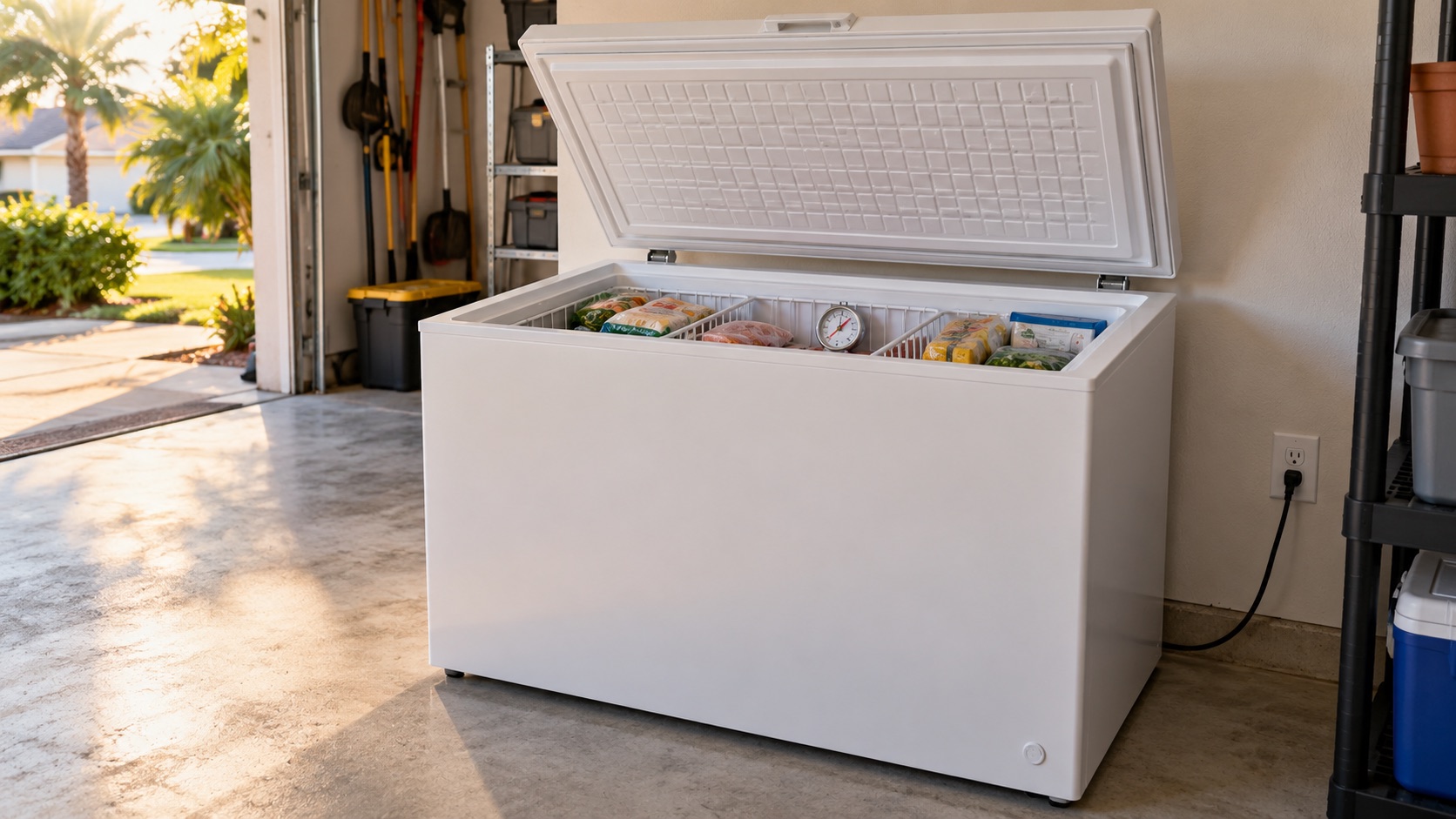
Chest Freezer Not Freezing in a Florida Garage: Heat, Location, and Cooling Clues
Chest freezer warming in a Florida garage? Compare the model’s rated ambient range, measured food temperature, lid seal, airflow, and frost clues before local service.
Updated October 3, 2026
a chest freezer warms in a Florida garage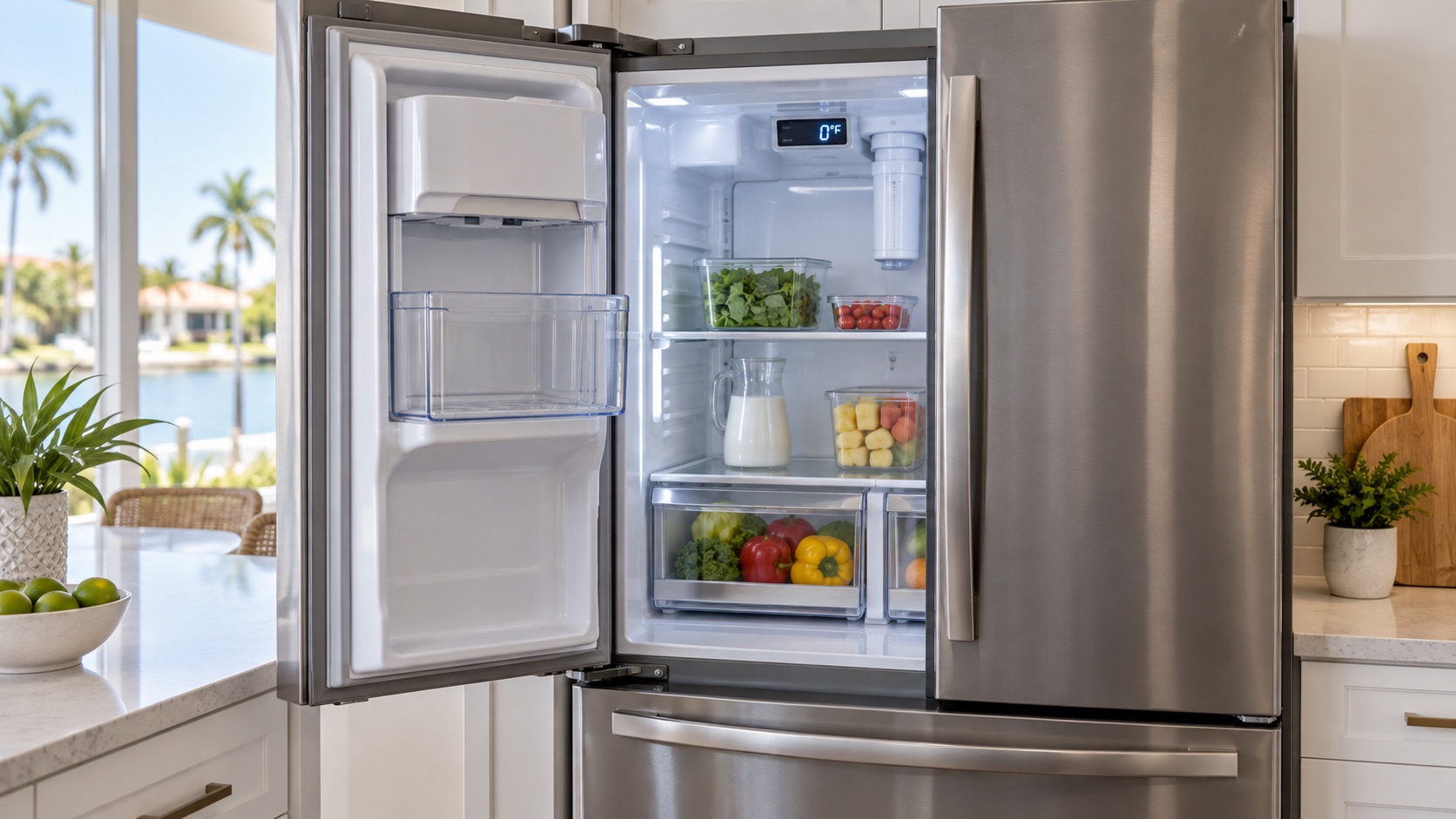
Ice Maker
Ice Maker Not Making Ice: Temperature, Water, Filter, and Brand Clues
Ice maker not making ice? Separate production from dispensing, then record temperature, water, filter, and model clues before local service.
Updated October 2, 2026
ice maker not making ice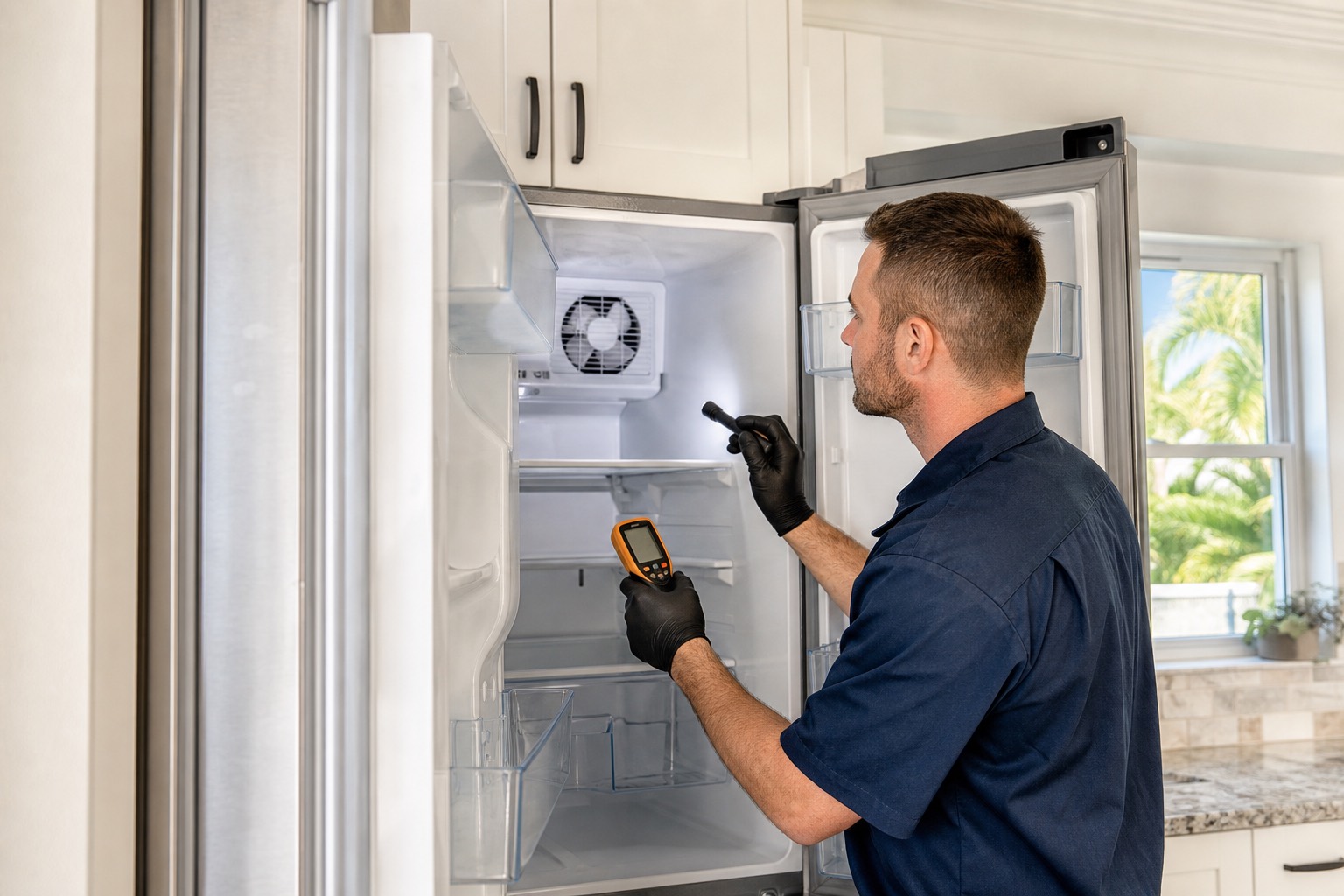
Refrigerator
Why Is My Refrigerator Fan Not Running? Common Causes
Refrigerator fan not running? Learn how to identify evaporator, condenser, and ice maker fan problems and when to schedule repair in Southwest Florida.
Updated August 4, 2026
refrigerator fan not runningNeed service?
Freezer and Refrigerator Repair in Cape Coral, Fort Myers and Southwest Florida
Art’s Appliance Repair provides freezer and refrigerator diagnostics and repair throughout Cape Coral, Fort Myers, North Fort Myers, Lehigh Acres, Estero, Bonita Springs, Naples, and surrounding Southwest Florida communities.
We diagnose problems including:
- Freezer not freezing.
- Refrigerator still cold but freezer too warm.
- Freezer temperature fluctuating.
- Evaporator fan problems.
- Condenser fan failures.
- Frost-covered evaporators.
- Defrost-system problems.
- Door gasket and airflow problems.
- Compressor and inverter problems.
- Refrigerant leaks and restrictions.
- Ice maker stopping because of freezer temperature.
- Control-board and sensor failures.
Call or text (239) 688-9955 to schedule refrigerator or freezer service.
The service call is $0 when the diagnosed repair is approved and completed. If no repair is completed, the diagnostic service call is $79.
View Freezer Repair