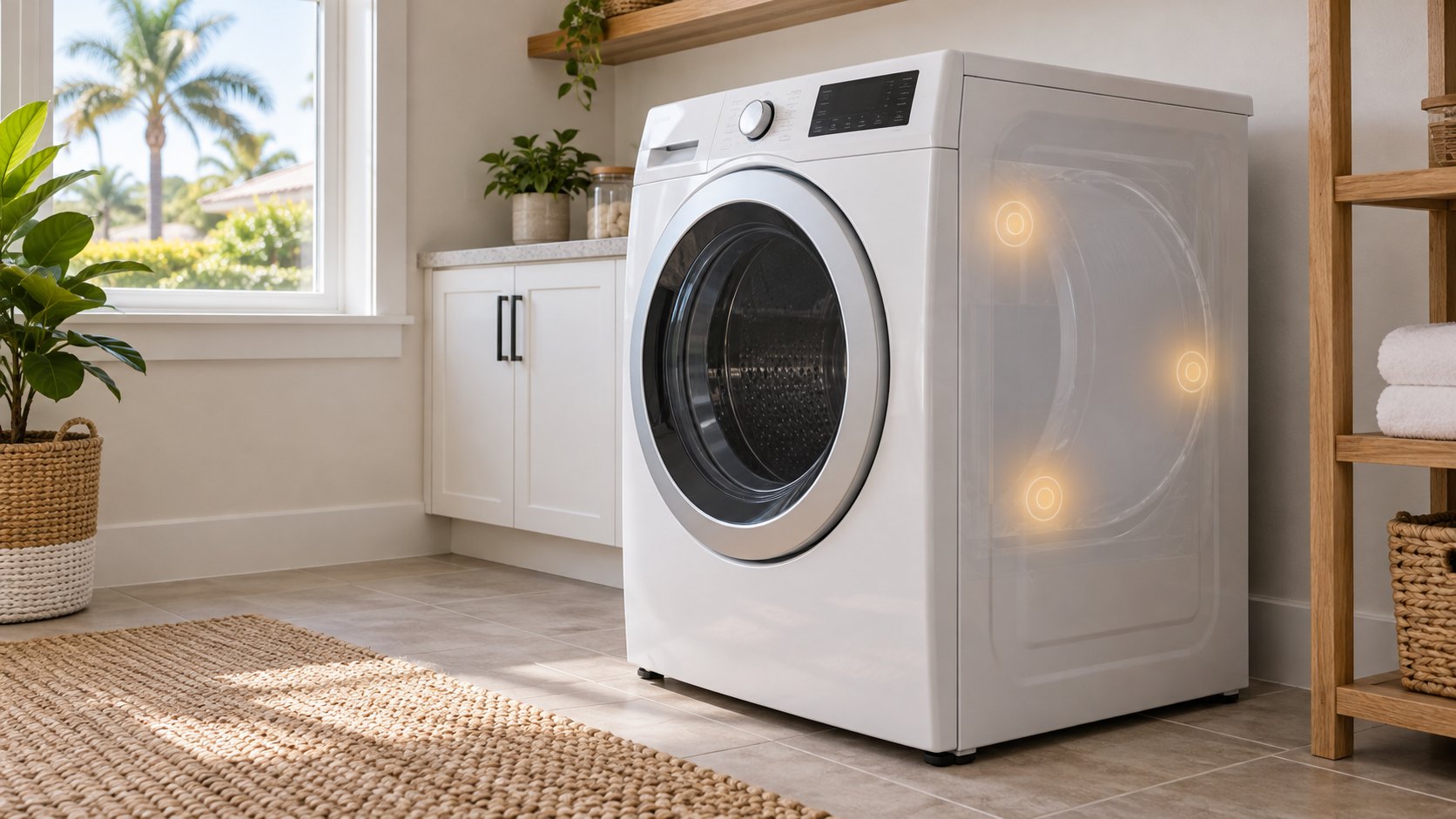
Stop First for Heat, Odor, Electrical or Gas Warning Signs
A new squeak without those warnings may allow a few outside observations. End the check if the sound becomes louder, the drum movement changes, or any warning appears.
Does the Sound Follow One Load or Loose Item?
Start with what is inside the dryer. Coins, zippers, buttons and other hard items can click, rattle, scrape or sound like a mechanical fault. Samsung and LG both direct owners to check loads and loose objects when diagnosing dryer noise.
- Stop the dryer and let it become safe and cool before handling laundry.
- Check pockets, fasteners and the visible drum for loose objects without reaching into a moving appliance.
- Separate one heavy or unbalanced item from a normal mixed load.
- If the model manual permits another cycle and there are no warning signs, note whether the noise returns with a normal load.
A noise that appears only with a zipper or one bulky item is different from a rhythmic squeak that continues with a normal load. A heavy load can also make an existing support or drive problem more noticeable, but that change still does not identify a failed part.
Samsung: dryer noise troubleshooting
LG: common dryer noises and service clues
Check Level, Floor Contact and Nearby Vibration
A dryer that rocks can transfer vibration into the floor, wall, vent or nearby cabinet. From the outside, confirm that all feet appear to contact a solid floor and that the appliance is not touching an object that vibrates. Do not pull the dryer forward if that could strain the power cord, exhaust connection or gas line.
Use the exact installation guide before changing a leveling foot. Samsung and LG describe solid-floor and four-foot contact checks for covered models; installation clearances and adjustment methods still vary by model.
Samsung: vibration and leveling checks
Record the Pattern Instead of Guessing a Part
A short, safe recording and a few timing details are more useful than calling every squeak a bad belt. Keep the door closed and record from outside the appliance; do not recreate a warning sign just to capture it.
- Does the sound begin at startup, after several minutes, or only near the end?
- Is it continuous, intermittent, or repeated about once per drum revolution?
- Does it change with a normal load, one bulky item, or a lighter load?
- Does the drum appear to tumble steadily through the closed door?
- Is the sound strongest at the front, rear or lower cabinet?
- Is there unusual heat, odor, weak airflow, a displayed code or an early shutdown?
Sound location is only a clue because vibration travels through the cabinet. A front squeak can involve a glide, seal, drum contact or an object; a lower or rear sound can involve several support, drive or motor areas. The same part names do not apply to every design.
GE, LG, Samsung and Maytag Dryer Squeaks Still Need the Model Number
Brand-specific searches help describe the appliance, but a brand name is not enough to choose a part. Two dryers from the same brand may use different drum supports, belt routing, motors, controls or venting designs. Some covered models also produce brief normal noises that another model does not.
Record the complete model number from the model label when the dryer is off and access is safe. Then use that model's owner and installation instructions for load limits, leveling and normal sound descriptions. Do not copy a test sequence or cabinet-opening video from a similar-looking model.
Safe Checks Before Requesting Dryer Repair
- Stop immediately for smoke, burning or gas odor, unusual heat, electrical damage, a stalled drum, severe scraping or repeated breaker trips.
- Check pockets, fasteners and the visible drum for loose objects while the dryer is stopped and cool.
- Note the selected cycle, load type and when the sound begins.
- Confirm that the dryer appears stable on a solid floor and is not touching a nearby object.
- Clean and reinstall the removable lint filter before the next safe use.
- Photograph the full model label and record the sound from outside the closed appliance only when it is safe to operate.
What Professional Diagnosis Separates
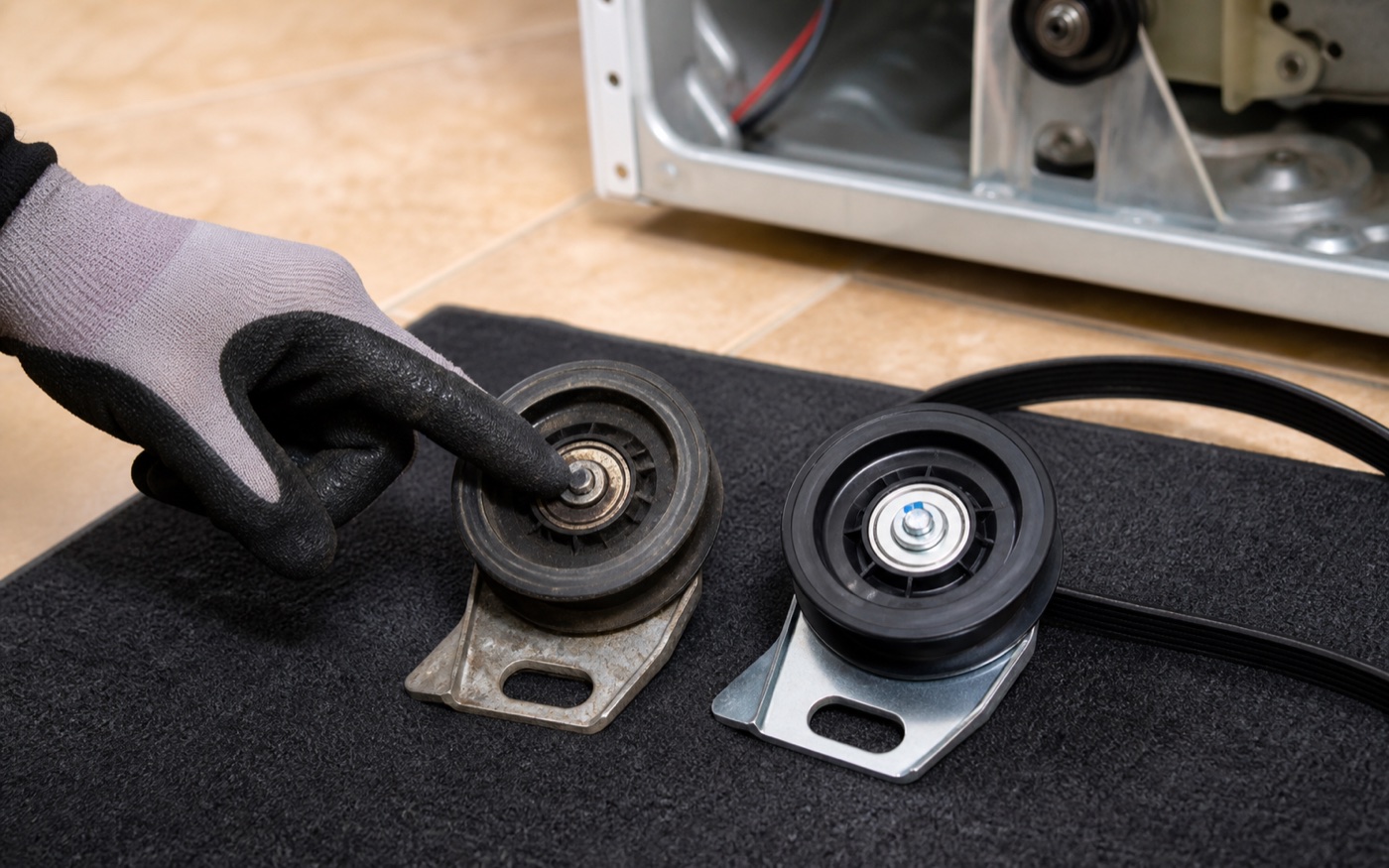
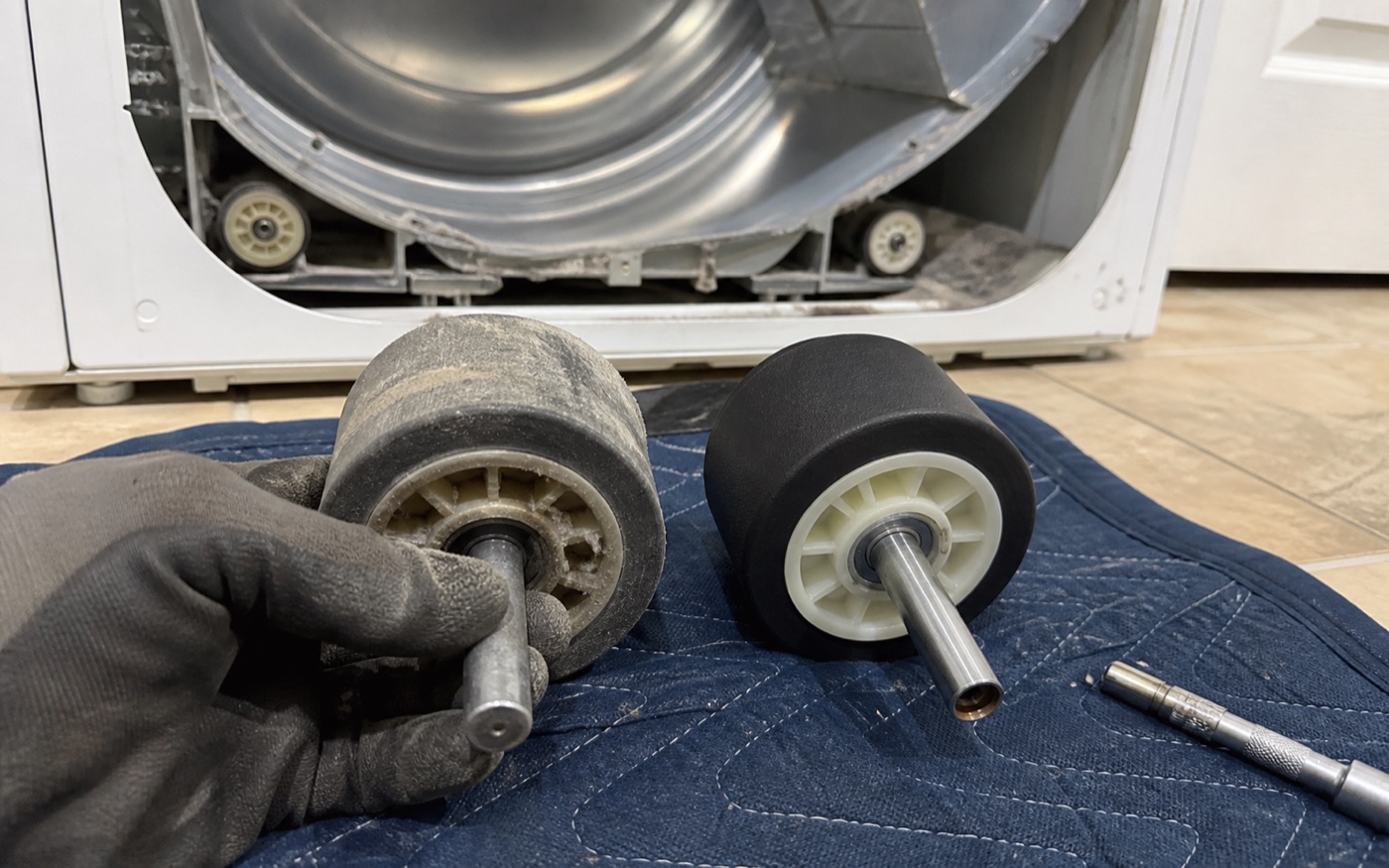
With the dryer disconnected and the correct service information available, a technician may need to inspect the drum supports, glides or bearing, belt and idler system, seals, blower and motor area, cabinet contact and trapped objects. The safe inspection method depends on the model.
A worn roller can transmit noise through the belt path; a rubbing seal can resemble a bearing sound; a loose object can imitate metal contact. Diagnosis should confirm the condition before a repair is approved. The recording and timing notes help narrow the inspection, but they do not replace it.
What to Include in a Cape Coral or Fort Myers Service Request
For dryer repair in Cape Coral or Fort Myers, share your city or ZIP code privately so we can confirm coverage, appliance eligibility and appointment availability.
- Brand and complete model number, plus gas, electric or ventless type if known.
- When the squeak begins and whether it follows drum rotation.
- Whether it changes with the load and whether the drum continues moving normally.
- Any odor, unusual heat, weak airflow, code, early stop or electrical clue.
- A short safe recording from outside the closed dryer; do not recreate a hazardous symptom.
Art’s Appliance Repair services many noisy residential dryers. Share the model so we can confirm whether we can help. An online appointment time is a request and requires confirmation. The service call is waived when an approved repair is completed. Diagnosis is $79 for one appliance or $100 total for two appliances when no approved repair is completed.
Service-call and warranty policy
Photo guide
Diagnostic Photos
Local Dryer Service
Relevant local service pages include dryer repair in Cape Coral and dryer repair in Fort Myers. We also serve surrounding Southwest Florida service areas.
For scheduling, use the Contact page or call/text Art’s Appliance Repair directly.
Related Appliance Guides
Dryer
Dryer Stops After a Few Minutes: What to Check
Dryer stops after a few minutes? Separate an early Sensor Dry finish from heat, airflow, power or motor symptoms before requesting local dryer repair.
Updated September 24, 2026
Dryer stops after a few minutes
Dryer
Dryer Takes Two Cycles to Dry: Airflow, Heat, and Vent Clues
If a dryer takes two cycles, compare the load, washer spin, heat and outside airflow. Learn when the dryer needs service and when the home vent needs attention.
Updated September 26, 2026
Dryer takes two cycles to dry
Dryer
Dryer Runs but Does Not Heat: Electric and Gas Clues
Dryer tumbles but blows cold air? Separate cycle, electric-supply, gas and airflow clues before requesting local dryer repair.
Updated October 16, 2026
Dryer runs but does not heat