Dryer Runs but Does Not Heat: Common Causes

A dryer that turns on and tumbles but does not produce heat may have a power-supply problem, restricted airflow, failed heating element, blown thermal fuse, faulty thermostat, damaged gas igniter, or control-system failure.

The exact cause depends on whether the dryer is electric or gas. Some simple checks can be performed safely, but internal electrical and gas-system testing should be handled by a qualified appliance technician.

When a dryer runs but does not heat, first verify the selected cycle, check the circuit breaker, and inspect the dryer vent for restricted airflow. Electric dryers commonly fail because of a heating element, thermal fuse, thermostat, or partial loss of 240-volt power. Gas dryers may have a failed igniter, flame sensor, gas valve coils, or interrupted gas supply.

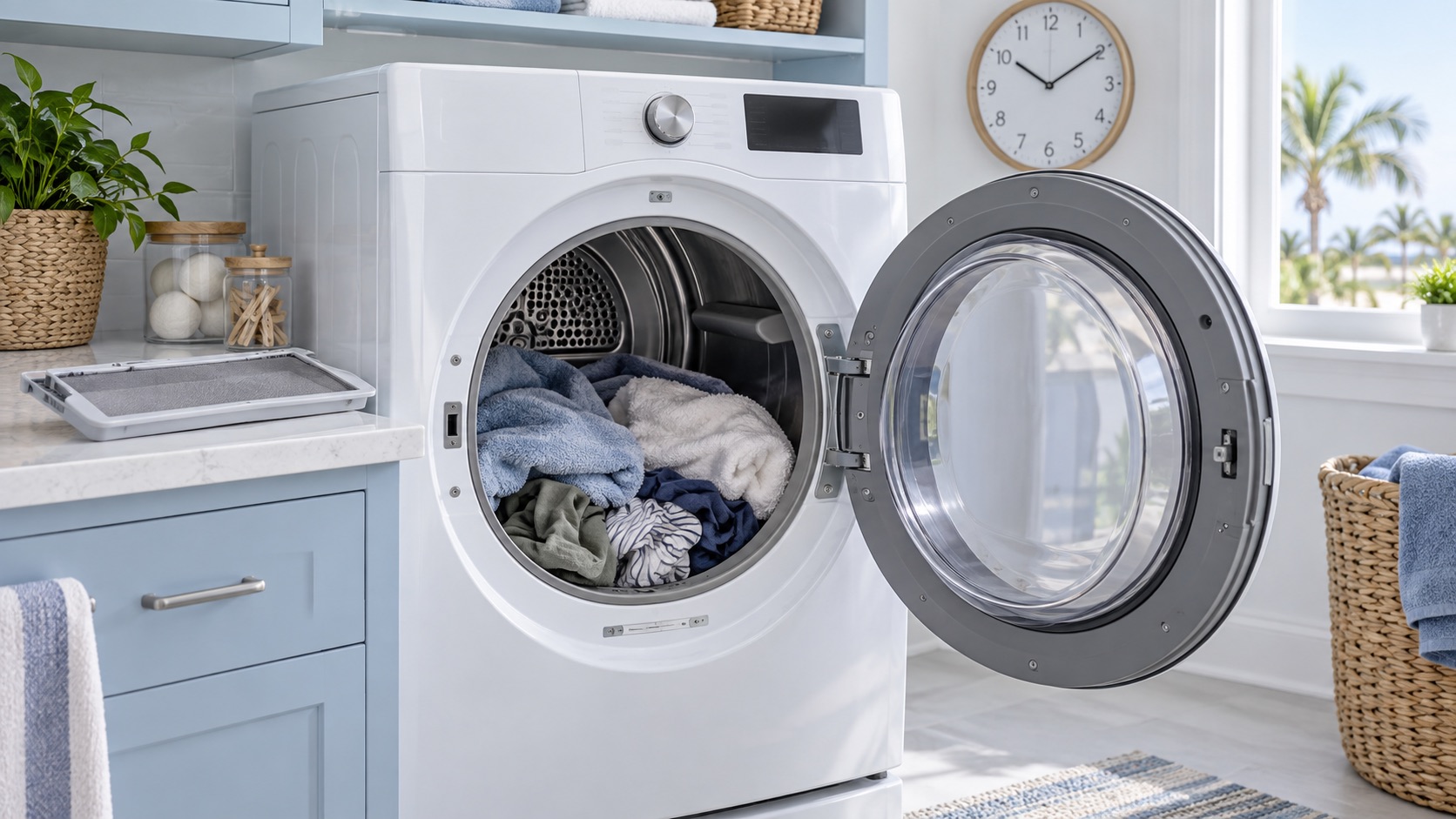
Open dryer in a laundry room during a no-heat diagnostic check

Is the Dryer Actually Producing No Heat?

Before diagnosing the appliance, confirm whether the dryer has:

  • No heat at all.
  • Weak or intermittent heat.
  • Normal heat but poor airflow.
  • Heat at the beginning of the cycle that stops later.
  • Heat only on certain settings.
  • Clothes that remain damp despite a warm drum.

These symptoms may point to different problems.

A dryer with completely cold air may have an electrical, heating, gas, or control failure. A dryer that becomes warm but takes several cycles may have restricted airflow or a moisture-sensing problem.

1. The Wrong Cycle Was Selected

Some dryer cycles are designed to operate without heat.

Examples may include:

  • Air Dry.
  • Air Fluff.
  • No Heat.
  • Cool Down.
  • Wrinkle Prevent.
  • Refresh.
  • Timed Air.

Check the selected cycle and temperature setting.

Choose a normal heated cycle such as:

  • Normal.
  • Heavy Duty.
  • Towels.
  • Timed Dry with High Heat.

Allow the dryer to run for several minutes before checking the temperature. Many dryers do not produce full heat immediately after starting.

2. The Dryer Is in the Cool-Down Portion of the Cycle

Most dryers stop heating before the drum stops turning.

This cool-down period helps reduce wrinkles and lowers the temperature of the clothing before the cycle ends.

The dryer may appear to have lost heat when it is actually completing a normal cycle.

Restart the appliance on a timed high-heat setting and check whether heat develops during the first several minutes.

3. An Electric Dryer Has Lost Part of Its Power Supply

An electric dryer usually requires approximately 240 volts to heat.

The motor and control panel may operate on only part of the electrical supply. This means the dryer can tumble normally while the heating element receives no power.

Possible causes include:

  • One side of the double breaker has tripped.
  • Loose power-cord connection.
  • Damaged terminal block.
  • Burned wiring.
  • Faulty outlet.
  • Incorrect voltage at the receptacle.
  • Damaged circuit breaker.

Check the electrical panel.

A dryer breaker is usually a double breaker. Move it fully to the OFF position and then back to ON.

Do not rely only on how the breaker handle looks. One side may trip while the handle appears nearly normal.

If the breaker trips again, stop using the dryer and schedule service. Repeated tripping may indicate a shorted heating element, damaged wiring, or another electrical fault.

4. The Power Cord or Terminal Block Is Damaged

The power cord connects to a terminal block behind the dryer.

A loose or burned connection may allow the motor to run while preventing the heater from receiving full voltage.

Warning signs include:

  • Burning smell.
  • Melted insulation.
  • Discoloration near the cord connection.
  • Dryer heating intermittently.
  • Breaker tripping.
  • Crackling or buzzing.
  • Power cord or outlet becoming hot.

Disconnect power immediately if any electrical burning smell or visible heat damage is present.

The terminal block, cord, outlet, and wiring should be inspected before the dryer is used again.

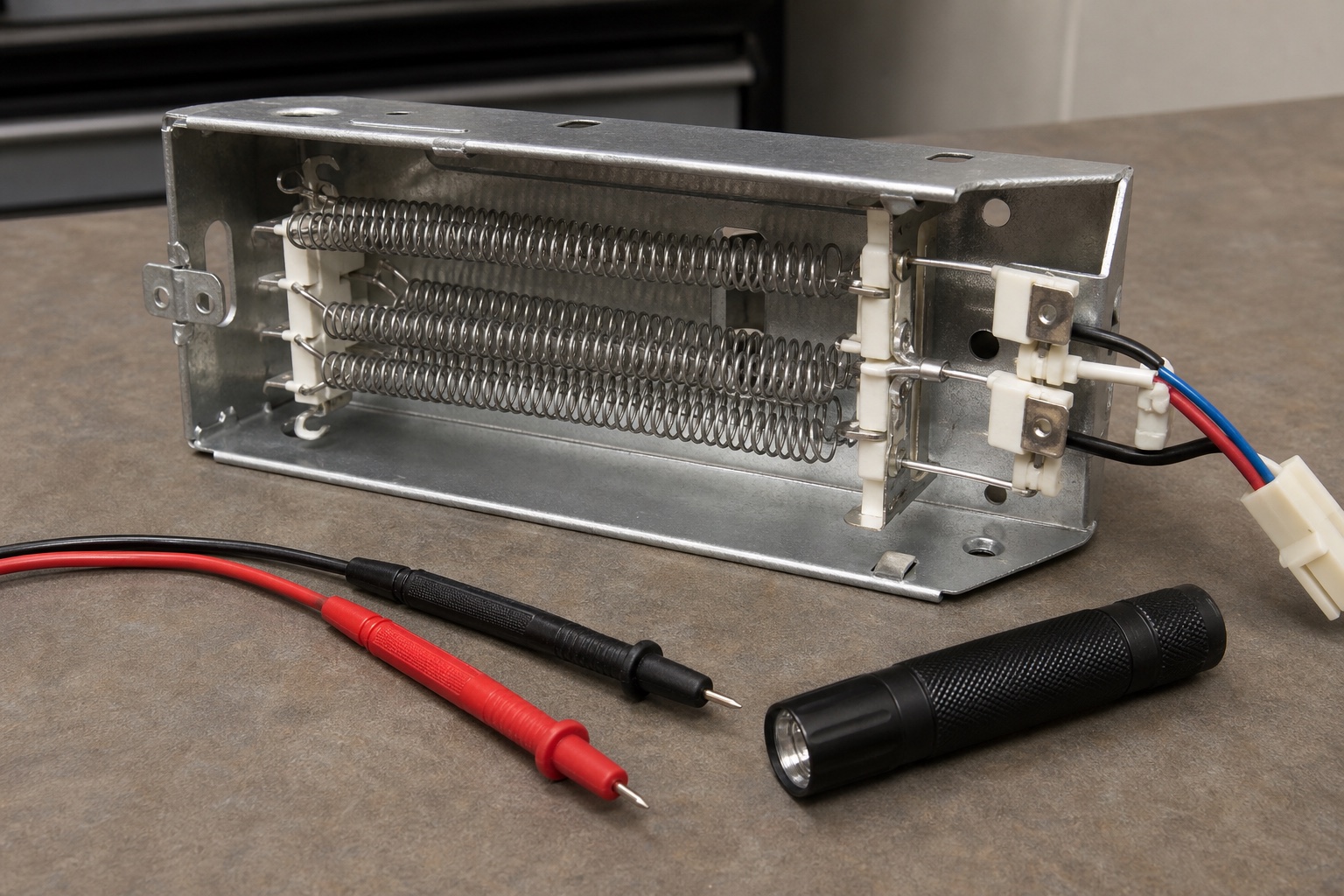
5. The Heating Element Has Failed

Electric dryers use a heating element to warm the air entering the drum.

The element contains a resistance coil that becomes hot when electrical current passes through it.

Over time, the coil may:

  • Break.
  • Burn open.
  • Short against the metal housing.
  • Overheat because of restricted airflow.
  • Fail because of age or repeated high-temperature operation.

Common symptoms include:

  • Dryer tumbles but produces no heat.
  • Heating stops suddenly.
  • Dryer takes multiple cycles before complete failure.
  • Breaker trips when heat is selected.
  • Burning smell before the heat stops.
  • Element heats only intermittently.

A heating element must be tested for electrical continuity and checked for a short to ground.

A visibly broken coil usually means the complete element assembly needs replacement.

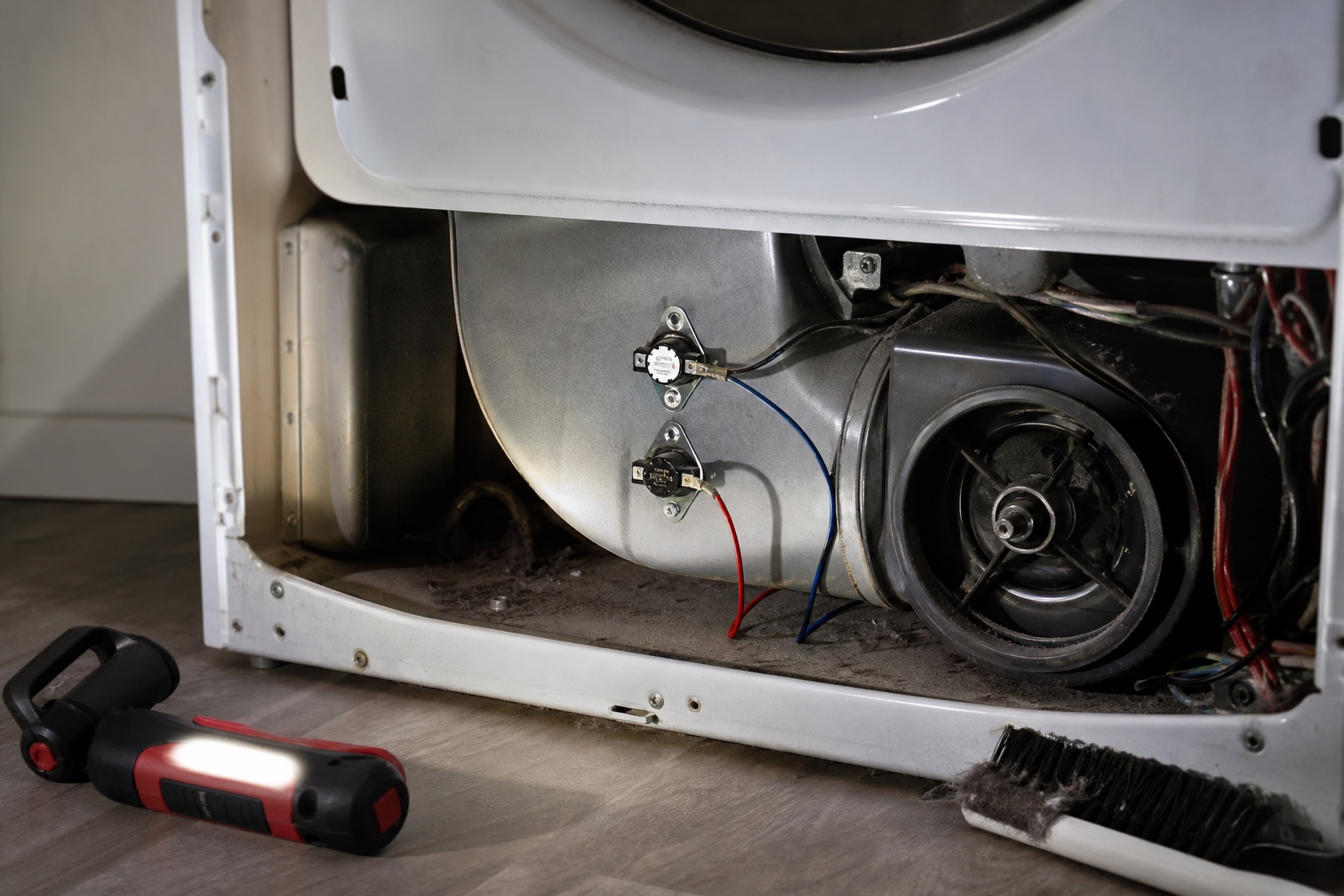
6. The Thermal Fuse Is Blown

The thermal fuse is a safety device that opens the electrical circuit if the dryer overheats.

Depending on the model, a blown thermal fuse may cause:

  • Dryer running without heat.
  • Dryer not starting.
  • Gas burner not igniting.
  • Motor stopping.
  • Control board preventing operation.

A thermal fuse does not normally reset. If it is open, it must be replaced.

However, replacing the fuse without identifying why it failed can result in another failure.

Common causes of a blown thermal fuse include:

  • Clogged dryer vent.
  • Crushed exhaust hose.
  • Lint buildup inside the dryer.
  • Failed blower wheel.
  • Blocked exterior vent hood.
  • Thermostat malfunction.
  • Heating element shorted to the housing.

Airflow should always be checked when a thermal fuse has failed.

7. The High-Limit Thermostat Has Failed

The high-limit thermostat helps prevent excessive dryer temperature.

If it fails in the open position, the heating circuit may remain off.

If it fails to regulate correctly, the dryer may overheat and repeatedly damage the thermal fuse or heating element.

Possible symptoms include:

  • Dryer running without heat.
  • Heat cycling unpredictably.
  • Dryer overheating before losing heat.
  • Heating element failing repeatedly.
  • Thermal fuse opening more than once.

The thermostat should be tested at the correct temperature and according to the manufacturer’s specifications.

8. The Cycling Thermostat Is Faulty

The cycling thermostat regulates normal dryer temperature by switching the heater on and off.

A faulty thermostat may cause:

  • No heat.
  • Weak heat.
  • Excessive heat.
  • Long drying times.
  • Temperature changing unpredictably.
  • Heating only on certain cycles.

Some dryers use electronic temperature sensors instead of a traditional cycling thermostat.

The correct testing method depends on the dryer model.

9. The Dryer Vent Is Clogged

A restricted dryer vent is one of the most common causes of heating and drying problems.

When hot air cannot leave the dryer, internal temperature rises too quickly. Safety components may shut off the heater to prevent overheating.

A clogged vent may cause:

  • Dryer initially heating and then stopping.
  • Clothes remaining damp.
  • Dryer becoming very hot.
  • Long drying times.
  • Burning lint smell.
  • Thermal fuse failure.
  • Heating element damage.
  • Moisture collecting in the laundry room.
  • Exterior vent producing weak airflow.

Check the airflow outside while the dryer is running.

The exterior flap should open and release a strong stream of air.

Weak airflow may indicate a restriction in:

  • Flexible hose.
  • Wall duct.
  • Roof vent.
  • Exterior hood.
  • Dryer blower system.
  • Internal lint passages.

Cleaning only the lint screen is not the same as cleaning the entire vent system.

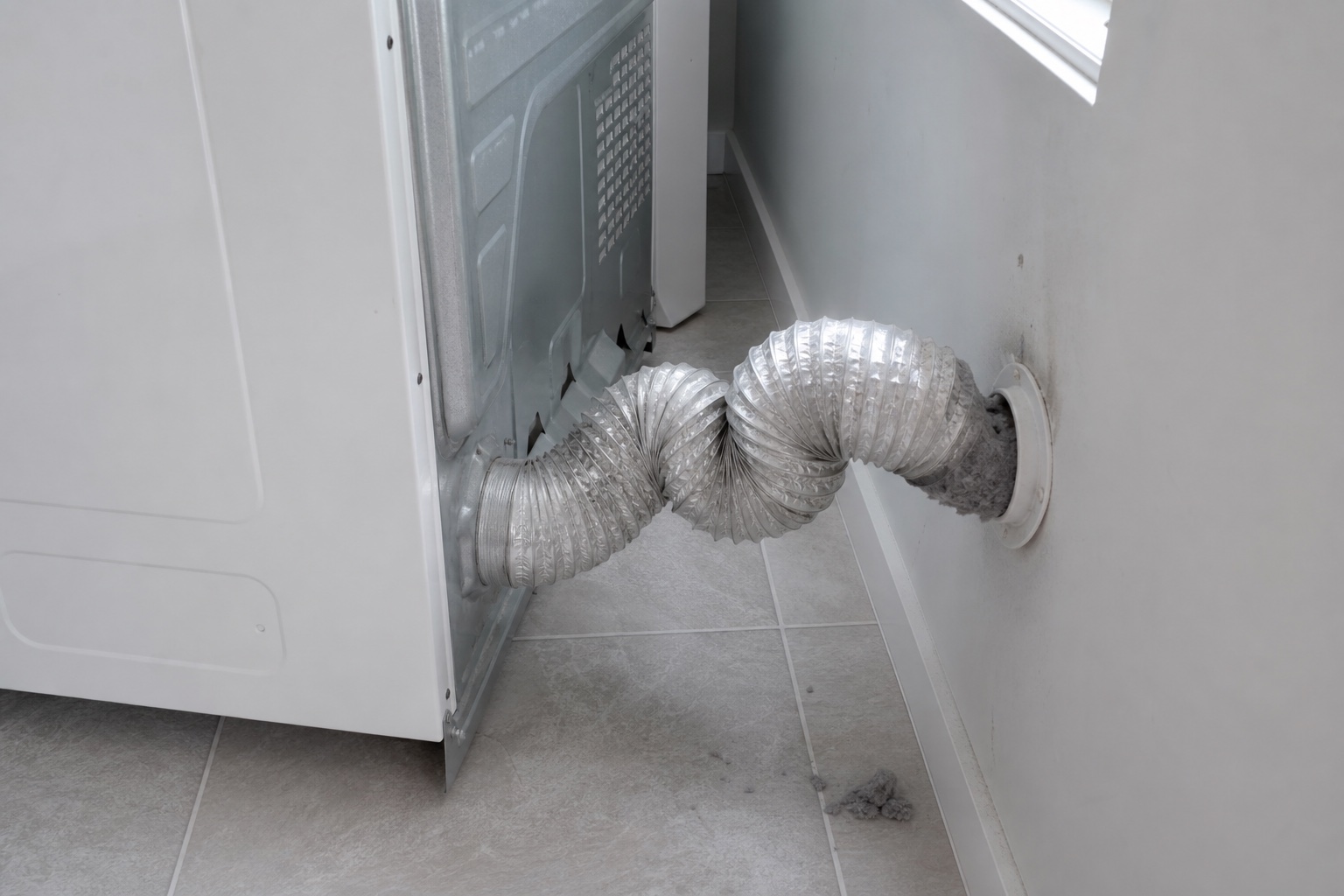
10. The Exhaust Hose Is Crushed or Kinked

The flexible exhaust connection behind the dryer can become crushed when the appliance is pushed too close to the wall.

A damaged or restricted hose can reduce airflow and cause the heater to cycle off early.

Inspect for:

  • Sharp bends.
  • Crushed sections.
  • Excessive hose length.
  • Lint accumulation.
  • Loose connections.
  • Plastic or foil duct not approved for the installation.

Rigid or semi-rigid metal ducting is generally safer and provides better airflow than thin plastic vent hose.

Do not operate the dryer without a properly connected exhaust system.

11. The Exterior Vent Hood Is Blocked

The vent hood outside the home may be blocked by:

  • Lint.
  • Bird nests.
  • Insect screens.
  • Leaves.
  • Construction debris.
  • Damaged flap.
  • Paint.
  • Roof-vent obstruction.

In Southwest Florida, exterior vents may also be affected by humidity, insects, storms, and outdoor debris.

Check whether the vent flap opens fully while the dryer is operating.

A screen installed over the dryer vent can trap lint and should not restrict airflow.

12. The Lint Screen Is Restricted

A lint screen may look clean while still being coated with residue from dryer sheets or fabric softener.

This coating can reduce airflow.

To check:

  1. Remove visible lint.
  2. Hold the screen under running water.
  3. Observe whether water passes through easily.

If water remains on the surface, wash the screen with warm water, mild soap, and a soft brush. Rinse and dry it completely before reinstalling.

Never operate the dryer without the lint screen.

13. Lint Has Built Up Inside the Dryer

Lint can accumulate beyond the removable lint screen.

Common locations include:

  • Blower housing.
  • Heating-element housing.
  • Base of the cabinet.
  • Exhaust duct.
  • Motor area.
  • Around thermostats and sensors.

Internal lint buildup can cause:

  • Restricted airflow.
  • Overheating.
  • Burning smell.
  • Thermal fuse failure.
  • Heater failure.
  • Increased fire risk.

Internal cleaning requires partial disassembly and should be performed safely with the dryer disconnected from power and gas.

14. The Blower Wheel Is Damaged

The blower wheel moves heated air through the drum and exhaust system.

If it becomes loose, cracked, clogged, or disconnected from the motor shaft, airflow may become too weak.

Possible symptoms include:

  • Dryer runs but does not dry.
  • Heat turns off quickly.
  • Weak airflow outside.
  • Rumbling, rattling, or scraping noise.
  • Lint collecting inside the cabinet.
  • Dryer overheating.
  • Burning smell.

The blower wheel and housing should be inspected for blockage and mechanical damage.

15. The Moisture Sensor Is Dirty

Automatic dryer cycles use moisture sensor bars to determine when clothes are dry.

Residue from fabric softener and dryer sheets may coat the sensor.

A dirty sensor can cause the dryer to:

  • End the cycle too early.
  • Run without enough heating time.
  • Switch quickly to cool down.
  • Display an unexpectedly short remaining time.
  • Leave clothes damp.

The moisture sensor bars are usually located near the front of the drum.

Clean them with a soft cloth and mild soap. Do not use abrasive tools that could damage the sensor surface.

If Timed Dry produces heat but an automatic cycle does not work correctly, the moisture-sensing system may be involved.

16. The Temperature Sensor or Thermistor Is Faulty

Many electronic dryers use a thermistor to measure exhaust-air temperature.

If the thermistor sends incorrect information, the control board may stop heating too early or fail to energize the heater.

Possible symptoms include:

  • No heat.
  • Intermittent heat.
  • Dryer stopping early.
  • Incorrect temperature.
  • Error code.
  • Cycle time changing unexpectedly.
  • Dryer remaining at one minute.
  • Heat working only in test mode.

The thermistor resistance should be compared with the manufacturer’s specifications at a known temperature.

17. A Gas Dryer Has No Gas Supply

A gas dryer uses electricity to operate the motor and controls, but gas to produce heat.

The drum may turn normally even when the gas supply is interrupted.

Check that:

  • The gas shutoff valve is open.
  • Other gas appliances are operating.
  • The gas line is not kinked.
  • The home gas service is active.
  • The dryer was correctly converted for the available gas type.

The shutoff valve handle is generally parallel with the gas pipe when open.

Do not disconnect gas fittings or attempt leak repairs without proper training.

If you smell gas:

  1. Do not operate electrical switches.
  2. Do not start the dryer.
  3. Leave the area.
  4. Shut off the gas only if it can be done safely.
  5. Contact the gas company or emergency service.

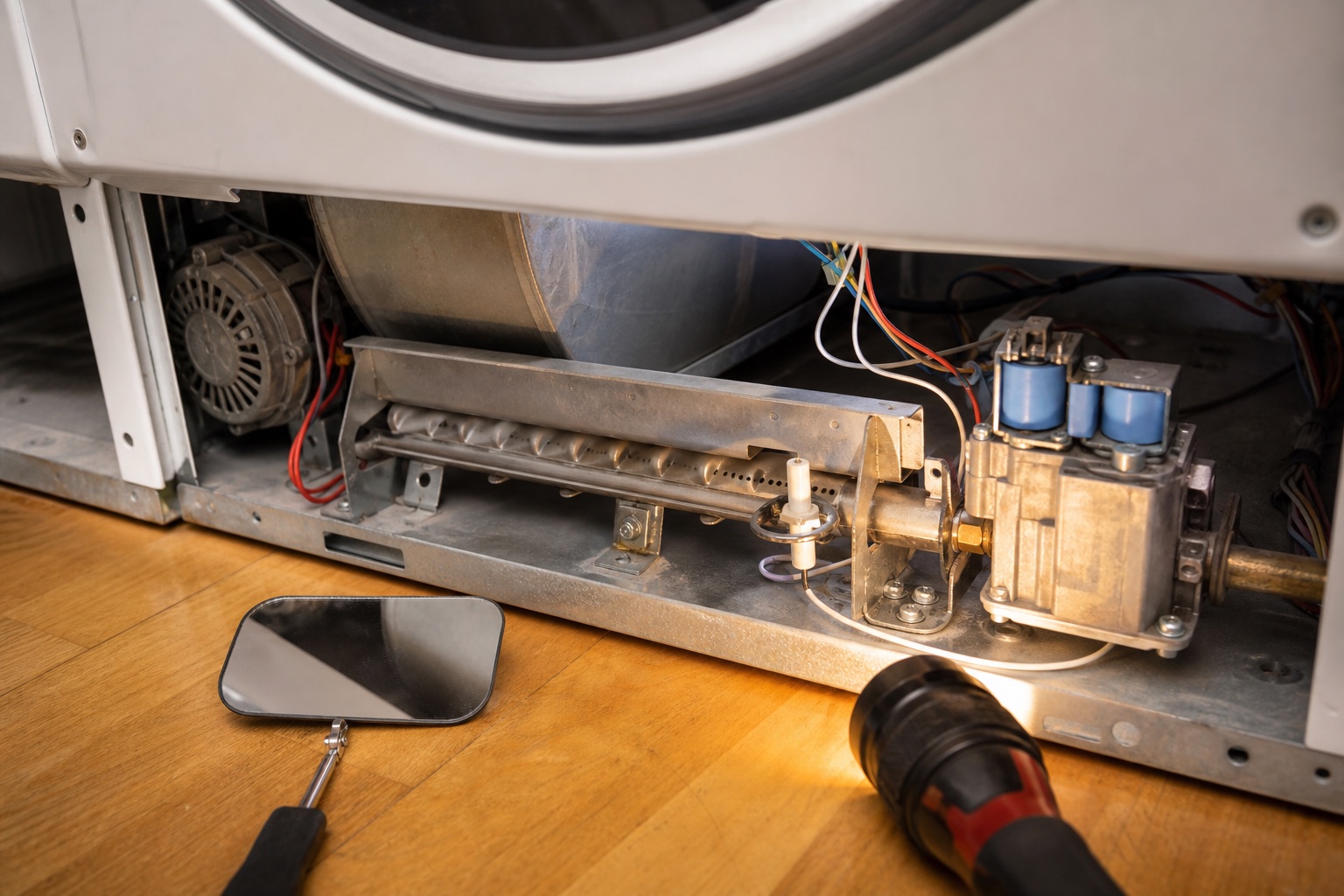
18. The Gas Igniter Has Failed

A gas dryer uses an electric igniter to light the burner.

The igniter may crack or fail electrically.

Possible symptoms include:

  • Dryer tumbles but produces no heat.
  • No glow visible from the burner area.
  • Gas supply is available.
  • Control system appears to operate normally.
  • Dryer may have heated intermittently before stopping.

The igniter is fragile and can be damaged by touching or impact.

It should be tested electrically before replacement.

19. The Flame Sensor Is Faulty

The flame sensor monitors heat from the igniter and burner flame.

If it fails, the gas valve may not open even when the igniter glows.

Common symptoms include:

  • Igniter glows but no flame appears.
  • Burner fails to start.
  • Dryer runs without heat.
  • Ignition sequence stops unexpectedly.

The flame sensor, igniter, and gas valve coils should be tested as a system.

20. The Gas Valve Coils Are Failing

Gas valve coils open the internal gas valve when the dryer calls for heat.

Weak coils may work when cold and fail after warming up.

This can cause:

  • Heat at the beginning of the cycle.
  • Burner shutting off after several minutes.
  • Igniter glowing repeatedly without flame.
  • Dryer completing the cycle with damp clothes.
  • Heat returning after the dryer cools down.

This pattern is common when gas valve coils are beginning to fail.

The coils are usually replaced as a set.

21. The Gas Valve Is Defective

The gas valve itself may fail mechanically or electrically.

Possible symptoms include:

  • No gas flow despite correct ignition sequence.
  • Igniter and sensors testing normally.
  • Valve not opening.
  • Intermittent burner operation.
  • Abnormal buzzing near the valve.

Gas valve replacement should be performed by a qualified technician.

The gas line must be checked for leaks after service.

22. The Burner Is Dirty or Restricted

Dust, lint, corrosion, or debris may affect the burner assembly.

A restricted burner can cause:

  • Weak flame.
  • Delayed ignition.
  • Yellow or unstable flame.
  • Gas odor.
  • Burner shutting off.
  • Poor heating.

The burner area should be inspected and cleaned safely.

Do not operate a gas dryer that produces delayed ignition, unusual flame behavior, or gas odor.

23. The Motor Centrifugal Switch Is Faulty

Some dryers use a switch inside the motor to complete the heating circuit only after the motor reaches operating speed.

If this switch fails, the drum may turn but the heater or gas burner may not receive power.

Possible symptoms include:

  • Motor runs normally.
  • No heat on any cycle.
  • Heating components test correctly.
  • Intermittent heating linked to motor operation.

Motor-switch testing normally requires electrical diagnosis and access to the motor wiring.

24. The Timer Is Faulty

Mechanical dryers may use a timer to send power to the heating circuit.

Burned or worn timer contacts can cause:

  • No heat.
  • Heat only on certain cycles.
  • Intermittent heating.
  • Timer not advancing.
  • Cycle continuing too long.
  • Dryer stopping unexpectedly.

The timer should not be replaced until the heater, thermostats, fuses, wiring, and power supply have been tested.

25. The Electronic Control Board Is Malfunctioning

Modern dryers may use an electronic control board to operate:

  • Heating element.
  • Gas valve.
  • Motor.
  • Relays.
  • Sensors.
  • Cycle timing.
  • Temperature regulation.

A failed relay or damaged board may prevent heat even though the drum turns.

Possible signs include:

  • No voltage sent to the heater.
  • Heat working intermittently.
  • Error codes.
  • Display resetting.
  • Burned relay area.
  • Dryer working after a temporary power reset.
  • Multiple functions behaving incorrectly.

Control boards should not be replaced based only on symptoms. The connected components and wiring should be tested first.

26. A Wire or Connector Is Burned

High-current heating circuits can develop loose or overheated electrical connections.

Possible locations include:

  • Heating element.
  • Thermal fuse.
  • Thermostat.
  • Terminal block.
  • Motor switch.
  • Control-board relay.
  • Power cord.

Warning signs include:

  • Melted connector.
  • Darkened terminal.
  • Burning smell.
  • Intermittent heat.
  • Arcing sound.
  • Breaker tripping.

A damaged connector should be repaired correctly rather than simply pushed back into place.

27. The Dryer Is Overloaded

An overloaded dryer may have difficulty moving air through the clothing.

This can result in:

  • Long drying times.
  • Clothes remaining damp.
  • Heat cycling off.
  • Uneven drying.
  • Excessive strain on the motor.
  • Poor moisture-sensor readings.

Dry similar fabrics together and avoid packing the drum tightly.

Clothes should be able to tumble freely.

28. The Washer Is Leaving Clothes Too Wet

The dryer may appear to have a heating problem when the washer is not removing enough water during the spin cycle.

Possible washer causes include:

  • Drain problem.
  • Weak spin speed.
  • Unbalanced load.
  • Suspension issue.
  • Drive-system problem.
  • Control or sensor failure.

Check whether clothes feel unusually heavy or dripping wet when transferred to the dryer.

If so, the washer may also require diagnosis.

What Can You Safely Check?

Before scheduling service, you can:

  1. Confirm that a heated cycle is selected.
  2. Test the dryer on Timed Dry with High Heat.
  3. Reset the double circuit breaker for an electric dryer.
  4. Check whether the gas shutoff valve is open.
  5. Clean the lint screen.
  6. Inspect the vent hose for crushing or kinks.
  7. Check airflow at the exterior vent.
  8. Make sure the dryer is not overloaded.
  9. Clean the moisture sensor bars.
  10. Check whether clothes leave the washer excessively wet.
  11. Note whether heat starts and then stops.
  12. Record any error code.
  13. Stop using the dryer if there is a burning smell or repeated breaker trip.

Do not remove electrical panels or test live voltage without the correct training and equipment.

Do not disassemble gas components or search for gas leaks using a flame.

When Should You Stop Using the Dryer?

Stop the dryer and disconnect power when:

  • You smell burning wiring or plastic.
  • The breaker repeatedly trips.
  • The power cord or outlet becomes hot.
  • Smoke is present.
  • The dryer becomes extremely hot.
  • The drum runs but airflow is almost absent.
  • You hear electrical arcing.
  • The heating element appears to remain on when the dryer is stopped.

For a gas dryer, stop using it immediately if you smell gas or hear delayed ignition.

When Should You Call a Dryer Technician?

Professional diagnosis is recommended when:

  • The dryer runs but has no heat on any setting.
  • The breaker is on but the electric dryer remains cold.
  • The heating element or thermal fuse may have failed.
  • Heat starts and then stops.
  • The gas igniter glows but no flame appears.
  • The exterior airflow is weak.
  • The dryer overheats.
  • A burning smell is present.
  • The dryer displays an error code.
  • The thermal fuse has failed more than once.
  • Wiring or connectors show heat damage.
  • The cause cannot be identified through basic checks.

A technician can test the power supply, heating element, thermal fuse, thermostats, thermistor, airflow, motor switch, control board, gas igniter, flame sensor, and gas valve components.

Should You Repair or Replace the Dryer?

Repair is often reasonable when the problem involves:

  • Heating element.
  • Thermal fuse.
  • Thermostat.
  • Thermistor.
  • Gas igniter.
  • Flame sensor.
  • Gas valve coils.
  • Vent restriction.
  • Blower wheel.
  • Wiring connection.

Replacement may be more practical when:

  • The dryer has severe cabinet corrosion.
  • Multiple expensive components have failed.
  • The motor and control board both require replacement.
  • Critical parts are discontinued.
  • The dryer has repeated electrical damage.
  • Repair cost approaches the price of a replacement appliance.

A complete diagnosis should be performed before deciding.

Photo guide

Diagnostic Photos

Electric dryer heating element coil assembly during no-heat diagnosis
A failed heating element is one of the common electric-dryer causes when the drum tumbles but stays cold.
Dryer thermal fuse and thermostat area on the blower housing
A thermal fuse or thermostat problem can shut off heat after overheating or airflow trouble.
Crushed dryer exhaust hose with lint restriction behind the appliance
Restricted airflow from a crushed hose or lint-heavy vent can make the dryer overheat and stop heating correctly.
Gas dryer burner and igniter assembly during no-heat diagnosis
Gas dryers may run without heat when the igniter, flame sensor, valve coils, or gas supply fail.

Local Dryer Service

We provide dryer repair in Cape Coral and Fort Myers, along with surrounding Southwest Florida service areas.

For scheduling, use the Contact page or call/text Art’s Appliance Repair directly.

Need service?

Dryer Repair in Cape Coral, Fort Myers and Southwest Florida

Art’s Appliance Repair provides electric and gas dryer diagnostics and repair throughout Cape Coral, Fort Myers, North Fort Myers, Lehigh Acres, Estero, Bonita Springs, Naples, and surrounding Southwest Florida communities.

We diagnose dryer problems including:

  • Dryer running without heat.
  • Electric dryer heating-element failures.
  • Blown thermal fuses.
  • Thermostat and thermistor problems.
  • Gas dryer ignition failures.
  • Gas valve coil problems.
  • Restricted dryer vents.
  • Weak airflow.
  • Dryer overheating.
  • Long drying times.
  • Burning smells.
  • Control-board and wiring problems.

Call or text (239) 688-9955 to schedule dryer service.

Service call: $0 with an approved repair. A $40 diagnostic fee may apply if the repair is declined.

View Dryer Repair
Call Text for Service