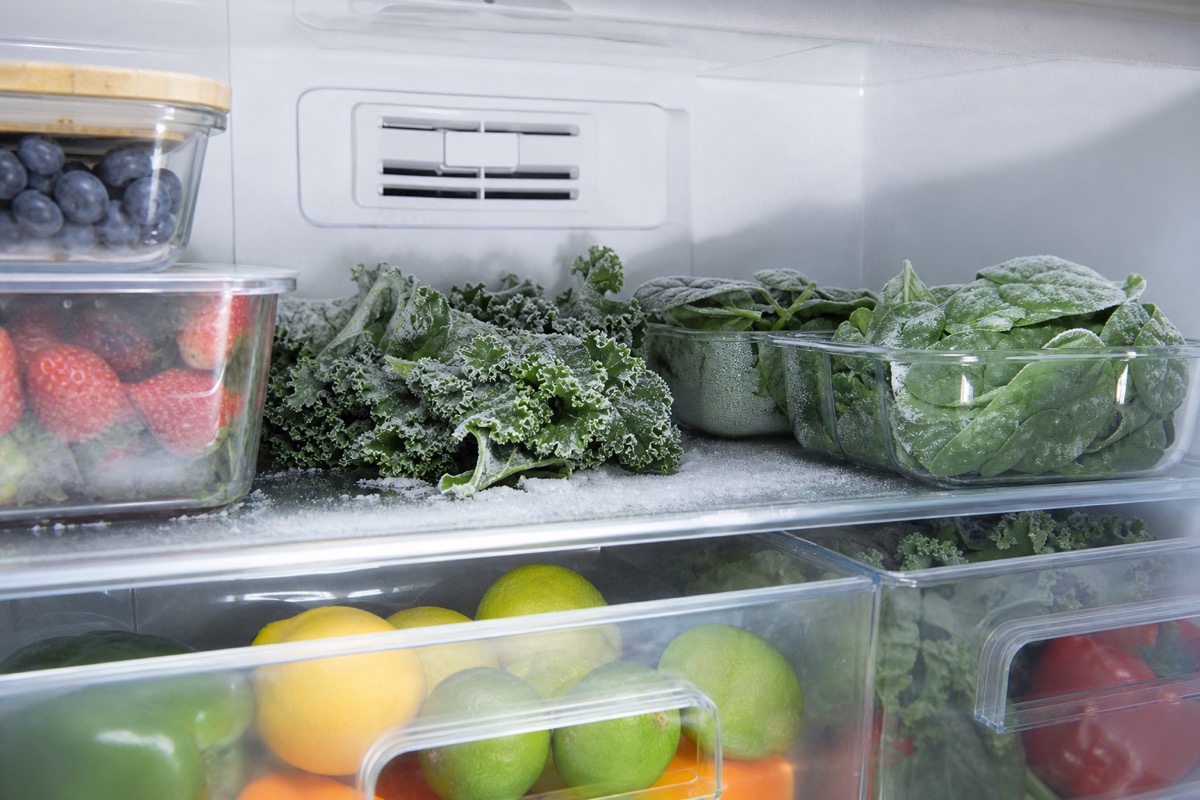
Is Everything Freezing or Only Food in One Area?
The freezing pattern helps narrow the problem quickly.
Food freezes only near the back wall or air vent
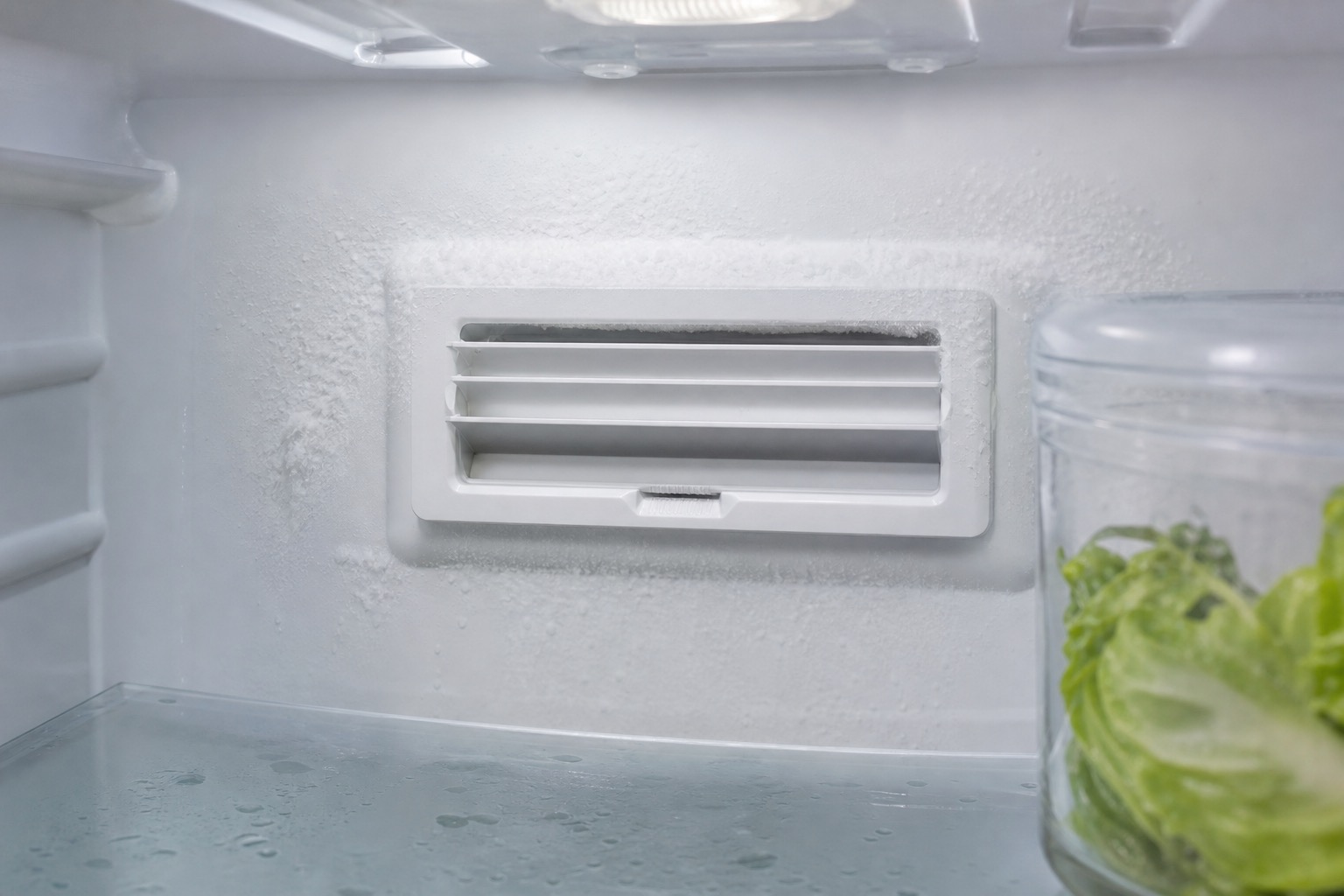
This commonly points toward airflow or food placement. Cold air often enters through vents connected to the freezer or evaporator system, so items directly in that stream may freeze while the rest of the refrigerator stays at a normal temperature.
Food freezes mainly on the top shelf
On some top-freezer and side-by-side designs, the upper rear area is one of the coldest locations because it is close to incoming freezer air. Keep delicate food away from known cold-air areas.
Produce freezes in the crisper drawers
Check the refrigerator and freezer settings, airflow around the drawer, and any drawer-specific temperature control. A deli, meat, Flex, or other temperature-controlled drawer may be designed to run colder than a normal produce drawer.
Food freezes throughout the refrigerator
If milk, drinks, produce, and food on several shelves all freeze, simple placement is less likely. Incorrect settings, a sensor or thermostat problem, a damper stuck open, unusual room conditions, or a control problem become more plausible.
Cause #1: Refrigerator Temperature Is Set Too Cold
Someone may have selected the coldest setting, activated a fast-cooling mode, or changed the controls while trying to solve another cooling problem.
Move the refrigerator setting slightly warmer rather than jumping from one extreme to the other. Allow about 24 hours for the temperature to stabilize before adjusting it again.
Cause #2: Food Is Directly in Front of a Cold-Air Vent
Food exposed to supply air can become much colder than the average cabinet temperature. Look for containers covering a vent, bags pushed against the back, food touching the rear wall, or one shelf freezing while the others remain normal.
Move temperature-sensitive food several inches away from the vent and monitor the refrigerator for a full day. If only food near the vent was freezing, the appliance may be operating normally.
Cause #3: Stored Food Is Disrupting Airflow
Cold air needs a path into the fresh-food section, around shelves, through stored food, and back toward return vents. A tightly packed refrigerator can create frozen areas, warm spots, condensation, longer run times, and inconsistent temperatures.
Leave space around vents and between containers. Do not stack food tightly against the back wall.
Cause #4: Fast Cool or Power Cool Is Active
Fast Cool, Power Cool, Super Cool, Quick Cool, and Turbo Cool modes intentionally lower compartment temperature after a large grocery load, frequent door openings, or initial installation. Check the display and turn off the mode if it is no longer needed.
Cause #5: The Freezer Setting Is Too Cold
Many refrigerators use cold air produced around the freezer evaporator to cool the fresh-food section. An unnecessarily cold freezer setting can send very cold air into the refrigerator compartment. Normal freezer operation is generally designed around approximately 0°F, but follow the model’s instructions.
Cause #6: The Air Damper May Be Stuck Open
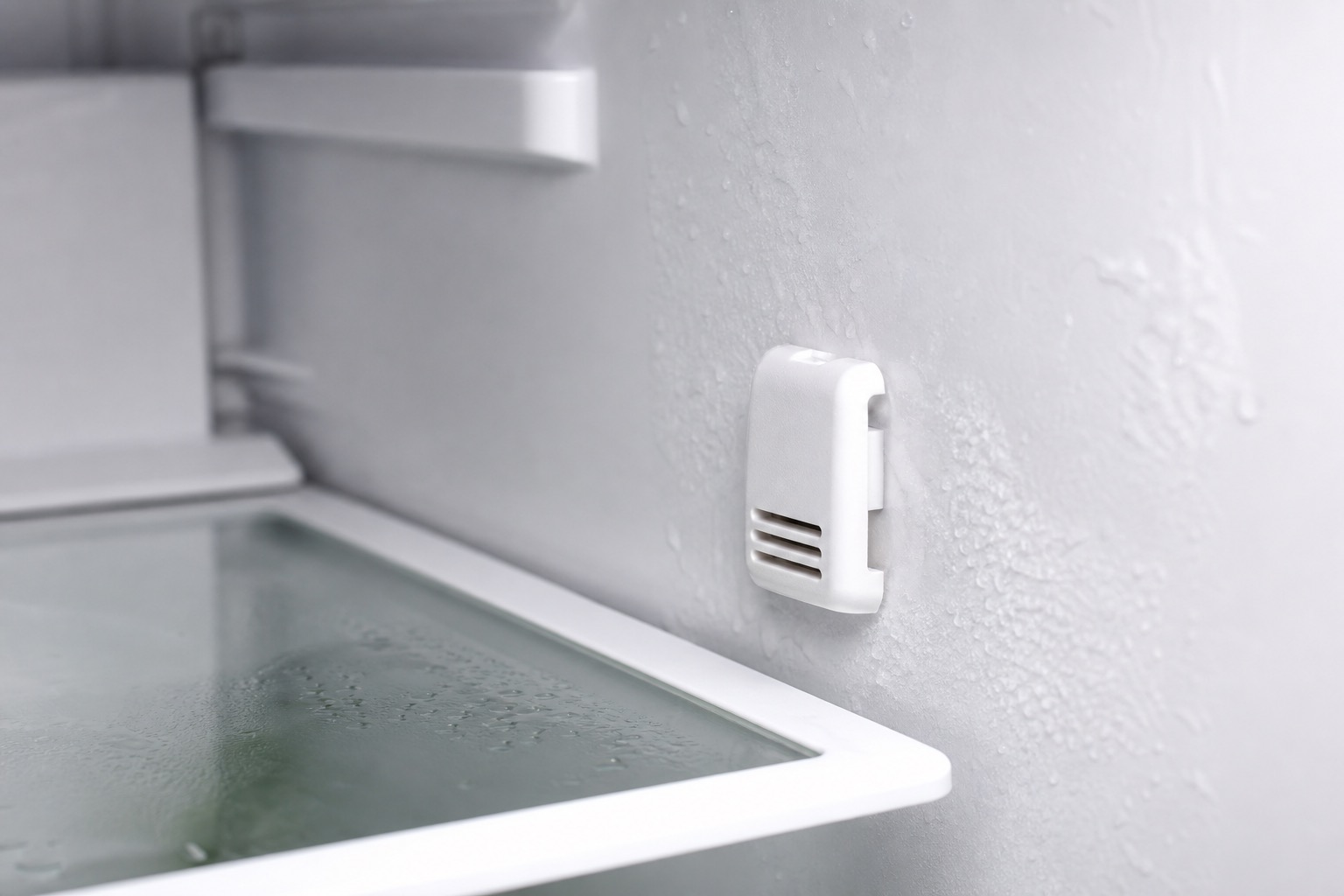
Many models use a mechanical or electronic damper to regulate cold air entering the fresh-food compartment. If it remains open when it should close, freezer air can continue entering the refrigerator.
Possible signs include food freezing near the air inlet, strong airflow almost continuously, a normal freezer temperature, and refrigerator setting changes having little effect. Damper design varies by model, so freezing food alone does not prove the damper should be replaced.
Cause #7: The Temperature Sensor May Be Reading Incorrectly
Modern refrigerators often use a thermistor to report cabinet temperature to the control. If it reports that the compartment is warmer than it really is, cooling may continue too long.
Food freezing across several shelves, an actual temperature much colder than the display, unpredictable temperatures, or little response to a warmer setting can justify sensor testing. A technician should verify model-specific specifications before replacing it.
Cause #8: Mechanical Thermostat or Cold-Control Problem
Some refrigerators use a mechanical thermostat. If the control stays closed after the target temperature is reached, the cooling system may run too long. Check actual temperature, settings, vents, placement, and the model’s control design before treating the thermostat as the cause.
Cause #9: Electronic Control or Wiring Problem
A control problem can cause excessive compressor operation, incorrect damper movement, or temperatures that do not match the setpoint. Because a thermistor, damper, connector, or wiring fault can create similar symptoms, the main board should be considered only after simpler causes and inputs are checked.
Cause #10: Ice Maker On Without a Water Supply
On some models, leaving the ice maker on when the refrigerator is not connected to water can contribute to unusually cold fresh-food temperatures. This is model-specific, so check the owner’s manual before changing the ice-maker setting for this reason.
Cause #11: The Refrigerator Is in a Very Cold Space
A garage, unconditioned utility area, seasonal home, or unusually cold room can change how some refrigerators cycle. This is less common in Southwest Florida, but the installation environment still matters.
Why Does Food Freeze Near the Back but Not Near the Door?
The door area is exposed to room air each time it opens, while the rear may be closer to supply ducts, the evaporator area, or air-return paths. If the center measures normally and only items at the back freeze, reposition them before assuming a component failure.
Why Are Vegetables Freezing in the Crisper Drawer?
Vegetables may freeze because the refrigerator is set too cold, very cold air is directed toward the drawer, airflow is blocked, or a drawer-specific control is set incorrectly. Confirm that a specialty cold drawer is not being used as a normal produce drawer.
Refrigerator Says 37°F but Food Is Freezing
The display usually shows a target, not the exact temperature at every point. Put an appliance thermometer in the center of the fresh-food compartment, away from walls and outlets, allow it to stabilize, and compare more than one area. If the average is significantly below the setpoint, a control problem becomes more likely.
What Temperature Should the Refrigerator Be?
For food safety, keep the refrigerator at 40°F or below. Many manufacturers recommend a fresh-food target near 37°F and a freezer target near 0°F, though the correct setting varies by model. An appliance thermometer is the best way to confirm actual temperature.
Safe Checks You Can Do
Before scheduling repair:
- Check the refrigerator and freezer settings.
- Turn off Fast Cool, Power Cool, or a similar mode.
- Measure the center temperature with an appliance thermometer.
- Move food away from vents and the rear wall.
- Clear supply and return vents.
- Note whether one shelf, one drawer, or the entire compartment freezes.
- Check whether the issue began after controls were changed.
- On an applicable model, check whether the ice maker is on without water.
- Record the refrigerator model number and any error code.
- After changing a setting, wait about 24 hours before changing it again.
What Not to Do
- Do not block vents to reduce cooling.
- Do not tape an air damper closed.
- Do not disconnect temperature sensors.
- Do not replace a control board based only on food freezing.
- Do not change settings every hour.
- Do not assume the display equals the exact temperature everywhere.
Blocking airflow can make one area freeze while another becomes too warm.
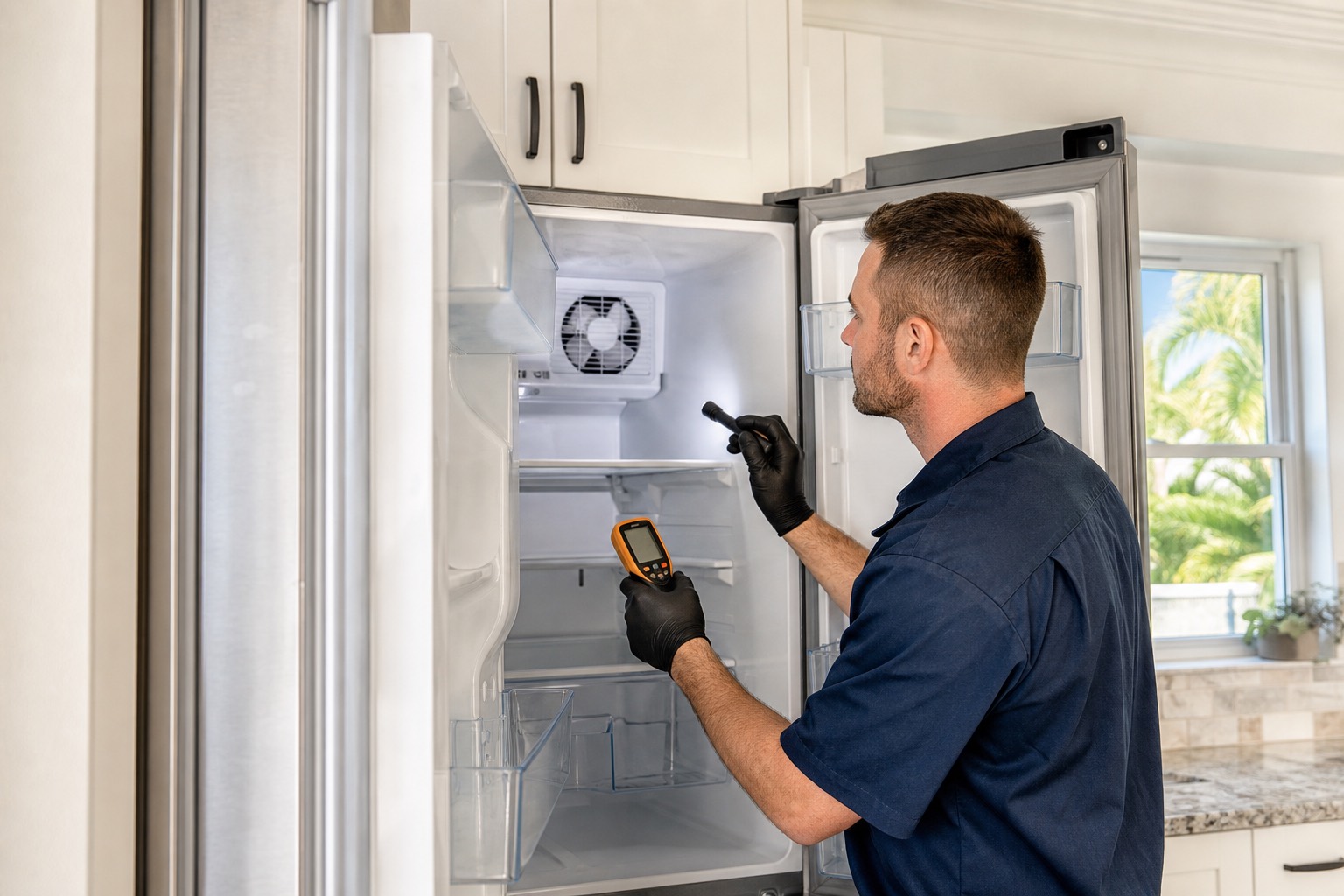
What a Technician Usually Checks
- Measure actual refrigerator and freezer temperatures.
- Identify whether freezing is local or compartment-wide.
- Verify setpoints and temporary cooling modes.
- Inspect supply vents, return vents, air distribution, and damper movement.
- Test the fresh-food thermistor or thermostat to model specifications.
- Inspect wiring and connectors.
- Evaluate electronic control operation after simpler causes are ruled out.
Refrigerator Freezes Food but Also Has Warm Spots
Freezing near one vent while another shelf or the door stays warm points strongly toward uneven air distribution. Do not simply turn the whole refrigerator much warmer; blocked vents, overcrowding, damper behavior, or a fan or duct problem may need attention.
Refrigerator Is Too Cold Even on the Warmest Setting
If actual temperatures remain below normal, food freezes throughout the compartment, vents are clear, and fast cooling is off, further control adjustments are unlikely to solve the cause. The sensor, thermostat, damper, wiring, or electronic control may need service.
When Should You Schedule Refrigerator Repair?
- Food keeps freezing after settings and placement are corrected.
- Several shelves remain below normal refrigerator temperature.
- The refrigerator stays too cold at a warmer setting.
- Actual temperature does not match the display.
- Freezing occurs together with warm areas.
- Temperatures fluctuate significantly or the compressor runs excessively.
- The problem repeatedly returns or an error code appears.
A useful service description is: “The refrigerator is set to 37°F, but food on several shelves is freezing. I moved everything away from the vents and it is still happening.”
Frequently Asked Questions
Why is my refrigerator freezing food even though it is set to 37°F?
Food may be in very cold airflow, or the actual cabinet temperature may be below the displayed target. If measured temperature remains too low after vents and placement are corrected, the damper, thermistor, thermostat, wiring, or control system may need diagnosis.
Why does only food at the back of my refrigerator freeze?
The back may be close to a cold-air outlet or cold interior surface. Move sensitive items away from the wall and vents, then monitor the temperature.
Can a blocked vent make food freeze?
Yes. Disrupted airflow can create uneven temperatures, with freezing in the cold-air path and warmer conditions elsewhere.
Can a bad thermistor make a refrigerator too cold?
Yes. An incorrect sensor reading can cause excessive cooling, but the sensor must be tested to the model’s specifications before replacement.
Can a stuck damper freeze food in the refrigerator?
Yes. On models that regulate freezer air with a damper, one that remains open can admit too much cold air.
Should I turn the refrigerator temperature way up?
Make small adjustments and allow about 24 hours for stabilization. Large or frequent changes can create a different temperature problem.
What temperature should my refrigerator be?
Keep it at 40°F or below for food safety. Many models use a target near 37°F, but follow the owner’s manual and verify actual temperature with an appliance thermometer.
Photo guide
Diagnostic Photos
Local Refrigerator Service
We provide refrigerator repair in Cape Coral and Fort Myers, along with surrounding Southwest Florida service areas.
For scheduling, use the Contact page or call/text Art’s Appliance Repair directly.
Related Appliance Guides
Refrigerator
Why Is My Refrigerator Fan Not Running? Common Causes
Refrigerator fan not running? Learn how to identify evaporator, condenser, and ice maker fan problems and when to schedule repair in Southwest Florida.
Updated August 4, 2026
refrigerator fan not running
Refrigerator
Why Is My Refrigerator Running Constantly?
Is your refrigerator running nonstop? Learn the common causes, safe checks, and when to schedule refrigerator repair in Cape Coral and Fort Myers.
Updated July 19, 2026
refrigerator running constantly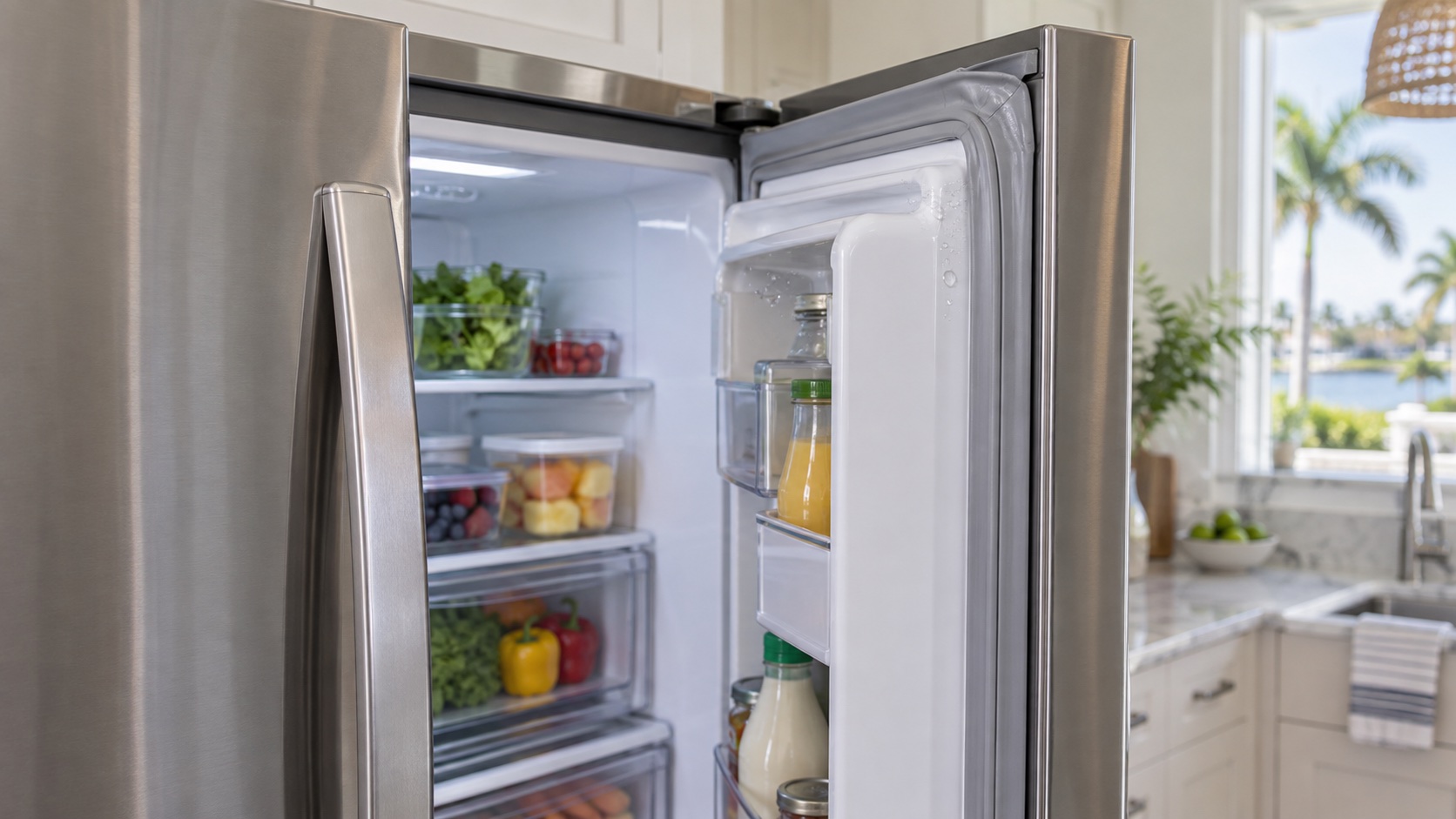
Refrigerator
Refrigerator Door Not Sealing: Warm Air, Moisture, and Gasket Clues
A refrigerator door that will not seal can admit warm, humid air. Check obstructions, gasket condition, alignment, and food temperature before requesting local repair.
Updated September 27, 2026
refrigerator door not sealingNeed service?
Refrigerator Repair in Cape Coral, Fort Myers and Southwest Florida
Art’s Appliance Repair diagnoses refrigerator temperature, airflow, damper, sensor, fan, control, defrost, and cooling problems throughout Cape Coral, Fort Myers, North Fort Myers, Lehigh Acres, Estero, Bonita Springs, Naples, and surrounding Southwest Florida communities.
We diagnose fresh-food sections that are too cold, vegetables freezing in crispers, temperatures that do not match the display, uneven temperatures, damper and thermistor problems, and refrigerators that freeze in one area while staying warm in another.
Call or text (239) 688-9955 to schedule service.
The service call is $0 when the diagnosed repair is approved and completed. If no repair is completed, the diagnostic service call is $79.
View Refrigerator Repair